Author Archives: jledmiston

Economic Choices

Almost all parents have been working parents since the beginning of time.

It occurred to me a couple years ago that I was the daughter of a woman who worked outside the home who was the daughter of a woman who worked outside the home who was the daughter of someone who worked outside the home.  The four of us made our choices based on both family economics and  personal interest. We were all – also –  first born daughters.

I believe my own “work outside the home” is a calling.  And I could make a case that my mother, grandmother, and great grandmother also had a calling.  I was blessed to know all three of them into adulthood and I wished I’d asked more questions about their work lives.

Parents of all kinds are trying to do the best we can. I always wonder about those who cannot parent their children for whatever reason.  Mother’s and Father’s Days must be rough.

What increasingly interests me as I grow older are the stories associated with our parents and their economic choices.  My great grandmother was a young widow with five children and I wish I could talk with her about the choices she made (continuing to work in the family feed store and allowing her three sons to take some family farm land and create a little airport in the 1940s.)

My mother worked “outside the home” to help make ends meet, but she and my father also hired someone to clean the house and care for the children while they worked.  (My hunch is that the Black Woman who took care of us was quite “affordable.”  It’s part of my story, although it’s a hard part.)

These are some of the stories I recall about the economic history of my family. What stories do we tell each other about the economic history of our church family? 

  • There are congregations that started schools and hospitals “in the mission field” during the U.S. Civil War in spite of the fact that the war at home was expensive and many of their own families were poor in the mid-1860s.
  • There are congregations created after the end of World War II built through pledges that would now be considered too meager to buy property and build a new church building. I’ve seen old photos of church leaders clearing the trees off construction sites themselves to save money – or so the story is told.
  • There are congregation built by the local millionaire and those were the places to be – socially and politically.  The millionaires also built the hospitals and the cultural centers.  Being rich-adjacent in church was almost like being rich ourselves.
  • There are congregations who have always struggled economically because they serve communities of poor people.  If the majority of our church members are either unemployed or underemployed, we will struggle to pay for a pastor much less pay for an educator, a musician, an adminstrator and a sexton.

What is going to happen to all the congregations after this pandemic?  Even “wealthy” congregations have had to lay off staff members.  Those congregations without strong patterns of online giving are having to shift their culture whether they want to or not.  The activities which have financially supported their ministries – preschools, after school programs, room rentals –  have dried up due to quarantine requirements.

Nevertheless . . . (I love that word)

… we also have churches who would not consider themselves “rich” in that they have no wealthy members, much less millionaires who are thriving.  I’m watching grant monies come into some of our congregations wholly because they are missional churches with big dreams and committed leaders.

This is the time when our church members are making essential economic decisions about “the family.”  What post-pandemic stories will we re-tell ten or twenty years from now?

  • “Our church closed because we didn’t want to get our hands dirty.”
  • “Our church closed because we stopped supporting it financially when all the gatherings were virtual.”
  • “Our church make some financial sacrifices and opened up a summer center for students who were behind after digital learning, and it sparked a new chapter in our ministry.”
  • “Our church did what we had to do to keep up with our free lunch programs and our affordable housing efforts.  It only made us stronger.”
  • “Our church realized that we couldn’t financial survive the pandemic on our own, so we were moved to merge with another congregation and we are able to be so much more in partnership with them.”

What story will we tell about the work our churches did during the pandemic when we look back?  What decisions did we make because we had to?  What decisions did we make because we felt called to make them?

I’m so proud and grateful for the sacrifices my parents made, looking towards the future.  And I pray we can make similar sacrifices for the sake of God’s family.

Image of (left to right) my great-grandmother, my grandfather (her son-in-law) and my grandmother (her daughter), my mother (expecting her fourth child) and my father. Hope you and your family had a good celebration yesterday – however you observed it.
What If They Resist?

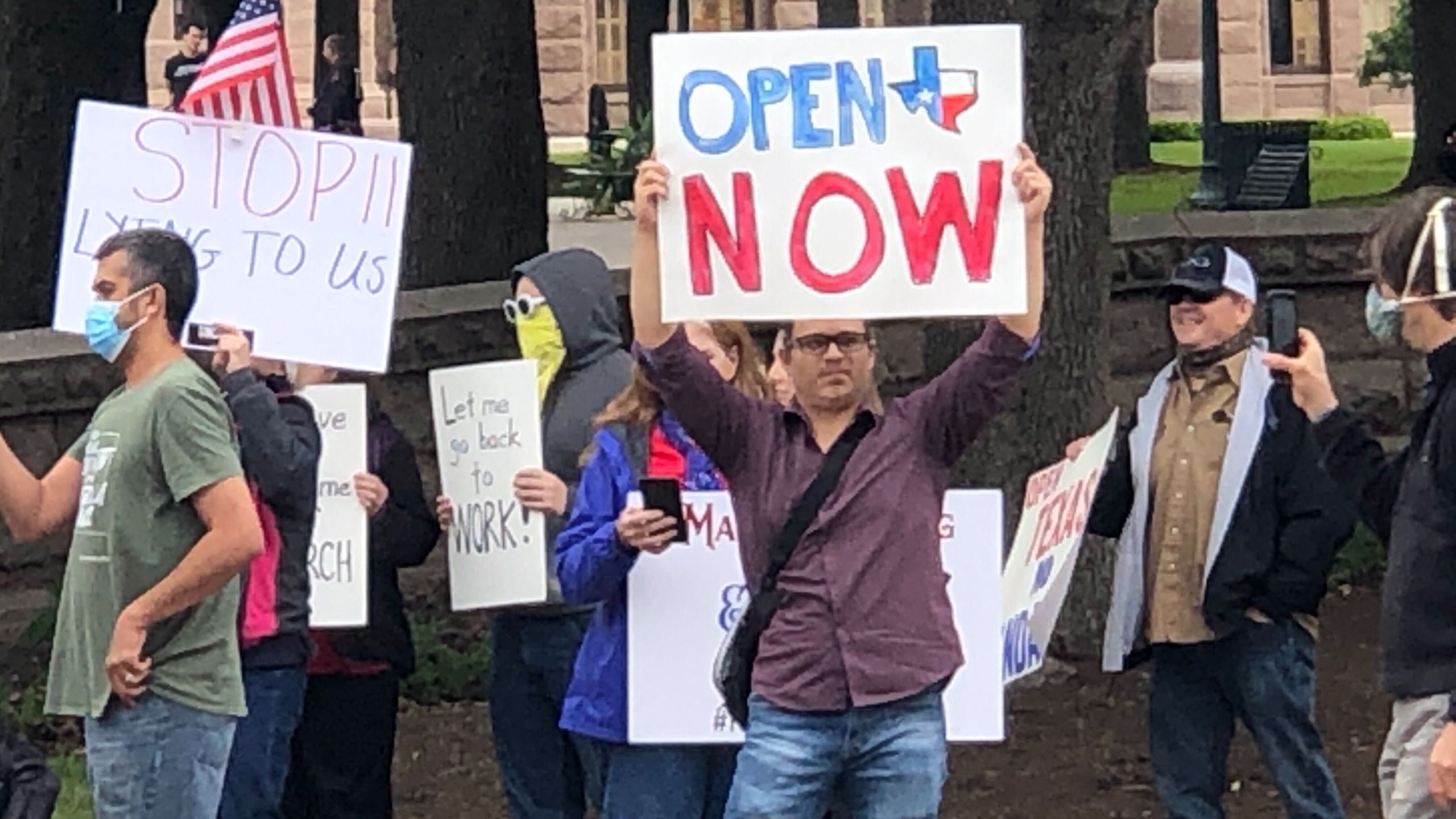
As churches consider the process of opening their doors in the coming weeks/months, there are definitely faithful people who want to open sooner than later.

  • Some believe outdoor worship is a safe alternative.
  • Some believe we can socially distance in worship gatherings.
  • Some believe that this whole COVID 19 situation is overblown.
  • Some believe that this whole COVID 19 thing is an elaborate hoax.

What do we do when members of our congregations insist on reopening and the pastor disagrees?  What happens when the pastors and other leaders themselves are particularly vulnerable to the virus?  What happens when some members declare that NOT gathering is a sign of faithlessness in Jesus the Great Physician?

Well, we have a wealth of theological conversations to have here, don’t we?

  • The Great Commandment declares that we are to love Jesus with our hearts, with our souls, and with our minds.  My grandmother used to say, “It’s amazing what the LORD has let us learn.”  God expects us to use our brains.  God created science and scientists.
  • Tempting God is not cool.  Anybody who says, “I’m going to lick this door knob to show how God is going to save me from the COVID” is tempting God.  Note that the devil quotes scripture here but is taking it out of context.
  • We are called to look out for “the least of these.”  This means that while I might be healthy or at least asymptomatic, I need to look out for those with auto-immune issues or other factors that might make them vulnerable.

There have been tweets going around asking, “Do you know anyone personally who has had COVID-19?” as if they personally do not and so it’s not real.  If you do not know one of the 25,676 (as of May 7, 2020) people in the United States or one of the 3.5 million cases in the world (as of 8:27 am ET May 8, 2020) or at least are connected by only two degrees to someone with COVID-19, you are quite sheltered and extraordinarily fortunate.**

I will share that everyone I know who has died of COVID-19 so far has been a black or brown person.  But that’s for another post.

As a follower of Jesus trying to bring justice to “the least of these” and trying to “make earth as it is in heaven” I hear and share personal stories about the things that break God’s heart which I’ve seen with my own eyes:  domestic violence, child abuse, systemic racism, systemic sexism, hunger, homelessness – all in our own neighborhoods and communities.  One of my cousins lives in the county where Armaud Arbery was murdered while jogging one day in February.  You don’t have to tell her there is systemic racism in her community.

But so many of my siblings in Christ resist these truths.  They don’t believe the stories.  They call even government statistics exaggerations or lies.

What do we do about the resisters?  What do we do about those who have to see evidence with their own eyes – and even then – do not try to stop the injustice and pain?

  1. We love them.  (We might not like them but we are commanded to love them because they too are Children of God.)
  2. We tell stories of what we’ve personally witnessed – not as weapons but as tools for building empathy.
  3. We remind them what Jesus says about how we are supposed to live.

If “getting back to church” as soon as possible is about returning to comforting experiences and familiar faces and personal enjoyment, we are missing the point of The Church of Jesus Christ.  Church is not about you.

If it’s about being the Church, even during a dangerous pandemic, we will adapt to different ways to worship, to offer comfort to others, to care for those impacted by this crisis the most.  Church is about us.

I’m in no hurry to “get back to church” because – actually – I am in church, I am doing church, I am part of the Church now more than ever.  I hope you are feeling that too.

Image from KXAN in Texas.

** My numbers here are low. Those were per day cases.

Once in a Lifetime

You better lose yourself in the music, the moment. You own it. You better never let go. You only get one shot. Do not miss your chance to blow. This opportunity comes once in a lifetime.  Lose Yourself by Eminem

Okay, Eminem is not my usual go-to voice on church things, but I can’t get this song out of my mind as we discuss re-opening church buildings in the coming weeks.

I work with 96 congregations.  Some of them have essentially closed in that they didn’t have the capacity to offer online worship or Zoom meetings.  Some pulled off extraordinary worship experiences with breathtaking choral synchonization.  And most did something in between.  But all of our church leaders are exhausted.  We’ve had to wrap our minds around a new way of being the church.

We’ve made technical changes: online worship, online giving, Zoom Bible Studies.

If we believe that those technical changes will (and must) go away after the pandemic is “over” so that we can return to “normal” we are missing a once in a lifetime opportunity in the history of the Church of Jesus Christ.

This is the perfect opportunity for Adaptive Change. Please let’s not waste this opportunity.

From this Fuller Seminary article:

Adaptive challenges happen when we ask people to adopt new beliefs, when we hope people will pursue better values, or when we help people see that the ways that they have been doing things in the past will not work for them. 

We need to read (or re-read) Ron Heifetz.  Here and here are places to start. Also:

  • Look at WHY we’ve done ministry a certain way. Is it about sentimentality first and foremost?  Or is it about making disciples of all nations?  Is church – for us – about personal comfort and good feelings?  Or is it about following Jesus in hopes of bringing in the reign of God?  Does it make sense to continue the way we’ve always done it if fewer and fewer people are spiritually fed?
  • Both/and is a good thing.  Expect the Church to offer both virtual and in-person practices in the future.  We are not going back to one way of worshipping God on Sunday mornings.  Or if we are, we do so at our own peril in terms of cultural obsolescense.
  • What practices have we appreciated during this pandemic and why?  I hear young parents say they love Zoom Church Meetings because they can participate without needing childcare.  I hear older people say they love Zoom Meetings because they don’t have to drive at night.  I hear almost everybody say that they love virtual worship on Sundays because they can participate with multiple services on a given morning while drinking coffee and wearing fluffy slippers.  Let’s build on these things.
  • Let’s try lots of things and see what works.  More than ever, we are serving diverse demographics and reaching out to new people (or at least we say we want to do this) and not everything will work for everyone.
  • In the midst of disconnection and isolation, how have our technical shifts influenced adaptive shifts?  Have we realized – once and for all – that The Church Is Not a Building?  How has the Church not been a building over the last 3 months?  Discuss.
  • Let’s look at the creative ways that Christian Educators and Children/Youth Ministers have been ministering to our youngest people.  Some of what I’ve seen is not only excellent, but it’s more relatable than ever for generations who already use screens for everything.  Again – technical changes spark conversation about adaptive changes for the sake of the Gospel.

I am on the brink of begging you, Church Leaders.  If we don’t use this once-in-a-lifetime opportunity to re-think and re-make the way we are the Church, we are fools whose churches deserve to die so that The Resurrected Church can thrive.

We cannot go back to the way we were the Church before March 15th.  Cue Eminem.  Such a good song.

Preparing to Reopen Our Churches Again

[For the record – if our churches have continued to offer virtual worship, virtual meetings, phone calls to check in, and mission giving – they have not been closed.  But . . . ]

. . . it’s possible that our church buildings will re-open in the coming weeks.  In my state of North Carolina, it’s possible that we can legally open church buildings on Pentecost Sunday IF Phase 1 of the three phase process of re-opening is successful in terms of no coronavirus spikes or setbacks.

This doesn’t mean that we should or must open our church buildings on Pentecost.  It won’t be as simple as unlocking the doors.

In fact the process of re-opening requires serious preparation.  It would be foolish to open without the following groundwork:

  1. Preparing the building. Deep cleaning the building including the nursery (and every toy), the bathrooms, all pews/chairs, all door knobs, all light switches, all mikes.
    1. Making sanitizer available to everyone.  If you don’t have sanitizer, don’t open the building.
    2. Posting signs reminding people to keep social distance and refrain from shaking hands.
    3. Marking seats with sufficient distance between worshipers.
    4. Cleaning between worship gatherings, classes, meetings in the building.
  2. Preparing the leaders. Instructing ushers and greeters to remind everyone to socially distance and use the sanitizer, and to direct traffic in ways to avoid unnecessary pile ups of people in the halls or aisles – not like police but like friendly tour guides.
    1. Instructing ushers to stand by the offering plates/boxes/baskets which have been moved to the entrance or exits of the worship space.  They will not be “passing the plate” for a while.
    2. Continuing leaders to encourage online giving for the rest of their lives and online meetings for at least a while.
    3. Ordering and sharing (from a tray) individual pre-packaged communion sets to be picked up on the way into worship.
  3. Preparing for Church Life’s New Normal. Exchanging paper bulletins for screens.  Same with hymnals.  Honestly, this is not about personal preferences anymore.  It’s about health and safety.
    1. Providing and wearing masks – even/especially for singing.  Apparently we spit when we sing.
    2. Allowing some volunteers to step back for now.  Some lifelong ushers, teachers, and music leaders might not feel comfortable continuing in those roles at the present time.
    3. Stopping coffee hour for now.
    4. Sitting at a distance.
    5. No more passing the peace except with our eyes and behind-the-mask smiles.
    6. Reminding people that the Church is not a building and social distancing can be Biblical – although immediately after this story, groups formed once again.  Jesus attracted a crowd.

This is a great time for our church leaders – elders, deacons, educators, musicians, and pastors – to prepare how we will “re-open” the Church. And it’s an act of faithful solidarity for all congregations in a particular city or town to have these conversations together so that all congregations of all kinds stand in unity.  It would be especially healthy for all houses of worship to open the same date if at all possible to illustrate that the whole faith community is on board with being safe together.

In spite of the tragedies that this pandemic has wrought, the Church is blessed with an amazing opportunity to move into the 21st Century.  More about that tomorrow.

Image of pre-packaged communion.  Some of them are hard to open so consider how we’ll safely open them for small children or people with arthritis.  

Who Are Your Comfort People?

[Note: The trafficking of Korean, Chinese, Filipino and other women called “Comfort Women” was a heinous act committed by the Japanese military during WWII.  I refuse to let this hijack the word comfort so I’m reclaiming the word for this post on Comfort People.]

Just as there is comfort food we are lavishly consuming during this pandemic, there are people in the world who automatically bring us comfort.  Merely the presence of some people – even on Zoom – has a calming effect.

Just as different people are comforted by different kinds of foods, we are individually comforted by different kinds of people.  I have a friend known for her creative snarkitude and yet I am thoroughly comforted by her photos and tweets.  She probably ticks off a lot of people but I feel peace in her presence.

The opposite of Comfort People might just be Toxic People and I wonder if they know who they are.  Maybe I am toxic to some folks.  I hope not, but if I am, it’s okay not to hang out with me or return my calls.

Toxic people – if I can be so bold – are exhausting.  They suck the life out of you with no self-awareness.  They (we?) never ask “How are you doing?” Or maybe they ask and don’t seem to pay attention to the answer.

Enough about toxicity.  Let’s get back to comfort.

Comfort people bring relief without saying or doing much.  It’s who they are.  Their very presence is soothing.

I believe Jesus could be a demanding friend, but that doesn’t exempt him from also being a comforting presence. Some of my most demanding friends are comforting because they are demanding. (You will get past this.  You’ve got this. Get out there and show the world that you can kick some toxicity @^*.)

I am blessed with lots of people who bring comfort into my life by their mere presence.  On the Zoom calls I find that some faces bring me deep joy.  I miss seeing them up close and personal.

As many of us are reaching our limits in terms of Zoom calls and working from home and wearing masks in public and craving food from restaurants not doing take out and wondering how much longer we can look presentable without a haircut, consider asking yourself this:

Am I toxic person?  Am I am comfort person?  What can I do to focus more on the needs of others and stop feeling sorry for myself?

Whether quarantines will soon be lifted or not, we owe it to each other and to our Maker do try to bring more comfort into this world.  The suffering in this pandemic is uneven.  How can we support those who are suffering the most?

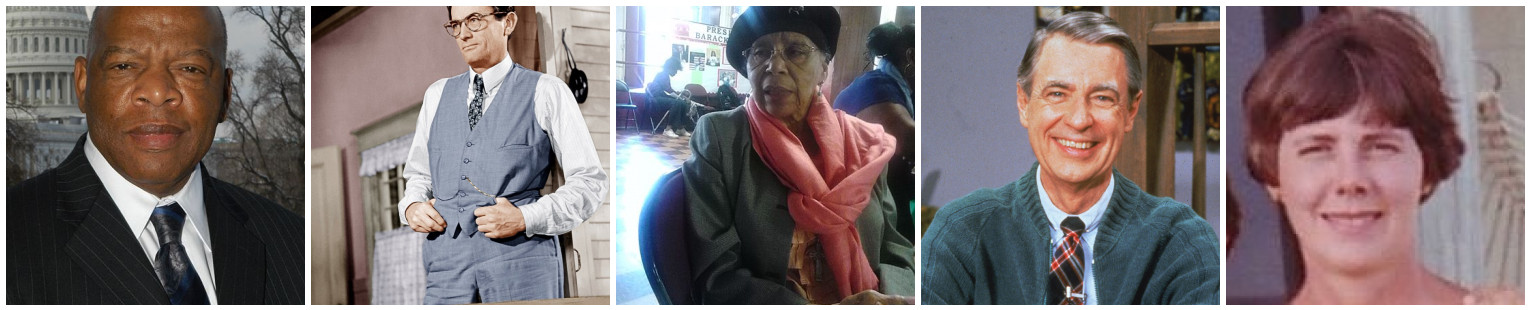
Image of people who bring immediate comfort to me:  John Lewis, Atticus Finch, Thelma Adair, Mr. Rogers, Mom.  I was on a Zoom Call with Dr. Adair last week and my heart is still rejoicing.  She will be 100 years old this August.

Does God Still Send Plagues?

News of the U.S. arrival of The Murder Hornet last week set social media ablaze with comments like “What’s next? Frog Blizzards?

At the moment there are still locusts in East Africa and Asian Carp in the United States both eating their body weight in human food sources. And then there’s  COVID.  Some people say that God is punishing us for everything from corporate greed to same sex marriage.

Does God continue to make statements through Jumanji-esque plagues?  Does God speak through weather?

One of the truest lines in scripture is this one:

He makes his sun rise on the evil and on the good, and sends rain on the righteous and on the unrighteous. 

Sun and rain can both be good and not so good for people, but everybody gets both.  And that line comes after the whole “love your enemies” part of Jesus’ Sermon on the Mount.  I’m guessing there were some Very Good People who died during the Egyptian plagues, condemned only by the fact that they lived in North Africa.

I remember voting on a hot topic at a Presbytery meeting once and – just before the momentous vote – tornado sirens went off and everybody huddled towards the middle of the church sanctuary away from the windows.  Was God expressing a vote against the proposal?  Was God expressing a vote for the proposal?

So here’s the thing about God and “plagues” – those plagues touch the righteous and the unrighteous.  When people tell me that AIDS was God’s comment on Gay People, I remind them that lesbians were barely impacted by HIV.  So does God prefer lesbians to gay men?  (I don’t think so, for the record.)

I believe that human beings contribute to the world’s plagues in that climate change is something humans have ignored.  Can we agree too that human greed spreads pandemics?  Are there far-reaching consequences for failing to treat each other with respect and compassion?  A big yes.

AND it’s also true that grace abounds and God loves even God’s enemies in some deep cosmic way. (God so loved the world – not God’s favorite parts of the world.)

Here’s a really life-giving thing to remember:  God created science and scientific minds and scientific breakthroughs.  Human beings tend to muck things up quite well.  But God intends creation – including the creation of new formulas, new vaccines, new understandings – to be used for good.

[Side Note:  Jonas Salk did not become rich from creating his polio vaccine because he was creating it for all people to benefit without cost.  I’m guessing that some corporation will become enormously rich when a COVIC-19 vaccine becomes available. Does this make baby Jesus cry?  I imagine so.]

The world spins and God continues to create and the sun continues to rise and the rain continues to fall on the just and the unjust. We are not puppets.  God has created us to love each other and even to pray for those who persecute us. We tend not to obey this commandment even on our best days.

It would be so much easier if all the evil people were stung by Murder Hornets and all the good people would have natural immunity against Murder Hornets.  My hunch, though,  is that all of us would be in for a rude awakening if this was how God set things up.

It might feel like somebody started a Jumanji Game these days.  But it wasn’t God.

We need to clean up our act.

Image of a Murder Hornet who decapitates honey bees.  And also – have you noticed how Asia gets blamed for all the bad insects and fish and viruses?  What is wrong with us, people?

Have We Noticed Their Faces?

Have we noticed the faces of the nurses, doctors, and respiratory therapists dealing with the COVID-19 situation?

As I watch these overworked professionals interviewed about their experiences on television and other media, I’ve noticed that they represent the variety of cultures and demographics in the United States.  Take notice next time you watch or read the news and notice the faces of those directly dealing with COVID-19 in this country.

They are not all white, my friends. Our hospital staffs throughout the United States look like the world.  Many of our medical professionals are immigrants or first generation Americans – and we would be a poorer nation without them.

(Note: So imagine what are we missing by refusing to welcome new immigrants to our country – but that’s for another post.)

It reminds me of something Eboo Patel wrote about here.

In an American hospital, a Jewish internist may be working with a Baha’i anesthesiologist to treat a Buddhist patient. They may be supported by a Muslim nurse, in a room cleaned by a Baptist custodian, at a hospital started by a Catholic religious order and run by a culturally Hindu CEO who does not believe in God.

If that Buddhist patient approaches the end of her life, it is very likely that the person offering comfort would be a chaplain trained at a mainline Protestant seminary.

COVID-19 has collapsed the lungs of tribalism.

I would like to believe that this is true: that tribalism has been zapped away by this pandemic.  But I sense that many white people still believe that “they don’t see color” and so we miss this great truth:

People of every religion, skin color, and heritage are serving sacrificially in these days of the novel coronavirus.  Have we noticed this?

We are not a “white nation.”  We white people might think we are a white nation and we might not realize the enormous privilege based solely on our pale skin color,  but actually the whole world is blessed because we are not all white.

Have we noticed the faces of the helpers?  They look like the Kingdom/Kindom of God.

The medical professions above were all interviewed in the past week about their work with COVID-19 patients in a variety of venues.  They are – from the top left going clockwise – Dr. Mafuzur Rahman, Dr. Taison Bell, Dr. Lisa Cooper, Dr. Ayman Fanous, Dr. Octavia Pickett Blakely, Dr. Thomas Oxley, Dr. Winston Wong, Dr. Ahmed Hozain, and (in the center) Dr. Althea Maybank.  Also, would someone please give Eboo Patel the Nobel Peace Prize?  And finally, if you live in a rural area that’s predominantly white, read this book.

What Does Winning Look Like?

What it means to be “a winner in this world has always been interesting.  I have a college friend who’s “done very well” since our college days and at this point, he is a multimillionaire.  I asked him once why he continued to want to make more and more money and he said something about it being a game that he’s still trying to win – and win definitively.

Good for him.

During these pandemic days “winning” has special significance.

  • Are we winning when we have the Personal Protection Equipment we need in hospitals and other venues?
  • Are we winning when we land the last roll of toilet paper in the store?
  • Are we winning when we’ve finally come up with a schedule for computer use for our school-aged kids and their working-from-home parents?
  • Are we winning when we find a wine store that delivers?

I could make a case that Jesus tried to make losing the new winning.  But more than that, Jesus was all about vulnerable people winning.  (Note The Sermon on the Mount.)  And this is our calling as human beings – and especially as people who claim to follow Jesus. We want love to win.  We want resurrection to win.

We want “the least of these” to win.

Winning churches – if we can use that term – are congregations with a positive impact on their communities in the name of Jesus Christ.  Winning churches are the ones that:

  • Feed the poor AND also work to eradicate systemic poverty so the poor can feed themselves.
  • Include the ignored, the vulnerable, the unseen AND also work to dismantle racism, sexism, ageism, and every other kind of ism that negates someone’s inherent worth.
  • Build vital community AND promote relationships that nourish souls.

Winning in the 21st Century Church is not about church size or bank account size.  It’s about the size of our imaginations and our willingness to let God’s Spirit direct us.

A lot of us are tired.  Those organizing virtual church are working behind the scenes way beyond their job descriptions.  But there is renewed energy in knowing that we are making a life-giving impact.

Final thought:  Spiritual Winning is never about getting our way to fulfill our own agendas.  Take note church leaders.

Image of church backpack program to feed food insecure children.

My Fourth Marriage

My colleague JC (Joe not Jesus) told me once that he’s been married multiple times to the same woman.  As life has transitioned, so has the marriage.

With that in mind, HH and I begin our fourth marriage today – to each other.

First Marriage: Three Churches. A Birth. A Death. An Eventful Move.

Second Marriage: Two More Births. Two Miscarriages. Three More Deaths. Co-Pastoring. Not Co-Pastoring. 16 years of Public Schools.  Two Dogs. Lifelong Friends. Soccer Fields. Lacrosse Fields. Field Hockey Fields.

Third Marriage: Empty Nest. Central Time Zone. One Church/92 Churches. That PCUSA Thing. Two Years of Breakfast with Faces.

Fourth Marriage: Downsizing. Freedom. Old Dog. New Adventures.

Life together changes with the years and the seasons.  There are joys and there is brokenness and there is a lot in between.  I love what Brene Brown says about the myth of the 50-50 relationship.  (It’s definitely a myth.)

A lot about marriage involves luck and grace and God and magic and miracles.  We happen to make it to this point for some reason and it doesn’t make us better or smarter.  But the truth is that life often involves multiple marriages – sometimes to the same person.

Old coffee cups. New venue.

Is Everything Suddenly (Or Not So Suddenly) Outdated?

This will be my last post of the week since I lose internet tomorrow with the final chapter of our move from Illinois to NC.  Moving during a pandemic has some interesting challenges.

Over the past ten days of endless packing, I’ve found sermons that won’t preach in a post-pandemic church.  I’ve come across articles that I wrote in the early 2000s that sound completely out of touch in the year of COVID 19.  I’ve re-read pieces I saved because they sounded so on track just a few years ago but today they sound ridiculous.  For example, the Ten Ideas That Are Changing Our Lives on the March 2012 cover of Time Magazine includes these “ideas”:

  • Living Alone Is the New Norm
  • Food That Lasts Forever
  • High Status Stress

So, here’s the thing:  people might want to live alone but they can’t afford to do it.  Fresh food (and “farm to table” restaurants) are much preferred – especially by those who live in food deserts.  And “high status” people might find it super stressful to have to cancel their vacations this summer, but the most stressed out people I know have lost their jobs during this pandemic and the government checks are not going to help much if they help at all.

As a person who serves in the Mid-Council level of Church World, I’m trying to get my head around what the Post-Pandemic Church will look like.  It’s about more than how we celebrate communion once we can get back together again.  (It probably won’t involve a common cup or tearing chunks of bread from a common loaf but that’s obvious.)

I wonder about seminary training: will there be classes taught on preaching to a screen?

I wonder about worship: will people become used to staying home Sunday mornings where they can sip coffee and wear their pjs during the service?

I wonder about meetings: will people prefer online meetings so that they don’t need to hire a babysitter or drive at night?

I wonder about pastoral care: will we visit face to face AND Zoom?

I wonder about The Connectional Church: will we “attend” a virtual Bible study at First Church of the City and then “attend” worship with Second Church of the Burbs and then “attend” the board meeting with our “home church” working to provide resources for Third Church of the Hills because their food pantry needs to be re-stocked?  Note:  This kind of connectionalism is exciting and it also begs many questions like . . .

  • Who’s paying for the preacher in that virtual service that thousands are watching?
  • Will people from my church divide up their financial support between three or more congregations?
  • What do we do about the buildings we’ve been keeping up for decades?

And what about the churches who have essentially shut down during the pandemic because their parishioners don’t have smart phones much less computer notebooks?  What if they continue to shun online giving and virtual gatherings? Do we let them go?  Do we let them die?

I remember my grandmother telling me about her friend who “didn’t believe in” telephones when phones were the new thing.  She openly castigated the whole concept of talking through a machine as opposed to visiting people face to face.  The time came when she was the only person without a phone and she missed out on so much information that – towards the end of her life – she broke down and got a phone. But she never liked it.  She never embraced the positives of connecting with people by phone.

For decades, I’ve been writing and speaking about shifts between the 20th and 21st Century Church.  People have often listened politely and then continued to do what they’ve always done in the ways they’ve always done them.

But now, we are newly forced to consider that 21st Century technology is a requirement for 21st Century Church.  21st Century culture shifts are no longer an option; they are a prerequisite for being a thriving congregation post-pandemic.

Is it possible that everything will go back to the way they once were prior to Mid-March?  It’s possible.  But I think things have changed forever.

(Note: this is not a bad thing.)

Image from a New Jersey highway from the front lawn of a church building.