Author Archives: jledmiston

Having ‘The Talk’ with Our White Children

We White People are familiar, perhaps, with The Talk that parents of Black and Brown children have to keep their children safe in a culture of White Privilege and White Supremacy.  I also believe that it’s on us –  White parents –  to have a talk with our White children.  It needs to be a long, ongoing talk that starts when our children are tiny and keeps going well into their adulthood.

Here’s what we need to tell them:

  1. You might think that Blackface is funny, but most of the world sees it as an insult that dates back to a time when White performers mocked Black people.
  2. You might think that the Confederate flag is a symbol of Southern pride, but most of this world sees it as a sign of hate that was flown with renewed enthusiasm during both the Jim Crow era and the Civil Rights movement to intimidate People of Color. Also (and I write this as a Southerner whose Great Great Grandfather died at Antietam) secession from the United States was treason.  And it was a war to perpetuate the evil of human slavery.  Why would we want to fly a flag that represents treason and the most despicable sin in our nation’s history?
  3. You might think it w makes us look tough to use the N-word, but most of the world knows that this is an ugly slur used to demean people.  People of color might use this word themselves, but that’s fodder for a different conversation.  White People – no.

Two of the incidents (linked above) occurred where I used to live in the leafy Chicago suburbs.  All of these incidents occurred over the past week.

White parents: this is on us.

In these days when many people feel empowered to say offensive words and act out offensive behaviors, we need to teach our children that this is not who we are – unless it is who we are and then I suggest we get some education.

If we are also  Christian White people, we have a special responsibility to teach our children that Jesus weeps when we mock, slander, and wound people.  No exceptions. This is not who God created us to be.

Teaching this to our children is Basic Parenting 101.  We can do better.

Image of Jennifer Harvey’s excellent book Raising White Kids: Bringing Up Children in a Racially Unjust America.  If, by some chance, you are White and you do not believe that America is racially unjust, I especially hope you will read this book with an open mind and talk about it with friends.

Why I Have the Best Job

Okay – it’s a calling, not a “job.”  And maybe you are a talk show host or a travel writer or a the inventor of Sharpies and you believe that you have The Best Job.  Lots of us can have The Best.  All of us deserve to work in ways that bring joy and satisfaction and pay us a living wage.  It would also be great if each of us had jobs with health insurance.  (But that’s for another post on another day.)

Yesterday, May 1st was the first anniversary of my not-so-new calling in Charlotte, NC and it came on the heels of a shooting at the UNC Charlotte campus seven miles from my home.  Two students died.  Four additional students were shot and will recover – at least from their physical wounds.

This is what we prepare for as Mid-Council Leaders:  the sudden death of a pastor, the church fire, the hurricane, the shooting of innocent people.  We hope that those in the thick of the crisis will be the best version of themselves.  And that’s what I witnessed yesterday.

I know of no other work that offers the variety of professional ministry.  Within 24 hours I had the opportunity to

  • Meet with a church leader over coffee to talk about the future of her small congregation,
  • Share resources on trauma with our churches,
  • Join up with a group of Presbyterians, United Methodists, Lutherans, Jews, and Muslims to stand with a college community in the face of deep grief.
  • Pray with a college senior from China who slept through the shooting but wanted me to pray that his mother can leave China to attend his graduation.
  • Was invited to hang out with the Hillel people to welcome Jewish students to pray.
  • Talked with Muslim students about their fears and hopes as college students and specifically as brown college students who happen to be Muslim.
  • Talk with a woman while picking up my BBQ take out about why the world is so crazy.  (I was wearing my collar so apparently I looked like someone who might have the answer.)

Why is the world so crazy?  The short answer is “sin.”  The longer answer has something to do with fear, greed, ignorance, and a host of other human failures.  But sometimes – even in the craziness – we get it right.

Thank you, church people who get it right.  Thank you, Muslim students who are brave in the face of daily bias and racism.  Thank you, Jewish neighbors who are having to make decisions about hiring armed guards to watch your synagogue doors and yet you remain kind and faithful.  Thank you church leaders who bravely consider Big Changes for the sake of the Gospel.

Thank you God for allowing me to live long enough to experience all this.

Image of me in my collar.  I only wear it for marches and vigils but I should wear it more often.  You would not believe who wants to talk when you’re wearing a collar.


There’s No CaringBridge for Depression

Today marks the beginning of Mental Health Awareness Month. It’s also the day after yet another shooting –  this time where I live.  At this writing, two are dead and four are injured who were in class at the UNC Charlotte campus yesterday when someone started shooting.

Lord have mercy.  Christ have mercy. Lord have mercy.

I’m going to make a assumption here that you might not make, but it helps me make sense of such moments:  the shooter is a desperately sick human being.  Maybe the shooter is also racist/sexist/himself traumatized/uncontrollably angry.  But his brain is broken. He is mentally ill.

I will share that I, too, am mentally ill.  I deal with depression for which I take medication daily and I see a therapist almost every week.  My illness is not the same as that of a serial killer or a white nationalist or a person with any number of other brain disorders.  But the stigma of mental illness is a stigma for us all.  And it shouldn’t be.

I’ve had cancer and I’ve had depression, but there is no CaringBridge for mental health issues.  (And my cancer was so long ago that CaringBridge wasn’t a thing back then.)

I’m happy to wave at you if we run into each other at the counseling office because it means that both of us are taking care of ourselves.  Self care is self care whether we are getting a mammogram, a colonoscopy, a six-month dental cleaning, or a massage. Or talking with a counselor.

We have a lot of work to do out there in the world.  And we need to be in the best shape possible so that we can do what God’s calling us to do.

For more information about Mental Health Awareness, check this out.  And here in Charlotte, I recommend Presbyterian Psychological Services.

Changing Our Ways is Harder than Changing Our Shoes

I attended a church meeting several months ago and was the youngest person there by many years.  (I’m 62 years old.)

One woman approached me as if I had run over her dog: “What are you doing about all the young people?  Where are they?”

Me (in my head): Trying to avoid being chastised?

She went on to tell me that her daughter was breaking her heart because she didn’t bring the twins to church. I suggested that she ask her daughter why she doesn’t go to church but I suspect I already know why.

It was vociferously reported at this meeting that people need to give more. Fingers might have been pointed at all the guilty slackers.

There were numerous open leadership positions and the chairperson begged folks to nominate themselves.  (Not one person did.)

It was announced that the coffers are low in terms of paying dues and when asked for suggestions for making up the deficit, the following suggestions were made:

  • Bake Sale
  • Car Wash
  • Pancake Breakfast

The date could have been 1972 but it was 2019.

This group clearly needs to change their ways:  No more bake sales.  Get rid of committees that nobody wants to serve on.  Stop berating people.  Give up on perpetuating something nobody wants to/is able to do anymore.  Remember why we started this organization in the first place.

Changing our ways is an adaptive change.  Changing our shoes is a technical change.  And depending on technical changes to grow is killing us.

Shifting a culture – as I’ve written many times before – is not for the fainthearted.  It’s hard and messy and people will almost certainly feel angry and hurt that they are losing their institutional power.  But if we do not make adaptive changes – especially in terms of the way we’ve been The Church – our congregations and mid-council ministries will die.  Many are already dead but we haven’t accepted that fact.

It’s okay.  (Remember: Easter.)

In the meantime, if our congregations are brave and faithful, we will welcome the challenge of adaptive change.  (Many of your leaders have read this book, if you’re interested.)  Here are some questions to ask at the beginning of your next leaders’ meeting (adapted from the Heifetz book):

  • What’s the most important lesson you’ve learned since we last met, in terms of our church/organization?
  • What mistake did you make in the past week/month and what did you learn from it?
  • What’s the most important thing you did yesterday and why was it so important? (This could have happened at church or at work or in your family.)
  • What’s one thing you did (for the church) in the last month that was unnecessary/you need to stop doing?

At the end of the meeting, discuss whether or not sharing one of the questions above helped make it a better meeting.  How might it change how you move forward as leaders?

Changing shoes is easy.  (So is changing the chancel flower arrangements or changing to LED light bulbs in the church office or changing the color of the towels in the church kitchen.)  But not one of those changes will make any difference in terms of the health and competence of your church.

[And what’s really crazy is that – in some churches – changing the flowers, the light bulbs or the towels invokes a church-splitting fight.  And this is why that mother of  twins and so many other people will not cross the thresholds of our church buildings.]

Note:  there are people/other church leaders who will help you make adaptive shifts that could resurrect your congregation.  Please get in touch with us.

Secret Ingredients

Is there a secret or not-so-secret ingredient you regularly add to bring a little something extra to your meal? Mine is slivered almonds – not to be confused with sliced almonds which are tasty but not as crunchy.

I add slivered almonds to almost everything.  Over the weekend I ordered the best kale salad of my life in Chapel Hill and – of course – there were slivered almonds in there.  And three kinds of raisins (their secret ingredient?) which made it especially tasty and I don’t even like raisins.

This is related to church, of course, because what isn’t?  Church World = Life with Humans who are trying to figure things out.*

There are exquisitely gifted church leaders who are imperfect humans and yet they get things done.  They face conflict in faith.  They keep going.  They laugh (ish) when ministry gets quirky.  They cry deeply when confronted with pain (and so they probably cry a lot.)  What’s their secret ingredient to masterful ministry?

What adds the crunch?  My answer to this question changes from time to time but today I believe the secret (or not-so-secret) ingredient is the lens through which we love people.  Do we love them because they love us?  Do we love them because we can get something from them?

I’m trying to love people through the lens of Jesus’ eyes.  My own eyes see bullies.  My own eyes see annoying people.  My own eyes see people I hope to avoid.  But when I try to see people through the eyes of Jesus, the bullies are revealed as deeply insecure people.  The annoying ones are revealed as people who are craving love.  The ones we hope to avoid become people I want to get to know.

Believe me, this adds crunch to my life.  To try to see people through the eyes of Christ adds something delicious and surprising.  Today, this is my secret ingredient for getting through this life.

Image of slivered almonds.  So healthy.


*Who are we?  Who is God?  What’s my purpose in life? What does this %^#@ mean? If you have already figured everything out, why are you part of a church?  If you haven’t figured everything out, why aren’t you?  (It’s a real question.  I’d honestly like to hear what you think/believe.)


What We Have Done

Then there came to our place a large army, who killed many men, and took me, and brought me to the great sea, and sold me into the hands of the Christians, who bound me and sent me on board great ship and we sailed upon the great sea a month and a half, when we came to a place called Charleston in the Christian language.

From The Autobiography of Oman ibn Said (1831)

My favorite part of Rachel Held Evan’s Searching for Sunday is Chapter Ten: “What We Have Done.”

Christians, who had once been persecuted by the empire, became the empire, and those who had once denied the sword took up the sword against their neighbors.

And then she highlights some of the things done in the name of Jesus through the ages:

  • The Siege of Jerusalem (1099)
  • The Inquisition (12th – 14th Centuries)
  • Martin Luther’s Anti-Semitic On Jews and Their Lies (1543) which was used to justify the Holocaust (1941-1945)
  • European Christians slaughter native people in the New World (starting in the 15th Century)
  • Puritans obliterate the Pequots (1636-1637)
  • The Trail of Tears  (1838)
  • Protestant Clergy defend slavery (pre-Civil War)
  • Rev. Dr. Martin Luther King arrested in Birmingham for defending the treatment of Black workers (1963)
  • Bob Jones University defends interracial dating ban (1982)
  • Uganda passes law to sentence homosexuals to lifetime imprisonment “because we are a God-fearing nation.”) 2013

Jesus wept.  And not for joy.

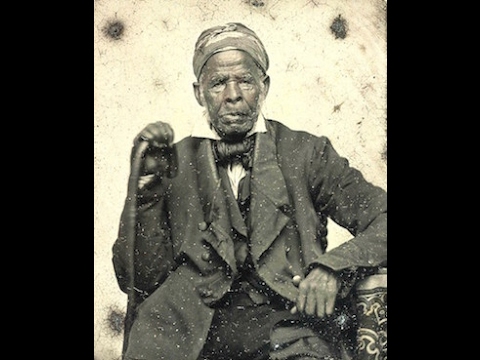
I encourage you to read the diary of Mr. Omar ibn Said which is the only known diary of an enslaved person in the United States written in Arabic. (It’s a short read – only a few pages.)

His diary has been translated into English and it’s heartbreaking, yet hopeful.

Mr. Said was a prosperous and distinguished man who was kidnapped at the age of 37 from Africa, shipped to Charleston where he was sold to a cruel man. He escaped to Fayetteville, NC where he was arrested and later purchased by the Owens Family who were devout Presbyterian Christians.  He converted to Christianity and although he lauds his treatment by the Owens family, it seems that he died an enslaved man.  The Owens Family were members of First Presbyterian Church in Fayetteville, NC – a congregation in my denomination.

I wonder if Mr. Said converted out of faith or out of fear.  It’s been said – at least for leaders – that you can be feared or you can be loved but you cannot be both.  I disagree, at least when it comes to The Divine.  I love Jesus and believe that I am loved by Jesus, but I also fear what God could do to us because we deserve it.

This is what grace is all about, though.  The White Christian Empire has annihilated millions of people throughout the ages of God’s good creation in a way that should spark our deepest shame.  “It wasn’t us,” we say.  “We never killed a Jew or a Muslim, never enslaved a person, never took a native American’s property.”  But our people did and the resulting privilege we’ve enjoyed is evidence of our participation.

What a downer for Eastertide.  But actually, this is an Easter message. We have been granted such grace that we are moved to repair what is broken in this world in hopes of making it a little more like heaven around here.

We have a lot of work to do.  Let’s go.

Image of the extraordinary Oman ibn Said.   Here‘s the PBS piece on him.  Also, please keep praying for Rachel Held Evans who is hospitalized with complications from an infection.

What Are “They” Looking For?

Probably not this:

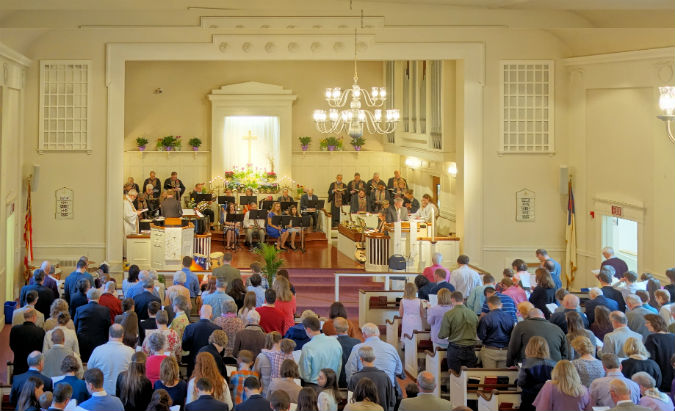
By “this” I’m talking about a sanctuary full of people who look like themselves – only older.  I’m talking about a choir and pews and a pulpit.

By “they” I’m talking about “the young people.”  Millennials. Gen Xers. Gen Zers. Even those Boomers who used to be with us.  “They” are the Nones, the Dones, and even the “Wons” (those we convinced to join but we rarely see them.)  I’m often asked “where is everybody?”  “Why don’t people come to church anymore?” (It’s a complicated answer.)

Please do not misunderstand me.  I love the look and feel of church in terms of choirs, pews, and a pulpit.  I’m a fan of pipe organs along with drums and harps and trumpets and pianos and whatever other musical instruments people know how to play.  I like screens.  I like no screens.  I really like candles and banners and fresh flowers.  I love beautiful liturgy.

But this is not what most people are looking for.  Church is not about the trappings of an institution.  Real Church is what people are looking for – but not the way we – or even they – think of “Church.”

“Why do you look for the living among the dead? He is not here, but has risen.”

Lots of preachers preached on that text last weekend, and yet increasing numbers of our neighbors have stopped expecting much life from their local churches.  Here’s my take on what human beings are looking for in these days:

  • Honesty. Are people pretending to be something they aren’t?
  • Community. Do we learn from each other and care for each other?
  • Refuge. Are we safe here?
  • Hope. Will I find meaning and encouragement?
  • Support. Will they love me when they realize I’m a hot mess?
  • Something holy and eternal.  Is this about supporting an institution or something bigger?

It’s important to remember that those of us who are privileged and prosperous underestimate the numbers of people out there looking for food, affordable housing,  gainful employment, medical treatment, and safe neighborhoods – first and foremost. When I asked a wise pastor recently what was going on in her rural congregation regarding dismantling racism, she said that “people are mostly concerned about having enough food to eat.  Considering other issues is a luxury.”

I believe with all my heart that the Church of Jesus Christ will thrive when we offer what human beings really need to be the people God calls us to be – whether we believe in God or not.  In spite of the bright words of The Resurrection, many people would not think to look for resurrection in a church.  Why is that?

Image of an anonymous Protestant church in the Midwest U.S. on Easter Sunday.

The Happiest Place on Earth . . .

. . . is not church.

I am re-reading Rachel Held Evans’ excellent memoir Searching for Sunday: Loving, Leaving, and Finding the Church which quotes Walter Brueggemann at the beginning of Chapter Nine:

Churches should be the most honest place in town, not the happiest place in town.

We are just a couple days past Easter Sunday and it was undoubtedly a happy time.  Families were together.  Church-sanctioned gluttony was encouraged. There might have been bonnets.  There definitely were bunny ears.  Bright colors ruled the day except for white lilies adorning thousands of sanctuaries.  We sang happy songs.  And it was church-legal to say Alleluia again.

I for one enjoyed a drink with an edible flower floating in it.  Nothing says happy like a flower in your drink.

But Real Church deals with unhappy things.  Pain and suffering don’t go away when we cross the threshold into the sanctuary but our pain and suffering are shared with other broken people who seek forgiveness and healing.  Or at least that’s what’s supposed to happen.

I have a friend who was invited to leave her church small group when she tearfully shared that she and her husband were getting a divorce.  She was told that her marriage problems “could be contagious.”  Comfortable = Happy.  And it was uncomfortable having an unhappy person in their midst.

RHE writes:

“I’m a Christian because Christianity names and addresses sin.  It acknowledges the reality that the evil we observe in the world is also present within ourselves.  It tells the truth about the human condition – that we’re not okay.”

Unfortunately, too many churches I know and love are not safe communities for sharing that we are not okay. We keep shameful secrets to ourselves for fear someone will judge us or gossip about us or banish us.  We’d prefer to pretend that church is the happiest place in town where all the little girls wear lacy socks and all the little boys say, “Yes, Ma’am.”  Too many of us know that church can be vicious when things are not pretty.

When I was a child, the happiest place in town was Addison’s Play World which was actually in Durham, the town next door.  It was North Carolina’s version of FAO Schwarz. Who could be unhappy there?

Actually, most people.  I remember leaving after our annual family visit each December filled with regret that I would never in fact receive the over-the-top gifts I saw there.  Pink child-sized grand pianos and trampolines and child-sized convertibles that drove like real cars.  It was all so beautiful and magical.  But it made me feel greedy inside.  And a little sad.

And there were always sobbing children in the aisles begging for toys.

I’m not sure what the happiest place in town is these days, but it will never be a church building – at least if that church building is a tool for authentic ministry.  Healthy congregations welcome and love people who struggle with everything from their faith to their addictions to their utility bills.  Effective congregations welcome the homeless, the refugee, the grieving.  Congregations offer relief and – certainly – there are happy results on many days.  But Real Church confronts evil and imperfection with love and that’s really hard.

True happiness comes when we are the people God created us to be. Not greedy or grabby or judge-y. It’s so much more than fake smiles and cursory handshakes during the Passing of the Peace.

There is deep joy when we take care of each other and love each other.  When people we barely know are praying with and for us, when they visit us and bring dinner, when they hold us while we weep, when they sit with us when we fail – this surely makes life a little better.  

Imagine if every church became a place where everyone is safe, but no one is comfortable.  Imagine if every church became a place where we told one another the truth.  We might just create sanctuary.*

*Rachel Held Evans in Searching for Sunday. Please pray for Rachel as she – at this writing – is in Intensive Care  after complications from an infection.  Updates on her health are here.  There’s a GoFundMe account to help pay medical expenses here.  And please pray for her and her family.

Image from the newly re-opened FAO Schwarz in NYC last fall.

Roles of a Lifetime

Christ is risen! And our role as followers of Jesus is to be instruments of resurrection in Christ’s name.

We are not called to be members of an institution (although being the Church together is essential.)  We are not called to “save people” (because there is only one Savior.)  We are not called to sacrifice ourselves/be crucified by the Church (although that sometimes happens.)

We are called to use our God-given gifts to equip other people to use the gifts God has given to them, as well.  (Check this out.)  Because of our baptisms, these are – literally – the roles of a lifetime.

A brilliant coach once taught me that effective ministry is all about understanding our roles.  And when Churches are in conflict it’s usually because roles have been confused and misunderstood.  For example:

  • It’s not the pastor’s role to unlock the doors and turn on the lights every Sunday. (If your pastor is doing that, then your leaders are both shirking and missing out on their own ministry.)
  • It’s not the personnel chairperson’s role to be “the pastor’s boss.” (The pastor’s “boss” is the congregation, the bishop/mid-council, etc. depending on your church’s polity.)
  • It’s not the church administrator’s role to keep pastoral care information from the pastor. (This is a power play.)
  • It’s not the music director’s role to control worship. (A healthy church staff works together on worship under the leadership of the pastor.)
  • It’s not the church treasurer’s role to decide if the pastor deserves to be paid this week.  (See: power play.)
  • It’s not the Church Ladies’ role to decide the norms of the congregation. (I have no further comments on this.)
  • It’s not the pastor’s role to be a spiritual Pied Piper.  (We want people to be in love with Jesus, not in love with the pastor.)

You get my point.  Our roles are about resurrection:

The blind see.  The lame walk. The lepers are cleansed. The deaf hear. The dead are raised. And the poor have good news brought to them.

This is what Jesus expects us to be about in the world.  What killed Jesus:  spiritual laziness, power plays, selfishness, fear, narcissism, the very worst that the Church can be.

But Jesus lives for all that is healing and whole and good and holy.  And because Jesus is resurrected, we get to participate in resurrection too.  If we indeed remember our baptisms – that we have been called to new life – then we will accept this role of a lifetime: to be agents of resurrection in the name of the One who lives.

And also Happy Earth Day.

Image by Laura Brodrick.  Source here.

Image

Happy Easter