Author Archives: jledmiston

Who Would Want to Be President These Days?

Apparently a lot of people.  I’ve lost count of how many people have announced their intention to run in 2020.

I can’t remember who said this in a recent radio interview, but a politician – in discussing the process of running for national office – offered this advice to potential candidates:  Prepare to be eviscerated.

Opposition research will dig up every parking ticket, every romantic relationship, every college escapade, every rumor, every secret.  Family members will be investigated. Neighbors will be interviewed.  Opposition research can alter the personal narratives of even the saintliest among us and define people into unrecognizable caricatures.

Who would put themselves through this?  Who wants something enough to be willing to be “eviscerated”?

Power is a potent motivator. But so is a vision of heaven on earth.

I am still in the institutional Church business because Jesus prayed ἐλθάτω ἡ βασιλεία σου, γενηθήτω τὸ θέλημά σου, ὡς ἐν οὐρανῷ καὶ ἐπὶ γῆς: (“Thy kingdom come; thy will be done on earth as it is in heaven” Matthew 6:10).

I still believe that there are people in the world who are trying to serve something higher than themselves.  I would love for one of them to be elected President in 2020.

Happy Presidents’ Day.

Image of George Washington by Roy Lichtenstein (1962)

Models for Transitional Ministry

They are called Place Holders, Interim Ministers, Transitional Pastors – and they tend to have different roles depending on the needs of the church.  Gone are the days when Transitional Pastors followed a precise recipe.  There is no one model for doing this work of serving a congregation after one pastor leaves and before a new pastor arrives.

Again, I’d like to encourage all professional ministers to take Transitional Ministry Training at Menucha – whether you intend to serve in an intentional interim role or not.  All congregations are in transition.  All of them need leaders who understand how to navigate those transitions.

This Friday post is intended to be lighthearted, so work with me.  As I see it, there are many models of Transitional Ministry – some more helpful than others – but all serving their purpose.  Consider . . .

  • The Transitional Leader as sorbet – something to cleanse the palate between courses.  (Thank you HH.)
  • The Transitional Leader as laser surgeon – problems will be pinpointed and subsequently zapped with very little blood involved.
  • The Transitional Leader as wrecking ball – everything gets knocked down to the foundation whether it was necessary or not.
  • The Transitional Leader as seat warmer – not much is happening until the new pastor shows up.

Which transitional leaders have you worked with? My hope is that effective leaders can come into any transitional situation and move the church forward in healthy ways.  That’s a lot right there.

Have a good weekend.


Attention Clergy: Are We Pastors or Are We Leaders?

“When the Pastor becomes a Leader change finally happens.”  Scott Lumsden

The role of pastor and the role of leader are different and we need both – preferably in the same person.

Pastors get to do the good stuff. We are invited into intimate family situations.  We literally stand with brides and grooms, the newly baptized, the grieving.  As a parish pastor, I was shown engagement rings even before the brides saw them.  One couple asked for my blessing upon their engagement because their own parents would not bless them.  I’ve been with mothers during labor when we knew their babies would live for only a few moments.  I’ve been with parishioners before chemotherapy and after surgeries.  I’ve blessed houses and cast demons out.

The truth is that we pastors want to be beloved by our congregations and so we are often conflict averse.  We might not address issues that – left ignored – will hurt or even destroy a congregation.  We want to be everyone’s spiritual friend.

But the Church today needs leaders.  We need spiritual leaders who love their congregants and love them enough to walk them through contentious times.  I know a lot of pastors.  I don’t know a lot of pastors who embrace being leaders.

  • We need leaders who have the guts to help staff members move on when they can no longer do their jobs – even if they are treasured members of the congregation.
  • We need leaders who will say “no” when asked to officiate at a wedding or funeral after they’ve retired.
  • We need leaders who will confront church bullies and hold them accountable when those bullies are sabotaging the ministry and health of the congregation.
  • We need leaders who will ask hard questions (like “Why does our church exist?” and “Who are we – now – as a congregation?” rather than “Who did we used to be?”)
  • We need leaders who know how to engender trust so that people will follow out of faith – not out of fear.
  • We need leaders who know how to affect transformative congregational change in a swiftly changing culture.

And we also need pastors.  If you’re an effective pastor but you fear conflict, or you don’t know how to help a stuck congregation, or you want to keep up with 21st Century practices that replace what worked as 20th Century practices, there are some good training opportunities out there.

I’m attending one this week at the Menucha Center led by Scott Lumsden.  Not only will this kind of training feed your soul but it will also feed your congregation.

The future Church depends first and foremost on the Holy Spirit.  But the Holy Spirit can do even more when we lead God’s people with the right tools.  Yes, we will still mess up and God uses those times too.  But all these cultural changes are great fun to grapple with.  God does amazing work in anxious times and sometimes we get to be a part of it.

Image is Jesus Raising Jairus’ Daughter by Yelena Cherkasova


Laurie Explains It Well

I’ve been writing about Millennials a little bit lately – although I’ve actually been writing about more than that when I talk about Millennials.  As I spend this week overlooking the Columbia River in Corbett, Oregon, here are some gentle invitations:

Invitation #1:  Read this bookVagabonding: In Defense and Praise of Millennial Faith by Laurie Lyter Bright, a PCUSA colleague living in Colorado these days.  This would be an excellent Lenten book study for any church “wondering where all the young people went.”  Laurie looks at several key Bible stories over the course of twelve chapters and her take on these passages is fresh and insightful and very 21st Century – with an eye on the 1st Century.  Please read it and grapple with the truths Laurie offers.

Invitation #2: Let’s consider who is included when we talk about Millennials.  It occurs to me that “Millennials” are described as a specific generation of about 73 millions Americans born between 1980 and the late 1990s.  But usually when we are talking about Millennials we are picturing well-educated, digitally privileged, widely-traveled, urbanites or suburbanites.  Jim Kitchens noted recently in a tweet that – if we start new congregations at all – we tend to start them in urban wealthy-ish neighborhoods.  But there are poor neighborhoods and rural areas in need of new spiritual havens for young adults as well.  There are also Millennials in those contexts but we tend not to consider them.  I invite you to consider prayerfully how to offer opportunities to young human beings who don’t all look like the cast of New Girl.

This is an exciting time for the Church.  But there are also innumerable opportunities to miss Jesus’ point.  It’s going to take thoughtful and faithful cultural and attitudinal changes.  But nothing is impossible with God.

Writing this week from Transitional Ministry Workshops at the Menucha Center in Oregon, led by the staff of Seattle Presbytery.  P.S. Buy Laurie’s book.


Not. One. Word.

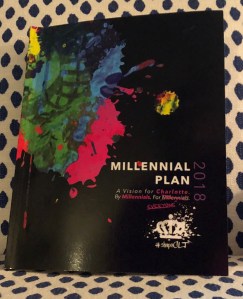
The Charlotte Millennial Report never mentions the word “church.”  Not one time.  Also not mentioned: the word “spiritual.”

I was not surprised but was hoping to be surprised.

[Quick review: I read the report over the weekend. It’s okay but not life-changing, at least for me.  I feel queasy whenever anyone of any generation makes statements like, “Millennials like ____.”]

Back to God things.

Millennials are spiritual human beings – as are other generations before and after them.  It’s just that most Millennial human beings find spiritual nourishment in something different from what fed their parents, grandparents, and great-grandparents.

We human beings – of all generations – are created to be in community, to find meaning, to serve something Greater than ourselves.  Some people are fed by 19th or 20th Century worship traditions.  And many are not.

But our churches/spiritual communities need to pay attention to what nourishes 21st Century souls – regardless of generation.

If you feel closer to God wearing a coat and tie or navy pumps on Sunday morning sitting in traditional church pews and hearing a three point sermon and a pipe organ – keep doing that.  If you serve your Maker by participating in church committees and singing in the choir, please continue to do these things.  I’m completely serious about this.

But note that most people feel close to God, most people serve their Maker in other ways.  The way human beings have honored their Creator has evolved throughout the ages.  Once it was not having sex certain times of the month or taking great pains to sacrifice a dove in a precise way.  For some today, it’s tithing 10% of one’s income.  For others it’s studying scripture in a comfortable church parlor.  And for others it might be taking part in an after school program for first graders or learning to speak Spanish in order to communicate with the new neighbors or buying Fair Trade coffee.

Our job as disciples of Jesus is to help make that connection between caring for each other and for the world and the God of the universe. 

Our calling is to be cultural tour guides connecting what we see out there (and in “here” – our souls) with the living Word of God (i.e. Jesus.)

We cannot possibly make these connections with dated connectors.  According to Charlotte’s Millennial Report 20 to 30-somethings are moved by images, peer review, and transparency.  Word of mouth is how most people – even in my generation – learn about new restaurants, good movies, and inspiring art.

When was the last time your congregation’s life together was the buzz around town?

Because the God we worship is exceptional, our churches also need to be The Exception to the world’s darkness.  In a world rife with blackface photos, uncovered sexual assaults and fake news, we are called to be radically just, wholly respectful and utterly true.

And we have a lot of lamentation, repentance, and reparations to make before anyone will take The Church seriously.  Who is up for this – for the sake of the Gospel?

You can order the 2018 Charlotte, NC Millennial Plan here.  Even if you don’t live in Charlotte, it offers ideas for all cities and towns (and congregations.)


Power

Power is good.

It can be a tool to transform neighborhoods and repair the breach.  It can open doors and offer opportunities.  It can reveal the truth and melt away shame.

It can also cause chaos and unspeakable misery.  Examples:

  1. Ralph Northam, Justin Fairfax, Mark Herring
  2. Oscar Arias
  3. The Roman Catholic Church
  4. Every other church which has covered up misconduct
  5. Bill Cosby, Harvey Weinstein, Kevin Spacey, etc. etc. etc. etc.

Why does it feel like there is so much misbehavior these days?  (Quick answer: Humans are really good at sin.)

Each of those listed above ostensibly used their power for their own benefit – whether their power was based on white privilege, money, celebrity, physical strength, or ecclesiastical role.  Their choices  – whether thoughtless or strategically planned – have brought deep pain to a wide swath of human beings.

I have a simple request:  can each of us consider the power we have and try to use it for good today?

  • Speak up if you see someone being gaslit.
  • Stand between a person and her bully.
  • Use your influence to clear the path for somebody.
  • Pay attention to the needs in front of our faces.

We were created to care for something beyond ourselves.

Have a good weekend.

The Curse of the Historic Church Cemetery

I love an historic cemetery.  My parents are buried in one.  Here are some of my favorites.

Cemeteries are holy and beautiful places.  But some of us love them more than we love Jesus.  Or we love the people buried there more than we love Jesus. (Same thing?)

Not only are we unsure about where Jesus was buried (there are at least two options) but worshiping the cemetery can kill one of Jesus’ congregations.

How do we know if our church is at risk of Death by Historic Cemetery? Here are some questions to ask ourselves:

  1. Are there more members of The Cemetery Committee than the Board of Elders?
  2. Do we spend more money on irrigating the cemetery than we spend on Christian education?
  3. When someone asks, “What excites you about your church’s ministry?” do people say, “We have a beautiful cemetery“?
  4. Do church leaders spend more than 15 minutes per year discussing cemetery needs?
  5. Are ministry opportunities voted down based on the location of the cemetery?  (Examples: “The youth shouldn’t play soccer in that field beside the graves because it’s disrespectful.”  “We can’t build a warehouse for disaster relief beside the cemetery because it will look ugly when people come to pay their respects.”
  6. Has there ever been a church fight about the cemetery?

Just as people die and are buried in cemeteries, whole congregations can also die and find themselves buried in their cemetery.  Remember when angels asked the women at Jesus’ grave why they were looking for the living among the dead?

Thriving spiritual communities are living, breathing, laughing, thinking, comforting bodies of human beings who gather for community and ministry.  Whether your church building has a cemetery or not – at your next church meeting – note how much time is spent discussing dead things (buildings, cemeteries, parking lots) and how much time is spent discussing living things (children, youth, adults, neighbors.)

It will offer a clue about whether your church is more in love with the living God or with death.

Image of Thyatira Presbyterian Church Cemetery in Rowan County, NC where three pirates are buried.  The story goes that they had left their pirate lifestyle on the N.C. coast and became farmers in the middle of the state, only to be discovered and subsequently hanged.

Allowed

Jackie Robinson’s 100th birthday would have been last week on January 31st and so there were clips and remembrances of him as  “the first African American to play in Major League Baseball in the modern era.”

The truth is that he was not the first African American good enough to play MLB.  He was not the first African American baseball player with the character to stand up to blatant racism with grace.  He was not the first African American baseball player with an extraordinary arm.

Jackie Robinson was the first African American allowed to play Major League Baseball.  This can be said for all the major African American “firsts”:

Hiram Revels was the first African American allowed to serve in the United States Senate. (1870)

Mae Jemison was the first African American woman allowed to fly in outer space. (1992)

Richard Theodore Greener was the first African American allowed to graduate from Harvard University. (1870)

Bessie Coleman was the first African American – as well as the first Native American – woman allowed to have a pilot’s license. (1921)

Rebecca Lee Crumpler was the first African American woman allowed to practice medicine as a licensed physician. (1864)

Charlotte E. Ray was the first African American woman allowed to practice law in the United States. (1872)

Douglas Wilder was the first African American allowed to serve as a governor in the United States. (1990 in Virginia)

There were many others who were never allowed.  They had the skills, the brains, the physical gifts, and the temperament to serve in politics, science, sports, engineering, and academics.  But they didn’t have the opportunity.  (White) People were not “ready” for it.

We must continue to lift up these “first” historic figures while also remembering that – actually – they were the first allowed to fulfill their calling but not necessarily the first who could have had that achievement.

Note to Church:  how are opening doors for talented children, teenagers, and young adults to use the gifts God gave them?  How are we allowing people with fewer opportunities than we have had to thrive?

Image is the Rev. Dr. Katie Cannon – the first African American woman allowed to be ordained as a Minister of the Word and Sacrament in the Presbyterian Church USA.

Note: Robin DiAngelo makes this same point about ‘being allowed’ in her book White Fragility about Jackie Robinson. Great read.

Allowed

Jackie Robinson’s 100th birthday would have been last week on January 31st and so there were clips and remembrances of him as  “the first African American to play in Major League Baseball in the modern era.”

The truth is that he was not the first African American good enough to play MLB.  He was not the first African American baseball player with the character to stand up to blatant racism with grace.  He was not the first African American baseball player with an extraordinary arm.

Jackie Robinson was the first African American allowed to play Major League Baseball.  This can be said for all the major African American “firsts”:

Hiram Revels was the first African American allowed to serve in the United States Senate. (187)

Mae Jemison was the first African American woman allowed to fly in outer space. (1992)

Richard Theodore Greener was the first African American allowed to graduate from Harvard University. (1870)

Bessie Coleman was the first African American – as well as the first Native American – woman allowed to have a pilot’s license. (1921)

Rebecca Lee Crumpler was the first African American woman allowed to practice medicine as a licensed physician. (1864)

Charlotte E. Ray was the first African American woman allowed to practice law in the United States. (1872)

Douglas Wilder was the first African American allowed to serve as a governor in the United States. (1990 in Virginia)

There were many others who were never allowed.  They had the skills, the brains, the physical gifts, and the temperament to serve in politics, science, sports, engineering, and academics.  But they didn’t have the opportunity.  (White) People were not “ready” for it.

We must continue to lift up these “first” historic figures while also remembering that – actually – they were the first allowed to fulfill their calling but not necessarily the first who could have had that achievement.

Note to Church:  how are opening doors for talented children, teenagers, and young adults to use the gifts God gave them?  How are we allowing people with fewer opportunities than we have had to thrive?

Image is the Rev. Dr. Katie Cannon – the first African American woman allowed to be ordained as a Minister of the Word and Sacrament in the Presbyterian Church USA.

Note: Robin DiAngelo makes this same point about ‘being allowed’ in her book White Fragility about Jackie Robinson. Great read.

In Search of Rural Ministry Rock Stars

If this is your calling, please contact me.

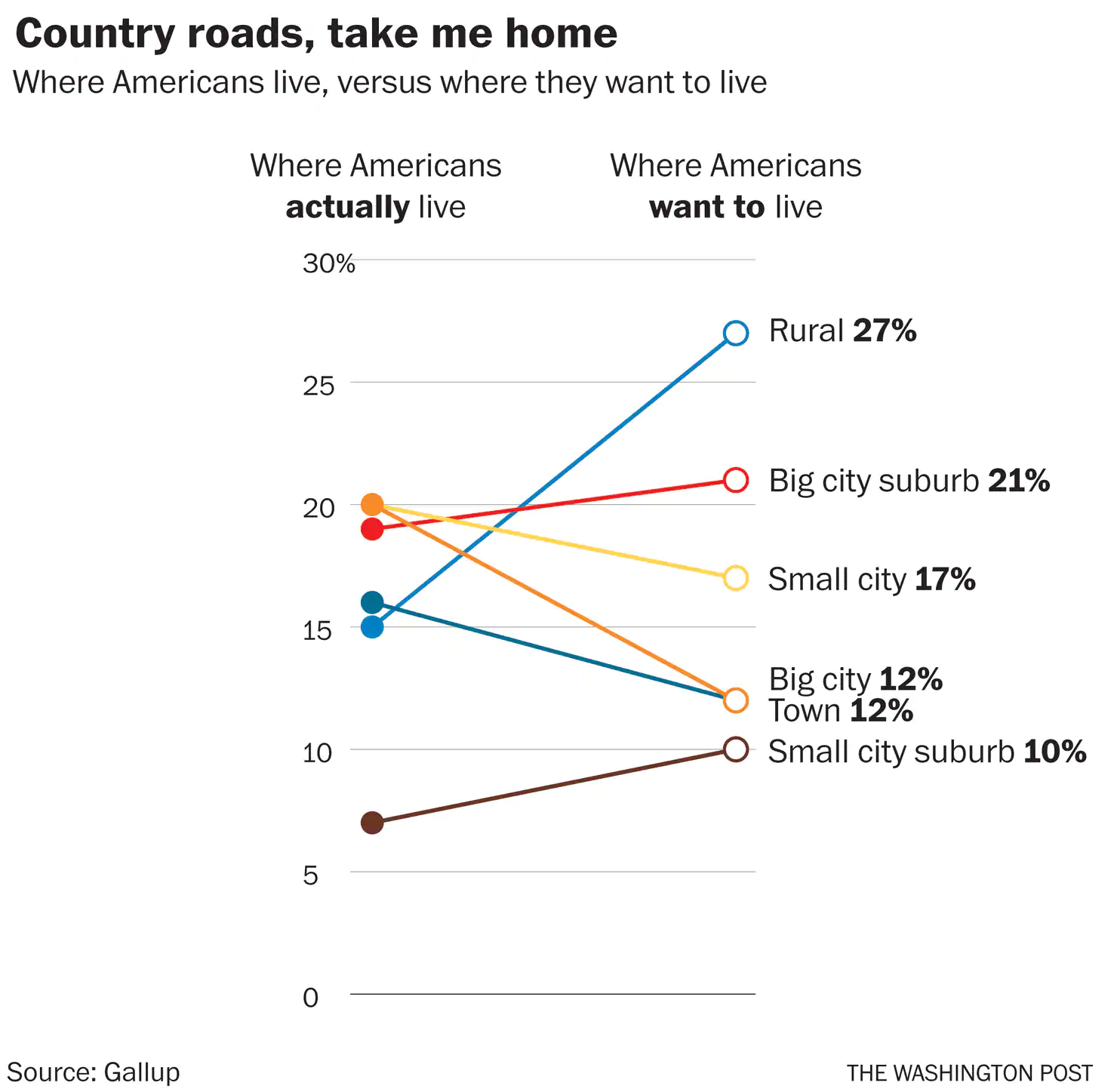
80% of Americans live in or near cities. But most want to live in the country.

Rural churches are challenging for pastors – especially if you want to be near a Target or a Trader Joe’s.  In Kathleen Norris’ classic Dakota, she noted that McDonald’s wouldn’t come to Lemmon, South Dakota because the population – hovering around 1000 – was simply too small.  Believe me, Starbucks has perfected their calculations about where to open a new store.  They don’t do rural.

If you are married, it will probably be hard for your spouse to find a job.  If you have children, the schools will not offer the same enrichment opportunities as a suburban school.  If you are single, dating will be tricky.

I lived in the lovely rural village of Schaghticoke, NY for the first five years of my professional ministry.  It was a wonderful experience, but it was also profoundly lonely.  I was 28 years old on the day of my installation and I stayed for five years.

And yet, the stories are better in a rural church.  There will be interesting billboards, colorful county fairs, and perhaps a Bigfoot sighting.  The people will be extraordinarily smart in ways that most people are not very smart.  They will care for each other and for their pastor.  Most of them will be related to each other.

As the graph above shows and the accompanying Washington Post article attests, many people like the idea of moving to a rural community.  But the jobs are not there.  Most of the mills and factories have moved out of small towns, and the farming industry is not what it once was.  Many rural communities have few children because – after high school – many young people move to where the jobs or colleges are, and they never return.

Opioid addiction and teenage pregnancy continue to be rampant in rural areas.  One rural resident explained that “there isn’t much to do to distract the kids around here.”  Drugs and sex have long been ready distractions in every kind of community.

So who will follow God’s call to serve small rural congregations?  We need entrepreneurial leaders who connect well with a wide variety of people and personalities.  Rural pastors need more flexibility than big city or suburban pastors.  They need to be okay with not being paid well.  (Even at a minimum salary, they might earn more than anyone else in their community.)  They need hobbies that don’t require theater tickets, bowling alleys, or gourmet restaurants.

Most of all, they will need to love God’s people deeply.

What would it take for you to seek a call in a rural community?