Category Archives: Uncategorized

Where Do We Begin?

Years ago, some church leaders and I went to an Easum and Bandy event in a yellow brick roadneighboring suburb and I had to pull over the car on the way home because everybody was crying.

  • The changes our church needed to make in order to revitalize itself would take years.
  • The level of energy required seemed monumental.
  • The subsequent push back anticipated back home felt overwhelming.

Actually one of us was not crying.  The whole event and even the subsequent conversation about the challenges filled me with energy.  I loved it.

A chunk of my time is spent these days talking with church groups about helping congregations make the shift to a 21st Century Church culture and sometimes it feels overwhelming to those who gather.

Where do we begin? This questions comes from faithful church people.  They are my people.

They still do all the things they’ve always done:  gathering on Sunday mornings, sitting in pews, singing hymns, serving in great and small ways. But – for some reason – it’s not working anymore, or at least it’s not working the way it used to work.  “People don’t come anymore.” They sometimes feel like the way they’ve been the church is all wrong, or they are being judged for the way they’ve worshiped all these years.

They’ve been faithful.  The world has simply changed in even more ways that we realize.  I love figuring out how those changes are impacting how we might be the future church.

Where do we begin?  It depends.  But here are three things any church could do in the next month.

  • If your church building gets a lot of foot traffic, set up coffee on a random morning and give it out for free.  Do not give people a flyer about your church. Just the coffee and a hearty “Good Morning.”
  • If your church is in a small town or suburb, invite the mayor out to coffee and ask what your church could do to serve the community. Do not make this about proselytizing or “getting new members.”  This is about learning how your church might serve.
  • Sit down with your leaders and a church calendar and have a conversation about why you do what you do. Write down every possible answer – even the awkward ones.  Why do you have a flower guild? (i.e. to make the sanctuary beautiful, to feature Mrs. Smith’s gardening gifts, to appease someone.)  Why do you have a fish fry every Friday?  (i.e. because Mr. Jones loves the fish fry, because it’s a money-maker, because it gets the neighbors into our building.)

Culture shifts take time, and they are exhausting and infuriating. People will threaten to leave.  People will leave.  It’s okay.

And it’s also okay – in fact it’s holy – if your people decide that they cannot change and it’s time to close.  Consider all the congregations that have closed since the resurrection.

But if you are ready to become a 21st Century Church, there are many ways to begin.

Image of Dorothy’s first steps on a long but fruitful journey.

March Madness Reading List

We are on the cusp of a season within a season that simultaneously The Secret Game by Scott Ellsworthbrings many of us deep spiritual satisfaction and crushing existential crises.

For many of us,  March Madness will inform our Lenten Journey in profound ways.  These are tales of struggle and grit. Myths will be crushed. Hopes will be dashed.  People who never cared before will  – suddenly – care deeply about Ducks and Hawkeyes, Musketeers and Jayhawks.

We must ready ourselves.  We must prepare for bracket selections and hoops hoopla.  We must pay tribute to The Greats of Basketball Past.

Here are four books that will fortify our knowledge, whip up our school spirit, and stir up feelings of acrimony which only Jesus can heal:

  • The Secret Game – A Wartime Story of Courage, Change, and Basketballs’s Lost Triumph by Scott Ellsworth  This is my favorite on this list.  Jim Crow laws prohibited African America college teams from playing in the National Collegiate Athletic Association (NCAA) and the National Invitational (NIT) Tournaments.  But on March 12, 1944, a secret game was played in Durham, NC between the white Duke University medical school team and the black North Carolina Central University team.  This book is extraordinary because the characters and their back stories are extraordinary.  Love.  This.  Book.
  • To Hate Like This Is to Be Happy Forever by Will Blythe.  The Blythes sat behind the Edmistons in church throughout my childhood and I happened to see Dr. Blythe the Sunday before he passed away. “It’s nice to see the Edmistons today like old times,” he said to me and my sister when we were visiting that church years ago.   Yes, this is a basketball book but it’s also about a son’s love for his father.  And it captures my childhood and my feelings about another university down the road from my hometown.
  • The Legend’s Club: Dean Smith, Mike Krzyzewski, Jim Valvano, and an Epic College Basketball Rivalry by John Feinstein.  Those were the days.  Two of those legendary coaches have passed away, and Feinstein is clearly a Duke fan, but this new book is a pretty great read if you are an Atlantic Coast Conference fan (pre-expanding the ACC to include universities nowhere near the Atlantic Ocean.)
  • (And recently suggested by my neighbor:) Sacred Hoops: Spiritual Lessons from a Hardwood Warrior.  PK Phil Jackson clarifies what some of us intuitively know:  that there are spiritual aspects to the great game of basketball.  Good leadership lessons in here too.

Read and be inspired!  It will be here before we know it.

Was It Actually Super?

Super TuesdayNow that Super Tuesday is behind us, politicians and pundits will spend today discussing how super it actually was and for whom.

There are certain adjectives we use in church which may or may not be precise or even honest.  Some worship services include “special music” which may or may not be all that special.  (Translation: a trumpet or harp might be added to the organ music.  It’s special in that it’s not usually featured.)

Adjectives we often hear in the 21st Century to describe Church:

  • Intentional as in Intentional Community – Translation:  Relationships happen not because they just happen but deliberately and mindfully.
  • Missional as in Missional Outreach – Translation: Instead of sending checks and relating to mission projects from a distance, we build relationships with our mission partners side by side.
  • Authentic as in Authentic Relationships – Translation: The days are gone when we pretend that being a Christian = Having a Perfect-ish Life.  We pray for and with each other about real life.
  • Inclusive as in Inclusive Congregation – Translation: People you wouldn’t necessarily think would be welcomed are not only welcomed for worship but they are also welcomed in leadership. Note:  watch out for this one.  Who’s included in some congregations might differ from who’s included in others.

We need to be careful about our adjectives.  I self-identify as an evangelical Christian in that I believe that Jesus is my Savior and following Jesus is the best way to live my life.  But many others who call themselves evangelical would not include me in their fold.

I once sat on a plane beside a man who noticed my reading material.  (It was Bruggemann’s Cadences of Home.)  He asked me if I was a Christian and I said yes, and then he told me he went to a Bible-believing church.  “What a coincidence,” I said.  “I‘m part of a Bible-believing church too.  It’s called the Presbyterian Church.”  I didn’t mention that I was the pastor.

Was Super Tuesday really all that super?  For the love of God, I pray that we will look back one day and decide it was.

Headband

This is a post about self care.Lupita's headband

Those of us who spend time in pulpits – or doing any kind of public speaking – need to keep our hair out of our faces.

There was a time in the ’90s when I had three young children and shoulder length hair and I – briefly – succumbed to wearing a head band in the pulpit.  It was not a good look on me.

That’s how little I cared about my hair, but at least it was out of my face.  Hair-in-face was a certain way to receive snide grooming comments by parishioners on their way out of the sanctuary just as surely as if I’d worn red shoes in the pulpit.

Headbands serve many purposes of course.  They can mean:

While there are fashionable options, sometimes headbands simply mean “I have given up.”

This can become a habit my friends.  Self-care is often a last priority for pastors – especially women pastors.  Especially women pastors who are moms.  Especially women pastors who are single moms.

This is actually a blog post for parishioners today:  please look out for your pastor’s well-being. Please encourage her to take her Sabbath.  Please demand that he takes his vacation.

It’s almost the mid-point of Lent.  Your pastors might be tired.  This is a good week to check in with them.

Image of Lupita Nyong’o.  Most of us will never look this good in a headband. 

The Joy of Sharing Power

Powerful Americans

I loved this story in the New York Times over the weekend.

It’s not news that most people with power in the United States are white and male, but I really appreciated the way Haeyoun Park, Josh Keller, and Josh Williams  described the power:

  • This is  who decides “which movie ideas come to fruition.”
  • These people – in the music industry – are “the most elite decision makers”
  • These are “among the most influential in deciding which books get published”
  • These are the “people who decide which television shows Americans see”

And of course the Ivy League University Presidents, Corporate Elite, and Members of Congress are mostly white and male.

Full disclosure:  five of my favorite people in the world  – HH, FBC, SBC and my brothers – are white and male.  I’m not talking about bashing all men or all white people.  I’m talking about sharing power.  It’s not only the right thing to do; it makes life interesting and creative and real.

I am a person with (a bit of) power.  It’s both heretical and boring to try to stockpile it.

Let’s think about power in your life:

  • Who, in your school system, gets to decide which teachers are hired?
  • Who, in your community, gets to decide which small businesses get licenses?
  • Who, in your congregation, gets to nominate officers?
  • Who, in your denomination, decides who gets recommended to plum positions?

All of us with great or small levels of power have the opportunity to consider expanding the pool and giving fresh talent a shot.  Whether we are talking about who gets to take the class hamster home for the weekend or we are talking about who gets funding for a new church development – most of us have some power to share.

Ordinarily, we pick our friends or familiar faces when we have an opportunity to share. But what if we considered those who are talented, creative, and not connected?   What if we cleared the way for people who are not male and white to have the opportunities that people who are male and white often have?

I’m not talking about quotas.  I’m talking about bringing in unconventional, unique, fresh talent.  I’m talking about giving new people a break.

It’s actually a selfish act to do this, because  – when we broaden our perspectives – we become sharper and more innovative.  The world becomes better for it.

Let’s share.


Things We Don’t Want to Try

I have no desire to drink Jelly Bean brand blueberry soda.  I don’t care if they Blueberry Sodacall it “gourmet.”  I don’t care if it’s a pretty color.  It sounds like a fad.  I sounds like something that can’t possibly be good for me or society in general.

So here are my choices when people suggest that we all try Jelly Bean brand blueberry soda:

  • I can refuse to try it under any circumstance.
  • I can try a “no thank you serving” (which is what we taught our children to do for the sake of giving something new a chance.)
  • I can give it a go, recognizing that trying it doesn’t mean that I will have to keep it in my diet forever.
  • I can try it and possibly realize that it’s better than expected.

These are exciting days for the institutional church.

When churches and denominations are in transition – and all of us are in transition – structures are deconstructed and rebuilt, processes shift, new ideas are brainstormed and tried out, sacred assumptions are tossed.  We have several options as part of the Body of Christ:

  • We can refuse to participate.
  • We can give something new a chance.
  • We can recognize that trying it doesn’t mean that we will have to do it forever.
  • We can try out The New and realize that it’s better than we expected.  Maybe The New turns out to be more than we could have possibly imagined.

Church as Community Center

I loved all the comments about renting church space and it’s clear that I wasn’t clear for some in this post.  So I’ll try to clarify.

(Santa Maria dei Miracoli and Santa Maria in Montesanto Rome Piazza del Popolo.

Church A has 40 members.  They have an old building that needs some maintenance.  On Sunday mornings about 20 of the 40 members gather for worship with a guest preacher because they do not have the funds to hire a pastor part-time much less full-time.

After they leave worship, another congregation begins to arrive.  That congregation is Not Like Them but they needed a place to gather and they pay $1000 a month.  They might be a different ethnicity or worship style.  Maybe they are younger. Maybe they don’t speak English as a first language or at all.  This gathering is larger and after worship, there are classes or a meal with about 200 souls.  They return for a Bible study on Wednesday night and a prayer meeting on Friday mornings.

Church A also hosts an AA group on Monday nights that makes a donation of $50 each week.  And there’s a private preschool  that pays $2500 a month with 60 families involved. Church A also rents their parking lot for $1000 month to a construction company Monday – Friday.  Members have no relationship or even face time with their assorted renters beyond the exchange of rent checks and keys.

Church B has 40 members.  They have an old building that needs some maintenance.  On Sunday mornings about 30 of their members gather for worship along with assorted visitors  – sometimes as many as 20 or 30 – who are interested in possibly being a part of a congregation that does what this congregation does the rest of the week.  They have a full-time pastor – although it’s not easy pulling that off and sometimes they have to dip into their savings.

After worship, there is a community dinner and people off the street who were not in worship join them.  They might be a different ethnicity or worship style – or no worship style.  Maybe they are younger. Maybe they are older.  Maybe they don’t speak English as a first language or at all.

Church B’s doors are rarely locked and their lights are rarely turned off.  They regularly host local choral groups, assorted support groups (Veterans, Parents of Disabled Children, unemployed neighbors, formerly incarcerated women), Noontime Group Spiritual Direction, and offices for advocacy groups working against homelessness and domestic abuse.  These groups may or may not make financial donations to the church, but the church still has a connection with them.  Four times a year, church volunteers set up an espresso bar in the lobby and serve fancy coffee to their guests as they come and go to thank them for their ministry.  About twice a year, the church invites everybody who uses their building to help with a painting project followed by a picnic in the parking lot. (Neighbors who can’t paint come over for the picnic too.)  Church leaders know the names of the people who come in and out and they openly invite people to share prayer concerns on a chalk board in the hall.  Before the support group for Parents, the pastor pokes her head in sometimes and reminds the parents that their kids are more than welcome to come to Movie Night this Friday with some church kids or to the parenting book group on Sunday mornings.  There’s a preschool and although it’s a separate 501c3 and the preschool pays $2500 each month, the pastor is a well-known face among the students and teachers. She leads a weekly chapel service that reminds the children that they are loved by God and the deacons host a welcome-back-to-school coffee for the parents every August.  The church supports ten scholarships for local children whose parents could otherwise not afford preschool.  And there’s a free Parents’ Day Out four Saturdays a year for the preschool parents staffed by trained and vetted church education volunteers with Vacation Bible School-ish activities.

Which church is a landlord and which is a community center?  And which church would be missed if it vanished from the neighborhood?

Having a church building to use for ministry is a privilege.  Are we using it to the glory of God?  Or are we using it to perpetuate our own institution?

Image is of the twin church buildings Santa Maria dei Miracoli and Santa Maria di Montesanto which stand beside each other in the Piazza del Popolo in Rome. Pope Alexander VII commissioned their construction and they were designed by Carlo Rainaldi in the mid-17th Century.


Church or Landlord?

Landlord

At what point does a congregation shift from being a church to becoming a landlord?

Many of our congregations – for financial reasons – rent out space to other congregations and non-profit organizations.  A couple of initial thoughts about this:

  • Charging rent to other not-for-profit organizations seems to be the antithesis of partnership.  If my congregation believes that A) our building is a tool for ministry and B) the ministry to addicts, abuse victims, and children is aligned with our mission, then charging rent or expecting “a donation” feels a bit mercenary.
  • If we charge rent to an organization, we cannot claim their work as “part of our ministry.”  I recently visited a congregation and asked about their mission outreach into the community and they shared a long list of organizations that meet in their building.  “Do you know them?” I asked.  “Who are their leaders, their participants, and how do you connect with them personally?”  Needless to say, their only connection is a transactional relationship involving keys and a rent check.

So, assuming your congregation rents space to a preschool or a counseling center or a support group for PTSD victims or another congregation . . . at what point in funding your church’s budget do you become more of a landlord than a church?

My brilliant colleague EH and I discuss this often.  Has your congregation declined from being a church to being a landlord if your budget is 97% rent-subsidized?  80%?  50%?  25%?

Jesus didn’t die for this.  Jesus didn’t give up his sweet life to endlessly prop up ineffective ministry or to perpetuate an institution that is sentimentally dear to our hearts.  That is not ministry.  That’s real estate management. (No offense to real estate professionals.)

So this Lenten season is an excellent opportunity to be brave followers of Jesus.  Are we willing to give up our buildings for the sake of the gospel?

If my particular church no longer has the capacity to serve the community and beyond in the name of Jesus, imagine leaving a legacy that would serve the community and beyond for years to come.   Who will be the first leader to say these words:

“I believe we are called to sell this building and give the proceeds to a congregation that can be what we can no longer be.”

These are not sad words.  They are not the words of a loser or a failed Christian.  These are holy, imaginative, faithful words.

For the love of God – literally – please consider your congregation’s ministry with a new set of metrics:

  • How many people are being touched by the Holy through the work of our church?
  • How are we serving our “partners” in ministry (i.e. people using our building) apart from renting them space?
  • How do we love Jesus more than we love our building and property?

And for what it’s worth, I’d love to hear your opinion on the percentage of the operating budget can be fulfilled by rent before a church stops being a church.  Is it 10%?  50%? 100% (or something in between.)  Please share your wisdom here or on Facebook. Thanks.


Calling a Different Kind of Pastor

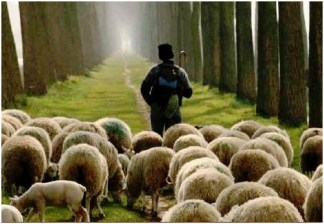
pastoring-sheepForbes Magazine shared 5 Hiring Trends to Watch last week which are especially helpful when translated to hiring trends for pastors.  As I work with congregations seeking new pastoral leadership, it often feels like we are looking for pastors who fulfill dated job descriptions and expectations.

Even – especially? – for small congregations barely able to afford a pastor, it’s essential that we pay attention to the kind of leadership needed for a growing 21st Century Church. It’s not just about preaching poignant sermons anymore. Or at all.

Here are Forbes’ trends with my translation for pastors & congregations:

1. “Job offers will include more perks and benefits.”  Lifelong learning is not just a perk/benefit; it’s essential for leadership development, especially in terms of figuring out how to lead a congregation in the throes of what Pew calls “America’s Changing Religious Landscape.”  Conferences addressing the landscape Pew describes are indispensable and it costs more than a couple hundred dollars of continuing education money per year.  Forward-thinking congregations will offer generous study leave funding and a sabbatical after 5-7 years of service.  If you want your pastor out in the community, you need to fund it.  I used to serve a congregation that expected me to spend money to have coffee out with both parishioners and community leaders, and it was part of my benefits package.

2. “Increased interest in boomerangs.” (Forbes reports that employees increasingly return – or would return – to former organizations.) Although this is rare in Church World, what is more prevalent is the church that hires within their staffs.  Directors of Christian Education become Associate Pastors.  Youth Leaders become Directors of Membership.  Former field education students become the new Pastor.

3. “Social media will be increasingly used to find candidates.”  Media savvy churches put pastor position openings on Facebook.  We use social media connections to ask for good candidates.  And it goes without saying (but I’ll say it anyway) that social media activity also weeds out candidates.

4. “More lucrative employee referral programs – and beyond.” Most pastor search committees do not use head hunters or other professional recruiters.  But they call seminary presidents, other pastors they know, and even relatives in other cities about pastors they need to recruit as candidates.

5. More offers will include flexibility. This is huge.  Gone are the days when pastors sit in their offices and wait for parishioners to drop by.  Today’s pastor is out in the community meeting with school, civic, and elected leaders discerning the needs that might be addressed through their congregation.  Today’s pastor spends an enormous time equipping other people to be leaders.  The work schedules of any pastor have always been flexible.  But what we do in those hours has changed dramatically since the 1950s.

Of course everything I’ve written here is contextual.  Huge churches have Preaching Pastors whose primary role is to prepare and deliver sermons.  Tiny churches can only pay for someone to spend a handful of hours serving them.  If they want a weekly worship service, there will be no time to be out in the community.

My point is that 21st Century pastoral leadership is very different from 20th Century pastoral leadership, and yet we tend to seek pastors with 20th Century expectations. There are many reasons why this is so – the first being that many of our church members haven’t been taught otherwise.  A wise colleague shared recently:  We cannot imagine what we cannot imagine.

Cheerleading for Jesus

I was a high school cheerleader.

cheerleaders for Jesus

. . . but not like this.

I would love to tell you that I ran track or played soccer in high school but Title IX wasn’t the law until I was almost done with my secondary education, so there were few options to don uniforms devoid of pom poms.

It occurs to me, though, that cheerleading was excellent preparation for pastoring.

I learned how to stand in front of large (or not so large) crowds and proclaim things.  I learned how to keep my hair out of my face.  I learned how to bolster spirits and be part of a team.

Last night – and on many nights over the past several years – I tapped my inner cheerleader for Jesus.  As I talk with weary people who haven’t experienced many ecclesiastical victories lately, offering a message about something bigger than themselves.  Yes, this all sounds very hokey, but it’s true.

Our people need to hear a simple message and it’s a message of hope – not the hope of “winning” but the hope of community and reaching out to broken people because we are broken too.  The pom poms are gone but honestly we need some heartfelt cheering in these days.  I’m not talking about ridiculous, inauthentic “cheering up.”  I’m talking about being courageous in the face of darkness.  Who doesn’t need to hear this?