Category Archives: Uncategorized

Peptides

My favorite salon recently convinced me to invest peptidesin peptides. Specifically, I have been persuaded to apply Palmitoyl Pentapeptide-4 to my face in order to stimulate my fibroblasts to rebuild my extra-cellular matrix.  Whatever.

Peptides have been an intentional part of my life for two weeks now and the long term impact has yet to be seen.  But I’m feeling hopeful about peptides and – for now – I’m game.

I have also learned in my peptide research that “the hype is . . .  that there is one magic ingredient or group of ingredients that is the anti-aging answer. It’s simply not true. There is no single solution for all the signs of aging—though we admit it would be great if it was really that simple.”  In other words, peptides will not make my skin look like I’m twenty. At best it will make my almost sixty-year old skin look like healthy sixty-year old skin.  That works for me.

Of course I’m going to connect this to Church because that’s what I do.

It occurs to me that there is no one program, no single model, no perfect structure, no unique path that will guarantee Church Health.  What works in my church will not work in yours.

Context is everything.  And in order to discern what our context actually is, we need to ask questions, develop relationships, become learners.  We cannot count on one magic ingredient.

What doesn’t work:

  1. Copying what seems to be the recipe for success in another congregation/institution/community.
  2. Quick fixes.
  3. Hiring consultants who come in with a tool box and assumptions about who we are, but no desire to learn who we really are.  (See #2)
  4. Calling a pastor who will save the day/make it all better/”bring in the young families

There is no perfect pastor who will turn everything around anymore than there is a perfect peptide that will turn the process of aging around.  What worked 20 years ago doesn’t work anymore.  Heck – what worked five years ago doesn’t work anymore.  That’s a good thing.  We are learning all the time about new ways to be the Church because the Spirit is still moving.

I was talking with a pastor yesterday and as she shared the amazing things happening in and around her congregation, her words are joyfully seared into my soul:  “God wants so much more for us than most of our churches realize.”  Yes.

But we only figure out where God is leading us by trying lots of things and seeing what works for here and now in our particular time and place.  Maybe it’s the organizational equivalent of a peptide.  Or maybe it’s something else.

The bottom line is that I – Jan Edmiston – am aging and that’s a normal and lovely thing. Whether I use peptides or not, I will continue to age.  But I’d like to age gracefully and in ways that please my Maker.

The Church of Jesus Christ is also aging.  Parts die off.  Other parts are new and growing. It’s a normal and lovely thing.  How can we be the Church that ages gracefully and seeks to please our Maker?  I have so many ideas about this.

Image of Hydration Serum with Peptides by Lucrece.  I have no idea if this stuff works.

Explaining the Ridiculous

Hello Kitty ValentineTBC and I were recalling Valentines Past the other day and we remembered shopping in Target about ten years ago looking for Valentine cards. It was about two weeks before the big day but we wanted first dibs on the best choices.  And this is what happened.

Me (to Target employee):  Excuse me.  Where are your Valentines?

The Target Employee was a young man who was not originally from the U.S. and he looked off into the distance and quietly repeated:  Valentimes.  And then he looked back at me and TBC and said:  I do not know Valentimes.

Me:  You know.  They are those little cards that children pass out at parties on Valentine’s Day.  They might have pictures of Hello Kitty on them.  Or Batman.

Target Employee:  I don’t understand.

Me:  They’re maybe in the card section.  They’re usually red or pink.  Sometimes they are lacy.  You can get them with Sesame Street characters.  Or Dr. Seuss.

Target Employee:  ?

The more we tried to explain, the more ridiculous we sounded.

Sometimes we try to explain things to people who are unfamiliar with Church World and it sounds a little ridiculous.  Or worse, we don’t even try to explain and we simply assume they know what we are talking about:

  • Special Music
  • Coffee Hour
  • Offering Plate
  • Narthex
  • Blood Hymns
  • Stewardship Season

Seriously, try explaining “special music” to someone who has never been in a church building.  It’s special because  . . . ?

Hope everyone had a Happy Valentine’s Day as well as a meaningful Lent 1.  Can we easily explain what that means?

Ancient Anathemas

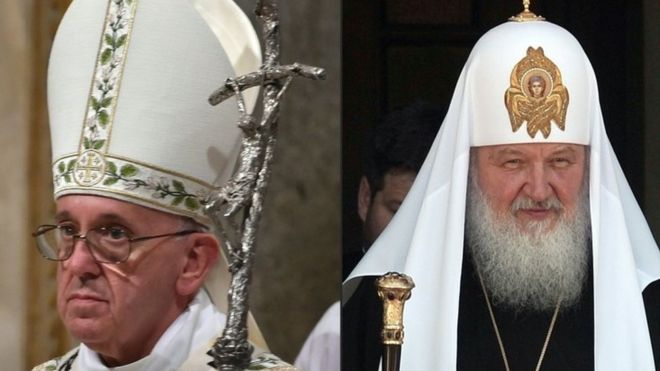
Today in Havana, the Bishop of Rome –  His Holiness Pope Francis –  Sovereign pope and patriarchof the Vatican City will sit down with the Patriarch of Moscow and all Russia – Primate of the Russian Orthodox Church –  Bishop Kirill.  The last time the Roman Catholic Pope met with the Russian Orthodox Patriarch was 1964 in Jerusalem.

You can read about the 1050 schism between the Eastern and Western Church here.  This article speaks of “ancient ‘anathemas‘” between these two branches of Christianity who have called each other heretics, held each other in contempt, and condemned each other to hell.

We’re talking about cosmic things here.

Many of us carry ancient anathemas around with us too, but they tend to be less weighty than matters of human reason versus human nature or from where the Holy Spirit proceeds.  Is it from the Father and the Son (Roman Catholic) or solely from the Father (Orthodox.)  Of course, “anathema” in the Church is a curse involving excommunication.  An anathema is “devoted to evil.”

Those are fighting words, especially if the differences are about whether or not Mary was herself immaculately conceived.  (Our Orthodox sisters and brothers say no.)  But enough about doctrine and theological truths.

Is there anyone in your life whom you consider to be an anathema? Is there any situation which you consider to be anathema?

[Here’s one.]

Some of us carry bitterness over relatively minor slights.  But others of us carry anger and fear based on the actions of people who have genuinely hurt us or the people we love.  If we have never experienced being personally wounded to the point that we are now haunted and heavy-hearted, we are most fortunate.

And so now we find ourselves in the season of Lent.  This is the season when we turn from our destructive ways to a new way that brings life.  This is the season that we try to forgive because we’ve been forgiven.  This is the season when we walk toward the light and ask to be set free.

It’s not easy.  It might even feel impossible.  But the Pope and the Patriarch are meeting today and so maybe anything is possible in these 40 days.


Images are of the men formerly known as Jorge Mario Bergoglio and Vladimir Mikhailovich Gundyayev who now wear the holy headware of the Vicar of Christ and the Patriarchal Vicar respectively.

The Big Mo

In this presidential election year, some political nerds might remember The Big Mo.   George H.W. Bush spoke of it in the 1980 election.  He had it after the Iowa Caucuses that year.giphy The Big Mo Newton's Cradle

Some of our congregations also experience The Big Mo. A colleague recently shared that his church has noticed several guests visiting from a neighboring congregation going through turbulent times. Subsequently, giving is up, there is increased energy, and people are excited to be a part of things.

When a spiritual community is clearly on a roll – reaching out in effective ministry, making an impact in their suburbs, regularly welcoming new members -momentum is up.  I loved this as a parish pastor.

In the same way, when a congregation is in a downward spiral with low energy and low satisfaction, momentum slows to a halt.  Congregations become stuck and floundering.  I hated this feeling as a parish pastor.

How do we turn around a low energy church?  Sometimes we can’t.  The leaders are too tired and the resources are depleted.  It’s a holy thing to close congregations whose momentum has slackened to a point of no return.

But it’s also possible to change a congregation’s momentum.  It happens when:

  • There is a core group of leaders (more than one or two) who have energy and skills willing to work alongside the pastor.  Both the pastor and the leaders find themselves to be faithfully fearless and teachable.
  • There is a strong capacity for ministry.  Resources exist – from financial to human – to expand outreach into the needs of the community in the name of Jesus.  Those in need are no longer invisible in the neighborhood and there is a spiritual craving to connect with them.

This is not about large endowments and “big givers.”  Yes, money can fuel ministry. But money ≠ momentum.  Sometimes it’s a bandage but the bandage won’t last forever.  Underneath, growth and healing are required to shed dependence on the bandage.

Momentum Killers include:

  1. Long meetings with no purpose.
  2. Cranky leaders who shame and blame visionaries.
  3. Pastors who have given up but won’t leave/retire.
  4. An inability to articulate why (theologically) our church exists.

Momentum Builders include:

  1. Gatherings that feed souls.
  2. A clear connection to the needs of the community.
  3. Sacrificial giving of all resources.
  4. A clear vision that even a child can articulate.

My favorite mission statement:  We exist to change the world for good in the name of Jesus Christ.   This kind of audacious proclamation fuels all kinds of mo.

Image of Newton’s Cradle which demonstrates the transfer of momentum.


Putting Me in My Place

“Remember you are dust and to dust you will return.”  Genesis 3:19b

Ash WednesdayIn world where we humble-brag, where we are encouraged to climb the proverbial ladder, where we push our children to be on top, where we push our neighbors out of the way to get to the top ourselves . . . the voice of God reminds us that  – actually – we are broken, weak, ridiculous, and hurt, if we tell the truth about ourselves.

Ash Wednesday puts us in our place.  This is the day when we remember that – while wonderfully and fearfully made – we are also mortal creatures who will die one day.  And how we will live this one remarkable lifetime we have been given?

  • Seeking to know who we are and who God is.
  • Serving in proportion to our privilege.
  • Living to bring heaven to earth.

This is my favorite season.  What an opportunity.

That Time I Voted in the N.H. Primary

I faithfully voted in North Carolina until 1984 when I was briefly living in New Hampshire and couldn’t resist voting in the N.H. Primary.

voting in NH

Every day when I walked to work from my house past the Hanover Inn to the old Mary Hitchcock Memorial Hospital for a Clinical Pastoral Education residency, I’d see at least one presidential candidate hanging out.  Jesse Jackson would be in the bakery.  Gary Hart would be eating a sandwich in the diner.  Walter Mondale would be interviewed on the corner.  I don’t remember ever seeing Ronald Reagan but he was probably there too.

Reagan ran unopposed.  There were at least nine candidates on the Democratic ticket.  And Independents could vote in either party’s primary, so it was only fun – Democrat or not – to vote in the Democratic Primary.  We filed into a school gym on Tuesday, February 28, 1984 and did our civic duty.

But as we voters were leaving the gym, Dartmouth students handed us slips of paper that said something like this:

  • If you voted for Mondale, tell the media you voted for Jackson.
  • If you voted for Askew, tell the media you voted for Glenn.
  • If you voted for Hart, tell the media you voted for Mondale.
  • If you voted for Hollings, tell the media you voted for Askew.

You get the idea.  In the throes of media madness when we sometimes do not believe our vote matters – because somebody has already predicted who will win, so why bother? – we were keeping our votes to ourselves . . . at least until someone had time to count them.

Political Nerds have almost as much fun as Theological Nerds.  Sometimes it takes a little whimsy to get us through this political season.

People We Should Know: William Barber

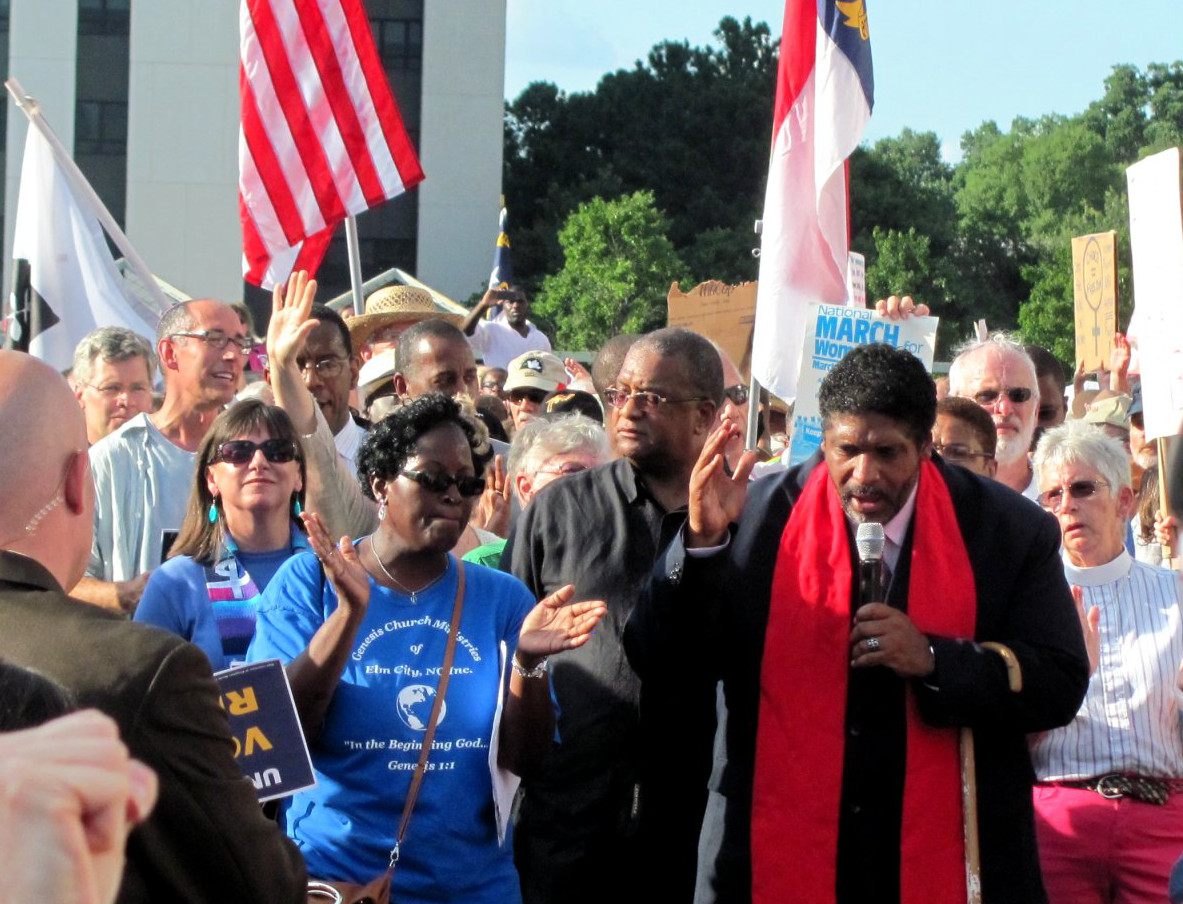
One of my favorite parts of the Transitional Executive Ministry Training I took last fall was the session on Conferences We Should Attend, Blogs We Should Read, etc.  [FYI: among the must-attend conferences are NEXT Church for Presbyterians and White Privilege for everybody.]William_Barber_at_Moral_Mondays_rally

I have another list:  People We Should Know . . . if we are interested in 21st Century ministry.  Friends, we should all know William Barber II.

I first heard him speak at the Wild Goose Festival in 2013 and 2014 and this was after he had gained national attention as the creator of Moral Mondays in N.C.

Moral Mondays – which has now spread to twelve other states – was created to peacefully protest state government actions which impede voting rights and cut social programs.

Cornel West has described the Rev. Barber as “the only (Martin Luther) King-like figure we have in the country right now.”  His messages are powerful and Spirit-infused.  And in these days when the words of our political candidates are often violent (one wants to “carpet bomb” ISIS until the sand glows) and do not sound Christ-like in spite of coming out of the mouths of those who self-identify as Christians (“I will bring back a hell of a lot worse than waterboarding”) Barber believes that – because words can still become flesh – we need to speak prophetic words in the likeness of Christ.

These, for example, speak to us all:  “Woe to you, scribes and Pharisees, hypocrites! For you tithe mint, dill, and cummin, and have neglected the weightier matters of the law: justice and mercy and faith. It is these you ought to have practiced without neglecting the others.”  (Matthew 23:23)

William Barber keeps reminding us what the weightier matters of the law truly are.  You can read more here.

Image by TW Buckner.

Sacred Assumptions

I go to UVA!  I go to UVA!  I go to UVA!”  Martese Johnson being arrested outside a bar in Charlottesville, VA on March 18, 2015

It always bothers me when someone judges me based on my appearance.  My age.  My gender.  My race.  I might be wearing pearls but it doesn’t mean I’m not tough.  I might be pushing 60 but it doesn’t mean you can peg me in terms of my politics or my theology or my cultural proclivities.

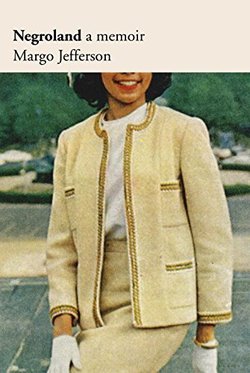
NegrolandNegroland by Margo Jefferson is a great read about a black family who lived on the Southside of Chicago in the 1950s and ’60s who were wealthier, worldier, and better educated than most people of any race or ethnicity in those days.  I highly recommend it.

Assumptions were made about Margo and her family based on the color of their skin. One of the most memorable stories is about Margo and her mother shopping for the latest appliance in a Sears department store and running into the white man who does their laundry.

The laundryman did not acknowledge them.  He was their employee and he did not acknowledge knowing them.  He was buying his clothing at Sears and they were buying the latest refrigerator – or something like that – but he pretended like he didn’t see them.

We make sacred assumptions about each other every day based on appearance. A young black man is arrested outside a bar in a college town and it’s assumed he is a hooligan, but actually he’s an honors student.  There’s a story about Thurgood Marshall on an elevator in the Supreme Court Building in DC and someone thought he was the elevator man.  Lord, have mercy.

What if – upon glancing at the stranger in the grocery store check-out line or at the bus stop or in the public library – we assumed that the person before us was a genius or a national treasure or a child of God?  What if we assumed that the brown child on the playground, the green-haired teenager in the ice cream shop, the tired-looking couple in the diner were all brilliant, extraordinary human beings?

What if we set aside our sacred assumptions and treated people as individuals – each with their own amazing stories and gifts?  (It’s so much easier to lump people into unfair stereotypes.)  But we are better than this.

PS – For more thoughts about this . . . 

Mark Your Calendars: September 24, 2016

Train Tracks

‘Those who cannot remember the past are condemned to repeat it.’    George Santayana

When I was a child and our family visited family in Iredell County, NC, my father often pointed out a platform near the train tracks in Mt. Mourne as we drove between Davidson and Mooresville.  He told us that the town was called Mt. Mourne because slaves were traded on that platform.  I remember exactly where that platform stood and I used to imagine what “trading slaves” might have looked like.  At least someone had the sensitivity to name the town “Mt. Mourne.”

Not only is the platform gone but I can find no historical evidence about the slave trade in Mt. Mourne.  Either my father was sharing a mythological tale or somebody has cleaned up the history really well.

The Mt. Mourne Plantation, however,  is on the National Register of Historic Places as the site where Rufus Reid owned 80+ slaves who worked his cotton fields, making him one of the wealthiest men in North Carolina in the 19th Century.  I’ve long wondered if Reid Memorial Presbyterian Church – which is near Mt. Mourne – was named for Rufus Reid.  The whole story makes me feel queasy and uncomfortable.  But I believe that my father was telling the truth about that long-gone train platform.

I have visited Holocaust Museums in both Washington, DC and Jerusalem, and they are disturbing.  They are meant to be disturbing.  School groups visit on field trips and – in the Washington, DC museum – they walk through the hallway filled with the shoes of men, women and children who perished in death camps. It’s a history that we must not forget even though it’s sickening and reminds us of how some of us have dehumanized others of us.

As Jim Wallis and others have written, human slavery is the original sin of our nation.  It’s unspeakably shameful. And who wants to remember one’s shameful past?

If I’m visiting Our Nation’s Capital, I’d rather watch the pandas at the National Zoo or check out Dorothy’s ruby slippers in the American History Museum or try to figure out how the Wright Brothers’ 1903 glider in the Air and Space Museum could have possibly gotten off the ground.

But on September 24 of this year, The National Museum of African American History will open on the National Mall in Our Nation’s Capital and we who love our country need to go – if not in September, then sometime in the near future. I believe it will help us understand how we got to where we are today – where a young white man can sit through a Bible study in S.C. and shoot the black church members along with their pastor, and where a drug-addled young man can be shot 16 times while walking away from a police officer because of – I believe – the color of his skin.

We will have the chance to see what none of us wants to see but all of us need to see – so that we will not forget how some of us in history have dehumanized others of us in history. Among the collections to be included in the African American History Museum will be an exhibition on the history of slavery.  I’m guessing these will not be easy hallways to walk through, but we have got to remember in hopes that we will not repeat this history.

I love remembering beautiful stories depicting women who were brave and men who were kind and people of all ages being generous beyond all comprehension. But we owe it to all God’s children to remember the stories of injustice as well.

Colonialism

ColonialMy personal history regarding colonialism involves 1) visiting Colonial Williamsburg, 2) liking Southern U.S. colonial-style architecture, and 3) being called “the colonist” by my co-workers when I was a social worker in the U.K. after college.

I’ve spent most of my life as a sheltered innocent.  It’s one of the privileges of growing up as a Daughter of the American Revolution (my side – the colonists -won) as opposed to growing up in an Indian colony in Nevada (“settlers” took our land) or in The Belgian Congo in the early 20th Century.

The word “colonial” has always been a happy word for me.  It meant four poster beds and Chippendale chairs.  It meant Paul Revere of Boston and John Turk Edmiston of Staunton, VA (my fourth great-grandfather who arrived in Philadelphia from Ulster in 1740.)

But I shuddered a bit when I saw the name of the Hilton in Nassau last week: The British Colonial Hilton.  It felt different from the feeling I have when I see the words “Colonial Williamsburg” on a tourism brochure.  And here’s why: when Columbus met the native Bahamians in the 15th Century – the Lucayan people – he took them as slaves and eventually they were freed but banished from their own islands.  Many years and countless colonizations later, the Bahamas became a British colony finally gaining their independence in 1973. Colonization was not necessarily horrible throughout all Bahamian history. But we who appreciate freedom need to recall that part of our beloved history includes settling in and colonizing places that belonged to someone else, as if we could simply arrive and claim ownership.

Sometimes we claimed to own the people as well as their land.  God have mercy upon our souls.

Oh, how I innocently have loved Chippendale chairs and all things “colonial.” Part of growing up and – I believe – growing more mature in our faith is acknowledging corporate sin.  The world “colonial” might mean heartwarming comfort for me but the word might mean cruelty for someone else.

Yesterday I head a S.C. woman rue the taking down of the Confederate flag.  “It means ‘history’ to me,” she said, “And I understand that it means bigotry to others.  But it means ‘history’ to me.

The apostle Paul often wrote about this sort of thing, including here and here. We are called to consider what hurts our neighbors or makes them fall.  It’s not about political correctness.  It’s about loving our neighbor as ourselves.

And so when I suggest that we must be sensitive to those for whom colonialism has been part of their history, I don’t mean to be that person who always dredges up the ugly side of everything.  Rather – we are called to be those people who confess before God and each other that many of our ancestors were part of the ugliness.

God redeems even what is ugly.  And we are a part of this redemption.