Category Archives: Uncategorized

Hello and Goodbye

Francis and PhyllisAs you read this, Pope Francis has said “hello” to Our Nation’s Capital and Phyllis Tickle has said good-bye to us all.  Over breakfast, HH and I say good-bye to friends we’ve come to love in Chicagoland who are moving south.  And there are good-byes and hellos in the office.

People come and people go in our lives.  This is a really, really good thing.  That’s all I have to say about that today.

Wondering About The Dones: Pastor Edition

Leaving ChurchYou’ve heard of The Dones – those who once served on boards, taught classes, volunteered to usher, and sang in the choir – who have now left the Church.  They were the faithful ones, the leaders.  And many of them have left.

I’m told that many of The Dones left in order to save their faith.  They learned stories of grace but didn’t experience grace.  They were invited to share their brokenness, but then their brokenness was held against them.  Even their children noticed that the lessons taught in Sunday School were not always lived out by their brothers and sisters in Christ.

What I’ve read less about are those who are Done because their church life was less about their relationship with God and more about their relationship with the pastor, their church friends, the pipe organ, whatever.

I’ve lost count of how many fresh faced Christians were elected to serve as elders and deacons but they bolted from the Church after witnessing what goes on behind the curtain.  Maybe they imagined that being a church officer would be comparable to initiation into The Holy of Holies – an opportunity to tap into a wellspring of spiritual peace and contentment.  But what they actually experienced was not quite like that.

With this in mind, what’s also a bit troubling is that  many of us pastors are also Done (or would like to be.)   This happens for the same reasons as the Dones who loved the Tiffany Windows more than they loved Jesus.  We pastors are often spiritually challenged people, but we didn’t start out that way.

Maybe we spend so much time planning worship, that we never actually worship. Maybe we easily lead others in prayer but spend little time talking with God ourselves.  Maybe we busy ourselves with Church Stuff but forget the point of it all. (Note:  The point of it all is not to perpetuate an institution.)

Attention Parishioners:  you deserve a spiritual leader who has an authentic relationship with God.  Please check in with your pastor about this.   Just like you, your pastor needs a Sabbath and uninterrupted vacation time and study leave.  If your pastor reaches the point that she is Done, we’ve all failed as a congregation.

Imagine a church that nurtures our relationship with God so well that we don’t want to miss an opportunity to get together with those folks.  Imagine a church that cares more about our spiritual lives than how much money we pledge or how many committees we’ll join.  Imagine a church that enfolds people without suffocating them, that doesn’t freak out when life is messy, that craves figuring things out together.

I’ll never be done with that kind of church.

Image source.

Are We Putting Our Small Churches Out of Business?

(And is that ever a good thing?)tiny church

Throughout all denominations in the U.S. there seem to be two tracks of churches (and yes, this is a very simplistic description):

  • There are the large congregations with multiple paid staff members and lots of programs.
  • There are the small congregations with little or no paid staff and few – if any – programs.

Some would consider a “large church” to have over 500 members.  Others would say – if you have 150 members – you are “large.”   Some would consider a “small church to have 50 members or less.  Others would say – if you have 150 members – you are “small.”

If you ask me, size doesn’t always matter in that I’ve been a part of both large churches (with 200-500 in worship) and small churches (20-50 in worship) which both exemplify the joy of Christ and the beauty of community service.  I’ve also worshiped with  large and small congregations who are dying and – sadly – it’s obvious to everyone but the congregation.

Dying large churches have some time on their side.  They could shift their culture and make their ministry about Jesus (if it hasn’t been about Jesus), about serving others (if it’s been about serving themselves), and about healthy discipleship (if their leaders have been unhealthy.)  But shifting a church culture is not for sissies and most of us will not expend the energy.

Dying small churches have less time and less money.  They are especially impacted when their denominations increase their institutional costs.  For example:

  • Most denominational congregations require a fee per member to be paid to the denomination to cover regional and national administrative support.  Many of our denominations will be raising those fees in 2016.
  • Denominations generally require a minimum salary for pastors in addition to pension and medical benefits dues.  Both dues and minimum salary requirements are increasing.

Can our small churches afford to stay open?  Can they afford even a part-time paid pastor?  Do they need a pastor?

Everything depends on whether or not congregations are willing to allow their church to be wholly and completely about God’s mission.  Here’s what I know about church:

  • If our leaders are dysfunctional, self-centered, tired, and spiritually immature, the church will and should close.  Please close sooner than later, and give all your money to a congregation with vision and energy.  It doesn’t matter if you got married in that building long ago or your children went to Sunday School there.  It doesn’t matter if the windows were given by your grandfather or your mother was the organist for fifty years.  Please remember that congregations have seasons and sometimes the most faithful thing to do is close – especially if your church has been more about you and your family than God and God’s family.
  • If our leaders are healthy, mission-focused, energized, and spiritually curious, the church will be fine.  Yes, you might struggle financially, but you get it.  Ministry is not about the building.  It’s about transforming souls and loving broken people.

Increasingly our struggling congregations will (and should) close over the next ten years.  This is not a terrible thing.  It can be a very faithful thing.

Maybe – for the sake of offering a living wage for our pastors and paying the real costs of their medical insurance – we really do need to increase denominational fees and requirements.  It’s not that we want to put struggling churches out of business.   It’s that we want our congregations – of every size – to take seriously our commission to make disciples.  Call me crazy, but if we are indeed doing that, our churches  – of every size – will be just fine.

For the Love of God, Grab a Crayon

AWCMost of us agree that:

  • God’s children of every age need quiet reflection time
  • We love God by being in relationships with God and others
  • Many of God’s children are visual people
  • Many of our resources for children’s ministry fall short

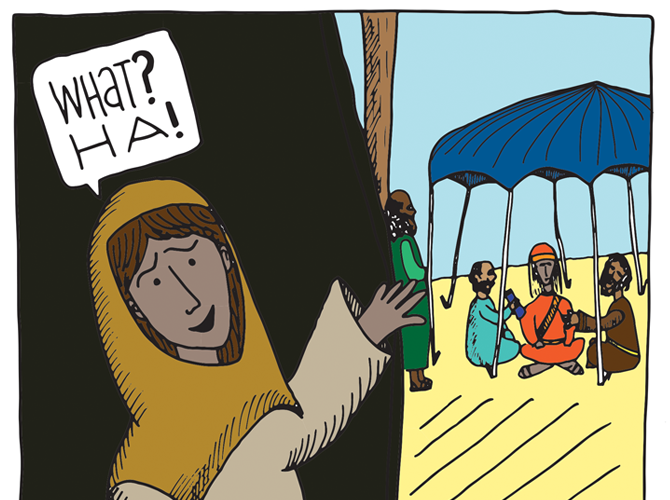
My friend and colleague Adam Walker Cleaveland is creating some wonderful resources for children based on both the narrative and common lectionaries. Who knew he could draw?  (He can.)

Check out his images here at Illustrated Children’s Ministry – Adam’s new venture.  Yes, this is a shameless commercial, but I share it because these are really good resources – upbeat, racially diverse, Biblically sound, and fun.  It’s one of the ways that Adam loves God.

We are constantly seeking effective ways to help children connect with the stories of our Creator and this is an excellent addition to our tool box.  And maybe it will inspire you to pick up a box of crayons too.

Layers of Goodness

Layers of Goodness

I’m still pondering my previous post about truth-telling.  It seems that the resulting comments were about at least two different things:

  • Sometimes we tell the truth about ourselves and people reject us.
  • Sometimes the truth about ourselves is uncovered by someone else and people reject us.

The truth ultimately sets us free but – depending on how it came to light – it could also make us miserable.  Maybe it makes us more miserable if we weren’t the ones who revealed it.

Also, there are secrets (“I take an antidepressant every morning“) and there are secrets (“I‘m still married but sneakily enjoying benefits with someone else.”)

Healing seems to have something to do with how readily we acknowledge what impact our truth has on the other people in our lives.  Sometimes our truth even impacts strangers.

We forget about The Layers of consequences.

Personal example: A  pastor friend was caught in a years-long relationship with someone who was not his wife.  Obviously he deeply hurt his spouse, his kids, his parents, his congregation, and his colleagues.  But there were further layers he didn’t acknowledge very well:  he hurt me (who officiated at his wedding) and the couples he’d guided through pre-marital counseling (whom he’d reminded firmly what Jesus said about divorce) and the lectures he gave to anyone who would listen (about the “fact” that LBGTQ relationships were unbiblical.)  His extra-marital relationship might still be continuing to this day had he not been caught.  And yet he wants to move on without acknowledging that the layers of hurt were deep.  A conversation between the two of us  about the breach in our relationship would have been appreciated but – again – he has “healed and moved on.”

Errrr.

Our actions – especially our not-our-best-selves actions – create many layers of hurt.  Until we come to grips with this truth, wholeness is elusive.

In the same way, though, our gracious/generous/loving/hospitable actions create layers of goodness.  If an insurance company gets this  we can probably get it too.  People are watching us.

Even in post-Christendom, people watch clergy. And they notice when we are cranky and impatient and mean, especially when we don’t think anyone is paying attention.

Yes, we are – ourselves – broken and ridiculous.  But that’s my point:  we need to tell the truth about ourselves, try to do better next time, and seek wholeness. Repentance creates delicious, beautiful layers of goodness.

Pastors Who Tell the Truth

truthIf we say that we have no sin, we deceive ourselves, and the truth is not in us.  1 John 1:8

Sometimes clergy lie to their parishioners and sometimes we lie to ourselves. Of course this is true for people in every vocation, but pastors are in a particular position of authority – at least in some circles – and we are susceptible to others’ unrealistic perceptions. I’m especially struck by this news story about the number of clergy outed on Ashley Madison.  And this story about the pastor who was both a successful seminary professor and Baptist minister and a human being with secrets.

If you are part of Church World – either vicariously or personally – you surely know a clergy person whose secret life has been revealed – painfully.  I’m less interested in the Jimmy Swaggarts and Ted Haggards of the world than in the local pastor who lies to him/herself and or lies to his/her people only to have those lies disclosed.

We need to hold each other accountable.  We need to try to be the people we profess to be by virtue of our ordination vows.

There are too many links in this post, but this article is a must-read.   I especially like this:  “Give a heady sermon and folks are moved, but give a vulnerable sermon and they are set free.”  Preachers who disclose our own failures and struggles create community.  Those of us who minimize our own vulnerabilities perpetuate the notion that we are morally and spiritually superior.

Sure, it’s our hope that we pastors will be Christ-like, but it’s our hope that everybody will be Christ-like, right?

It’s not enough to declare the obvious:  pastors are not perfect.  But my point is that we are doing a disservice when we lie to ourselves or fail to note that our secrets – if revealed – will hurt the people we love.

  • Maybe we have calmed ourselves with food, alcohol, sleeping pills, etc. for so long that we don’t even realize we have a problem.
  • Maybe we have presented a certain way of life (happy marriage, perfect kids, unwavering spiritual life, super-human emotional resilience) to the point that even we don’t even acknowledge the truth to ourselves.
  • Maybe we have made personal life choices that we hide from our parishioners.  Controversial example: Pastors in open marriages. Chances are that most parishioners would not understand/appreciate this.  But when it gets out in the community, the resulting damage will be long-lasting.  If we have a secret life that we would not want revealed on social media, perhaps we need to rethink our calling.
  • Maybe we believe that nobody could possibly know the truth about ____.   Don’t be so sure.  It’s a really small world.

Being vulnerable is a crucial part of being a spiritual leader.  Our truth is comprised of brokenness, imperfection, and shame just as much as anybody.  If you are reading this and thinking, “This is not about me.  I’ve got it together,” please take a couple days off and read some Brene Brown.

The healthy 21st Century Church is about authenticity.  There are countless BS-ers out there who will preach cliches and prop themselves up as pillars of spiritual coolness.  But the world is craving something real.

We can do a lot of damage when we’re fake or self-deceived.  But we can go some good if we admit that we are kind of a mess and need something bigger than ourselves.

Also: read these really good posts by John Vest and Rocky Supinger.

Image source.

Eye of the Tiger?

The word “tiger” is not found in either the Hebrew and Greek Bible.eye-of-god-20  

[Note:  this doesn’t mean that tigers don’t exist.  I mention this for a friend who once told me that she didn’t believe in the historic existence of dinosaurs because dinosaurs are not mentioned in the Bible.]

I would like to confess before you and God that when I watched this video yesterday, I felt alarmingly angry.  I was angry that political candidates seemed to be using Kim Davis.  I was angry that crosses were being held up in the crowd.  I was angry that a song by Survivor was being played – more like a battle cry than a hymn.  I was angry that many people in the world will watch that video and believe that all Christians are like the Christians in this story.

It’s a spiritual discipline – and one that I need – to reflect on how we have damaged the message of Jesus rather than throw stones at those whom we believe have damaged that message.  And so I confess that I wanted to rip her hair out. But it wouldn’t have helped at all.

So here is my hope for Kim Davis if I’m offering my best self:

  • That she will study the Gospels and note what Jesus said about homosexuality.
  • That she will study the Holiness Code in Leviticus and Paul’s letter to the Romans with someone who knows Koine Greek and ancient Hebrew.
  • That she will study the Gospels and note what Jesus said about divorce, and in light of her own life experience, grant grace to others.
  • That she will have the opportunity to befriend and be friended by LGBTQ people in her county.
  • That we who disagree with her theology would have compassion for her.
  • That she would not be re-elected if she cannot fulfill her constitutional duties.

When I looked up “tiger” on my online concordance, I was told that the word shows up zero times in the Bible, but then, this verse popped up:

From the same mouth come blessing and cursing. My brothers and sisters, this ought not to be so.  James 3:10

Yep.

Image is of the Eye of God Nebula,  photographed by the Hubble Space Telescope.  I don’t believe God’s eye looks like this, but I do believe that God made the nebula, the geniuses who created the telescope, and Kim Davis.

The Theology of Distraction

Church TreasuresProne to wander, Lord, I feel it,
Prone to leave the God I love . . .*

We Reformed Christians are ostensibly not big fans of religious icons or elaborate fretwork for fear we will worship the art rather than The Artist. Nevertheless, I for one, am prone to wander in terms of my focus during prayer and worship.  Sometimes it helps to stare into a candle.

That’s not what this blog post is about exactly.

What the early Reformers were concerned about in terms of worshiping statues and stained glass is the least of our problems in the 21st Century Church.  We are more deeply distracted by other things.

Mark Leibovich wrote here in The NY Times about The Politics of Distraction which is not merely about how we in the U.S. follow the shiniest of shiny objects when discussing politics.  Yes, we focus on Trump’s latest outrageousness or the dumbest thing Sarah Palin said last week.  Many of us go a little deeper and debate Kim Davis’ arrest or the difference between immigrants and refugees. But there are deeper issues that mark who we are as citizens and human beings that mean more than the legality “anchor babies” and the requirement that everybody “speak American.”

I observe The Theology of Distraction everyday.  In the saddest cases, a congregation’s theology amounts to conversations about Whose Building This Is or Who Owns the Coffee Maker.  In other congregations, the elders spend most of their time fretting over whether or not to charge The Boy Scouts for Eagle Ceremonies or allow the youth group to paint the church kitchen.

Seriously.  I sit in some church meetings and listen to people debate such things. And I get it.  It’s easier to spend 20 minutes discussing whether to let a neighborhood Mom’s Group rent the fellowship hall than spending a good hour prayerfully considering what we might do in Suburban Chicago to serve those impacted by gun violence, heroin addiction, or homeless LGBTQ kids.  But our theology – if we take our faith seriously – is not about chasing ecclesiastical shiny objects.  It’s about the deeper issues that mark who we are as followers of Jesus and human beings created in the image of God.

Jesus didn’t die for paint colors and attendance tallies.  But Jesus did die for refugees and broken people and addicts and the violated and you and me.  If we care – undistracted – for the people, whomever they are, then our theology will be okay.  Our politics will be okay.  We will be okay.

On this day as many of our schools and churches kick off a new program year, it’s good to redirect our attention to What Really Matters.  Usually what truly matters is not particularly shiny.

*From the hymn “Come Thou Fount of Every Blessing” by Robert Robinson (1757)

Rethinking Church Staffs

Imagine a church staff that looks more like a circle than a pyramid.Light-Circles

Large congregations have been staffed a certain way for so long that we can’t imagine any other way: Head of Staff/Lead Pastor, Associate Pastor, Christian Educator, Music Director.  I grew up in these churches.  Most multi-staff churches are still organized this way.

One easy-ish change over the past 50 years has been the Senior Pastor who promotes collaborative, permission-giving leadership.  It’s increasingly rare – and often demoralizing – when the one at the top of the ecclesiastical food chain refers to the rest of the staff as “mine” as in “my Associate Pastor” or “my organist.”  Red flag.

Some Senior Pastors say they are collaborative, but they are in fact threatened by that world class educator or effective mission coordinator.  Another red flag.

This might be a good time to re-imagine the church staff – especially if your congregation is in transition.  [Note:  if you are part of a vibrant congregation your church is in a constant state of transition. This is good.]

  • Imagine three congregations on the same side of town who share a staff of leaders.
  • Imagine clergy couples who are not married to each other.
  • Imagine several congregations who share a youth pastor.
  • Imagine a 30-something lead pastor and a 60-something associate pastor.

These ideas are neither new nor radical.  But most congregations will not even consider them.  They are the tip of the iceberg in terms of some of the creative ways we might professionally staff a church.

And maybe the “professionals” we call/hire have been prepared for this ministry in unconventional ways.  Imagine that.

Pastor Jobs: The “It’s Who You Know” Edition

Who you know What you knowIt’s commonly understood that there are more clergy looking for jobs than there are clergy jobs.  In a denomination like mine (without bishops who assign pastors to churches) the field is competitive, at least in popular locations and in healthy congregations.

[Note: Every church is imperfect.  Some are soul-suckingly imperfect. “Healthy” doesn’t equal perfect.]

For pastors with good connections, it’s easier to be called to preferred congregations.  Yes, this is true.

Forget “the call.”  Forget “the moving of the Spirit.”  Pastors who have a foot in the door via friendships or other connections have an advantage to be sure. Although I’m not a bishop, I often have the ear of the Search Committee or a congregational leader and I can put a good word in for Pastor X.  The Old Boy Network has been working this way for generations, so it’s kind of nice when the New Girl Network kicks in.

Sometimes this is a good thing.  And sometimes this is not a good thing.

Good Thing:  A 50-something second career pastor with excellent skills gets a second look by a church which has been looking only at the stereotypical 30-something male pastor with a lovely wife and kids. Someone like me  takes the opportunity to mention that the Search Committee might want to talk with Pastor 50-Something who would bring diversity and seasoned energy to their leadership.

Not Good Thing:  I am trying to help my friend “get a church” even though my friend is unsure that he is really called to this kind of ministry.  I talk him up as even though I know he struggles with most of his relationships.  It’s just that he has mortgage payments and he really needs a job.

Worst Kind of Thing:  I once knew of a Presbytery that approved the call of an Interim Associate Pastor to her own home church even though that church was a week away from announcing that they’d found a candidate to be their “permanent” Associate Pastor.  The spoken explanation for this ridiculousness was that “we wanted to find a call for our friend.”  The unspoken explanation was that the Senior Pastor wanted to make it impossible for her to stick around. Once the “permanent Associate Pastor” was called, the Interim would be forced to leave this church where she was considered a troublemaker.  

Lord have mercy.

The bottom line is that someone like me who has the power and opportunity to whisper someone’s name in a Search Committee Member’s ear is that the Committee still has the freedom to listen to me or ignore me.  In a perfect world, they listen first and foremost to the Spirit of God.  In a perfect world, the right candidate’s most crucial connection is to God.

Every once in a while, the perfect candidate Comes Out of Nowhere to shine as the next pastor.  The Spirit still works.  I just wish – honestly – that all Search Committees would pay attention.

Sadly, Pulpit Candy still wins too many times.