Category Archives: Uncategorized

Authentic Accountability (or Who Tells Us When We Screw Up & Do We Acknowledge That – Yes – We are Screw Ups?)

Chagall Nathan and DavidSomebody told me yesterday that I should have called him on the phone to discuss certain issues when what I actually did was send information in an email which was also copied to others.  He was absolutely right.  It kind of ticked me off/embarrassed me but I’m grateful for his willingness to offer fair criticism.  The point is that I learned what not to do next time.

I am not always so quick to agree that I made a mistake.  This was an easy one.

Several years ago, a friend in the Emerging Church community was criticizing denominations and I asked him who held him accountable in his life and ministry. He answered in some way that seemed lame to me and now more than ever I am wishing he had a body of people who were his peers, but not necessarily his posse, to sit him down and acknowledge that maybe some of his life choices have caused far-reaching pain.

In my business – the hypocritical, corrupt, disappointing world that is The Church – I see lots of it.  And maybe you do too.

  • Pastoral leaders who criticize the lax personal standards of other pastoral leaders when actually they are doing the very thing they attack in another.  Or worse. (I once had someone lecture me about LGBT ordination only to learn that he was having a long time affair with a woman who was not his wife.)
  • Church people who have human failings  – as we all do –  but then they lie about it rather than confess that – yes – they screwed up.  (And they can’t keep the lies straight, so I get multiple versions of stories from their own mouths.)  Sheesh.
  • People criticize their brothers and sisters who are miserly in their financial giving, but then I learn that the critics themselves have not donated anything financially to their congregation in years.

I could go on and on, and so could you.  It’s distressing.  It’s human.  It’s universal.  We all fall short of the glory of God.

However, there are certain circumstances that make it difficult to be held accountable and ultimately this damages relationships far beyond the initial offense. Among those circumstances:

  • There is no denomination to hold people accountable or the denominational structure is so lax or corrupt that ignored suffering becomes the norm.
  • The Pastor/Leader is so adored and set on a pedestal that no one dares to challenge sick behavior.  And the Pastor/Leader has become blind to the fact that the behavior is indeed sick.
  • The Pastor/Leader is surrounded by a band of friends who “pray with him” once accusations are made but he’s so gifted and such an important leader that he can’t possibly be asked to remove himself from leadership even for a brief time so that he can get some counseling and make some concrete changes.
  • The Pastor/Leader is a bully behind the scenes and people are afraid that she will crush them, so she gets away with all kinds of hurtful behavior.

Again, all of us are guilty of some significant screw ups.  We fail God and each other.  And yet we are blessed with second and third and hundredth chances.

Nevertheless –  it’s not okay to crush people in huge and small ways.  How can we be the church we were created to be unless we are honest about this?  Are we able to face the fact that we  – often  – bear absolutely no resemblance to Jesus?

Image is Chagall’s David and Nathan.  Remember?

Memory-Making in Church

MemoriesSome people have memories that seal their happy relationship with The Church – and God – like super glue.  And, of course, other people have church memories that are viscerally painful and forever distance them from a given congregation – and God.

This article about how the brain stores trivial memories is very interesting.

Among the trivial memories in my own brain:

  • The last thing my Dad ate on this earth was a forkful of yellow cake with chocolate frosting.  (We knew he was dying when he didn’t want the whole piece.  Just a taste.)
  • TBC’s childhood bedroom had a Hey Diddle Diddle wallpaper border.
  • The first towels I ever bought for myself were lime green.

Trivial church memories can become profound:

  • My kids remember watching a church elder spill a whole cup of coffee, glance around the room to see if anybody was looking, and then walk away without cleaning up the mess.
  • They also remember how good Mrs. H. smelled every Sunday morning when she hugged them.
  • I remember my Sunday School teacher, Mrs. G. telling us that she’d been the Maid of Cotton.
  • I remember the taste of Welch’s grape juice at VBS when I was six or seven, and being told, “This is what communion juice tastes like.”  (I subsequently Could Not Wait until I could be confirmed and have that juice during worship one day.)

I remember when a new member left our church because she heard two church ladies talking about a third church lady in the women’s bathroom after Coffee Hour.

I remember the parishioner who told me that she “hated the Presbytery” because “they” wouldn’t let them have the minister they wanted.  “When was that?” I asked her.  “In the 70’s,” she said.

What do you remember about Rev. ___’s ministry?” I asked a group of church people at a retreat.  “He once said ‘damn’ in the pulpit,” was the first response.

Sigh.

Yes, we who spend our lives writing sermons, teaching classes, praying at bedsides, and sitting through countless meetings to plan, budget, decide, and ponder take our ministry very seriously.  But maybe it’s the trivial that most people will remember.

How are we creating memories in our spiritual communities?  This question could change everything in our church leadership.

Instead of spending the majority of time in meetings talking about ceiling cracks and boiler replacement, what if we looked at the decisions to be made as opportunities to Create Spiritual Memories?

  • The smell of the communion bread.
  • The red balloons at Pentecost.
  • The way we smile and ask, “How are you doing?” – even to children – when we serve refreshments after worship.
  • The way we look into each other’s eyes during the passing of the peace.
  • The home-y feeling of the church parlor.
  • The way kids run down the aisle to hear “The Children’s Message”  (and it makes the grown ups smile rather than scowl.)
  • The way a church gentleman – who is not your grandfather but could be – helps a single mom put snow boots on her children as they prepare to leave the building.
  • The way a young parent intentionally sits with an elderly widow and teaches her child to say, “Good morning, Mrs. M.  You look pretty today.
  • The way the home bound C. telephones other home bound ladies to check on them each morning.

This is church.  And church is often how we first learn what God is like – for better or for worse.

Image source.

What It Means to Me and What It Means to You (But Mostly What It Means to You)

wang-Zhiyuan-thrown-to-the-wind-trash-sculpture (1)Over last weekend SBC, TBC, and I cleared out a storage unit and we had three piles:  stuff to toss, stuff to give away, stuff to pack in the car and drive back to Chicagoland.  It was a semi-painful, one-person’s-treasure-is-another-person’s-trash family tableau.

There was one piece of junk  property that involved  serious debate.  What it meant to me = ridiculous trash.  What it meant to one of my kids = memories of a fun day in college when life was sweet and worry-free.

We packed this item and I drove it 12 hours west.  It now sits in our basement.

Maybe it will be there forever.  Maybe it will become an interesting planter in a future apartment.  Maybe it will get trashed after a sufficient period of time.


It occurs to me that our world is a mess because we don’t get each other.  One person’s terrorism is another person’s authentic act of spiritual devotion.  One person’s spiritual epiphany is another person’s abandonment of commitment.  One person’s rude gesture is another person’s act of faithful defiance.

What this action/comment/ritual/decision/thing means to me is not what it means to you.  What if we asked “What does this mean to you?” before we criticized it?  What if we had conversations about our differences without judgment or condemnation?  What if we were interested in learning from each other?

This is what I pondered as I drove for twelve hours on Monday.  And I also thought about MLK and how much I appreciated the Selma movie.

Image source.


We Need More Color

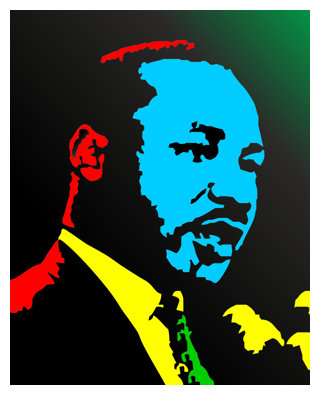
Yesterday I met a lady who reminded me how I love that church brings together martin_luther_kingall kinds of human beings who would never go to the same parties.  That’s also what I believe The Kingdom of Heaven looks like.

This woman was colorful.  In the course of 20 minutes I learned about her unusual bones, her interesting employment history, and her assortment of allergies.  It was a privilege to hang out with her.

The marks of a healthy church often involve color:

  • Colorful characters who are beloved and respected for being exactly who they are.
  • Color commentary on Scripture that tinges our perspective on the world and makes us want to be the people we were created to be.
  • People with different skin colors who – chances are – also have had different experiences from our own, thus broadening our horizons and getting us out of our own little lives.

What I see, though, too often are:

  • Churches that ostracize colorful characters and hope they’ll go away.
  • Preaching that upholds a black and white view of the world, or such a gray view of the world that nothing means anything.
  • Racial segregation.

Maybe you saw this article last week about segregated pews.  What does it mean that our congregations remain racially segregated for the most part?

Yes, some of our communities have absolutely no people of color living within miles and some communities have absolutely no white people within their city limits.  But most of our communities are in fact more diverse than our churches. We just don’t share the same (fill in the blank:  style of worship, theology, culture, socioeconomic class.)  Some of our congregations work hard to have “sister churches” that are different from our own.  But it’s one thing to share a mission project or two and it’s another thing to know about someone’s allergies and employment history.

We need more color – in every way.  I believe that the God who created every gorgeous hue requires this of us and relishes in it.

Image source.  Also:  Go see Selma today.

The 22nd Century Church?

Mattel_HoverboardOne of my brilliant colleagues wondered out loud the other day what the 22nd Century Church might look like.  That’s right:  the Church 100 years from now.

I expend a lot of energy pondering the 21st Century Church and what we could be.  But Brilliant Colleague has the right idea. What if we tried to imagine what will become of the Church for our grandchildren and great-grandchildren?

I participated in a discussion yesterday about how theological institutions might make shifts to better address the spiritual needs of future generations.  And here’s what ideas popped into my head:

  • The spiritual will effectively partner with the sacred, making the lines between them blurrier. Ministry will be integral in businesses, schools and other institutions.  But it will probably not be called “ministry.”
  • Spiritual competency will be an expected part of human development.  (Note:  I have no idea what this might look like. And by “competency” I don’t mean that spiritual depth is something we achieve – but then I’m a fan of Reformed Christian theology.)
  • Christians will have dramatically altered our expectations about what’s necessary to be a church.  We will have long cast aside those things – from real estate to programming – that do not bring the reign of God (although we liked them very much for generations.)
  • Theological words and their definitions will have changed.  Just as “charity” (19th Century) became “love” decades later in Scripture, imagine changes in church vernacular: “worship service” becoming “community gathering” or “equipping the saints” becoming “training and deploying the faith community.”  Not as catchy, but someone will create better terms.
  • Interfaith relationships will be strong and united against fundamentalism of every kind.

Can we begin to imagine what the Church will be like in 100 years?  I actually don’t know that we can.

Jesus will always have a Church and we do not get to control what the Church will look like.  Our job – today and generations from now – is to commit to discernment, study, and prayer.  We have only a shadow of an idea of what we could be and do, by grace.

Image source.  When do we get our hoverboards?  We were promised hoverboards.

Loving Life as an Older Lady

I’m still not crazy about the term “crone” although friends tell me it’s a Frances McDormandcompliment. I still picture her in my head, so, no thank you.

One of my no-longer-secret hopes for 2015 includes finding friends who have no church connections (i.e. not connected to former or current churches that I serve.) I adore my clergy and parishioner friends. I happen to have the most fabulous church friends in the world. But tucked into the recesses of my mind is the fact that I always have my Presbytery Hat on.

I literally have zero friends in The Prairie State who are not church-related in some way, unless you count two barristas whose establishments I regularly visit. They know my coffee preferences, but they don’t know my favorite books or the names of my children. Still, it’s something I don’t take for granted.

I’ve been in search of at least one local human being with whom certain conversations do not involve potential boundary problems. Enter 60 year old acquaintance who actually said recently, “We should get together.” Thank you Jesus. (Note: This is a good article about making friends as adults.)

My potential friend and I entered different professions in our 20s and found ourselves being among the handful of women in those professions. We both love our work. We both have funny stories. But again, there is a boundary issue. Dual relationships. (She is a medical professional.) But at this point, I’m willing to chance it.

What we also agree on:

  • We love being 60/almost 60.
  • We have little to prove, so we aren’t afraid to stand our ground.
  • We have no intention of wasting our time trying to convince people that we can do/be something even with ovaries. (Note: I don’t know her well enough yet to know if she actually still has her ovaries.)
  • We are fascinated/inspired by our adult kids.
  • We’ve made some big mistakes in our previous decades of life, but it’s okay.
  • We’re often invisible in social situations, but this offers an excellent opportunity to scope out the room and figure out who is interesting without small talk.

I loved the Tina Fey/Amy Poehler explanations of “cake” and “birthdays” to a Golden Globe culture of perpetual starvation and age aversion Sunday night. I like cake very much. And birthday parties. And women of a certain age.

For sure I will turn 59 in 2015. Not for sure, but possible: a non-church friend.

Image of Frances McDormand whom – like Amy Poehler, I would also save from a burning building.

(I’m Pretty Sure) I’m Not Charlie Hebdo Either

Je Suis CharlieWe love and support our neighbors, especially when they’ve been needlessly, much less fatally, hurt.  We are quick to come to their side, at least on social media.

We who seek to follow Jesus believe that God became One with us.   And so, of course, we want to stand up and shout  Je Suis Charlie and become one with the weak and victimized.  But as David Brooks pointed out in this editorial, “If they (the staff of Charlie Hebdo) had tried to publish their satirical newspaper on any American university campus over the last two decades it wouldn’t have lasted 30 seconds.”

Civilized people do not murder people with whom we disagree.  But we – in the land of Freedom of Speech – sometimes do not allow all people to speak. Remember last spring?

  • Christine Lagarde withdrew as Smith’s Commencement Speaker after some protested her work with the IMF.
  • Condoleeza Rice withdrew as Rutger’s Commencement Speaker after some protested her foreign policy work.
  • Ayaan Hirsi Ali was uninvited by Brandeis as an honorary degree recipient after protests about her anti-Muslim commentary.
  • John Corvino was uninvited by Providence College in 2013 after some protested his LGBTQ activism.

See, it can go both ways.  Progressives protest Conservative speakers and Conservatives protest Progressive speakers.

Obviously, we do not tolerate violence against those with whom we disagree.  But are we okay with tolerating their speaking at all?

Shifting this to a church context, many (most?) of our churches are not as friendly as we think we are, and we are not as tolerant as we think we are.  It’s not easy for someone to express that she isn’t sure what she believes about homosexuality in a congregation known to be “liberal.”  And it’s not easy in a congregation known to be “traditional” when someone expresses that he’s discerned that God created LGBTQ people with great joy.  Certain comments might make our deepest organs wince in pain, and we might want to shoot them (but of course we don’t.)

In my heart of hearts, I’m pretty sure I’m not really Charlie Hebdo.  I am not crazy about letting people express their views when they disagree with me that women are called into professional ministry or that transgender people are called into full leadership in the church or that marriage equality makes God happy. Nevertheless I want to be in a community that allows disagreement and respect, in spite of the profound difficulty in hearing different voices.  I admit that I do not have a sense of humor about some issues.  I admit that some of the Charlie Hebdo cartoons are seriously not funny to me.

But we’ve got to allow those with whom we disagree to speak their thoughts. Some who do not tolerate different views or satire occasionally resort to violence.  What happened to the men and women in Paris is unspeakably horrible.

But we can all be better at allowing room for those who speak words and draw images even if they offend us.

Image source (with slight editing)

How to Get Run Out of Town in 6 Easy Steps

10763_simpsons_angry_mobI’m a big fan of Bill Tenny-Brittian and the good people at Effective Church.  But I wonder how realistic this article is – as we are newly called in the 21st Century Church to spend most/much of our time reaching out beyond the hallowed walls of Church World.

On the one hand:  what would happen if you/your pastor . . .

  • Attended only one meeting per month?
  • Spent almost no time preparing the Sunday bulletin?
  • Kept no office hours except by appointment?
  • Delegated all pastoral calls to church members?
  • Trained and deployed church members to do hospital visits?
  • Spent less than two hours on sermon preparation/week (for churches with less than 150 members) and no more than five hours/week for larger congregations?

Yep, you/your pastor might be run out of town.

But on the other hand:  Ephesians 4 (the only Biblical job description for “pastor” meaning the person who shepherds a church) makes it clear that we are supposed to equip God’s saints for ministry and not do it all ourselves.  If we are not preparing others to make lead, care, visit, and even preach then we are not doing our jobs.

And yet, these are fighting words.  20th Century Pastors were all about meetings, bulletin prep, office hours, pastoral calling, hospital visitation, and – God-knows – sermon preparation.  This is What We Do.  People pay us to be the professional Christians, right?

Not in a 21st Century Church.  Not in a thriving congregation.  Not in a spiritual community with a deep sense of satisfaction and energy.

If we pastors devote less time to a 20th Century job description, we will be freed up to connect with people who are not already in our church community.  We will be freed up to be connectional, missional, and focused on our community in hopes of figuring out its greatest needs.

Many/most pastors today are:

  • still fulfilling those dated job descriptions
  • seminary-trained only to do 20th Century ministry
  • unprepared to be community leaders
  • untrained in change management

Believe me, people will want to run you out of town.  If  you propose Terry Brittian’s ideas for clergy time management and suggest the kind of changes he’s talking about, they will not be thrilled.

They have (often woefully) believed that change is about tweeting and singing U2 in worship. But the change that will create growth is actually about following Jesus in a new way, taking seriously our own baptism vows, and discerning our own calling.  Much more difficult.

I remember Easum and/or Bandy saying years ago that a pastor should never ever do hospital visits.   She/he should train parishioners to do them.  Honestly, I get this to a point. But I also know that Clinical Pastoral Education is the real thing and there’s a reason why we require it of seminarians.  I, myself have experienced spiritual mayhem when an unskilled person visited me in the hospital and made things worse.

So, I’m saying that Tenny-Brittian has some good points, but pastors have got to spend A Lot Of Time equipping their people to excel in ministry.  It doesn’t necessarily take a seminary degree to be a trained minister.  But it takes massive dedication, along with the spiritual gifts required to make the ministry about God.

And if we try to make changes without success, they will run us out of town.

Your thoughts?  Anybody ready to choose only one meeting/month?

Image from The Simpsons.

Negotiating Church Salaries & Benefits (when budgets are tight)

Every church I know (EVERY church I know) has a budget crunch as we move into the new year.

Belt tightening

Why? There are many reasons – some deeply analyzed by church historians and sociologists, and some pondered unscientifically by pastors and bloggers like me.

Among those reasons: Consistently-generous givers (who tend to be in older generations) died or moved away in 2014 . People who no longer worship regularly (i.e. every Sunday unless they are out of town or sick) have stopped giving as regularly too. Younger generations (who – by the way, in my experience – are very generous financial givers) are trying to pay off student loans. Unemployment is still a huge issue in many communities.

We in the non-profit world did not accept this calling expecting financial riches. And yet, we work hard and we deserve to be compensated accordingly. So, how do we ask for what we need (and maybe a tiny bit of what we want) in a culture of Financially Struggling Church? Here’s what not to do: Allow pastors, educators, and musicians who pay for their own supplies. They do it because they need certain things to do their jobs and they want their congregations to thrive in spite of what feels like a time of scarcity. The problems with this practice are:

  1. We sabotage the next pastors, educators, and musicians who cannot do this. (“Our last educator bought all the bulletin board supplies out of her own pocket! This is why we miss her so much/can’t function without her/wish you were her.”)
  2. We will not have correct financial information for budgeting purposes if financial gifts are donated off the books. If Vacation Bible School actually costs $2500 but the pastor has donated $2000 for it, it looks like VBS costs $500. Then somebody gets blamed for “overspending” down the road.

So, how do we Church Professionals negotiate our salary and benefits in times like these? Do we take one for team? (Leigh Thompson of Kellogg School of Management at Northwestern University says no. Also, Kellogg has an excellent Non-Profit Leadership program you need to check out here.)

Full disclosure: I just asked my own Personnel Committee to consider increasing my benefits in 2015.

The bottom line is that gas costs more (if our jobs require driving for on-site visits) and continuing education classes cost more (along with transportation and hotels if required.) The minimum for Continuing Education in our Presbytery – we hope – will be increased in 2016 because 1) most pastors get the minimum and 2) you can’t attend a conference out of town within the $700 minimum we require.

Yes, our congregations are strapped. But if we want vibrant ministry, if we want well-prepared clergy, educators, and musicians, if we want sharp support staff we need to help them succeed. Removing financial stress is a good start.

Final note: if your congregation has more than one pastor and the Associate Pastor(s) make(s) less than half what your Head of Staff earns, please prayerfully consider the fact that this might be unjust. At least consider it.

Minimizing the Mean in 2015

Few of us believe we are mean.  fruit

Especially we Church People tend to consider ourselves to be friendly (especially to visitors and guests), tolerant, and generous.  I visit a lot of congregations comprised of the gracious and well-mannered as bulletins are distributed and friends are welcomed.  But increasingly, I notice that – when fewer people are looking – they are mean.  They don’t even realize it.

I don’t realize it either. I find myself saying something unnecessary or untrue. And I barely realize I’m doing it.

A wise person said to me yesterday, “Some of our congregations need exorcisms.”  Ouch – and yet she’s right.  The foundational DNA of too many of our congregations is snarkiness and suspicion.  Maybe we can resolve to be less snarky and suspicious of each other in the new year.  Or maybe we need an exorcism.

It’s kind of painful and shocking to realize how much we need to check ourselves. Overheard in the last month or so in church meetings/events*:

  • Expect a couple of people to bitch that we aren’t singing all five verses of that hymn.”  (During a bulletin review before worship)
  • We had hoped to go to Florida this week but our nephew decided he needed to ruin that and get married in Minnesota this weekend.” (Said without a sarcastic twinkle)
  • Maybe it was wrong to pass that rumor about the pastor, but some of us think it’s true.” (By a church elder)
  • Why does she have to bring her baby everywhere?” (About a church leader who is also a single mom)
  • What does our pastor really do all day?  (To a room full of people drinking coffee. Note: Why don’t you ask?)

*Details have been changed.

So, remember that Bible verse about being known by our fruits?  We can do better.