Category Archives: Uncategorized

Are the Spirit of Christmas and the Spirit of Christ the Same Thing?

We Gotta Pray Screenshot Alicia KeysAlong with many others, I shared this story on FB about a woman whose identity is not known “yet” (because we love both intentional and unintentional celebrities) who paid off approximately $20,000 in over 150 layaway accounts near Bellingham, Massachusetts.

If you don’t know what a layaway account is, it’s what you do when you don’t have enough money to buy something out right. You “lay it away” in a back room of the store and pay it off as you are able.

When one Toys R Us beneficiary received notice that her layaway account had been paid in full, she said, “I feel like I was part of something special – touched by an angel.”  This is truly the Spirit of Christmas.

Is it also the Spirit of Christ?

The apostle Paul wrote that “anyone who does not have the Spirit of Christ does not belong to him.”  Ouch.

I want to belong to Christ but I definitely live in the flesh.  And I’m venturing a guess here and will suggest that you too – faithful reader – most likely live in the flesh as well.

I just bought myself my own Christmas gift last night.  It’s a purse I’ve wanted for a long time and it was half off and it’s no longer being made and I have all kinds of reasons why I really really need this particular bag.  Even though this morning’s class was about Spending Less as part of The Advent Conspiracy  (and I think they meant spend less on other people) I went and spent more on myself.  Clearly the only Advent Conspiracy I’m a part of is a selfish one.

As I write this today, families bear the second anniversary of Sandy Hook and thousands continue to ache over racial injustice.  And if we didn’t realize this before, we now know for certain that the United States of America – our beloved nation – tortures people.  What can I do besides wear black and share articles on FB and feel self-righteous when the Sunday benediction includes the words “Return no one evil for evil”?   Friends, our nation returned evil for evil in our names.

I’m wondering what it means to share the Spirit of Christ and not merely the Spirit of Christmas.

I wonder if the Spirit of Christmas – which by the way is an excellent way to live – is about noticing the material needs of those who have less than we have and the Spirit of Christ is about noticing the spiritual needs of those who are desperate, lost, broken, and furious.  Our response to the first is to bring relief via toys, blankets, mittens, and socks.  Our response to the second is to bring relief via relationship, freedom, and forgiveness.

It’s harder to offer the Spirit of Christ, if you ask me.  And please know that sharing the Spirit of Christ has absolutely nothing to do with bull horns or shaming or violence.  It has to do with praying that we would exude the Spirit of Christ in our own lives in terms of the way we treat other people who are not like ourselves.

As HH said in this morning’s sermon, Jesus showed up in places nobody would expect the Messiah to show up:  in a manger, on a cross.  Where are we showing up in the name of Jesus to share the Spirit of Christ?

Image is a screen shot of Alicia Keys’ We Gotta Pray.

Is Church Only for Rich People?

My new favorite person is Vu Le but more about that later.Creating Frankenstein

First, I want you to help me figure this out:

  • An urban neighborhood riddled with violence and unemployment needs a church to offer a haven of healing and good news.
  • A church is created, led by a missional pastor who gets out into the neighborhood and discerns the needs of the neighbors.
  • The church is packed every Sunday, mostly with unemployed people.
  • They are busy weekdays too with tutoring programs and computer training for neighborhood students.
  • The church is “successful” in every way but financial sustainability.

What’s a church to do when the members do not have the personal financial resources to fund the ministry?

Congregations are faith-based non-profits.  We cannot apply for government grants.  We can charge rent in our buildings for outside groups, but we don’t want to be in the real estate business.  We can hold fundraisers and sometimes those fundraisers create community and bolster relationships, but our tax free status might be at risk if we raise too much money through “moneymaking” ventures.

One of the reasons for denominations to exist is that we can do more as a community of churches than we can do as a single congregation.  What if four to six wealthy churches pooled their money to wholly fund a church that cannot fund themselves?  In essence, those wealthy churches become the funders and donors and those poor churches become the grant recipients, in non-profit parlance.

And now we have power issues.  Or at least they are more obvious than they were before.

Back to Vu Le.  He makes so many excellent points in his non-profit blog.  Please subscribe to his blog if you are 1) part of a wealthy church that funds unsustainable ministries or 2) part of a ministry-rich but financially-poor church that depends on the generosity of people not directly part of your congregation. He shares the fact that his job often revolves around “frankensteining bits of funding together.”

Increasingly, this is going to be an issue for all our spiritual communities:

  • How will congregations comprised of unemployed or underemployed members be able to afford a pastor, much less a church with programs to feed them both physically and spiritually?
  • How do we convince Funder (i.e. Wealthy) Congregations to realize that their donations will be needed forever?  It’s not like First Presbyterian Church of Poorest Neighborhood in Town will ever be able to overcome their deeply rooted poverty.  Imagine that three young people from the congregation go to college, become surgeons, return to the neighborhood, and tithe their income. The ministry would still struggle financially.
  • The more successful a ministry becomes, the more expensive it becomes.  When a ministry takes off, more money is needed for additional utilities, more staffing is needed to serve the program, more insurance is needed to protect the institution, more supplies are needed to support the activities.

Answers anyone?  Is it true that “sustainable non-profit” = sparkly unicorns?

Image is of one famous Frankenstein creator.  And thanks to SB for introducing me to Vu Le’s blog.

That Pesky Budget Shortfall

It’s catch up time for annual church budgets. And Christmas is often The Season of Hope in terms of balancing the church budget.

This is not just a time of inspiring choral programs and heartwarming children’s pageants, but church finance people pray that the well heeled among us will be inspired and warmed to the point of Giving Big before December 31st.

One of the more painful shifts in the 21st Century Church is the fact that people do not financially support the church like they used to. Or at least this is what we have come to believe.

  • Yes, it used to be true that Church People once pledged money to their congregations as their primary (and possibly their only) charitable giving.
  • Yes, it used to be true that it cost less to staff, program, and maintain a church that it does today.
  • Yes, it’s true that many of the institutional church’s most generous contributors are passing away or moving south to retire in the sun.
  • Yes it’s true that even our wealthiest congregations are “struggling” to the point of decreasing staff size.

Our smaller congregations have struggled financially for years. But now our “big churches” also find themselves thousands or tens of thousands behind in giving for 2014.

And yet, these are good days. Anxious perhaps but very good. These are the days when we are forced to make choices that clarify who we are and why we exist as The Church.

  • Do we need the building we currently use?
  • Have we depended too much on church staff to do the ministry of the congregation?
  • Are we predominantly serving our neighbors or ourselves?
  • Are we making a difference in the lives of those less privileged than we are?

Some of our churches will close in 2015 because it’s time. And some of our churches will continue to thrive because their mission is strong. And many churches fall between the two, struggling but doing their best to serve those in need and bring Good News to broken people.

Blackbaud reports that $26,183,217.42 was donated to over 4000 non-profits on Giving Tuesday last week. People want to give. Are we in the institutional church offering ministry that inspires generous giving?

PS check this out.

The Incarnation and Michael Brown, Eric Garner, Tamir Rice, Rumain Brisbon . . .

  They shall name him Emmanuel’, which means, ‘God is with us.’   Matthew 1:23

Killed by policeThis post is for white people, especially white Church people.

I can’t breathe either, but I sound like a jerk saying that. I don’t deserve to say it with my white skin and enormous privilege.  But I am honestly queasy over the state of racial relationships in this land we love.

I know what you’re thinking, white family and friends:  you are getting a little tired of people talking about white privilege and you find this constant talk about #blacklivesmatter – ing and news coverage of protests excessive.  But let’s look at this from the perspective of Advent and The Coming of Christ.

We who believe that the One who has come and is coming again is Jesus might also believe that we are called to follow Jesus.  If Jesus became one with us, maybe we understand that we are to become one with others for whom Jesus died.

Do we believe in turning the other cheek, caring for “the least of these” and loving our neighbors as ourselves or don’t we?  Yes, police officers and others with authority are also our neighbors and God’s children.  But we are all called to protect and to serve each other.  Will we be those people or won’t we?

We need to address racism in church.  We need to connect with people of color to listen to their stories of racial profiling and everyday racism.  And we need to use our privilege to serve those without privilege.  If we don’t do this as the people of Jesus, I’m not sure we can claim to follow him.

Mosaic of Trayvon Martin, Renisha McBride, Eric Garner, Rumain Brisbon, Michael Brown, John Crawford III, Dontre Hamilton, Jonathan Ferrell, & Tamir Rice.  They have all died in the past months for many reasons but the color of their skin had something to do with it.

Why Solid is Better than Hollow

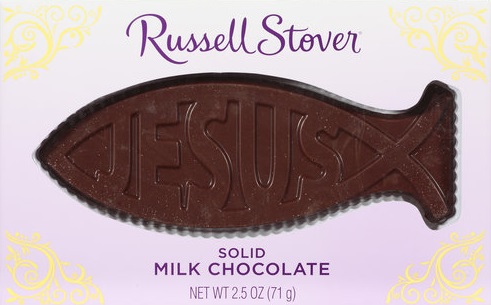
Solid Jesus FishIn the hunt for the perfect stocking stuffers, it’s clear that 1) there are too few dark chocolate offerings and 2) hollow milk chocolate Santas are often sad, unsatisfying confections. Good dark solid chocolate is one of God’s great creations.

We all know why dark chocolate is preferable to milk chocolate:  health.  It’s all about good health, ladies and gentlemen.  Of course it is.

But why, exactly, is solid chocolate better than hollow?

  • Is it because we feel tricked and cheated when we bite into that thin hollow leg?
  • Is it because a hollow snack is a less substantial snack?

A church leader shared with me yesterday, in her reflections about a church she recently visited, that their faith seemed very hollow.  This is an issue with many of us:  our faith seems hollow (probably because it is.)

“Solid faith” is not only substantial;  it’s also substantive.  In other words:

  • It’s consequential.  It makes a difference in the world.
  • It’s meaningful.  It serves a purpose larger than ourselves.
  • It’s authentic.  No tricks or fakery.
  • It’s good for us.  It makes us better human beings.

What makes a spiritual community solid?  It’s not the number of members or the number of programs.  It’s not about Tiffany windows or award winning architecture.  It’s not about charismatic preachers or exquisite musicians.

It’s about solid faith in the One who has come to live among us.  If God is with us, the world is different.  If God is with us, we serve something bigger than ourselves.  If God is with us, things are finally real.  If God is with us, we can be the people we were created to be.  What if we assessed our congregations based on how solid they are?


Levels of Membership?

Should someone receive more influence because he/she has been around longer? I’m talking about institutional church membership and those who offer their tenure as evidence that They Should Be Heard:

  • After 28 years of church membership, you would think they would have asked me my opinion before buying new windows.
  • I’ve been a member of this church for 35 years and I’ve never heard such things from the pulpit.
  • My father was a founder of this church and he never would have imagined the church he started going in this direction.

This is not to say that long-standing members are to be dismissed or disregarded. But established church members who say these kinds of things seem to have a completely different understanding of What It Means to Be Part of a Congregation than those who connect with a church today as new members.

For the record, I personally believe that it doesn’t matter if you’ve been a church member for 50 years or 5 minutes. All members have the same influence and voice.

(Isn’t there a parable about this?)

So how do we convey to long-standing members that their viewpoints are very important but so are the viewpoints of newer members? And what about participants who will never formally join the church? They might be spiritually committed, they might even pledge financial support – but they have no plans to “join” officially. Should they have a voice?

These questions speak to the fact that there are tremendous differences in how we view Church, depending on who we are and where we are coming from. The differences between generations, digital natives versus digital immigrants, and multicultural shifts impact the way we see spiritual communities. But as long as we have established church members who insist on being listened to based on their long-time tenure, we will be distracted.

Our calling and our priorities: to make disciples and to love our neighbors as we love ourselves. If we succeed here, we will be just fine.


Amping Up What We Always Do

As Advent begins, it occurs to me that – whileadvent-candle family traditions shift – there are some things that we always do in my family. When I was a child . . .

  • we always celebrated Christmas in Mooresville.
  • my Dad always played practical jokes with gift-wrapping.
  • my Mamaw always baked angel biscuits for breakfast.
  • my Mom always baked cookies that looked like these.

These days, even with our own children fully grown, we  – still – always . . .

  • stay in our pjs all day long on Christmas Day relishing the only day in the whole year when nobody calls the pastor(s).

What is it that you always do for the Advent season and Christmas?  Or is every year different?

It’s easier to name Christmas traditions than Advent traditions perhaps.  And chances are that our traditions have more to do with our own families and friends than with strangers.

But what if we started this Advent creating some new practices involving strangers that could become what we always do?

  • What if we always bought a handful of $10 gift cards to Dunkin Donuts or Starbucks or McDonalds and handed them out to street people sometime during the first week in Advent?
  • What if we always took a bag of new thick socks to the local shelter sometime during the second week in Advent?
  • What if we always wrote notes to people who’ve lost loved ones since last Christmas?
  • What if we always kept our eyes opened for Invisible People – those most people don’t notice – and we made a special effort to connect with them?
  • What if we always spent Advent learning about a group of people (of a different religion, race, nationality) who are not like us.  Jesus was born for them too.
  • What if we always spent at least one meal during Advent with someone who lives alone?
  • What if we always took cookies to our local firefighters or police officers or EMT workers or crossing guards or public librarians a few weeks before Christmas?

In light of the brokenness of the world, what if we always lived as allies to those who are not in the majority, defenders of those who suffer injustice, partners of those who have a difficult road to walk?  What if serving the least of these became the thing we always do – and not just during Advent?

Happy Thanksgiving

Going silent until December 1st.  Happy Thanksgiving to all.

pies

So Many Consultants

This WayChurch consultants are everywhere.  Sometimes they are former pastors, former seminary professors, or organizational management gurus who specialize in religious communities. There are some great consultants out there.

Because the rules have changed throughout what used to be Christendom, almost every congregation needs a coach to move us through the muck and onto the other side.  But what do we look for in the search for the right consultants for our congregations?  Here are some questions to ask:

  1. What other congregations have used these consultants/assessments/programs?  And what was the final impact/result of working with them?  What really changed?
  2. Does your denomination have arrangements with certain consultants so that you get a group rate?  (Note:  this is one of the good reasons to be part of a denomination.  We partner together to do Big Things.  We lean on each other for financial and other support.)
  3. When was the last time the consultants actually served in pastoral leadership?  Sometimes it’s easier to tell a congregation how to move forward than to lead a congregation forward.
  4. What’s your consultant’s own spiritual community?  If she/he is not personally part of a spiritual community, see #3.
  5. Is this relationship going to be Hit and Run Coaching? Will your congregation receive a report, but then you are left coach-less?

Partnerships are the way to go in the 21st Century Church:  partnering between congregations, between churches and denominations, between congregations and consultants who help us lead impactful change.  As we move into both a new liturgical years and a new calendar year in the days and weeks to come, how can we be the church for a new day?


This Could Change Everything (in the PCUSA)

Note:  This brilliant idea comes from a colleague who doesn’t want to be identified.  You know who you are, my friend.  Thank you.  I will refer to you as The Ingenious One. (TIO)

Time for Change clockIn my pontiff-less, Cupich-less denomination, pastors seeking new calls complete a Personal Information Form (a PIF) and congregations seeking new pastors complete a Ministry Information Form (a MIF).  It’s not exactly e-Harmony for church but that’s the basic idea.

Here’s the gaping, sabotage-creating problem:  pastors express their hopes of serving a congregation that wants to make a difference in their communities and in their souls.  They have energy for “growth” and “change.”  And maybe the congregation says that they, too, want “growth” and “change” but there is no evidence that the congregation has ever made the effort to do so. They say it, but in their heart of hearts, they don’t really mean it either consciously or unconsciously.  It could be that they don’t know how or it’s too painful or it’s too much work or they simply cannot imagine a different way or they have forgotten that the church is about Jesus.

But this will become the flash point in their future ministry with their new pastor.

One of the questions a pastor is required to answer in the PIF is this:  Describe a moment in your recent ministry that you recognize as one of success and fulfillment.

My friend TIO wants to know why this question is not also asked in the MIF.  The answer would tell all potential candidates a slice of the real story about that congregation.  For example, consider these answers.

Describe a moment in your recent ministry that you recognize as one of success
and fulfillment.

  • We redecorated the parlor two years ago after receiving funds from the estate of one of our beloved members.
  • We celebrated the 17th anniversary of our Christmas Elves program last December.
  • We had several cottage meetings about worship and selected a new hymnal.
  • We added a new Sunday School class called The Newspaper Class.
  • We installed a screen in the sanctuary which we use occasionally for praise songs.
  • After talking with local school officials about the issue of teenage depression in our community, we partnered with a cafe near the school last summer to offer a gathering space for high school students after school and on Monday nights. A committed group of our members offer presence, mentoring, and a weekly informal God Talk which offers the opportunity to discuss Meaning of Life topics. The God Talks have connected 8-15 students each week and it seems to be making a difference.

See what I mean?  The answer to this question would speak volumes on where the congregation truly is and what their DNA might be.

Too often congregations seeking “growth” and “change” call a young pastor, let’s say, imagining that all they need to do is have a younger presence in the pulpit.  “Other young people will flock to us.”  Or they believe that calling a young pastor with young children will attract other young families.

Note to all churches who have ever thought this was The Plan:  it does not work that way.  It’s not about appearances.  It’s about the energy and will of the congregation to commit to loving neighbors and making disciples – the marks of true growth and change.

The pastor – of any age – cannot be expected to be the only one who can “Describe a moment in your recent ministry that you recognize as one of success and fulfillment.”  Not asking the congregations this question perpetuates the notion that the pastor – and only the pastor – is responsible for “success and fulfillment.”

And so – if the MIF doesn’t ask it – maybe candidates should ask it:

“What has this church done to make changes and growth in the past year?”  The answer will tell a deeper story.