Category Archives: Uncategorized

This Is What I’m Looking For

????????????????????????????????????????????????????????????????Presbyterians don’t have bishops, of course, unless you count the corporate bishop that is The Presbytery.  I work for that bishop.

The truth is that I also have the ability to influence “the bishop.”    And the power is intoxicating.  (Kidding.)

At the risk of sounding independently bishop-y, this is what I’m looking for when a church in transition (i.e. each one of them) asks for guidance as they seek a new pastor.  Pastors equipped with these skills in their toolboxes are like gold.

I’m looking for pastors with:

  1. The ability to shift a congregation’s culture.  This process is neither for the fainthearted, nor for those in a rush.  But almost every congregation’s culture is in need of a culture shift.
  2. The ability to make connections between parishioners, community leaders, denominational resources, neighbors, and people who would never cross the threshold of a church building.
  3. The ability to love people authentically, even when they are cranky, anxious, and have no boundaries.
  4. The ability to mediate conflict with grace and firmness.
  5. Fearlessness in the face of angry/bullying/evil-ish behavior because they trust that God’s Spirit is more powerful than the most difficult member of their congregation.
  6. A working understanding and appreciation of multiculturalism. 
  7. The ability and desire to work collaboratively with their own staff, parishioners, and colleagues both in and outside the denomination.
  8. The ability to articulate a deep, impactful faith in words and actions.
  9. A desire to model healthy boundaries and Sabbath-keeping.
  10. Knowledge of family systems and organizational management.

While Pastor Nominating Committees are looking first and foremost for “good preachers,” pastors who are “good with children and the elderly,” and those with excellent pastoral care chops, they cannot be effective without at least some of the tools mentioned above.

My hope is that all of us will continue to learn, continue to develop new skills, and continue to change.  Otherwise we cannot expect our congregations to do the same.

Facebook at Work

I already use Facebook at work.  Yesterday, I specifically:woman_using_facebook_imac

  • Messaged someone about Adult Education speakers.
  • Found photos to steal use for a Presbytery slide stream.
  • Asked for an email.
  • Messaged someone about a job description.

Anyone who walks into my office can see what’s on my computer screen, and I sometimes feel self-conscious when what’s on my screen is Facebook.  But honestly I sometimes need to make Zuckerberg-esque Church World connections.

But for those for whom Facebook is frowned upon in the office, Facebook at Work is coming.  It’s unclear how this will work/look/impact professional lives. I don’t use LinkedIn or other work-related sites much, but I do use general social media for work.  How about you?

What social media do you use on a regular basis for work?  And why do you use it?

Image source.

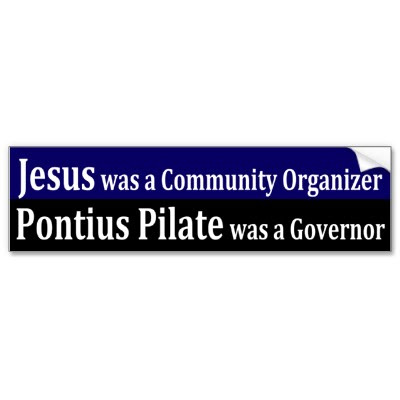
When I Say “Community Organizer” What Comes to Mind?

There is a generational divide, perhaps, when we ponder the term “community organizer.” Several faithbased groups full of Baptists, Roman Catholics, Jews, Presbyterians, Muslims, Lutherans, Episcopalians, and Unitarians serve in the community organizer model.

But for another generation who remembers the violence of the 1960s – to say that we in the church want to create a new role called “Community Organizer” – this brings discomfort if not pain. Some of my colleagues and I witnessed this last weekend in a debate about what to call a new Presbytery staff position.

I like the term Community Organizer. I have spoken in favor of this job title.

Even if this term screams not-so-positive things for some, I’m a big fan of reclaiming words that started out meaning one thing and now mean another due to cultural usurp-age: Evangelism. Bible-Believing. Feminist.

But upon further reflection, I’m also mindful of what Paul said about getting in the way of someone else’s spiritual journey. What if a term that we find excellent makes others miserable?

For example: My mind is on Ferguson today. And I recall last summer when Governor Nixon called for a curfew after Michael Brown was killed by a police officer. The first thing that some black citizens of a certain generation think when they hear “curfew” is sundowning.” While a curfew might have been a good idea in theory (get people safely home) the word hit a nerve. (And then there’s also that issue of violating the constitutional right to assemble peacefully.)

Yes we can reclaim words. But would we be willing to give up the perfect word for an alternative if it brought peace? I hope so.

Image of Jesus training twelve new community organizers a.k.a. “The Sending of the Twelve” by Duccio DiBuoninsegnaca (14th c)

Restructuring Church Organizations 101

restructure-195Our Presbytery voted overwhelmingly today to restructure.  After countless meetings, writes and rewrites of proposals, and finally a lengthy discussion about the job title of a new two-year position (“Community Organizer”?) we approved a new Connectional Mission Design.

One of Big Three Shifts for the 21st Century Church is Organizational Change.  It used to be true, for example, that every member of a church governing board headed up a committee of the congregation (e.g. The Stewardship & Finance Committee, The Education Committee, etc.)  That organizational structure is dead – or should be.

True restructuring will never happen without authentic, deep, broad, difficult, courageous change with buy-in from the majority of the congregation.  Among the easy attempts at church transformation that will not work:

  • Changing the church’s name
  • Installing a new sign
  • Re-naming committees “teams” or “work groups”
  • Calling a new pastor
  • Changing the order of worship
  • Changing the time of weekly worship
  • Shifting the worship style
  • Using words like contemporary, missional, special, & emerging
  • Participating in a denominational or other program that will help you grow/change/figure everything out.

Those things might be pieces of the strategy.  But if there is no energy, if there is no absolute willingness to toss everything that is not about Jesus, then transformation will never happen.

So, now for the good news:

  • This is about the moving of God’s Spirit and so – if we are willing – God will do extraordinary things that will rock us.
  • If we focus on relationships (with God and each other) rather than processes, our souls will be fed.
  • If we consistently ask “How is this _____ (chili cook-off, Bible study, play group, harvest festival) transforming people and communities for good?” we will stop wasting our time on activities that “we’ve always done” or “we have to do” that simply waste precious resources.
  • If we treat people like people – and not like numbers, targets, dollars, trophies or “fresh meat” – we will experience the reign of God.
  • If we model transparency, trust, and grace the behavior of the community will shift.
  • If we focus on the big message (i.e. why we exist) rather than the small messages (e.g. what happened at last week’s rummage sale, the fight over sanctuary paint colors) we will alter the congregation’s DNA.
  • If we truly love our people, we will have the pastoral capital to challenge them.

Lots of organizations are addicted to reorganizing, so we need to look out for that too.

Every denominational entity is reorganizing these days.  But none of it will work if we aren’t willing to give up all the things we love and worship more than Jesus.

Image source.

Where Would We Go?

Lord, to whom can we go?  John 6:68

wilderness

So what would you do if a parishioner told you that the only reason that he is part of his church is because he needs a venue for his funeral?  He is closer to 90 than 60 and so he is planning ahead.

And while he’s been a member of that congregation for most of his life, he has neither the energy nor the interest in committing himself to the mission and ministry of his church in the community.  And yet he asks, “Where would I go if this church didn’t exist?”

It’s come to this:  The church exists – for that particular gentleman and for many we know and love – for them . . . until they die.

A missional church exists, of course, for those outside its walls.  Yes, there are people within the walls to serve too, but the church gathers to be equipped to serve out in the world.  Remember?

Older generations who have been part of the same congregation for most their lives wonder where they would go if their church didn’t exist.  Younger generations can think of all kinds of places they would go if the church didn’t exist.  (And so they indeed go there.)

As churches shift to Millennial Leadership in the next 10 years, we are going to see some creative and fantastic models for ministry.  I personally can’t wait.

Where will we go?  Even as a Baby Boomer, I’m excited about the answer to that question.

We will go everywhere there are broken people who want life to be different.

When The Sermon’s the Thing

Is it possible big bangthat sermons can be ruinous to our spiritual lives? And I’m not talking about bad theology.

I’m talking about the primacy of The Sermon.

We in the Reformed tradition would say that the primacy of the sermon  is – in itself – good theology.  But making the sermon the center of all things also causes theological confusion in that:

  • Most pastor nominating committees are seeking – first and foremost –  “a good preacher” rather than a strong leader who can equip the saints for their own ministry.
  • When Sunday morning worship is considered the most important hour of the week, we can become self-satisfied.  I heard a sermon, so my spiritual ponderings are done until next time I hear a sermon.
  • When we invest most of our energy, money, and ‘church time’ in that single hour of Sunday morning worship – if we go to church at all – we forget that following Jesus is a way of life rather than single hour commitment.
  • When we receive all our theological training from sermons, we forget our own calling to study the Scriptures and reflect theologically in other venues.
  • If we expect the sermon to be educational, entertaining, comforting, and compelling – and then we go have brunch and forget about it – there is no spiritual transformation or visible impact.

The sermon – to me – is dessert. If we consider it the main course we are going to die of theological malnutrition.

Yes, many of our preachers are elegant and brilliant and excellent at interpreting Scripture for daily life.  But excellent pastors are also Walking Sermons, modeling what discipleship looks like and offering spiritual reflection in every meeting, class, and conversation.  We’ve all know Good Preachers who are rarely confused for Jesus.

It’s a common joke that pastors only work on Sundays.  But the joke also lets parishioners off the hook.  If “the pastor only works on Sundays” then maybe this means that parishioners only have to practice their faith on Sundays.

The 21st Century Church offers multiple portals for entering a faith community.  Yes, there is a corporate gathering on Sundays.  But if there is something different everyday in a variety of places with a variety of practices, there are more ways to enter the community.  What if small congregations partnered with other small congregations so that individual staff members don’t burn out?

I love a good sermon.  But if it’s the only time I ponder holy things, I’m missing out on the holy stuff that happens every day.


Do’s and Don’ts for Appreciating Spiritual Leaders

Edible ArrangementsI remember a denominational leader once advising our Presbytery:

If you like your pastor, please treat her/him well.  A spiritually nourished pastor = a spiritually nourished congregation.

What we clergy do – at its best – is spiritually nourishing work.  But it’s also lonely, unrelenting and – at its worst – soul-sucking work.  How can we support all our church staff members:  clergy, educators, music leaders, and administrators when they are serving at their best?

  • Do: Give an extra week or weekend of vacation, if  – in spite of excellent leadership – you cannot afford to give your church staffers a cost of living increase, much less a raise.
  • Don’t: Forget to do annual performance reviews for every paid and volunteer member of your church staff.  Everybody gets a review.
  • Do:  Surprise your church staff with random acts of appreciation.  A gift card.  One of those random cut-out fruit bouquets.  Cupcakes.
  • Don’t: Make them ‘pay to work’ – e.g. paying for their own music (musicians), art supplies (educators), and conferences (clergy.)
  • Do: Recognize that most of their work is unknown to you.  The average church member has no idea what we do all day long. Somebody should write a television series.  (Oh, wait.)
  • Don’t:  Assume that – when you call – they are sitting at their desk just waiting to hear from you.  They have quite a bit going on.  So please try to refrain for phone calls asking for other people’s phone numbers (look it up yourself) or asking what day of the week Christmas falls on this year (again – look it up) or complaining about last week’s coffee.  Please don’t.
  • Do: Encourage them to take their days off, all their vacation, all their study leave time, and – if at all possible – a sabbatical.  Your congregation will be better for it.
  • Don’t: Call them when they are on vacation just because you can’t find the light bulbs or the name of the roofer.  Don’t interrupt that holy vacation at all unless it’s a catastrophic emergency.  (e.g. death, near death, something that will make the evening news.)

One of the greatest things our Presbytery was able to do this year was award 33 $1000 grants for clergy to be used for something that refreshes their souls. (Note to applicants:  the last 11 haven’t been awarded yet.)  Gym memberships, painting classes, a canoe, a weekend trip with a son/daughter, date nights with their spouses.  This might seem extravagant, but it’s actually a beautiful and subversive way to nurture our colleagues in ministry.

As church budgets are being created for 2015, my hope is that those of you who do such things will consider beautiful and subversive ways you can  nurture your own spiritual leaders.

Just Wondering

Outdoor labyrinthFaithful readers:  I’m wondering what your institution’s policies are about Study Leave.

In my denomination, Study Leave is required for all pastors.  The minimum requirement is two weeks and $700 in my Presbytery, but those terms are common nationally.  As a spiritual leader’s experience increases, the church might offer the same time (2 weeks) but more funding (at least $1000.)

According to assorted manuals I’ve researched, study leave is not vacation.  There is an educational and spiritual refreshment component.  Among the common study leave practices are:

  • Long-range planning and preparation for worship, Christian Education, and mission.
  • Meeting with established clergy groups who share sermons, spend time with a theologian, and/or pray together.
  • Taking a class in an area to broaden skills in a particular area – either for a degree or certificate or for one’s own enrichment.

After over thirty years of professional ministry, I’ve been blessed with an array of solid Study Leave opportunities.  I’ve taken specific courses on preaching, for example.  I’ve earned a Doctor of Ministry in Christian Spirituality.  I’ve attended conferences.  I’ve hidden in a cabin to chart out the upcoming year.  I’ve met with The Preaching Roundtable – a group of 16 clergywomen for 13 years.  While I’ve always reported my study leave activities to the board of elders, I’ve never asked permission to take a certain course or make a certain plan for those two weeks.

So, here are my questions for you.  (I’m asking both clergy who take Study Leave and church members who are impacted by your pastors’ Study Leave):

  • Are two weeks and (about) $700 sufficient for your needs?
  • Do you tend to take classes/attend conferences/workshops close to home?
  • Do you run your plans by the personnel committee before Study Leave?
  • Is Study Leave the same as Professional Development (i.e. can your Personnel Committee assign certain activities for your Study Leave?)

I would love to know your experiences.  Thanks.

Business Relationships with Parishioners = Yikes

It’s not uncommon for congregations to be business partners with their kevin osmond artparishioners and/or paid staff members:

  • The church that hires members to serve as administrators, sextons, choir directors, educators.
  • The church that loans money to their pastor to cover a home downpayment.
  • The church that hires a church member’s firm to paint the sanctuary, re-roof, pave the parking lot, fix the boiler.

If everything goes perfectly well:  the church staffer is excellent, the pastor pays her money back, the paving company does a stellar job – then all is well.  But what if:

  • The organist – who is also a church member – is not working out.  It could be anything from addiction issues to tardiness issues to doesn’t-play-well-with-others issues.  Maybe he just isn’t a strong organist?
  • The pastor is in arrears in terms of paying back the loan.  Some parishioners want to forgive the loan out right and others want the pastor to keep up with the payments.
  • The paving job was botched and now it will be even more expensive to pave and correct the previous company’s work.

Now what?

We can all be adults here and talk seriously about Making Changes.  But too often feelings are hurt.  Blame is declared.  And people leave their church – either physically or emotionally, often causing congregational mayhem on the way out.

There are pros and cons to hiring members as staff or as business partners.  But mostly there are cons.  (I know these are fighting words for those who happily serve their own congregations and are compensated for it.)

There are pros and cons to serving as a bank for church staff.  But mostly there are cons.  (Yes, most pastors do not have 20% down payment for a home when they move into a new community.  But neither do other people.)

Very few congregations do this well.  If a church member is on staff, they lose their pastor to some extent.  Their pastor becomes their boss.

What are your congregations’ experiences and best practices on this issue?  The healthiest I’ve seen:

  • Parishioners working for other congregations in their community. They might be active in their own congregations and so they know Church World, but share their knowledge with a church that is not their own.
  • Parishioners working very PT for their own churches so that their primary salary is not from their congregation.
  • Pastors borrowing money from banks rather than the church coffers.

What healthy processes have you experienced?

Image source.

When “Fit” Is Code for Something Else

Yesterday, I wrote about “good matches” between congregations and pastors or SONY DSCbetween people looking for spiritual community and those communities.  But – to be honest – sometimes saying “It wasn’t a good match” is another way of saying “This person/church/community wasn’t ______ enough.

Another way of putting it, in a most personal way:  “You aren’t the right fit.”  Yes, we take it personally.

Maybe this code for:

  • “You are too old.”
  • “You are too young.”
  • “You are too black.”
  • “You are too white.”
  • “You are too female.
  • “You are too male.”
  • “You don’t look like our next pastor should look.” 

I get it that Pastor Nominating Committees – for example – are looking for someone who will “fit” into an existing context.

Let’s say that all the other pastors on a church staff are all male.  Chances are you are especially seeking a female – at least if we are talking about a Mainline Protestant congregation.

Or what if you are trying to expand the racial diversity of your staff and you don’t need another white person?

Or what if your staff is comprised of several people over the age of 50 and you really want to hire someone under 40 for some age diversity?

Or what if everybody on staff is an extrovert or a Type A personality or a Myers-Briggs “J” and you badly need an introvert/laid back/”P.”

It hurts to hear “You just weren’t a good fit” or “You weren’t what we were looking for.”  Ouch.   We can’t exactly change who we are.  And we live in such a litigious society that we can’t exactly say, “We didn’t need another white, female 60 year old.

Consider, though, that we in the Church are in the Holy Spirit business.  We need to recognize that the person we are looking for is not always the one God is guiding us to call.   

But in the meantime, here’s some unsolicited advice to those who interview candidates for church jobs – or any job:   Please don’t speak in code when turning someone down for a position.  Please don’t say, “You were not a good fit” or “You were not what we were looking for.”

Gentle readers:  What would be a better thing to say when a church nominating committee has decided to say “no”?