Category Archives: Uncategorized

Hanging from a Cross

‘Blessed are those who are persecuted for righteousness’ sake, for theirs is the kingdom of heaven.’ Matthew 5:10

Obviously and gratefully, I have no idea what it feels like to literally hang from a cross.

There have been times I’ve felt betrayed, broken, and gaslit (even by the Church) and there have been excruciating times when I’ve felt alone with the exception of Jesus. Those days are an important part of my call story.

And there is so much betrayal, brokenness, and gaslighting going on in the world, that Good Friday feels upspeakably holy this year and every year. We have a God who knows what it’s like to feel betrayed, broken, and gaslit. This God is not like any other god.

I mentioned my appreciation for the movie Promising Young Woman last week and I was struck by the depth of the betrayal Emerald Fennell was able to create on film. It’s the feeling that Nina Fisher must have felt when she was sexually assaulted and no one believed her, except for her friend Cassie. And Cassie felt that betrayal as if it had happened to her.

Cassie becomes an avenging angel, in the words of Fennell. In fact, the Biblical imagery is intentional. Cassie is often filmed as if she’s hanging on a cross. Sometimes it appears that there’s a halo above her head or angel wings are at her sides. (You have to watch the movie more than once to catch these little – forgive me – Easter eggs.) Cassie continues to be kind even in her misery. Until she’s not. She makes a sacrifice and yet the end is not the end.

Sort of like the Jesus story.

What I’m not saying is that Cassie is Jesus. What I am saying is that each of us has the ability to live our lives supporting the unsupported and trying to live with integrity. What I’m saying is that there are privileged people among us who have gone through life unconcerned with the fact that the other people around them are human beings, not disposable things. At this moment there are people in places of power who have done heinous things without repercussion. They have the power to make their problems go away, to make the troublemakers go away.

The powerful of First Century Palestine wanted Jesus to go away because he knew the truth about them. Even if they were the respectable temple leaders, he knew what was actually in their hearts.

As Emerald Fennell has said in interviews, “there is no position more powerful and vulnerable” than hanging from a cross which is why the opening scene of her movie shows Carrie in such a position. The vulnerability comes from being on full display for the world to see your weaknesses. And yet great power comes from revealing such vulnerability.

If you don’t believe me, look at Jesus.

For those all over the world who are persecuted for righteousness’ sake today, we pray to the LORD.

Image from the opening scene of Promising Young Woman starring Carrie Mulligan as Cassie.

Love Has a Spine

Do yourselves a favor and read Beth Moore’s analysis of The Cleansing of the Temple by Jesus.

Is it fair to say that Jesus, the sinless Son of God, acted in anger in this scene? Somehow I can’t picture him braiding up a whip and flipping over furniture because he was mildly annoyed. What sets divine anger—and even ultimately divine wrath—apart from human anger is that it cannot be extracted from his love. God cannot set it aside His love because it is not only what he does. It is who He is. It is his very essence. We’re simply too quick to forget that love has a spine.  

This might be the most important lesson of Holy Week: Love has a spine. Too often in the 21st Century Church, the followers of Jesus have no spine:

  • We know that we should be standing up to bullies (especially church bullies) but we fear the bullies will turn on us.
  • We know that we are called to stand with the poor, but it’s easier to sit in our own comfort and look away.
  • We know that it’s right to stand beside our siblings whose very existence is threatened, but we were taught to avoid conflict.

Where is our backbone, Church? Clearly Jesus became angry witnessing the poor being cheated and the disenfranchised being abandoned. Jesus wasn’t always “nice” or accommodating like many of us try to be.

But Jesus didn’t cleanse the temple to spark mayhem. It was about love. Love. Has. A. Spine.

Why don’t we?

For the sake of the Gospel, we need to find our spines and stand up, stand with, and stand beside the people Jesus died for. Because of love.

This Could Be the Day

This could be the Day God moves us to change the world.

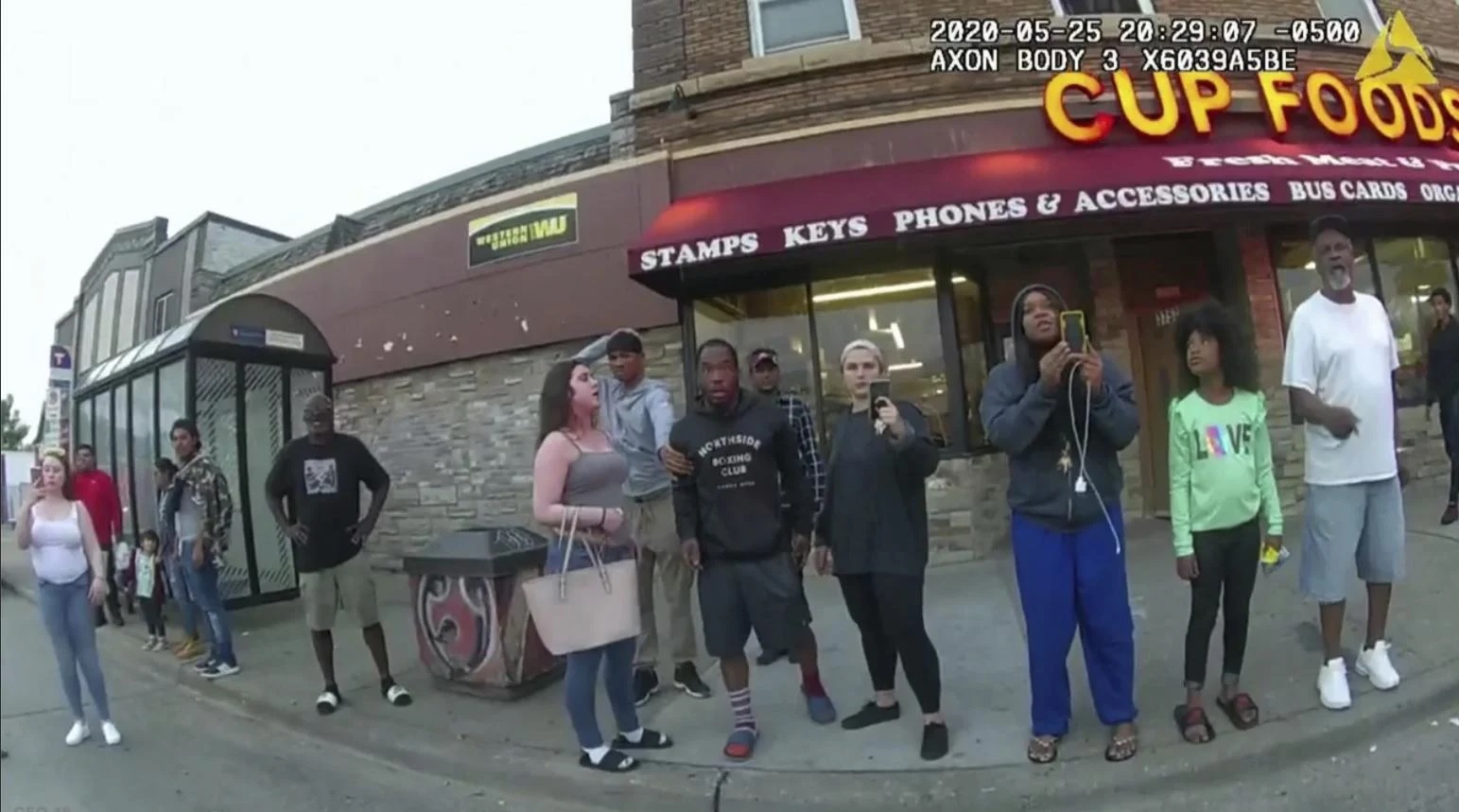
Meet Darnella Frazier. When she was 17 years old, she was taking her 8 year old cousin down the street to buy snacks. But before they reached the store, she found herself witnessing what many of us consider to be a murder. She took out her phone and recorded the killing of George Floyd. And her video changed the world.

I once taught a class for adults called “The Meaning of Life” and one of the most memorable conversations was called “The Most Important Thing I Did Today.” This was a class made up of attorneys and doctors and Important Government People and their answers included things like “reading a bedtime story to my child” and “finishing a grant for painting classes for local school kids.” Most of us change the world by working towards small victories that bring joy to a tiny community of human beings.

Today it’s quite possible that an opportunity will arise when God will call us to do something simple yet life-changing. We have the opportunity to uplift a person who’s feeling low. We have the chance to redeem a situation which feels like a failure. It’s the moment when we can either ignore a person in need or step up to remind that person that they matter. It’s the moment when a person feeling hopeless finds hope because we have noticed them.

This is why we were born. God has created us to be like Jesus: healing the sick, befriending the outcast, loving the unlovable. Being like Jesus = showing what the love of God looks like.

It looks like Jesus. This is The Big Thing we are called to remember this week. We are called to express love. It might change the world.

Image source. Pray that the witnesses of the Chauvin trial would find peace.

A Trial Starts Today

One of the most famous trials in human history is remembered this week . . . and it’s not about OJ or Manson. It was the trial of an innocent person who spoke the Truth and it got him executed. It was a quick and ridiculous trial involving a jury of sorts – the Sanhedrin – and judge who was mightily influenced by the popular crowd in his sentencing.

The overwhelming focus this week will skip ahead to Easter brunch and an egg hunt. But please remember there was a trial and it was a joke.

There is another trial that begins today in Minneapolis with opening statements against a former police officer named Derek Chauvin. Please do not call this the George Floyd Trial. Mr. Floyd was the victim whose death in front of millions was clearly unjust whether he paid for cigarettes with a fake $20 or not, whether he was drunk or not.  It’s one of countless examples of justice gone wrong.

There is enormous opportunity in this trial.  There is an opportunity for justice.  There is an opportunity for reflection especially by White People.  There is an opportunity for remembering that when all the White People posted solid black boxes on our social media profile pictures and then took them down and never mentioned George Floyd’s name again, it might be an excellent time to revisit racial injustice in this country.  If we were shocked by the death of George Floyd and never thought about it again after most of the Black Lives Matter marches ended, this is a good time to pray for a just trial.

We have all seen our share of unjust trials.  The trial of Jesus was a joke and yet God redeemed it three days later.  We pray that the trial of Derek Chauvin would not be a joke.  

Please pray for the jurors, the attorneys, the judge, the Floyd family, and Mr. Chauvin this week.  We also pray for redemption knowing that the God of the vulnerable expects us to be like Jesus.

Image is the magnificent cover of the June 22, 2020 New Yorker by Kadir Nelson.

Is Collaboration Female?

Some of us read Carol Gilligan’s In a Different Voice in seminary which notes the differences in how men and women make decisions. Generally- speaking. women make decisions according to their relationships and men make decisions according to what’s right and wrong. [Note: gender studies have evolved since Gilligan wrote this book in 1982 but that’s for another post.]

I remember when, as a parish pastor, our elders approved to have an organization place a huge metal bin in a corner of the church parking lot to collect used clothing.  On the day the bin was delivered, it was accidently placed in a corner of the church parking lot across the street.  The Methodists had our bin!

Whatever.  Both churches were served by female pastors and we agreed that it was just fine to keep the bin over there and it was just as convenient for people to donate clothing in “their” parking lot as in “ours.”

Conflict ensued.  Some of our elders were concerned that “we wouldn’t get credit” for this mission project and when it was pointed out that the purpose of the bin was to serve those who might need the clothing rather than to score points in some heavenly tally, the conflict was settled.  But the feelings remained the same.

To put it simplistically, the women were quick to collaborate and the men wanted to keep score.  [Again: these are stereotypes.  Please don’t troll me.]

The future of the Church is collaboration in mission: with private business, with school systems, with local police departments, with other congregations.  If the point is to make a positive impact in service to our neighbors, then who cares whose idea it was or whose name is on it?  Unless we are keeping score.

If Jesus kept score, we would all be doomed.  

Some say that “the future is feminine.”  I don’t know about that, but I do know that the days of white straight male privilege are slowly (very slowly) fading away.  Weekend assignment: watch the movie A Promising Young Woman by Emerald Fennell.*  To be discussed next week.

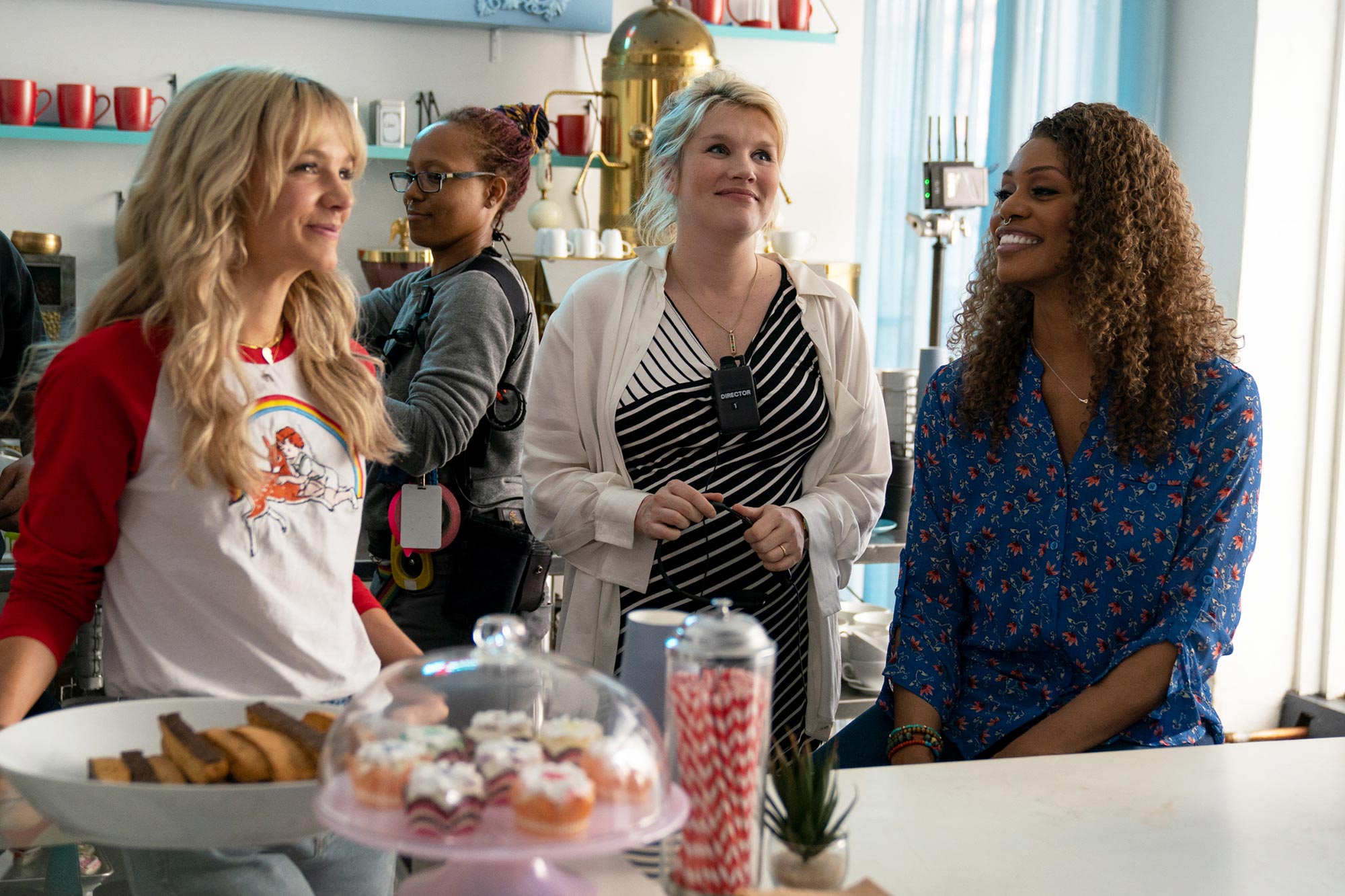
Image of (L to R) Actor Carey Mulligan, writer/director Emerald Fennell and actor Laverne Cox on the set of Promising Young Woman.

*Viewer Warning: it might trigger those who’ve been assaulted.

Meddling from the Pulpit

I included this question in yesterday’s post about the shootings at the three Asian American spas:

And why is it okay for someone to register for and buy a gun on the same day in Georgia but it’s not okay to register and vote on the same day in Georgia? 

Maybe I’m naive, but I don’t see that question as controversial.  It’s a real question.  I would love to hear from someone – especially from a person of faith – an answer to that question that makes sense.

People of faith can disagree and it’s an ongoing topic of conversation among preachers about how we – as students of Scripture charged with proclaiming The Truth – can express what we believe God is saying to us even if we know there are hearers who will – at best – disagree and – at worst – accuse of of meddling/preaching politics.

[Note: Jesus was crucified for political reasons.  Just something to keep in mind as we move into Holy Week.]

As a preacher, I have not cornered the market on God’s Truth.  And yet I can say for sure that God doesn’t want us to :

  • Perform child sacrifice.
  • Burn down our neighbor’s house.
  • Enslave people.

Those beliefs do not seem political unless we go deeper.

  • Are we sacrificing our children by not tightening gun legislation? (Check out this new book Children Under Fire by Washington Post reporter John Woodrow Cox.)  Are we sacrificing our children by permitting abortion?  By aborting fetuses with Down Syndrome? 
  • Are we figuratively burning down the houses of our neighbors when our troops accidently or strategically target civilian villages?  Are we sacrificing safe neighborhoods for fossil fuel expansion?
  • Are we allowing financial institutions to hold students hostage with crushing debt?  Are we participating in unfair labor practices that keep the poor impoverished?

See what I mean?  It doesn’t take much to move into “meddling.”

I believe we are called to speak the truth in love and it’s also true that people will not love us back.  In healthy congregations, people can agree to disagree.  In healthy congregations, people of deep faith can say to each other, “You could be right, but I’m not there yet.”  

In unhealthy congregations, preachers get bullied and gas-lit and assaulted in ways unbecoming of a follower of Jesus.  And sometimes preachers speak in a way that people can’t hear them.

Stories help.  But sometimes people with whom we disagree don’t believe our stories.

How do we preach the Gospel of Jesus Christ when the Gospel makes God’s people uncomfortable?  We love them or at least we try to love them.  And we remember that we follow One who loved God’s people even from the cross.

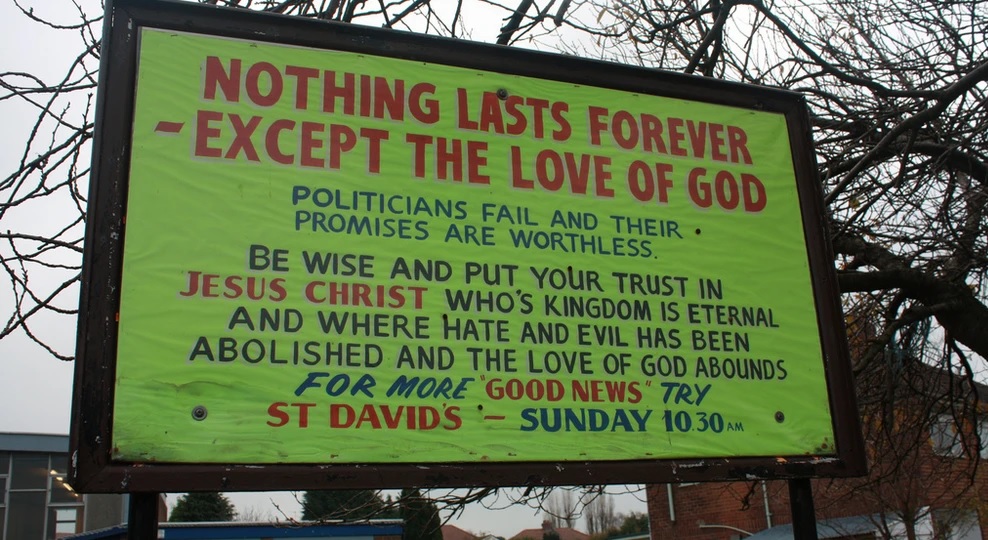
Image from St. David’s United Reformed Church in Eastham, U.K.


The Women in the Spa Where I Get Pedicures

I know quite a few Asian women as clergy colleagues.  They are without exception among the most brilliant leaders in our denomination.  Most of them are Korean American.

There are two young Asian women in my family whose life stories seem similar to mine, but they aren’t.  One is Pakistani American and one is Indian American.

My financial planner is an Asian woman whose wisdom I treasure. She is Filipino American.

[Note: There are 48 countries in Asia.  Each country has multiple cultures and differences.  To identify someone as Asian doesn’t begin to describe their heritage.]

And then there are the women over at the nail place where I get a pedicure. They are primarily Vietnamese Americans. Their name tags say “Angela” or “Jasmine” but I suspect their real names are something like Hyunh or Khanh.  They speak very little English but they know my name when I visit about once a month.  

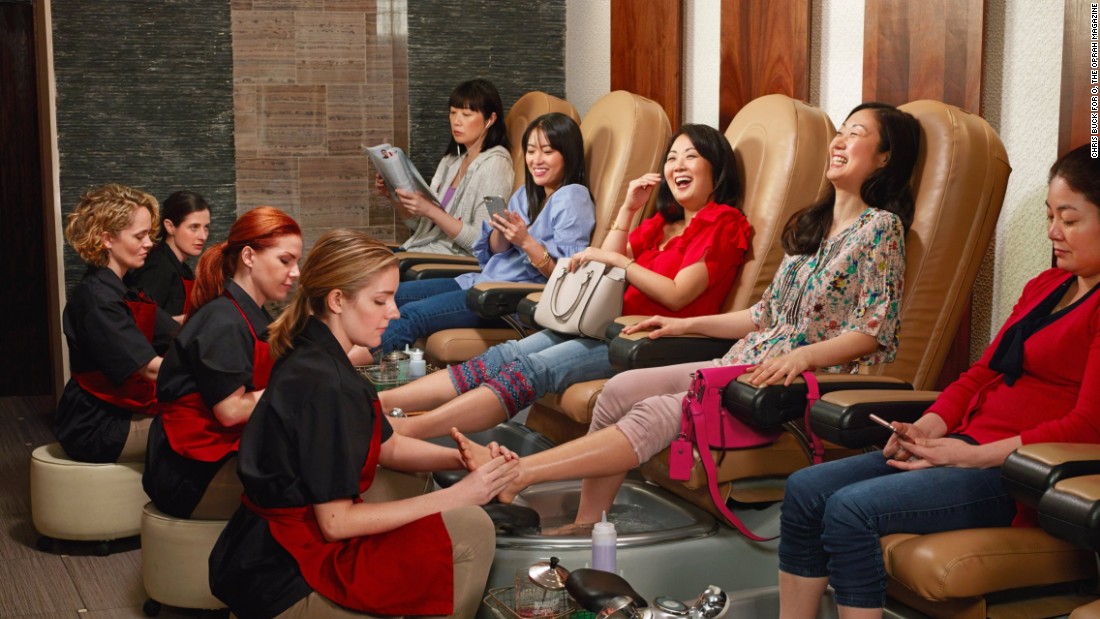
The photo above was part of a project by Chris Buck for O Magazine in May 2017.  The photo essay – “Let’s Talk About Race” – included women in stereotypical situations according to their race. And then he flipped the stereotype, as you can see in the photo above.

It’s intended to jolt us into reconsidering how we see each other.

I’ve tried to keep quiet and listen after the shootings in Atlanta last week. Nobody needs to hear from another straight white woman about this and yet I wish to condemn this insane hatefulness.

The people killed that day were:

  • Soon Chung Park, age 74
  • Hyun Jung Grant, age 51
  • Suncha Kim, age 69
  • Yong Yue, age 63
  • Delaina Ashley Yaun, age 33
  • Paul Andre Michels, age 54
  • Xiaojie Tan, age 49
  • Daoyou Feng, age 44

Six of them were Asian American women who worked in the spas, and I suspect that if I had walked in for a pedicure, I would have barely noticed their faces much less their names.  I admit that I had no idea that women of Asian American Pacific Islander heritage have been as verbally and physically assaulted as I’ve read about since March 16. 

This tragedy requires intersectional analysis.  This tragedy requires saying out loud that the lives of these women who worked in the spas – with those who were killed alongside them – were children of God created in God’s image.  

I condemn these murders.  And yet I need to do more than write in a blog that such violence and hatred is horrible.

We need to speak up when stereotypes are accepted as truths.  We need to stand up when anyone is treated as if they are less.

And why is it okay for someone to register for and buy a gun on the same day in Georgia but it’s not okay to register and vote on the same day in Georgia? 

Our hearts break for these families and it means nothing if we don’t address the deeper issues.

Image source.


Getting Unstuck

Yesterday’s post was about being stuck. But there are ways to get out of that quicksand.

According to the Eagle Creek travel gear store, here are the five things you can do to free yourself from being held captive by quicksand:

  • Make yourself as light as possible—toss your bag, jacket, and shoes.
  • Try to take a few steps backwards.
  • Keep your arms up and out of the quicksand.
  • Try to reach for a branch or person’s hand to pull yourself out.
  • Take deep breaths.
  • Move slowly and deliberately. 

Such an easy metaphor for the Church.  

If you are a stuck congregation, getting unstuck sounds a lot like escaping from the clenches of quicksand.

  1. Travel lightly as a congregation.  Are you bogged down by centuries of history?  On the one hand that’s wonderful because it shows that your congregation has done something to reach this point.  (In other words, courageous followers of Jesus have taken risks along the way to get to 2021.)  Our history is a part of our DNA but it’s not wholly who we are.  Our history can weigh us down to the point that we become a church museum, not an active community of faith.  We can also be burdened by an historic building that can’t be updated without a preservation society becoming involved or by a former pastor whose perceived successes sabotage the ministry of anyone who has followed him.  It’s okay to toss the Annual Fish Fry if everybody hates the Fish Fry although your church has been doing it for 65 years.  Congratulations.  Now move on.
  2. Try to take a few steps backwards.  Backtrack and see how you got to where you are today.  Did the stuckness begin when you chose a pastor who looked good on paper but was basically a Ken doll? (i.e. plastic with great clothes and good hair but without a trace of life?)  Was it the decision to build a gym “so that young families would join” even though there was a local gym a mile away and not a single family has joined since 2014?  How did you get here?
  3. Where are your arms and hands?  Are they folded in your laps? Are people pointing fingers?  Does everybody have their arms in the air with suggestions but they expect someone else to do the work?  Congregations with an active membership (i.e. using their hands and arms for everything from distributing food to painting the neighbors’ houses to writing cards to the homebound) aren’t stuck.
  4. Reach for help.  Your Presbytery – or whatever your middle governing body is called – exists to help your congregation thrive.  There might be consultants or grants or partnerships to invigorate your ministry.  Please don’t use the excuse that “The Presbytery” did something to upset you 30 years ago.  Support is a phone call away.
  5. Breathe deeply.  This is ultimately about God and where God is in your congregation’s life.  If your church doesn’t spend time in spiritual discernment and deep prayer, with Bible studies (start with Acts) and hard conversations, no wonder you are stuck.  
  6. Move slowly and deliberately.  Don’t pull a Peter on Transfiguration Mountain wanting to jump into a construction project without paying attention to what God has to say.  Don’t choose the first pastoral candidate who seems nice.  See #5.

It has occurred to me that there was a time in every stuck congregation’s history when the leadership was energetic and more faithful than fearful and willing to take risks.  That’s how your congregation was established.  Just as we are now in the throes of a pandemic, racial divisions, and political battles, the founders of our congregations started churches during wars, economic depressions and medical outbreaks.  They made sacrifices and they joined forces to serve in the name of Jesus.

We can do that too.  That’s what unstuck churches want to be.


Stuck

It’s no fun feeling stuck. And we sometimes don’t even know we’re stuck until there’s an epiphany that we want things to change.

I work with churches that find themselves stuck and ministry among the stuck feels exhausting, mostly because there is little room for the Spirit to do life-giving things.  There are at least three things that make a congregation stuck:

  1. They are in survival mode.  There is fear that one bad decision and the church will close.  And so no decisions are made.  
  2. “They’ve always done it that way.” The world has shifted. Life in 2021 looks different from life thirty, twenty, or even ten years ago, but the church is still organized, still doing mission, still doing worship exactly like they did it decades ago.  And it feels dated even to the people who have always done it that way.
  3. They have lost their spiritual energy.  Maybe a church bully has drained it.  Maybe poor leadership has squelched it. Maybe they’ve tried to be Good Church People for so long that they’ve forgotten that God inspires us to so much more than maintenance of an institution.

So, here’s the question: are we okay being stuck or would we like to be moved in the name of Jesus Christ?  This is the question for congregations discerning what’s next.

Image of Indiana Jones dealing with quicksand – the curse of adventure heroes everywhere.

Glimpses of the Post-Pandemic Church: Multi-Church Disciples

About 30 years ago I had a friend in rural Virginia who claimed to have three churches and she participated in all three each Sunday morning. She attended 9:30 Bible Study with the Baptists. She attended 11:00 worship with the Presbyterians. And she attended 12:30 coffee hour with the Episcopalians.

I remember feeling semi-outraged by this, thinking she lacked commitment and was taking advantage of those congregations as a mere consumer.

Today the pandemic has made this kind of relationship with multiple congregations not only possible but preferable.

I now know multiple people who attend the Bible Study on Wednesday nights at one church, Sunday worship at another church, and perhaps a book study at a third church. And they tend to be very committed and very generous to all three gatherings. And these congregations might be located in three different states.

This might continue as a feature of the Post-Pandemic Church.  When once we were siloed, we can now be more connectional.  When once we were devoted to a single church congregation – perhaps to the point of perpetuating an institution first and foremost – we can now become more devoted to becoming a disciple of Jesus first and foremost.

Here are the common questions though:

  • Will people participating in several congregations be willing to support each of those congregations financially? (i.e. Who’s going to pay for all these great events in all these great congregations?)
  • What if somebody from “our church” likes that book study over at the other church to the point that they leave us and join them?

We have been all about Attendances, Buildings, and Cash for so long in our congregations (the ABCs) that we have forgotten about the Neighbors, Organizational changes from what no longer works, and Paradigm shifts needed to be a Church for Post-Pandemic times (the NOPs.)  

I’ve been preaching about this for a while now, and the pandemic has blessed us by accelerating the need for these shifts.  This is good.

Do not be surprised when “strangers” – and perhaps people who do not even self-identify as Christian – call your church “their church” because they’ve been attending your Bible study on Genesis and they feel connected.  Do not be surprised when a person nobody knows in Colorado starts pledging to your church’s ministry in Georgia because they’ve found community.  It’s a new day.  And all this is very good.