Category Archives: Uncategorized

Queen Latifah and My Post-Retirement Plans

First of all, I’m not announcing my retirement. And yet because of yesterday’s post and other ponderings, I need to do what I ask others to do. I’m thinking about what I would love to do whenever I actually retire.

Preliminary ideas:

  • Cuddle with babies in the NICU.  I’ve taken four units of Clinical Pastoral Education.  I love babies, even when they are sick.  I would do this all day if given the opportunity.
  • Volunteer in a museum.  This is one of my favorites.
  • Create a Queen Latifah-esque role as The Pastoral Equalizer.*

*God is God and I am not.  Also this.

Queen Latifah plays “The Equalizer” on television – an unlikely role that serves as a guilty pleasure on Sunday nights after busy weekends.  She plays a former  agent of some kind who helps those who cannot go to the police.  There are computers.

I would like to have this position, only for pastoral accountability moments like these:

  • Your pastor has lost a child after a long illness and the elders are ready for him to “snap out of it” and get back to work.  I show up at the next Session meetings and remind them that their pastor is a human being.  I might express some anger.
  • A wife and the mom of three dies suddenly and her husband (a college professor) is dating one of his students within a week.  I show up at his door step wearing my collar and I lean in a little bit and remind him that his children need therapy and love, and a dad who is not dating his students.  And if I hear that she is serving breakfast to those children before school even once in the next 12 months, I will be back yelling “Get behind me, Satan” before his second cup of coffee.  It won’t be pretty.
  • A congregation with a million dollars in endowment loves their cemetery more than they love Jesus to the point that they are confused about what it means to make disciples of all nations.  They have conflated Christianity with Ancestor Worship (aka Taoism) which is by definition: “a religious practice based on the belief that deceased family members have a continued existence, that the spirits of deceased ancestors will look after the family, take an interest in the affairs of the world, and possess the ability to influence the fortune of the living.”  Source.  Yeah, we don’t do that in Church.  I would be happy to show up at Session with food offerings and incense for everybody and then remind them that this is not a thing for followers of Jesus.

This Pastoral Equalizer Gig would be a continuation of what I have been doing in my non-retired state, only post-retirement it could involve more props and perhaps a cape.

I look forward to whatever comes after my “working years”  and I encourage my colleagues – even the 20-somethings – to ponder what your post-retirement might look like.  Living until retirement would be an enormous gift. We must plan to use it well.

Image of the gifted entertainer actor Dana Elaine Owens, also known as Queen Latifah.

What’s Our Oxygen?

In an article about the travails of Andrew Cuomo over the weekend, one reporter wrote:

Everything about Mr. Cuomo — his home, his legacy, his identity — is wrapped up in a governorship now under siege. On Friday he was seen striding the mansion’s grounds, draped in a blanket, his cellphone pressed to his ear. Being governor, in other words, is his oxygen.

I get this.  Being governor is his oxygen.

What is the oxygen that keeps us breathing? What is our home, our legacy, our identity?
In my world, I see professional ministers who have no friends outside of their church.  The same is sometimes true for their spouses. They work with parishioners, they socialize with parishioners, they play golf with parishioners.  They might even travel vacation with parishioners.

Their legacy is based on their ministry, often in the same town, in the same church for decades. Their identity everywhere is “pastor” or “pastor’s spouse.”

Serving the Church is their oxygen. And it’s a recipe for personal and institutional setbacks.

What happens when this pastor retires? It can be gut-wrenching leaving the people you’ve loved and shared life with for many years.  And even if retiring pastors agree on paper to “separate” from their congregations, what are their spouses to do?  Make new friends outside the congregation at the age of 65 or 70 or 75?  How do you replace friends with whom you’ve shared weddings, births, illnesses, and deaths for decades?

Young pastors: please plan now for retirement and not just financially.  Unlike other life callings, professional ministry involves deep personal connections among the people we serve that need to end when the professional relationship ends.  Yes, you can still be friends, but even so, your role has been “pastor.”  You will always be seen as “pastor” even after you retire and even if you try to be “just friends.”

We need to plan now to have non-church interests and people.  

Why?

If for no other reason, it slows down a congregation’s vitality.

It’s one thing to appreciate the ministry of a beloved pastoral leader and it’s another thing to cling to that pastor’s leadership.  When parishioners want the previous pastor or the retired pastor to officiate at their family events, it’s impossible for the new pastor to establish those same connections that made the previous ministry successful. It undermines the authority of the new pastor.

Please, beloved church people: do not ask your former pastor to serve in your future pastoral moments.  Do not even ask because it puts them in a difficult situation.  Your former pastor doesn’t want to disappoint you.  But you are keeping the new pastor from developing relationships.

Please, beloved former pastors: just say “No.”  No to weddings, funerals, sick beds, and baptisms.  Don’t say, “I’d love to if the new pastor agrees.”  (That puts the new pastor in an untenable situation: to say ‘no’ makes them the bad guy.  To say ‘yes’ sabotages their authority.)

What’s the oxygen we breathe?  And do we need some fresh air?

Whether we live and breathe wholly for our families, our work, or our sports career, our identities are bigger than any of those single things.  We were created for abundant life.  Our identity is ultimately Child of God.

And our life’s calling doesn’t end when our children grow up and leave, when our high school or college sports career ends, or when we retire.  It just shifts.  And it’s hard and it’s also life-giving even if we can’t see it yet.

God created oxygen.

You (Yes, You) Have the Power to Change the Culture

If you would just speak up.

So, Church . . . 

  • The Property Committee of a predominantly White church is looking at contracts for replacing the windows and three proposals have been submitted.  One of those is from a Black-owned company.  As the committee looks over the proposals, one long-time member says out loud, “Well we can already eliminate the Black one.”  And no one says a word.
  • The preacher, in a sermon about Mary Mother of Jesus, makes a toss off joke in his sermon about “the problem with single mothers . . . ”  And no one speaks to him about this comment after worship.
  • The Head of Staff demands that a youth program welcoming formerly incarcerated kids from a nearby residential facility shut down.  “This is not what our members have in mind when they pay for youth programs.”  And no one says a word.

See what I mean here?

We in the church are “nice” and discomfort is our kryptonite.  We don’t want to “split the church.”  We don’t want “important members” to leave.  We don’t want to stir up conflict. 

Nice is killing us.

I’m not talking about turning over the tables (yet) and I’m not talking about refuting heretical comments with pithy but hateful retorts.  And I’m not talking about politics.

[Note: This is a very good article in The Atlantic by Shadi Hamid here regarding our conflation of religious beliefs and political beliefs.]  We do not stand up to racism or sexism or attacks against the vulnerable to be politically correct.

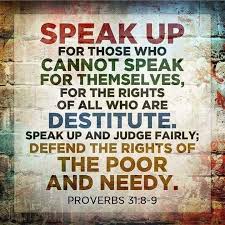
We stand up to racism, sexism, attacks against the vulnerable and all other injustice because of Jesus. We speak up because we are not embarrassed by the Gospel.

Imagine how our culture would change – and especially how our church culture would change – if we stopped being “nice” and started being brave disciples of the One who preached a message of abundant life for all God’s children – including the brown ones, the poor ones, the addicted ones, the sick ones, and even the ones who are Muslim, Hindu, Buddhist, Agnostic, and Atheist.  What if we showed everyone what the love of God in Jesus Christ looked like?

What if we spoke up when our siblings in Christ said and did things that are the antithesis of Jesus’ message?  We could change the world.  Or at least we could begin to change the culture.

It is not okay – for theological reasons – to allow men to denigrate women, to allow white nationalism to fester, to allow the poor to be punished for their poverty, to make health care available only to the wealthy.  It is not okay according to the Good News of Jesus Christ.

What would it take for you to speak up?  We speak up because of Jesus. We speak up because we say we want to follow the Carpenter from Nazareth. We speak up because we claim to love the Lord.

Please. Speak up. And have a lovely weekend.

Who Are We, Church? (Don’t Be Boring. Or Deceptive.)

Congregations seeking a new pastor are asked to describe who they are to give prospective candidates an initial sense of their identity. Many of these descriptions are boring.

We are a friendly church interested in growing.  We worship with joy together in our historic sanctuary and we value community, spiritual growth, and mission.

Yawn.

Also, really?

Are you really friendly to new people, especially if they don’t look like you? Are you genuinely interested in growing or do you secretly like things exactly as they are?  Is worship truly joyful?  Do you even know what breaks God’s heart in your community? Do members believe they don’t need to learn anything new about God?  And what do you mean by mission?  (Is it your mission to keep the church afloat?)

Most of the creative, rock star pastors I know who are looking for a new call are looking for something real:

The people of Old Church in the Valley are like the fertile soil on which we worship together: soil enriched by our Creator, stony from a 200 year old history which has made some of us hardened, uncultivated in terms of our understanding of being a post-pandemic church, and yet redeemed by Jesus Christ.  

First Church on the Hill is a congregation with a great history: established in the 19th Century, thriving in the 20th Century, and clueless about how to be Church in the 21st Century. But we are ready to be shaped and changed in the name of Jesus Christ for a vital post-pandemic ministry.

We at St. Paul’s Church would love to say that we are a friendly, mission-oriented congregation.  But the truth is that we are mostly friendly to each other and our mission has been primarily to ourselves.  We are ready to change that.  After two years of prayer and discernment we acknowledge that we need more gospel and less sentimentality.  Yes, we love our historic sanctuary, but we realize now that Jesus didn’t die for those stained glass windows.  We are ready to be resurrected and we know who our Savior is.  (For the record, our Savior was, is, and always will be Jesus – not our new Pastor.)

A pastor in another Presbytery contacted me a few months after beginning a new position. After less than a year with them, he was already planning to leave.  “They lied to me,” he said.  “They told me they were ready to reach out into the community.  (They aren’t.) They told me they averaged about 250 in worship. (More like 50.)  They said they were excited about welcoming in the new people moving into town.  (They ignore them.)”

Please, Pastor Nominating Committees, do not lie to your candidates.  Don’t tell your future pastor that you are ready to love Jesus in new ways when you can’t stop loving your pipe organ even more.  Don’t tell interviewees that you are ready to move forward when actually you are held captive by the wealthiest donors who don’t want to lose power.

One of the #1 reasons why the institutional Church is hurting is because we have failed to acknowledge who we really are which includes what we honestly love.  We are halfway through Lent.  Time to catch up on discerning reality.

PS It’s not too late to make a donation in memory of Breonna Taylor here for nursing student scholarships via The National Black Nurses Association.  She was killed a year ago this Saturday.

She Had Hoped to Go to Nursing School

Breonna Taylor died a year ago this coming Saturday. She died on my 64th birthday.

When you turn 64, people sing the Beatles to you. When you turn 65, people send you a Medicare Card.

But what I really want for my 65th birthday is for us to remember Breonna Taylor. 

At the time Ms. Taylor was killed, she was working as an ER Technician in two different Louisville hospitals after previously serving as an Emergency Medical Technician.  She had hoped to go to nursing school.

[Note:  There is still misinformation about the shooting of Breonna Taylor and this article refutes that misinformation.  In truth, she was killed by two members of the Louisville Police who shot her six times.  One of those shots was fatal.  It is also true that no one was charged with her death.]

I am not asking you to give me a birthday gift or to donate in my name.  There is nothing about this that’s about me.

My wish, however, is that you would consider making a donation to the scholarship program of the National Black Nurses Association in memory of Breonna Taylor this week as a way to remember her name and her dreams.  Consider it a simple Lenten practice. You can make a donation here.

Please designate your gift in the dropdown to “Scholarship Donation” with the tribute being “in memory of” Breonna Taylor. There are many promising Black nursing students out there who will be blessed by our gifts.

Remember her name.  And remember that her dreams were destroyed in a single, racist moment.  She had hoped to go to nursing school.

Image is an undated family photo when Ms. Taylor was honored for her EMT work.

Guest Blogger: More on Retirement from a Retired Church Leader

Note: One of my gifted colleagues Mary Marcotte shared her response to yesterday’s post and she has given me permission to share it with you.  

Yesterday’s post on retirement struck a real chord for me.  I’ve worked with pastors (and educators) who had essentially retired in place.  My observation is both they and their congregations suffer. 

I’m three and a half years into my retirement and think I’ve found my rhythm.   My retirement date was as much to do with the state of Presbytery finances as it was with my personal needs.  I’ve been lucky enough to never have used my salary to put food on our table, unlike so many of our colleagues. 

In early days of retirement I was delighted to continue supply preaching  and to be able to commit to teaching a long term, in depth Bible study.  About six months into retirement we moved to Dallas, within the bounds of a different Presbytery.  We’ve settled into our new church home (actually the first congregation I served as an educator and where we raised our children.) I have a wonderful network of educator friends and enjoy keeping my mind sharp by joining with a group of fabulous retired educators in an on line book group.  I continue to be involved in the Association of Professional Christian Educators and my congregation’s Director of Faith Formation knows I have her back.

That is probably more than you need to know, but a bit of background to a couple of observations.

I think many pastors (and other church professionals) hold on too long because they don’t know who they are if they are not the pastor of their congregations.

They realize that if they do a good job of observing separation ethics, they will be losing touch with all their friends and are not sure how to make new ones.

I think presbytery’s could fill a wonderful function if they helped folks begin to navigate these issues in the years looking toward retirement.  A  few great questions are:

  • What about your ministry would continue giving you joy if you were not being paid to do it?
  • What about your current ministry exhausts you or no longer engages your heart?
  • What new skill have you developed in the last year?
  • What new insight have you gained in how scripture speaks to the issues of our time?
  • What new initiative would you love for your congregation to engage
  • What friends do you have beyond your own congregation?

You get my drift. 

I worked with Rev. Jim Atwood in his last year of ministry before retirement and remember vividly his story of coming to the realization that it was time to retire.  He was in Alaska, watching a sled dog demonstration and someone asked how they knew when a dog was ready to retire.  The answer was when the driver pulled out the sled and the dog was no longer jumping up and down to be chosen, the canine version of “Pick me!”  He realized he was no longer jumping up and down, yet that was not the whole story.  Jim was able to devote his next 20 years to the issues relating to gun violence.  That fed his soul and made a difference to so many lives.

I no longer suffer from ‘helium hand’ as one former colleague described the reactive need to volunteer for all tasks.  I was shocked to find myself NOT apply to write curriculum.  I am clear that I will NOT re-up  to serve in my current APCE leadership role, and I am committed to making space for the next generation of leaders and to provide whatever support they might need.  I’m far clearer on this as I anticipate my 70th birthday this year than when I was looking at 65.

I hope to be as clear as Mary when God calls me to retire.

Note: Mary Marcotte retired as the Associate General Presbyter of the Presbytery of New Covenant in Texas in the Presbyterian Church USA.  She previously served as the Director of Christian Education for three different congregations.  The Rev. Jim Atwood retired from Trinity Presbyterian Church in Arlington, VA.  He was one of the co-founders of the Million Mom March  in 2000 and former Chairperson of the Board for the National Coalition to Stop Gun Violence after his retirement from professional ministry.  Jim died of complications from COVID-19 in June 2020.

Are You (Or Is Your Pastor) Discerning Retirement?

I will be 65 years old next week (and will try not to talk it incessantly because I think about it incessantly.)

Being 65 makes me eligible for Medicare and marks fifteen years since I could join AARP. I could say so many things about aging here but I won’t.

Instead, I want to talk about clergy retirement.

I’ve written a bit on 60-somethings in our congregations and some of those posts have hurt my colleagues feelings.  That was not my intention.  It is my intention as an institutional church person to devote my life to helping congregations thrive and expand the reign of God and make disciples of all nations.

As I did when I was a pastor serving a congregation, I have a small group of people I trust to tell me the truth.  One of their primary responsibilities these days is to tell me when it’s time to retire and I am confident they will do this. 

In my denomination, it’s lucrative to retire when you are 70 years old if you are vested in our pension system.  And it’s also true that churches do not tend to call new pastors who are 60+ in age.  

So, here’s what sometimes happens:  A pastor is – say – 62 and wants to retire at 70 but that pastor has lost energy and the desire to learn new things.  There is no steam left to shift the culture of that congregation.

This is especially dangerous in these days as we discern what the Post-Pandemic Church will look like.  A struggling congregation cannot survive 2 to 10 years of leadership under a pastor who will not or cannot pivot to serve a Post-Pandemic Church.

As I discern these things personally, I am begging my Boomer colleagues to talk about these things with the LORD:

  1. Am I one of the first to say ‘yes’ when elders and deacons present fresh ideas for our congregation to consider?  
  2. Am I excited about Sunday mornings? Sunday evenings? Tuesday afternoons doing my ministry?
  3. Have I surrounded myself with people who help me dismantle doing things “the way we’ve always done it?” for the sake of the Gospel?
  4. Am I willing to learn from younger leaders?
  5. Do I feel hope for the future of our congregation?

If you answer “no” to any of these questions, please consider retirement in the next year, my beloved 60-something colleagues.

The truth is that it’s not about age.  It’s about energy, intelligence, imagination, and love.  And yet if you find yourself at a place where your energy is depleted, your desire to learn is negative, your imagination has leveled out, and you don’t love ministry the way you used to love it – please, for the love of God – retire this year.

I don’t mean to offend, but our churches will suffer to the point of no return without hopeful, dynamic, servant leadership.  We need pastors who are pumped to move our congregations into the future with impactful ministry in the name of Jesus Christ.

P.S. If you don’t know that this is a post for you, ask around.  Ask your colleagues, your family, and those trusted parishioners who are not ‘yes people.’ Listen to what God is telling you in prayer.


This Could Be Dangerous

Courageous people do dangerous things.  They speak the truth when it could get them in trouble.  They step in when the weak are being bullied.  They put themselves in situations that others avoid.

Jesus did all these things.

We could say he was an instigator, but actually he was showing us what God’s love looks like  – speaking the truth, stepping in, putting himself in tricky situations.  He wasn’t putting himself in danger for the danger’s sake.  He was doing it for love’s sake.

Talking to a foreign woman in public.  Refuting the powerful Pharisees in public. Touching a leper in public.  His was a public ministry and it was often dangerous.

Our congregations do dangerous things too, but sometimes they are the wrong kind.  It’s very dangerous for a church to:

  • Keep the same leaders in the same roles for decades.
  • Conflate confidentiality and secrets.
  • Allow bullies to go unchallenged.
  • Grant one or two families more power than others.
  • Confuse “spiritual practices” like observing Lent with “traditions” like eating breakfast with the Easter bunny.  (Both can be meaningful but they aren’t the same thing.)
  • Let pastors surround themselves with ‘Yes People.’
  • Refrain from doing a regular financial audit of the books.

These might be common occurrences in our churches, but the danger is that they create unhealthy congregations that – subsequently – spend more time untangling messes than doing ministry.

It’s so much more fun to do authentic ministry that changes people’s lives than to think we are doing ministry, but actually we are busying ourselves with power struggles and conflict. Nobody wants that.

Authentic ministry can be dangerous too.  We run the danger of changing unhealthy systems.  We run the danger of stepping on the toes of the powerful.  We run the danger of changing our brand from Pretty Church to Land of Misfit Toys Church. 

It’s deep faith in Jesus that makes us care more about being faithful than being fearful.  He lived in danger for much of his life and yet he remains the Light of the World, the Good Shepherd, the Bread of Life – and so much more.

Love wins. 

Religious but not Spiritual?

I don’t know Jennifer Banks, but I agree with her:

You know “spiritual but not religious”? Well, I often wonder about that other, less discussed category “religious but not spiritual.”

The pandemic is creating even more “spiritual but not religious” people from what I’m reading, but I worry about the religious ones who are not very spiritual.  (Note: we made them that way, Church.)

We in the Church have taught people who wanted to know Jesus the importance of serving on committees (especially the dreaded Property Committee.) We have taught them that church attendance is more important that daily discipleship.  We have taught them that acting like we have it all together is the way to present ourselves instead of acknowledging that we are hot messes in need of a Savior.

See what I mean.  It reminds me of the apostle Paul’s sermon at the Areopagus:

“Athenians, I see how extremely religious you are in every way.” Acts 17:22

But God was unknown to them.

I hate to admit this, but I’ve seen this in our congregations.  Elders can tell you how much a new boiler costs, but they don’t know how to pray with church members.  Deacons know where to find the tableclothes but they have never been taught how to pray by someone’s bedside.  Youth leaders know fun things to do with shaving cream and plungers and plastic flamingos but they are lost when kids ask about Jesus.

Again – we have created this issue.  We who have been more concerned about bolstering an institution (and therefore our careers and power) more than expanding God’s reign have allowed this to happen.

But this is what resurrection is all about.  To paraphrase Jesus:

The blind stop focusing on the building and start seeing the people, and the lame walk out of the building into the neighborhood to serve.  The lepers are cleansed and welcomed and they go out healing and welcoming others. And the deaf hear the voice of God and not the voices of gossipers, and the lifeless congregations are resurrected.  Oh, and the poor have good tidings preached to them.

Lent is a great time to ponder whether we are more religious about institutional church things or more religious about our devotion to God.  One of these is more spiritual.

The quote at the top is from a tweet yesterday by Jennifer Banks who is Senior Executive Editor of Yale Press.

A Barber Who Changed the World

It’s taken me over a week to write this post.

Darryl Gaston was neither “just a barber” or “just an elder” or “just a community leader.”  To describe him that way is an affront to his Maker.

Darryl was one of those people who lived out his baptismal vows to the point of changing the world.

He died suddenly on February 20 and the only joy in that moment was that it was sudden and painless – at least for him. Leaving suddenly is traumatic for those we leave behind, but he was spared a difficult ending of this life.

His years were a testimony to what is needed in the world.

Please read this and this and this.  

One of things they don’t teach you in seminary is how to prepare for the constant losses: the deaths of beloved parishoniers, the abrupt departures of angry church members, the slow departures of parishioners who no longer feel connected.  It’s enough to give a pastor abandonment issues.

It felt like a gut punch the night Darryl died.  His little church is without their pastor.  (Darryl was a ruling elder trained to serve as a Commissioned Local Pastor.) 

I write this to remind myself and anyone reading this that we are not  “just” anything.  We are so much more than one thing although our primary identifier might be Pastor or Mother or Christian.  God equips us to shine in every part of our lives if we will only pay attention, but few of us do this well.  Darryl Gaston did it very well.  

Please continue to hold this family and congregation in prayer.