My Memorial Day Privilege

Arlington National CemeteryAs a child, Memorial Day was celebrated as my grandmother Ethel’s birthday.  Since May 30 was the designated Memorial Day for her entire life – long before it was changed to the last Monday in May – Memorial Day involved cake and ice cream not parades and flags.

Another reason why our family never celebrated Memorial Day – except as a birthday celebration – is because the last family member to die in service to his country was my Great Great Great Grandfather Samuel Edmiston who died at Antietam.  And the country he died for was not the United States of America.  (Note: if anyone in my family of origin is aware of any of our kinfolk who died in battle defending the United States, please let me know.)

Although several family members and friends have served in the military, they all returned home.  I have friends buried in Arlington National Cemetery, but they all died many years after their service.  I’ve read and re-read the obituaries of noble men and women who have died in action through the years, but they were not my siblings or cousins or parents.

When a young person dies defending their country, I cannot imagine the depth of their families’ losses.  I hope I never know.  But Memorial Day is different for them than for the rest of us.

According to this source, the total combat deaths of American troops have been over 666,441 since 1775.  An additional 673,929+ have died in non-combat deaths.

Less than 10% of the U.S. population has served in the military according to Pew Research. And there is a widening divide between civilian and military culture according to this story. We wave our flags but few of us know what it’s like to experience Memorial Day as grieving people.  We celebrate this day as privileged people.

I am humbled by this fact.  I live freely in a nation I love which is also a nation that can be better.  On this Memorial Day, I also remember that in 2018 more school children than armed service members have died at the hands of military weapons.  As much as I appreciate the decrease in military deaths, this is a sin.

It’s time to use our privilege to change things.
Kneeling

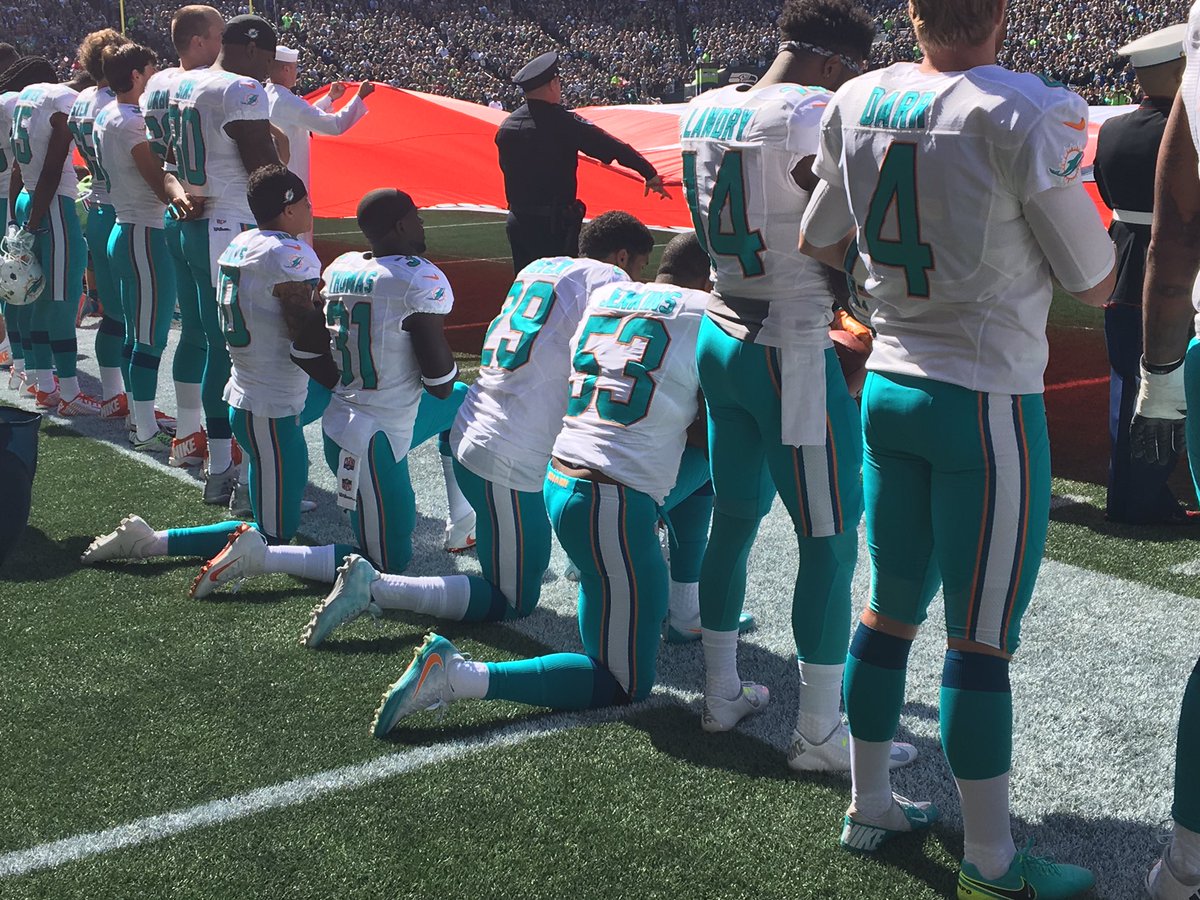
“New Testament stories describe people who kneel before Jesus in supplication or lament. With their kneeling, these biblical figures say: Something is desperately wrong, please hear us and use your power to help us. Their act of submission signals their faith that healing will come and their prayers will be answered.” Duke Professor Luke Bretherton

I can’t write about what kneeling at NFL games means – to the kneelers – better than Elizabeth Bruenig here. When I read that politicians believe that players who kneel during the National Anthem are unpatriotic, I feel angry.  No kneeling football player has ever said that their decision to kneel was intended to disrespect the flag or the national anthem. But kneeling has been outlawed by a unanimous vote yesterday of the NFL team owners.

As Dr. Bretherton mentioned, kneeling means that something is desperately wrong.  “Please hear us and use your power to help us.”  Those desperately wrong things include police brutality against unarmed Black men and arrested teenagers being held in solitary confinement before their trials – sometimes for months.

A Canaanite woman knelt before Jesus begging him to help her.  The father of a child with epilepsy knelt before Jesus begging him to heal his son.  Peter knelt in prayer asking God to raise Tabitha from death.  Hopeful people kneel.  Desperate people kneel.

Some of us are hopeful and/or desperate for change to the point of kneeling in hopes that those in power will act.  And some of us get angry about such kneeling during the National Anthem.  Both sides are patriotic – one ostensibly realizing that we do not yet have justice for all and one ostensibly believing that pledging “justice for all” is enough.

I have heard people I respect say that they will no longer buy football tickets if the players continue to kneel, and I wonder, “Why is kneeling so threatening?”

Perhaps we all need to kneel more often remembering who ultimately has the power.  It’s the Spirit of God who moves us to change things so that there might indeed be liberty and justice for all.

Image source.

Pillow Controversy

Now that I’m in a new position, it’s just a matter of time before I tick somebody off.

For example: my church tradition doesn’t have individual bishops.  Instead The Presbytery is a corporate bishop comprised of an equal number of ruling elders and pastors who make the decisions a bishop would make in other denominations.  In other words, I’m not a bishop.  And although The Presbytery has rules, sometimes those rules are guidelines and sometimes those rules are commandments. And there are consequences for not adhering to them.

So . . . do you agree with this pillow?

My colleague and friend Landon Whitsitt offered this wisdom at an executive training session a couple years ago and I thought it belonged on a pillow.

There is another perspective in Church World though.  Some of my colleagues believe that it’s the Presbytery/Bishop’s job to keep a church from doing something they’ll regret – like installing a toilet in the kitchen.

Congregations make decisions every day that determine their future.  For example, I would consider these to be bad decisions akin to putting a toilet in the kitchen:

  • Not hiring a trained transitional pastor between the former and future pastor. There are exceptions but they would be rare.
  • Saving the church endowment for a rainy day when the roof is literally leaking.
  • Calling Pulpit Candy (i.e. the person you imagine is your dream pastor: good hair, radio voice, young family) instead of the pastor you actually need to thrive in the 21st Century.
  • Focusing inward with no beneficial impact in the neighborhood around you.
  • Confusing being a good church member with being a disciple of Jesus.  They are two very different things.

But if you absolutely want to make choices that people who study these things for a living know to be unwise and you are going to be all up in arms if you don’t get your way, I am somewhat likely to let you get your way.  And I’ll try not to say “I told you so” when things go awry because God can redeem even our worst mistakes.  See Genesis 50.  [Note:  some mistakes eventually result in closing a church, but even church closures lead to resurrection.]

Church leaders: what’s your wisdom?  Do we let congregations make mistakes?  Or do we make them angry  – perhaps for generations – when we adamantly refuse to let them put a toilet in the kitchen?

The fundamental question boils down to this: Do our congregations trust us when we say that we want them to thrive and grow?  Do they trust us enough to accept our leadership and make (what we pray will be) healthy choices?

Image of one of my favorite pillows with thanks to LW.

God Loves People with Mental Illness

The story of Roger Self – a father and grandfather dealing with severe depression – has shaken me.  The Self Family had worshiped together in church last Sunday and were eating dinner at The Surf and Turf Lodge in Bessemer City, NC when Roger left the table, got into his car, and drove the car into the restaurant.  The crash killed his daughter and his daughter-in-law.  Three other family members were injured.

Once again hearts are crushed and lives have changed forever because of serious mental illness.  Mr. Self has been charged with first degree murder and it’s yet to be seen whether or not his depression will factor into his defense.

A troubled young man in Santa Fe, Texas murdered ten human beings at his high school on Friday, May 18.  It was the 22nd high school or college school shooting in 2018.  

Not all of those shootings involved mental illness necessarily, but most of the shooters dealt with issues ranging from grief to depression.  Mental illness affects 43 million Americans but 56% of those Americans do not have access to mental health services according to Mental Health America.  You can read their entire 2018 State of Mental Health in America report here.

If you are a Bible reader, note that Jesus healed both physical and mental illness.  We now know that mental health is also a physical issue involving body chemistry.  Bonus disclosure for those of you who have kept reading to this point: I am one of those people who takes medicine for depression.  I thank God for that.

What can we in the Church do to address the enormous needs in this area?

  1. Instead of asking difficult people in our lives, “What’s wrong with you?” ask “Tell me about your childhood.”  Learn about ACEs and be the kind of community that works to love the hard-to-love.
  2. Become certified in Mental Health First Aid.  All pastors, educators, and community leaders need this training.  Our people in church pews as well as the people outside our church walls are dealing with things.
  3. Teach about, talk with, and pray for people struggling with mental health issues.  Make it part of normal conversation and ministry.  If nothing else, people are stressed and we in the Church can contribute to that stress or offer sacred relief.

God loves Roger Self, who is identified in the press as “a church-goer.”  And God loves all of us who are grappling with everything from situational stress to paralyzing depression.  We in the Church are called to minister to those who suffer in mind and in body.  How are we doing?

Image is Old Man in Sorrow by Vincent van Gogh (1890)

Not My Job

I know preachers who print the worship bulletins.  I know church sextons who serve coffee to visitors.  I know Christian educators who repair copy machines.  Most of us do work beyond our job descriptions.

Going the extra mile” shows dedication and commitment to an organization.  Until it doesn’t

Over-functioning causes all kinds of trouble from feeding burnout to creating a congregation of slackers.  If people assume that the pastors will take care of everything from mowing the grass to recruiting nursery volunteers to ordering candles, those pastors will be expected to keep it up.  And I can tell you right now that the church that expects their pastor to mow, recruit, and order things is a dying church.

There’s a fine line between “so dedicated” and “so imposed upon.”

There will be times when people complain that:

  • Our pastor never visits people unless they are in the hospital.”  (Maybe it’s because home visitation is the job of the deacons/Stephen ministers/other pastor.)
  • Our senior pastor never comes to our Mission Committee Meetings.”  (Maybe it’s because someone else staffs that committee.)
  • Our Presbytery Staff never sends our pastors birthday cards.” (! – Seriously, I just heard that one.)

It sounds flippant to say, “Not my job” when folks complain about what we are not doing.  But a better response might be, “That’s right. We are trying to equip everyone for ministry and so the deacons/elders/sexton/administrator/parish associate/financial secretary/____ have been trained to do that job.”

A good question for the pastor to ask:  Can anyone else besides me possibly do this?

My colleague Rev. CL has a rule that if there are any elders in the room, he never opens or closes a meeting in prayer or offers the blessing at a church meal.  That’s the job of one of the other spiritual leaders of the church.  If there’s no one who can lead a prayer besides the pastor, the pastor is not doing her job.

Can you think of one thing you do in your ministry that you could train someone else to do?  Note: Is there anyone out there who would like to send birthday cards to all the pastors in my Presbytery?

Image of church flowers if this pastor was expected to arrange them.

Every Meeting. Every Day.

I heard someone teach recently that every successful meeting requires three things:

  • Relationship-building
  • Information-sharing
  • Action-taking

We’ve all been to meetings that included relationship building to the point that someone will invariably complain about Kum Ba Yah moments and say, “This is a waste of our time.”  We’ve all been to meetings that offered information we could have received in an email.  And we’ve all been to meetings where nothing happens and maybe “nothing ever happens.”

My new goal is to promote these three things at meetings.  And it occurs to me that there are also three things I need – personally – every work day:

  • At least one future-oriented conversation with someone about the way things could be.
  • Tasks I can check off – preferably a long list of emails, snail mails, and/or phone calls.
  • Something active – for both my brain and my body.

What do you need for a successful work day?  And what are your work meetings like these days? Do you find that meeting facilitators and moderators are providing what’s needed for you to move your organization’s mission forward?

Leadership training is one of my favorite things.  How about you?

Image is from the Exploding Light Bulbs collection by photographer and chemist Jon Smith.


Power Tools

Most spiritual communities require electrical power.  We like our coffee makers  and AC.  But spiritual communities also require the kind of power that makes transformation happen.

Community organizers teach us that the power to change things comes when we:

  • Organize people towards a common focus.
  • Organize money towards a common mission.

Many wonderful organizations haven’t yet learned that Power Is A Good Thing, and we get more of it when we organize people and money.  Charlene Mack, Director of National Organizing Initiatives at Leadership for Educational Equity points out that the National Rifle Organization has done an excellent job organizing both people and money.  And some of our finest affordable housing organizations, homeless shelters, and feeding programs have inspiring goals but are not organized well enough to make anywhere near the same impact as the NRA.  Some of us believe that homeless and hungry people need at least as much protection as gun owners.

This is one of the reasons I believe that Community Organizing Training is one of the skills 21st Century leaders need.

Our power tools in the Church are indeed Organized Money and Organized People.  But we also have access to a third power tool:  The Holy Spirit.

The Holy Spirit is not magical.  The Spirit of God is not like voodoo or karma or superstition.  I have experienced God’s Spirit in both everyday revelations and broad strokes of history.  As the Rev. Denise Anderson preached at the Charlotte Presbytery gathering Tuesday, this is the Spirit that can separate waters and revive dead bones.  This Spirit is the ultimate Power tool, but we cannot control it.  We cannot buy it.  We cannot organize it. We can only pray for it.

This Sunday the Church celebrates Pentecost when the Spirit of God transformed the lives of “devout Jews from every nation.”  This is a good day to pray that the Spirit transforms us so that we might work with God for a world as it should be – according to what Jesus said – and not stand for the world the way it is.

‘The Spirit of the Lord is upon me, because he has anointed me to bring good news to the poor. He has sent me to proclaim release to the captives and recovery of sight to the blind, to let the oppressed go free, to proclaim the year of the Lord’s favor.’  Jesus in The Gospel of Luke 4:14-21

Image source.

Mom Was There

We wore red stoles for my installation yesterday which is the traditional color for clergy installations and ordinations.  But under my red stole, I wore the clergy tartan stole my mother made me when I was ordained.  I was told that Scottish clergy wore that particular tartan because in times of war in the Highlands, it marked the clergy as neutral.

I wanted my mom there yesterday but she died almost 30 years ago.  So I wore the stole she made.

After lunch which was after morning worship and the installation service, a woman I’d never seen before came up to me and handed me three photographs of my mother.  “You don’t know me, ” the woman said, “but I was a friend of your mother and these are from a trip we took to Wrightsville Beach when we were teenagers.  I found them over the weekend and thought you might like them for a late Mother’s Day.

Yesterday was so meaningful. But what made it miraculous was that my mom got to be there too.

Getting Plugged In

I’m being installed today into my new position in ministry – like an appliance only much more meaningful.  Will let you know how it goes.

It’s one thing to be installed and it’s another thing to get plugged in and that’s what happens after today.  God is good.

Racial Purity (is not a thing)

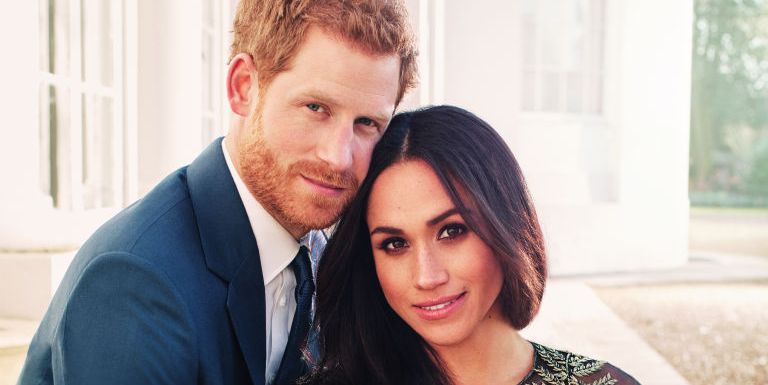
Many folks are excited that the United Kingdom will have a biracial princess later this week, but she won’t be the first one.

My new city – Charlotte – is named for Queen Charlotte the wife of King George III (Remember from Hamilton?) who was previously Princess Charlotte of Mecklenburg-Strelitz.  She married George six hours after meeting him at the age of 17, and she was personal friends with Johann Christian Bach and Marie Antoinette. And she founded a variety of orphanages and hospitals.

And she was of African descent.

Queen Caroline was a descendant of Alfonso III and Ouruana, a black Moor.  The artist Allan Ramsay who knew the Queen depicted her skin color as a lovely cafe au lait and her hair as very curly.  This also means that Charlotte’s granddaughter Queen Victoria was also blessed with African genes, as is Victoria’s great-great granddaughter Queen Elizabeth II.

So there’s that.  Next time I hear someone described as “whiter than the Queen” I’ll be thinking “not so much.”

We human beings are all connected if we go back far enough.  Remember that race is a social construct invented to separate people. “Whiteness” and “Blackness” are not fixed.

So, while it’s interesting to say that Ms. Markle will bring “racial diversity” to the royal family, it was already there, and it’s part of our heritage too.  This is our story.  It includes love and violence and division and ties that bind.

To quote historian Nell Painter: “Race is an idea, not a fact.” And from Ta-Nehisi Coates:  “Race does not need biology. Race only requires some good guys with big guns looking for a reason.”

For all those with big guns (or microphones) out there: “racial purity” is not a thing.


Top image is the official engagement photograph of Prince Harry and his betrothed Meghan Markle.  The lower image is Queen Charlotte (1744-1818) painted by William Ramsay in 1762.  It hangs in the National Portrait Gallery, London.