Wall of Culture

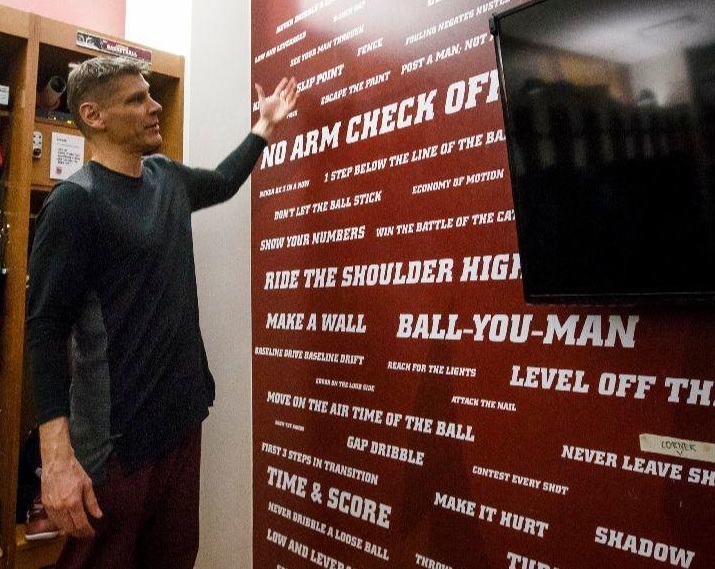
The Loyola Men’s Basketball team wowed fans all weekend, first defeating Miami and then defeating Tennessee – two teams that outranked them throughout the season.  The secret to their success includes a team nun and a wall of culture.

Every family, every organization, every spiritual community lives by sayings and norms often passed down from generation to generation to the point that it becomes part of our DNA.  Sometimes they make no sense to outsiders as in these Loyola ditties:

  • Ride the Shoulder High
  • Ball-You-Man
  • Get Out of the Mud

Loyola’s cultural sayings are painted on their locker room wall and all that really matters is that they know what the sayings mean.

What are the (honest) cultural sayings that you would paint on  your church office or sanctuary walls that reflect the reality and aspirations of your organization?  Would they look like this?

  • Always Look Backwards
  • We Heart Secrets
  • Gossip is Our Life Blood
  • Fail and Be Shamed
  • Cast Them Out

Or this?

  • Let’s Try It
  • Expect the Best of Each Other
  • Relationships Over Rules
  • Who’s Not Included?
  • Tell the Truth

Ingrained systems can keep congregations, mid-councils, and other non-profit organizations stuck and dysfunctional or can set them up to move forward and thrive.  If we do not know what’s on our proverbial wall of culture, we will continue to perpetuate unhealthy practices.  

Our culture spells out what we value, what we tolerate, what our true core values are (as opposed to what we say they are.)  It would be interesting to ask our boards and staffs:  What’s on our Culture Wall?

Image of Men’s Basketball Coach Porter Moser in front of Loyola’s Wall of Culture.


This Might Scare Us (Or It Might Give Us Hope)

Take four media leaders:

  • One grew up with no religious tradition.
  • One is a pastor’s kid who never really felt “the faith part” of his religious tradition.
  • One is another pastor’s kid who explored a variety of faiths before returning to her father’s tradition.
  • One is a Muslim American who grew up surrounded by evangelical Christians in Alabama.

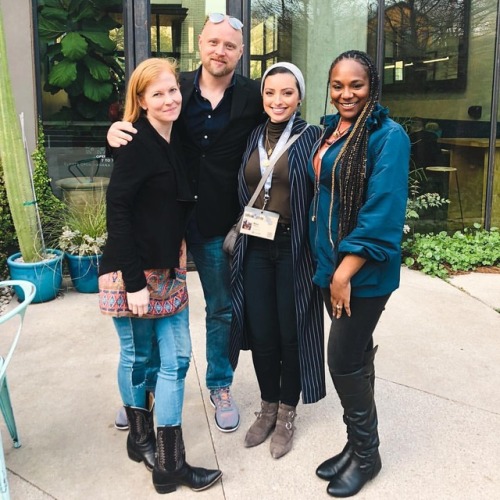
They got together this past week in Austin for a South by Southwest conversation and it might have changed my life. The panelists – Ana Marie Cox, Ben Howe, Noor Tagour, and Bree Newsome – spoke about some of the authentic spiritual needs of people in every generation, tradition, and political demographic. Please listen here.

They range in age from 24 to 45 which is “young adult” only if your denomination’s average age is 60. But the next time someone says  . . .

  • Where are all the young people?
  • Why don’t young people come to Church?

. . . invite them to listen to the South by Southwest podcast.  They might feel uncomfortable (there’s a Muslim on the panel!) or sad or scared or tired.  But I deeply believe that the future Church will look and sound more like this panel conversation than what happens most Sunday mornings in sanctuaries throughout this country.  What’s the future Church going to look like?

  1. There will be more conversation and less sermon.  Someone (a theologically trained leader?) might start the conversation, but there will be more back and forth, more grappling, more group spiritual direction.
  2. There will be more focus on faithful action that brings positive impact.  More active service, and less “thoughts and prayers.” More worshipful work and less sitting in pews going through the motions without knowing why.
  3. We will remember that God is in control. We tend to nod and say those words while digging in to cling to our institutional power, pet projects, and deep-seated belief that our way is the best way. Letting go is perhaps the holiest practice of 21st Century ministry. (And speaking of letting go . . . )
  4. We will let go of finding common ground or agreeing in our divided world.  “There are as many religions as there are people,” said one SXSW panelist.  The goal is not to make everyone agree.  The goal is to love each other in spite of our differences. Changing each other is not the same as loving each other.
  5. We will acknowledge that God is God is and we are not.  We will remember that no one – not Franklin Graham, not Jerry Falwell Jr, not even Pope Francis – speaks unequivocably for God.  We cannot know what’s best for other people.  We cannot assume that God is on our side.  We must trust God to know what’s best.  We must seek to be on God’s side.
  6. We will remember that people don’t solve issues.  God solves issues.  We are simply tools for transforming the world, and we pray that we do this faithfully. (This is true even if we don’t acknowledge it.  I don’t care that Stephen Hawking didn’t believe in God.  Hawking’s life is still a miracle.)
  7. We will remember that relationships are everything.  If we are in a congregation – whether it’s been 6 months or 60 years – and we do not have soul mates who hold us accountable for the way we live, we are missing out.  A deep relationship with God and with God’s people is not only possible; it’s essential for spiritual growth.
  8. Spiritual communities will increasingly be about building resilience.  In these days of overwhelming levels of violence, corruption, addiction, indebtedness, and trauma, there will be an increased understanding that we cannot endure without a power that’s greater than ourselves.

None of these shifts are new.  Some of us have been writing and talking about them for a while.  What’s new is that this conversation happened in a world famous, secular event.

We in organized religion must also remember that Jesus challenged organized religion.  This is a wonderful and (for those of us in organized religion) terrifying season.  But these times are not about us.  It’s all about trusting in God and deeply believing that God’s plans are better than our own.

This is especially discomfitting for those of us who are most spiritually comfortable with a sermon, a choir, and pews.  But just as God shifted the church in past eras regarding sermons, choirs, and pews these shifts are happening again.  And if God is doing it, it will be good.

Image from SXSW.  Left to right: Ana Marie Cox, Ben Howe, Noor Tagouri, and Bree Newsome.

I’ve Seen a Glimpse of the Future Church (and It’s Awesome)

“Everybody” knows that the 20th Century Church is pregnant and/or dying/flat.  “Everybody” knows that the 21st Century Church is going to be something different.  But most of us have no idea what that difference will look like exactly.

I have seen a glimpse of it and it wasn’t revealed at a church camp or a worship service or a conference or in a pilgrimage to a holy place (unless you consider Austin, Texas a holy place – which some people do.)  For the first time in the history of South by Southwest – that huge music and film event held every March in Texas’ capital city – there was a panel discussion on religious faith.

For the love of all things holy, please listen to this.  It’s an hour of your time featuring  Ana Marie Cox, Ben Howe, Bree Newsome, and Noor Tagouri. They share their personal faith stories and engage in a conversation about faith in something bigger than themselves in this divided 21st Century world in which we find ourselves.

What I heard impacts the Church in every way.  More tomorrow, but – please – check it out.  It changed my life and my perspective on ministry.  I hope it will change yours.

Image is the 2018 South by Southwest logo.

Privilege and Power at 62

Like Brian McLaren, Bill Gates, and Whoopi Goldberg, 62 is my new age in 2018 and it feels amazing.  I’ve outlived my parents by several years – as some of you know – which means that every birthday brings both joy and deep appreciation.

Being 62 means I can retire early if I wish – although I won’t be doing that. And yet a constant thought is that I – as a Boomer – need to step aside unless I indeed carry the energy, intelligence, imagination and love necessary to continue in some professional role.  Actually I am beginning a new call this May.  Am I being an intransigent hypocrite?  I hope not.

I have written many times that once we clergy reach our 60s, we need to discern if it’s time to make way for younger leaders to step in and take our place.  It’s not easy to seek and find a new call in my 60s when many church nominating committees are looking – longingly –  for that stellar 30-something or 40-something or (maybe even) 50-something person who will bring a spark to their congregation/organization.  Am I fooling myself by thinking I can still offer a spark too?  I don’t think so and that thought has been affirmed by some faithful people in North Carolina.

I love that three-legged stool metaphor we Presbyterians tout. I can’t wake up one fine morning and decide unilaternally that I am called to a particular ministry.

One of the advantages of being among the oldest and most seasoned on a team is that we have the power to do more for younger colleagues in our 60s than we did when we ourselves were younger.  This is the most important reason to keep our hand in professional ministry in our 60s.  It’s not about us.

Here’s what someone with my age might be able to do in the church we love:

  • Ensure that younger leaders are considered for service.  I am often asked for suggestions regarding people for positions on important committees and commissions.  Pastor Nominating Committees sometimes ask me to recommend candidates to be their next Head of Staff.  This is a privilege and opportunity to suggest people they might not ordinarily consider:  younger, browner, queer-er individuals whom I know to be rock stars although they might not be on that PNC’s radar.  I have the power to put excellent candidates on their radar.
  • Step aside as often as possible.  When I’m asked to serve on a committee or commission myself, I have the privilege and opportunity to say something like, “Thank you.  I’ve actually served on this board before, but why don’t you contact (insert younger pastor’s name here)?
  • Connect younger leaders to resources.  When letters from foundations and denominational programs come across my desk offering everything from money to educational opportunities, it’s not only my privilege and opportunity to pass that information along to younger leaders, but it’s my responsibity to do it.  And it’s fun.

Being a 60-something leader with privileges and opportunities is extremely fun but only if I use that power for good to expand the reign of God Ephesians 4:11-12-style.  It’s essential to have the kind of honest, trusting relationships with colleagues – of every age – that let me know when it’s indeed time to move on.  Ministry continues for the whole of our lives – even if we are bedridden and weary.  But ministry shifts and flows until we die.  It never stays stagnant.  It always makes way for new leaders to come in and shine to the glory of God.

So far, the sixties are pretty great.

Image of 62 candles – enough to set a room on fire.

Trevor, Tiffany, and Many of Us

I listened to Trevor Noah’s Born a Crime and Tiffany Haddish’s The Last Black Unicorn during last weekend’s roadtrip and was struck by the level of childhood trauma they each experienced.  Oprah also talked about childhood trauma over the weekend and Bruce Perry’s books on the topic have become bestsellers.

So, it occurs to me that – whether we are teachers, police officers, social workers, secretaries, pastors or any person whose work involves other people – we all relate to human beings who have experienced at least one of the following adverse experiences – as children:

  • Physical abuse
  • Sexual abuse
  • Emotional abuse
  • Physical neglect
  • Emotional neglect
  • Intimate partner violence
  • Mother treated violently
  • Substance misuse within household
  • Household mental illness
  • Parental separation or divorce
  • Incarcerated household member

Children who endure four or more Adverse Childhood Experiences (ACEs) often find that their adult years can be more difficult in terms of their physical, emotional, and social health.  Educators and health professionals are now being trained to ask students and patients, “Tell me about your childhood” in hopes of uncovering experiences that might have been traumatic and subsequently helping to explain adult issues.

As a parish pastor, I once looked out at the congregation each Sunday and was aware of some of their traumas.  I often knew who had been sexually abused by a parent or sibling, who had lived with an alcoholic father or mother, whose family member was in prison, and who had witnessed domestic violence.  Many of these parishioners were in therapy.  Many were also dealing with adult issues related to their childhood trauma.

This is not something I learned about in seminary, but there are many resources out there to help us better understand the people in our pastoral care.  Both Trevor Noah and Tiffany Haddish have obviously risen out of both poverty and abusive situations.  Adverse childhood experiences do not condemn people to lifelong sorrow.  In fact, healthy communities can counter the impact of ACEs.

A healthy church offers belonging, purpose, and deep comfort.  There are so many many people seeking exactly these things – but they don’t believe they can find it in a church.

Can they find it in your congregation?  I hope so.

Image source.  Trauma care professionals suggest that we ask, “What happened to you?” rather than “What’s wrong with you?” when discussing behavioral health issues with both children and adults.

In Praise of Young Clergywomen

The Rev. SPM was ordained yesterday and I got to be there.

We are all called into ministry by virtue of our baptisms, and some of us are called into professional ministry.  SPM is now a card-carrying, sacrament-leading, all-rights-and-privileges Minister of the Word and Sacrament.  I hope the congregation she’s serving has a flicker of understanding how blessed they are.

So, here’s the thing:  young male clergy are a blessing, over-40 second career female clergy are a blessing, Gen X/Boomer clergypersons are a blessing.  But being a clergywoman under the age of 40 still has it’s particular challenges.  Double those challenges if the clergywoman is a Person of Color or an LGBTQ pastor.

Most large congregations with multiple pastors in the United States have a male Head of Staff/Senior Pastor and so calling a young female associate pastor is not particularly risky for traditional congregations.  She adds balance.  He can teach her some things.  Maybe her voice won’t be too high.  It could be inconvenient if she gives birth while serving. If she’s single – all the better.  I have heard each of these comments from search committees seeking an associate pastor and open to calling a young clergywoman.  Calling a young clergywoman because she is maleable or helpful in completing a staff demographically is problematic.  Calling her for who she is  – period –  will make everybody happier.

Very small congregations are often open to calling a young woman to be their solo pastor, but it will be lonely.  And exhausting.  Even young male clergy tell me that “the church ladies” volunteered for them quite a bit in their first small-church call – from bulletin printing to tidying up the sanctuary.  I was asked to bake brownies for the first Session meeting I moderated as a 28 year old new pastor.

Medium to large congregations tend not to call young women right out of seminary, although they might call a young man the same age – especially if he’s married.

There are exceptions to these generalities, of course, but young clergywomen will recognize some of my observations.

The Young Clergywomen’s Project was founded in 2007 by the Rev. Susan Olson with a grant from The Louisville Institute to offer support for the youngest clergywomen among us.  Today the organization is called Young Clergy Women International.  Members are ordained clergywomen under the age of 40 from a variety of Christian denominations. 

I thank God for this group of colleagues who are a fountain of support.  They remind each other that they are not alone, especially when they feel like they are doing “everything” all by themselves or when they haven’t had a date in years or when parishioners won’t stop talking about their hair.  They have been a support to me  (an older clergywoman) too.

If you are reading this and a young clergywoman is serving your congregation, please recognize that . . .

  • Not only does she have a lot to learn from you but you have a lot to learn from her. (Read about Co-Mentoring here.)
  • It’s not a good idea to touch her hair, face, or (if expecting a child) belly.  Her body is her own.
  • Commenting on her hair, shoes, legs (please don’t) diminishes her role as your spiritual leader.  Ask her instead about what she’s reading or if she’s taking her Sabbath day off.
  • She deserves a personal life as much as you do.  If she’s single, it’s none of your business who she’s dating.  If she’s married, encourage couple time.  Don’t ask when she plans to have a(nother) baby.
  • Remind her that she is gifted in pastoral care, preaching, teaching, and leadership.  That’s why your congregation called her, right?  Give her feedback beyond “nice sermon” or “I love your earrings.”
  • Pay. Her. Fairly.  Could you live off her salary?

I loved being a young clergywoman long ago.  But it can be harder than it needs to be.

Image is from The Young Clergy Women’s Project. I dedicate this post to the newly ordained SPM who has always been my first cousin once removed and is now also my clergy sister.  She preached the best sermon I’ve ever heard yesterday on the Mark 14:32-42 text.

Yes – Please! – In My Back Yard

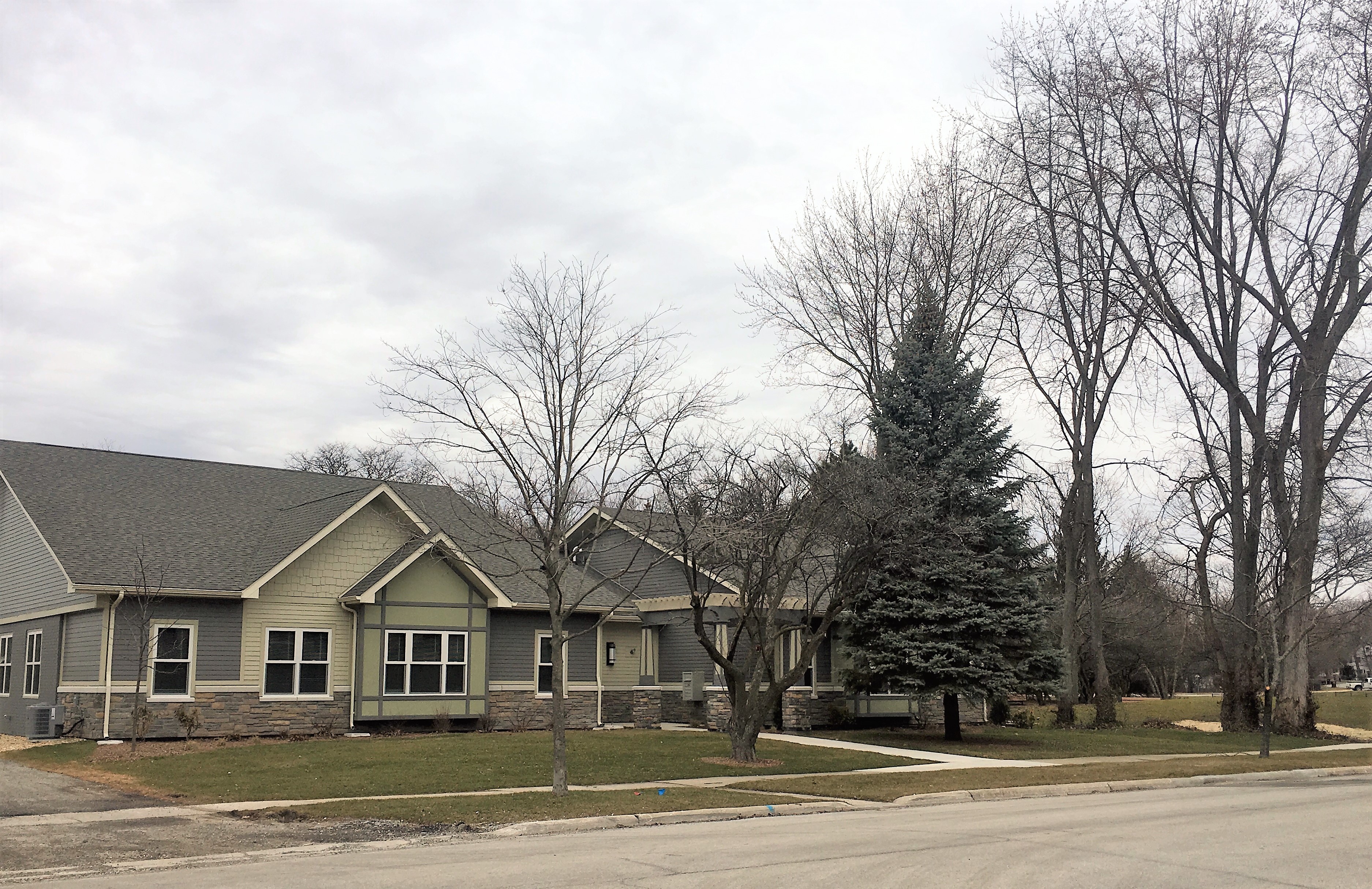
I am thrilled and inspired about the opening of the New Hope apartment complex a few blocks away from my home in Flossmoor, IL.

It’s a newly built facility with six apartments for special needs adults, approved unanimously by the village board in 2016 and encouraged by their immediate neighbors who include some personal friends.  While there were a few initial NIMBY (Not in My Back Yard) whisperings, the overwhelming attitude in our community was actually Yes Please – in Our Back Yard.

New Hope Apartments offer a much-needed housing option for all our communities, although it’s currently the only one in Illinois.

It’s conveniently located near the train station, the public library, and our little village center (shops and restaurants) where residents can navigate their lives conveniently and in a good and safe neighborhood.  Why wouldn’t everybody want this in their community?

This article by Emily Badger from January 2018 spells out the history of NIMBY sentiments and the notion that owning a home = having the right “to shape the world beyond its boundaries.”  Some home owners are concerned that their own properties will lose value.  Others simply want to control who their neighbors are.  The origins of these sentiments begin – not surprisingly – with race.

White people have historically left neighborhoods when Black or Brown people moved in and this continues today in many urban and suburban neighborhoods.  As a White person, I would love to hear from other White home owners the honest reasons behind this.  What do “Black Neighbors” and “Brown Neighbors” mean to you?  (I know the answer, but I’d like you to say it out loud.)

The truth is that diverse neighborhoods are rich neighborhoods.  Do I really need to say that every Black or Brown neighbor is not – by definition – uneducated, unlawful, or unneighborly?

It’s also true that many urban and most suburban neighborhoods in our country are racially segregated.

And it’s thirdly true that all of us want to live in safe neighborhoods.  All of us.  We all want convenience and good schools.  We all want community.  And – if we profess to be followers of Jesus – we all want everyone to have the abundant life Jesus promises, right?  This is what true evangelism means.

For today, I am evangelically grateful that the good people of my state, county, and village all agreed that special needs adults are a blessing in our back yard.

Images of (top) the New Hope apartments and (bottom) some of the memes shared after Marco Gutierrez’ statement on September 1, 2016.


Measuring Our Impact

Many readers of this blog are in the non-profit world.  We are involved in Church, Interfaith Engagement, Refugee Resettlement, LGBTQ Civil Rights, Anti-Racism Education, Anti-Poverty Work, Gun Control, and other change-the-world efforts.  Non-profits are busy organizations with a lot going on.  Churches, in particular, are often so program-centered that it’s become our predominant culture, as if a full calendar equals an active and faithful congregation.

But what if being busy does not actually equal effectiveness?

I recommend The Stanford Social Innovation Review and specifically this article by Kathleen Kelly Janus is a reminder that outputs (busy programming/activity) is not the same as impact (actual transformation.) It’s important to assess our ministry in terms of results.  What difference are we making?  What measurable good is coming from our efforts?

One of the points that The Poor People’s Campaign: A Call for Moral Revival makes (and Liz Theoharis makes it in Always With Us: What Jesus Really Said About the Poor)  is that – if we are still providing shelter for the homeless, food for the hungry, etc. – we need to ask ourselves: why there are still homeless and hungry people in our midst?  Do we believe that there will always be poor people?  And if so, why do we believe this?

  • Because Jesus said so?  (Note:  we are misreading the text if we think so.)
  • Because human beings perpetuate systems that keep people poor?

In all the busyness of our ministries and service, what actual impact are we making?  Are there fewer homeless neighbors?  Are there fewer hungry children? Are there more poor high school students going to college or learning trades?

Is our point that we are busily serving and we subsequently congratulate ourselves?  Or are we trying to shift systems in hopes of institutional change?

Kathleen Kelly Janus calls for us – as institutions – to measure our work in new ways.  Instead of merely taking attendance, we need to be more curious and creative:

  • Worry less about “impressive numbers” (e.g. “We served 1000 breakfasts to the poor last year!“) and assess individual relationships that move people towards having their own homes/kitchens.  Who are we connecting to available services?  How transient is our population?  Have we been serving the same people for five years?
  • Track “longer term outcomes” in the lives of those we serve.  Follow up on those who have “graduated” from our programs.  (Again, this is about relationships.)
  • Tell the truth about our programs.  We who want so much to do good and are dependent upon the donations of others need to be honest about what’s working and what is not working.

The institutional Church has enormous power to transform the world for good in the name of Jesus.  Or we can perpetuate busy-ness which is often about appearances more than transformation.

It’s a topic for our leaders to consider as we hope to do more effective ministry.


Image of student protesters outside the Florida State House which resulted in the first gun reform legislation in over twenty years this past week.  It’s a start.


It’s Okay If We Act Like We Don’t Know Each Other

I’ve always liked Secret Santas & Layaway Angels.

It’s one of the things I also love about ministry. There are countless opportunities to have a covert relationship with someone in terms of our prayer lives.
Consider the people you pray for who are known to you only by name (and maybe you don’t even know their names.)  E’s daughter, A’s mother, SBC and TBC’s future partners – these are all people on my prayer list even though I don’t know them.  My hope is that a day will come when I get to meet these people face to face, and I will smile because- unbeknownst to them – I’ve had a relationship with them for a while now. I’ve been talking to God about them.  On that fine day when I might see them face to face, I will be smiling.  It’s like reuniting with a long lost friend albeit one we’ve never met personally.
There is another aspect of ministry involving covert activities and the warm feelings are completely internal and confidential.  Some ministry results in avoiding eye to eye contact:
  • The older parishioner who regularly receives money from the clergy emergency fund to pay her utilities while no one else is aware that she is in financial distress.
  • The young woman who tearfully discloses that her father sexually abused her throughout her childhood.
  • The young man you met at NA.
  • The teenager you bailed out from jail.
  • The waitress you tipped a twenty dollar bill to after she shared that she was saving money to buy a cell phone.
Sometimes we act like we don’t know each other because it’s easier that way.  Sometimes shame keeps us from looking into the eyes of the ones who know the truth about us. But it’s ok.
God also knows.  And God and I are talking together in prayer, looking forward to your wholeness together.


Inclusion Rider

Does the leadership of your organization look like its members?

I once moderated a congregational meeting during which someone bemoaned the “fact” that they were now required to “go find homosexuals” to ordain as elders according to their understanding of changes in the constitution of the Presbyterian Church (USA.)  They were mistaken.

My denomination’s constitution says that our leadership must “express the rich diversity of the congregation’s membership and shall guarantee participation and inclusiveness.”*  In other words, if there are no LGBTQ people in your congregation, then you do not have to elect an LGBTQ person to office – because there aren’t any.  And if you have no women in your congregation, you also do not have to ordain any women.

Sadly, however, I’ve known wonderful congregations with new immigrant members, former refugee members, unicorn members (adults under 30) and People of Color in predominantly White congregations who are never asked to serve in positions of leadership.

Take a look at your congregation.  Do your officers express the rich diversity of your church?

More often than not, our predominantly White leaders over the age of 60 look exactly like our congregations because our congregations are basically White people over 60.  This is a multi-faceted issue, but I wonder if our demographics perpetuate themselves because:

  • We do what we think “the young people” want without asking them.
  • We are the kind of church that makes us feel comfortable but we are an uncomfortable congregation for anyone outside that over-60 White demographic.
  • We have no idea how our brand of “hospitality” is actually offensive to those who are not yet with us.
  • We have become irrelevant to our communities.

A “rich congregation” doesn’t necessarily have a lot of money.  A truly rich congregation is about diversity, and I’m talking about all kinds of diversity from theological to gender to skin color to age.

Seeking diversity is fundamentally selfish – not because it’s about institutional survival or coolness quotient – although those are selfish reasons too.

Seeking diversity is selfish because we are poorer without it.  If everybody looks and thinks like we do, we are missing out on the voices of our neighbors.  We are missing out on what is really needed in our communities.  We are missing out on our own personal growth and a broadening of our perspectives.

My denomination requires representation of all kinds of leaders above the Session (i.e. the governing board.)  It’s our own in-house constitutional inclusion rider.  But there are many governing boards – not to mention event leaders, educational leaders, hospitality leaders, etc. who exclude certain kinds of people from holding important responsibilities.

It would be a good thing – as we look towards Easter and new life – to assess this in each of our churches.  Do our leaders look like the diversity of our members?  And if there is not much diversity, why is that?  Does our village/neighborhood/suburb look exactly like we do?  And if not, what are we doing to make connections?  (Nothing is not the right answer.)

*From the PCUSA Form of Government G-2.0301

Image of Frances McDormand two nights ago when she won the Academy Award for Best Actress.  She ended her speech with two words: Inclusion Rider.