The Real Reason Millennials Don’t Do Church

We’re looking for a truer Christianity. Rachel Held Evans

There are many unicorns in my life: those 20 and 30-somethings who are committed church people who consider spiritual community to be an important part of their lives. They regularly worship God. They spend part of their income to support various ministries.  They value connecting with neighbors in need. They have a hunger for spiritual awareness and growth.


I have many more friends in their 20s and 30s who don’t do church and it’s not because they don’t believe in God.  It’s not because they don’t value service to neighbors in need.  It’s not because they are stingy with their money or their time.  It’s not because they don’t ponder cosmic things.

It’s because even with all the good things about being part of a Church –

  • the connection to people of different ages and experiences,
  • the community
  • the opportunities to make a difference in the world

they are turned off/repelled/sickened by the not-so-good things about the Church –

  • the focus on regulations over relationships
  • the dysfunction
  • the lack of transparency/kindness/honesty

My own FBC, SBC, and TBC hear of things in Church World and say, “That’s why it’s so hard to be a part of it, Mom.”  That’s why it’s often hard for me to be a part of it too.

But I have hope.  I have hope that we can shift the culture to be more about relationships over structures, that we are working to become healthier, that we are becoming more transparent, kinder, more honest – especially with ourselves.

Calling all of us who are over 40:  we need to model a truer kind of Christianity. If we continue to fail to do this and be this, there will be no blessing of unicorns.


Note:  A herd of unicorns is called a “blessing.”

Unfinished Work

17Mirzakhani2-master675

I am profoundly sad that Maryam Mirzakhani has passed away at the age of 40 of breast cancer.  You can read about her here.  I wrote about her here in 2014.

She was not only a brilliant mathematician and the first woman to win the Fields Medal. But she was also the mother of Anahita and the spouse of Jan.  Anahita is only 6 or 7 years old.

Dr. Mirzakhani’s unfinished work in mathematics is something I will never comprehend. But her unfinished work as a mother knocks the wind out of me.  I know something about that.  My mother had not finished parenting us when she died at the age of 55. And – sitting here alive and well – I haven’t finished parenting my own grown children.  It’s never finished.  And then – whether we like it or not – it is.

On this lovely Monday in July, when the newspapers in Iran cherished their own Maryam Mirzakhani enough to allow some photos of her with an unveiled head, I continue to trust that life can flourish even after genius . . . or your mother . . . dies.

Image source here.  In thanksgiving today for the motherless genius AAM as she begins a new path herself.

“No Wonder You Were In Pain”

Tom Hanks with toothache

I had dental surgery yesterday and upon checking out the situation, my dentist said, “No wonder you were in pain.

I love it when this happens because I feel like I’ve proven myself to be A Pain Hero. Yeah, I gave birth to three humans. Yeah, I broke my tailbone (twice) and didn’t cry. Yeah, I broke three bones in my foot  – and I cried but not hard.

This kind of talk makes it sounds like feeling pangs of pain is to be avoided when actually feeling pain is an important part of life.  It’s impossible to be an authentic pastor when we:

  1. Pretend like you can’t hurt us even when you tell us our sermons suck or our bedside manner is awkward or something even worse.
  2. Say that we know how you feel when we totally do not.  I have never lost a child or a spouse or a sibling.  I don’t know how that feels (thank God) and even though I’ve indeed lost parents and friends and dogs, your loss is not my loss.  Maybe you didn’t like your parents.  Different situation.
  3. Do not acknowledge our own brokenness.  (Not a newsflash:  I can be a hot mess sometimes.)
  4. Hate it when other people are happy.  Every congregation has people who aspire for something that someone else has (true love, a child, health, a nice home, friends.)  It’s okay for others to be happy. We can be happy too, but everybody’s path is different.

Feeling It is important. It makes us know we are alive.  It connects us to God who also has felt it. (Hello Jesus.) The God I believe in knows what it’s like to be betrayed, to be unjustly accused, to be lonely. The incarnation of God means everything.

Paying attention to pain might even save our lives. (It saved my tooth.)

Image of the Tom Hanks character removing his tooth with an ice skate blade in Castaway.

“Home Sweet Home” – Is This Our Next Big Thing?

Presbyterians are historically known for establishing hospitals and schools throughout the world. To name a few of the hospitals:

  • Rush University Medical Center in Chicago (formerly Presbyterian-St. Luke’s Hospital)
  • Columbia University Medical Center in NYC (formerly Presbyterian Hospital)
  • Penn Presbyterian Medical Center in Philadelphia (formerly Presbyterian Hospital of Philadelphia)
  • Presbyterian Hospital (Durlang, Mizoram, India)
  • Embangweni Hospital (Embangweni, Malawi)
  • Canton Pok Tsai Hospital (Canton, China)
  • Pasteur Research Institute (Addis Ababa, Ethiopia)

And to name a few of the schools:

  • Princeton University (formerly The College of New Jersey)
  • Washington and Lee University (formerly Augusta Academy)
  • The University of Pittsburgh (formerly Pittsburgh Academy)
  • The University of California at Berkeley (formerly the College of California)
  • Cheeloo University, Shandong China
  • American University of Cairo
  • American University of Beirut
  • Damavand College, Tehran (formerly Iran Bethel School for Girls)
  • Presbyterian College and Theological Seminary, Seoul
  • The Reformed University in Barranquilla, Colombia (formerly Presbyterian Theological Seminary)

I believe our next big building project involves housing.

Affordable housing is a huge issue throughout our country and some of our congregations have taken the bold step to partner with housing agencies to combine worship space and housing space. Considering the fact that many hardworking people do not earn enough to live in safe, affordable housing,  it could be true that the next Big Thing in the institutional Church is building homes for the homeless, the housing insecure, and the civil servant employees who cannot afford to live where they work.

Churches own a lot of property, especially in urban and suburban areas.  What might we do to serve the needs of our neighbors with that property while maintaining a spiritual presence? This could be our 21st Century calling.

Images of 1) project between (upper left clockwise) Full Gospel Church & Related California in Oakland, CA; 2) St. James United Methodist Church & AHC Partners in Alexandria, VA; 3) AME Zion in White Plains, NY; 4) Fairlington Presbyterian Church & Wesley Housing Development Corporation, Alexandria, VA.


Do Your Eyes Glaze Over When We Talk about Poor People?

When I say, “Poor People” what’s your first thought?

  • The abject poverty of starving people in Africa?
  • The plight of refugees with no home?
  • Public School Children on free or reduced lunch in the United States?

I was talking with a neighbor several months ago in suburban Chicago and he told me that he didn’t believe that anyone in the United States was truly “poor.” Compared to people dealing with famine, for example, there are no people in America.

I disagree.

While comparing levels of poverty is tricky and imprecise, the truth is that too many people in the United States (“the greatest country in the world“)  are:

  • Food insecure. They do not have enough to eat and/or they depend on assistance programs to feed themselves and their family members.
  • Unable to afford safe housing because a FT minimum wage job will not cover rent in most parts of the country.  In my state of Illinois, a person would need a minimum wage of $16.32 per hour working full time to afford rent on the smallest apartment.  A person would need a minimum wage of $20.87 to be able to rent a two bedroom house.
  • Anxious about losing Medicaid which they need in order to pay for long-term mental health care, catastrophic accident surgeries, or ongoing care for children with disabilities.

Denise Anderson and I would like our denomination and everyone to consider the fact that we have enough resources to feed everyone, to house everyone, and to offer medical care to everyone . . . if we are willing to care for our neighbors.

Remember when Jesus said, “The poor will always be with you?” He wasn’t stating God’s intention for the world.  He was stating a fact of human character.  The poor will always be with us if we continue to be greedy.  Want to know more?

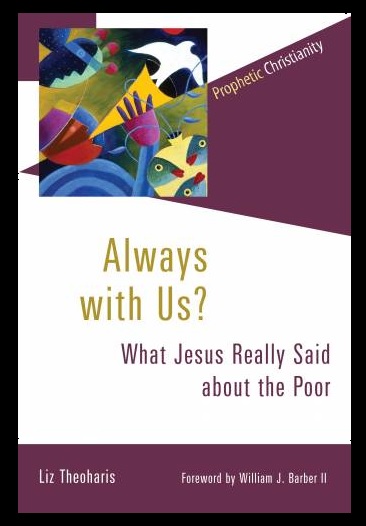
Read this – Always With Us?  What Jesus Really Said About the Poor by Liz Theoharis.  This is my and Denise Anderson’s second One Church/One Book suggestion.  (The first was Waking Up White by Debby Irving.)

If you are prosperous and comfortable, read this book for the sake of your neighbors who are in need of support.  If you are anxious and struggling, read this for the sake of your ability to trust in the God who loves us and wants abundant life for us all.  If you are a follower of Jesus, read this because it clarifies what Jesus is calling us to do next.

The only reason there are poor people among us is because we have failed to share, failed to listen, failed to protect, failed to support, failed to see each other as human beings created in the image of God.

Do your eyes glaze over when people talk about the poor?  Or is it possible, that we can imagine a world without poverty and hunger and homelessness?

Please read this book and then talk about it with someone.  God has granted us the power to speak up and change things in the name of Jesus.


This Week in LOVE

Some people are hateful.  Some systems are hateful.  The New York Times occasionally picks a particularly hateful slice of life and includes it in a column called This Week in Hate.  Last week it was about innocent people being “swatted.”  Most of the articles are about people who are targeted because of their race or religion.

I’d like to lift up slices of life observed in the past week that shines a light on something done out of sheer love.  Maybe I’ll do this every Friday.  I haven’t decided yet.

Last week someone tweeted this advice:  “Find someone who looks at you the way everyone looks at Viola Davis.”  

Great advice – if you can make it happen – but being loved is not something we can control.  I can’t make someone love me and neither can you.  Love is unspeakably mysterious and  full of grace.  Long-sustaining love is also hard work.

Being loved when we are unlovable is especially miraculous.

So as I ponder This Week in Love – at least in my own small life – I thank God for HH who was an especially perfect partner this past week.  Next week is his birthday and I couldn’t be happier that he was born.  There are no words.

May each of you find at least one person who looks at you the way everybody looks at Viola Davis.  Everybody deserves this.

Just How Big is That Tent?

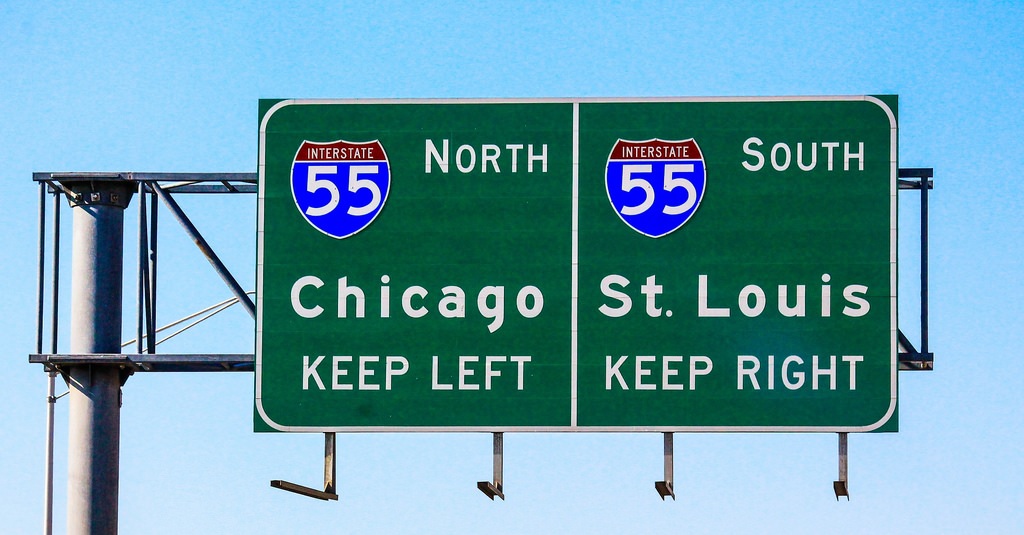
Headed south to St. Louis this week.

I’m not a camper.  I like mattresses and air conditioning. The idea of sleeping in a tent and hearing the running of a river sounds nice in theory but it also means bugs and silently pondering how badly I need the outhouse in the middle of the night.

Camping can be messy and uncomfortable. I was at Wild Goose in 2014 (aka The Mud Year) and profusely thanked God all week that HH and I had the sense to be staying in a cabin with a shower.  And a TV. And a little fridge.

I don’t care how big the tent is. It’s still a tent.

“A Big Tent” in politics means that a political party – for example – includes people with different viewpoints on assorted issues while agreeing on The Big Things. One voter’s big issue however might be another voter’s minor issue and especially these days, our Big Tent issue is that we don’t want the other candidate to win.

The Big Tent in my denomination is the national event that happens in between General Assembly years. Next year, the 223rd General Assembly of the Presbyterian Church USA will be meeting in St. Louis and so this week The Big Tent also meets in St. Louis for a preview of what’s coming, plus enough workshops, plenaries, and meet-ups to fill a church nerd with unspeakable joy.

Most people in the world do not know or care that the Presbyterians are meeting for The Big Tent this week. That’s okay. What’s important is not that a denominational meeting is happening in St. Louis.

What’s important is whether or not what happens in/under/around that Tent makes an impact that changes lives for good in the name of Jesus Christ.  

Here’s the thing about being The Church in the 21st Century:

  • It’s messy and uncomfortable.  (But that’s okay because so is resurrection.)
  • It includes people we probably do not agree with or look like. (This makes sense because we are an increasingly diverse culture whether we like it or not.)
  • It might actually do ministry in a tent. (Growing congregations are out in the community handing out bottles of water at local Farmer’s Markets or offering neighborhood dinners.)

If we love Jesus, we might even be willing to spend time in a tent with people we wouldn’t otherwise know – and get to know them. This is how the world is changed.

As you read this, I’m headed to St. Louis and I expect this trip to be life-changing. May your lives be changed in similar ways this summer too.


[Note:  Check out what we hope will change many, many lives for good – the PCUSA Hands and Feet Initiative.]

Things I’m Not Mad About

On this Fourth of July, everyone’s mad at everyone according to this article.

It’s a spiritual discipline to fight this trend and let’s start today considering the people we are happy with because they make America great today.

I am happy with quite a few people – even some with whom I disagree. Here’s a starter list:

  1. I’m happy that Lin-Manual Miranda is using his Genius/Pulitzer/Future EGOT capital to raise money for immigrant rights.
  2. I’m happy that some Republicans and some Democrats are saying out loud that the future prosperity of our nation requires bipartisanship.  Thank you John Kasich, John Hickenlooper, Susan Collins, Joe Donnelly, Heidi Heitkamp, Joe Manchin III, Shelley Moore Capito, Bill Cassidy and Lindsey Graham.  This is government at its best.
  3. I’m happy to call Russell Moore my brother in Christ.  We don’t always agree, but we agree on this: “The church of Jesus Christ will outlast the United States of America. If that doesn’t sound like good news to you- reconsider.” (from a July 2 tweet)
  4. I am over-the-moon happy that Liz Theoharis will be joining me and Denise Anderson at the Big Tent Conference this week to introduce her book Always With Us. A great nation works to end poverty for all.
  5. I’m happy with Toni Morrison because she’s Toni Morrison. She explains our nation here and it might make some of us uncomfortable, but that doesn’t mean she’s wrong.
  6. I am happy to eat Chobani yogurt because Hamdi Ulukaya is a great American. He hires refugees along with American citizens to make yogurt in upstate New York and Idaho.

Enjoy the holiday and eat your burgers/hotdogs/yogurt! Happy Fourth of July!

Image is Jasper John’s Three Flags (1958)

God Bless America

“Thou shalt have no other gods before me Exodus 20:3 

One of my go-to sermons while traveling around our denomination asks the question:  What Do We Love More Than Jesus? and I confess that – on most days – I am guilty of loving all kinds of things more than Jesus.  Sometimes I love my iPhone more than I love Jesus.

But following Jesus means that we are at least trying to love Jesus as he asked Peter to love him.  So this article is really interesting, especially in these days of chronic national division.

Many congregations sang patriotic hymns on July 2nd.  Some of those songs mentioned God.  Some focused more on country.  For example God Bless the USA is not a good choice for Sunday worship, in my humble opinion.  There are no words about honoring God or pledging allegiance to the One who invented freedom in the first place.  It’s not a religious song, unless our religion is patriotism.

There’s nothing wrong with loving our country or being patriotic.  Don’t misunderstand me.

But believing that Good American = Good Christian is a misunderstanding of the Gospel, at least as I read my Bible.

Yes, we thank God for winning the citizenship lottery if we were blessed to be born in the United States of America.

Yes, we have only God to thank for the wealth of our lakes and rivers and purple mountain majesties, for our natural resources, for the wisdom of our Founders (when they were indeed wise), and for the freedoms we enjoy.

But we live in an imperfect nation where too many people are hungry, where health care is not considered a human right, where we have twisted the right to bear arms into a dysfunctional culture where people are shot in nightclubs, in hospitals, in schools, while driving their cars, while walking home from school, while sitting in their own homes victims of stray bullets.  This is not what a great nation looks like.

But more importantly, this is not what a Jesus-following nation looks like.  I’m grateful to sisters and brothers in Christ with whom I might disagree on many things, but we agree that our nation is only great when we care for the vulnerable and those who’ve been systematically disadvantaged.

This is a great time for the Church if for no other reason that we have an opportunity to join together to serve those who are being left behind in our great nation.  My prayer today is that we might indeed be great in the likeness of Christ.

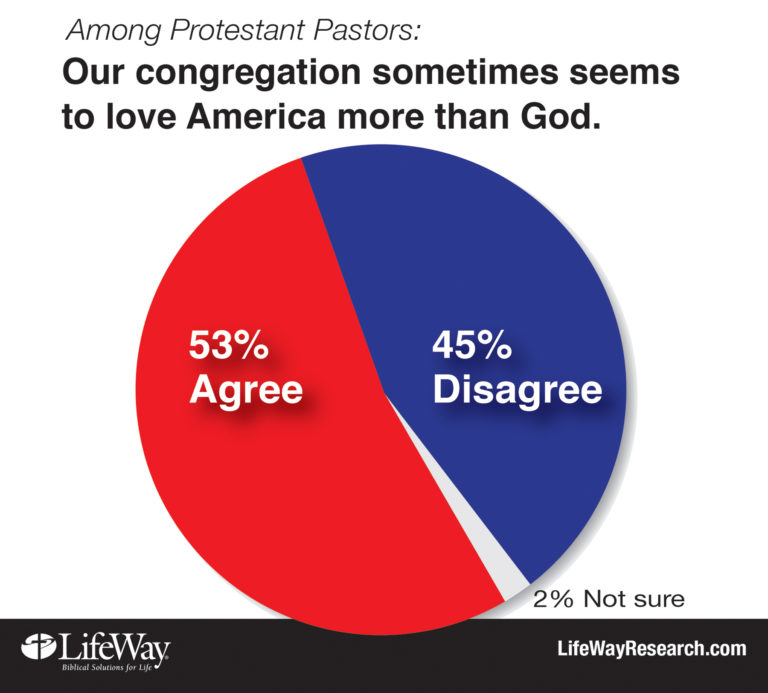
Image from Lifeway a research organization sponsored by the Southern Baptist Convention, based in Nashville.

What If We Reached Out to Youth Who Will Never Join Our Church?

Your church wants a youth group? This is my favorite Praying-For-A-Youth-Group story:

A church in a Colorado ski community wanted a youth group.  The problem was that they had no members under the age of 30.  They didn’t even have any members under the age of 60.

Theirs was a resort community with plenty of young vacationing skiers and plenty of retirees.  “Ski bums” moved there to hang out  after or instead of college, and “going to church” was not remotely on their radar.  The retirees were, on the other hand, committed disciples who decided they would pray.  They would pray for young people to join them in their Episcopal church.

The pastor officiated at more funerals than weddings, and after a funeral one afternoon, he was sitting in a coffee shop still wearing his clergy collar.  A couple of heavily tattooed young men came up to him and – seeing his collar – asked if he was “like a priest.”

I am like a priest,” he said.  And then the young men asked if he was part of a church that “let’s people get together when somebody dies.”

Like a funeral?” he asked.  “Yes,” they said, “A funeral.”  And then they explained that a friend of theirs had overdosed and died, and his parents had flown his body back to his hometown before they could say goodbye.  The priest said that – if they wanted – they could have a funeral in the church building where he worked.  They accepted.

The priest phoned his leaders and explained that:

  • There would be a guest funeral this coming Sunday afternoon.
  • It would be great if they could prepare a meal for their young guests. Homecooked comfort food was suggested.
  • Although it might not be easy, they were to refrain from staring at or judging their guests.  “They don’t look like church people,” he said.

The priest relinquished control over the “service.”  There were no bulletins, no prayers, no hymns. The Friends of the Deceased took turns telling stories.  And after, the guests enjoyed a homecooked dinner in the reception hall served by the church ladies and gentlemen.  Eating his first homecooked dinner in a while, one guest said, “This is like eating at my Grandmother’s house.  I wish we could do this every Sunday.”  And without missing a beat, one of the casserole bakers blurted out, “We can.  We’ll be here next Sunday too, so come for dinner and bring some more friends.”

These young men and women will – most likely – never join that church in a formal way.  But prayers were answered and the church found it’s “youth ministry.” As I mentioned in another post this week,  we have got to get past our image of what youth ministry looks like.

Ministry – for any age –  is not about “getting people to join.”  It’s about loving our neighbors and addressing their needs.  I have no doubt that congregations will thrive if we are living out the message of Jesus.  Focusing on “increasing membership” instead of following Jesus is the sure fire way to kill a church.  The by-product, however, of doing healthy ministry is church growth.

So maybe you don’t live in a resort community with skiers.  But chances are you live in a community with kids who need you.  Maybe they struggle with hunger or addiction or bullying or struggles speaking English or substandard housing or unemployment or homelessness or unplanned pregnancy or neglect or overwhelming social pressures or gangs or physical abuse or basic human loneliness. How would you know?  Talk to your local police officers, school guidance counselors, emergency room workers.  Do your research.  And then pray that God will make ministry happen.

Keep in mind that our congregations are asked to model what Jesus looks like. Keep in mind that these kids may never sit in our pews on Sunday mornings.

Or maybe they will.  Maybe our new sisters and brothers in Christ will be homeless LGBTQ youth or teenagers with pierced tongues or gang members.  Are we ready to welcome all kinds of kids into our fold?  If we are serious about youth ministry, I believe we are. Or by God’s grace, we will be.

Image of one of many Church Youth Room ideas from Pinterest.  For the record, we don’t necessarily need Youth Rooms in our church buildings. Also, I can’t remember the origin of this story, but it might have come from Martha Grace Reese.