How Hungry Are You?

Taste and see that the LORD is good.  Psalm 34:8

Tonight – Maundy Thursday – many of us will be feasting as we remember the first Last Supper.  How hungry are you?

I have three thoughts about that:

  1. I remember a parishioner who told me – years ago – that she loved coming to worship because it fed her to the point that missing worship = hole in her soul.  She was thoroughly hungry for spiritual food.  She was young and single then, but as time passed, she dropped out of church altogether.  No longer hungry?
  2. I staff the Commission on Preparation for Ministry in my Presbytery and we (the CPM) can tell when a candidate for professional ministry is hungry for spiritual food.  We see a spark in their eyes.  We hear a clear calling in their words.  You can’t fake this.
  3. I work with a few churches who have forgotten what the church is supposed to be.  They are satisfied (or unwittingly stuck) crossing the threshold of their long-time place of worship on most Sunday mornings neither expecting much nor receiving much in the way of spiritual food. But it’s okay with them, it seems, because they’ve done what they’ve always believed they were supposed to do.

I want to be hungry.

And I want to serve a Church that’s  hungry for spiritual food: people who must grapple with the things of faith because their life depends on it.  I want to be part of a Church of people who are in it to pray deeply, struggle mightily, and love sacrificially.

I relish connecting with a congregation that longs to understand people who are not like them, who are curious about the world and what God is doing. I am hungry for more congregations who take Jesus seriously.

Our hunger for holy food will determine the future of Christ’s Church in the 21st Century.  I hope we find ourselves very, very hungry.

Image Source.

Who Is Your Truthteller?

Pilate famously asked, “What is truth?” at the trial of Jesus and it’s an excellent question especially in 2017.

When the church I was serving planned to install a new pipe organ in the sanctuary balcony, the organ builder asked me, “Who is your hoister?”  I had no hoister, nor did I know our church was supposed to have one.

If I asked, “Who is your truthteller?” would you have someone to name? Would you know that you were supposed to have one?  We are in the Truth business as professional ministers.  But there is a tremendous need in each of our professional and spiritual lives for someone to safely share the truth with us too.

This article about Donald Trump got me thinking: this administration needs someone on staff who can speak “truth to power without fear of being sacked.” We in the Church need this as well.

I’m increasingly aware that the world needs safe spiritual spaces and this is not possible without safe spaces in leadership.  And – if we are talking about Church again – the leadership cannot be safe if those who supervise and evaluate them do not allow for safe truth telling.  In other words, a healthy personnel committee = a healthy staff = a healthy congregation.

Imagine a Pastor who has lost his way.  He works to bolster his own reputation. She is threatened by the gifts of others.  He can no longer work with those with whom he disagrees.  She sabotages those who quetion her.  This would not happen if there was a truthteller on board who was respected by all and could share difficult information fearlessly.

This kind of relationship comes from trusting and being trustworthy.  It comes from assuming the dignity of each team member.  (Note:  This book is a must read for all leaders.)

So . . . who is your own truthteller?  I believe we all need one.

Image is Finding the Focus © Jan Richardson. janrichardson.com   Used with permission.

Rituals That Mean Something

We are spreading our parents’ ashes today in our hometown.  Fun fact:  Mom and Dad were full-body buried in caskets sealed in “50 year waterproof guaranteed” vaults almost 30 years ago.  There are no ashes. But we will make do because we need this ritual in Chapel Hill and so that’s what’s happening.

Every healthy family,  every healthy organization celebrates Rituals that bring joy and comfort.  They might seem strange to those outside the family/organization but they bring Meaning. They bond people together.

Rituals in my assorted circles:

  • We sing “Ding Dong the Witch is Dead” everytime Duke loses a basketball game. (family)
  • Somebody gets Henry’s Hulk ornament in his/her stocking every year. (family)
  • We eat warm homemade rum cake for Kitty’s birthday. (office)
  • We do a summer outing together that has nothing to do with work. (office)

You get the picture.

Religious communities also have rituals but sometimes they are more like “practices” rather than “traditions.”  Our practices might involve having a Women’s Group Bake Sale on Palm Sunday.  Our historical traditions might include having the children march through the aisles with palms.

Sometimes our secular practices are more meaningful rituals than the traditional ones.  So many “church traditions” are meaningless because there’s never been an explanation much less an emotional connection.  For example, I once served a church with a very high central pulpit.  The Reformed Tradition behind that architectural plan was about the Word of God being the highest thing in the room.  But a young worshipper once asked me why I “preached from so high so that I could look down on people?”

Explaining our traditions is a good thing.  But making them meaningful is not something we can control  (In the words of Regina George: We can’t make “fetch” happen.)

We can’t decide that something will become meaningful to us.  It’s meaningful or it isn’t.  Or maybe it doesn’t seem very meaningful at one point in our lives but – as time passes – it’s meaning deepens.

The tasks of a 21st Century spiritual leader include being the tour guide who explains our faith traditions and the storyteller/performer who connects the brain with the spirit.

As we spread something representing my parents’ ashes this afternoon in one of the holiest places on earth, it will mean everything because we will be together in a spot we’ve been before, in a place we loved each other.  I can already feel it.

It’s Always More Complicated Than It Seems

I’m not sure how to respond to the news of last night’s bombing in Syria after standing on that holy ground so recently.

On Monday, our delegation from Presbyterian Disaster Assistance met with the Governor of Homs.  Today Governor Barazi  is being interviewed about casualities.

It’s been interesting watching the news and comparing what’s said in U.S. media with what local church leaders shared with us last week or how the BBC reports stories in other parts of the world.  I’ve observed partial news, fake news, and sentimental news.  It’s hard to discern the whole story . . . except I do know that . . .

  • these are real people we have killed.
  • these are real people that others have killed.
  • we are all hypocrites.
  • everybody wants a piece of Syria (they have oil and natural gas)
  • we need to remember that human beings are indeed – always – children of God and they are never – ever – poison Skittles.

To ask us to pray for Syria seems shallow although that’s what I’m asking and that’s what my new Syrian friends are asking today.  And we might also consider how we – in our own lives and in our own congregations – might create Space for Hope wherever we are:  a place to gather safely  in the face of anxiety and trauma to create fun and conversation.  Who needs this in your neighborhood?

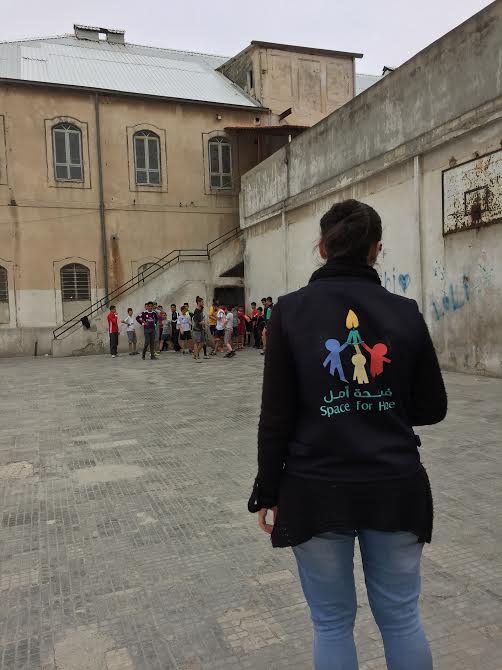
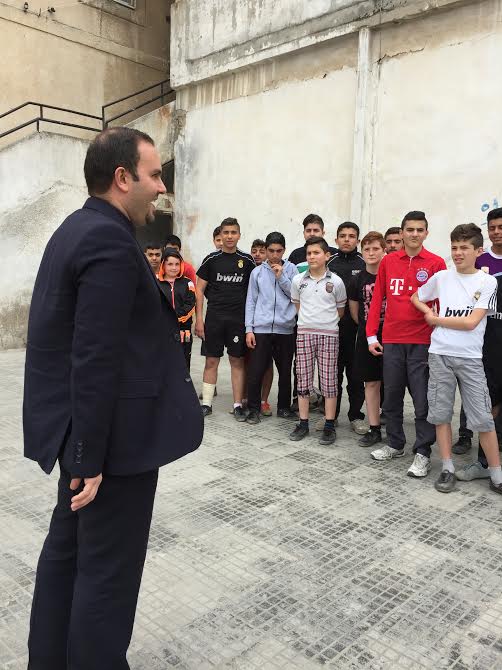
Images from the Evangelical Church in Homs on Monday.  “Space for Hope” is a program bringing Christian and Muslim youth together for sports and other programs.  I tried to explain March Madness to the basketball players but failed.  They’ve got other things going on.

Traveling Uncomfortably

Before leaving for  Lebanon and Syria a couple weeks ago, I started feeling sick. And then I pulled my right knee getting out of a chair or something.  By the time we landed in Beirut my throat was scratchy, my head hurt, and my chest ached from long nights of deep coughing. And sharp pains were piercing through my right knee. And then I got pink eye.

I had become That Traveler – the one who can’t eat the local food because her stomach is already sensitive, the one who experiences second hand smoke by getting searing headaches.  The one willing but unable to start early and stay late. Ugh.

I’m home now and I’m happy to report that the pink eye is clearing up.

There are many ways to travel and my favorite kind involves premium rain-shower heads.  But uncomfortable travel is about more than needing to find a local pharmacy to stock up on throat lozenges.  It’s about accepting brief power outages without drama because the locals deal with them every day.  It involves being curious about the unfamiliar.  It involves talking with people about their lives rather than assuming we already know.

Especially when one visits a part of the world impacted by pain and trauma, it’s a holy thing to stand beside those neighbors even if this means being uncomfortable.  We who call ourselves Christian follow One who not only stood beside those in pain; he was willing to die for them.

When we stand in solidarity  – with the poor, the powerless, the minority, the outcast, the threatened – we stand in the image of Christ if only for a moment.

It’s uncomfortable walking among the ruins of a once-beautiful street and remembering what is now lost.  But this is real life and we are called to be a part of it, and to welcome those who need to be comforted.

Image of a bombed out apartment building along Al Qal’aa in Homs, Syria last weekend.


(Trying Not to Be Sinfully) Proud

Pride is a funny thing.  
It’s a deadly sin and yet we embrace pride when talking about our children or our friends, or even about ourselves.  (Hello Facebook.)

My understanding of the sin of pride is that it makes my achievements about me. It kind of makes everything about me.

I’m a proud mother.  My kids are remarkable human beings with good hearts  – and while much of that is about grace and luck, the underlying message could be that HH and I are superb parents.  (There’s the sin part right there.)

I returned safely home from ten days in Lebanon and Syria last night and I didn’t want to go with a post about being “sinfully proud to be Presbyterian.”  That makes what I experienced about me, as in: I am smart enough/faithful enough to be part of an amazing denomination that gets many things right.  No, this trip was all about what God does through unlikely people.

There’s a lot of toxic charity out there.  There’s a lot of charity that makes us look and feel great about ourselves – whether we actually helped anybody or not.

I built a well!  We made friends with poor kids!  We put a new floor in that flood-destroyed school!

So many Heaven Points.

The world is heartbroken with Syria today and rightly so.  They have now been gassed after being shot, bombed, burned, maimed, killed, starved, and terrorized – sometimes by their own leaders.

But I thank God for the Presbyterian Disaster Assistance program which is in no way a toxic operation:

  • Long after organizations have left Katrina-battered parts of the Gulf, Presbyterian Disaster Assistance is still there.  We stay after the sexy is gone.
  • Presbyterian Disaster Assistance works with local partners supporting what they want to do – not what we think they need.

About a year ago, the Presbyterian Churches in Lebanon near refugee camps wanted to provide schooling for the refugee children – many of whom had never been in any school of any kind.  Many up to age 13 were illiterate in even in their native language – Arabic.

Now they are learning to speak, read, and write in both Arabic and English (because they will need English if they ever hope to go to an accredited school in Lebanon or in most places in the Middle East one day.)

They are not only given free schooling.  They receive transportation, medical care, a school uniform, and love.  Five refugee schools now teach Christian and Muslim children through northern Lebanon.  One meets in a former auto garage. Did you read this carefully?  Five schools were established in less than one year.

These schools are often staffed by barely paid directors (often the local pastors’ spouses) and members of their congregations.  And those congregations are all members of the National Evangelical Synod of Syria and Lebanon (NESSL) which is Reformed in theology and Presbyterian in polity.  You can support these schools here.  (Note that we Presbyterians are not new to this ministry.  We’ve been partnering there since 1823.)  That’s right:  1823.

Through NESSL, we Presbyterians in the PCUSA have been helping to build schools, hospitals, and nursing homes for a long time.  Yep, I’m proud.  But I’m mostly overwhelmed that God would move exhausted people who are unspeakably patient followers of Jesus in a war-ravaged corner of the world to step up and create five refugee schools in less than a year.

This is what God does through us.  If you are filled with sorrow of the deaths in Syria this week, if you are moved by the plight of people fleeing for their lives out of Syria (and for the overwhelmed nation of Lebanon which has received more refugees than a country smaller than Connecticut should have to take on) you can do something.  Here.  These people are heroes.

One more thing:

Most of these children are Muslim by identity and faith.  The Christians who teach them are respectful of their beliefs unlike some schools who seek to convert.  NESSL seeks to love in the image of Jesus and let God take it from there.  When I asked what that looked like, one teacher said that when two boys were fighting, she reminded them that “Jesus does not like fighting.  Jesus wants us to treat each other with love.”  Better than any lecture.  One school director said that a student told him that he “never wanted to leave the school because people love him there.  No one hits him at school.”  Seed planted.

This is who we are as the people of God.  At our best and our holiest, we followers of Jesus do not hate people.  We love people in the name of the one whose death and resurrection we honor next week.

I am unspeakably grateful and simply proud of my brothers and sisters in Lebanon and Syria.

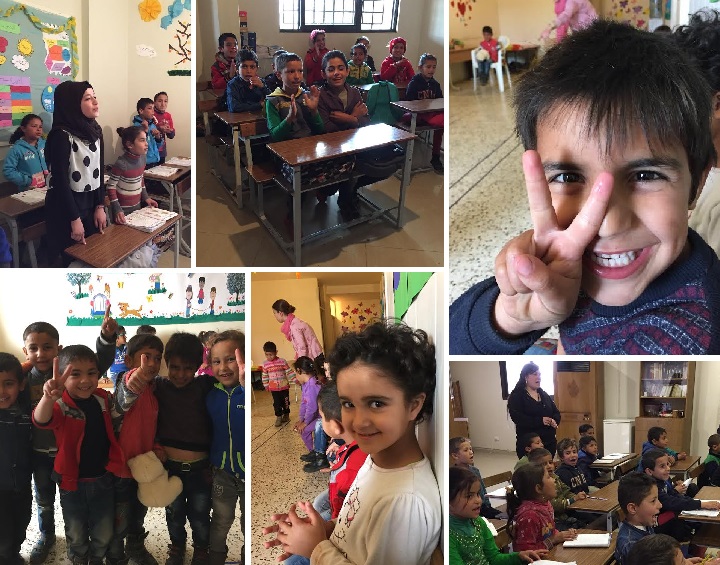
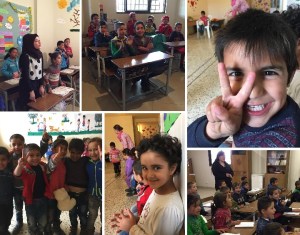
Image of some of the Syrian refugee school children we met last week.

I Can’t Wait to Tell You about Lebanon & Syria

I’m on my way home.  Can’t wait to share the amazing work that the Church is doing in Lebanon & Syria in response to the refugee crisis & post-war assistance.

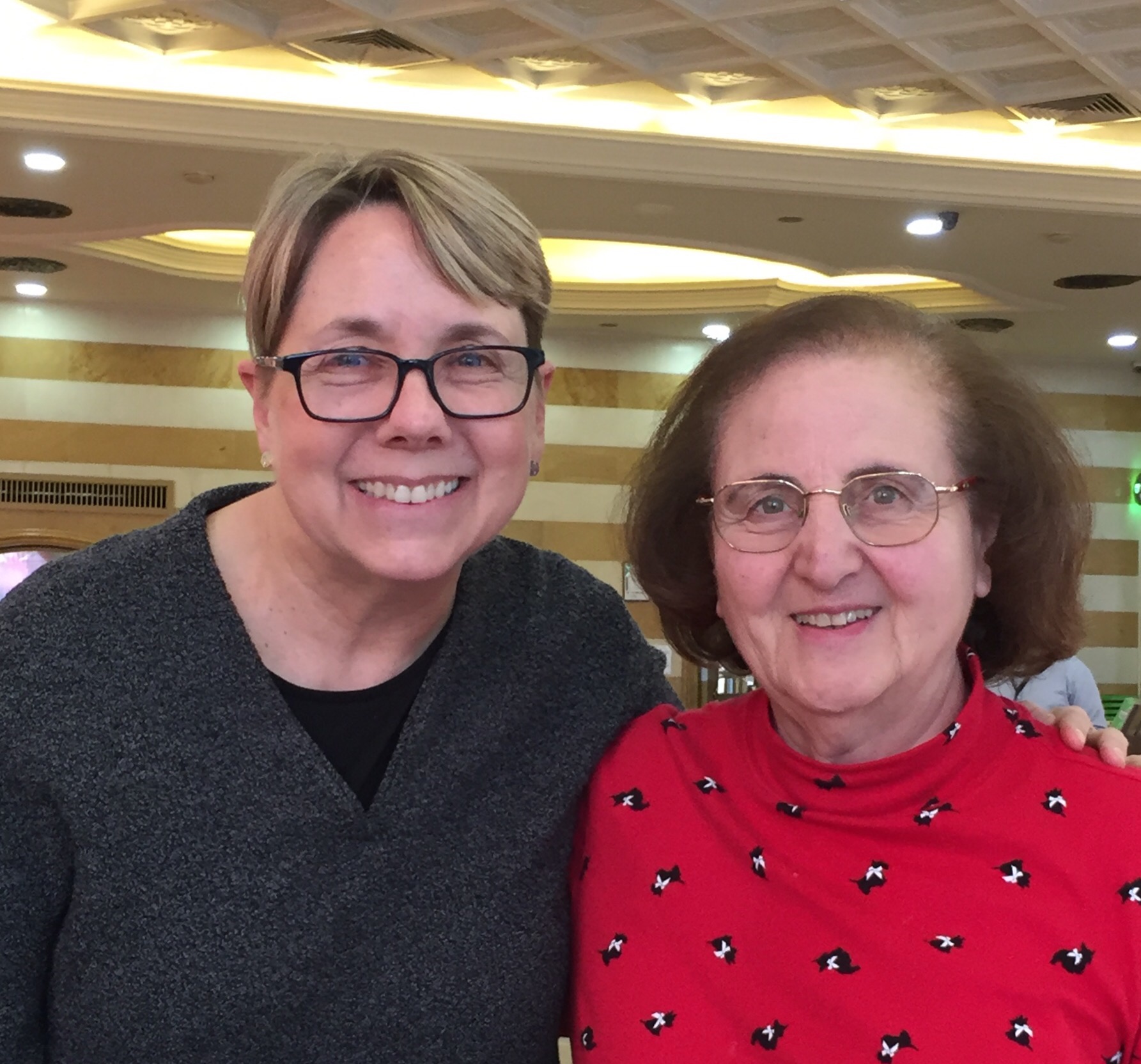
And you win Presbyterian points if you can identify the global treasure pictured with me here in Tripoli, Lebanon yesterday.

This is Why I’m Here

I love those moments when it’s clear that you were supposed to be at that very point in time and space.

A couple weeks ago, after hearing a stirring sermon, the person sitting beside me in the pews said, “That’s why I was supposed to be here today.”  She had tears in her eyes and – frankly – I loved the sermon too.  But there was something about it that rang especially true and real for my friend.


We can’t make these moments happen.  But we can look out for them.  We can pay attention.

Last week, I was sitting in a room with strangers and friends listening to the hopes of a pastor in a faraway place who has a vision for ministry among the poor in his city and beyond. Suddenly, I felt it:  that moment.  This is why I came to Puerto Rico.

Things made so much sense and my whole life seemed to connect to that very point in time.  The strands of my life pulled together into some cosmic choreography: the family farm, summers spent smelling cow manure, a daughter “called to the dirt,” agricultural entrepreneurs I’ve known and loved, recent readings about Farminary, leadership development, Diana’s book.  I don’t know what it means but I plan to pay attention.

Image is Blessing for Those Who Have Far to Travel © Jan Richardson. janrichardson.com   Used with permission.

Pastors with Agendas

All of us who are clergy tend to be Pastors with Agendas.  We pray that those agendas are holy and noble:

  • To lead God’s people in the corner of the world to which we’ve been called with energy, intelligence, imagination, and love – to quote the PCUSA ordination vows.
  • To discern what breaks God’s heart in our neighborhood and address it in the name of Jesus Christ.
  • To reach out to broken people.
  • To shift the congregation’s ministry from a 20th Century to a 21st Century culture for the sake of the Gospel.

Some pastors – perhaps unconciously – have an agenda which may or may not serve God’s people well:

  • To hang on until I can retire with full benefits.
  • To get my kids through college/my spouse to retirement/my house paid for.
  • To stick around long enough to set myself up for a higher step on the ecclesiastical ladder.
  • To wait out Mr. Crankitude on the governing board.  He can’t live forever.
  • To make this congregation more conservative/liberal/gay friendly/willing to leave the denomination.
  • To make anti-gun violence/LGBTQ rights/inclusive language/environmental awareness/gun rights/anti-trafficking/any-number-of-justice-issues What We Are Known For in our community.

Pastors (and I’m talking to you too Mid-Council Leaders):  what’s your agenda as you live out your calling?  Is it a hidden agenda?  Is it shared in whispers or is it shared out loud?  How often do you track it?

I think about Jesus’ agenda often in these days and it wasn’t about climbing ladders or achieving personal security or seeking the spotlight.  It was about serving.  It was about connecting with unlikely people.  It was about sacrifice.

Trying to keep this in mind as I land in Lebanon today with representatives from my denomination.  We’ll be meeting with leaders whose agendas are indeed holy and noble in that they are serving is difficult and dangerous corners of God’s world.

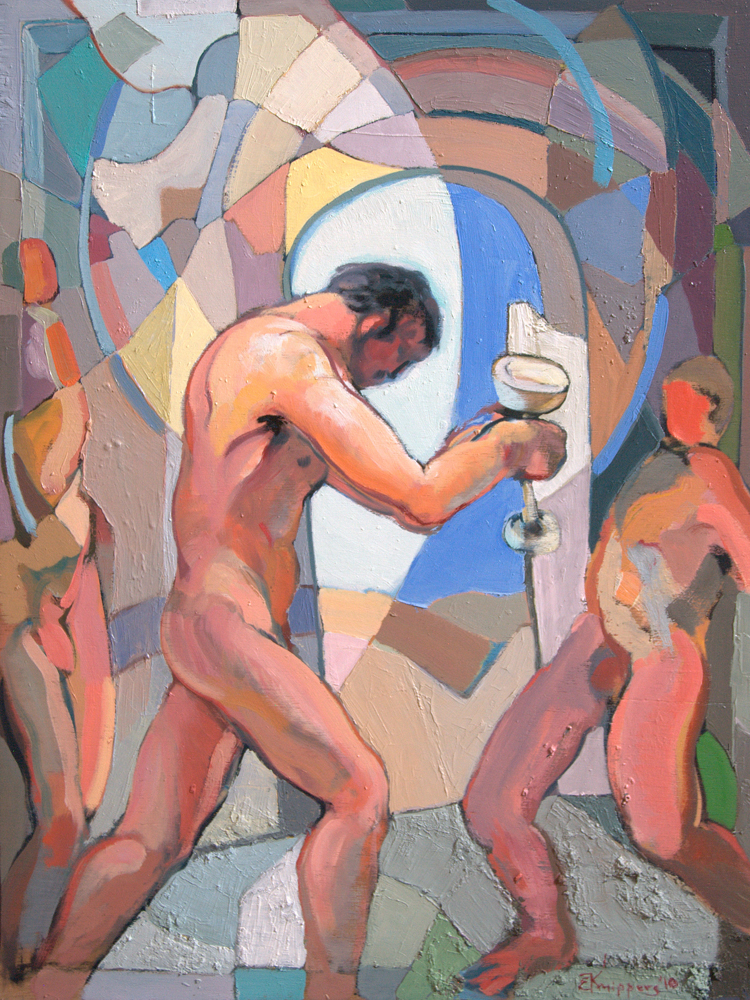
Image of Edward KnippersChrist the Servant.

Cancer

I wanted to call this post F@*! Cancer but I’m a pastor and denominational leader and such vulgarities are frowned upon in my circles. On the one hand, I don’t care about that.  On the other, swearing about cancer won’t make it go away.  But sometimes it’s the best we can do.

There are more than 120 different kinds of cancer.  Did you know that you know that you can get cancer of the eyelids? You can get cancer of the salivary glands? You (women) can even get cancer on your vulva.  True story.

My mother died of breast cancer.  My father died of non-Hodgkins lymphoma. My friend C died of uterine cancer. My friend M died of liver cancer. My friend D died of brain cancer.

I’ve lost count of how many of my friends’ mothers have died of breast cancer. We hate being in this club.

Some people don’t die.  I didn’t die.

But not knowing what’s going to happen is so strange.  I remember asking my brother one August if he thought our Dad would be with us at Christmas.  Dad died within the week.  We just don’t know when the end will come. This is a blessing and a curse.

The best part of a cancer diagnosis is that you get that jolt that reminds you to tell people you love them.  You can prepare.  You can write notes to your people. You can record in your own voice how much you love them.

The worst part of a cancer diagnosis is that you might die sooner than you imagined.  And you actually have cancer. You could be zapped and poked and prodded and poisoned and people will feel sorry for you and give you that look. Or you could hear words like “incurable” or “terminal” or “nothing-we-can-do” or “put-your-affairs-in-order.”  You get added to the Prayer List.  (Note:  it’s more difficult to get off the Prayer List than to get on it.)

I hate cancer so much.  I especially hate it today.