Mark Your Calendars: September 24, 2016

Train Tracks

‘Those who cannot remember the past are condemned to repeat it.’    George Santayana

When I was a child and our family visited family in Iredell County, NC, my father often pointed out a platform near the train tracks in Mt. Mourne as we drove between Davidson and Mooresville.  He told us that the town was called Mt. Mourne because slaves were traded on that platform.  I remember exactly where that platform stood and I used to imagine what “trading slaves” might have looked like.  At least someone had the sensitivity to name the town “Mt. Mourne.”

Not only is the platform gone but I can find no historical evidence about the slave trade in Mt. Mourne.  Either my father was sharing a mythological tale or somebody has cleaned up the history really well.

The Mt. Mourne Plantation, however,  is on the National Register of Historic Places as the site where Rufus Reid owned 80+ slaves who worked his cotton fields, making him one of the wealthiest men in North Carolina in the 19th Century.  I’ve long wondered if Reid Memorial Presbyterian Church – which is near Mt. Mourne – was named for Rufus Reid.  The whole story makes me feel queasy and uncomfortable.  But I believe that my father was telling the truth about that long-gone train platform.

I have visited Holocaust Museums in both Washington, DC and Jerusalem, and they are disturbing.  They are meant to be disturbing.  School groups visit on field trips and – in the Washington, DC museum – they walk through the hallway filled with the shoes of men, women and children who perished in death camps. It’s a history that we must not forget even though it’s sickening and reminds us of how some of us have dehumanized others of us.

As Jim Wallis and others have written, human slavery is the original sin of our nation.  It’s unspeakably shameful. And who wants to remember one’s shameful past?

If I’m visiting Our Nation’s Capital, I’d rather watch the pandas at the National Zoo or check out Dorothy’s ruby slippers in the American History Museum or try to figure out how the Wright Brothers’ 1903 glider in the Air and Space Museum could have possibly gotten off the ground.

But on September 24 of this year, The National Museum of African American History will open on the National Mall in Our Nation’s Capital and we who love our country need to go – if not in September, then sometime in the near future. I believe it will help us understand how we got to where we are today – where a young white man can sit through a Bible study in S.C. and shoot the black church members along with their pastor, and where a drug-addled young man can be shot 16 times while walking away from a police officer because of – I believe – the color of his skin.

We will have the chance to see what none of us wants to see but all of us need to see – so that we will not forget how some of us in history have dehumanized others of us in history. Among the collections to be included in the African American History Museum will be an exhibition on the history of slavery.  I’m guessing these will not be easy hallways to walk through, but we have got to remember in hopes that we will not repeat this history.

I love remembering beautiful stories depicting women who were brave and men who were kind and people of all ages being generous beyond all comprehension. But we owe it to all God’s children to remember the stories of injustice as well.

Colonialism

ColonialMy personal history regarding colonialism involves 1) visiting Colonial Williamsburg, 2) liking Southern U.S. colonial-style architecture, and 3) being called “the colonist” by my co-workers when I was a social worker in the U.K. after college.

I’ve spent most of my life as a sheltered innocent.  It’s one of the privileges of growing up as a Daughter of the American Revolution (my side – the colonists -won) as opposed to growing up in an Indian colony in Nevada (“settlers” took our land) or in The Belgian Congo in the early 20th Century.

The word “colonial” has always been a happy word for me.  It meant four poster beds and Chippendale chairs.  It meant Paul Revere of Boston and John Turk Edmiston of Staunton, VA (my fourth great-grandfather who arrived in Philadelphia from Ulster in 1740.)

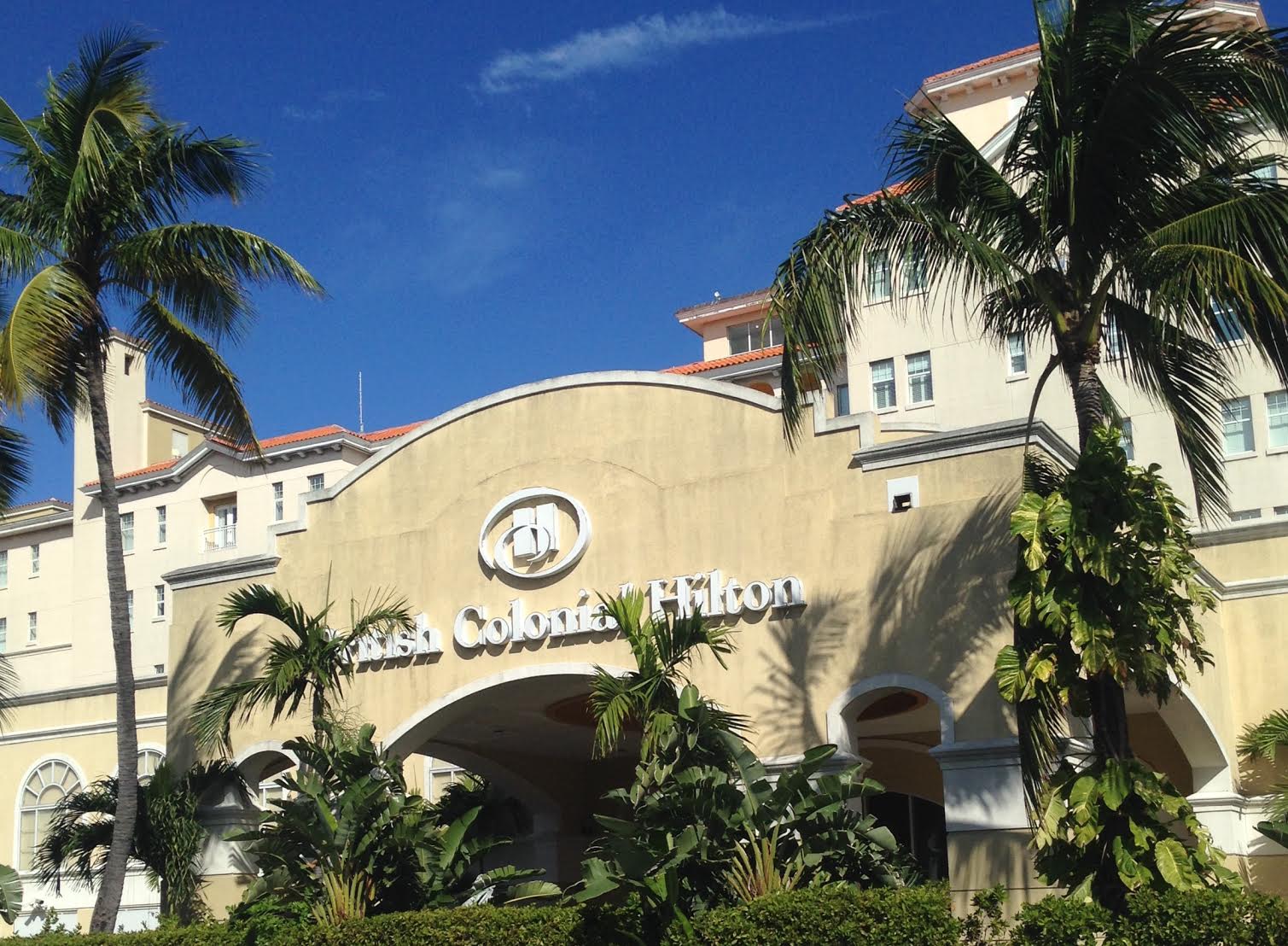
But I shuddered a bit when I saw the name of the Hilton in Nassau last week: The British Colonial Hilton.  It felt different from the feeling I have when I see the words “Colonial Williamsburg” on a tourism brochure.  And here’s why: when Columbus met the native Bahamians in the 15th Century – the Lucayan people – he took them as slaves and eventually they were freed but banished from their own islands.  Many years and countless colonizations later, the Bahamas became a British colony finally gaining their independence in 1973. Colonization was not necessarily horrible throughout all Bahamian history. But we who appreciate freedom need to recall that part of our beloved history includes settling in and colonizing places that belonged to someone else, as if we could simply arrive and claim ownership.

Sometimes we claimed to own the people as well as their land.  God have mercy upon our souls.

Oh, how I innocently have loved Chippendale chairs and all things “colonial.” Part of growing up and – I believe – growing more mature in our faith is acknowledging corporate sin.  The world “colonial” might mean heartwarming comfort for me but the word might mean cruelty for someone else.

Yesterday I head a S.C. woman rue the taking down of the Confederate flag.  “It means ‘history’ to me,” she said, “And I understand that it means bigotry to others.  But it means ‘history’ to me.

The apostle Paul often wrote about this sort of thing, including here and here. We are called to consider what hurts our neighbors or makes them fall.  It’s not about political correctness.  It’s about loving our neighbor as ourselves.

And so when I suggest that we must be sensitive to those for whom colonialism has been part of their history, I don’t mean to be that person who always dredges up the ugly side of everything.  Rather – we are called to be those people who confess before God and each other that many of our ancestors were part of the ugliness.

God redeems even what is ugly.  And we are a part of this redemption.

My First Cruise

drink on cruiseIt was a six day/five night Carnival Cruise.  You’ve seen the ads:  happy, thin, attractive people splashing around under sunny skies and I have to admit before you and God that I didn’t even get up to that level with the huge circular slide.

I was on this particular cruise To Work – albeit to work with clergy colleagues who are interesting and fun.  The only cruise I’ve ever really dreamed about taking was one of those river cruises they show during Downton Abbey commercials. You know the ones I mean.

After this – my virgin excursion – these are my thoughts:

  1. A cruise ship like this one is more than a Floatel. It’s like a little city.  I was happy to be in a little city with lots of generational and ethnic diversity.  English was not the only language spoken although it was curious that announcements were made in both “European English” and “United States English.”  Why?
  2. Not sure I’d want to take my honeymoon on this kind of ship. Kids can be loud and even on The Serenity Deck (no kids, no music) there are plenty of talkers.  Overhead in the hot tub: “I could have worked for Apple but it was all about age discrimination.”
  3. You do not have to do all the things. There are gospel concerts and stand-up comedians and art auctions and other shows but you do not have to partake.  The only extra thing I did was go to High Tea because I heard there’d be clotted cream.
  4. You will not meet the locals at portside stops (or whatever the maritime name for these layovers are called) unless you work very hard at making it happen. Or it could happen by accident.  On Thursday, I had planned to meet a colleague for lunch and when I asked a local for directions to the restaurant, she told me it was way down the island.  After walking about five miles, I was picked up by a local bus (I must have looked lost) and for $1.25 I received a tour of the island with air conditioning.  When it became clear that the restaurant was not “way down the island” but in fact in town, and after almost everybody else had disembarked, the bus driver, his sister, and I had a nice conversation. We made a brief stop where he ran into his aunt’s house to get all of us bottles of water.  His name was Danny and his sister was Epolia and we watched an episode of Madea on the bus (the one about adultery with lots of gospel singing.)  And we talked about adultery and then they took me to my restaurant. My brush with the locals.
  5. Is it disembark or debark?  Debark sounds like something cruel we do to dogs.
  6. If you are a Myers-Briggs introvert, you must get a single. You must.  On the ocean side.  They bring free room service breakfast every morning so you don’t even need a roommate to go fetch coffee.
  7. The staff was from all over with names like Genji and Chul and Martina. The good news is that they get to work on a cruise ship.  The bad news is that work on a cruise ship 24/7 and sometimes they are required to dance Gangnam Style.  It makes God happy when we tip them generously because I have a feeling they are sending most of their wages back home.
  8. Cruise ships are about privilege. What an enormous privilege to lie around on deck of a ship under 80 degree sunshine in January when the East Coast is shoveling out from a snowstorm.  Actually staying on a cruise ship – depending on the ship – is less expensive than staying in a Holiday Inn – depending on the Holiday Inn – plus 3-4 meals a day, so it’s not about having piles of money.  But I do have enough money to do something like this.  And that’s a privilege.
  9. And speaking of privilege, not many people get to work on a cruise ship like I did last week. I’m a pastor who got to work on a cruise ship talking about a topic that makes me excited and happy.  These kinds of opportunities are few and far between.  Thank you RevGals.
  10. Taking care of ourselves is part of life’s calling. Women – especially – are not good at this.  We rarely have people “turn down our beds” or replace our towels twice a day.  The average woman on this planet does not have someone to cook and clean for her.  If you know a woman who has cooked and cleaned for you on a regular basis, send her on a cruise.  You can go with her if she doesn’t have to clean up after you in your State Room.
  11. Staying in a tiny space feels like heaven if it’s called a State Room. Think about the spaces we call a Sanctuary and consider if it’s truly a sanctuary for people.  And what makes it so?

Already checking out websites for next cruise . . .

I Am Here

Cruise-Ship-Carnival-Magic_tn2

This is my only blog post this week as I am semi-radio silent with the RevGalBlogPals at Big Event #9.  See you in February.

God’s Person

It’s been a long time since I’ve watched Grey’s Anatomy but I know that Jesus on the TubeMeredith and Cristina are each other’s person.  Your person is the one you can call when you get dumped, the one who helps you get home after surgery, the one you can phone in the middle of the night and say, “There’s a naked dead guy on my kitchen floor” and she responds, “I’ll be right over.”

One of the comforts of life is having a person.  The unspeakably fortunate have more than one.

So, I was praying on the train yesterday on my way to work and – to be perfectly honest – I am a distracted pray-er, especially on the train.  But these words came out:  “Help me be your person today.”   For the record, I was talking to God.

Now God can do much better than me, in terms of a reliable person.  And yet it occurs to me that it’s not a bad daily aspiration:  to try to be God’s person.  And by that I mean that there will be people out there on the sidewalk or in the elevator or waiting for a bus and they might need someone to be their person for a moment or a day.

I’m not talking about being That Person who annoyingly tries to fix everything or be helpful in ways that are not at all helpful.

I’m talking about paying attention.  It’s really cold in Chicago this week and it’s common to bundle up and brace ourselves against the weather to such an extent that we can become blind to what’s going on around us.  We miss the person who needs a person.

Trying to be God’s person feels amazing – sort of what it’s like to be a super hero. Nobody knows we have a secret mission.  But we do.

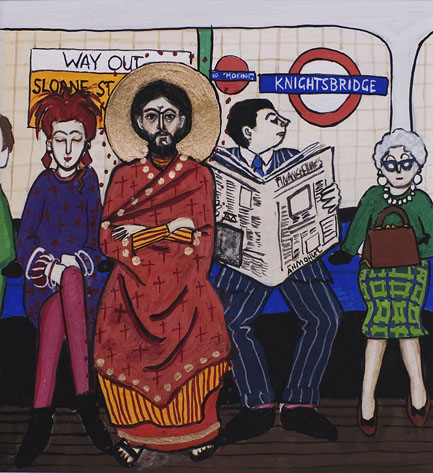
Image source.  She can also paint a picture of you and your people on the Tube with Jesus.

Who Taught You How to . . .

Who When What WhyFaithful readers: if you happen to be the Head of Staff in your church:  who taught you how to be a Head of Staff?

To those of you who moderate governing boards/the vestry/the session: who taught you how to Moderate a meeting?

To anyone reading this who runs a non-profit or serves from the second chair or organizes an event:  how did you learn how to do those things?

These are real questions and I hope you’ll share your experiences. Did you watch someone do it?  Did you go to “head of staff” school?  Did you learn on the fly? Did you read Drucker/Godin/Borden/Easum/Bandy/Bullard/Rendle?Are you being coached?

Lifelong learning is crucial for all leaders.  But what if we work with someone who doesn’t see any need to learn new skills or has no desire to tweak their expertise?  How do we encourage seasoned pastors, for example, to become more proficient?

One of the fun things about ministry in the 21st Century Church is that it’s all deliciously new.  One of the not-fun things is that many of us are not interested in the new.  We have too many leaders who are too weary or unwilling or unaware to make pronounced shifts in his/her leadership.  There are too many of us who have made ministry about us.

(It’s not about us.)

What are the best coaches or books or blogs or classes you’ve found that enhance your leadership skills for serving the 21st Century Church?  I’d love you to share.

Race

Family of Alonzo Edmiston

“I would like to tell you that such a day approaches when the people who believe themselves to be white renounce this demon religion and begin to think of themselves as human.”  from Between the World and Me by Ta-Nehisi Coates

Our Presbytery offered a day-long anti-racism event led by Chicago Regional Organizing for Antiracism (Chicago ROAR) and over 100 people attended.  On a Saturday.  Of a three-day weekend.  From 9-4 (as in all day.)  And it was a sunny day.

Our nation is a hot mess in terms of violence and racial prejudice.  But the color of one’s skin is about as indicative of one’s propensity for personal success or  violence as one’s height, eye color, or shoe size.  And yet we consider skin color to determine one’s intelligence, personality traits, and proclivities.

We know that race is a social construct, right?  It was invented by Europeans to designate value and status.  We know that – right?

What was considered “white” in the United States varied from state to state after the U.S. Civil War.  The children of Thomas Jefferson and Sally Hemings were slaves and yet – according to Virginia law – they were “white” by virtue of their European blood.  Native Americans were “white” in Oklahoma during Jim Crow years.  Arabs were officially ruled to be “white” in 1944.  At certain points in history, people from Ireland, Italy, and Israel were not considered “white” until they were. Rashida Jones and Lena Horne are considered “black” although their skin color is lighter than my (“white”) father’s.

And so on this day when we remember Dr. Martin Luther King, let us also remember that:

  • race ≠ skin color
  • race ≠genes or blood
  • race ≠ language
  • race ≠ ethnicity
  • race ≠ religion

Race is a social construct invented to sort people.  And sorting people based on the color of their skin makes no sense.  And so, while we move further into the 21st Century, let’s educate ourselves on what it means to be human beings created in the image of God.  It’s not about melanin.

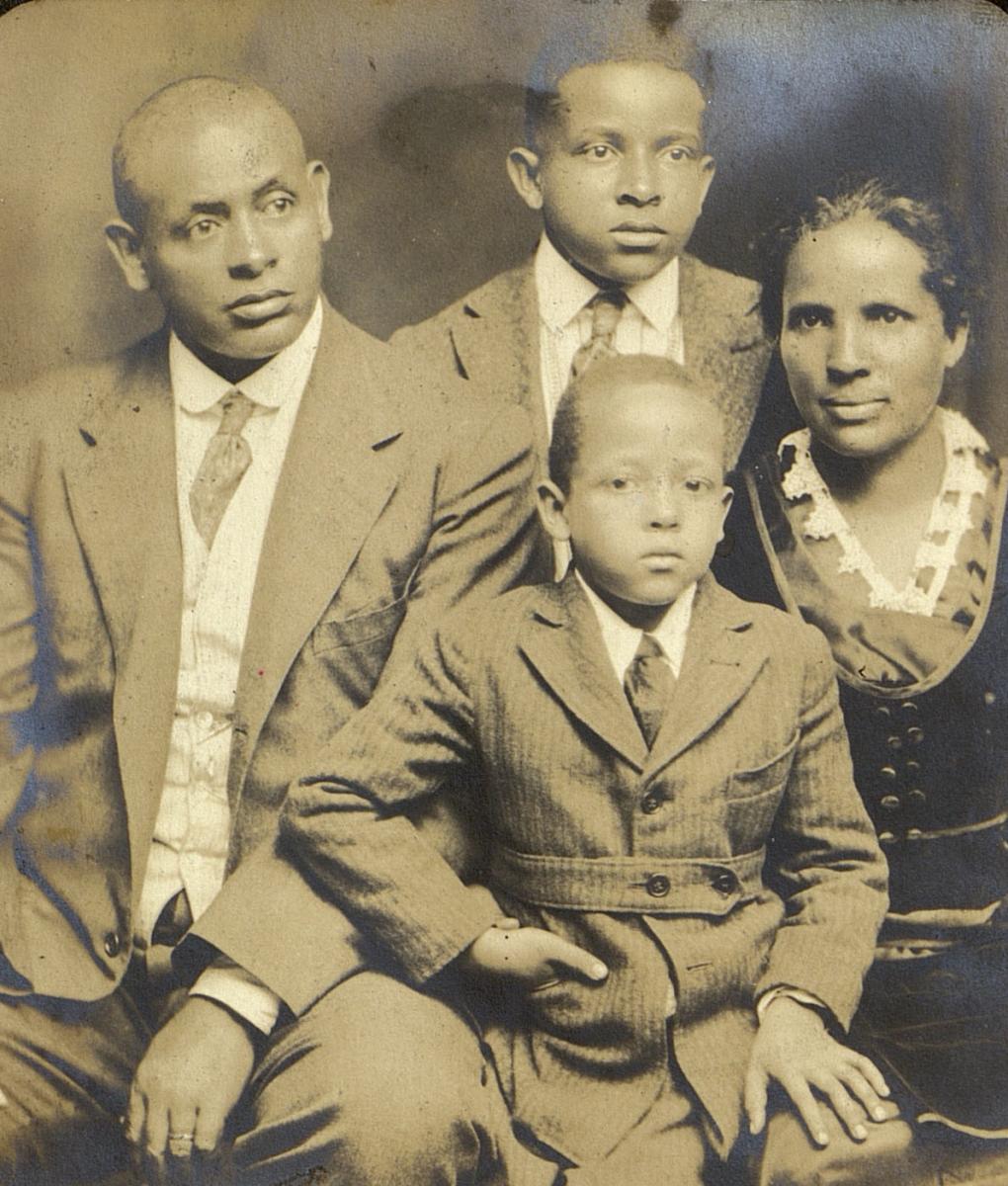
Image of Alonzo Edmiston and family whom I would be honored to consider my kin although I’m not sure we are actually related by either marriage or blood.  “Alonzo Edmiston, a missionary to the American Presbyterian Congo Mission in the early twentieth century  . . . married fellow missionary Althea Brown on July 8, 1905, and together they had two sons. Sherman Lucius was born on May 26, 1906, and given the native name of Kuete, after the Bakuba King. Alonzo Leaucourt was born on May 27, 1913, and given the native name of Bope.”  You can read more about Althea Edmiston here.

Shed a Little Light This Weekend

James Taylor wrote this weekend’s post.

Is This a Movement or a Program? (The Answer Changes Everything.)

chi-mlk64rally20120116110644Remember the Emerging Church?  Many of us involved in the Emerging Church, the Emergent Church, the Hyphenateds (Presbymergent, Anglomergent, Luthermergent, etc.) considered this to be more than a program or semantic shift.

It was (and still is) a movement.

Congregations have been creating and perpetuating church programs for years: Vacation Bible School, PADS (Public Action to Deliver Shelter), chili dinners, book groups, after-school activities, lunch hour lectures, youth retreats, Bible studies, knitting groups, hand bell choirs, yoga lessons, tutoring events.  We are good at creating programs and we’ve felt good about these – often impactful – activities.

But the 21st Century Church is not about programs.  It’s about a movement. Programs are activities that – at best- nourish us spiritually, educationally, socially.  And at worst they simply busy us and make us feel like we’re accomplishing something.

The 21st Century Church is a movement:  a movement to change the world for good in the name of Jesus Christ, a movement to bring justice, a movement to address what breaks God’s heart, a movement to help us be the people God created us to be.

I was talking with a young man last year who had converted to Islam.  He was raised a Baptist Christian, but he said that he had converted because “Islam is a way of life.  It’s not just about going to church.”  (Note:  I wonder if understanding Islam as a way of life is contributing to this.)

When I defensively responded that “Following Jesus is a way of life too!” he looked at me like I was speaking a foreign language.  That had not been his experience:  either the part about following Jesus or the part about the faith of his childhood being “a way of life.”  Sigh.

A couple important articles have come out over the past few weeks addressing this question:  are our spiritual lives about participating in programs or committing to a movement?

Check these out:

David R. Henson addresses why Sunday School is faltering.  While Sunday School started out as a justice movement to educate poor children, today it’s more likely “about educating and ensuring a future generation of Christians or getting more warm bodies and families through the church door.”  This is a recipe for shutting down Sunday School, my friends.

Noa Gafni wrote last fall that millennials are not interested in protest movements.  And yet, they are – generally speaking – attracted to movements that meld “old power” (hierarchical) and “new power” (participatory), promote worthy causes, and “adapt the global development agenda to their local communities.”  They want to make an impact while also growing personally.

Gone are the days when congregations grew and thrived because they offered a catalog of activities.  If church offerings do not move us to deeper discipleship, they will eventually fall away (and so will our people.)  But if we see our mission as one which moves us towards a way of life that brings wholeness to ourselves and to the world, we will flourish as God’s people.

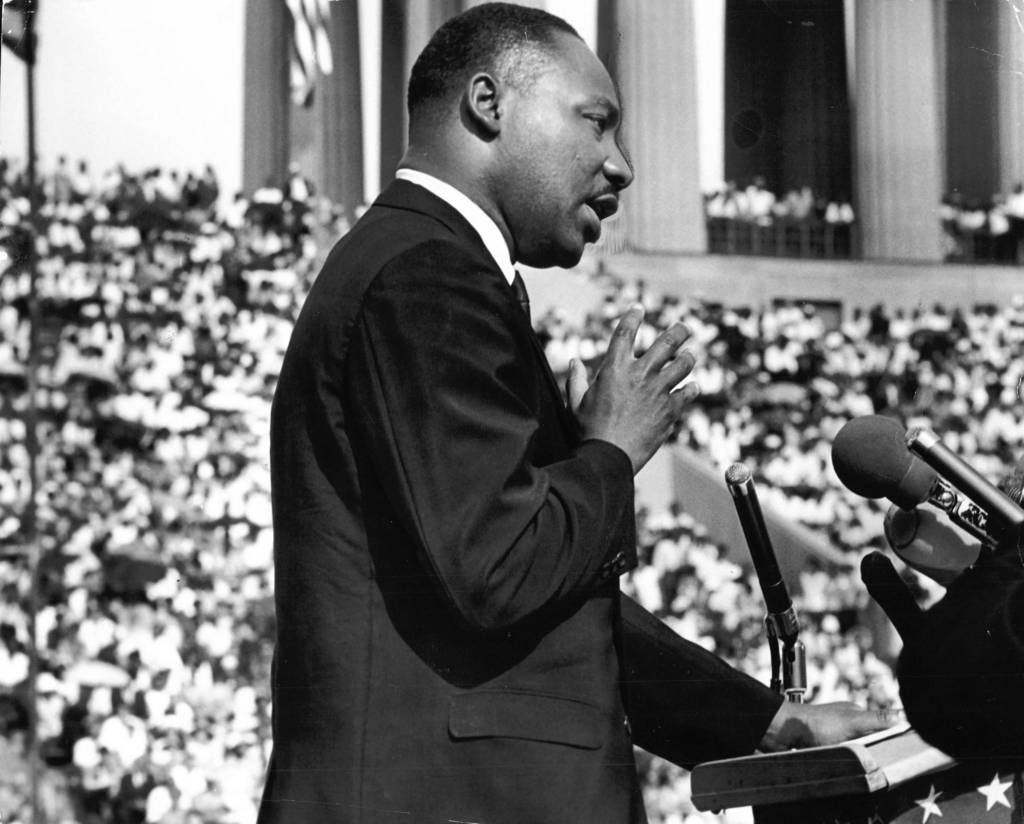
Image of Martin Luther King Jr. speaking against racism and poverty at Soldier Field in Chicago on June 21, 1964.


De-Cluttering Church

As I attempt to Marie Kondo my closets at home, I am grateful for all those cluttered church balconychurch ladies (and they are usually ladies) who organize office filing cabinets and kitchen closets and fellowship halls post-clothing sale events.  Churches are magnets for junk:

  • The sack of clothes someone dropped off at the back door that are too worn for consignment and too good to throw away.
  • The random coffee mugs that were donated after church members de-cluttered their own kitchen cabinets.
  • The box tops, jelly jar lids, popcicle sticks, kleenex boxes, and broken toys in the education wing that no one has time to sort.

It makes my project of evaluating old sweaters look like a vacation.

Marie Kondo famously suggests that – as we de-clutter – we ask ourselves: “Does this coat/pair of shoes/scarf/nightgown bring me joy?”  If not, say “Thank you” in remembrance of old times and pack it away for The Salvation Army.  That moment when we toss the bags in a bin or drop them off at the Goodwill Store feels wonderful.  Exquisite really.

This is all old news since Kondo’s book is a couple years old.  But – with Lent around the corner – it feels like a good time for spiritual communities to de-clutter more than our balconies and music files.

Maybe we all need to de-clutter our calendars – as individuals and as congregations.  We who consider church to be an important community in our lives seem to be especially susceptible to filling our calendars.  In addition to busying ourselves in general, congregations have the added burdens/blessings of “tradition” and liturgical calendars and institutional directives.

I hope we know that Busy Church ≠ Thriving Church.

As I’ve shared before, I know a church that gives up all business meetings for Lent.  No elders, deacons, or trustees meetings.  No staff meetings.  No committee meetings.  Yes to Bible studies, prayer gatherings, worship gatherings, book groups, coffee klatches, Faith on Tap.

Imagine going on a church meeting Sabbatical for seven weeks.  Sweet.

Now would be the time to discuss this for and with your congregation.  

And for the rest of the year – after Easter – what calendar de-cluttering is needed? Is there a Peach Festival that you’ve scheduled every summer that nobody likes anymore except the two ladies in charge?  Is there a fall ham dinner that people groan about – even though it’s an annual “tradition”?

What sparks joy?  Let’s get rid of what doesn’t.

Image from a church balcony that I do not dare identify.