Layers of Goodness

Layers of Goodness

I’m still pondering my previous post about truth-telling.  It seems that the resulting comments were about at least two different things:

  • Sometimes we tell the truth about ourselves and people reject us.
  • Sometimes the truth about ourselves is uncovered by someone else and people reject us.

The truth ultimately sets us free but – depending on how it came to light – it could also make us miserable.  Maybe it makes us more miserable if we weren’t the ones who revealed it.

Also, there are secrets (“I take an antidepressant every morning“) and there are secrets (“I‘m still married but sneakily enjoying benefits with someone else.”)

Healing seems to have something to do with how readily we acknowledge what impact our truth has on the other people in our lives.  Sometimes our truth even impacts strangers.

We forget about The Layers of consequences.

Personal example: A  pastor friend was caught in a years-long relationship with someone who was not his wife.  Obviously he deeply hurt his spouse, his kids, his parents, his congregation, and his colleagues.  But there were further layers he didn’t acknowledge very well:  he hurt me (who officiated at his wedding) and the couples he’d guided through pre-marital counseling (whom he’d reminded firmly what Jesus said about divorce) and the lectures he gave to anyone who would listen (about the “fact” that LBGTQ relationships were unbiblical.)  His extra-marital relationship might still be continuing to this day had he not been caught.  And yet he wants to move on without acknowledging that the layers of hurt were deep.  A conversation between the two of us  about the breach in our relationship would have been appreciated but – again – he has “healed and moved on.”

Errrr.

Our actions – especially our not-our-best-selves actions – create many layers of hurt.  Until we come to grips with this truth, wholeness is elusive.

In the same way, though, our gracious/generous/loving/hospitable actions create layers of goodness.  If an insurance company gets this  we can probably get it too.  People are watching us.

Even in post-Christendom, people watch clergy. And they notice when we are cranky and impatient and mean, especially when we don’t think anyone is paying attention.

Yes, we are – ourselves – broken and ridiculous.  But that’s my point:  we need to tell the truth about ourselves, try to do better next time, and seek wholeness. Repentance creates delicious, beautiful layers of goodness.

Pastors Who Tell the Truth

truthIf we say that we have no sin, we deceive ourselves, and the truth is not in us.  1 John 1:8

Sometimes clergy lie to their parishioners and sometimes we lie to ourselves. Of course this is true for people in every vocation, but pastors are in a particular position of authority – at least in some circles – and we are susceptible to others’ unrealistic perceptions. I’m especially struck by this news story about the number of clergy outed on Ashley Madison.  And this story about the pastor who was both a successful seminary professor and Baptist minister and a human being with secrets.

If you are part of Church World – either vicariously or personally – you surely know a clergy person whose secret life has been revealed – painfully.  I’m less interested in the Jimmy Swaggarts and Ted Haggards of the world than in the local pastor who lies to him/herself and or lies to his/her people only to have those lies disclosed.

We need to hold each other accountable.  We need to try to be the people we profess to be by virtue of our ordination vows.

There are too many links in this post, but this article is a must-read.   I especially like this:  “Give a heady sermon and folks are moved, but give a vulnerable sermon and they are set free.”  Preachers who disclose our own failures and struggles create community.  Those of us who minimize our own vulnerabilities perpetuate the notion that we are morally and spiritually superior.

Sure, it’s our hope that we pastors will be Christ-like, but it’s our hope that everybody will be Christ-like, right?

It’s not enough to declare the obvious:  pastors are not perfect.  But my point is that we are doing a disservice when we lie to ourselves or fail to note that our secrets – if revealed – will hurt the people we love.

  • Maybe we have calmed ourselves with food, alcohol, sleeping pills, etc. for so long that we don’t even realize we have a problem.
  • Maybe we have presented a certain way of life (happy marriage, perfect kids, unwavering spiritual life, super-human emotional resilience) to the point that even we don’t even acknowledge the truth to ourselves.
  • Maybe we have made personal life choices that we hide from our parishioners.  Controversial example: Pastors in open marriages. Chances are that most parishioners would not understand/appreciate this.  But when it gets out in the community, the resulting damage will be long-lasting.  If we have a secret life that we would not want revealed on social media, perhaps we need to rethink our calling.
  • Maybe we believe that nobody could possibly know the truth about ____.   Don’t be so sure.  It’s a really small world.

Being vulnerable is a crucial part of being a spiritual leader.  Our truth is comprised of brokenness, imperfection, and shame just as much as anybody.  If you are reading this and thinking, “This is not about me.  I’ve got it together,” please take a couple days off and read some Brene Brown.

The healthy 21st Century Church is about authenticity.  There are countless BS-ers out there who will preach cliches and prop themselves up as pillars of spiritual coolness.  But the world is craving something real.

We can do a lot of damage when we’re fake or self-deceived.  But we can go some good if we admit that we are kind of a mess and need something bigger than ourselves.

Also: read these really good posts by John Vest and Rocky Supinger.

Image source.

Eye of the Tiger?

The word “tiger” is not found in either the Hebrew and Greek Bible.eye-of-god-20  

[Note:  this doesn’t mean that tigers don’t exist.  I mention this for a friend who once told me that she didn’t believe in the historic existence of dinosaurs because dinosaurs are not mentioned in the Bible.]

I would like to confess before you and God that when I watched this video yesterday, I felt alarmingly angry.  I was angry that political candidates seemed to be using Kim Davis.  I was angry that crosses were being held up in the crowd.  I was angry that a song by Survivor was being played – more like a battle cry than a hymn.  I was angry that many people in the world will watch that video and believe that all Christians are like the Christians in this story.

It’s a spiritual discipline – and one that I need – to reflect on how we have damaged the message of Jesus rather than throw stones at those whom we believe have damaged that message.  And so I confess that I wanted to rip her hair out. But it wouldn’t have helped at all.

So here is my hope for Kim Davis if I’m offering my best self:

  • That she will study the Gospels and note what Jesus said about homosexuality.
  • That she will study the Holiness Code in Leviticus and Paul’s letter to the Romans with someone who knows Koine Greek and ancient Hebrew.
  • That she will study the Gospels and note what Jesus said about divorce, and in light of her own life experience, grant grace to others.
  • That she will have the opportunity to befriend and be friended by LGBTQ people in her county.
  • That we who disagree with her theology would have compassion for her.
  • That she would not be re-elected if she cannot fulfill her constitutional duties.

When I looked up “tiger” on my online concordance, I was told that the word shows up zero times in the Bible, but then, this verse popped up:

From the same mouth come blessing and cursing. My brothers and sisters, this ought not to be so.  James 3:10

Yep.

Image is of the Eye of God Nebula,  photographed by the Hubble Space Telescope.  I don’t believe God’s eye looks like this, but I do believe that God made the nebula, the geniuses who created the telescope, and Kim Davis.

The Theology of Distraction

Church TreasuresProne to wander, Lord, I feel it,
Prone to leave the God I love . . .*

We Reformed Christians are ostensibly not big fans of religious icons or elaborate fretwork for fear we will worship the art rather than The Artist. Nevertheless, I for one, am prone to wander in terms of my focus during prayer and worship.  Sometimes it helps to stare into a candle.

That’s not what this blog post is about exactly.

What the early Reformers were concerned about in terms of worshiping statues and stained glass is the least of our problems in the 21st Century Church.  We are more deeply distracted by other things.

Mark Leibovich wrote here in The NY Times about The Politics of Distraction which is not merely about how we in the U.S. follow the shiniest of shiny objects when discussing politics.  Yes, we focus on Trump’s latest outrageousness or the dumbest thing Sarah Palin said last week.  Many of us go a little deeper and debate Kim Davis’ arrest or the difference between immigrants and refugees. But there are deeper issues that mark who we are as citizens and human beings that mean more than the legality “anchor babies” and the requirement that everybody “speak American.”

I observe The Theology of Distraction everyday.  In the saddest cases, a congregation’s theology amounts to conversations about Whose Building This Is or Who Owns the Coffee Maker.  In other congregations, the elders spend most of their time fretting over whether or not to charge The Boy Scouts for Eagle Ceremonies or allow the youth group to paint the church kitchen.

Seriously.  I sit in some church meetings and listen to people debate such things. And I get it.  It’s easier to spend 20 minutes discussing whether to let a neighborhood Mom’s Group rent the fellowship hall than spending a good hour prayerfully considering what we might do in Suburban Chicago to serve those impacted by gun violence, heroin addiction, or homeless LGBTQ kids.  But our theology – if we take our faith seriously – is not about chasing ecclesiastical shiny objects.  It’s about the deeper issues that mark who we are as followers of Jesus and human beings created in the image of God.

Jesus didn’t die for paint colors and attendance tallies.  But Jesus did die for refugees and broken people and addicts and the violated and you and me.  If we care – undistracted – for the people, whomever they are, then our theology will be okay.  Our politics will be okay.  We will be okay.

On this day as many of our schools and churches kick off a new program year, it’s good to redirect our attention to What Really Matters.  Usually what truly matters is not particularly shiny.

*From the hymn “Come Thou Fount of Every Blessing” by Robert Robinson (1757)

Rethinking Church Staffs

Imagine a church staff that looks more like a circle than a pyramid.Light-Circles

Large congregations have been staffed a certain way for so long that we can’t imagine any other way: Head of Staff/Lead Pastor, Associate Pastor, Christian Educator, Music Director.  I grew up in these churches.  Most multi-staff churches are still organized this way.

One easy-ish change over the past 50 years has been the Senior Pastor who promotes collaborative, permission-giving leadership.  It’s increasingly rare – and often demoralizing – when the one at the top of the ecclesiastical food chain refers to the rest of the staff as “mine” as in “my Associate Pastor” or “my organist.”  Red flag.

Some Senior Pastors say they are collaborative, but they are in fact threatened by that world class educator or effective mission coordinator.  Another red flag.

This might be a good time to re-imagine the church staff – especially if your congregation is in transition.  [Note:  if you are part of a vibrant congregation your church is in a constant state of transition. This is good.]

  • Imagine three congregations on the same side of town who share a staff of leaders.
  • Imagine clergy couples who are not married to each other.
  • Imagine several congregations who share a youth pastor.
  • Imagine a 30-something lead pastor and a 60-something associate pastor.

These ideas are neither new nor radical.  But most congregations will not even consider them.  They are the tip of the iceberg in terms of some of the creative ways we might professionally staff a church.

And maybe the “professionals” we call/hire have been prepared for this ministry in unconventional ways.  Imagine that.

Pastor Jobs: The “It’s Who You Know” Edition

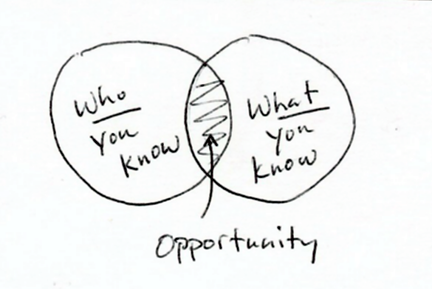
Who you know What you knowIt’s commonly understood that there are more clergy looking for jobs than there are clergy jobs.  In a denomination like mine (without bishops who assign pastors to churches) the field is competitive, at least in popular locations and in healthy congregations.

[Note: Every church is imperfect.  Some are soul-suckingly imperfect. “Healthy” doesn’t equal perfect.]

For pastors with good connections, it’s easier to be called to preferred congregations.  Yes, this is true.

Forget “the call.”  Forget “the moving of the Spirit.”  Pastors who have a foot in the door via friendships or other connections have an advantage to be sure. Although I’m not a bishop, I often have the ear of the Search Committee or a congregational leader and I can put a good word in for Pastor X.  The Old Boy Network has been working this way for generations, so it’s kind of nice when the New Girl Network kicks in.

Sometimes this is a good thing.  And sometimes this is not a good thing.

Good Thing:  A 50-something second career pastor with excellent skills gets a second look by a church which has been looking only at the stereotypical 30-something male pastor with a lovely wife and kids. Someone like me  takes the opportunity to mention that the Search Committee might want to talk with Pastor 50-Something who would bring diversity and seasoned energy to their leadership.

Not Good Thing:  I am trying to help my friend “get a church” even though my friend is unsure that he is really called to this kind of ministry.  I talk him up as even though I know he struggles with most of his relationships.  It’s just that he has mortgage payments and he really needs a job.

Worst Kind of Thing:  I once knew of a Presbytery that approved the call of an Interim Associate Pastor to her own home church even though that church was a week away from announcing that they’d found a candidate to be their “permanent” Associate Pastor.  The spoken explanation for this ridiculousness was that “we wanted to find a call for our friend.”  The unspoken explanation was that the Senior Pastor wanted to make it impossible for her to stick around. Once the “permanent Associate Pastor” was called, the Interim would be forced to leave this church where she was considered a troublemaker.  

Lord have mercy.

The bottom line is that someone like me who has the power and opportunity to whisper someone’s name in a Search Committee Member’s ear is that the Committee still has the freedom to listen to me or ignore me.  In a perfect world, they listen first and foremost to the Spirit of God.  In a perfect world, the right candidate’s most crucial connection is to God.

Every once in a while, the perfect candidate Comes Out of Nowhere to shine as the next pastor.  The Spirit still works.  I just wish – honestly – that all Search Committees would pay attention.

Sadly, Pulpit Candy still wins too many times.

Energy

In my denomination, we take an ordination vow to serve God’s windmillspeople with energy.  I am not aware of anyone being charged with breaking this particular ordination vow, but I am aware of leaders whose energy for professional ministry is in fact depleted.  Sometimes we are depleted of the energy to do much of anything.

It wasn’t until yesterday when I finally felt like I’d recovered physically from the family wedding we celebrated the previous weekend.  As much as we loved the wedding, I was absolutely drained for days.  My legs ached.  My attention span was nil.  My need for sleep rivaled somebody with mono.

Years ago, when I announced to a congregation I used to serve that I was leaving to follow HH to the Midwest, someone asked me what I would be doing.  I didn’t have a call myself, but that was okay.  I was absolutely spent.  “I’m really tired,” I said to the group who had gathered.  “Really tired.”  I slept for two weeks after moving to Illinois.  I had worked really hard and then I was done.

For what do we have energy?  In one way, this is a question for the privileged.  If I’m a single mom with no education and no safety net, I need to find the energy to do whatever it takes to support my family.  I don’t have the benefit of waiting for “the right job.”

What concerns me about many of my ministry colleagues is that we often stay in a position even when our energy for that ministry is long gone.  We have checked out.  But we need the paycheck until we can find a new position.   Or we need to hang on until we can afford to retire.

This is a problem not merely for our own souls but for the communities we serve. I observe serious damage to congregations when a pastor doesn’t leave after the energy is gone.  But many of us stay nevertheless.

On the cusp of Labor Day weekend, this week’s posts will be about the work of professional ministers in the 21st Century.  We are in the throes of tumultuous  – and exciting – change in The Church.  When our labor as pastors is lifeless, God’s people suffer.  But it doesn’t have to be this way.

Image of the windmill farm along Interstate 65 in Indiana.


What We Learned at the Wedding

CakeThere was a wedding in our backyard over the weekend and now We Have Advice.   After experiencing their own (or their children’s) weddings from engagement to honeymoon, people often believe they are expertly qualified to counsel others in their own nuptial planning.  Speaking as the mother of the groom, I believe there is something to this.

The personal experience of planning a wedding changes a person.  These are among the things we learned:

  1. Everyone advises that “when people volunteer to help, let them” but there is something helpful and holy about mundane wedding tasks. Picking up ten gallons of sweet tea can obviously be done by the someone other than the groom’s mom.  But I learned that a) when the wedding is at your house, you have no place to retreat and so a car trip feels like a little break.  And b) I was thinking about the cultures that encourage people – in times of death – to build their own loved ones’ caskets, wash their own loved ones’ bodies, and dig their own loved ones’ graves.  Although marriage is mostly not about loss, it’s incredibly meaningful to do some of the dirty work ourselves in order to process things.  We could sit back and direct the work.  But schlepping tables and lugging bags of ice makes it real.
  2. You will always need more ice.
  3. Don’t assume everybody knows the expectations.  What exactly does a best man do?  It’s possible that his only point of reference is The Hangover (although for the record, SBC was the perfect Best Man.) If somebody expects X and somebody else expects Y and friction ensues, it’s okay.  But if it really matters, have the “this is what I expect of you” talk several weeks/months before the wedding.
  4.  Take into account cultural differences & refrain from all judgement. (e.g. Having a wedding registry in which the couple picks exactly which bowls they’d like is considered unspeakably tacky in many cultures just as paying the bride cash to dance with her at the reception is frowned upon in other cultures.)  Embrace diversity.
  5. Attention all brides, grooms, & parents: Pick the One Thing you care about the most for this wedding.  One Thing. Be as specific as possible.   Not: “I want everyone to arrive safely.”  But: “I really want Aunt Sophie there even though she’s in a body cast.”  If the bridal bouquet is The Most Important Thing, then by all means make those perfect flowers happen.  Also, make your One Thing known so that others will recognize the centrality of this particular matter.
  6. Accept the fact that something will disappoint you on or around the wedding day.  Then channel your inner Elsa.
  7. Accept the fact that some random action will unnecessarily mess with the beautiful picture in your head of how everything’s supposed to look.  48 hrs before our backyard wedding, the power company people marked our painstakingly manicured  back yard with red spray paint so the tent people wouldn’t cut power lines.  These particular spray paint people clearly do not read Martha Stewart Living.
  8. Invite guests to make music requests when they RSVP.  Thank you to the person who requested “We Are the Pirates Who Don’t Do Anything.”
  9. Expect very view people to follow RSVP guidelines.  I’ve heard this from hosts who included a self-addressed/stamped envelope, an email address, a phone number, & all the above.  Most people will not tell you if they are attending.  (But thank you, thank you, thank you if you actually RSVP.  We salute you.)
  10. You need one toilet per every 50 people according to the professionals.  A bouquet of eucalyptus tied together with a lovely ribbon makes any Port-A-John smell delightful.
  11. Authentic love is everything.  There’s not a photo booth or monarch butterfly release on earth that will make a wedding beautiful if the couple is faking it, whether they realize it or not.
  12. Get a fearless eleven year old on the dance floor and set him free.

Image of someone’s One Thing. #BSWedding

Countdown to Matrimony

There will be a wedding in our backyard this Saturday.simple-backyard-wedding-ideas

Of the last eight weddings I’ve attended, not one of those celebrations occurred in a church building.  This even includes weddings featuring brides/grooms who are themselves clergy.  Even devout Christians often choose a non-traditional venue.

There are many reasons for this:

  • It’s less expensive and more convenient to hold one’s wedding and reception in the same location.
  • Gone are many of the judgments about “non-church weddings” because our theology has expanded.
  • A “church wedding” can happen in a field, on a beach, or in a cave for that matter.  What makes it “church” – theologically speaking – is the community surrounding the couple, not the stained glass windows surrounding the couple.
  • Christians who belong to mega-churches often prefer a more intimate sanctuary than an auditorium.

As our FBC and his betrothed prepare for their wedding this Saturday, I’ve often imagined What My Mother Would Say had she lived to see this milestone. Engraved invitations have been replaced by mass printed card stock.  The “save-the-date” announcement was a video.  The gift registry is on Amazon. Professional servers in white jackets were never considered, but instead we will be graced by friends who have volunteered to pour wine and refill sweet tea urns.

Wedding traditions have changed dramatically – in some ways for the better and in some ways for the ridiculous.  Some practices drive me crazy, theologically. (Just say no to individual communion.)  And there are others that make today’s weddings feel much more authentic.

Karl Rahner was right:  when couples marry, they create a new little church. They will do what a church does: have a purpose and a mission and core values. For followers of Jesus, they will worship God, pray for and with each other, serve neighbors, and contribute financially to the poor.  This is what I hope for my own children and their future spouses – that they would get that marriage is not merely about two people being in love.  It’s about two people partnering together to love others and to make the world a little more like heaven.

This is the kind of conversation that’s trickier than the pre-wedding conversation about church building versus beach venue.  Honestly, most of us haven’t got a clue what married life will be like when we stand before God and loved ones and exchange vows.  Where it happens doesn’t matter very much.  How it happens doesn’t matter very much.  But why it happens matters quite a bit.

My posts will be limited this week because I’ll be in swirling in the wedding vortex.  But commentary will surely follow.

Image is not of our backyard, but it will look something like this in my head.

Everybody Needs a Stella

skepticI once knew a soccer mom with whom I spent many weekends watching our daughters play.  She was hilarious and inappropriate. She drank too much.  She wore fun earrings.  I liked her so much.  Let’s call her Stella.

Stella:  So if I walked in your church next Sunday, what would you say that made me take you seriously?

Me:  (Ugh.  Not much?)

I lived in dread that some random Sunday, Stella would show up, sit on a back pew, cross her arms, and give me an irreverent “So, I’m here.  Rock my world” look.

She never did, but the fear made me a better preacher.  I was forced to consider if the message I was sharing was consequential in any way to a skeptical, secular friend.  It kept me from ever preaching a sermon like I heard once, trying to convince us that Jesus rose on a Tuesday, not a Sunday.  (Lord have mercy. Christ have mercy. Lord have mercy.)

Obviously I’ve preached enormous heaps of dross sometimes but the hope is that there has been more gold than dross- thanks be to God.

Nevertheless, everybody needs a Stella to keep us on our toes.

I was asked just yesterday by someone who is not a believer, “What’s the best thing one of the churches you work with does?”  My first thoughts were not “Fill the pews on Sunday” or “Offer excellent music.”  I thought of the church with the safe after-school program in a neighborhood prone to violence.  I thought of the tutoring program that connects hundreds of young adults with local students.  I thought of the food banks and the clothing closets.

Shifts in the 21st Century Church include these:  “consumer Christianity is dying and a more selfless discipleship is emerging” and “attendance no longer drives engagement; engagement drives attendance.” (Carey Nieuwhof)

Especially for Stella and her friends, making a difference in this ridiculously troubled world is the point. We realize gaps in our lives and the need to make a difference.  And doing this in community makes it easier and more meaningful.  And there is a God who created us for good.  And this God is worthy of getting to know and honoring.

Today’s prayer: I believe.  Help my unbelief – especially when I fail to minister to the Stellas in my life.