Calling a Start Up Pastor in `Traditional Church World

Startup-ideas

Maybe you’re sick of me referring to Kellogg, but I’m a little obsessed after a good week here.  As I continue to ponder shifting church culture so that our congregations might thrive, I came across an article in the Kellogg Magazine (sorry but no article link available) about Andreas Pecher.  He was hired by Zeiss to incubate new ventures within it’s traditional (and very successful) corporate world.

Two things:

  1. In a previous life, I worked the Zeiss projector at the Morehead Planetarium in college.  Yes, I swirled stars.  And yes, maybe I know people who borrowed the Van Gogh painting to “give” as a birthday present once.
  2. We can learn amazing things from Andreas Pecher.

Pecher says, “The key to success is to create a startup-like culture in a corporate setting by attracting entrepreneurially  minded individuals out of the organization and providing them with a protected environment alongside the “normal” organization.”

Yes.  For the love of God.  Yes.

Startup culture is not like traditional culture:

  • Values are lived very  intentionally.  (Sometimes we have mission statements and core values but they are something printed in a handbook, not lived every day in the way we make every decision.)
  • Staffing for the right personalities/attitudes is much more important that staffing for the right skills.  Skills can be taught.  Fit cannot.
  • Evolving is assumed and embraced. Growing means letting go of programs and practices that no longer work.  Trying new things without fear of failure is expected.
  • People will make tremendous sacrifices for an inspiring vision. When we started a church within a church called Holy Grounds (again in a previous life) very busy people made it happen. They had babies at home.  They traveled for work.  They were in grad school while working two jobs.  But they believed HG would change lives for good.

I frankly do not know a single church on the planet that wants a Start Up Pastor to come in and thoroughly change their traditional church.  But I do know churches that might consider – if they could afford an associate pastor – to call someone to join the staff specifically to start new ventures and incubate new ideas within and alongside that congregation’s community.

What would this proposal need to be successful?

  1. The Senior Pastor/Head of Staff would have to be on board, never threatened, never threatening, always ready to back up the Associate Pastor for Innovation and Entrepreneurship.
  2. Key leaders in the congregation would have to be ambassadors and cheerleaders for the new AP for I&E. Their tasks would include saying and saying again that the new ventures introduced by the new AP would constitute “Real Church.” The new ventures are not “Pretend Church” with the assumption that those participating will eventually come to 11 am worship and join committees.
  3. Traditional leaders would have to commit to praying and spiritually supporting the start ups like their lives depended on it.  Financial support would be essential, both in terms of funding new ventures and coaching the leaders of the new ventures on sustainability.
  4. Co-mentoring would be essential. An attitude of curiosity would be assumed, especially been professional ministers on staff. The established pastor could offer traditional wisdom (“How do you finesse pastoral care with the long term member who sabotages even simple changes?) while the “start up pastor” could offer the latest in cultural updates (“This is why we need HootSuite.”)

Friends, our DNA is in serious need of alteration and we can do this.  For the sake of the gospel, bolstered by The Great Commission, we can do this.  Who wants to be the Pastor for Innovation and Entrepreneurship?  And how can we train our new pastors to do this?

(Note:  Register now for this class.  Image source.)

Managing Congregational Pain

NervesAny of us who’ve lived in Cancer World know all about pain management. Sometimes simple verbal venting helps relieve the suffering.  And sometimes a morphine pump is required.

If the pain is joint-related, moving those very joints that slow us down alleviates the suffering.  If the pain’s excruciating, we might want to numb out with narcotics.

Many of our congregations are experiencing chronic pain these days because the church has changed/is changing.  And change hurts.

Pastors retire.  Church friends die.  Families leave.  Children fall away.

Boomer pastors rue the fact that the rules of institutional church leadership have changed and they don’t know how (or don’t want to know how) to shift.  Lifelong parishioners wonder why their children and grandchildren have forsaken church (i.e. God.)  Churches are invisible in towns where they were considered essential for the well-being of the community.

Yes, there is pain in our congregations, but the pain can be managed in a way that brings new life.

Last week at Kellogg , we discussed leadership in light of the need for some pain management.  How can we manage the pain that change brings?

  • We can ignore it.  “Maybe if we ignore this ____ (toxic person, hole in leadership, monumental budget shortfall)  it will simply go away.”  Or it could worsen.
  • We can numb out.   Some of us go through the motions of following Jesus.  We still ‘come to church.’  Or we simply disengage. If we are serious about our spiritual lives, this is probably not the best method of pain management.
  • We can keep moving.  To get out of bed hours after surgery sounds like a terrible idea, but that’s what the doctor recommends. Yes, it hurts, but moving makes us stronger.  Maybe we are slow to move towards changes in worship.  Or maybe we don’t particularly want to exercise our faith in new ways.  But it makes us a stronger community.
  • We can change our daily routines.  (Who doesn’t hate this one?)  Diabetics must shift what they eat or die.  People with damaged hearts have to make lifestyle changes.  Addicts have to quit doing what we do that makes us sick. It used to be that we in the Church could ‘eat anything.’  Now we need to be more intentional about our spiritual practices.  Sorry, but this is totally true.
  • We can become curious. Some pastors are frankly too tired or stuck to want to learn how to lead a 21st Century Church.  But what if we became as proactive as the cancer patient who wants to learn everything about her disease?  It’s not just about reading new things. It’s also about talking with people who are not like we are – with the intention of learning from them, not criticizing them.  Why do you like to tweet?  What do you love about organ music?  What does it mean to you that the choir members no longer wear robes? Why do we go to Mexico for mission trips?  Don’t get angry.  Get curious.
  • We can have hard conversations. Read this and then talk with each other.  Transparency, pastoral care, and creativity are essential when people are in pain.  We need to have those tough conversations to move forward in ways that honor and support each other. With the longtime church treasurer:  “After giving 40 years of your life to the church, what if we looked ahead to five years from now? Would you be willing to mentor an assistant so that you will be free to pass this responsibility on to someone else after you no longer want to do it?  And it would be more efficient for the church and safer for you to shift from doing the books by hand.”  With the new pastor:  “You are doing a good job in a difficult situation since everybody loved the retired pastor and he still lives in town.  They are used to a pastor who does home visits every week and your style is different.  How can I help you get to know the church better?”  To the cranky elder:  “I know that you love this church and even though we haven’t always agreed with each other, how can we work together to build this congregation?  I know you want to leave a strong church for your grandchildren.”
  • Pray.  Sometimes there is nothing we can do but sit with each other and/or sit with  God.  Pain is part of life, and – for followers of Jesus – we believe in a God who knows all about pain.  But prayer can alleviate suffering in ways that we cannot understand.

I’d like to make a specific pitch here.  I believe that pastoral leaders of all levels of experience could use a coach.  I’m not talking about a coach that tells you how to be as awesome as he/she is.  I’m talking about someone with training to encourage you through painful seasons in your congregation’s life.  It’s not too late to adopt this as a new year’s resolution.

Every parish pastor I know is serving in the thick of congregational change.  Yes, it’s painful.  But we can not only manage it.  We can thrive in it.

What I’m Learning Outside the Church Bubble: Day 3

Bryant Park Square DanceI’ve become a big fan of the Kellogg School’s Non-Profit Management program which is very faith-friendly while also expanding our Churchy horizons. I strongly recommend that you check them out.

On Wednesday we learned about partnerships.

Kellogg’s School of Management has partnered with the non-profit community via this program in a way that models how our congregations might also partner with business, government, and other organizations to form multi-party coalitions serving common causes. In the congregation I once served, our church (via a 501c3) partnered with state and local government entities and international and local businesses to create a computer training program that – by the time I left – had equipped over 800 adults in computer skills. That, my friends, is an effective partnership.

Working with our the individual staff and officers of a particular congregation involves constant negotiation, coalition building, and team development. Here are the tips of the day:

  • It’s easier to be collaborative when there are lots of resources. But when resources are limited (or perceived to be limited), anxieties make us less collaborative and more individualistic. This is when a strong spiritual leader can step in and remind the team of their spiritual resources.
  • It’s impossible to be a strong staff or body of officers without trust. Transparency and clear communication bolster trust levels.
  • Partnering detail people with vision people is a good idea. Vision people can learn to pay closer attention to details and detail people can be coached to expand their vision, but it’s not their gift and it will exhaust them. Appreciating the gifts of and partnering with people who are our opposites is holy work.
  • Clarify the group’s goals. It’s possible that half of us have the goal of spiritually feeding the people within our walls and the other half of us aspire to reach out to spiritually feed the people outside our walls. Let’s not assume we all have the same institutional goals. We need to talk about it together.
  • Negotiations are not just about money. We negotiate at every meeting we attend about everything from agendas and priorities to procedures and calendars.

I’ve often felt allergic to business practices in church and I’ll admit that I’m still wary in some cases. But we in the Church need to hone our skills in leading meetings and understanding finances and training volunteers. It’s urgent that we are organizationally efficient so that we can be spiritually effective.

Image source. Swinging your partner involves clear roles and some choreography.


What I’m Learning Outside the Church Bubble: Day 2

My new favorite obsession is discerning a congregation’s true cultureBoard Room and then helping them make transformational shifts.

Sometimes small changes make big differences.  And sometimes the essential  changes feel impossibly huge.

We spent time here on Tuesday covering intergenerational collaboration, leveraging board relationships, and partnering more effectively with volunteers. Juicy stuff.  If you are feeling stuck in your ministry, integrating Church World and Business World (with a faith perspective) fuels all kinds of fresh ideas.

So, here are some truths to ponder with our boards and staffs:

  • Collaboration with each other takes a lot of time and energy.
  • Training leaders takes a lot of time and energy.
  • Making a congregation safe and ready for diversity takes a lot of time and energy.  (It also makes us smarter according to Katherine W. Phillips.)
  • We have to decide if collaboration and training are worth it.  (Some of us will say “no.”)
  • There are simple and effective ways to “manage the pain” of culture changes.  (A future blog post.)
  • Succession plans can (and should) be considered throughout one’s service.  (This is not the same as a retirement plan.)  We must consider who will come after us so that we can set them up to succeed.

More tomorrow.

What I’m Learning Outside the Church Bubble: Day One

To cut to the chase, here are my latest sweeping declarations:Garden Gate Northwestern University

  • All pastors need post-seminary training in leadership, non-profit finance, and innovation/social entrepreneurship.
  • Sally Blount should be the keynote speaker at your upcoming conference or retreat or seminary graduation.
  • Business School dining hall food is way better than Seminary dining hall food.

Several colleagues and I are spending a few days in a class called “Leading a Vibrant Faith Community” in the Non-Profit Management Program of the Kellogg School of Management at Northwestern University this week, and we wish you could be here too.  My mind is awhirl with ideas about church vitality.

A couple of insights from the day’s lectures:

  • How we organize a congregation, plan worship, create a church budget, do mission is about PROCESS.  The process is especially precise and hard-wired if our connections to each other are weak.  How we feel about the organization, worship, budget, mission is about CONNECTIONS.  If our relationships are strong, we can more easily tweak our processes to adapt to particular situations.  So, here’s a question for my PCUSA sisters and brothers:  If we are “a connectional church” why are our processes so intrinsic to how we do things?
  • Our churches are first and foremost communities of spiritual formation so that we can go out into the world and make an impact/make disciples of all nations.  But too often our churches have become clubs (with membership/per capita dues), social service organizations (offering tutoring, homeless shelters, 12-step organization space – but without necessarily connecting this outreach to our faith) or continuing education centers (providing classes that make us smarter but not more engaged in the world.)  Are we teaching our leaders – from the ushers to the coffee hour servers how to always be in spiritual formation mode?
  • We must always be aware of why our church exists.  And everything we do must point to this.  The job of a Sunday morning usher is not to unlock the doors and turn on the heat.  It’s to make the worship space safe and comfortable for anyone who gathers so that they aren’t distracted as their souls are fed.  The job of a fellowship hour server is not to pour coffee.  It’s to offer hospitality to every person so that they feel loved and welcomed.

There’s much more, but the best part of being here is the blessing of seeing what we do and how we do it through a different lens.  More tomorrow.

Image of garden gate at Northwestern University, Evanston, IL

Truth Changes

Egg Shaped EarthWhen I moved from Our Nation’s Capital in 2011, I had just had a hearing test and was told by a medical doctor that I would need hearing aids ASAP to prevent further loss.  It took me 3 1/2 years to get around to connecting with a hearing professional here in Chicagoland, both because of procrastination and denial.  I feared this.

Guess what I learned after Friday’s hearing test:  my hearing is “almost perfect.” I’m told that I have better hearing than most people my age or any age.

I thought it was true that I was going deaf.

“So why can’t I hear the bell on the microwave?  Why do my kids have to repeat themselves.”  The doctor answered my questions with more questions:

  • Are you always in the kitchen when the mike goes off?  (No.)
  • Are you usually in the middle of something when the kids are talking with you?  (Yes.)

So what’s true is that I can’t hear through walls and I can only concentrate on one thing at a time.

When Marcus Borg died last week, there were words of appreciation and words of criticism from all kinds of Christians.  Some Christians now say that he saved their faith.  Others say that he crushed (or tried to crush) their faith.

Marcus Borg said that – while the Bible offers Truth (with a capital T) – much of what we know about Jesus is not historically true.  To say out loud that some of Jesus’ sayings and activities are in fact myths makes many Christians nervous, if not terrified that somebody is about to burst  into flames and go straight to hell.

It used to be true that the earth was considered flat.  Then it was true that the earth was considered round.  Now it’s true that the earth is kind of egg-shaped and it’s getting hotter and hotter with each generation to the point that it might one day become hard-boiled.

It used to be true that if you worked hard and made good choices, you could buy a house and live a fairly comfortable life in the middle class.  Now it’s true that the middle class is dying, according to both conservative and liberal economists and the income gap is growing, regardless of how hard we work.  (Here are some interesting articles.)

The truth changes as we receive more and better information.  But the Truth remains firm.

For followers of Jesus, it used to be truth that “everybody went to church.”  Now it’s true that “we are the church.”  What remains forever True is that the Church is called to make disciples and equip the saints and feed God’s sheep.

And I am apparently not going deaf.  But  – who knows?  That could also change.

Authentic Accountability (or Who Tells Us When We Screw Up & Do We Acknowledge That – Yes – We are Screw Ups?)

Chagall Nathan and DavidSomebody told me yesterday that I should have called him on the phone to discuss certain issues when what I actually did was send information in an email which was also copied to others.  He was absolutely right.  It kind of ticked me off/embarrassed me but I’m grateful for his willingness to offer fair criticism.  The point is that I learned what not to do next time.

I am not always so quick to agree that I made a mistake.  This was an easy one.

Several years ago, a friend in the Emerging Church community was criticizing denominations and I asked him who held him accountable in his life and ministry. He answered in some way that seemed lame to me and now more than ever I am wishing he had a body of people who were his peers, but not necessarily his posse, to sit him down and acknowledge that maybe some of his life choices have caused far-reaching pain.

In my business – the hypocritical, corrupt, disappointing world that is The Church – I see lots of it.  And maybe you do too.

  • Pastoral leaders who criticize the lax personal standards of other pastoral leaders when actually they are doing the very thing they attack in another.  Or worse. (I once had someone lecture me about LGBT ordination only to learn that he was having a long time affair with a woman who was not his wife.)
  • Church people who have human failings  – as we all do –  but then they lie about it rather than confess that – yes – they screwed up.  (And they can’t keep the lies straight, so I get multiple versions of stories from their own mouths.)  Sheesh.
  • People criticize their brothers and sisters who are miserly in their financial giving, but then I learn that the critics themselves have not donated anything financially to their congregation in years.

I could go on and on, and so could you.  It’s distressing.  It’s human.  It’s universal.  We all fall short of the glory of God.

However, there are certain circumstances that make it difficult to be held accountable and ultimately this damages relationships far beyond the initial offense. Among those circumstances:

  • There is no denomination to hold people accountable or the denominational structure is so lax or corrupt that ignored suffering becomes the norm.
  • The Pastor/Leader is so adored and set on a pedestal that no one dares to challenge sick behavior.  And the Pastor/Leader has become blind to the fact that the behavior is indeed sick.
  • The Pastor/Leader is surrounded by a band of friends who “pray with him” once accusations are made but he’s so gifted and such an important leader that he can’t possibly be asked to remove himself from leadership even for a brief time so that he can get some counseling and make some concrete changes.
  • The Pastor/Leader is a bully behind the scenes and people are afraid that she will crush them, so she gets away with all kinds of hurtful behavior.

Again, all of us are guilty of some significant screw ups.  We fail God and each other.  And yet we are blessed with second and third and hundredth chances.

Nevertheless –  it’s not okay to crush people in huge and small ways.  How can we be the church we were created to be unless we are honest about this?  Are we able to face the fact that we  – often  – bear absolutely no resemblance to Jesus?

Image is Chagall’s David and Nathan.  Remember?

Memory-Making in Church

MemoriesSome people have memories that seal their happy relationship with The Church – and God – like super glue.  And, of course, other people have church memories that are viscerally painful and forever distance them from a given congregation – and God.

This article about how the brain stores trivial memories is very interesting.

Among the trivial memories in my own brain:

  • The last thing my Dad ate on this earth was a forkful of yellow cake with chocolate frosting.  (We knew he was dying when he didn’t want the whole piece.  Just a taste.)
  • TBC’s childhood bedroom had a Hey Diddle Diddle wallpaper border.
  • The first towels I ever bought for myself were lime green.

Trivial church memories can become profound:

  • My kids remember watching a church elder spill a whole cup of coffee, glance around the room to see if anybody was looking, and then walk away without cleaning up the mess.
  • They also remember how good Mrs. H. smelled every Sunday morning when she hugged them.
  • I remember my Sunday School teacher, Mrs. G. telling us that she’d been the Maid of Cotton.
  • I remember the taste of Welch’s grape juice at VBS when I was six or seven, and being told, “This is what communion juice tastes like.”  (I subsequently Could Not Wait until I could be confirmed and have that juice during worship one day.)

I remember when a new member left our church because she heard two church ladies talking about a third church lady in the women’s bathroom after Coffee Hour.

I remember the parishioner who told me that she “hated the Presbytery” because “they” wouldn’t let them have the minister they wanted.  “When was that?” I asked her.  “In the 70’s,” she said.

“What do you remember about Rev. ___’s ministry?” I asked a group of church people at a retreat.  “He once said ‘damn’ in the pulpit,” was the first response.

Sigh.

Yes, we who spend our lives writing sermons, teaching classes, praying at bedsides, and sitting through countless meetings to plan, budget, decide, and ponder take our ministry very seriously.  But maybe it’s the trivial that most people will remember.

How are we creating memories in our spiritual communities?  This question could change everything in our church leadership.

Instead of spending the majority of time in meetings talking about ceiling cracks and boiler replacement, what if we looked at the decisions to be made as opportunities to Create Spiritual Memories?

  • The smell of the communion bread.
  • The red balloons at Pentecost.
  • The way we smile and ask, “How are you doing?” – even to children – when we serve refreshments after worship.
  • The way we look into each other’s eyes during the passing of the peace.
  • The home-y feeling of the church parlor.
  • The way kids run down the aisle to hear “The Children’s Message”  (and it makes the grown ups smile rather than scowl.)
  • The way a church gentleman – who is not your grandfather but could be – helps a single mom put snow boots on her children as they prepare to leave the building.
  • The way a young parent intentionally sits with an elderly widow and teaches her child to say, “Good morning, Mrs. M.  You look pretty today.“
  • The way the home bound C. telephones other home bound ladies to check on them each morning.

This is church.  And church is often how we first learn what God is like – for better or for worse.

Image source.

What It Means to Me and What It Means to You (But Mostly What It Means to You)

wang-Zhiyuan-thrown-to-the-wind-trash-sculpture (1)Over last weekend SBC, TBC, and I cleared out a storage unit and we had three piles:  stuff to toss, stuff to give away, stuff to pack in the car and drive back to Chicagoland.  It was a semi-painful, one-person’s-treasure-is-another-person’s-trash family tableau.

There was one piece of junk  property that involved  serious debate.  What it meant to me = ridiculous trash.  What it meant to one of my kids = memories of a fun day in college when life was sweet and worry-free.

We packed this item and I drove it 12 hours west.  It now sits in our basement.

Maybe it will be there forever.  Maybe it will become an interesting planter in a future apartment.  Maybe it will get trashed after a sufficient period of time.


It occurs to me that our world is a mess because we don’t get each other.  One person’s terrorism is another person’s authentic act of spiritual devotion.  One person’s spiritual epiphany is another person’s abandonment of commitment.  One person’s rude gesture is another person’s act of faithful defiance.

What this action/comment/ritual/decision/thing means to me is not what it means to you.  What if we asked “What does this mean to you?” before we criticized it?  What if we had conversations about our differences without judgment or condemnation?  What if we were interested in learning from each other?

This is what I pondered as I drove for twelve hours on Monday.  And I also thought about MLK and how much I appreciated the Selma movie.

Image source.


We Need More Color

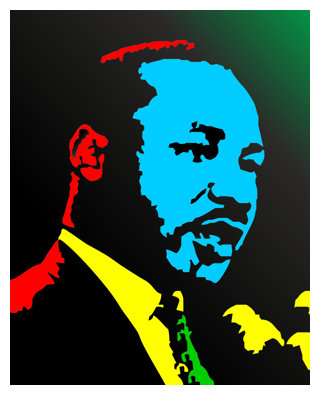
Yesterday I met a lady who reminded me how I love that church brings together martin_luther_kingall kinds of human beings who would never go to the same parties.  That’s also what I believe The Kingdom of Heaven looks like.

This woman was colorful.  In the course of 20 minutes I learned about her unusual bones, her interesting employment history, and her assortment of allergies.  It was a privilege to hang out with her.

The marks of a healthy church often involve color:

  • Colorful characters who are beloved and respected for being exactly who they are.
  • Color commentary on Scripture that tinges our perspective on the world and makes us want to be the people we were created to be.
  • People with different skin colors who – chances are – also have had different experiences from our own, thus broadening our horizons and getting us out of our own little lives.

What I see, though, too often are:

  • Churches that ostracize colorful characters and hope they’ll go away.
  • Preaching that upholds a black and white view of the world, or such a gray view of the world that nothing means anything.
  • Racial segregation.

Maybe you saw this article last week about segregated pews.  What does it mean that our congregations remain racially segregated for the most part?

Yes, some of our communities have absolutely no people of color living within miles and some communities have absolutely no white people within their city limits.  But most of our communities are in fact more diverse than our churches. We just don’t share the same (fill in the blank:  style of worship, theology, culture, socioeconomic class.)  Some of our congregations work hard to have “sister churches” that are different from our own.  But it’s one thing to share a mission project or two and it’s another thing to know about someone’s allergies and employment history.

We need more color – in every way.  I believe that the God who created every gorgeous hue requires this of us and relishes in it.

Image source.  Also:  Go see Selma today.