Think Fast: “I Would Give Up My Life for _______.”

Then Jesus told his disciples, ‘If any want to become my followers, let them deny themselves and take up their cross and follow me. For those who want to save their life will lose it, and those who lose their life for my sake will find it.” Matthew 16:24-25

Lenten Cross[Note:  Thanks to my brilliant colleague BC for the insights that contributed to this post.]

Losing is different from giving.

My parents lost their lives to cancer.  I have lost exactly two (expensive) fobs to get into the Presbytery Office building.  I have lost my mind on at least one occasion.

Kayla Mueller gave her life for Syrian victims.  She didn’t lose her life.  She gave it.  Yes, technically a building fell on her after a bombing or maybe someone personally killed her.  Either way, she chose to give up her life in a global way for the sake of the suffering in Syria.

Deah Barakat gave up his time to offer free dental care to Syrian refugees.  (But then someone took his life, which is different from losing or giving, but that’s for another post.)

Many of my my colleagues have given their lives for the institutional church. (Or we think we have.)

A fine preacher pointed out last Sunday that Jesus said we can save our lives by losing them, but then she wondered if he wasn’t really talking about giving rather than losing.

Nerd alert:  The Greek for for “will lose” is ἀπολέσει which means something like “utterly perish” or “cause to be lost.”  In other words, Jesus isn’t talking about “losing” as in losing our keys.  Jesus is talking about an action more akin to giving up something or allowing something to die.

Jesus didn’t lose his life for the sake of love.  Jesus gave his life for the sake of love.  Huge difference.

So, this makes “giving up something for Lent” different too.

I get the spiritual discipline of loving something so much (chocolate, coffee, bacon) that refraining from it for 40 days might remind us of Jesus’ sacrifice. But give me a break.

Jesus doesn’t much care if we give up our favorite food.  Jesus cares if we give up our lives.  And I’m not just talking about who or what we’d take a bullet for.

I’m talking about who or what we’d give up our personal dreams/goals/habits for.  Giving our lives for what Jesus gave his life for seems like our only choice, if we hope to be serious disciples.

This sounds much preachier than I expected.  But Lent is serious business.  And I confess that I’m pretty terrible at it.

Image source here.

Beyond Lemonade

” You intended to harm me, but God intended it for good to accomplish what is now being done, the saving of many lives.” Genesis 50:20

Children in Dental Clinic Reyhanli, Turkey

This quote is from the Bible story about Joseph, the son of Jacob meeting his brothers for the first time after they’d (tried to) ruin his life. In spite of the fact that his brothers sold him into slavery, lied to their father that he’d died, etc. God used this tragedy for good.

I have long stopped believing that God’s finger is on every trigger and every steering wheel. People hurt people because we make choices (except in those situations when mental illness takes those choices from us.)

It’s yet to be seen whether or not Craig Hicks was officially insane when he executed Deah Barakat, Yusor Mohammad Abu-Salha, and Razan Mohammad Abu-Salha in their own home. But what has happened in the aftermath can only be described as holy:

  • While UNC School of Dentistry student Deah Barakat’s goal was to raise $20,000 for a mission trip to Turkey this summer to offer free dental care to Syrian refugee children, over $400,000 has been raised at this writing. You can make your donation here.
  • A school clinic for refugee kids has opened in Reyhanli, Turkey named for Deah Barakat – less than three days after his death.
  • Another clinic will be opening in Jordan in his memory.
  • And another clinic will offer dental care to the homeless in Raleigh, NC bearing the names of all three victims.

This is not much of a Mardi Gras-ish post today, is it? But – on the cusp of Lent – we are reminded that our God brings life even out of death.

Image of Syrian refugee children in Reyhanly, Turkey at the opening of their new dental clinic.

Speaking Up on Presidents’ Day

In the wake of last week’s tragedy in my home town of Chapel Hill, at least onelichtenstein-george-washington person tweeted:  

I need to hear from my president.  The shootings occurred on Tuesday and – to be fair – the world didn’t know much about the victims until Wednesday.  But President Obama didn’t talk about it until Friday.

We don’t elect the President of the United States to be our spiritual leader.  And yet there are moments – Ferguson, Sandy Hook, Katrina, 9-11 – when we expect our highest government leader to speak of lofty things.  Sometimes I want my President to declare/remind us in the wake of unnecessary violence that This Is Not Who We Are as human beings.

Yes, individuals can be broken, dark, mistaken, insane, and randomly evil.  But that is not who were were created to be.

The President of the United States’ task is not to pastor the people in times of tragedy.  We elect the President “to execute the Office . . .”  and “to preserve, protect and defend the Constitution of the United States.”    But sometimes we need to hear a prophetic or comforting word.

As a follower of Jesus, my faith teaches me (Hello Incarnation) that we are called to stand with those who suffer.  Kayla Mueller was apparently trying to live out her faith in this way.  Some have called her foolish, but she was trying to be the hands and feet of Jesus in a place of terror.

As a pastor, I have answered this vow four times now:

Will you be a faithful minister, proclaiming the good news in Word and Sacrament, teaching faith, and caring for people? Will you be active in government and discipline, serving in the governing bodies of the church; and in your ministry will you try to show the love and justice of Jesus Christ?

My hope is that all my clergy friends are off today for Presidents’ Day because we need the break before Lent begins.  But, just as we remember what Presidents do, it’s a good day to remember what pastoral leaders do.

Years ago, during a particular difficult issue in the congregation I was serving, the leaders were discussing how to move forward.  I remember one elder saying, “All I know is that I want my pastor back.”  I had been so entrenched in the administrative matters at hand that I had not been free to be the pastor I’d been called to be.

We clergy have been called to speak – as well as to be the hands and feet of Jesus. I’m grateful for pastors who speak up.  There is a great deal to speak about.  It’s our calling and our responsibility.

Sometimes we want to hear from our President.  And many people no longer want to hear from a Preacher.  And yet, this is a huge piece of our calling:  to speak up – if not with our voices then at least with our actions.

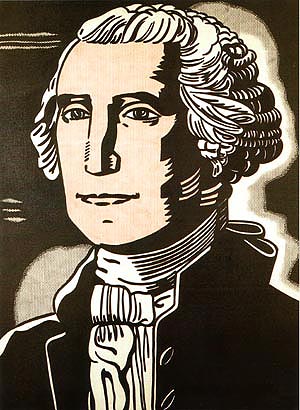
Image is George Washington by Roy Lichtenstein (1963)

For the Love of God


Chapel Hill Victims
Please stop what you are doing right now and make a donation for Syrian Dental Relief – offering free dental care to Syrian refugees in Turkey – in memory of Deah Shaddy Barakat, age 23; his wife of less than two months Yusor Mohammad Abu-Salha, 21; and her sister, Razan Mohammad Abu-Salha, 19.

That’s all I have to say today.

Taking Your Son/Daughter to Work: Clergy Edition

We were first encouraged to Take Our Daughters to Work  in 1993 Ben Fred Jan 1989
so that they could experience the working world. Obviously taking our daughters to work was difficult if we neurosurgeons (“Look Honey, this is how we remove the bone flap”) or letter carriers (“Here, you take the even numbers on the street”) or window washers (“Don’t look down.”)  By 2003, we were also encouraged to take our sons to work.

We clergy take our children to work at least once/week. [Note: Imagine the gossip if we didn’t take our children to church with us on Sundays.]

I can’t think of another vocation which expects professionals to take their children with them to the work place where their children will be present during what many consider to be the highlight of the pastor’s week.  Imagine if advertising execs took their children to ‘the pitch’ they’d been working on for several months or if tech consultants took their kids to the sales presentation they’d prepared for a big client.  My children went to work with me almost every Sunday for 20 years.

It was not easy.  To be perfectly honest, some parishioners made it easier.  And others made it more difficult.

Some congregations would love to perpetuate a 1950s model of parenting when the (male) pastor never worried about his children seven days a week, because his wife was home all day raising them.  The man who baptized me decades ago shared that his wife singlehandedly raised their children, including a son who died of a childhood cancer so that he would be free to Follow God’s Calling.

I, too, have tried to Follow God’s Calling, but as half of a clergy couple, it never looked like the 1950s at our house.  Or in our churches.

The palpable stress of those Sunday mornings has faded now that our kids are grown, but there are things parishioners can do to hurt or help:

Things Not to Do When Your Pastor Has Small Children:

  1. Expect them to keep watch on their own children while leading worship.
  2. Criticize their parenting/their children to other people. (“Can you believe she lets her kids run free in the balcony?”)
  3. Offer constructive comments in inappropriate moments.  (Someone once asked me to tell my child to stop running in the Christian Education wing while I was greeting guests.)
  4. Confuse professional and personal lives.  (“That was a good sermon but I wish your children wouldn’t squirm during worship.“)
  5. (There are about 100 more things I could say here.)

Things to Do When Your Pastor Has Small Children:

  1. Hire a nursery worker who arrives when the pastor (and her children) arrive  – even if it’s 7 am.
  2. Recognize that the future spiritual lives of those children will be positively or negatively impacted by the way they were loved (or not) by the congregation that hired their parent(s).
  3. Recognize that the church didn’t hire the pastor’s children.  Yes, you wanted “a young pastor” but check yourself if you liked the idea of a pastor with children more than the reality.
  4. Remember that the church necessarily controls your pastor’s child’s schedule. Some parishioners stay home for a few years after the birth of their children so as not to disrupt nap schedules on Sunday mornings.  Your pastor’s children have to adapt to napping  around worship and church school times.
  5. Treat those kids (and all the children of your congregation) like gold. Don’t talk down to them.  Ask them about their lives and listen to their answers.  This will connect them to God more than the Sunday School lessons.
  6. Remember that when you expect your pastor to attend a church meeting at night or on Saturdays or at 6:30 in the morning, they will be paying for childcare.  It will cost them money.  If you have a clergy couple, offer to cover babysitting when you ask both of them to officiate at your wedding or your loved one’s funeral.
  7. Give those kids a break.  Yes, they are cranky. They were the first to arrive and they will be the last to go home.

I love the idea of Taking our Daughters & Sons to work, but most of us do this as a special event once a year – if that.  Professional church work is unique.  Please don’t make it difficult for our young pastors.

Image of a clergy couple with their FBC their first year as co-pastors.

Forcing Fetch

Gretchen Wieners
Gretchen: That is so fetch!
Regina: Gretchen, stop trying to make fetch happen! It’s not going to happen!*

[Note:  This post will make no sense unless you’ve watched Mean Girls, preferably multiple times.]

It occurs to me that much of the conflict in our churches is a result of forcing fetch.  This is  true for secular life as well.   We sometimes try to make fetch happen.

“Fetch” could be anything from Trying to Make A Call Happen (we want so much to be the pastor of a particular church even though there are clear indications that it’s not right) to Trying to Make a Relationship Happen (we can’t make someone fall in love with us) to Trying to Be Something We Are Not (it’s simply too exhausting and sad.)

Creative, visionary pastors – especially those called to “help the church grow” – try to make fetch happen all the time.  We try to make changes in worship, organizational structure, mission, and culture but our people aren’t ready or they don’t understand the why behind the what or we fail to love our people and they know it.  We try to force the fetch and we fail, and the church often suffers for it.

So how do we indeed lead change that helps our congregations grow in post-Christendom?  How do we love our neighbors and make followers of Jesus in a 21st Century Church?

We refrain from forcing fetch.  Instead we pray, we discern, we collaborate, and we depend upon the Holy Spirit to lead us.

We cannot Save the Church.  We cannot Fix the Church.  We can’t make fetch happen.  Regina was right.

*From the movie Mean Girls (2004)

What Does It Mean to Be “A Class Act”?

dean-smith_si-cover_sportsman-of-the-yearA man who represents a huge chunk of of my life passed away over the weekend. Many – including his rivals – have called him A Class Act. His funeral will be a festival of inspiration.

Those are the best kind of funerals: the ones that inspire and make us want to be better people. The most inspirational funerals are usually not for those whose passing is reported on the national news however. Among the most influential I’ve ever attended have been the funerals of a music teacher, a postal worker, and a lawyer turned denominational moderator. You don’t have to be famous to be a class act.

So what about Church People? Class Act = Image of Christ, if you ask me. And how are we doing with that?

This is one of those posts I am writing to myself, just like there are sermons I write for myself. I could do a better job trying to live in the Image of Christ.

People watch us for signs of authenticity if we say we are Christians – especially when we are leaders. If we claim to follow Jesus and then act like divas, jerks, trulls, and @#*!s our behavior destroys more than our own souls. But enough preachiness. How can we aspire to be not so much like Mike, but a little more like Jesus?

It’s not enough to excel at our job responsibilities. Being a Class Act includes:

  • Speaking the truth without fearing repercussions. Example: ‘Dean Smith appeared at a clemency hearing for a death-row inmate and told then-Governor Jim Hunt, right to his face, “You’re a murderer. The death penalty makes all of us murderers.”‘
  • Living a life that includes the excluded. Example: ‘When (Smith) was still an assistant coach, (he) walked to the restaurant with (his pastor)and a theology student . . . who happened to be black. Then they did something radical for the day: The three stood by the door waiting to go inside. “The manager looked through the door and saw that we were there. There was a look of consternation, but the door finally opened and we were served like everybody else.”‘
  • Looking out for each other even when there is no benefit for ourselves. Example: ‘I thought I wanted to coach, so I coached Chapel Hill High School for a season and then I went to Virginia Commonwealth. He was very much involved in helping me get the job,” Dick Grubar (’67-’69) said in 2011. “Then I went to Florida for another job and he had his fingerprints all over it.”‘

For more leadership tips from Dean Smith check this out.

Even pastoral ministry sometimes seems bereft of authentic leaders. But every once in a while, we see someone who inspires us and we remember what A Class Act looks like.

Thanks be to God for the life of Dean Edwards Smith (1931-2015)

Communication (Or: Please Talk to Your Pastor)

TalkToMe-01Years ago as a parish pastor, I left a congregational meeting so that the congregation could talk freely about my compensation.  Some pastors do this and some don’t.

I went down the hall to my study and waited for someone to come tell me that it was time to return to the meeting.  I waited . . . and I waited . . . and I waited . . . until finally I opened the door to listen for what was going on in that interminable church meeting.  When I couldn’t hear anything, I tiptoed down the hall to check out what was happening.

They had left.  Everybody was gone.

Apparently, they had talked, voted, and departed.  It hadn’t occurred to anyone to retrieve me or to inform me what had happened at the meeting.  But this is what I wondered:

  • Did someone have a heart attack and so they waited for the ambulance to arrive?
  • Did they need more copies of the agenda and so they spent an extra 15 minutes making copies?
  • Was there a lengthy discussion about How Awesome The Pastor Is?
  • Was there a lengthy discussion about How Lame The Pastor Is?

This happens all the time to my colleagues.  Conversations happen About Us.  We leave meetings for Awkward Discussions About Our Salary & Benefits.  And when we return to the meeting (if we return) people look at their shoes.  It doesn’t occur to anyone – it seems – that the pastor who stepped out has no idea what just happened.

Here’s a little secret I’ll share about me and my clergy colleagues:  it doesn’t take much to crush us.  Our egos are often fragile.  And yet, it’s better to share Difficult Conversations with us honestly and lovingly (remembering that a healthy church makes decisions that result in What’s Best For the Community) than it is to withhold constructive criticism.  It’s much better to share honestly what’s going on.

Just a helpful reminder to church leaders who want their congregations to thrive. Thank you.

Image Source.

Hey Boo

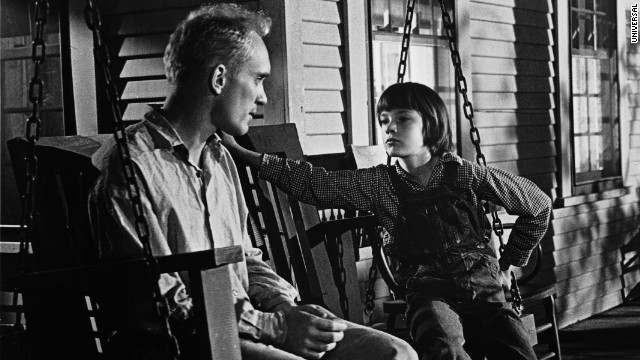
booradley2Sometimes when we clean out our dead loved one’s closets and safety deposit boxes we find a nice brooch or a set of mystery keys. And sometimes we find a manuscript written by Harper Lee.

Okay, maybe it’s true that all the best parts of Go Set a Watchman were inserted
into To Kill a Mockingbird and it will be a yawner. OR maybe we’ll find out that

  • Dill became a New York writer and celebrity who hosted masked balls,
  • Calpurnia and Jem marched together in Selma,
  • Maudie led a popular book group during which she influenced The Ladies of Maycomb, Alabama to wake up and smell the coffee.

And will we find out what became of Boo Radley? I certainly hope so.

I also hope that Jean Louise Finch still calls herself Scout, even though she graduated from law school at the age of 23. And now – at the age of 25 – she has her father’s sensibilities and her long-gone mother’s dreams of adventure. And maybe she’ll visit Dill in NYC and meet Errol Flynn.

This newly discovered manuscript has the power to disappoint us terribly. But the joy of life includes surprises like this one and – while I’d love this book to be exquisite – just knowing that it exists is lovely.

When We Are #2

I am a bossy firstborn. I decided early on never to serve as an totem_poleAssociate Pastor after an internship that left me feeling like an idiot. (During one-on-ones with The Real Pastor, I sat in a child’s chair because “it was the only extra chair he could find.”) Sadly I was too intimidated to suggest that we look for A Grown Up Chair down the hall. Instead, I stewed and realized that I was a terrible judge of character (“He seemed so supportive in the interview!“) and I vowed never to be an Associate Pastor.

So now I am #2 (or maybe #3 or #4) on a staff of leaders, all of whom have their ideas and their vision for how things should go. The buck doesn’t stop with me – which is lovely. But the buck doesn’t stop with me – which can be frustrating for a bossy person who indeed has A Vision.

When we are leading without formal authority, we need particular skills:

  • Knowing when we are free to act and when we need to run something by the #1.
  • Reading the room. (When can I speak up? When do I stay silent?)
  • Knowing how to collaborate and build coalitions.
  • Keeping good boundaries. (What do I report to the supervisor? When do I ask permission?)
  • Persevering (when someone insists we sit in the child’s chair.)
  • Discerning priorities.
  • Understanding our roles. (Am I here to back up the #1? Or Do I have a different mission connected to my own job description?)
  • Self-confidence
  • Trust-building
  • Knowing when to move on (and be the #1 if that’s really our calling.)

We covered this topic in a break out group last week at Kellogg so many of these ideas are not my own.

As well, I’m reminded by my professional coach that it doesn’t matter if “I wouldn’t do it that way.” If we really want to steer, we need to find a different vehicle. We were hired to help navigate and perhaps to suggest respectfully that our tank’s running low if the driver hasn’t noticed yet. We are called to work together in partnerships and it’s important to keep this in mind and not to take it personally when our ideas are not included in the vision.

I talk with frustrated Associate Pastors occasionally who want to be taken seriously, respected, asked their opinion, and set free to do their jobs. If parishioners have connected with them in ways that they haven’t connected with the Senior Pastor, well, Thanks Be To God that connections have been made at all. Staff members who sabotage each other should be pummeled. Seriously. Don’t do that to each other.

Yes, there are totem poles in our spiritual communities.

But increasingly, this is not the best model for 21st Century ministry. Flexible teamwork that builds skills, focuses on the mission, and allows for safe collaboration seems to be a better way. Being #2 is pretty great when these things happen.