Going silent until December 1st. Happy Thanksgiving to all.


Going silent until December 1st. Happy Thanksgiving to all.
Posted in Uncategorized
 Church consultants are everywhere. Sometimes they are former pastors, former seminary professors, or organizational management gurus who specialize in religious communities. There are some great consultants out there.
Because the rules have changed throughout what used to be Christendom, almost every congregation needs a coach to move us through the muck and onto the other side. But what do we look for in the search for the right consultants for our congregations? Here are some questions to ask:
Partnerships are the way to go in the 21st Century Church: partnering between congregations, between churches and denominations, between congregations and consultants who help us lead impactful change. As we move into both a new liturgical years and a new calendar year in the days and weeks to come, how can we be the church for a new day?
Posted in Uncategorized
Note: This brilliant idea comes from a colleague who doesn’t want to be identified. You know who you are, my friend. Thank you. I will refer to you as The Ingenious One. (TIO)
 In my pontiff-less, Cupich-less denomination, pastors seeking new calls complete a Personal Information Form (a PIF) and congregations seeking new pastors complete a Ministry Information Form (a MIF). It’s not exactly e-Harmony for church but that’s the basic idea.
Here’s the gaping, sabotage-creating problem: pastors express their hopes of serving a congregation that wants to make a difference in their communities and in their souls. They have energy for “growth” and “change.” And maybe the congregation says that they, too, want “growth” and “change” but there is no evidence that the congregation has ever made the effort to do so. They say it, but in their heart of hearts, they don’t really mean it either consciously or unconsciously. It could be that they don’t know how or it’s too painful or it’s too much work or they simply cannot imagine a different way or they have forgotten that the church is about Jesus.
But this will become the flash point in their future ministry with their new pastor.
One of the questions a pastor is required to answer in the PIF is this: Describe a moment in your recent ministry that you recognize as one of success and fulfillment.
My friend TIO wants to know why this question is not also asked in the MIF. The answer would tell all potential candidates a slice of the real story about that congregation. For example, consider these answers.
Describe a moment in your recent ministry that you recognize as one of success
and fulfillment.
See what I mean? The answer to this question would speak volumes on where the congregation truly is and what their DNA might be.
Too often congregations seeking “growth” and “change” call a young pastor, let’s say, imagining that all they need to do is have a younger presence in the pulpit. “Other young people will flock to us.” Or they believe that calling a young pastor with young children will attract other young families.
Note to all churches who have ever thought this was The Plan: it does not work that way. It’s not about appearances. It’s about the energy and will of the congregation to commit to loving neighbors and making disciples – the marks of true growth and change.
The pastor – of any age – cannot be expected to be the only one who can “Describe a moment in your recent ministry that you recognize as one of success and fulfillment.” Not asking the congregations this question perpetuates the notion that the pastor – and only the pastor – is responsible for “success and fulfillment.”
And so – if the MIF doesn’t ask it – maybe candidates should ask it:
“What has this church done to make changes and growth in the past year?” The answer will tell a deeper story.
Posted in Uncategorized
 Presbyterians don’t have bishops, of course, unless you count the corporate bishop that is The Presbytery. I work for that bishop.
The truth is that I also have the ability to influence “the bishop.” And the power is intoxicating. (Kidding.)
At the risk of sounding independently bishop-y, this is what I’m looking for when a church in transition (i.e. each one of them) asks for guidance as they seek a new pastor. Pastors equipped with these skills in their toolboxes are like gold.
I’m looking for pastors with:
While Pastor Nominating Committees are looking first and foremost for “good preachers,” pastors who are “good with children and the elderly,” and those with excellent pastoral care chops, they cannot be effective without at least some of the tools mentioned above.
My hope is that all of us will continue to learn, continue to develop new skills, and continue to change. Otherwise we cannot expect our congregations to do the same.
Posted in Uncategorized
I already use Facebook at work. Yesterday, I specifically:
Anyone who walks into my office can see what’s on my computer screen, and I sometimes feel self-conscious when what’s on my screen is Facebook. But honestly I sometimes need to make Zuckerberg-esque Church World connections.
But for those for whom Facebook is frowned upon in the office, Facebook at Work is coming. It’s unclear how this will work/look/impact professional lives. I don’t use LinkedIn or other work-related sites much, but I do use general social media for work. How about you?
What social media do you use on a regular basis for work? And why do you use it?
Posted in Uncategorized

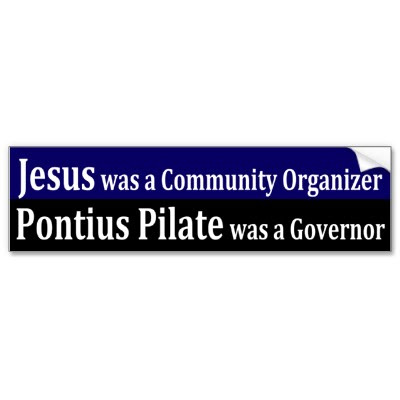
There is a generational divide, perhaps, when we ponder the term “community organizer.” Several faith–based groups full of Baptists, Roman Catholics, Jews, Presbyterians, Muslims, Lutherans, Episcopalians, and Unitarians serve in the community organizer model.
But for another generation who remembers the violence of the 1960s – to say that we in the church want to create a new role called “Community Organizer” – this brings discomfort if not pain. Some of my colleagues and I witnessed this last weekend in a debate about what to call a new Presbytery staff position.
I like the term Community Organizer. I have spoken in favor of this job title.
Even if this term screams not-so-positive things for some, I’m a big fan of reclaiming words that started out meaning one thing and now mean another due to cultural usurp-age: Evangelism. Bible-Believing. Feminist.
But upon further reflection, I’m also mindful of what Paul said about getting in the way of someone else’s spiritual journey. What if a term that we find excellent makes others miserable?
For example: My mind is on Ferguson today. And I recall last summer when Governor Nixon called for a curfew after Michael Brown was killed by a police officer. The first thing that some black citizens of a certain generation think when they hear “curfew” is “sundowning.” While a curfew might have been a good idea in theory (get people safely home) the word hit a nerve. (And then there’s also that issue of violating the constitutional right to assemble peacefully.)
Yes we can reclaim words. But would we be willing to give up the perfect word for an alternative if it brought peace? I hope so.
Image of Jesus training twelve new community organizers a.k.a. “The Sending of the Twelve” by Duccio DiBuoninsegnaca (14th c)
Posted in Uncategorized
 Our Presbytery voted overwhelmingly today to restructure. After countless meetings, writes and rewrites of proposals, and finally a lengthy discussion about the job title of a new two-year position (“Community Organizer”?) we approved a new Connectional Mission Design.
One of Big Three Shifts for the 21st Century Church is Organizational Change. It used to be true, for example, that every member of a church governing board headed up a committee of the congregation (e.g. The Stewardship & Finance Committee, The Education Committee, etc.) That organizational structure is dead – or should be.
True restructuring will never happen without authentic, deep, broad, difficult, courageous change with buy-in from the majority of the congregation. Among the easy attempts at church transformation that will not work:
Those things might be pieces of the strategy. But if there is no energy, if there is no absolute willingness to toss everything that is not about Jesus, then transformation will never happen.
So, now for the good news:
Lots of organizations are addicted to reorganizing, so we need to look out for that too.
Every denominational entity is reorganizing these days. But none of it will work if we aren’t willing to give up all the things we love and worship more than Jesus.
Posted in Uncategorized
Lord, to whom can we go? John 6:68

So what would you do if a parishioner told you that the only reason that he is part of his church is because he needs a venue for his funeral? He is closer to 90 than 60 and so he is planning ahead.
And while he’s been a member of that congregation for most of his life, he has neither the energy nor the interest in committing himself to the mission and ministry of his church in the community. And yet he asks, “Where would I go if this church didn’t exist?”
It’s come to this: The church exists – for that particular gentleman and for many we know and love – for them . . . until they die.
A missional church exists, of course, for those outside its walls. Yes, there are people within the walls to serve too, but the church gathers to be equipped to serve out in the world. Remember?
Older generations who have been part of the same congregation for most their lives wonder where they would go if their church didn’t exist. Younger generations can think of all kinds of places they would go if the church didn’t exist. (And so they indeed go there.)
As churches shift to Millennial Leadership in the next 10 years, we are going to see some creative and fantastic models for ministry. I personally can’t wait.
Where will we go? Even as a Baby Boomer, I’m excited about the answer to that question.
We will go everywhere there are broken people who want life to be different.
Posted in Uncategorized
Is it possible  that sermons can be ruinous to our spiritual lives? And I’m not talking about bad theology.
I’m talking about the primacy of The Sermon.
We in the Reformed tradition would say that the primacy of the sermon is – in itself – good theology. But making the sermon the center of all things also causes theological confusion in that:
The sermon – to me – is dessert. If we consider it the main course we are going to die of theological malnutrition.
Yes, many of our preachers are elegant and brilliant and excellent at interpreting Scripture for daily life. But excellent pastors are also Walking Sermons, modeling what discipleship looks like and offering spiritual reflection in every meeting, class, and conversation. We’ve all know Good Preachers who are rarely confused for Jesus.
It’s a common joke that pastors only work on Sundays. But the joke also lets parishioners off the hook. If “the pastor only works on Sundays” then maybe this means that parishioners only have to practice their faith on Sundays.
The 21st Century Church offers multiple portals for entering a faith community. Yes, there is a corporate gathering on Sundays. But if there is something different everyday in a variety of places with a variety of practices, there are more ways to enter the community. What if small congregations partnered with other small congregations so that individual staff members don’t burn out?
I love a good sermon. But if it’s the only time I ponder holy things, I’m missing out on the holy stuff that happens every day.
Posted in Uncategorized
 I remember a denominational leader once advising our Presbytery:
If you like your pastor, please treat her/him well. A spiritually nourished pastor = a spiritually nourished congregation.
What we clergy do – at its best – is spiritually nourishing work. But it’s also lonely, unrelenting and – at its worst – soul-sucking work. How can we support all our church staff members: clergy, educators, music leaders, and administrators when they are serving at their best?
One of the greatest things our Presbytery was able to do this year was award 33 $1000 grants for clergy to be used for something that refreshes their souls. (Note to applicants: the last 11 haven’t been awarded yet.) Gym memberships, painting classes, a canoe, a weekend trip with a son/daughter, date nights with their spouses. This might seem extravagant, but it’s actually a beautiful and subversive way to nurture our colleagues in ministry.
As church budgets are being created for 2015, my hope is that those of you who do such things will consider beautiful and subversive ways you can nurture your own spiritual leaders.
Posted in Uncategorized

 A Church for Starving Artists