Why Solid is Better than Hollow

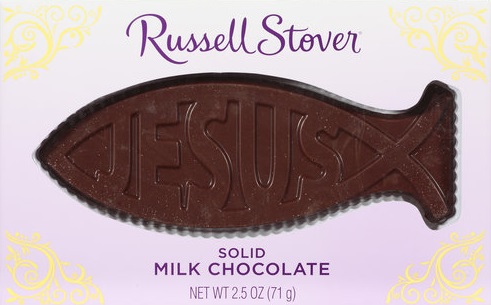
Solid Jesus FishIn the hunt for the perfect stocking stuffers, it’s clear that 1) there are too few dark chocolate offerings and 2) hollow milk chocolate Santas are often sad, unsatisfying confections. Good dark solid chocolate is one of God’s great creations.

We all know why dark chocolate is preferable to milk chocolate:  health.  It’s all about good health, ladies and gentlemen.  Of course it is.

But why, exactly, is solid chocolate better than hollow?

  • Is it because we feel tricked and cheated when we bite into that thin hollow leg?
  • Is it because a hollow snack is a less substantial snack?

A church leader shared with me yesterday, in her reflections about a church she recently visited, that their faith seemed very hollow.  This is an issue with many of us:  our faith seems hollow (probably because it is.)

“Solid faith” is not only substantial;  it’s also substantive.  In other words:

  • It’s consequential.  It makes a difference in the world.
  • It’s meaningful.  It serves a purpose larger than ourselves.
  • It’s authentic.  No tricks or fakery.
  • It’s good for us.  It makes us better human beings.

What makes a spiritual community solid?  It’s not the number of members or the number of programs.  It’s not about Tiffany windows or award winning architecture.  It’s not about charismatic preachers or exquisite musicians.

It’s about solid faith in the One who has come to live among us.  If God is with us, the world is different.  If God is with us, we serve something bigger than ourselves.  If God is with us, things are finally real.  If God is with us, we can be the people we were created to be.  What if we assessed our congregations based on how solid they are?


Levels of Membership?

Should someone receive more influence because he/she has been around longer? I’m talking about institutional church membership and those who offer their tenure as evidence that They Should Be Heard:

  • After 28 years of church membership, you would think they would have asked me my opinion before buying new windows.
  • I’ve been a member of this church for 35 years and I’ve never heard such things from the pulpit.
  • My father was a founder of this church and he never would have imagined the church he started going in this direction.

This is not to say that long-standing members are to be dismissed or disregarded. But established church members who say these kinds of things seem to have a completely different understanding of What It Means to Be Part of a Congregation than those who connect with a church today as new members.

For the record, I personally believe that it doesn’t matter if you’ve been a church member for 50 years or 5 minutes. All members have the same influence and voice.

(Isn’t there a parable about this?)

So how do we convey to long-standing members that their viewpoints are very important but so are the viewpoints of newer members? And what about participants who will never formally join the church? They might be spiritually committed, they might even pledge financial support – but they have no plans to “join” officially. Should they have a voice?

These questions speak to the fact that there are tremendous differences in how we view Church, depending on who we are and where we are coming from. The differences between generations, digital natives versus digital immigrants, and multicultural shifts impact the way we see spiritual communities. But as long as we have established church members who insist on being listened to based on their long-time tenure, we will be distracted.

Our calling and our priorities: to make disciples and to love our neighbors as we love ourselves. If we succeed here, we will be just fine.


Amping Up What We Always Do

As Advent begins, it occurs to me that – whileadvent-candle family traditions shift – there are some things that we always do in my family. When I was a child . . .

  • we always celebrated Christmas in Mooresville.
  • my Dad always played practical jokes with gift-wrapping.
  • my Mamaw always baked angel biscuits for breakfast.
  • my Mom always baked cookies that looked like these.

These days, even with our own children fully grown, we  – still – always . . .

  • stay in our pjs all day long on Christmas Day relishing the only day in the whole year when nobody calls the pastor(s).

What is it that you always do for the Advent season and Christmas?  Or is every year different?

It’s easier to name Christmas traditions than Advent traditions perhaps.  And chances are that our traditions have more to do with our own families and friends than with strangers.

But what if we started this Advent creating some new practices involving strangers that could become what we always do?

  • What if we always bought a handful of $10 gift cards to Dunkin Donuts or Starbucks or McDonalds and handed them out to street people sometime during the first week in Advent?
  • What if we always took a bag of new thick socks to the local shelter sometime during the second week in Advent?
  • What if we always wrote notes to people who’ve lost loved ones since last Christmas?
  • What if we always kept our eyes opened for Invisible People – those most people don’t notice – and we made a special effort to connect with them?
  • What if we always spent Advent learning about a group of people (of a different religion, race, nationality) who are not like us.  Jesus was born for them too.
  • What if we always spent at least one meal during Advent with someone who lives alone?
  • What if we always took cookies to our local firefighters or police officers or EMT workers or crossing guards or public librarians a few weeks before Christmas?

In light of the brokenness of the world, what if we always lived as allies to those who are not in the majority, defenders of those who suffer injustice, partners of those who have a difficult road to walk?  What if serving the least of these became the thing we always do – and not just during Advent?

Happy Thanksgiving

Going silent until December 1st.  Happy Thanksgiving to all.

pies

So Many Consultants

This WayChurch consultants are everywhere.  Sometimes they are former pastors, former seminary professors, or organizational management gurus who specialize in religious communities. There are some great consultants out there.

Because the rules have changed throughout what used to be Christendom, almost every congregation needs a coach to move us through the muck and onto the other side.  But what do we look for in the search for the right consultants for our congregations?  Here are some questions to ask:

  1. What other congregations have used these consultants/assessments/programs?  And what was the final impact/result of working with them?  What really changed?
  2. Does your denomination have arrangements with certain consultants so that you get a group rate?  (Note:  this is one of the good reasons to be part of a denomination.  We partner together to do Big Things.  We lean on each other for financial and other support.)
  3. When was the last time the consultants actually served in pastoral leadership?  Sometimes it’s easier to tell a congregation how to move forward than to lead a congregation forward.
  4. What’s your consultant’s own spiritual community?  If she/he is not personally part of a spiritual community, see #3.
  5. Is this relationship going to be Hit and Run Coaching? Will your congregation receive a report, but then you are left coach-less?

Partnerships are the way to go in the 21st Century Church:  partnering between congregations, between churches and denominations, between congregations and consultants who help us lead impactful change.  As we move into both a new liturgical years and a new calendar year in the days and weeks to come, how can we be the church for a new day?


This Could Change Everything (in the PCUSA)

Note:  This brilliant idea comes from a colleague who doesn’t want to be identified.  You know who you are, my friend.  Thank you.  I will refer to you as The Ingenious One. (TIO)

Time for Change clockIn my pontiff-less, Cupich-less denomination, pastors seeking new calls complete a Personal Information Form (a PIF) and congregations seeking new pastors complete a Ministry Information Form (a MIF).  It’s not exactly e-Harmony for church but that’s the basic idea.

Here’s the gaping, sabotage-creating problem:  pastors express their hopes of serving a congregation that wants to make a difference in their communities and in their souls.  They have energy for “growth” and “change.”  And maybe the congregation says that they, too, want “growth” and “change” but there is no evidence that the congregation has ever made the effort to do so. They say it, but in their heart of hearts, they don’t really mean it either consciously or unconsciously.  It could be that they don’t know how or it’s too painful or it’s too much work or they simply cannot imagine a different way or they have forgotten that the church is about Jesus.

But this will become the flash point in their future ministry with their new pastor.

One of the questions a pastor is required to answer in the PIF is this:  Describe a moment in your recent ministry that you recognize as one of success and fulfillment.

My friend TIO wants to know why this question is not also asked in the MIF.  The answer would tell all potential candidates a slice of the real story about that congregation.  For example, consider these answers.

Describe a moment in your recent ministry that you recognize as one of success
and fulfillment.

  • We redecorated the parlor two years ago after receiving funds from the estate of one of our beloved members.
  • We celebrated the 17th anniversary of our Christmas Elves program last December.
  • We had several cottage meetings about worship and selected a new hymnal.
  • We added a new Sunday School class called The Newspaper Class.
  • We installed a screen in the sanctuary which we use occasionally for praise songs.
  • After talking with local school officials about the issue of teenage depression in our community, we partnered with a cafe near the school last summer to offer a gathering space for high school students after school and on Monday nights. A committed group of our members offer presence, mentoring, and a weekly informal God Talk which offers the opportunity to discuss Meaning of Life topics. The God Talks have connected 8-15 students each week and it seems to be making a difference.

See what I mean?  The answer to this question would speak volumes on where the congregation truly is and what their DNA might be.

Too often congregations seeking “growth” and “change” call a young pastor, let’s say, imagining that all they need to do is have a younger presence in the pulpit.  “Other young people will flock to us.”  Or they believe that calling a young pastor with young children will attract other young families.

Note to all churches who have ever thought this was The Plan:  it does not work that way.  It’s not about appearances.  It’s about the energy and will of the congregation to commit to loving neighbors and making disciples – the marks of true growth and change.

The pastor – of any age – cannot be expected to be the only one who can “Describe a moment in your recent ministry that you recognize as one of success and fulfillment.”  Not asking the congregations this question perpetuates the notion that the pastor – and only the pastor – is responsible for “success and fulfillment.”

And so – if the MIF doesn’t ask it – maybe candidates should ask it:

“What has this church done to make changes and growth in the past year?”  The answer will tell a deeper story.

This Is What I’m Looking For

????????????????????????????????????????????????????????????????Presbyterians don’t have bishops, of course, unless you count the corporate bishop that is The Presbytery.  I work for that bishop.

The truth is that I also have the ability to influence “the bishop.”    And the power is intoxicating.  (Kidding.)

At the risk of sounding independently bishop-y, this is what I’m looking for when a church in transition (i.e. each one of them) asks for guidance as they seek a new pastor.  Pastors equipped with these skills in their toolboxes are like gold.

I’m looking for pastors with:

  1. The ability to shift a congregation’s culture.  This process is neither for the fainthearted, nor for those in a rush.  But almost every congregation’s culture is in need of a culture shift.
  2. The ability to make connections between parishioners, community leaders, denominational resources, neighbors, and people who would never cross the threshold of a church building.
  3. The ability to love people authentically, even when they are cranky, anxious, and have no boundaries.
  4. The ability to mediate conflict with grace and firmness.
  5. Fearlessness in the face of angry/bullying/evil-ish behavior because they trust that God’s Spirit is more powerful than the most difficult member of their congregation.
  6. A working understanding and appreciation of multiculturalism. 
  7. The ability and desire to work collaboratively with their own staff, parishioners, and colleagues both in and outside the denomination.
  8. The ability to articulate a deep, impactful faith in words and actions.
  9. A desire to model healthy boundaries and Sabbath-keeping.
  10. Knowledge of family systems and organizational management.

While Pastor Nominating Committees are looking first and foremost for “good preachers,” pastors who are “good with children and the elderly,” and those with excellent pastoral care chops, they cannot be effective without at least some of the tools mentioned above.

My hope is that all of us will continue to learn, continue to develop new skills, and continue to change.  Otherwise we cannot expect our congregations to do the same.

Facebook at Work

I already use Facebook at work.  Yesterday, I specifically:woman_using_facebook_imac

  • Messaged someone about Adult Education speakers.
  • Found photos to steal use for a Presbytery slide stream.
  • Asked for an email.
  • Messaged someone about a job description.

Anyone who walks into my office can see what’s on my computer screen, and I sometimes feel self-conscious when what’s on my screen is Facebook.  But honestly I sometimes need to make Zuckerberg-esque Church World connections.

But for those for whom Facebook is frowned upon in the office, Facebook at Work is coming.  It’s unclear how this will work/look/impact professional lives. I don’t use LinkedIn or other work-related sites much, but I do use general social media for work.  How about you?

What social media do you use on a regular basis for work?  And why do you use it?

Image source.

When I Say “Community Organizer” What Comes to Mind?

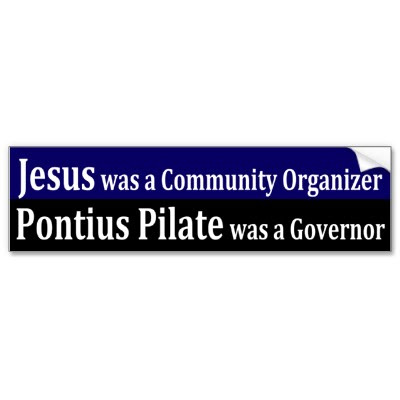
There is a generational divide, perhaps, when we ponder the term “community organizer.” Several faith–based groups full of Baptists, Roman Catholics, Jews, Presbyterians, Muslims, Lutherans, Episcopalians, and Unitarians serve in the community organizer model.

But for another generation who remembers the violence of the 1960s – to say that we in the church want to create a new role called “Community Organizer” – this brings discomfort if not pain. Some of my colleagues and I witnessed this last weekend in a debate about what to call a new Presbytery staff position.

I like the term Community Organizer. I have spoken in favor of this job title.

Even if this term screams not-so-positive things for some, I’m a big fan of reclaiming words that started out meaning one thing and now mean another due to cultural usurp-age: Evangelism. Bible-Believing. Feminist.

But upon further reflection, I’m also mindful of what Paul said about getting in the way of someone else’s spiritual journey. What if a term that we find excellent makes others miserable?

For example: My mind is on Ferguson today. And I recall last summer when Governor Nixon called for a curfew after Michael Brown was killed by a police officer. The first thing that some black citizens of a certain generation think when they hear “curfew” is “sundowning.” While a curfew might have been a good idea in theory (get people safely home) the word hit a nerve. (And then there’s also that issue of violating the constitutional right to assemble peacefully.)

Yes we can reclaim words. But would we be willing to give up the perfect word for an alternative if it brought peace? I hope so.

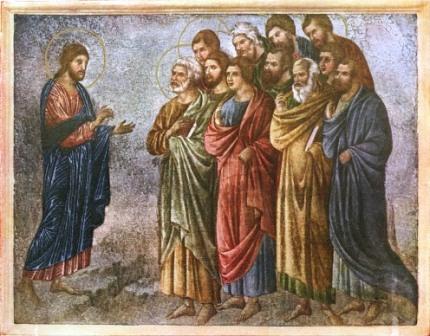
Image of Jesus training twelve new community organizers a.k.a. “The Sending of the Twelve” by Duccio DiBuoninsegnaca (14th c)

Restructuring Church Organizations 101

restructure-195Our Presbytery voted overwhelmingly today to restructure.  After countless meetings, writes and rewrites of proposals, and finally a lengthy discussion about the job title of a new two-year position (“Community Organizer”?) we approved a new Connectional Mission Design.

One of Big Three Shifts for the 21st Century Church is Organizational Change.  It used to be true, for example, that every member of a church governing board headed up a committee of the congregation (e.g. The Stewardship & Finance Committee, The Education Committee, etc.)  That organizational structure is dead – or should be.

True restructuring will never happen without authentic, deep, broad, difficult, courageous change with buy-in from the majority of the congregation.  Among the easy attempts at church transformation that will not work:

  • Changing the church’s name
  • Installing a new sign
  • Re-naming committees “teams” or “work groups”
  • Calling a new pastor
  • Changing the order of worship
  • Changing the time of weekly worship
  • Shifting the worship style
  • Using words like contemporary, missional, special, & emerging
  • Participating in a denominational or other program that will help you grow/change/figure everything out.

Those things might be pieces of the strategy.  But if there is no energy, if there is no absolute willingness to toss everything that is not about Jesus, then transformation will never happen.

So, now for the good news:

  • This is about the moving of God’s Spirit and so – if we are willing – God will do extraordinary things that will rock us.
  • If we focus on relationships (with God and each other) rather than processes, our souls will be fed.
  • If we consistently ask “How is this _____ (chili cook-off, Bible study, play group, harvest festival) transforming people and communities for good?” we will stop wasting our time on activities that “we’ve always done” or “we have to do” that simply waste precious resources.
  • If we treat people like people – and not like numbers, targets, dollars, trophies or “fresh meat” – we will experience the reign of God.
  • If we model transparency, trust, and grace the behavior of the community will shift.
  • If we focus on the big message (i.e. why we exist) rather than the small messages (e.g. what happened at last week’s rummage sale, the fight over sanctuary paint colors) we will alter the congregation’s DNA.
  • If we truly love our people, we will have the pastoral capital to challenge them.

Lots of organizations are addicted to reorganizing, so we need to look out for that too.

Every denominational entity is reorganizing these days.  But none of it will work if we aren’t willing to give up all the things we love and worship more than Jesus.

Image source.