Because We Don’t Want To

There are many things I don’t want to do in life:  weed the garden, wash man-with-folded-arms-1962windows, paint the trim, floss.  But I have to do these things, and life is sweeter when I do.

This statement from a post by Aaron Earls jolted me last week:

Why aren’t Millennials at your church? You don’t want them there.

Honestly, our faith communities want many things:

  • “To grow”
  • “To attract young families”
  • “To serve”
  • “To make a difference”

But we don’t want to do what it will take for those things to happen.

I often ask engaged couples, “What are you willing to do to keep your marriage healthy and alive?”  It’s a better question to ask before marriage because it’s easier to secure a commitment before the wedding than after.

  • Are you willing to go to counseling with your spouse?
  • Are you willing to leave your job for her/him?
  • Are you willing to live a distance from your family?
  • Are you willing to stop _____ for the sake of your relationship?

Sometimes we don’t want to do these kinds of things.

Churches:  what are you honestly willing to do to grow/welcome “young people”/serve your community?

  • Are you willing to relinquish norms that turn people off?
  • Are you willing to fling open the doors to people who don’t look like/act like you?
  • Are you willing to give up some of the things you like most about your church?
  • Are you willing to be uncomfortable for the sake of someone else’s comfort?

If the answer is “no” then you actually don’t want to do what you say you want to do.

It’s healthier to acknowledge this truth and continue to decline than it is to say – falsely -that you want to grow and then blame it on the pastor/denomination when growth doesn’t happen.  The real story is that you just don’t want to.

Image is Man with Folded Arms by Roy Lichtenstein  (1962) 

A Case for Part-Time Pastors Only Preaching Part Time

PT preacherAs small congregations grow smaller, some of those churches hire pastors to work anywhere from ten to twenty-five hours a week.  Ten hours is considered 1/5 time in my denomination. Twenty-five hours is considered 1/2 time. But preaching takes the same amount of effort each week whether you have fifty hours to work or ten.  If you are a PT Pastor, how do you also fit in the pastoral care, the funerals, the meetings, the preparation, the planning, the recruiting, the training, the teaching? You can’t. I have long lived with the assumption that churches with a PT pastor cannot possibly grow.  The moment they shifted to PT paid professional leadership, they were spiraling toward death. I don’t believe that anymore.  What if . . .

  • The weeks that the PT pastor is not preaching, she/he is using what would be sermon prep time to equip gifted members to ramp up their ministry.   Teach leaders how to pray out loud with parishioners, how to do a hospital visit, how to be an effective liturgist.
  • The congregation welcomed new ways to hear God’s Word by inviting leaders to share their personal testimonies about a time that they felt disappointed by God and what they learned about God in that situation or to talk about a time they felt especially close to God because of something the church did right.
  • Local community leaders (the school principal, the police chief, the county mental health worker) were invited to share how they spend an ordinary week, informing the congregation of the needs in the community and how they might address those needs.

Imagine the possible growth in equipping the saints, advancing adult faith formation and articulation, and expanding missional outreach.   This assumes that a church – even a small church with a PT pastor – really really wants to growth in depth and ministry.  I believe many of them do.  (And the rest will close soon enough.)

How Do We Receive Difficult Truth? (It matters if we are the church)

Maybe you saw this story Sunday about the Quinnipiac University student whoweek-two-008-764x1024 was so afraid to tell her parents the truth (that she had dropped out of college the year before, pocketed their tuition money, and was not actually graduating with her class) that she phoned in a bomb threat in hopes of canceling graduation.

This is what one person was willing to do to hide a secret.  I can’t stop wondering why she didn’t simply tell her parents the truth, whatever it was that made her drop out of school.  Apparently, she hadn’t told her friends either.

  • Are her parents savage bullies who would have kicked her out of the family after physically and emotionally pummeling her?
  • Did she have a secret life (drugs? porn star job?) that required keeping up appearances?
  • Was she worried about being ostracized by her friends and socially banished forever?
  • Is disappointing her family A Worse Fate Than Death (or at least prison)?

How bad could it have been to say, “Mom, I’m having a hard time and need to drop out of school for a while“?

In her head, it must have been pretty bad.

So what happens in your spiritual community when someone shares a difficult truth?

  • I have a friend who disclosed the crushing news to her church small group that her marriage was ending, and they asked her to leave the small group. 
  • I know a church musician who achingly told the pastor that he was gay and HIV positive, and he was fired.
  • I know a family who shared with their church friends that their teenage daughter was pregnant and the father was removed from the Board of Elders.

Are our sanctuaries truly safe?  Do we actually welcome sinners?  Have we any idea how to love those who disappoint us?

My neighbor is a behavioral psychologist with young children, and he is teaching them that – if they always tell the truth – they will never get into trouble.  He wants them to know that truth-telling is so highly valued in their family that they can even tell difficult truths.  It’s what healthy families do.

The truth is that our congregations are often the first to punish people for sharing what is really happening in their lives.  Imagine what it might look like if we trusted each other enough and loved each other enough to tell the truth?

Evidence of a healthy 21st Century Church:  people are safe to be authentic, people are held accountable, people are considered redeemable.

Imagine how scared you’d have to be to call 911 and report a bomb threat to cancel college graduation.  Ugh.

Image Source.

The Parents

imageWhen FBC first visited the college where he would eventually matriculate, we were touring a dorm during his Junior-in-High-School visit and this happened:

Upper Classperson Tour Guide: The RAs are really cool. Your boyfriend or girlfriend can stay over and it’s no problem.

Me: Um. I’m the Mom & I’m standing right here.

On another occasion, TBC & I were shopping for jeans & this happened her senior year of high school:

Hollister Employee: Hi! Take a look at our low cut jeans! They look really good!

(After realizing I was invisible:)

Me: Um. Hi. I’m the Mom.

At some point, we became the Ever-Present-Yet-Unimportant Parent. Yes, we moms are often the ones who labor for hours and hours to give birth to our beloved children. Or we joyously adopt precious daughters and sons, making enormous financial and personal sacrifices to welcome them. Dads try to figure out how to be sensitive new age guys.

We endure sleeplessness, minivans, homework meltdowns, forgotten-until-bedtime assignments from science projects to tomorrow-we-wear-something-yellow. It’s not easy, ladies and gentlemen.

Yesterday, our last child graduated from college and the Dean of her College said that the journey of the child necessarily becomes the journey of the parent.

I know this to be true.

There is a difference between 1) usurping our children’s lives as our own and 2) experiencing a child’s journey as our own. Our children’s lives are not our lives but I can tell you – with everything that is in me- that I know parents whose children have endured leukemia, depression, addiction, ADHD, gender dysphoria, and a basic lack of ambition, and their journeys become our own. It’s not that we want to live our children’s lives. It’s that we love them so much that their pains become our own.

I write this as an immensely grateful parent.

I have been thanked by graduation speakers (“Please thank your parents”) and I’m here to say that nobody cares about the parents at college graduations – really – except that we have really been invested in this thing. And we cannot ignore the fact that many others have made our children extraordinary, if we are honest.

It’s hokey to say that our children are raised by a village, etc. And yet, it’s true. And so I thank you.

You know who you are. Our last child child graduated from college yesterday. And there is no way we can thank you. But thank you.

Image of the Best Parents Ever (& their FBC)

The Baby Graduates

image
About 23 years ago, I was the mother of two boys under the age of three, and during their nap time, I was cleaning out a closet. Specifically, I was boxing up their infant wear.

An overwhelming feeling came over me that somebody was missing. And a year later, we were the parents of three kids under age four.

It had not occurred to us that this meant we would have three kids in college at the same time – at least for one year, just as there was a year when all three were all in high school at the same time. Whew.

A couple random thoughts on this momentous weekend when TBC graduates from college:

  • We are unspeakably blessed. I did nothing to deserve the ability to get pregnant easily (when I wanted to) or give birth to healthy children who lived to adulthood.
  • I won the genetic lottery, not to mention the privilege lottery, the citizenship lottery, and the romance lottery. Again, I did nothing to deserve this. We’re talking about lavish grace/good fortune.
  • I’m a big fan of having kids close together, if that’s possible/you plan more than one child. If they are close in age, they all like the same books and the same games at the same time- easy. Yes, you have multiple car seats and lots of diapers. But you’re just as busy with three as with one.
  • Just because they are about the same size, it doesn’t mean they will like the same things. We allowed each of our three to pick one sport and one arts activity at a time, and so – yes, this meant that there was a potential for six different activities per week, but they got to choose. I’m glad we did it that way.
  • As Double PKs (Preachers’ Kids) they needed each other when exposed to every manner of human turpitude. My kids can handle things beyond their years.

The bottom line is that I’ve learned so and I’m immensely grateful. Happy Graduation to our last & TBC.

Image of Gildersleeve Hall – named for PK Basil Gildersleeve – where TBC lived that first year of college.

How Do You Respond When Someone Says . . .

imageIn the past 24 hours, about six people have said to me, “You are a busy lady” – or something like that. It usually happens when I’ve been playing phone tag with someone and we finally connect. Or I have an appointment out of the office and someone comes 15 minutes early to my office and expects me to be waiting for them, but I arrive 5 minutes later, still a few minutes before we  are scheduled to meet. Or someone stops by with no appointment and asks if I have ten minutes to talk about something (which might actually take thirty minutes) and when I say “No, I’ve got a meeting in 3 minutes,” he/she says:

Wow, you’re so busy.”

How would you respond?

  • Yes, I am.
  • I’ve always got time for you.”
  • We’re all pretty busy.”

It makes me wonder:

  • Do I give off the appearance of being harried or crazed or wiped out or so-incredibly-important-that-I-have-no-time-for-you? (I don’t think so, but – faithful friends – please do me a favor and let me know if I’m sending “I’m constantly overwhelmed” vibes.)
  • Do people expect that we (my colleagues and I) are just hanging out waiting for someone to call or show up?
  • Do men get these comments as often as women? (i.e. Is there a subconscious expectation that female employees should always be available to help?)

I’m about as busy as everyone around me seems to be. But how would you respond to comments like this?  Just curious.

News Flash: There Are Mentally Ill People in Church

“Crazy” is considered a slur in many circles these days, and yet it’s a word used Mad Men Nippleoften to describe everyday life:

  • My schedule is crazy.”
  • Those kids are driving me crazy.”
  • Are you crazy?”

Some people even believe that Christians – and other people of faith – are a little crazy to believe in God, miracles, the power of prayer, etc. Others say there’s merely a fine line between ecstatic spiritual devotion and brain disorders.

But the truth is that any seasoned pastor has witnessed serious mental illness in parish life. A professional therapist once sent me this book so I might understand a borderline parishioner who was hurting and hurtful, while mayhem ensued in our congregation.

Our spiritual communities are comprised of people with addictions, schizophrenia, depression, phobias, and combinations of all the above. They serve alongside us as elders and deacons, teachers and choir members, office volunteers and nursery workers. [To be fair, some pastors also suffer with serious mental disabilities, but the hope is that they will be removed from professional ministry – at least temporarily – to ensure healthier congregations. It’s hard to shepherd God’s people if the shepherd is lost and sick.]

Do we prepare future pastors how to spot behavior that can perpetuate dysfunction and create havoc in a church system? I haven’t seen such classes, but maybe you have.

I know from experience that the best laid plans for mission and ministry can be sabotaged by just one person who wrestles with serious insecurities much less demons. And small congregations with limited members seem especially susceptible. If small churches are struggling to keep members, they will tolerate unhealthy behaviors for a long time.

Pastors out there:

  • Did you get any seminary training in identifying mental illness?
  • Did you receive strategies in working with difficult people whose difficulties might be connected to brain diseases?

Yes – many of us received Clinical Pastoral Education, perhaps even in a mental health facility, but what about basic training in dealing with bullies, liars, saboteurs, and passive-aggressors?

Congregations increasingly include such folks, and it would help to have the beginning of a clue how to identify those who need a special kind of pastoral care. Ideas?


Image from last week’s episode of Mad Men. Sadly, Michael Ginsberg is truly mad.

Beyond Ovaries

There are women and girls here in Chicago at risk at this very moment. Books - Jimmy CarterThe same is true for your community, no matter where you are.

Some wonder why the Nigerian Schoolgirls have attracted such attention in light of the fact that crimes against schoolgirls happen every day in every nation.

  • Was it because having our own daughters/sisters/young friends our empathy quotient has ratcheted up?
  • Was it because teenagers in school uniforms (or in this case, in their night clothes) seem particularly innocent?
  • Was it because Boko Haram threatened to sell these girls for $12 to potential “husbands”?

Boys and men are also at risk throughout the world, but it’s different for girls. As Susan Brownmiller wrote in 1993, human history changed forever when ancient men realized that they could overpower ancient women by raping them. By sheer force, most men could control most women physically.

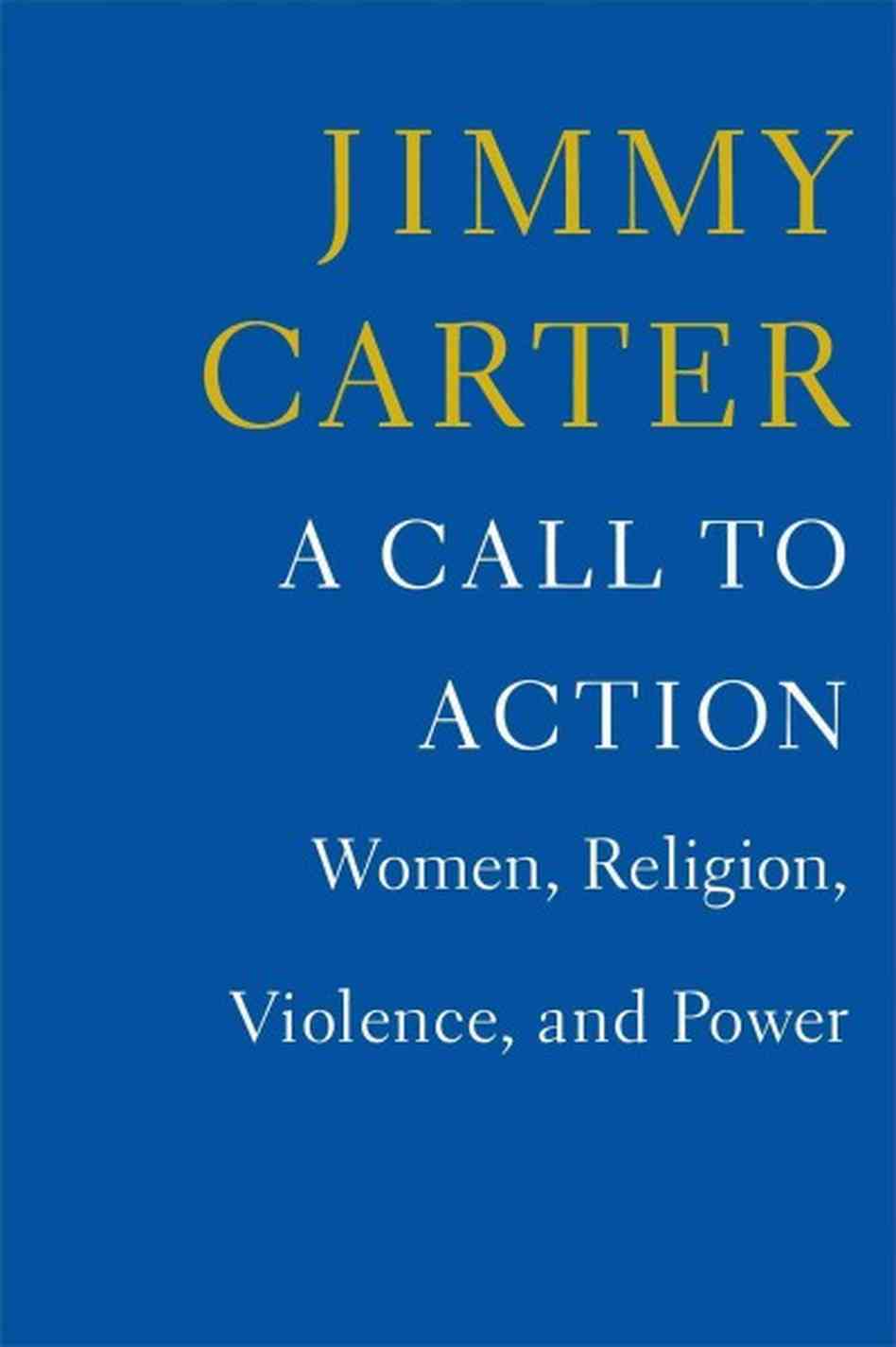
21 years later, Jimmy Carter has written another book that essentially states that the world’s violence, poverty, and dysfunction can be traced to the fact that women and girls are treated as lesser human beings than men. Read his new book, especially if you are a person of faith.

We people of faith have often been taught – erroneously – that God created men to be more valuable than women, just as some generations once were taught that God created light skinned people to be more valuable than dark skinned people. Holy Scripture has been used -erroneously – to support such notions.

Beyond praying for the Nigerian schoolgirls, we can educate ourselves on the realities of being a female in this world and work to make earth as it is in heaven.

In most of the world men control women legally, politically, and economically. And while our ovaries make most of us women physically at a disadvantage from most men, God did not intend for men to subjugate and overpower us.

Read this book.
This is a good read too.

What If We Were Best Known for the Worst Thing We Ever Did?

MonicaMonica Lewinsky is a real person. She has feelings.  She has the right to have a job, a life.  I recommend this article in the most recent issue of Vanity Fair.

It’s been culturally okay to shame her, to peg her, to make jokes about her.  I’ve done it.

Of course she made some foolish choices almost 20 years ago.  And unless she cures cancer or solves the Mideast Crisis, she will be forever known as “that woman” who had an inappropriate relationship with a President of the United States.

What if we were best known for the worst thing we ever did?

As a pastor, I’m privy to all manner of imperfection, and – pastor or not – you are too.  We daily witness global ugliness as well as domestic disappointment in friends from whom we expected better.

How do we get beyond holding onto the worst in people?  How do we forgive those  who want to be forgiven? How do we forgive even those who who don’t accept responsibility for causing human pain?

I know that I don’t want to be best known – and never forgiven – for the worst thing I’ve ever done.  I don’t even want you to know what it is.

Can we imagine being a community that actually gives people a fresh start?  Can we imagine being that kind of church?


Image of Monica Lewinsky.


Because I’m Happy

While talking to TBC today, I said words that I’ve been pondering for a couple of momdays now, but I could finally speak them out loud:

TBC: Are you having a good day, Mom?

Me: I think I’m as happy today as I’ve ever been in my whole life.

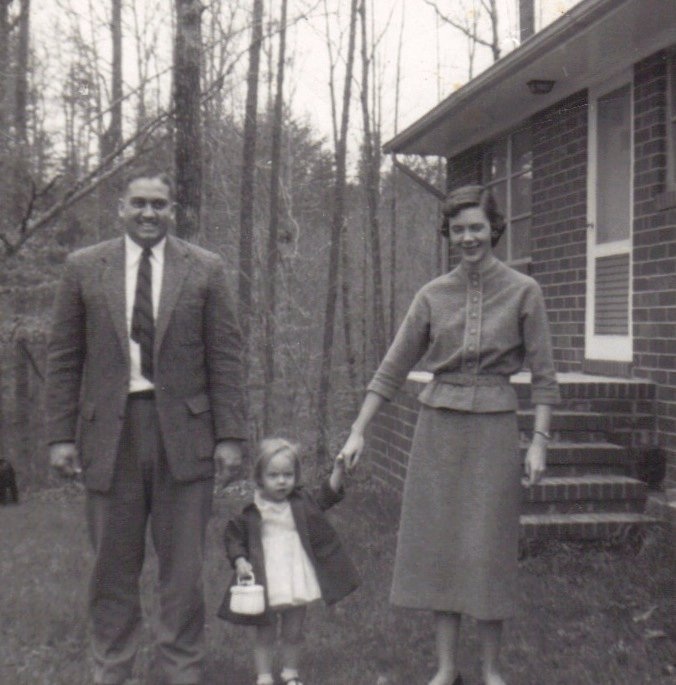
Don’t get me wrong. I still semi-hate Mothers’ Day and have ever since Mom died in 1988 after an eight year adventure with breast cancer. Those were some dark years, hidden well by my perky personality but any of my parishioners could tell you that I easily choked up in the years after her death. The sadness was barely below the surface.

My life’s narrative evolved into this:

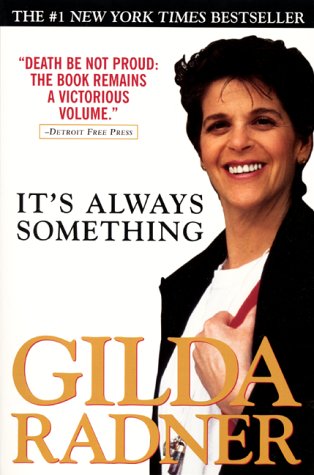
I had a baby (FBC) and my mom died when FBC was eight weeks old. I had another baby (SBC) and my dad died when SBC was four months old. Then I had another baby (TBC) and nobody died (but we joked that my in-laws looked worried.) The truth is that I was sad for about ten years. Pathetically, cataclysmically, drooling-on-myself sad. And then one day I read this book and something clicked. I didn’t want to die anymore.

Being a mom is hard. Not being a mom is hard. Losing a mom is hard. Wishing your mom would get lost is hard.

The bottom line is that I – for some gracious reason – have been breathtakingly fortunate. Today, on the cusp of the end of 20 years of public primary, secondary, and higher education, our three kids are all employed and – best of all – alive. They like each others’ company. They are good human beings. They make a mother (and a father) proud. They know that God created them to make a difference.

Because I’m happy today, the world is different. Once I couldn’t think about mothers without weeping over the loss of my own. But there is hope. There is always hope.

So Happy Mothers’ Day. Or – even better: hang on if this has been a terrible day, especially if it had anything to do with being a mother or not being a mother or having a mother or not having a mother. The season is still Eastertide and resurrection is always a possibility. Always.

Peace to those who are sad today. And know that – while we are not promised happiness – it’s possible.