There is a fine line between religious experience and mental illness.
If you’ve seen an angel, you are probably not likely to share that story carelessly. But I know people who have seen one or more angels. Some of the angels were floating. One angel was a barefoot tobacco farmer. Such stories have come to me from believers and non-believers alike.
Sophy Burnham is still a popular speaker on the topic among all kinds of church people as well as Spiritual But Not Religious types. She once spoke at a church where I was the pastor and that event still ranks among the best attended class in that congregation’s history. People came From Everywhere. For all I know, maybe there were angels in attendance that day too.
We followers of Jesus know Bible stories about Gabriel and Michael and maybe we can recite verses about guardian angels and reporters at an empty tomb. But some of us are skeptical of those who see angels in the 21st Century – especially when the angel seers are mentally ill.
Thamsanqa Jantjie – the sign language interpreter at Nelson Mandela’s funeral – says that he saw angels descending in the stadium. “Sometimes I will see things that chase me,” he said. Mr. Jantjie is a person with schizophrenia and untrained in the field of sign language interpretation.
So here’s what I believe in this season when angels factor quite a bit into our story: They don’t chase us. They report information (“Behold, I bring you good news of great joy.“) Both mentally ill people and mentally healthy people see them – or at least we think we do. I’m not sure what Mr. Jantjie saw, but it doesn’t sound like angels.
Angels bless us. They help us. They tell us not to be afraid. This is what I still believe even on Friday the 13th.
Years ago, I attended a holiday party where I didn’t know most of the people in attendance. While standing at the bar, a stranger came up to me and we introduced ourselves:
Me: Hi, I’m Jan.
Stranger: Hi, I’m Adolf. (Names have been changed to protect the innocent.)
Me: So what do you do? (Don’t you hate it when we are pegged re: work?)
Adolf: I’m a venture capitalist. I find places to put my money. (Yes, he really said this.)
Me: What a coincidence. I am trying to find money for a new venture. (I had recently been elected to the Board of a new 501c3 at my church.)
Adolf: What’s the venture?
Me: We’ve started a computer lab to teach homeless people basic computer skills so they can get employment.
Adolf: ?
Me: While serving dinner recently at a local shelter, we realized that many of the residents are very bright. They just don’t have the basic skills to run a computerized cash register or work in an office. We have several corporate donors giving us hardware and software. We need financial contributions too, though. Are you interested?
Adolf: Excuse me. (He took his glass and a spoon and clinked them together to get the attention of everyone in the room. And then he said this:)
Adolf: My new friend here – Jan – has proposed an interesting idea that I’d like to share.
Me: (in my head: Oh my gosh, this is great! He’s going to challenge the room to donate to our new amazing project to teach homeless people computer skills.)
Adolf: Get this. She is hoping to raise money to teach computer skills to homeless people.
Me: !
A brief moment of silence ensued. And then . . . . laughter.
They laughed at me and then went about their business talking about plastic surgery and winter vacations and such. After catching my proverbial breath, I realized that I live on a totally different planet from those folks.
[Important note: I feel like a jerk sharing this story because it makes me look like I am full of holiness and selflessness – or it makes me look self-righteous and obnoxious. Believe me, I am as fake as Adolf.]
For a better example, read this. Please read every word.
As Christmas comes once again, it’s important to remember that – even as fellow earthlings – we live on different planets. Some of our children will be inundated with gifts beyond the wildest dreams of a child like Dasani. A December to Remember ostensibly means this to a few but to most of the world, having family and friends is most memorable. And then to others – on a different planet from our own experience – having healthy parents and basic clothing and shelter is most memorable.
At that party long ago, I was asked, “Why would you do that? Why would you want to teach homeless people computer skills?”
We live on different planets. How can we come together and partner to make the world look like the planet Jesus describes here:
Your kingdom come.
Your will be done,
on earth as it is in heaven. (Matthew 6:10)
I (stupidly) said to a colleague a while ago that “I was just the Interim Associate Executive Presbyter. I don’t really have any power.” Wrong.
I have enormous power. I can ruin someone’s life – by giving an unfair reference or sharing a confidential piece of information or not giving him/her a second chance – but hope to God I never do these things.
You have enormous power too – especially if you are a pastor or if you are a church person of any kind. You have the power to mess with people’s impressions of Christianity. You have the power to welcome someone who is unwelcome in conventional culture. You have the power to introduce a different narrative about what Jesus is about and who God is.
As we prepare to welcome a baby who was God (!) we remember One who was weak and yet breathtakingly powerful beyond all measure. We remember that – in God’s realm Weak is the new Strong. We remember that, as God’s children, we have enormous power.
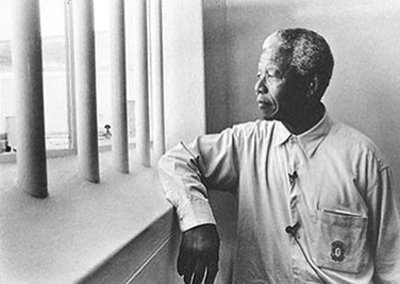
Think Nelson Mandela. Think Malala Yousafzai. Think Little Church on the Corner with people who are serious about following Jesus. Think Transformed People.
Over the weekend, I came across this article about ordering home life. Does this ring true, anybody?
“We all know families that are held together because a woman knows who likes what in their sandwiches, who can or cannot read on a road trip, who needs cuddles after a hard day at school.”
Yep.
So, here’s my question: who does what in your home for the holidays? When I was a child, my Dad delighted in the practical joke side of Christmas (e.g. changing the tags on the gifts) but Mom did all the cooking, cleaning, shopping, wrapping, and decorating. And I suspect that it’s still true in many households that one person takes on more responsibilities than the others under the same roof. Is that because – in my case – the woman wants/needs things to be a certain way? Stockings hanging from the mantel. Greens hanging from the doorpost. Candles in the windows.
Is it still true in your household that one person takes the lead on All Things Christmas?
Would you say that Stephen Marche’s article true for you and your household in 2013? (Do we simply need to let things be a little dirtier and stress out about holiday decorating a little less?)
I staff the Commission on Preparation for Ministry which is the denominational group that oversees those preparing for professional ministry. We are charged with being both Gatekeepers and Shepherds. We are expected to keep people out who should not be ordained and support those who should. It is a powerful task.
In my Presbytery, the first step towards ordination is a meeting with the person in my position, so for now, that would be me. At that initial meeting, I share with those feeling nudged by God to serve in professional ministry a couple of important truths:
Everyone is called to ministry in our theology, but not everyone is called to professional ministry.
You will be told, in this process, things that are not easy to hear. That’s our job: to share constructive criticism that will help you become a better minister to the glory of God.
Your journey will not be like anyone else’s journey. If your family of origin died in a fiery crash when you were ten years old, you will probably be required to have some serious counseling, unlike your seminary classmate who had a different childhood. If you have always been in suburban congregations, we will ask you to get experience in a rural or urban church.
This is a time of figuring out what God wants. This is not about what you want, what your mother wants, what your favorite professor wants. This is a time of holy discernment. It might not be easy. But it will be glorious.
If ever this process feels like fraternity hazing, bullying, or Princess Bride-ish torture, please let me know and we will make some changes. God doesn’t demand that we must be crucified. We already have a Savior.
The Commission for Preparation for Ministry (CPM) often has a terrible reputation. Seminarians compare notes on how terrible CPM has been to them. Horror stories are told. Ordination exam readers are condemned for not allowing creativity. CPM liaisons are shredded privately for not being – in any way – cuddly.
But here’s what I’ve learned after having this job for a couple years:
It’s a problem if CPM doesn’t see that you are teachable. Please don’t roll your eyes when we ask a simple question. It makes us think you will be one of those pastors who treats lay people like they are stupid.
It’s a problem if you cannot articulate your call. It’s okay if God spoke to you via your cat, if you can articulate this experience with authenticity and wonder. (Okay, maybe God speaking through you cat would be a concern.) But, honestly, you can tell us your story – if it’s real – and we will be grateful.
It’s a problem if you can’t handle the material. Seminary classes can be challenging, especially if you are dyslexic and are then expected to read Hebrew. But we will help you in any way possible. Just let us know and, I swear, we will do everything in our power to make it work.
It’s a problem if you are unwilling to stretch outside your comfort zone. So you hate the smell of hospitals? Welcome to Clinical Pastoral Education. You have no interest in parish ministry? Welcome to youth group. God-willing, you will be ordained to Professional Ministry and who knows what God will call you to do next. We want you to be as well prepared as possible.
I figure that we are gatekeepers about 20% of the time and shepherds the other 80% – if everybody is on top of things and there are no glaring issues. What gives us all this Power? Honestly – serving as people who guide future pastors is humbling. We want to know you. We want to support you. But very occasionally we need to say, “no.”
On a final note, sometimes CPMs are unfair, uncaring, and out of touch with reality. I’ve heard of seekers who have been told to quit their jobs so that they can focus on seminary (although they need to work to pay their bills.) I’ve heard of inquirers who have been asked to re-do Field Education because they did it without official approval. I’ve know candidates for ordination who are asked to take an extra unit of Clinical Pastoral Education in a specific site because they need more bedside manner training, even though they have degrees in nursing or social work. It frustrates me too. And yet, ministry is always – always – frustrating.
It’s also worthy of the best trained ministers we can possibly prepare.
Image of Zuul – “The Gatekeeper” – from Ghostbusters. Most CPM members are not this scary.
I once served a congregation that shared the building with a Korean Presbyterian Church. That is to say that 1) we “owned the building” and 2) the other church – which had no other place to worship – was comprised of people in our own denomination who happened to speak Korean as their primary language. Their pastor and I were members of the same Presbytery.
We treated them terribly, in my opinion. At every Session meeting, there were complaints that they were “using our stuff,” “breaking our stuff,” “taking advantage of us,” etc. Eventually, they found another space and they have flourished there.
About ten years or so later, my same congregation agreed to share space with a Pentecostal congregation. We still “owned” the building but something had changed in our culture and in our hearts. We lived as partners. They indeed gave us a tidy sum each month as “rent” but it was considered a gift which allowed us to keep our own ministries going. We prayed for and with them, wanting them to thrive and looking out for them in terms of what we could do to make their ministry prosper.
Two totally different situations.
Technically, I suppose, we who “owned the building” were landlords in both situations, but the difference was in our attitude and mindset. Now – in a different place and time – when I visit churches who are sharing their building with others, comments like these show me that the arrangements are a matter of survival:
“They now owe us $30,000 in arrears for fixing the boiler. They are in the building more than we are and they should pay for the heating.”
“Their children run all over the building.”
“They cook awful smelling food and I can’t understand them.”
“They use too much toilet paper. We should increase the rent.”
As everybody knows, a church in survival mode is a dying church.
And then there are comments like these that show me that the arrangements enhance their mission:
“The ___ church’s pastor is having surgery next week. Who can take dinner over to her house Thursday?”
“Some of us are getting together with the other church for caroling Friday night. Anybody else want to go?”
“The AA group is having a New Year’s Eve Party on the 31st so we’re love-bombing them with hors d’oeuvres to be left in the kitchen that afternoon.”
“We need to be sure to leave the bathrooms cleaner for the groups coming in on Monday. Can we make a concerted effort to do that?”
Churches that partner as equally as possible with “outside groups” tend to thrive. But here are some questions to consider:
Do we know our partners? Do we know what they do? Who they are? Why they meet? (Even anonymous 12-Step Groups are not so anonymous that we can’t chat in the halls or set up coffee for them and ask how we can serve them better.)
Do we consider ourselves equals in ministry? Or are we The Overlords and they are the Underlings?
Do we appreciate them and tell them so?
Do we admire their ministry and showcase it to our congregation?
Stewardship Season Idea: Take members of your congregation on a Mission Tour of your building. (“Here is where the computer classes happen on Tuesdays and Thursdays. Over _________ people have learned computer skills through this program and they often need volunteers if you’re interested.” “This is where the women’s NA group meetings on Monday nights. Most of the group comes on a prison bus for court-sanctioned NA.”)
If we have no idea who is in our building and we have no relationship with them, we are merely landlords. A different mindset makes all the difference.
This is a real question for several churches I know and love. With a building, we get a place to gather and it’s often a placed drenched with community or personal history. With a pastor, we get someone to cast a vision and equip the other leaders to do ministry.
Some churches are identified by their pastors (i.e. “I’m part of Lillian Daniel’s church.”)
Some churches are identified by their buildings (i.e. “The stone church with the beautiful windows on the corner.”)
What if we could only afford one?
The truth is that pastors are expensive, especially in denominations that require congregations to contribute to health benefits and pension plans. But most thriving congregations have full-time professional ministers.
It’s also true that many churches have loved their buildings more than they love God. I, for one, love church buildings, but their purpose is to be a tool for ministry. Few of us can afford to have a expensive tool that we use for only a few hours a week.
I’m not encouraging churches to become landlords because renting space is not ministry. Sure, our renters might do good things (e.g. teach preschoolers, support addicts, offer legal aid) but that’s their ministry, not ours. Most of us have nominal relationships with the Scout troops or the partner churches that use our buildings.
We have entered a season when, increasingly, congregations will need to choose between keeping their pastor or keeping their building.
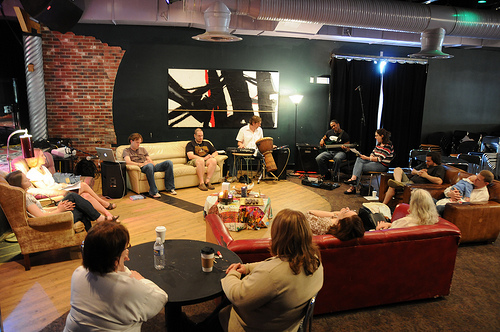
I would love to see more new church plants meeting in community places like Common Table in Vienna, VA.
Of course, most of our churches have and want both a pastor and a building. But if you really had to choose, which would you pick? We might have to make this decision in our lifetime.
OR we could rethink/restart/reconstruct the church as we know it.
Image of a gathering of one of my favorite spiritual communities: Common Table in Vienna, VA.
I had a friend in college who prayed faithfully for a boyfriend. And then she sat in her dorm room and waited, wondering why her divinely created Dreamboat wasn’t showing up.
Newsflash: Waiting is not about magic.
I won’t go into the whole confusion about God and Santa except to say that – unlike tongue-in-cheek Sarah Silverman – I don’t believe that Jesus (or either of the other two persons of the Trinity) is magic. And yet, many of us remain confused.
We pray our wishes will come true, but then we do nothing more than offer a minimal effort to work with God. Example from Church World:
A church wants to grow and return to their former glory (e.g. full pews.)
They pray to The Almighty that their church will grow.
They try simple strategies: install a new church sign, hand out flyers, call a new/better pastor.
They wait.
Nothing changes.
Going out into the world to make disciples of all people is hard work. It’s not about putting up a shinier sign or passing out pithy flyers or choosing a new leader. It’s about Changing Everything: our souls, our perspectives, our wildest dreams, our expectations, our control. Change is hard and most of us don’t want to do it.
Much of the world is waiting for food and water. They are waiting for shelter. They are waiting for grief to subside or for the meds to kick in. They are waiting and waiting and waiting because they have no choice.
But we who have many choices can choose – during this season of waiting – to believe in magic or to believe in Jesus’ message to go out.
Just let me state for the record: we’re giving love in a family dose.
Like almost everybody else, we are planning to travel in the next 24 hours to gather with family. While I’m semi-freaking out about the weather and the thought of my kids traveling through icy rain/snow, I trust that we will eventually arrive safely and enjoy a meal that most of the world would consider a once-in-a-lifetime feast.
But more than the turkey and the sweet potatoes and the pie, relationships rule. I consider myself unspeakably fortunate that there is family we want to see.
I have spent a week of vacation every summer with my siblings, their spouses, and our children for the past 23 years. Some people find it surprising that we would want to vacation together, but we have a really good relationship.
Monday’s post on Racism, Sexism, & Ageism sparked some excellent comments that I want to reiterate here. Specifically, the comments on Facebook about relationships hit home.
My church job is the ecclesiastical equivalent of working for The Man. I serve in a middle judicatory denominational office of the institutional church, staffing the commission that prepares people for professional ministry and the commission that oversees church-pastor relationships. As one wise colleague shared in a recent FB comment: “Discernment based on mentoring and relationships is almost non-existent, which is why I think (the Commission on Preparation for Ministry) has a hard time being adaptable. Therefore,the overly institutionalized process will inevitably be racist, sexist and ageist. Institutionalized processes can be more equitable, but can’t happen without some serious training and discernment.”
Yep.
I remember worshiping on a baptism Sunday with Cedar Ridge Community Church when Brian McLaren was the pastor, years ago. All those who came forward for baptism brought with them their spiritual mentor. Some of the mentors were parents or grandparents. Some were teachers or friends. It was so inspiring to see the fruits of spiritual mentoring up close and personal. The candidates for baptism were then baptized by their mentors. I distinctly remember thinking, “This is not how Presbyterians do it. But I wish we did.”
Most of us in the institutional church are weak in the mentoring department. Either our spiritual development is overly personalized and we see no need in growing spiritually within a community or we fail to take opportunities to notice the opportunities for mentoring others in our community.
HH has a clear memory of someone mentioning to him in the fourth grade that he had gifts for ministry. He held that comment close to his heart through his teenage years and well into seminary. And I totally treasure those years I worked with MP whom I trusted to the point of his being able to tell me when I was kind of an idiot and yet I didn’t take it personally.
The problem with shepherding seminarians, pastors, and congregations in the institutional church is that we are attempting to do the shepherding via corporate processes rather than relationships. Each of our seminarians have a Commission for Preparation for Ministry liaison, but their relationships tend to be transactional (“You send me signed forms and I will help you move along through the process.“) Each of our congregations have a Commission on Ministry liaison, but those relationships are nominal and only kick in when there’s a crisis or transition.
How great it would be if all liaisons had close relationships with all advisees. But the truth is that we are to busy to have deep, abiding institutional relationships. So what is the answer?
Collegial relationships within our institutions take time but we all make time for things we deem important – like connecting with people beyond our own interests.
Spiritual friendships and mentor relationships don’t just happen. They require intentionality.
And in the meantime, institutions are also necessary to bring order in a more formal way. Institutions set rituals that – in a perfect world – bring us closer together. Of course, because of corporate sin, institutions are invariably sexist, racists, ageist, and most other -ists too. But I’ve come to appreciate the good that institutions offer.
This week – and every week – it’s easier to bake a pie than it is to become a family of faith. But relationships are the key to becoming what we were created to be.
May your relationships flourish this Thanksgiving.
Part of my job involves staffing the Commission on Preparation for Ministry – the commission that shepherds seminarians through the ordination process. And I get these kinds of phone calls:
Caller #1: I’m concerned that the CPM is prejudiced against second-career-women because our church member is having a hard time in your process.
Me: Actually, she was having a hard time because she could not articulate her call. There are several other second-career women who have articulated their call and are flying through the process.
Caller #2: I’m concerned that the CPM is prejudiced against theologically conservative candidates. Our church member is feeling like he cannot share who he really is because you will object to his conservative theology.
Me: Actually, we are holding him back because he rolled his eyes when we asked him about eschatology. We have several theologically conservative candidates and one of the reasons they are flourishing through the process is because they are theologically humble.
Caller #3: I’m concerned that the CPM have problems with racial-ethnic minorities. They are treating non-white candidates disrespectfully and asking them to do extraordinary requirements.
Me: Actually, many of our racial-ethnic candidates are having no problems getting through the process. The ones who are moving more slowly are slowed down because they are asking for exceptions with every requirement and they are not turning in their papers on time.
It’s a new week and I’m starting it off with the Commission Ministry early Monday morning. As we try to discern how to best serve as gatekeepers and as shepherds, we want to be fair. So are we being sexist/racist/ageist? Or not?
As a friend – who is a woman of color – shared with me recently, “How do we know when we are being sexist/racist/ageist and how do we know when people are simply in need ofmore gate-keeping?”
I truly believe that we want to be fair as we discern others’ call to professional ministry. What do you believe?

 There is a fine line between religious experience and mental illness.