White Supremacy

flesh colored crayonI remember when there was a “flesh colored” crayon in my Crayola box.  It never occurred to me as a five year old that there was anything wrong with this.  

It wasn’t until I was in the second grade that “flesh” was changed to “peach.”  (And in other skin color related crayon news, “Indian red” was changed to “chestnut” in 1999.)

Some of us with white skin take offense when reminded that we are the privileged race.  Ours is the default skin color.  

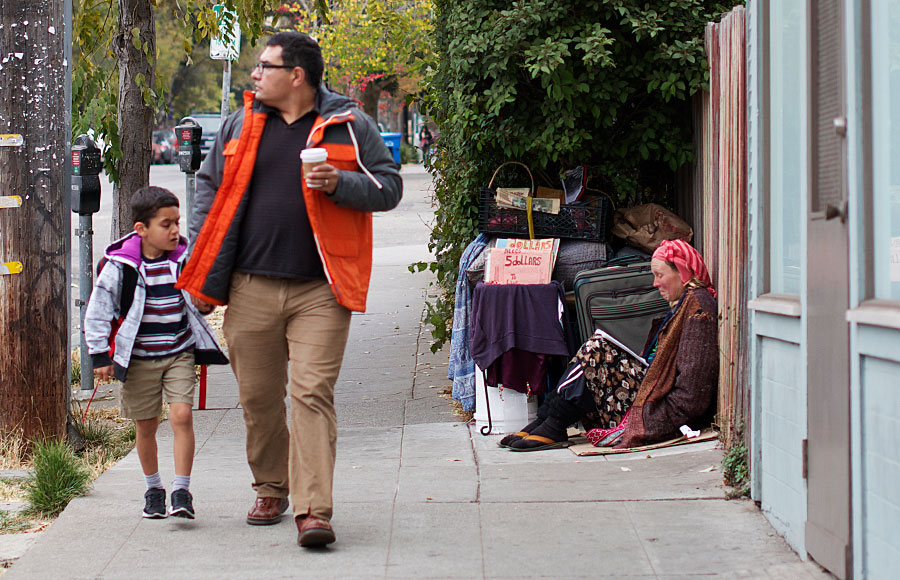
Note how many people describe people as “that black guy” or “the Asian woman” when we don’t usually ascribe skin color or race to someone if he’s a white guy or she’s a white woman.  I love that Zadie Smith intentionally identified only the white people by their skin color in White Teeth.

So, as I write this on the 25th birthday of my oldest child, I am thinking about Trayvon’s parents who will never celebrate their son’s 25th birthday.  I’m trying to get my head around the fact that his killer was not even found guilty of manslaughter.

Let’s say that Trayvon was carrying weed and a gun instead of Skittles and tea the night he was killed.  Let’s say he even had a criminal record.  Who cares? The truth is that he was walking home to his father’s house from a convenience store and someone shot him because he was black.

That’s basically why he was shot.  A “suspicious-looking” white kid would not have been shot by George Zimmerman.

Crayola started making  multiracial crayons twenty years ago but we are still judging people by their skin color.  I do it.  You do it.  

The truth is that white skin color remains privileged.  For every college applicant who gets a break for being “a minority” there are countless times that that same minority kid has endured unfair judgment against her because of her skin color.  

I don’t know what to do about this.  It makes me feel sick to think you can shoot someone for walking while black.  

Of course Trayvon Martin fought George Zimmerman.  Zimmerman was following him for no reason.  Who wouldn’t be afraid?  

This is a tragedy.

Positive Deviants in the Church

Let’s face it:  Jesus was a positive deviant.  Jesus on Deviant Art

  • When most folks were “eye for an eye” people, he said we should turn the other cheek.
  • When the generous gave their coat, he said we should also give our cloak.
  • He told parables about people like the father who risked his dignity by running to welcome  his prodigal child home and the Samaritan who showed more compassion than two spiritual leaders who should have known better.
  • He invited himself to a loathed tax collector’s house for dinner.

So why aren’t we who seek to follow Jesus positive deviants too?  Maybe some of us are, but most of us lead by conventional ecclesiastical wisdom (i.e. what we learned in seminary.)

I’ve been reading about Positive Deviance in terms of agricultural development and business.  But I wonder how we might incorporate it into spiritual communities.

One example:  An urban pastor’s church serves lunch every Thursday but his staff is concerned that the diners steal all the toilet paper out of the bathroom. So, what are the options?

A) Do not allow guests to use the church bathrooms.

B) Post a church person at the bathroom to be sure no one tries to take the TP.

C) Give each guest a roll of toilet paper as a parting gift after lunch.

Note:  C is the ingenious idea of this pastor.

What deviant behavior is proving to bring positive results to your church or other faith community? Do you have good examples of outliers who find success in their ministry because they do the opposite of conventional wisdom?  I would love to hear about them.

Image Source.

Bad Exegesis Kills

This article has been out there for a couple days now.  You can also watch this. (It’s almost 35 minutes long but worth it.  Please watch it all.)
To re-cap:  Christian teenage son tells his faithful Christian mom that he’s gay.  She still loves him but informs him that he can’t follow Jesus and embrace his sexuality.  He hates himself and self-medicates.  He dies.  Mom realizes that she was wrong.

Linda Robertson – and all of us – have misunderstood the Bible.

At the risk of offending everyone who interprets Scripture more conservatively than I do, please take the Bible seriously enough to study it inside and out before you condemn someone via your interpretation.  Learn Hebrew and Greek.  Study the culture and mores of ancient times.  Read.  The. Whole. Bible.  Look for the overarching themes rather than the single verse that talks about facial hair, for example.  Pray about it.  Talk about it.  Wonder about it.  Pray some more.

Because bad exegesis kills.

It kills the soul.  It kills relationships.  It can even kill the body.  But mostly, it in no way pleases God.

Not one of us has cornered the market on Truth.  It takes a lifetime to grapple with What God Is About.  But let’s start with love.

For God so loved the world . . .

A Holy Injunction to Notice

Walking past person in needI just finished reading The Corpse Walker by Liao Yiwu over the weekend –  a collection of stories about people on the lowest rungs of society in China and their jobs:  Professional Mourner, Former Red Guard, Human Trafficker, Public Restroom Manager, Professional Leper, Corpse Walker.

Two things:

  • These are excellent sermon illustrations for you preachers out there, for your Labor Day sermon.  Or for an upcoming ordination sermon on “call.”
  • Liao Yiwu is a fearless hero and superb interviewer/writer.

As the editor of The Paris Review notes in the forward, “There is nothing to make him take notice like an official injunction against noticing.

It occurs to me that – if we intend to follow Jesus – we have a holy injunction to notice.  Not noticing who is among us, around us, beside us is the opposite of Jesus’ message.  Biblical examples are endless:

  • The Samaritan who notices the victim on the side of the road.
  • Jesus noticing Zacheaeus in a tree.
  • Jesus noticing women in the room.  And by the well.  And on the streets.
  • Jesus noticing children.
  • Jesus noticing beggars.

Etc. etc. etc.

Sometimes we notice but do nothing.  Sometimes we notice but do what’s easy (like toss a dollar in the jar.)

Once, while waiting for a ride on Michigan Avenue, I watched a young homeless woman for about an hour.  She indeed might have been homeless with no means for earning money.  But she was clearly part of a group of others who were working together on that block in Chicago.  A man with his “Homeless. God Bless” sign tucked under his arm came by and took part of what she’d collected.  She knew I was watching.  And just as I was getting ready to go sit beside her, my ride arrived.

I had noticed her but hadn’t connected.

As we strive to separate ourselves from “people like that” I will remember Liao who literally risked his status as an intellectual in China by talking to the man who cleans out the public toilet, just to hear his story.

Imagine a world in which we notice, and then actually talk to the human beings that most people don’t notice.  They probably have interesting stories.

Happy Fourth (Fifth, Sixth, & Seventh) of July

Chagall America Windows

Enjoy these days as we celebrate liberty and pray for peace everywhere.

Image is The America Windows by Marc Chagall.

Yes, You Can Judge Me

1_3-5_Deborah_under_the_palm_tree_adriene_cruzPlease don’t judge me for reading Vanity Fair (and an occasional People Magazine when I get my toes painted.)

Please don’t judge me for being in a sorority in college.  Yes, I wore pink and green.  At the same time.

Please don’t judge me for eating premium ice cream with 16% butterfat.  I inherited both my dad’s love of ice cream and his naturally low cholesterol levels, thank goodness.

As I wrote in yesterday’s post, part of life and especially part of being in a healthy spiritual community is being told things we don’t want to hear.  Today I’d like to pitch the notion that we should invite people to judge us.  

Personnel evaluations are good.  Constructive feedback is good.  But both require trust and honest conversation.  Sadly, annual reviews and constructive criticism are rarely done well in the church:

  • Sometimes years go by without annual performance reviews.  My favorite book to get back on board with church reviews is still this one by Jill Hudson.
  • I’ve experienced people with personal, political, and theological issues with the pastor to be the first to sign up to serve on the personnel committee.  My favorite annual review story (reported to me by a friendly officer) was the guy who started the initial review meeting by announcing, “It’s time for Jan to move on.  I’m happy to tell her tomorrow.”  Whoa Jack.
  • We take reviews personally for good reason.  It stings when someone says, “You need to work on your preaching” or “You are not spending enough time getting to know the kids.”  But we forget that our service is not wholly about us.  It’s about whether or not we are serving in such a way that expands the reign of God and the growth of God’s people.

After many years in my previous congregation, I asked three trusted members to tell me the truth about my ministry.  Tell me when I have lost focus.  Tell me when it’s time to go.  Tell me when I’ve been unfair.  We met regularly to review how I was doing.

It meant so much to know that they would always tell me even the things I didn’t want to hear.   I invited them to judge my ministry, my priorities, my attitudes.  It was a rare and blessed partnership that helped immensely.  

Imagine inviting trusted people to judge us for the sake of the kingdom.

Image source of Deborah the Judge.

Telling People What They Don’t Want to Hear

  • You need to get counseling about your grief issues.accountability_chickens
  • We don’t believe you are ready to take your ordination exams.
  • Your church’s finances need to be audited.
  • Your congregation must address the conflict before electing a new pastor search committee.
  • The commission believes you need to re-write your statement of faith.

Part of being a community of faith is holding each other accountable.  Exceptions:  When the church itself is guilty of sexism, racism, abuse, or bigotry of any kind.  But in those cases, you need a new church.

In my denomination/tradition, we have a commission that oversees church transitions and other ministry issues, and we have another commission that helps prepare candidates for professional ministry.  Sometimes we have to tell people what they don’t want to hear.  But it’s what we’ve been elected by the Presbytery to do.  We have been elected to do these things on behalf of the whole body.

Churches have the reputation of being havens of pastoral support and unconditional love.  Mostly this reputation comes from idealistic people who don’t know what they are talking about.

Yes, there are wonderful human beings in our churches and we might aspire to be a Christ-like community, but we are often terrible at being Christ-like communities.  Many of us believe that following Jesus = being “nice.”   And it doesn’t seem “nice” to hold people accountable, but this is an essential part of being a community.

I’ve found that some folks are shocked – shocked! – when their spiritual leaders remind them that

  • they must keep confidentiality,
  • they must not lie,
  • they must refrain from gossip,
  • they are expected to participate in the community, not as a transactional activity, but as a spiritual practice.

Many Christians expect to be coddled by their spiritual communities.  They do not expect to be asked to change behavior that hurts themselves or others. They do not expect to be told “no.”

But church is not about being told that nothing has to change – either individually or corporately.  We are called to worship, pray, serve, and break bread together.  But we are also called to admonish each other when necessary, in hopes of becoming better equipped to serve God.

It’s never easy to hear what we don’t want to hear.  It’s almost impossible to hear what we don’t want to hear when we don’t trust the source. And when we have the attitude – even in our spiritual community – that “nobody can tell us what to do” then I wonder why we are part of that spiritual community in the first place.

Question:  Can you name a time when you’ve been told in your church community something that you didn’t want to hear?  And how did it go?

One of mine:  I was 28 years old and starving for friends my own age, so I thought I’d join the Tommy’s Tavern Softball Team in the town of my first call.  But the elders told me I couldn’t because it wouldn’t look right for the pastor to be seen in Tommy’s Tavern.  Made me unhappy.

What about you?

Elder Enrique Cohen-Chan?

Prom 2007I am the mother of three white kids, but they grew up in the world David Brooks describes in A Nation of Mutts.

Some of you know the story about our TBC being invited to introduce President Obama when he visited their high school in 2009.  The faculty had been asked to select a minority student to introduce the President, and they had picked our daughter –  a white blonde.  She was, in fact, a minority student in that school as the faculty knew,  but upon seeing her head shot, The White House requested someone who looked more traditionally “minority.”  (Note: The young man who replaced her as The Presidential Introducer insisted that she join him after he was invited to visit the Oval Office later that semester – such a generous thing to do.)

As David Brooks writes in yesterday’s NY Times, very soon the United States will be “a nation of mutts, a nation with hundreds of fluid ethnicities from around the world, intermarrying and intermingling.”  Expect our children or grandchildren to be friends with kids named Enrique Cohen-Chan or Amira Zhang or Tasanee Adebayo.

The truth is that most of our churches remain predominantly white and filled with Smiths and Kowalskis and MacDonalds and Romanos and deVries.  Some of us say that our congregations reflect who actually lives in the neighborhood – which is why they are predominantly white or predominantly brown.  But I’ve found that we actually live in more cross-cultural communities than we realize.  We just haven’t noticed.  Or we haven’t wanted to notice.

Conversation with church elders after eating in one of six Mexican restaurants on Main Street in their small town:

Me:  Do you have many members from Mexico?  

Elder:  Mexicans?  There are no Mexicans in town.

Me:  Actually all the restaurants up the hill are Mexican restaurants, and they seem to be run by people from Mexico.  Everybody spoke Spanish in there.

Elder:  Nobody speaks Spanish in our town.

It’s hard to welcome The Other if we don’t even notice them.

Teaching multiculturalism is standard in today’s public schools.  But our churches are way behind the curve.  By the time our congregations notice the need for cross-cultural literacy, third and fourth generation people will want to connect with organizations that teach their particular heritage, according to sociologists.  But we in the institutional church could still be trying to figure out how to welcome The Enrique Cohen-Chans of the world.

Image is one of my favorites:  Prom 2007.

This I Believe: Jesus Drew a Wide Circle

Jesus said, “He that is without sin, cast the first stone.” And then he knelt and drew or wrote in the dirt. When he stood, all of the accusers had gone and Jesus asked the woman if any of them had condemned her. She said none of them had condemned her. Jesus then said, “Nor do I condemn you,” and “go and sin no more.”  John 7:53 – 8:11

Today there will be Gay Pride Parades throughout many cities.  Some of my sisters and brothers in Christ will be horrified.  Some will be inspired.

Some of us imagine Jesus drew a line in the sand when confronted with the woman caught in adultery and the people who believed the faithful thing to do was to stone her, for the love of God.  Some of us imagine he drew a wide circle.  The truth is that we don’t know what Jesus drew in the dirt.  But I choose to believe that grace abounds for all of us.

Happy Pride Day, everybody.  Peace be with you.

Note: This is my new favorite anthem – new to me, but written in 2008.  Words by Gordon Light.  Music by Mark A. Miller

Is It the Dog Park or Church?

Rover's RunWe have our granddog for a couple weeks while FBC moves to Brooklyn, so we  joined the dog park.  Yes, you have to join it here – no freebies from the park service.  They want to be sure all the dogs have the proper shots and that Someone Knows Who They Are (in case a dog or owner breaks the rules.)  There is literally a locked gate and only members get keys.

Our dog park has a large Time Out Pen for the unruly or the potentially unruly.  Puppies can also hang out there to be trained, but since you can’t train puppies among dogs with bad attitudes, I never see a puppy in there.

The owners that make up The Dog Park Family are remarkably like your average church congregation.

  • There’s the cranky man who has this conversation with me every time I see him:

Me:  Good morning!  How are you?

CM:  Just fair.

Me:  Not having a good day.

CM:  Today’s about as good as any day.  Some days are worse.

Note:  I would be annoyed with the perky lady too.  But I spared him from sitting down on the bench beside him and trying to fix his life.  Or maybe I should try to get to know him better.  I’d kind of like to hear his story but I don’t think he likes me.

  • There’s the power couple with the French Mastiff.  They are carefree and friendly.  Their big dog is the power player by virtue of the fact that he’s the same size as Orb.
  • There’s the lady who talks constantly and sees herself as the person in charge, but I get the feeling that this is the only place on earth where she has, or seems to have, any power.
  • There’s the lady who stands in the corner of the park under the trees who never speaks unless unless it’s to say “Dash!  Dash!”  (her dog’s name.

A lot of people don’t know this dog park is even here, which is a shame because it’s pretty great.  There’s even equipment for older dogs who need exercise but can’t run anymore.

Most people care only about their own dogs and don’t connect much with other people’s dogs.  Except for that talking lady.

As for me and HH, we joined but we are just trying it out.  We won’t be here for many more weeks.