Madness

It has begun.basketball

March Madness is like Christmas if you love college basketball. And I grew up loving college basketball to the point that during a family vacation to the Basketball Hall of Fame in Springfield, Massachusetts, HH and I practically wept as we stood among the Dean Smith, Bill Bradley, and Kareem Abdul Jabbar memorabilia.  Really.  It was holy.

So let’s talk about madness.

People are mad about the most interesting things.  Some of us go mad after a terrible loss.  A loved one dies and we find ourselves in the fetal position drooling and making dying animal sounds.  We suddenly crave Jello.  We listen to Billy Joel over and over again.  We can’t sleep.  We watch reruns of Gunsmoke. We. Have. Lost. Our. Minds.

Some of us go mad merely thinking about loss.  We worry about losing people we love.  We worry about losing a certain way of life. 

For churchy people, there is the phenomenon of losing our church culture.   Our church seems to be flailing and we become paralyzed.  We don’t know what to do.  Our beloved religious institutions seems to be floundering and it feels like we’re trying to stay above water during a tsunami.  And yet we are afraid to change things.

I know one mad church that owns multiple properties in a city with expensive real estate but they won’t even consider selling any of their properties.  They are saving that real estate “for a rainy day” but they don’t realize that the rains are torrential out there.

I know another mad church that finds itself at a turning point.  They are in the throes of finding a new head of staff, and the temptation to call a pastor just like their former pastors is overwhelming.  But what they need is a fresh leader with a 21st Century perspective.  They are mad enough to sabotage themselves.

People are mad about holidays.  Easter’s coming up and it needs to be fabulous for many of us who self-identify as Christian.  We want pageantry.  We want an excellent spiritual experience.  But we fail to note that every day should be Easter for followers of Jesus.  Resurrection is an everyday occurrence.

And so here we are:  entering the season of madness.

It’s not like the season of Lent.  It’s not like the season of Easter.  It’s the season of madness.

We change our schedules to watch our favorite teams.  We cheer on teams we couldn’t have cared less about last week.  (Go Lehigh!)  We wear school colors and some of us paint our faces.

Madness moves us to do strange things.  So, imagine what spiritual madness looks like.  What if we lived our lives following the way of Jesus  – without regard to earthly security, cultural norms, or basic self-centeredness?

It would look a little crazy.  And yet it would be amazing.

PS- Go Heels.

What Kind of Journey?

Gonna take a Sentimental Journey,
Gonna set my heart at ease.
Gonna make a Sentimental Journey,
to renew old memories.

Doris DaySentimental Journey was the #1 song on the charts in 1945 and it’s still the soundtrack of many of our institutional lives – especially if we’re talking about church institutions.

We call ourselves a Christian nation but what many of us mean is that we have family and cultural affection for church-related traditions.  Many – if not most – of our church conflicts are about  sentimentalism rather than theology or spiritual disciplines.  At least that’s been my experience:

  • The discussion about moving a painting donated by a family years ago from the church library to the  . . . um . . . basement because 1) it scared people and 2) had no theological connection to anything (it was the portrait of a family relative with no connection to the church)
  • The discussion about using a new tune for the Gloria Patri which included comments like, “This is how we’ve always sung the Gloria” or “I want my children to learn it exactly how I learned it.”
  • The discussion about no longer continuing the Fall Fun Fair because 1) it was too expensive and we didn’t have enough volunteers and 2) it was not the transformational event we were hoping to offer for the community.  But some people were very upset because “We’ve always done The Fall Fun Fair” and “Our family’s whole Columbus Day weekend has always been about the Fall Fun Fair.

See a pattern here?

“My family”

“My children”

“My heritage”

“What I want”

“What I’m used to”

“What makes me comfortable”

These are the themes of sentimentalism, which bloom and grow in many established institutions.  And churches are supposed to be communities of worship and mission and discipleship.  Imagine if congregations spent all their time on a missional journey rather than a sentimental one.


Image of Doris Day whose first hit recording was Sentimental Journey in 1945.

Normal Pastor’s Kids

I appreciated this post by Southern Baptist pastor Thom Rainer who informallyBen Jay Libby black white asked pastors what Ten Things Pastors Wish They Knew Before They Became Pastors.  I’ve been thinking especially about #7:

7. Show me how to help my kids grow up like normal kids.  “I really worry about the glass house syndrome with my wife and kids.  I’m particularly worried that my children will see so much of the negative that they will grow up hating the church.  I’ve seen it happen too many times.”

My spouse and I are both pastors so our three kids are double PKs.  Their experiences  – like other Pastors’ Kids – are unique for several reasons:

  • Most kids don’t go to work with their parents and watch them do their jobs in a variety of settings including a pulpit.
  • Most kids do not get exposed to meetings where a gathering of people discuss and vote on how much money their parents will make, how much vacation they will get, or whether or not they deserve a sabbatical.
  • Most kids are not as exposed to birth and death on such a regular basis.  Another parent asked me on a playground once if I was a funeral director.  “Your kids are always saying that you have another funeral.
  • Most kids don’t witness the meanness of adults who work with their parents so up close and personal.  Our children once witnessed an angry church person storm out of a pizza restaurant rather than eat in the same room as The Pastor.  They’ve watched people yell at their mother because she was The Pastor.
  • Most kids are not exposed to the physical health and mental health issues of adults who are not members of their families.  A troubled church member once shared with our 8 year old over the phone that she wanted to kill herself.  True story.

As far as being “normal” though,  there are benefits to being a PK:

  •  A Pastor’s schedule is flexible enough to go to afternoon soccer games, especially when there is a meeting that night.  A Pastor can choose not to officiate at a wedding on her daughter’s birthday.  
  • Some people have special affection for our children just because they are the Pastors’ kids.  
  • Pastoral ministry offers excellent opportunities to teach children very directly about hospitality, pastoral care, and Real Life.  Although our kids didn’t know the confidential business of our parishioners, they were aware that people were in the hospital or going through a divorce.  They watched me weep when people died.  They asked where ___ was when they noticed he was no longer participating in church anymore.  They watched parishioners grow old.  They welcomed new babies like cousins.
  • PKs are exposed to a wide variety of people: black, white, Asian, African, European, gay, straight, very young and very old, homeless people, mentally ill people, ardent Republicans and yellow dog Democrats.  They got to know people they never would have known if they hadn’t been part of the church, and because they were usually the first to arrive and the last to leave any church function, they got to know these people pretty well.

As a mom who believes in the flinging-the-doors-open style of parenting, talking about everything as it comes up in an age-appropriate way, it was wonderful sharing professional ministry with our kids.  Because of the way they were raised, they are savvy and solid human beings.  

And if I may say so, we have really normal and happy kids.  Most of that is sheer grace.

But if you are reading this and you are not a Pastor, but you have a Pastor and your Pastor has kids, please keep this in mind:

  • Don’t expect more from PKs than you would expect from other kids.
  • Please don’t believe you can reprimand or offer commentary to our kids in ways you would never talk to or about other people’s children.  (Yes, I’m talking about you Smiling Mean Person who used to criticize our daughter’s soccer uniform during the Passing of the Peace.)
  • And please encourage your Pastors to go to all Parent-Teacher conferences, PTA meetings, their concerts, plays and games – even if there is a church meeting that night.
  • Please understand when your Pastor doesn’t want to schedule your daughter’s wedding on her daughter’s 16th birthday or your husband’s funeral on the afternoon her son is singing a solo at the school concert.
  • Please be the people you profess to be as followers of Jesus.  Believe me, PKs in particular notice when you are mean or rude or selfish.

Thank you.

Image is of our trio of PKs when they were 2, 4, and 6 years old.

White Smoke Rising – Encouragement for Pastor Search Committees

White Smoke RisingPresbyterians don’t call pastoral leaders like our brothers and sisters in the Roman Catholic Church.  We don’t even do it like the Episcopalians, Methodists, or Lutherans.  There is no bishop or other leader who appoints or designates the new Pastor.  We do it by committee, which is sort of like a conclave.  People pray, talk, pray some more, and then they vote.

I like the idea of white smoke rising from the chapel chimney when A Call Has Been Determined.  

There are several Pastor Nominating Committees out there hoping for the Spirit to point them in the faithful direction.  My hope is that white smoke will arise when they find the pastor who:

  • Understands that “getting new members” is not the point.  
  • Has no intention of being The Hired Christian.
  • Knows how to equip other people to offer pastoral care, pray, teach the Bible, and lead worship.
  • Teaches hospitality as a matter of spiritual maturity, not good manners.
  • Takes people on a missional journey, not a sentimental one

God bless all you PNCs out there.  I pray you are probably having more fun than the gentlemen locked in the Sistene Chapel today.

We Need to Get Out More

I remember hearing years ago that the Ayatollah Khomeini – Iran’s supreme open-church-doorreligious leader at the time – had never heard of the Beatles or Shakespeare.  “What an idiot,” I thought.

Actually,  it’s quite possible that during his time in exile outside Paris, he had indeed heard of those and other Western icons.  And more to the point, I am the idiot.

The BBC reported yesterday that The Largest Religious Gathering on Earth recently ended.  And fellow Westerners, can we identify this event?

  • No, it wasn’t  Joel Osteen’s most recent worship service.
  • No, it wasn’t a rally cheering on the conclave in Vatican City.
  • It definitely wasn’t a gathering of any Christian denomination.

It was Kumbh Mela in India – attracting was turned out to be 12 million pilgrims to the Ganges and Yamuna rivers in Allahabad. India.  I had never heard of this event until yesterday.  So who’s the idiot now?

We Christians have got to get out more, especially as the world is getting smaller and smaller.  And didn’t Jesus say something about this?  Yet we still act as if  this is a Christian nation (in some way beyond self-identification, not discipleship.)  We continue to be Christians with a 1950s mentality.  We continue to make assumptions about What Everyone Wants (i.e. to join a church) which are erroneous if not foolish.

How can we “get out more“?  Opening our eyes is a start.

A dear parishioner once told me that everybody in her apartment building was a Christian.  She had no contact with non-Christians, she said.  But I remembered being in the elevator in her building with women wearing chadors.  “What about those women who wear head scarves in your building?  I think their Muslim.”  She had never even considered that.

!

We can also get out more by having conversations with people who don’t do church. If we simply know and try to love these folks without attempting to snare them into church membership or “save them,” we might find that they have no desire to join a church and they couldn’t care less if we wear pinned or adhesive name tags on Sundays.  Imagine showing people – all people – simply what love looks like.

A Risky Invitation

Arch at CTSI’m guesting again at Ecclesio on Churches Starting Churches.

Have a good weekend everyone!

Trust Me. Or At Least Have a Cup of Coffee With Me.

photo[1]Does anyone remember a time when this conversation could have happened?

Personnel Chairperson to Church Board:  After considerable conversations with her and others, we have voted to let go of our Youth Minister.  We hope you’ll trust this decision.  Her last day will be Friday.

Church Board:  Thanks for letting us know.  How can we support you in this transition?

There are many reasons – often very private reasons – for firing someone:

  • secret addictions
  • not playing well with others behind the scenes
  • mental illness
  • physical illness
  • financial misconduct
  • sexual misconduct
  • random boundary issues
  • terrible fit

Maybe because information is so accessible and we demand it, and because choices are countless (and we like to make our own choices.  Can you say, “Half caf, double shot, extra hot skinny mocha?”)

We do not trust People In the Know to make decisions for People Not In the Know.

I’ll admit that it makes me wonder in a “Have-they-screwed-this-person?” kind of way when I hear that someone has been fired or asked to resign, and I personally don’t know why.

  • But what if the reason why would embarrass the person?
  • What if releasing information could bring about a lawsuit?
  • What if not releasing information could bring about a lawsuit? (e.g. we assume someone is fired for utterly nefarious reasons, but it was just a bad fit?)

Trust issues are huge in the church right now.  It used to be true that we trusted our leaders simply because They Were Our Leaders.  We were dutiful followers.

Today we must increasingly rely on authentic relationships.  If I thoroughly trust ___, I don’t need to know why he fired _____.  I might be curious, but I don’t really need to know.  And I probably won’t trust _____ unless I have a solid relationship with him.

I work for a Presbytery which – perhaps by definition – means I am not trustworthy.  I work for The Man in The Mother Ship which some might even call The Death Star.  We ostensibly are the entity that says, “No.”  We keep people from doing what they want to do.  We make them follow meaningless procedures.

But I find that I am trusted by congregations who know me.  I’ve spoken at their meetings.  I’ve presented my 21st Century Church road show.  I’ve preached in their pulpits.  I’ve listened to them over coffee.

Can we agree to try to 1) deepen relationships in the institutional church and then 2) trust those people to do the work of the church necessary to transform congregations?

Or will we continue to assume that our leaders are trying to pull a fast one on us?

Over at Ecclesio This Week

Crossing BoundariesI’m guesting at Ecclesio this week, writing about Churches Starting Churches.  Come visit Cynthia Holder Rich’s blog.  There will be three posts this week on the subject.

Image is Crossing Boundaries.


Pete Rollins & NEXTChurch 2013

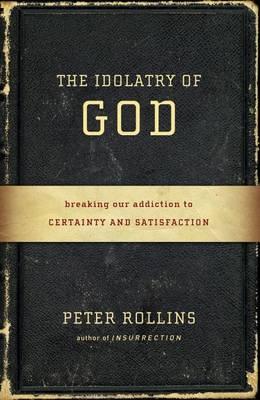
the-idolatry-of-god-breaking-our-addiction-to-certainty-and-satisfactionLeaving  NEXTChurch2013 yesterday, I happened to be reading Peter Rollins new book which I love for thoroughly selfish and idolatrous reasons.  Part of the NEXT2013 conversation was about what we love more than Jesus.  What is our (real) chief concern? Old question.  And fresher than ever.

Idolatry is everybody’s favorite sin, if you ask me, and the church is – of course – a daily offender.

If we are honest and try to discern what we truly worship, we might find that:

  • We worship what others think of us.
  • We worship money and what it can buy.
  • We worship not God, but the idea and promises of God.
  • We worship church.
  • We worship family.
  • We worship our children specifically (which is a variation of worshiping what others think of us:  if our kids do well, people think it’s because we are awesome parents.)
  • We worship our parents specifically (another variation of worshiping what others think of us: if our parents were amazing, we must be too.)
  • We worship love – or the idea of it.

I could go on and on, but you see what I’m saying.

As we talk about what’s next for the people who gather together to follow Jesus, here is some wisdom I randomly picked up at NEXT2013:

  • From Ed Brenegar (my Young Life Leader 40 years ago and now my colleague in ministry):  if everything in the church falls apart and it might/will, what will be left will be our relationships and all will be well.
  • From Bill Golderer and Aisha Brooks Lytle:  all churches (all of them) need Administrative Commissions these days to hold us accountable and deal with the junk, freeing the congregations to simply pray and discern God’s next call for the church.

There’s more, but I need to get going this morning.  It’s a snow day in Chicago but I like to work in the snow.  Makes everything feel a little cleaner.

Have a good day everybody.

Read This Book (& Think Ecclesiology)

Happy Families
Church people sometimes say, “Our church is like a family.”
 Maybe.  Maybe not.

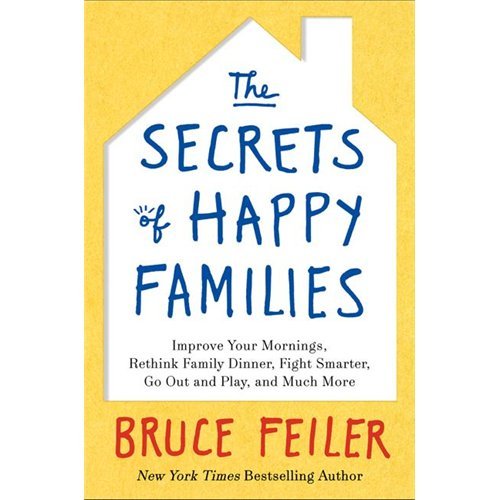
Bruce Feiler  – whom you might know for his books on Abraham and The Five Books of Moses – has written a good book about families that challenges some of common expectations of what makes a good family.

For example, most sociologists laud the benefits of “family dinner” but Feiler says that eating dinner together every night isn’t nearly as important as what we talk about when we eat dinner or drive the kids to school or fold laundry.  He’s all about family rituals.  He encourages sharing family stories (“Do you know where your grandparents grew up?”)  He claims – and I agree – that sharing an “oscillating family narrative” makes for a resilient, healthy family.

And so it is with church – whether we consider our church family as a “real family” or not.  Feiler’s suggestions for happy families also work for churches:

Institutionalized rituals can feed souls and make good memories.  There’s a difference between:

  • Annualizing church events for the sake of adding programs or promoting a specific ministry or church group (“Let’s do the Deacons’ Chili Dinner every year!”) and
  • Cherishing practices that connect people spiritually.  There’s a men’s group in one church that carves individual Christmas ornaments every year for the children of the church (one year a camel, another year a donkey.)  The children receive them at the Christmas Eve service.  Another church pairs teenagers and older members together for projects, creating memorable intergenerational relationships that don’t usually happen in the secular world.

Meaningful rituals are neither a burden nor a chore.  If family rituals – in either a nuclear or a church context – don’t bring comfort and wholeness, why are we doing them?

The church’s story highlights both the highs and lows of life together.  Think about the stories of a nuclear family.

  • Some  family stories are primarily ascending:  We came to this country with nothing. We worked hard. It paid off.  
  • Some family stories are primarily descending: We had it all but we lost it.  
  • The healthiest narrative expresses the reality of ups and downs: Grandma and Grandpa eloped during the war. They lived for a while at the beach. Grandpa got sick.  Aunt Kathy had a baby.  Dad lost his job.  But then he started his own company.  

Imagine a church story in which the basic narrative is ascending:  We started the church with 20 people and now we have 2000.  

Imagine if the story is descending:  We used to be THE church in town, but now our roof is leaking and the people are gone and we’ve depleted the endowment.  

Imagine a church that’s able to note both the ups and downs of a normal life cycle: We built this sanctuary.  There was a fire in the 1970s.  We rebuilt and added a kitchen to feed the homeless.  The pastor left abruptly.  But we called a great new pastor. 

Whether we consider our faith communities to be like a nuclear family or not, Feiler’s book is informative for churches.  It has a Sabbath in the Suburbs feel that inspires us to do better in terms of loving each other in community, whether that community lives under the same roof every day or the community gathers in the same sanctuary every week.