What to Expect When the Church is Expecting: Grandparents’ Edition

The wise and insightful MaryAnn McKibben Dana rightly teaches that the church is not dying; it’s pregnant.  Read this and share generously.  I won’t go into all the points MA makes but, as she says, pregnancy is not always comfortable or easy.

Of course, a baby will eventually be born and we all want a healthy baby.  But if we don’t follow healthy practices, we could end up with something less than a healthy church.  What we don’t want is the church equivalent of a crack baby – the result of trying to satisfy our most addictive impulses without considering the consequences.

 Let’s also keep in mind that the average age that someone gives birth in the US these days is 27.5 years old.    The “parents” of this future church, I believe,  are between the ages of 20 and 40, more or less.

I write this post in hopes that those of us who are too old to be new parents will recognize our role in the 21st Century Church:  We are the grandparents.

Our fertility diminishes as we age.  This doesn’t mean that people over 40 – or even over 80 – have no creativity and energy.  We just have less of it.

Although I am not a grandparent, I’m in the right age demographic.  [To be perfectly honest, I’ve already started pondering what my future Grandmother Name will be if I ever get to be a grandmother.  I like “Grand Jan” but my kids have vetoed it.]

Although I have no grandchildren, HH and I  have a grand-dog and we  noticed  that – the last time the grand-dog visited – we unintentionally made things difficult for the dog’s parents.  We ruined the dog’s schedule.  We fed him too many treats.  I don’t want to be a problem grandmother.  And I don’t want to be a problem grandmother for the church we are all anxiously expecting.

It occurs to me that those in my and older generations need to keep something in the forefront of our minds as the church we love is pregnant:

The Next Church Will Not Be Our Baby.

We will have great ideas for how to care for it and treasure it.  We might even be able to help pay for its nurture and its future.  But it’s not our baby.

 This is not to say we will not be ideal grandparents.  But it’s possible that we could overstep our bounds.  We could chuckle at the disciplines the younger generations have chosen to follow. We might want to talk incessantly about the way we did it.  But let’s not.

 There is enormous wisdom grandparents can share.  We are seasoned leaders and we definitely see that some things never seem to change.  But our role is shifting.

It’s not our baby, and – in terms of cosmic stewardship – the baby doesn’t belong to the younger generations either, any more than young parents “own” their sons and daughters.  The future church is God’s baby and our job is to be excellent stewards.  And prepare for a healthy birth.

Note: I looked everywhere for an image with darker skin for this post.  I have a feeling our baby will be a darker shade of humanity.

An Open Love Letter to My N.C. Kin

Dear N.C. Family,

When we were kids going out with friends, Henry used to say, “You’re taking a good name with you.  Make sure you bring it back.”  

I won the genetic lottery when two fine families from Prospect Presbyterian Church united in marriage in 1954.  Two families with two good names. I stopped counting at 60 how many Edmiston-Linker-Miller-Overcash-Johnston relatives I have who still live in North Carolina.  

The Edmiston side still meets here every June and I am profoundly humbled when asked to offer thanks before the meal – especially because I know that many members of my extended family do not believe that scripture affirms the leadership of women in ministry.  And yet everyone is gracious and welcoming of me.  I am so thankful to be in our family.

It is in this family that I came to follow Christ.  In this family, I learned how to study scripture and pray, and so did you.  And yet one of the reasons we don’t talk politics at family gatherings is because we disagree.  We vote differently in elections.  We interpret scripture differently in terms of what we believe God is calling us to do and be.

With this in mind – and at the risk of offending people I love in North Carolina – I am prayerfully asking you to take the name of Jesus into the voting booth this Tuesday.  Because it is already illegal for same-sex couples to marry, my prayer is that – no matter what you believe about gay people – you will, please, vote against Amendment 1.  It is unnecessarily mean-spirited and it will hurt people we love.

My authority comes from Scripture, but – again – we interpret Scripture differently.  Jesus consistently sided with the weak, the disenfranchised, the other.  We’re  talking Samaritans, the bleeding woman, the Syro-Phoenician woman, lepers, and tax collectors.  In other words, Jesus loved and reached out to foreigners, unclean people who were not allowed in the temple, and sinners.

Again, no matter what you believe about homosexuality, marriage is already defined in N.C. as between one man and one woman.  Gay couples can’t be married to each other.  And men and women can’t be married to more than one person at a time.  It’s already in the law.

As a pastor, I’ve dealt with many pastoral situations that would be negatively impacted by this amendment if it passes.  For example, there were two 90-something women in my church in Virginia who had come to DC to serve the government during WWII, never married, and retired together in a single-bedroom apartment, because they were extremely frugal.  Or so I thought.  When E. went into the hospital, I drove M. to visit her each day and we asked the nurse to please phone M. if E. took a turn for the worse.  We put a lime green post-it in E’s medical file so they couldn’t miss it.

One morning, M. phoned me at 7 am and told me that E. had died in the night and they had not called her because she was “not related” to E.  Instead they had called a great-niece in S.C. whom E. had not seen in decades.  I drove M. to the hospital and they had already taken E’s body away.  To make a long story a little shorter, M. told me that she and E. were actually a couple.  They had been together for over 60 years.  “Do you know what I’m telling you?” this pillar of our church said to me.  “I’ve just lost half of my body.”

M. and E. were never connected via civil union or any other official status.  It’s not legal in Virginia.  And yet, in the name of freedom and compassion, don’t we believe that we should be allowed to share our lives with anyone we wish – and let  God sort it out, if we ourselves find it wrong?

I see that Billy Graham has asked people to vote FOR Amendment 1 and I have enormous respect for this man.   But I also know, from Montreat friends, how frail he is and I wonder if he really made that statement or if someone made it for him.  The photograph is clearly from his younger, healthier days and the truth is that Amendment 1 is not about the definition of marriage.    Again, N.C. has already defined it.

At a San Francisco Crusade in 1997 Billy Graham stated: “There are other sins. Why do we jump on that sin  [homosexuality] as though it’s the greatest sin?…What I want to preach about in San Francisco is the love of God. People need to know that God loves them no matter what their ethnic background or sexual orientation. I have so many gay friends, and we remain friends” (“Graham Welcomes Gays at San Francisco,” Christian News, Oct. 20, 1997, p. 7).   This is also a wonderful piece done in 2005.

The God I trust in wants all children to have health care,  all people – even those with whom we differ – to have secure home lives, and all people to be able to make faithful choices.

You are taking the name of Jesus into the voting booth with you Tuesday.  And I respectfully and prayerfully ask that you consider making the same choices Jesus made when he came in contact with  the maligned of his time.

Nobody has ever come to Christ because of exclusion or mean-spiritedness.   People come to Jesus because of grace.

You are my family no matter what, but I can’t live with myself without sharing what I believe Jesus would want us to do.  Please prayerfully consider voting against Amendment 1 on Tuesday.

Your sister/cousin/aunt/in-law in Christ,  Jan

Worth Twice As Much?

I covet your comments here, especially if you are – or ever have been – an Associate Pastor and/or a Head of Staff/Senior Pastor.

What is your experience with salary disparity between Associate Pastors and Senior Pastors?  There is disparity, it seems, between male and female clergy.  Here‘s some research from The Episcopal Church about that.

There is disparity between pastors of small churches and pastors of large churches.  Check out this article.

But I’m very concerned about Senior Pastors who earn twice as much as their Associate Pastor colleagues.  Is a 50-something Head of Staff really that much more valuable or working that much harder than the 30-something Associate Pastor?  I get it that a pastor fresh out of seminary who has little or no experience preaching, teaching, offering pastoral care, or moderating meetings would earn less than a seasoned pastor at whose desk the buck stops.

But is it just and faithful to pay a Head of Staff $150,000/year while the Associate Pastor earns half that?  This is on my mind today.

What’s your experience?

Lazy Post

I’m headed to a staff retreat here today and so this will be a lazy post with ideas wholly coming from a friend.

Steve Knight is someone you should know  because of  TransFORM Knightopia, and other projects.  While several exceptional pastors are meeting this week in Minneapolis, I’m pondering along with them from afar.  The subject is:  Funding the Missional Church.

It’s no secret that some of our congregations are barely surviving financially.  

I regularly get phone calls  from our denomination’s Board of Pensions reporting congregations that haven’t paid their pastors’ pension dues, and if someone doesn’t cover them soon, those pastors will lose their health insurance.  Often the churches simply can’t afford to pay.

Some of these struggling congregations are in the poorest neighborhoods in Chicago and their own people rely on social services and other churches to feed their families.  Nevertheless, there’s one particular church that can’t pay its pastor’s pension dues, but they offer a safe place for kids after school.  Another church can barely hire a pastor, and yet they feed hungry people breakfast every day.

Steve Knight writes about the future of church finances here after spending time with Charles LaFond  –  Canon for Congregational Life in the Episcopal Diocese of New Hampshire.

Regarding Canon LaFond’s wisdom regarding  the future financial situation of the institutional church from Steve’s blog:

  • The primary years that Episcopalians pledge and give to their church are between the ages of 50 and 70.
  • Around 2015 (three years from now), the oldest Baby Boomers will begin moving out of the 50-70 age range, and the oldest Generation Xers  will begin moving into that age range.

Of course, there are two huge problems with this generational transition (which I believe will affect most aging mainline Protestant churches, not just Episcopal churches):

  1. There are far fewer Gen Xers than there are Baby Boomers and older, so there’s no way we can “replace” those who will stop giving (based on the population numbers alone).
  2. Generation X is the first generation that will no longer give to support anything based on affiliation (e.g., “I’m an Episcopalian/Disciple/Lutheran/Methodist/[fill in the blank], therefore I’ll give to my local [fill in the blank] church”).

Charles’ conclusion: Churches for the first time ever will need to really earn people’s participation and financial support, rather than simply expecting the “members” to remain engaged and cover all the costs.

According to Charles, “The average small church requires about $220,000 to exist with a clergy person, and I am not sure Generations X and Y are willing to pay the bills required for their wedding photos to be well-staged. I love our churches. … But I think the future of the church will be house-churches which use the church building as a meeting house.”

One of the great tweets from yesterday’s event in Minneapolis was a quote from speaker Brad Cecil:  “People stopped trusting the church to do something bigger than the church.”  

Yep.  What do you see for the future church based on these financial and generational shifts?


Making Exceptions

Once upon a time, college seniors with a call from God applied to seminary,
graduated in three years, and were ordained in their mid-twenties to serve as assistant or associate pastors in large institutional churches or as solo pastors in rural or small town institutional churches.  They were almost always male.  They usually married young. And they usually had children that they raised in the church.

About the time I felt God’s nudge, things were changing a bit:

  • More women were feeling called to serve the church as pastors.
  • Those women often needed to attend seminaries near their working husbands (which means they were not always free to relocate to attend a denominational seminary.)
  • Some of those women didn’t follow their call to seminary immediately after college because they were raising their children, or they were supporting their husband’s careers, or they were unaware that professional ministry was even an option for their gender.
  • Some men were increasingly taking different paths to seminary as well.
  • Culture was changing.
  • Church was changing.

It used to be true that all future pastors followed essentially the same path to serve the church professionally, but today seminarians are more diverse – and not only in terms of age and ethnicity.  Life situations are wildly varied among today’s future pastors.

For starters, fewer people are preparing to be future pastors, but that post is for another day.

This post is about something else:  Our seminarians and candidates for professional ministry are increasingly exceptional – in every way.

Our local Commission for the Preparation for Ministry  (the entity that oversees the process towards ordination for Teaching Elders/Pastors/Ministers of the Word and Sacrament in the PCUSA) was discussing recently the fact that our students and seminary graduates are increasingly asking for exceptions to the requirements.  Many have very good reasons.  Maybe they need to take field education in a foreign country because of family responsibilities.  Or maybe they need to figure out an accelerated course of study.  Or maybe they can only take Clinical Pastoral Education in a setting on the other end of the country.

Life is more complicated these days and sometimes this means exceptions are necessary.  This doesn’t mean we toss requirements that are merely inconvenient or difficult.  It means we prepare people in the best possible way for professional ministry based on their personal needs and situations.

Again, this is about traditional preparation for ministry.  There is a valid conversation in spiritual communities today that seminary may not be possible, practical, or necessary for all professional church leaders.  While I believe that there are gaps in seminary curricula today (e.g. in teaching missional ecclesiology or how to start new churches) I still value seminary education as an important tool for preparing people to serve God in spiritual communities professionally.

Seminary education is shifting.  From financial struggles to fewer applicants to cultural tsunamis, the seminary of 20th Century  and the seminary of the 21st Century need to do things differently, if they are going to be effective.

And in the meantime, we’ll continue to make exceptions as needed.  There’s more than one way to equip the saints for professional ministry.  And permission-giving is often an act of grace.

Image source.

Day Job

I hope you will check out these  books  by friends  who serve the church by day and write by night (or the other way around.)

Pastors of the future – we are told – will have day jobs that involve work beyond the institutional church.  Pastors of the future might be nurses or teachers or barristas or community organizers by day and pastors by night (evening worship?) or on the weekends.  None but the Biggest Steeple Churches will be able to hire professional pastors full time.  At least this is what we are told.

As a person whose salary is covered by multiple churches via their per capita payments, I realize that my position is not a sure thing in the years to come. Congregations may increasingly refuse to pay their portion for reasons ranging from 1) not being able to afford  to pay $30 or more per member to 2) not experiencing that “higher judicatories” (the Diocese or Presbytery or District) are all that helpful.  So, why should congregations support them/us?

I have had several writing projects on the burners for years now, and I can’t for the life of me figure out how people work full time jobs and also write books/screenplays, especially if they have spouses they would like to spend time with, children they want to raise, and houses to clean.  My current position involves a 45 minute commute each way, and I have tried writing on the train, but then I have to haul a laptop (albeit a 5 pound laptop) for the mile and half walk from the train to the office.  Yes, it sounds like I’m whining and I am.

Writing or exercise?  Writing or movie with HH?  Writing or baking cookies for my kids in college?  These are my daily choices and usually writing doesn’t win – except for the spiritual discipline of writing these posts.

We are all looking for creative ways to balance our lives.  And life varies as the seasons change.

I really thought I’d have lots of extra time when everybody went to college.  But now, my commute is much longer than when the kids were home and it starts at 6:45 am.  And I still have night meetings.

Not looking for any suggestions from you, but wondering about your day job.  

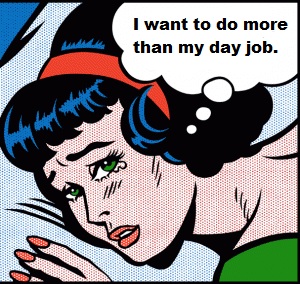
  • Do you long to do something in addition to what you do most of the time?
  • Are you hoping to ditch your day job after you get your big break in writing or music or acting or some other creative endeavor?

Coming Clean

Today my house is really clean and it’s my Sabbath and I just want to sit in it.

I am a Sabbath-challenged human being and the challenge is exacerbated when someone says this to me:

Church Guy:  I tried to reach you Friday but your voice mail said (insert chuckle here) it was your Sabbath (said like this:  SABbath in a Sarah Silverman voice.)

Yes, it’s my Sabbath and I will sit in my clean house and enjoy a good book.   Or I will nap.  Or I will bake things.  It’s yet to be determined as I write this post at 10:55 CT.

Cleanliness makes taking a Sabbath easier (which is why it’s a good plan to clean the house before our Sabbath and not on the day of.)  This is also true in congregations.  It’s good to come clean among our spiritual friends and I’m not just talking about vacuuming the dust bunnies under the pews.  Coming clean in church means

  • forgiving each other,
  • admitting we have enemies and then loving them,
  • sharing what we have for the benefit of people who cannot return the favor

I can’t do any of those things if I’m exhausted.  And so today I rest in my clean house.

Gossip Kills Churches

The author of the book of James wasn’t kidding.  Considering what people have said about Jesus for 2000 years – from the tempter  to Dan Brown  – it’s particularly interesting that these words came from a man that scholars believe was literally Jesus’ brother/half-brother.

The worst purveyors of gossip I’ve personally experienced have been church people.  This makes no sense to me logically or theologically.  Whole congregations of people who have stood up  and publicly proclaimed Jesus Christ to be their Lord and Savior on Sunday mornings barely get out of the church parking lot before sharing erroneous tidbits about people that can be life-ruining.

It’s a power play game, really.  In my current ministry, I see the firsthand devastation inflicted on individuals, families, and congregations by people who share lies as if they are truth:

– the pastor whose life is ruined because someone shares a rumor about her sex life or his finances, and it goes viral, especially if certain members see this as an opportunity to discredit the pastor,

– the elder who slips incendiary comments about the church treasurer’s honesty,

– the pastor who slanders a member in order to remove her from blocking his plans for the church.

How can followers of Jesus Christ do these things to each other?  People who sing “They will know we are Christians by our love”  and then fail to display self-control much less compassion.

We used to have notes on all the phones in the church building where I once served:

Is it true?  Is it kind?  Is it necessary?  It was a simple spiritual practice.

I’ve had to take church men and women old enough to be my parents and grandparents to the proverbial wood shed when they’ve shared erroneous information to hurt or discredit their brothers and sisters in Christ.  It’s embarrassing to do this, but it’s also essential.   We need to stop being “nice” in church and start speaking up when we see injustice – especially when it’s coming out of our mouths.

Kind of a preachy post today, but I’m weary of putting out those fires James was talking about.

Moral of the Day

This photo is in nobody’s Pinterest file.  It’s our kitchen ceiling.

Last January, the plumber had to cut a hole in our kitchen ceiling to replace a worn out pipe.  It was a mess but The Cleaning Lady from Heaven essentially Cloroxed our kitchen.  And then we needed to have someone else some repair the hole.

Now it is April and there is still a hole in the kitchen ceiling.  The weird thing is that I don’t even notice it anymore.  Friends from Virginia came to visit and said, “Wow, there’s a hole in your kitchen ceiling” and I said, “Oh, right.  There is.  We need to get that fixed.”  But office days are long and there’s work travel and Easter took a lot of attention.  But, yes, we need to get that hole fixed.  Honestly, I’m not even sure who to call for this.  (A plasterer?  A construction professional?)

The ecclesiastical moral of this story:  churches have had assorted versions of holes for years and we get used to them and don’t even notice, until an outsider comes in and notices the hole.  Churches’ possible responses:

  • We can’t afford to fix the hole.
  • We’re so used to the hole, we stopped noticing.
  • I can’t believe you’d offend us by mentioning the hole!
  • We’ll try to fix the hole ourselves, although we don’t really know what we’re doing.
  • Do you know anyone who can help us fix this hole?  And maybe re-paint, while we’re at it?

Happy Wednesday.

Measuring a Year in the Life of a Church

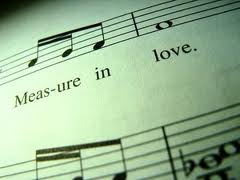
I find myself humming this song as I ask, “How do we measure a year in the life of a church?”

Some would say it’s about numbers.  An elder once challenged me (yes, just me – as if church membership was solely my responsibility) to “grow the church by 10% each year.”  My response was that I could probably convince people to join the church to make that 10% increase but that I’d rather have 1% new people with a longing to follow Jesus than 10% new people with mere pulses.

Some say it’s about new programs, new ventures.  I increasingly balk at churches that congratulate themselves with a long list of programs and mission projects in their annual reports.  I would rather serve a church with one single transformational practice than a congregation that offers an array of programs which have become institutional obligations.  I would rather serve a church that gives a large, life-changing  sum to a single mission  than a church that donates a hundred dollars here and two hundred dollars there.

So, I need your help here.  If you know of assorted instruments for measuring a year in the life of a church, please share those resources.  I hesitate to call these metrics “measures of success” because a successful congregation in God’s eyes often has little to do with worldly success.

What questions would you ask church leaders in order to discern if a congregation is “thriving” spiritually or if a congregation is merely “surviving“?

Here are some off the top of my head:

  • Can you identify an occasion in the last year when the congregation chose faith over fear?  Tell me about it.
  • Is the church living off an endowment or do the tithes and offerings of the congregation cover all expenses?
  • Can you name things your congregation tried that failed in the past year?  (Note:  if you didn’t fail at anything, you probably didn’t try anything new.)
  • Can you name ten people who were spiritually transformed in your congregation in the past year?  What did that look like?
  • Can you identify one person who was identified as a new leader in the past year, and then share how she/he is being equipped for ministry?  (Note:  this is a person who has never been a leader before in the life of your church.)
  • What hymnal does your congregation use regularly?  (Note:  Maybe you don’t use a hymnal.  Or maybe you are using a hymnal published in 1947.)  How does music glorify God in your faith community?  (As opposed to pleasing your own personal tastes.)

What questions would you add to this list?