Quiet Ministry Offerings

I left the house at about 10 am Sunday and returned at 5, having attended a church worship gathering and then a congregational meeting.  After the meeting, there was a Session meeting, and then I took some time to talk with concerned parishioners.  Like hundreds of other Sundays in my life, I arrived home barely able to speak another word.  I was done.

Myers-Briggs introverts, of course, might be able to stand up and speak before a crowd, schmooze throughout coffee hour, shift to focus on a youth project, and then lead lead an adult Bible study, but the way we re-fuel is to be alone.  We read.  We sleep.  We sit and stare into space.  We prefer one-on-one conversations.

Some say that clergy tend to be Myers-Briggs introverts.  Others say that The Top Three Personality Types for clergy all include extroversion.  The truth is that both introverts and extroverts can be church leaders.

One way, I believe, the church is changing and will continue to change is from loud, ringing, aggressive spirituality to a more reflective, devotional, conversational spirituality.  That’s not to say that we won’t sing with verve.  There will still be moments of noisy exuberance.  It just means that the needs are different now.  In order to nourish souls, the church needs to focus on meeting people’s spiritual needs.

Yes, we might offer a fabulous coffee hour, flawless worship choreography, and superb youth programs in terms of popularity and programming.  But if we aren’t feeding people’s souls, the church will become just another social or community organization.  In some cases, the church has already become merely a social, community organization.

But as our world continues to be filled with noise – from sirens and elevator music to talking and more talking – our culture will increasingly need space for quiet.

As I commute into the office on the train every day, I always look for The Quiet Car.   Absolutely no talking.   People even squirm when somebody sneezes.

Quietude is a treasured commodity, and the church can offer this like no other community.

So, here’s my question:  How would you compare the number of “loud ministry offerings” against the number of “quiet ministry offerings” in your church?  We in the church have the unique opportunity to offer a space for quiet devotion and reflection in a culture starving for time to process the meaning of our lives in the universe.

Some of our worship services include zero minutes of silence.  Perhaps we are so used to constant noise, that we don’t even know what to do during moments of quiet.  But we have got to figure out how to offer space for pondering the meaning of our lives and our suffering and our purpose.  The church is called to be this kind of community in the 21st Century.

Interesting read:  Quiet: The Power of Introverts in a World That Can’t Stop Talking.

There Goes Talbots

24/7 Wall Street – a financial news website – annually predicts the brands that will be extinct in the next 12-18 months.  They correctly predicted the demise of Blockbuster Videos in 2010 and Saab in 2011.

The original Talbots Store in Hingham, MA from where I ordered my very first pencil skirt in the 9th Grade.

Here are their predictions for some of the Top Brands that will go under in 2013:

  • American Airlines (Sorely inefficient.)
  • Research in Motion (As Adele might say, “They could have had it all” but they blew it.  So glad I ditched my Blackberry.)
  • PacSun (Maker of bathing suits that apparently nobody buys)
  • Avon (Even though Skin So Soft is an excellent bug spray “there is so much to fix.”)
  • The Oakland Raiders (There will be Raiders, but the won’t be in Oakland.)
  • Salon (Lost it’s top leaders.)
  • Suzuki  (Their cars apparently suck.)
  • Current TV (Called “a network with no future.” Ouch.)
  • Talbots (Kill me now.  I first wore cute Talbots clothes in high school when you had to order via catalog from the store in Hingham.   But the truth is that the clothes are dated these days.  Except for the pencil skirts.)

Talbots is part of my sartorial history and it pains me to think that I might have to find pencil skirts someplace else.  I remember the cute shoes I bought in high school.  I remember shopping there with my Mom when the stores moved south.  My husband always gives me something from Talbots every Christmas for old time’s sake.  Oh Talbots!

So, this is a churchy blog and there is a church connection here.

The 220th General Assembly of the Presbyterian Church USA meets in Pittsburgh in just over a week, and rumors of our denomination’s demise are a perennial topic of conversation.  Many are saying, for example, that if the GA passes the overture regarding same sex marriage, the denomination’s ultimate doom is sure.  Honestly, I am less concerned about this prediction than the fact that many of our congregations are stuck and – in some cases – dying.

My concern is not about avoiding extinction.  God will always have a church and The Church has shifted and changed dramatically through history.  Congregations – like denominations – have their seasons.

But if we are interested in generative congregational life, I suggest that we not go the way of the doomed brands identified by 24/7 Wall Street:

  • Efficiency in ministry is good.  Do we really need 10 committees for a church of 100 members?
  • Keeping up technologically is important.   Is our technology dated?
  • Are we offering something that nobody wants anymore?  (Note:  A sanctuary for peace and restoration will always be in demand. A religious club doesn’t interest most people these days.)
  • Avon had a long-term leader who drove the company into the gutter, at least according to business journals.  Do we have pastors who need to leave but won’t?
  • The neighborhood is key.  Does our congregation need to move?  Or – even better – change FOR the neighborhood?
  • Talented leadership – both paid and volunteer – is essential.  Are we equipping new leaders?  And if we like our leaders, we need to value  them and tell them (with words and financial compensation.)
  • Churches do not sell a product.  But we offer healing, hospitality, spiritual nurture, community, and opportunities for education and service.  Is what we offer excellent? Because God deserves our best.
  • Many of our congregations are stuck in the past.  How do we see our future?  Can we see a future beyond our own funerals?
  • Fresh, thriving, lively communities of worship beget new fresh, thriving, lively communities of worship.  Are we simply dated?  When was the last time our congregation did anything fresh?

Many people love to talk about the death of the church.  And it’s true that some brands of the Christian faith could be extinct in the next 12-18 months.  But it doesn’t have to be that way.

The Long Farewell

Now that I’ve been gone from my former congregation for about a year, I found recent wisdom from my friend Bruce Reyes-Chow who left his congregation about a year ago as well.

Check this out.

I am now the former pastor of two congregations.  I left the first church in 1989 – the year that Microsoft Office was first released and Nintendo sold their first Game Boy.  I left the second church in 2011 – the year that Facebook hit 500 million users and 175 million of us had Twitter accounts.

When I left my first church, the rules were to cut off all contact and that meant no phone calls or unannounced visits between former parishioners.  This was fairly easy since I moved four states away.

When I left my second church, the rules were more complicated.  Nobody was going to call me to ask about scripture suggestions for their wedding.  I accurately did not expect that someone would contact me for pastoral care or advice.  But I did ask about the common wisdom regarding staying connected with former parishioners through social media.

Is it okay to stay “friends” with former parishioners, even if you still consider them friends?

I was told to be smart about it.  Don’t talk about church life on Facebook.  Don’t cyberstalk your former church’s website trolling for news.  Don’t allow former parishioners to pull you into conversations about the new pastor.

After a year of staying friends with former parishioners, I’ve decided that it’s healthiest for me to de-friend my church FB friends.  This is legitimately sad because I love seeing the photographs of family.  I love hearing news of school and jobs.  But this continuing love expressed through social media makes it very difficult for the church to move on – especially after long term pastorates.

Even with this realization, there are other questions.  It’s not easy navigating boundaries when we can be connected 24/7 without picking up a telephone or hopping in the car.  But in my new position, part of my responsibilities involve helping teach what healthy boundaries look like.

I’m not sure the boundaries can be healthy if I’m still digitally connected to former parishioners.  What have you found to be healthy in terms of saying “Farewell” in a digital age?

Permission Granted

I’ve shared with some of you that early on in my current position, someone called me and we had the following conversation.  (Note:  I serve as an Interim Presbytery Staff Person.)

Caller:  I’m calling to ask permission to give our pastor a $5000 bonus.  She’s done a really good job during a difficult situation.  Who do I have to talk with to give her this money?

Me:  You can just give her the money.

Caller:  No, you don’t understand.  This extra $5000 is not in her regular Terms of Call.  Aren’t we doing something out of order?

Me:  No really.  Just give her the money.

Caller:  Don’t we need the Presbytery’s permission to give her this extra income? 

Me:  Nope.  She’ll need to report it to the IRS, but – really – you can just give her the money.

Presbyterians are law-abiding people.  We have rules.  We know the “shalls” from the “mays” in our constitution, and we increasingly love the word “ordinarily” because it infers a loop hole.

I find that many life-long church people have been programmed not to do what might be great for the church because it’s never seemed possible according to widely accepted rules.  Examples:

  • Worship can happen on Thursday nights.  Or Tuesday mornings. Or whenever you wish.  There is no rule that worship has to be on Sunday mornings.  (Our Roman Catholic siblings get this.)
  • Bible Study can happen in Denny’s.  Or on a playground.  Or in a circus tent –  if that space is available and convenient.
  • You can greet church guests in the parking lot.  You don’t have to wait until they get inside the building.
  • You don’t have to pass an offering plate during worship.  You could have a box at the exits.  You could invite people to mail it in.  If offering time is when your choir sings an anthem, you can actually pick a different time for them to sing the anthem.
  • You can give your pastor a $5000 bonus.  That would be fine.

If all these ideas are obvious to you, that’s reassuring.  My hope is that this means your congregation is indeed doing some of these things.

The job of denominational “Middle Judicatories” (e.g. Presbyteries, Synods, Districts, Associations, Regions, Dioceses) is not to be permission-givers but to resource, equip, and entrust ministry to our congregations.  At least this is true in traditions without bishops.

So, get out there and do something wacky like offer Sunday School on Saturdays, or offer Bible Study in a bar.  God has given us all permission, especially when shaking things up enhances our ministry.

A Lesson in Failure? Not Really.


For everything there is a season, and a time for every matter under heaven.  Ecclesiastes 3:1

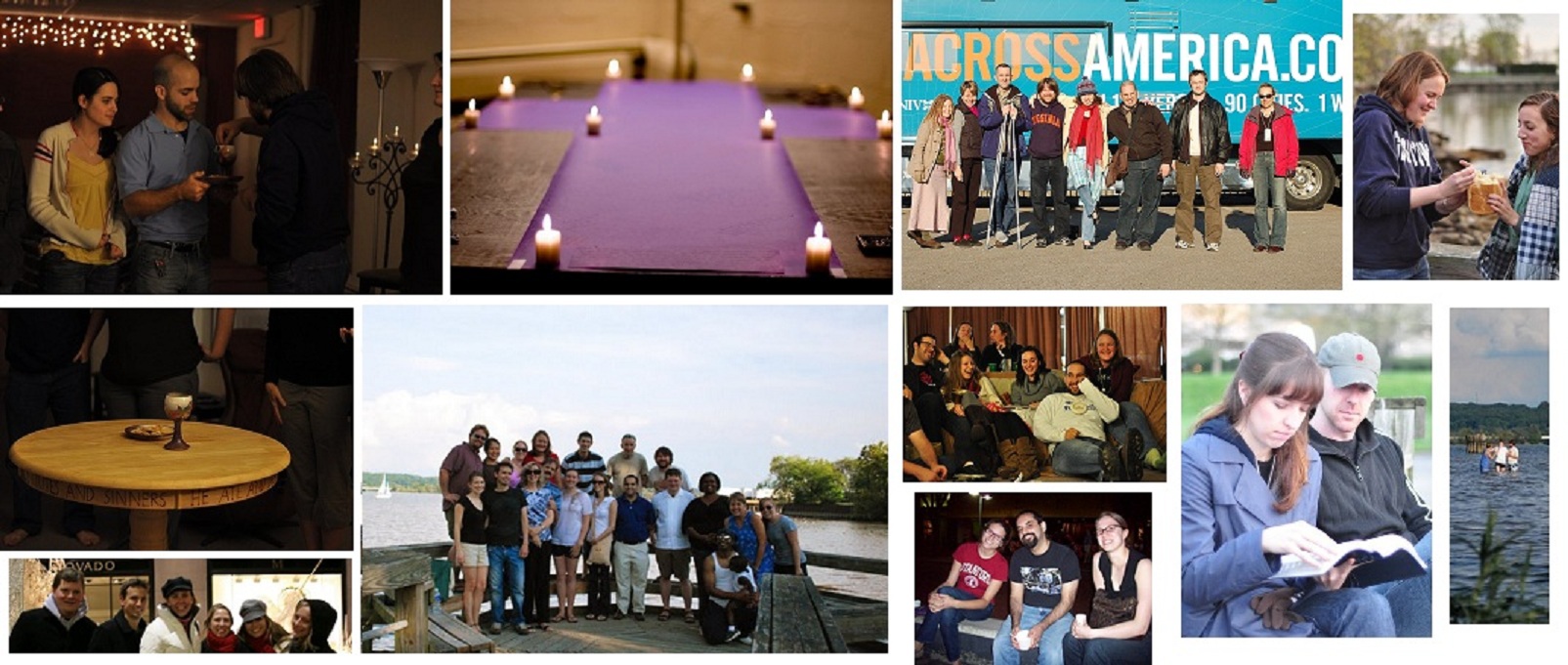
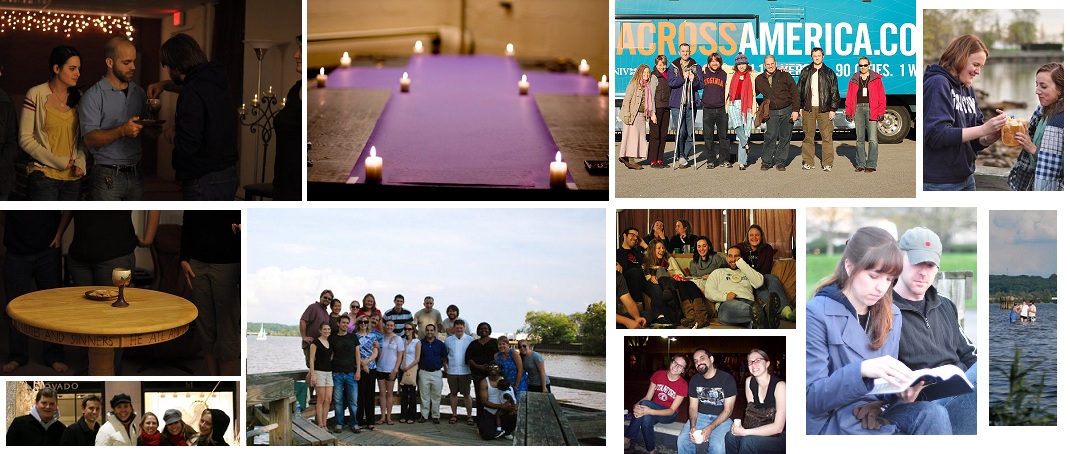
In the fall of 2006, a group of six church people met weekly to discuss Velvet Elvis together and dream of a church for people who would never come through the doors of our traditional sanctuary.  Several of us had been talking about this for a while.  The two rules for our planning were:  1) this wasn’t about us and the kind of church we wanted and 2) God could do whatever God wanted to do with this community.

On the first Sunday in Lent 2007, Holy Grounds was born.

While I was recovering from knee surgery, a team that included a submarine contractor,  a former Christian Educator, her boyfriend who wasn’t a part of our congregation, a decorator for Starbucks, a local musician, and assorted other volunteers built, painted, and organized the space that would become the gathering place for Holy Grounds which would meet in the lower level of a traditional PCUSA church building.  It was providential that I was incapacitated for the final preparations because I didn’t want this to be my thing as the pastor of the traditional congregation.  If it was really going to happen, we needed buy in.

Holy Grounds  shifted and changed over the next five years.  We started with a worship experience that used the same sermon as the 11 am service albeit with images on a screen and a more laid back ambiance.  We sat on sofas found on the side of the road, but our espresso maker was state of the art.  We occasionally enjoyed potluck dinners on Sunday nights – our regular worship time.  Worship was varied:

  • conversations in a circle with one person leading the content
  • prayer stations
  • book parties
  • film clips
  • music clips
  • a first year anniversary concert
  • a fundraiser for Haiti
  • commissioning people to go out and do ministry in faraway places

The group was always small and transient.  Exhibit A:  one of the services provided was moving friends from one apartment to another on Saturday mornings.  It was done so often that we had our own moving equipment.  The nature of DC is that nobody stays for long.  We sent people to Jordan, Germany, and Thailand, to Iowa,Texas, Ohio, New York, Michigan, Pennsylvania, Connecticut, and Illinois.  We came to perfect the notion of offering multiple portals into the community.  In fact several communities blended together occasionally.  Holy Grounds connected with Common Table and Convergence and Simple Way and the DC Community of Communities and the Community Coalition for Haiti.

But alas, the Sunday night gathering became smaller and smaller.  A paid staff member was not replaced after leaving in 2009. The rest of the community – filled with exceptional leaders – could not make the plans and the relentless connections needed to keep replenishing a community that lost people when they moved away.  The decision was made last weekend that HG will no longer meet on Sunday nights by the end of the summer.  This is not about blaming at all; it’s about the changing of seasons.

Personally speaking, I’ve never known a community of faith quite like this one.  Some of the Holy Grounders had been wounded by previous church experiences.  Some had no former church experiences.  Some had MDiv degrees.  Some were missionary kids or pastor’s kids.  Some just wandered in and wandered out again.  We even had people who are considered part of the community who rarely – if ever – came to the Sunday night gathering.

It was a community based on vulnerability and you can’t have community unless you are vulnerable.  (Do yourself a favor and watch this.)

Someone from the traditional congregation (the upstairs church) once expressed a concern that I spent too much time with Holy Grounds but the truth was that I spent 90% of my time with the traditional congregation.  It’s just that the 10% with Holy Grounds went a long way.  Worship was shared and so I rarely led worship.  No one worried much about appearances and so, if the candles had been moved or someone spilled a little coffee, it was not a problem.  When our content included lessons on how to care for someone when he/she is grieving or how much money should we be contributing, nobody got offended.

I remember one night when a new couple attended for the first time and the talk was about contributing money to the church, and somebody said, “They’ll never be back” but they did come back.  And they became leaders.

I remember the night two Holy Grounders got married and as we were all dancing at the reception, I looked at Matt and said, “Look what God did.”  The most wonderful feeling.

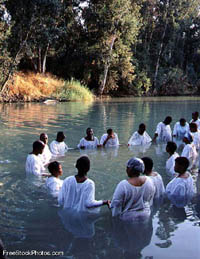
I remember baptizing Joanna in the Potomac River, which was so gross and yet magnificently beautiful.  (Note:  we had to walk halfway to Maryland through the muck to get to deep-enough water.)

I remember sunrise services on Easter with communion on that same spot at the Potomac.

I remember hilarious White Elephant Christmas parties.

But mostly I remember relationships.  That’s what a church is about really.  And those relationships will continue globally.

So, here is my long-winded message to all church people:  don’t be afraid to start something new.  Even if it “fails” it won’t be a failure if even one person was transformed.   By that measure, Holy Grounds has been an enormous success and blessing.

Let’s Stop Thinking of People as Targets

The dictionary defines “target” this way:

  • an object usually marked with concentric circles, to be aimed at in shooting practice or contests.
  • any object used for this purpose
  • anything fired at
  • a goal to be reached
  • an object of abuse, scorn, derision,

Even the name of the (wonderful) retail discount store was chosen to differentiate that chain from the other more expensive retail chain of the Dayton Dry Good Company.  In other words, they wanted to “target” people who desired upscale retail for less expensive prices.

In the church, we need to stop thinking of people as targets, as if we are aiming at them, zeroing in on them, firing at them, fulfilling goals through them, or – certainly – abusing them.  Let’s not do that anymore.

When I think of negative church experience people have shared, it often comes down to the fact that we Church People have seen visitors and guests as targets:

  • The single middle-aged woman who was invisible to church members for the first three Sundays she visited because she didn’t fit the targeted demographic (i.e. young family with children)
  • The person who attends worship rarely – often with a better known spouse or friend – who is greeted with “We sure don’t see you very often” (interpreted to mean that he/she is being judged for irregular participation and/or lack of commitment, faith)
  • The young family that is pounced upon as if someone has yelled “Fresh Meat!” because they are everybody’s #1 Most Sought After Demographic.
  • The unfamiliar “others” who don’t look like the rest of the congregation and are basically ignored.  (e.g. inter-racial couples, people of different skin tones, pierced and/or tattooed people in a congregation of unpierced/untattooed people – or visa versa, people not dressed like everyone else)
  • People in wheelchairs, or families with disabled children.  (Too much trouble; what if they expect special treatment?!  They are totally not our targeted audience.)

What if we welcomed people just because they are present with us, regardless of what they look like or how they are dressed or if they happen to have a pierced eye-brow or a partner of another race or a partner of the same gender or rowdy kids or a reclining wheelchair? Do we realize how hard it is for some folks to walk into a church building, especially if they have not done it lately – or ever?

Imagine if we saw guests as people like us – with issues similar to our own.  Imagine if we simply said, “Hi, would you like something to drink?  Or maybe a cookie?”  Imagine if we saw them  – not as targets – but as people who are trying to figure things out and hoping against hope that God and a community of people might help.

There is a huge difference between “targeting” people and being a missional church that reaches out into the community no matter what that community might be.  Let’s be a missional church.

Our Responsibility to New Christians

There was a young woman I used to know. She was a new Christian who decided to be baptized as a 20-something, and then she abruptly left the church after hearing two older, seasoned members of the congregation say ugly things about another church member in the women’s bathroom. Yes, she was immature, perhaps, but she was  a brand new Christian.  She didn’t think Christians Were Like That.

Remember what Paul said?

And so, brothers and sisters, I could not speak to you as spiritual people, but rather as people of the flesh, as infants in Christ. I fed you with milk, not solid food, for you were not ready for solid food. Even now you are still not ready, for you are still of the flesh. For as long as there is jealousy and quarrelling among you, are you not of the flesh, and behaving according to human inclinations? (1 Corinthians 3:1-3)

It’s a problem when new Christians expect their church – the spiritual community through which they’ve found their first holy community –  to be mature in faith and the church they have joined is filled with immature Christians.  There, I said it.

If we have ever:

  • Denigrated a brother or sister in Christ in a public place, and especially in a church building and most especially in a congregational meeting,
  • Gossiped in the presence of others, especially people in our church community,
  • Been the least likely person to be confused with Jesus

. . . then we have been irresponsible to the new believers in our midst.

Increasingly we who consider a church community to be our spiritual home will find that – in our presence – are new believers who did not grow up in the church. They don’t inherently know that:

  1. Church people can be mean, catty, greedy, power-hungry, and occasionally ridiculous.  And amazingly there is still grace.
  2. Just because people are in a spiritual community, we are still imperfect and fall short of the glory of God.

On the other hand, wouldn’t it be a fine thing for seasoned believers to show that all those years in Sunday School and Bible Studies and Worship Gatherings had matured them a bit.  I read the mission study of a church recently that had asked their members this question:

How much have you grown in faith through this congregation in the past five years?  A) very much; B) some; C) not much; D) Not at all.

Only 6% said they had grown “very much” and (wait for it) a whopping 80% said “not at all.”  My heart sank.  What have they been doing together?

On paper, they’ve been doing quite a bit:  regular worship, choir retreats, mission trips, Vacation Bible School, Circle Meetings, pot luck dinners.  But something was seriously missing.

Why do we want “new people” to join our congregations?  To add to the coffers?  To make it feel more crowded?  To make new friends?  Or to share life-changing faith with them?

These new believers and looking-for-hope people are watching us.  What are they observing/hearing/finding in our church communities?

How to Spot a Healthy Church

Repeat after me:  In a healthy church . . .

This is my basic mantra for congregations.  In healthy church, we don’t talk about each other in the parking lot.  In a healthy church, we don’t sabotage the decisions of our elders.  In a healthy church, we agree to disagree because we realize that not one of us has cornered the market on The Mind of God.  Yep.

Yesterday I wrote about dying churches.  Below I share my thoughts on signs of health because there are indeed healthy, growing congregations out there.

In a healthy church . . .

  • There is more emphasis on spiritual growth than programs. (Do the most well-known events in your program year focus on deepening the faith of the participants?)
  • The “Affirmation of Faith” new people outnumber the “Transfers” from other congregations.  (How many youth or adult baptisms have been celebrated each year compared to infant baptisms?)
  • Leaders are allowed to be leaders.  (Is the Pastor expected to be “the expert” or is the Pastor encouraged to equip others to be experts?)
  • People expect the best of their pastors.  (Do church members shred the pastor behind her back?  Do people assume that the pastor doesn’t know what he’s talking about?)
  • The congregation takes scripture seriously.  (Is the Bible ever used as an idol or a weapon?  Is questioning encouraged?  Are sermons preached on a wide variety of texts?  
  • Leaders can name several church failures from recent years.  (Is the church willing to try new things, even if they might fail?)
  • Leaders are mentally healthy, spiritually mature, and do not consider the church their fiefdom.  (Has the leadership changed much over the past 5-10 years?)
  • People laugh with each other and enjoy each other’s company.  (When was the last time the congregation had fun together?)
  • The church exists primarily for the neighbors.  (How much of the budget is spent sustaining only the congregation?)
  • The congregation connects with the culture while being counter-cultural.  (If you dropped your church in the middle of 1958, would it seem out of place?)
  • The congregation includes a variety of theological perspectives, demographic groupings, and political viewpoints.  (Is the congregation primarily conservative or liberal, tolerant or intolerant, hipster or old-school?)

Imagine a church that models what The Reign of God looks like.  For one thing, it would be the picture of health especially if “being healthy” means knowing what it means to really need Good News and what it means to really share Good News.

Do Not Resuscitate?

Moved by a link shared by MaryAnn McKibben Dana *on FB yesterday, I was thinking about the process of dying as it relates to the church.  All of us will die.  And while The Church of Jesus Christ as a universal entity will not die – I believe – congregations die every day.  Honestly, I observe dying congregations every day.  At the risk of sounding like a total pessimist, most of them don’t know they are dying.

I buried both parents in my thirties.   It was awful, and yet I agree that it would be harder to bury parents while in my 50s.  Worse in my 60s.  Unimaginable in my 70s.  It’s sad to lose parents at a young age.  But  it’s harder for the parents as they slowly, slowly lose their capacities in their ninth and tenth decades.   According to Michael Wolfe in “A Life Worth Ending” :

Seventy percent of those older than 80 have a chronic disability, according to one study; 53 percent in this group have at least one severe disability; and 36 percent have moderate to severe cognitive impairments; you definitely don’t want to know what’s considered to be a moderate impairment.

Wolfe also notes that the longer you live, the longer it will take to die.  This seems true even in Church World.

Only 68% of new church plants survive into their fourth year.  Presbyteries, Districts, Dioceses, and Associations (whatever the term of your denomination) might be quick to pull the plug if 1) they aren’t seeing “the results” they expected and/or 2) they are using dated metrics and don’t give a new missional community a fighting chance.  This blog post by Cameron Trimble is required reading for all of us who work in the church in terms of how we should be measuring growth in the 21st Century Church.

I spend a lot of thought and prayer these days on what to do about the congregations I staff that struggle with limited capacity for the ministry they once enjoyed.  Some are in a state of denial.  Some have been neglected.  Some dwell in what could be called “assisted living.”  Some fall below a “quality of life baseline.”  Some churches are “dwindlers;” they are slowly, slowly dying but no single precipitating factor will end their lives. And there are others who will not survive a crushing blow – the roof caves in, the pastor dies, the town dries up.

Sometimes is just time to die.  And yet, our churches usually do not want to die.

We human beings prepare for death by signing advances directives or living wills and yet when we are staring death in the face, an energy kicks in and We Want to Live.    Even Jesus had this moment.

How do we help congregations deal with the realities of lost capacities, the inability to rouse themselves, the increasing dependence upon others to do everything for them?  Do we pull the plug?  Do we abandon them?  Do we let them continue to dwindle?  After congregations celebrate their 75th, their 100th, their 175th anniversaries, it’s harder to close them – even if they are merely in palliative care.

Or we could let go and allow death, and then resurrection, to happen.

I don’t know where my parents are – in literal terms.  But I trust that they are safe and at peace in the presence of God.  I don’t know what will happen to our dying congregations, but I trust that something new and unimaginable is before us.  Note:  some of our “healthy” congregations are dying and I would love to give them a heads up so that they’ll make healthy choices for the future.  Again, please read Cameron Trimble’s “new scorecard” here.

Do we spend our time and treasure trying to resuscitate congregations?  Or do we let them go?

*And do yourselves a favor and pre-order MaryAnn’s new book Sabbath in the Suburbs due out in September.  You will be so glad you did.

Are We Really Saving the World? (Probably not)

As I’ve shared in a previous post, The Presbytery of Chicago offices moved to a lovely new building a few months ago which is shared with various other computer firms, non-profits, and academic offices.  Each time I meet someone new on the elevator, we have a brief chat about where we work. 

Last week, a guy in the elevator asked me where I worked and after I told him he said, “I was hoping to run into somebody from your office!  I saw your sign and have been wondering what you people actually do.”  And I said – with a straight face – “Actually, we save the world.”

It was good for a little laugh at staff meeting, but I was not being completely facetious.  I believe that what we do brings a glimpse of the Reign of God (i.e. Saving the World) into view.  Or at least it should.

I moved to Chicagoland from the city that is known for its variety of Saving The World Jobs:  every non-profit working against human trafficking, homelessness, poverty, AIDS, cancer, etc. has a DC office.  Young Americans flock to The Hill to save the world through government.  Others serve through the military.  The neighborhood where I lived in Northern Virginia was filled with former Peace Corps volunteers, women’s health advocates, embassy workers, and teachers.   We were all trying to save the world in our own little ways.

Many of us become cynical and bitter quite quickly.  Our efforts are sabotaged by bureauracies.  The movements forward are baby steps. 

But – I still believe – whatever it is we do to make earth as it is in heaven is worth both the long slog and the swiping away at red tape with everything we’ve got.

My job is both bureaucratic and pastoral.  I have endless rules to serve within, but some of those rules are self-imposed.  Manuals can be changed – and should be – if they bind us in stiffling ways.  Rules are meant to set us free, if they are set well.

A good day for me is when:

  • Somebody’s call is affirmed and celebrated
  • People are comforted, held accountable, inspired, and/or enriched
  • Enemies are reconciled
  • Individuals find holy relief
  • Somebody new “gets it”
  • A vision is cast
  • A vision is acted upon
  • God pops me in the head and reminds me that I don’t know everything

Happy Monday and blessings on whatever Saving the World activities you are about today.