The Goat We Scape May Be Our Own

The goat you scape may be your own.  Suzanne Ross, The Raven Foundation

Just yesterday, some NAACP members booed Mitt Romney during his speech to them.  And then some Republicans accordingly vilified the NAACP for their rude behavior.  Earlier in the day, Democrats vilified Republicans for attempting to repeal The Affordable Care Act  for the 33rd time. But Republicans filed this repeal once again because they blame Obama and “Obama Care” for many current and future woes.

We scapegoat each other.  

Especially in this election, we will endlessly hear that electing Obama again will Ruin Our Country.  Or electing Romney will Ruin Our Country.

We blame that one parishioner for making our lives miserable.   And, God knows, pastors are often blamed for everything from lower attendance numbers to budget deficits to random program deficiencies.

A coach gets scapegoated for a losing season. Immigrants are scapegoated for local crime.  Older generations are blamed for bringing younger generations down. Younger generations are scapegoated for destroying everything.

Liberal Christians get scapegoated for “people leaving the denomination.”  And so are Conservative Christians.  I’m weary of it.

We can’t get through a single day without blaming other people for the troubles of the world – personally, professionally, politically, and globally.  Although I am new to the ideas of mimetic theory, it’s intriguing to consider how we mimic the behavior we see in others, even if that behavior repulses – or at least frustrates – us. 

  • We blame others for the very things we do.
  • We criticize others for characteristics we share with them.
  • We demonize people for taking a fanatical stance, when we take similar stances in the other direction.

And all this leads to violence, brokenness, and devolvement.

I believe it is quite possible for people of opposing beliefs to be the church together.  It’s exhausting, labor intensive, and supremely frustrating.  But I agree with Brian McLaren’s premise here:

Why did Jesus cross the road?  To get to the other.

The goat we scape may not only be our own.  That goat is a part of us.  Does this make sense?
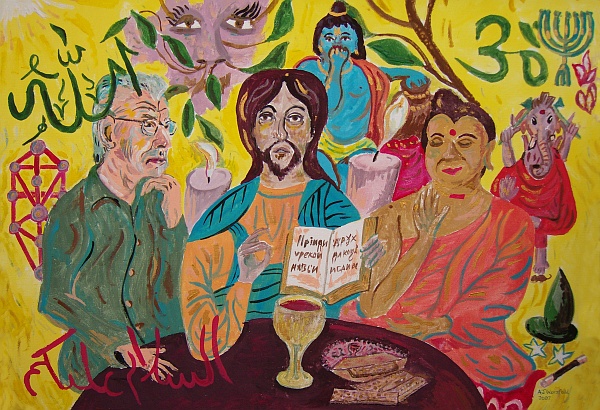
Image Source.

Misunderstandings from My Youth

I grew up believing that if we disagreed with someone, we subsequently didn’t like them.  In fact, we might even wish them more harm than the usual schadenfreude.

Apparently many children grow up with this misunderstanding.  When President Reagan was shot, I remember one of my seminary friend’s young daughters said – knowing that her mother was no fan of Reagan – “We’re happy he got shot, right Mom?”  Her mother was horrified.

I was taught as a young Christian that it was our duty to seek the conversion of others to Christianity, even if they were already devout Jews, Muslims, or Hindu.  Maybe we should even hate them.

My church did not teach this.  I think it was a cultural expectation.

I see this all the time, which is increasingly problematic as our culture is increasing less Christian and more multi-faith or secular.  How do we live as faithful Christians while working alongside, befriending, loving those of other faiths or no faith? I’m looking forward to Brian McLaren’s new book due out September 11, 2012 which will address these issues.

Eboo Patel’s Interfaith Youth Corps strives to teach youth and young adults how to live out their faith while respecting the faiths of others – without vilifying them or trying to convert them.

This is one of the teachings we in the church need to learn and perfect as well.

Even within our own faith, respecting the faith of Christians who disagree with us   requires finesse and unconditional love.  My sister in faith who was quoted here (the “shame on us” sister) is the first on my list this week.

Source of image.

Girlfriend Wisdom

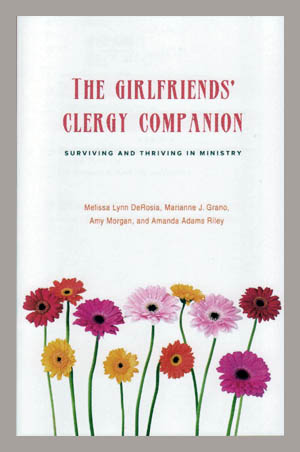
Amanda Riley was signing books at GA 220 last week and I took a quick glance at the book she wrote with Melissa DeRosia, Marianne Grano, and Amy Morgan and thought, “Why didn”t we write this book a couple decades ago?”  Actually, this is better than any book I could have written.  It’s thorough – with information for young married, single, solo, associate, pregnant, and/or exhausted clergywomen. 

I was once a young single clergywoman (ages 27-31) and then a young married clergywoman (age 31), then a pregnant clergy woman (32, 34, 36), and then a clergy mom (the rest of my life) and this resource would have been mighty helpful to me and my clergy girlfriends.  Today, as I work with an broader spectrum of seminarians (variety of ages and backgrounds) this is still a great resource.

Attention Commissions on Preparation for Ministry: this book should be given to all women seminarians preparing to serve the parish.

Attention all Pastor Nominating Committees and Church Personnel Committees:  this book should be read by at least one person on your team to that you have a glimpse of what it’s really like to be a pastor – especially a female pastor.

One thing I would alter:

  • The use of the word “minister.”  I am (obnoxiously) adamant about using the terms “pastor” or “clergy” or “professional minister” to describe what we do, rather than the word “minister.”  To call a pastor “the minister” is ruinous to the concept of the priesthood of all believers and the notion that a pastor’s job is to equip God’s people for ministry.  We are all ministers.  We do ministry in gardens, in grocery stores, on street corners, on tractors, in classrooms, etc. etc.  You know this. The long-term destruction to congregations and everyone’s daily theology that comes from calling the clergy “the minister” comes from a 1950s mentality.

So, there you have it.  Buy and read this book.  It’s beautifully written and full of wisdom. 

The best wisdom I received before my ordination, which I didn’t find in the book and which is especially helpful for single pastors living in small towns: 

At the end of the interview, when the committee asks, “Do you have any questions or comments for us?” you say this:

“Because I am single and don’t know anyone around here, sometimes people will visit me at the manse.  Some of them will be family and some will be friends. Some will be married and some will be single.  Some will be male and some will be female.  I just want you to know that it will be important for me to have people visit me.”  This suggested statement (thank you CMD) made life extraordinarily easier for me as I served in a small village of 700 people in a manse on Main Street.  People came and went and nobody said a word except, “I see you had company.” 

It really helped.  And this book will help you or someone in professional ministry that you care about.

Is Our Liturgy Working?

All of us have life liturgies which serve to teach and transform our lives.  Example:

Young parent:  (to preschooler)  What do we say when someone gives us a
present?

Preschooler:  Thank you!  I love it!

(Imagine how often this needs to be repeated before Preschooler knows this without thinking.)

Another example:

Worship Leader:  The Lord be with you.

The People:  And also with you.

Some faith traditions have elaborate liturgies and others seem to be non-liturgical, although even the Quakers have a liturgy. (Organized silence.)

Brian McLaren’s morning talk last Monday touched on the issue of liturgy that doesn’t work.  If I am a mean person before worship and I am still a mean person after worship – after being guided by a particular liturgy with my faith community – then the liturgy is not working.

Example (From the PCUSA Liturgical Resource written in 2011 to be used after the passage of Amendment 10-A)

Merciful God, through your Spirit of grace and power, you have called us together as the body of Christ. 

Yet we have fallen short of demonstrating our visible oneness in Christ. We have damaged your church, created factions, and caused harm by stereotyping and demeaning one another.

Forgive us, Lord.
In this time of change within the church,
draw us closer to you and to one another.
Help us to look beyond our differences
to see our common calling in and through you
to proclaim the gospel in word and deed
to a world in desperate need.
We pray in the name of our risen Lord, Jesus Christ. Amen.

This is a beautiful prayer that requires attention and intentional reflection.  If we pray this prayer and then – during coffee hour – we stereotype someone without blinking or we demean the nursery worker without feeling a twinge of discomfort, the liturgy hasn’t worked for us.

It’s not that the liturgy isn’t lovely; it’s that it didn’t work.  We couldn’t connect with it.  We went through the motions without engaging.  We didn’t get it.

Good liturgy sticks with us throughout our daily routines, by the grace of God.  I might say something catty or mean, but then I feel kind of sick inside, because didn’t I just ask God to help me with that just the other day?  That sick feeling is God helping me stop it.

Is the liturgy by which we live and worship transforming us?  Are we paying attention to the words we speak on Sunday mornings/Tuesday evenings/Thursday afternoon?  We need to be more mindful if we are going to do what Yena advised us to do this afternoon. (Here’s the link.)

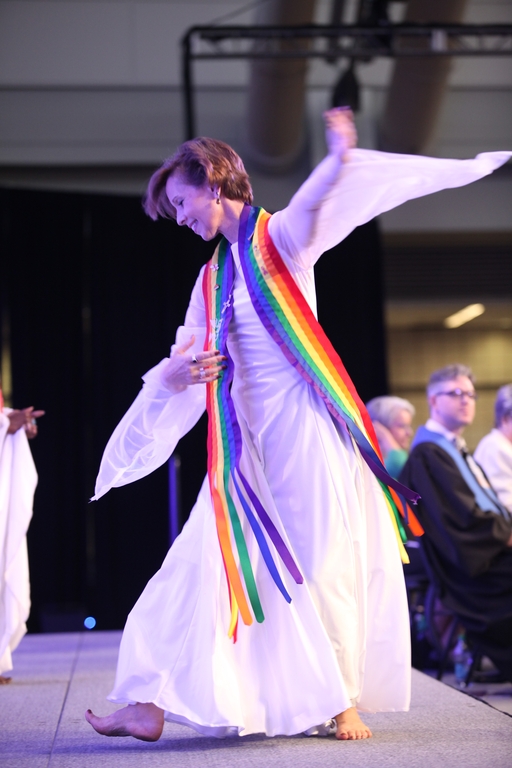
Photo of a lovely liturgical dancer at the Opening Worship of the General Assembly of the PCUSA.  Liturgical dancers usually don’t do much for my transformation, but it was an especially apt feature for that worship gathering.

Gone to the Beach

Friends:  I’m headed to Rehoboth to celebrate General Assembly from afar.  More posts next week.

Brian McLaren Helps Us Understand

It’s been a Brian McLaren Day at General Assembly with lots of new ideas to ponder.


Brian at breakfast:

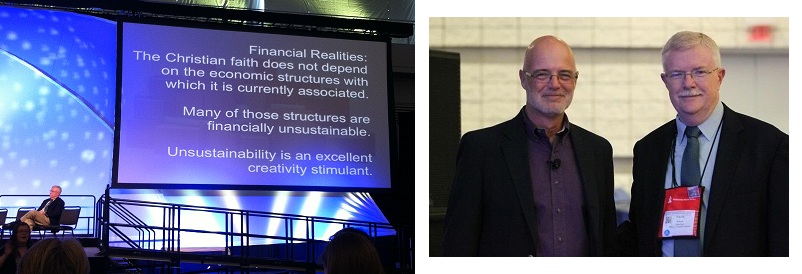
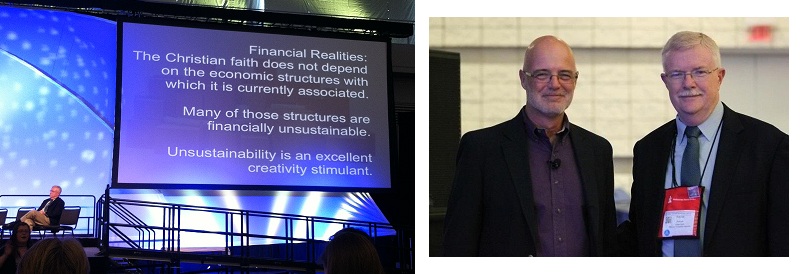
“The Traditional Protestant Identity” has involved Hostility (who/what we are protesting), Polity (How we’re properly structured), Legitimacy (What makes us superior) and Distinctiveness (What makes us different.)

“The Emerging Pro-Testifying Identity” is Affinity (What we love and value), Harmony (How we network to everyone), Fidelity (What makes us authentic), and Utility (What difference we make.)  Amen to that.

Brian at lunch:

He elaborated on a morning topic of the need for Institutions and Movements to work together.  We need both priests (Institutions) and Prophets (Movements) to be the future church.  Leaning too heavily on one or the other creates problems.

Brian in the afternoon (addressing Presbytery Staffs):

We must be organized for doing mission – not for governing.  Start with what is needed and then set up policies.

(I think of the church personnel policy I once served under that forbid people to bring dogs into the building.  Random.  And not exactly a pressing issue.)

My job as a Presbytery Staffer is to be a Launcher, not a Gatekeeper.

In summary:  It’s been a great last day of GA.

Tomorrow: The beach for some essential debriefing.

Images are of  1) one of the morning presentation slides and 2) Brian McLaren and Gradye Parsons, Stated Clerk of the PCUSA

Tips for Getting Things Done

I’m at the 220th General Assembly of the PCUSA and am reminded that God so loved the world, God didn’t send a committee.  And yet working with committees/groups/teams is crucial for including multiple perspectives,  sharing the responsibilities,  and holding each other accountable.

Whole books have been written about Getting Things Done.  But here are some thoughts I have after just a couple days at GA.  If you want a team or committee to get things done, try this:

  • Do not fill a committee or council with people who represent specific demographic or interest groups. Albeit all racial/ethnic/age/special interest groups have passionate ideas to support and achieve their vision.  But we need people with passion for the whole vision – not just the vision of disparate groups with individual agendas. For example, we want people with a radical passion for new church development because they all believe that Jesus commissioned us to make disciples of all and to love our neighbors as ourselves.  Note:  I also believe it’s a mistake to have a congregational council/Session made up of the Chairperson of Mission, the Chairperson of Christian Education, the Chairperson of Stewardship, etc. because it makes the elders push their individual ministries rather than the ministry of the whole church.
  • Expect the best of volunteers because God deserves no less.  Yes, people are not getting paid to study issues, attend meetings, read articles, listen to stories.  But it we are going to serve, we need to serve with energy, intelligence, imagination, and love – like we promised.  (Even those of you on the Review of Biennial Assemblies Committees.)
  • Make it fun.  My colleague B. joyfully ordered personalized water bottles for our commissioners.  Some of us wore green wigs to a party last night as a tribute to another friend for a job well done. (It made sense to us, but maybe you had to be there.)  Make it a party.  Or at least finish with a party.

This is the Mother of all meetings every other year in my denomination.  I am praying that many faithful things get done.

Photo by Erin Dunigan.  See more here.

Headed to General Assembly

I head to Pittsburgh today to join my PCUSA brothers and sisters for the 220th General Assembly, which is part denominational Congress/part family reunion. It’s my first GA as a Presbytery Staffer and I’ve been told that my role is to connect with people.  Excellent.

While the Commissioners vote on everything from a new moderator to overtures on divestment, I will be having lunch with a favorite theologian, coffee with someone interested in Third Place Ministries, and wine with friends celebrating the ministry of the current Moderator.

What I expect to happen:

  • The press – if they cover General Assembly at all – will cover same sex marriage and divestment (because those are the most controversial and ostensibly the most interesting topics) but barely mention the election of the new moderator or changes in the Board of Pensions policies.
  • Presbyterians will geek out on things that nobody else in the world cares about.  In other words, we will enjoy a sentimental journey connecting with old friends and colleagues, some of us knowing each other long before denominations had become culturally diminished.
  • The usual party favors will be handed out in the convention cent, but – due to the economy – there will be fewer water bottles and more pencils.
  • The Spirit will be present.  Theological enemies could leave at the end of the week as friends.  Scales could fall from eyes.  Trust in God could be bolstered.

This last expectation is my favorite, but it’s easier to get pumped up by free water bottles.  It’s easier to sit with our favorite people and demonize our least favorite people.  But I ask for your prayers today for lives that will be changed this week.  And I’m not just talking about the elders who will be elected as Moderator and Vice Moderator who will spend lots of time on planes in the next two years.

Peace be with us.

Things That Make Me Feel Old

I like my neck just fine.

But apparently a day will come when I won’t.  I remember a church lady tell me one Sunday how fortunate I was that I could still wear blouses that reveal my neck, so it really must be true:  something terrible will happen to our necks if we live long enough.

Here are other truths:  1) I actually prefer turtlenecks and 2) I am a middle-aged woman who is slowly dealing with the whole aging process.  The aging is not happening slowly.  I’m just dealing with it slowly.

I was reading this review  by Scott Mendelson of the movie Ted– the one with the talking Teddy Ruxpin – and this line made me feel old, and a little annoyed:

“Our generation defines itself not by the historical events of our lifetime but rather by the entertainment we consumed as we grew up.”

Really?  Scott Mendelson is 31 years old which means he was born at the end of Generation X and on the cusp of the Millennial Generation.  He was about 14 when 168 people were killed by a truck bomb in Oklahoma City.  He was about 16 when the Dolly the sheep was cloned in Scotland.   Yes, there were memorable entertainment offerings along the way – but is his generation really more defined by Jurassic Park and The X Files than 9-11?  Maybe, but I don’t think so.

One of the things that makes me feel old is when younger generations claim to be the first to do or be something when that’s not necessarily the case – unless you were born before the early 1990s and you have always been digital.   Those people really do have different brains from the rest of us.

This also made me feel old yesterday:  I had a Mean-Lady-Neighbor-Moment on the way to the train station when I got all bent out of shape seeing candy wrappers dropped along the sidewalk by  – I suspect – young menaces. There was a trail of individual Starburst wrappers all the way to the train.   (See?  I sound like one of those cranky old ladies who shakes her fists at kids chewing gum as they walk past the house.)   Somewhere in my neighborhood, there is a kid who polished off an entire sleeve of Starbursts and refused to use a trash can for the wrappers.  This makes me feel old and snarky.

Finally, I’ve noticed that I am increasingly invisible to the world.  Mid-50s.  Average looking.  Basic clothes.  No flashy jewelry.  In a way it’s fine to be invisible.  But sometimes it’s annoying.  I’ve been in shops with my 20-something kids or friends and no one acknowledges my presence.  I don’t need them to believe I’m attractive; I just want to pay for my drink.

I share all this in preparation for my travels to Pittsburgh on Friday.  Along with hundreds of my church friends and colleagues, I’m headed to The 220th General Assembly of the Presbyterian Church USA.  My hope is that everybody there will be generations younger than I am.  It’s one situation in which I would love to be among the oldest ones.  The irony is that – when I am the youngest person at church functions – I feel especially old.

Note:  I didn’t love the book pictured above, but this is a good one.  Excellent Key Lime Pie recipe.

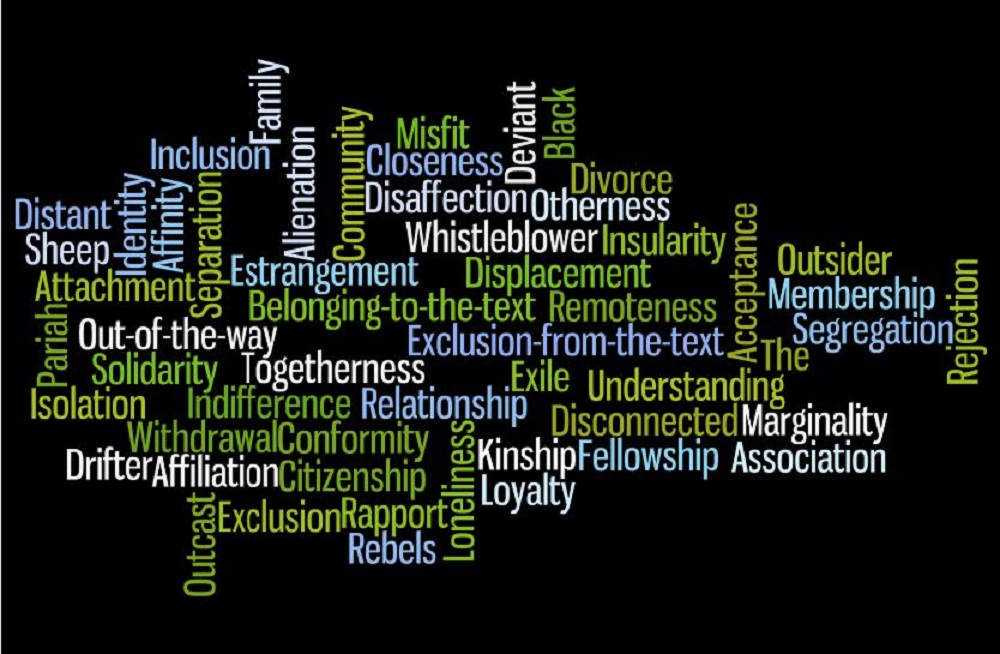
Statements of Belonging?

In life and in death, we belong to God.

One of my brilliant colleagues suggested yesterday that – if we are trying to shift to a Belong-Behave-Believe orientation (from Believe-Behave-Belong) then maybe we should ask those preparing for leadership in the church to write A Statement of Belonging before writing A Statement of Faith.

New church members, confirmands, seminarians, those seeking ordination, and other church leaders are familiar with writing our own Statements of Belief.  The Apostles Creed in our own words, if you will.

But I’m intrigued by the notion of starting our affirmations with A Statement of Belonging.  How do we belong to our faith community?  Why do we belong?  To what do we belong?  This kind of statement would clarify several other questions:

  • Are we connected only to the pastor?  If so, then can we really consider ourselves part of the community?  Will we expect the pastor to be our primary spiritual mentor (because honestly it’s impossible for the pastor to be everybody’s spiritual mentor in a church.)
  • Do we understand who we are in The Body of Christ?  Do we have a sense of purpose in our community?  Are we appreciated for who we are?  Have people noticed and encouraged our gifts?
  • How do we see membership?  Is it about having our names on a list or roll, or is it about something else?
  • Does this community nurture us spiritually?  How are we fed or connected to the Holy or loved unconditionally?
  • How do we live out our commitment to this community?  And how does this faith community show its commitment to us?
  • Do we trust this community enough to be vulnerable?  Am I willing to share my failures and hurt along with my successes and joys?  And do I disclose these things only to the pastor?
  • Are we willing to allow the community to hold us accountable? Do we trust at least one person in our community to let us know when we are being mean/stubborn/fake/selfish?
As connected as we are in terms of social media, so many of us are still isolated and lonely.  If we are going to welcome others into our congregations, we need to know how we ourselves belong.  What do you think?

Image source: Words of Belonging and Exclusion