Mean/Stingy/Abusive Christians

One of my favorite parts of Velvet Elvis is the story about people leaving the church parking lot feeling cranky because it was crowded and it took too long to exit.   Rob Bell announced the next week, “If you are here and you aren’t a Christian, we are thrilled to have you in our midst.  We want  you to feel right at home.  But if you are here and you’re a Christian and you can’t even be a Christian in the parking lot, please don’t go out into the world and tell people you’re a Christian. You’ll screw it up for the rest of us.”

Ask anybody who has left the institutional church and they will regale you with stories about:

  • mean people
  • stingy people
  • abusive people 
  • bullies
  • people who miss the point

Hypocrites are the least of our problems.

Some of us – institutional church people –  find ourselves in the throes of church conflicts or divisions, or even churches leaving their denominations over theological differences.  It’s exhausting.  And it’s distracting from what we are supposed to be doing.

Christians disagree with each other and with others who are not Christians.  Nevertheless, Jesus said something about loving our enemies which includes people with whom we disagree and/or don’t like very much.   It’s rather outrageous to observe people who self-identity with the One who said, “Pray for those who persecute you” and yet they proceed to shred their their pastor behind their backs.    It’s rather stunning to hear people engage in ugly parking lot conversations about other members of their own faith community.  I have personally observed:

  • church elders laughing during prayers for their pastor
  • a church leader making fun of his pastor’s desire to take a day off
  • one pastor denigrating another pastor on the same staff during a church meeting
  • a church leader sabotaging another church leader’s reputation

It’s enough to make me wonder why we we stick with  such congregations.  And yet, we can be healthy churches.

Healthy churches hold each other accountable and seek reconciliation.  And my job involves trying to help congregations become or stay healthy.  Sometimes it’s tiring.
And Speaking of Call . . .

I read this article yesterday and can’t get it out of my mind.  

Really.  Abdellah Taïa has been on my mind in the same way that I was haunted by Hassan in The Kite Runner – only Abdellah’s story is not fiction.

This is how God’s call works.  When we can’t let something go that stirs us, troubles us – this is how God tells us to serve in a new way.

Abdellah Taïa grew up as a Muslim in Morocco – a child who was different.  He was gay in a culture where even your family would not protect you, where nobody would dare save you from violent, ignorant men who came to your house in the night.  As I read his article in the NY Times, all I could think about was that – if only Christians were there –  he would be saved.  This is what we believe as followers of Jesus.  Or at least this is what I believe Jesus taught us.

Sadly, 91% of young non-Christians and 80% of young churchgoers say that Christianity is “anti-homosexual” according to a 2007 Barna study.  Where do they get this perception?  They get it everywhere.

There are many of my brothers and sisters in Christ who would condemn Abdellah exactly like his Muslim community.   And this makes me crazy – that people who share the name of Jesus with me come to this conclusion either because of their interpretation of Scripture or “what they’ve heard” Jesus says about homosexuality.

So here is my new calling (and note that 1- calls change seasonally and 2- we can have more than one call at a time):  I want people like Abdellah and his family and friends in Salé, Morocco and all those who believe that God hates GBLTQ people to be saved from that heresy.  I have believed condemning GBLTQ people is a heresy for a while now – frankly after some wrestling with God.  But perhaps God is calling me to do more.

What situation is gnawing at you that God might be calling you to help make on earth as it is in heaven?

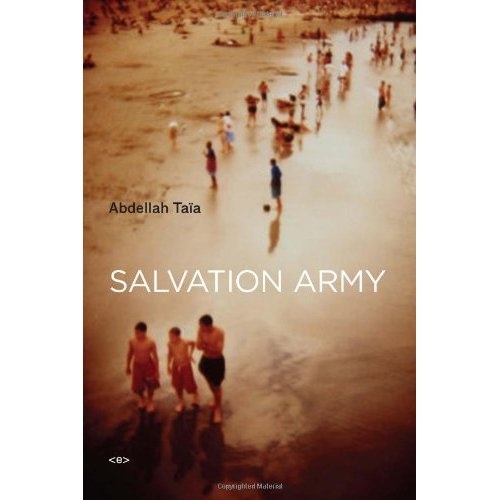
Image is the cover of Abdellah Taïa’s book Salvation Army.  When Abdellah left Morocco in 1998, he stayed at the Salvation Army hotel in Paris and found angels there.  Also, do yourself a favor and watch this.

The Cost of Following a Call

Come, follow me
Matthew 4:19

I believe in The Call.  I believe God calls some to pick up and go serve far from the familiar, while others are called to serve the exact neighborhood where we happen to live.

In this economy, and perhaps even when the economy is strong, I watch professional ministers look for the best paying job rather than a “call.”  A friend once told me that following a true call is a luxury he can’t afford.  He needed to provide for his family and so he took the most financially lucrative job he could find.

I understand this, practically speaking, but there is nothing quite like serving a community where the call to be there is abundantly clear.  I don’t ever want to be in a place where I haven’t been called.  It’s too hard on my soul.

Several friends and I were talking recently about The Cost of Our Call.  What if we’ve clearly been called to a place where the whole family has to move to a new part of the world.  Kids are plucked out of schools they love.  Spouses have to leave their own jobs and leave pensions behind.  Maybe we can’t sell our homes or we must leave close friends and family.  There is often a great cost when we follow God’s calling.  To a person, this group had paid a high cost when they’d followed where God had led them.

Years ago when two missionaries  were kidnapped in Afghanistan, a friend commented that they were asking for trouble by going to a place like Afghanistan.  I remember thinking, “But what if they were called there?  What if that voice whispering in their ears or that deep urge they couldn’t shake made going there irresistible?”  Nobody with a Bible can dispute that God sometimes calls people to go to dangerous, unfriendly places.

Like Elder Price in The Book of Mormon, we might long to be called to Orlando, but sometimes God calls us to Uganda.  Or maybe we are truly called to go move to Orlando.

Are you finding that you and the professional clergy you know are following authentic calls or are we simply taking positions that we can live with?  Hope you’ll share.

Secular Christians, Jews, & Muslims

I’ve shared before that I have a friend who is a kosher-keeping Jew but she doesn’t believe in God.  She is lovely.  She is raising her children in the Jewish faith in terms of traditions and cultural identification, but they also know that Mom doesn’t believe.  This article by Mira Sucharov speaks to some of this.

Over the weekend, I was asked about the faith of my own young adult kids.  “Do they practice their faith?” I was asked, and my answer was “yes” although they are still navigating the institutional church part.  I returned the question to the young man who asked, and he shared that he wasn’t sure what he believed, but he wanted to raise his kids in the Jewish faith if he one day was married with children.

I know people who self-identify as Muslims but do not practice their faith even during Ramadan.  I have many, many friends who self-identify as Christian but they never gather for worship with other Christians, nor do they read their Bibles or talk openly about their faith.  What they love about the faith is more about sentimentalism and family traditions.  They fondly remember relationships with older couples who were like their grandparents.  They loved their family tradition of attending worship together on Christmas Eve.  They have warm memories of their own Vacation Bible School experiences. 

But they do not practice spiritual disciplines.

It’s almost easier to make the shift from non-believer with no religious upbringing to devout believer than to make the shift from cultural believer to devout believer.  So many of us self-identify as something, but it’s in name only.

Do you agree?

Reality

It’s good to be home after a week of study leave and then a weekend of NCAA
basketball.  The basketball was a fun break replete with crushed seeds and broken brackets.  And study leave was a feast of spiritual and theological conversations and idea-sharing.

One great idea from B. for a preaching series:  Reality.  Or actually: Reality TV Shows.

Even if we don’t watch Reality TV, the sermon ideas are endless.  Just check this out and let your imagination go.

Big Brother (The Parable of The Prodigal Son)

Biggest Loser (Palm Sunday)

So You Think You Can Dance  (Miriam)

Wife Swap (David and Bathsheba)

The Voice (The Baptism of Jesus)

Many of us are excellent at distracting ourselves from those things we don’t want to think about or grapple with in the reality of our lives.  Maybe we watch basketball games.  Or maybe we watch Reality TV.  But we all reach a point when we crave something real that helps us make sense out of life.   The irresistible truth about Christianity is that we believe God entered  – and continues to enter – real life.  It makes me want to get back to work in the morning.

Image was seen in Indiana on the way home Monday.

March Madness

My birthday celebrations this weekend have included seeing some extraordinary NCAA basketball.  We saw four regional games yesterday in Greensboro, N.C. that some have called the best series in NCAA history.  Upsets.  Buzzer beaters.  Stunning victories.  Heart-wrenching losses.  But, hey, it’s just basketball.

The March Madness that really matters involves Syria, Kony, Europe’s Debt Crisis, The Global Water Crisis, Sudan . . .

The list of world crises are endless.  And so in the throes of suffering, we in the Christian tradition, find ourselves in the middle of Lent.  The March Madness for church leaders involve expansive Lenten schedules – extra Bible studies, extra worship services, extra responsibilities with that voice in the back of our minds reminding us that Easter Is Coming and we are considering that all-important Holy Week schedule and a bang-up Easter sermon.

The best kind of Lenten observances involve the world around us.  Sometimes it feels like madness:  the distracting busy-ness, the eye-glazing videos from the most violent places on our planet, the compassion fatigue.

Our calling is about inserting glimpses of the kingdom of God into this madness which will continue past the month of March.  The NCAA finals will be played on Holy Monday – April 2.  Between now and then, and long afterwards,  there will be Upsets.  Buzzer beaters.  Stunning victories.  Heart-wrenching losses.  We have a lot of work to do.

Image is of the Notre Dame mascot.

Matt and Jan

My last post was about Young Clergywomen and the need for women mentors.

Mentoring between genders might seem fraught with extraneous issues, and it’s true that choosing a mentor is not something you can just do.  The Spirit has a hand in putting people together.

But I see a new model of mentoring for the 21st Century Church.

Meet Matt and Jan (that would be me.)  Matt and I worked together in a parish for a couple of years and it was a great experience in terms of dual-mentoring.  Matt was in his late 20s at the time.  I was old enough to be his mom.  He had a degree in economics and was a renaissance man in terms of technology, legal documents (!), social media, spiritual gifts, and apostolic church.  I was what some might call “a seasoned pastor.”  I graduated from seminary in the 80s and had been ordained in a mainline denomination for over 20 years.

Matt often introduced me to people as his “boss.”  And my response was an awkward “He’s sort of like my boss too.”

The truth is that we mentored each other.  I might talk about the importance of loving people whose spiritual practices he didn’t understand.  He would hand me a book to read.  I asked him to pick out the church’s new copy machine because he would know what’s out there in terms of cool bells and whistles.  He would ask me if we could take a group to the next emerging church event.  I would share an interesting article from Alban.  He would share his copy of Relevant.  He might tell me about a new church management software.  I might teach him how to do a Hebrew word study online.

It was fun.

Ministry can be exasperating, angina-inducing,  and spiritually exhausting, but God wants us to have fun as well.  Especially in these shape shifting days of God’s church, it’s important that we mentor each other:  men and women, younger generations and older generations, institutional and not-institutional disciples.

How do we do it?  I have a couple of thoughts on what makes c0-mentoring thrive:

– Both sides need to be willing to give up “the power” – especially the older seasoned leader.  To My Older Pastor Colleagues:  You don’t know everything.  It’s okay.

– Don’t lord over each other what we know.  (Yes, you can read Greek.  Hurrah.  So, you do Prezi.  Good for you.)  Don’t roll our eyes when someone asks “a stupid question” (Who is this Walter Bruggemann?  What’s a PDF?)

– You have to trust each other.  There can be no possibility of sabotage, jealousy, or one-upspersonship.  You are on the same team.

– Every church should have someone on staff (who is not only working with youth) to offer leadership in ministry.

My life was positively changed forever by working with Matt.  And that’s what a mentor does.

I hope that you, too, get to have this in your ministry.


Young Clergywomen

Once upon a time . .  .

I was a twenty-something clergywomen.  The first time I did the benediction in the sanctuary of my first church, in that brief breath between the “amen” of the last hymn and the moment when the benediction is spoken, I heard someone say, “She can’t be a day over 13,”  I was a pastor but I was a very young person.

Tonight I asked the members of my clergywomen’s group, “How old were you when you were ordained, and all of us were in our twenties except for one who was a wise 30 year old.  Now we are in our 40s and 50s.  And we were not the first generation of ordained clergywomen.  But we were close to being The First.  Most of us were The First Clergywomen that our parishioners had ever seen.

An amazing thing happened today:  a seminarian who happened upon a member of our Preaching Roundtable in a parking lot had just received a phone call offering her a call.  Her first call.   She had happened upon our group, and we gathered around her and laid hands upon her and toasted her.

She is our new sister in professional ministry.

So, here’s my question:  What can 40/50/60-something clergywomen who are among the first ordained women in their churches offer to those who will be ordained in the next year?  My hope is that we mentor each other.

A question to women:  who is mentoring you these days?  Please share.

Study Leave Day 1

For 10+ years now, I’ve been in a preaching group with 13 other clergywomen.  Some of us met while we were getting our DMin degrees.  Some of us met through other connections. We range from ages 40 – 62 and we have gathered in various places where somebody serves:  San Francisco, Richmond, DC, Atlanta, San Antonio, suburban NYC, Asheville, Edinburgh.  We share sermons, books, liturgies, hymns, articles.  We drink wine and eat well.

But the most important thing we do is share our lives.  Every pastor needs this.  We are each other’s pastors.

This week we are in Atlanta again and we’ve planned conversations with some of the great theologians of our tradition.

Today we gathered.  Tomorrow we’ll share what’s happened personally and professionally in the last year – which will take at least a whole day.  I will share that I have a new call in a new city.  I’ll catch them up on what my spouse and kids are doing.  I’ll share the joys and burdens of my work.  We’ll pray for each other.

It’s a glimpse of heaven.

The personal advice I would give any new pastor is this:

1- Hire someone to clean your house once/month.

2- Connect with a group of clergy colleagues – preferably a group that meets away from your work context for a few days each year.  It could be all women or all men, or a mix.  It could be a lectionary group or a book group.  It could include conversations with theologians or white water rafting or making cupcakes.  But try to get away and process ministry with people who are also living it.  Our parishioners cannot do this with us.  But we need it.

My hope is that – by the end of the week – we will have decided to go to Chicago in 2013.

Imagine of The Preaching Roundtable 2010.

Why Do Pastors Get Study Leave – or Even a Sabbatical?

I came from a Presbytery where it was assumed that pastors would take sabbaticals after 6-7 years of service in their church.  I now serve a Presbytery where sabbaticals seem rare.  Why would a pastor get 1-3 months “off”?  Postal workers, office managers, chefs, and doctors don’t get that kind of paid vacation.  This is what people have said to me, and clearly some interpretation is needed.

Study leave for clergy – much less sabbatical time – is a misunderstood “perk” of professional ministry.

Study leave is required for pastors across the board in my denomination – 2 weeks minimum – in hopes that the pastor will read, attend classes, write, or process the layers of ministry that cannot be done while working  6-7 days a week.  People understand that professors and others in higher education take sabbatical or study leave to work on their intellectual specialty.  But many don’t understand that pastors need this as well to serve with fresh eyes and minds.

The PCUSA now calls Ministers of the Word and Sacrament Teaching Elders, which points to the fact that teachers need to study so that they will continue to have wisdom and insights to share with others.  And pastors need to step back and pray/reflect/worship/listen to the sages of our faith.

But here’s the crux of my concern for the 21st Century Church:  shouldn’t all church leaders get some form of study leave?  My previous church encouraged the music staff to take study leave but the budget allowed for little more than a local workshop.

Yes, all congregations are struggling with tight budgets.  But I believe a healthy 21st Century Church encourages all leaders to take a day – or a week or two – to study and learn from others beyond our particular communities.  I’m grateful for my denomination’s record on offering regular local training for everybody in our congregations.  Just last weekend, the Presbytery of Chicago offered LEAD.

Sometimes we all need to get away so that we can return fresh and ready to continue our service.  This week I’m headed to Columbia Seminary outside Atlanta.   Check back with me this week and I’ll let you know what I’m learning.

But in the meantime, I have a couple questions:

– When was the last time you or your pastor took a sabbatical?

– What do you do on study leave?

Image from Columbia Theological Seminary in Decatur, GA.