9 Months of Being Nobody’s Pastor . . and Yet

Inspired by this post written by Landon Whitsitt,  I’ve been thinking about what I’ve learned after 9 months of being nobody’s pastor.  For 27 years I was called Pastor Jan and it’s strange that nobody calls me that anymore.

And yet, my current work as a middle judicatory staffer (aka the IAEPM, aka “The Presbytery,” aka “Jan from Presbytery”)  I feel very much like a pastor of pastors and seminarians.  I still pray with people in my study.  I still preach, albeit in a different church every weekend.  I still go to Session meetings.

So what have I learned about church?  Here are a couple of things, in no particular order:

1.  Churches that love their (fill in the blank) more than they love Jesus are doomed.  Some of them know they are doomed and don’t care.  Some of them pretend like it’s okay to love their windows, organs, communion tables, strawberry festival more than God.

2.  Churches need to learn how deal with conflict well.  Conflict is good.  It’s an opportunity for growth and improved communication, but most churches are allergic to it.

3.  Pulpit candy still doesn’t work.  Some churches – especially congregations who see themselves as being Important – because once they were –  call pastors who look like they should be the pastors of Important Churches.  They have good hair, impressive height, radio voices, and attractive spouses.  But PNCs who consider only the outward appearances without delving into theology, personality, vision, and leadership skills are asking for a disaster.

4- Using up a dying church’s endowment is a sin.  There are congregations who’ve been living off their endowments to balance their budgets for some time now.  Some congregations can calculate exactly when they will close based on what’s left in the endowment.  I know pastors who plan to stay on board until the endowment is gone and then they will retire.  This is wrong.

5- Pastors who don’t equip their people are missing the point.  There are pastors who are afraid to let their ruling elders rule.  They are threatened by having their Deacons and/or Stephen Ministers do pastoral care.  They refuse to give up “the power.”  They need to read Ephesians 4:11-12.

I totally miss officiating at baptisms, serving communion up close and personal to people I love, officiating at weddings of parishioners, preaching to people I know, and picking the art for bulletin covers.  But I love having the extraordinary privilege of serving the wider church.  I have the greatest job in the world.  But would somebody please call me Pastor Jan again?

 

Pray for Asma

Please stop whatever you are doing at this very moment and pray for Asma al-Assad, the First Lady of Syria.  Pray that she can speak words to her husband that he can hear.  Pray that she is unafraid to stand up to evil.  Pray that she has the strength to do and be what God made her to do and be.

Today is International’s Women’s Day and we pray that the women of Syria’s prayers are heard. 

You can read more about Asma al-Assad here.

Re-Imagining Christianity Over at Pomomusings

I’m guest blogging over at Adam Walker Cleaveland’s blog today.  Adam’s question is:

What is one belief, practice or element of Christianity that must die so that Christianity can move forward and truly impact the world in the next 100 years?

For my answer, check it out here.  (It should be up sometime Wednesday.)

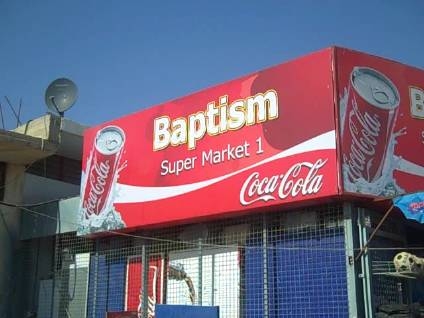
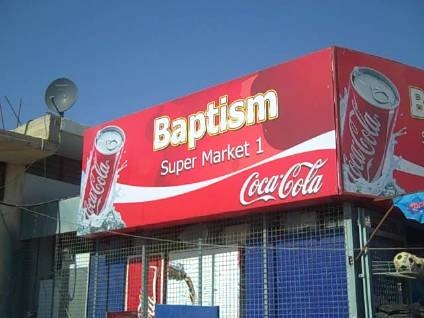
Image is from a shop near the baptismal site of Jesus in Jordan.

Tiny Steps Towards Transformation

Many of my creative church friends believe that starting a new church from scratch sounds more appealing that serving a congregation with long-established patterns, a 1950s DNA, and sacred cows that nobody wants to send out to pasture.

Planting new churches is hard.  Having said this, I hope you’ll join me at the Church Planters Academy  in Minneapolis May 3-5 if God is calling you to start something new.

Serving established churches is hard.  Having said this, I’ve witnessed some Tiny Steps Towards Transformation over the past few months:

  • I preached in a lovely but struggling church recently, offering some words that – the pastor later shared – would have been totally rejected if I’d preached the same sermon 5 years ago.  Hearing it in 2012 made them feel energized rather than angry or anxious.  The wild and crazy message?  That churches focusing on the ABCs (attendance, building, and cash) as their building blocks are dying.  But the churches that are focusing on the NOPs (neighborhood, organizational structure, paradigm shift) are growing.
  • At a church Session meeting recently, a new elder introduced herself  by explaining how meaningful her ministry is.  Nobody prompted her to describe her church work as ministry; she already saw it that way.  Elder by elder described her/his work in that congregation as ministry. This would not be happening in a dying church.
  • A church pastor nominating committee is looking at some creative models for ministry in their new pastoral leadership.  “Maybe we’ll look at a co-pastor team,” they’ve shared.  “We like the idea of a seasoned pastor working with a college or seminary student serving as partners in ministry.”  We’re talking about a traditional, old-fashioned congregation here, but they are looking at fresh possibilities for leadership.

There are signs of hope for followers of Jesus all around.

The image is from Presbygrow.


Death Star? Mother Ship?

I have very little power in my job as a “middle judicatory staffer”  in a particular denomination and then again, I have lots of power.

Example of no power:  I can’t control God’s call.  (Note: this is fine with me but there are still people who believe I can “get them a call.“)  No I can’t.  I can’t control the minds of search committees.  I can’t make a search committee interview you.  I can’t articulate a call statement for you.

Example of lots of power:  I give people permission to do new things when they have been called, sometimes in unconventional ways.  I point out to search committees how amazing someone is.  I clear the way for churches and church leaders.  I get to hear the stories of people’s visions.  And I have a voice.

Some people believe I work at The Death Star – where dreams are dashed and endless rooms of red tape distract us from real ministry.

Some people believe I work at The Mother Ship – from where ministries  and ministers are launched, conflicts are mediated, and people are set free to go out and make disciples of all nations.

The future church of course is flatter – and maybe as flat as a pancake – which probably means there will be no paid middle judicatory workers, no middle judicatory offices, no job for me in the not-so-distant future.  That doesn’t much worry me.  But I do hope I always get to be a part of the  incubation and connection-making and disciple-making forever.  I love what I get to do for work.

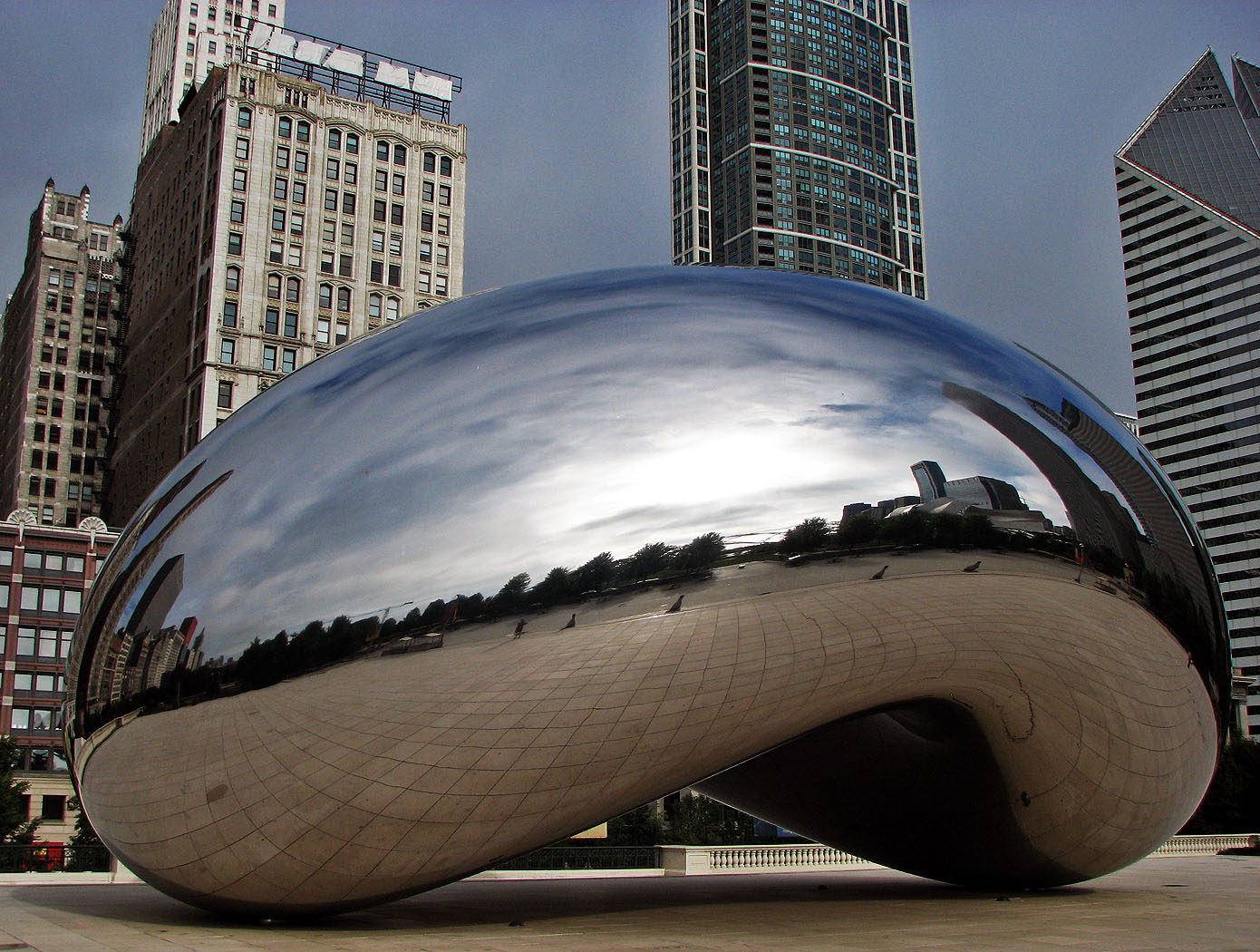
Image is The Chicago Bean – aka “Cloud Gate” designed by sculptor Anish Kapoor.

Is Your Ministry Fun?

Me (to new pastor serving a church known for being very difficult):  How’s it going?

New Pastor:  I’m having a blast.

Me: !

This was one of the first times – early in my own ministry – when I realized that it was okay if our ministry is fun.  In fact, it’s recommended.  As a person steeped in the Reformed tradition (Calvinism) reminded to shun ostentation and be happy in those wooden, cushionless pews, this was a revelation.

All ministry has it’s not-so-fun parts: administrivia, fixing toilets, squelching gossip – unless those activities happen to be fun for you.

But I believe God wants our ministry to be fun – and if it’s not fun it could be a sign that changes are needed.  The beauty of holy callings is that what might be a burden to some people  (working with junior high students, preaching, organizing a supply closet) may bring total delight to others.

Here’s how I know I’m called to my current ministry:  I sit in meetings listening to people share what their churches are doing, I have conversations with people seeking new calls who share their visions, I mediate troubled situations with church leaders – and I love this.  Honestly, I can’t believe that I enjoy this as much as I do.  It’s exhausting, frustrating, etc.   But it’s an opportunity to see God work in often impossible situations.

So, off I go to try to do something that makes the reign of God more visible.  Hope you have a fun day too.

Image is from another ministry that was really fun in my previous life.

Word Confusion

I staff the Commission on Ministry in our Presbytery which involves helping congregations, pastors, and “specialized ministers”  in transition or trouble.

I also staff the Commission on Preparation for Ministry which involves helping seminarians discern their call and prepare for professional, institutional ministry.

The following words are tossed out and repeated innumerable times every day of my life:  minister, ministry, church, call, lay, elder, commissioned.

Theological Word Confusion abounds.

People say “lay” as in “lay leader” or “lay preacher” to include ordained ruling elders.  But actually ordained ruling elders are not laypeople. They Are Ordained – at least in my tradition, the PCUSA.

People say “minister” or “ministry” meaning the person with the MDiv degree or the work of the institutional pastor.  But actually, every Christian/disciple of Jesus/baptized believer is a minister and we are all engaged in ministry.  This is not a PCUSA thing.  This is a Biblical thing.

“Church” has devolved into being a building (in spite of this 40 year old Avery and Marsh song) rather than a people.  Again, the Bible always refers to “church” as a people, never as a building.  But every day, someone in my life refers to the brick building with the steeple as the church.  “Let’s meet at the church.”  “I was in the church.”    They are talking about a building.

This is frustrating, and not because I’m obsessed with Dictionary Correctness.  It’s frustrating because it impacts our understanding of what God calls us to do and be.  All of us who are baptized into the Christian faith are called to ministry.   All.  Of.  Us.

Not all of us are called to professional ministry, but all of us are called to serve in some way in the name of Jesus Christ.  All of us are called to serve to make earth as it is in heaven.  This is good news.

We who are baptized and called are the church.  Some of us are elders – elders who teach people or elders who  rule in terms of leadership. All of us have been commissioned.  So is it too much to ask that we recognize these things in the way we talk?

Cursed?

Me:  One of the great things about my job is that I see so many possibilities in our churches.

Colleague:  It’s a curse, isn’t it?

I walk into church buildings and see so much hope.  If only . . .

If only a congregation would reach into their neighborhood.  If only the church flung open their doors and welcomed the community into their building.  If only the members were schooled in authentic hospitality.  If only people loved each other the way they long to be loved.

Sometimes I visit churches on Sunday mornings and – before they realize who I am: The Presbytery – nobody speaks to me.  I literally said, “Hello” to a stranger in the women’s room and she still did not speak to me.  What if we were honestly “friendly”?

My curse is that I look at church communities and see what they could be.  But either 1) they don’t want to be the church that rocks the neighborhood or 2) they don’t know how.

What is your curse in terms of serving the 21st Century Church?


Next Church 2012

I’m looking forward to hearing about Next Church 2012 from afar this week.

There are two things for certain that will happen:

  1. There will be prayers for our sister – The Moderator –  who is preparing for a different kind of Lent this year.
  2. There will be exceptional leaders sharing their ideas for the future of the PCUSA.

Here are two things that I hope will happen:

  1. The ideas will be new.
  2. The ideas will be about the deeper issues at hand for the 21st church (paradigm shifts) and not about the shallow issues (worship wars, generational differences.)

Of course there are very few truly new ideas.  Several of my colleagues and I read a new report this past week about the state of the church and there was nothing new in there.  It could have been written ten years ago.

But there are voices in the church with fresh ideas who are in the trenches of parish ministry.  There are those of us who work every day with weary leaders, anxious elders, and dysfunctional boards.  But we are still here working for a healthy church that seeks to make disciples of all nations.

A paradigm shift is everything and I see almost every day where it’s needed.  Two examples from this week in ministry:

–  I met a woman who was once a faithful church member serving in several ministries in her congregation.  She had church friends and was a regular leader in worship.  But when her marriage fell apart and her financial situation took a nose dive, she found herself alone.  Her church friends blamed her, shamed her, and gossiped about her.  And so she left.

Paradigm shift required:  real hospitality and pastoral care involves lavish acceptance of those who find themselves on the edge.  We in the church often fail to love broken people as we pretend that we are not ourselves broken.  Churches that “present well” – i.e. everyone looks good, acts ‘appropriately’ and doesn’t offend – are sometimes oblivious to the brokenness sitting right next to us in the pews, much less out in the neighborhood.

– I met a man who described his congregation according to “business metrics” (his words.)  His church is “failing” he said because attendance is down, finances are tight, and his parish is not offering the services it used to offer.

Paradigm shift required:  the church was never meant to be a vendor of spiritual goods.  The church has been called to make disciples (followers) of Jesus in every corner of the earth and to make earth as it is in heaven.  As long as  we consider the A,B,Cs (attendance, building, cash) to be the building blocks of a healthy church we are doomed to fail.

The real building blocks of a healthy church are the N,O,Ps:

How are we serving the Neighbors?  What’s breaking God’s heart in our neighborhood and what are we doing about it?  (See Luke 10:25-37)

How are we Organized for all to be ministers?  Is the pastor considered the only minister or is her/his primary responsibility to equip others to do the ministry?  (See Ephesians 4:11-12)

How has our Paradigm indeed shifted from a Constantinian Church to an Apostolic Church?  (See  the entire book of Acts)

So, may Next Church equip everyone who attends in how to make real changes that expand the reign of God (rather than focus on the survival of a denomination.)  This is my prayer.

Broken

With young adult kids of my own, I’ve been especially interested in the trial of George Huguely in Charlottesville.  He was found guilty of second degree murder on Ash Wednesday.

He’s not the only person whose brokenness made international news on the First Day of Lent.

Syria is broken.  Countless civilians have died at the hands of their own government, and on Ash Wednesday reporter Marie Colvin and photographer Rémi Ochlik died covering these brutal crimes.

The people in our pews, on the streets, in our work places are all broken.  Rich, poor, young, old, wise, foolish.  Jesus came to save broken people.

I love the season of Lent because it levels all playing fields.  We are dust and to dust we shall return.  But it won’t be the end of the story.

Prayers tonight for all of us who are broken that this would be a holy Lent.