The Invisible Church

I was at a conference recently when a pastor shared a story about her church. There was a fire in their church kitchen one day and when they called 911 and said, “St. Percy’s Church is on fire!!”  the fire department dispatcher said, “Where’s St. Percy’s Church?”

The church building is next door to the fire department.

How is it possible that the local small-town fire department would not be aware that their next-door neighbor was “St. Percy’s Church”?

  • Was the church sign not flashy enough?
  • Were shrubs hiding the front of the building?
  • Did the building look so run down that neighbors assumed it was closed?

While all those things might be true – the church could have no sign, kudzu could be covering all the windows, and the bricks could be crumbling – but if the church had a relationship with the fire department, those firefighters would know exactly where St. Percy’s Church met and they would most likely move extra quickly to put out the kitchen fire.

Our churches are invisible because we are all about ourselves and not all about the community in which we live.

This is true for every kind of church – those found in quaint villages, inner cities, Starbucks-laden exurbs, and rural crossroads.  If we have no relationship with our context, we are (deservedly) invisible.

Why has St. Percy’s not taken “thank you cookies” to the firefighters at Thanksgiving?  Why have they not invited the firefighters over to talk about making homes safer?  Why have they not gone caroling over there or made You-Are-Amazing Cards or love-bombed them with fruit baskets or just gone over there to introduce themselves and ask what they – the church – could do to support them?

One of my favorite congregations honored 9-11 by having a Feed Our First Responders event in a grocery store parking lot (co-sponsored by the grocery store and a smoothie business) for their Fall Kick Off.  There were free smoothies and people donated grocery store gift cards for the local firefighters which were distributed by the fire chief who is a member of that congregation.  People LOVED this.  This event had everything:  community service, connection-building, tasty smoothies, an invitation to be generous, and exemplification of what the reign of God looks like out in the world.  They are not invisible.

I have served wonderful congregations which were invisible to everyone but the members.  But every once in a while, we got with the program and people noticed that we were out in the world trying to follow Jesus. 

So, who’s up for taking cupcakes over to the police station?  Or ice cream sandwiches to the local park?  Or water bottles to the local CROP Walk?  Or . . .

Letting Go

The role of a spiritual leader is basically to let go and to help others let go.  I could say more about that on a Friday morning, but after reading what Hank Stuever wrote for yesterday’s Washington Post, I can’t do better than that.   It speaks not only to the loss of the Edison of our time; it also speaks to the grieving of our congregations.  Hope you’ll take the time to read it.

The Supremes Define “Minister”

The US Supreme Court heard a case yesterday involving a teacher from a Missouri Synod Lutheran School in Michigan who had been fired.  She claims she was fired because she has narcolepsy.  The church/school say they fired her because she threatened to sue them if they fired her for having narcolepsy and suing is against their religious principles.  Or something like that.  Nina Totenberg explains it all here.

The fascinating thing involves what the justices said about the definition of “minister.”

Chief Justice John Roberts:  (what about a) “teacher who teaches only purely secular subjects, but leads the class in grace before lunch. Is that somebody who would be covered” as a minister?

Roberts then added that “some churches view all its members as ministers.” (Thank you Chief Justice.)

Ruth Bader Ginsberg: “duties at the school did not change from when she’s a contract teacher, and therefore (she is) not a minister

Sonia Sotomayor:  (regarding the school’s lawyer who said a minister is “anyone who teaches religion“) suggested that this would include even people who were not members of the faith who happened to teach at the school.

Elena Kagan: asked the teacher’s attorney “why this commissioned minister does  not count as a minister,” to which the lawyer responded:  because “she carries out important secular functions in addition to her religious duties.”

To which Roberts said: “The pope is a head of state carrying out secular functions. Is he not a minister?”

I love that even in the highest legal circles, we are confused about who is a minister and who is not.  My vote:  There is a priesthood of all believers.  Black robes are not required.

Too Many Clergy?

My job now involves helping churches find pastors and helping pastors find churches.  It’s not always pretty.  According to this morning’s stats for my own denomination:

  • There are 2312 professionals (2250 clergy and 62 lay professionals) seeking relocation; 377 of them are seeking their first call
  • There are 502 positions in the system; 145 of them are available for persons seeking their first call.

So, did you get that?  2312 looking for positions and 502 positions available – including positions like “Director of Music” and “Church Business Administrator.”  Those 502 openings are not solely clergy positions.

Is this about our weak economy?  Sort of.  Some churches that used to have one or more Associate Pastors have had to downsize their staffs which means that many positions which would have been open no longer exist.

But more likely, those positions don’t exist because church membership is down across the country.  As we all know by now, our membership is older and many/most 20-somethings do not join churches – even if they are connected with congregations spiritually. 

So, I start my day wondering:

  • Do we discourage people – especially second career people, and most especially second career people over the age of, say, 45 from entering seminary and hoping to be called to serve the institutional church?
  • Do we encourage dying congregations to give up the ghost which would financially encourage new church plants that don’t look like the church plants of the 20th Century?

I ask these questions less with fear and trembling than with a renewed acknowledgement that the Spirit of God will guide us – if we will just pay attention.


Rob & Carlton’s Excellent Adventure

Rob Bell and Carlton Cuse are now friends.  (I wrote a few years ago that I believed RB was the 21st Century’s Billy Graham and I still believe this.  CC wrote Lost, one of the best television series on TV – even that last episode.)

I love it when creative people get together.  Cuse is considered a pioneer of transmedia storytelling – telling stories using different digital forms.  Bell does this too via Nooma.  Cuse speaks at Comic Con events.  Bell tours college campuses and urban theatres.

And so there’s going to be a TV show – if the way be clear – called Stronger, loosely based on Rob Bell’s life.  I can see the tweets now.  Very exciting.

This is a feature of the church for the 21st Century: spiritual creatives reaching out to inspire people to talk about their spiritual lives.  Yes, there’s a lot of confusing muck out there.  But I’m expecting something interesting – and holy – here.

Why Marriage?

I’m on my way back to Chicagoland after a wonderful wedding celebration in Our Nation’s Capital over the weekend.  After happy nuptials, a wedding feast, and many hours of dancing, a friend asked me to write a blog post about marriage.

Note:  I’ve learned through the years that when parishioners have asked me to preach a sermon about a specific topic, they usually hope I will express what they already believe about that topic. 

But when asked to write a blog post on the subject of marriage, the asker genuinely seemed to want to know why marriage is important.  “Why get married?”  she asked.  This was not a commentary on our friends whose wedding we had just witnessed.  It was more for herself.  She was honestly wondering.

Within the Christian faith, there have been several historical, Biblical reasons why marriage is a good thing:

Jesus went to at least one wedding but the celebration at Cana is more about the miracle of turning water into wine than the miracle of two people falling in love with each other at approximately the same time and deciding to spend their lives together.  Still we often mention this miracle of turning water into wine as proof that Jesus blessed marriage.

After officiating at over 100 weddings over the past 25+ years, I have known people who married:

  • to have sex
  • to gain property or financial security  (“She has a nice condo.”  “He has a good job.”)
  • to please parents
  • to show the world that “someone wanted me
  • to escape something or someone
  • because they didn’t know what else to do after college
  • for the presents and the attention

These are not good reasons to marry.  In some cases, they are terrible reasons. 

I also worry when someone tells me “I can’t live without her/him.”  A more mature sensibility is that “I can live with him/her; I just don’t want to.”  Herein lies the best reason to marry, if you ask me.

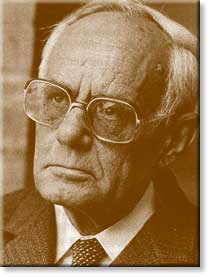
We marry someone we love and like because we want to make a life together with that person.  The Roman Catholic theologian Karl Rahner who – interestingly enough – never married wrote that every couple who marries creates a new little church.  Domestic New Church Plants, if you will.

A healthy church is a community that worships together, serves together, makes sacrifices together, celebrates together, prays together, cries together, and laughs together.  A healthy church has a mission and relationship of give and take.  Sometimes people take care of you.  Sometimes you take care of them.

If we marry with the expectation that it’s about the wedding, we are doomed to live a lonely life – albeit with matching towels and nice wine glasses.

If we marry assuming someone will always take care of us and make us happy, we will be disappointed.  Marriage is about taking care of each other.  And happiness is an ephemeral thing.  Contentment, joy, and deep peace are not.  Gratitude and spiritual maturity – which grow in community – nourish that contentment, joy, and peace.

So, my sweet friend who asked me to write about marriage, here it is.  It is a miracle – as surely as turning water into wine is a miracle – when two people fall in love, build a life, and devotedly stay together for the rest of their lives.  Many factors make marriage difficult – if not impossible: illness, addiction, selfishness, boredom, etc.  We have no idea what the future holds, in terms of the twists of life.  There are cruel turns and unfair challenges. 

But it’s better to go through such trials with someone we love, with someone who loves us.  And the special intimacy is the frosting on the cake.

Annual Membership for Church Communities!

So, I was talking with a guy who tells me his congregation has 350 members but they have less than 100 who gather together regularly for worship and service.  Obviously, the congregation does not in fact have 350 members.  They have 75 or 22 or 60 or 14 members. 

The numbers don’t matter as much as the commitment.  And there are not 350 committed disciples in that good pastor’s church.

Membership. Smembership.  Really – the days are long gone when merely having our names on the rolls of the church meant anything.  As I and others have written before, the church is not AMEX (“membership has its privileges“) as if ensuring that we have a place to marry, baptize our babies, and bury our dead is the point of church.  As if “being a church member” is about privileges and not service.  As if membership will save us.

All of us have members who remain on the church rolls even though their commitment to serve is nonexistant.  So, here’s my grand, crazy-making plan:  Annual Membership.

What if – each year, perhaps on The Baptism of the Lord Sunday which is usually the second Sunday in January or maybe on the first fall Sunday of the new program year in September, we ask everyone to re-affirm their commitment for the coming year in a renewal of membership.  If we choose not to re-affirm our commitment, it’s fine.  But it also means that the church will not expect anything from us in terms of participation, financial support, or service.   The hope is that this would be a spiritual practice that reminds us all that discipleship is more about daily commitments than names on a piece of parchment.

Potential craziness:

  • What if our officers (serving 2-3-year terms) don’t re-commit and we have to replace them mid-term?  If they aren’t committed, they should not be serving.  It would be better to have fewer officers than have uncommitted officers.
  • What if someone is in a coma or can’t be present due to illness, military service, etc.?  Obviously concessions could be made.  Home visits.  Skyping.
  • What if people find this too evangelical or overtly religious for their ecclesiastical tastes?  Oh well.

Yes, it would alter all the statistical reports, but they need to be tweaked/overhauled anyway.  Anybody with me?

More Pillow Theology

As I mentioned Monday, I’d like a needlepointed pillow that says, “All the churches Paul started have closed.” 

I’d also like a pillow that says, “In a healthy church . . .” 

How would you finish that sentence? 

I write this from a retreat at the lovely Cenacle Retreat Center in Lincoln Park, Chicago and we have pondered this a bit.  What makes a healthy church?  How would you, the other leaders of your church, and the assorted people in the pews answer this? 

  • In a healthy church, people don’t gossip in parking lots.
  • In a healthy church, leaders don’t sabotage each other.
  • In a healthy church, volunteers rotate so you don’t get into a rut.
  • In a healthy church, it’s not about sitting in a pew and then going home.
  • In a healthy church, innovation is encouraged.
  • In a healthy church, elders and/or deacons do most of the pastoral care.
  • In a healthy church, people trust each other.
  • In a healthy church, people hold each other accountable.
  • In a healthy church, people laugh and enjoy each other.

I haven’t even gotten started in terms of  spiritual growth, fruits of the Spirit, baptism of new believers, transformation of the neighborhood, etc.  But before much of this can happen, a church has to be healthy.  The alternative is death, which could actually be an excellent thing.   Sometimes it takes death to create something healthy.

So, how would you describe a healthy church?

And how would others in your congregation describe a healthy church? 

PS No church is completely healthy.  If you happen to have Pulpit Envy or any variation of that malady, know that even the healthiest churches have their own allergies, viruses, common colds, hang nails, blisters, etc.

Image source.

Read This Book . . .

. . . especially if you are seeking a new job and most especially if you are seeking a job in professional ministry.  (Yes, I know it’s more than “a job” but hear me out.)

Although this is not a new book, like the Lencioni books it’s interesting in terms of figuring out how we work together best.

Interesting:

“In every culture we have studied, the overwhelming majority of parents (77% in the US) think that a student’s lowest grades deserve the most time and attention.)”

Yep.

I grew up wanting to be one of the Supremes.  Big problem:  Singing is not my talent.  I could have taken voice lessons.  Practiced my moves.  Trained and trained for years.  But still singing would not be my talent.

So here’s the jarring note from Tom Rath which seems almost anti-American:  “You cannot be anything you want to be – but you can be a lot more of who you already are.” 

This is the task of the Commission on Preparation for Ministry or any organization charged with developing people for professional ministry:  helping people discern their strengths rather than “work on” their deficiencies.  Check out yesterday’s post. Maybe their strengths are pointing in a different direction.

Just Say No (While Also Saying Yes)

If you want to be a doctor, there are several concrete steps one must take: med school, boards, etc.

If you want to be a lawyer, there are different steps: LSAT, law school, etc.

If you want to be a professional pastor, there are completely different steps and those steps vary by denomination or tradition.  But here’s the thing:  any individual can check off . . .

  • required college and seminary degrees
  • required field education
  • required psych tests
  • required ordination exams
  • required random hoops

but still not be called to professional ministry.  We used to call professional ministry The Ministry of the Word and Sacrament in my denomination.  Now it’s called Ministry as a Teaching Elder. 

[Personal pet peeve:  when people refer to “ministers” and they mean the ones who graduated from seminary and were ordained as Teaching Elders.  Please stop doing this.]

If we really truly believe in “The Priesthood of all Believers” and that line on the back of the worship bulletins that says, “Ministers – The Congregation” please don’t refer to your pastor as “the minister” anymore.  It ruins it for all the other ministers in the world who feed strangers, knit prayer shawls, serve up lasagna casseroles in shelters, love stray animals, teach little children, rock crying babies, paint run-down living rooms, repair broken fences,  and every other countless act of compassion that scripture includes in “ministry.”  Really.  Please stop calling your pastor the minister.

Everybody’s called to ministry.  But not everybody’s called to professional ministry including The Ministry of Word and Sacrament.

In our give-everybody-a-trophy culture, we’ve become excellent at encouraging each other, but we are not so accomplished at telling people what their gifts are not.  How do we explain to someone who truly believes he is called to professional ministry that we do not see him as a professional minister – but we see his gifts and affirm that he’s called to a different kind of ministry?  How do we explain how one candidate is so clearly called and everyone sees it, while the community just doesn’t see it as clearly in another candidate?

It is a mystery  – this call to serve.

When a commission  – or a bishop – charged with discerning a candidate’s call says, “no” it feels soul-crushing like an absolute rejection of our very selves.    But this is not about rejection for all ministry.  It’s about being true to God’s calling for a specific ministry. 

A call – any call – from God never involves a sense of entitlement, personal  aggrandizement, or parroting responses we think people expect to hear from us.  It’s about a real, God-whispering-in-your-ear, humbling, irresistable, ineffable, shocking, unexpected summons to do what is messy and upheaving.

How do we help those who want to serve in a certain way, but what they see as their calling is not actually their calling according to the faithful team of people who reflect theologically with them in conversation, work, and wonder?  I believe that we who have the responsibility to help with this discernment need to be authentic and speak the truth.  Be loving.  Be compassionate.  Say yes to ministry but not to every ministry.