
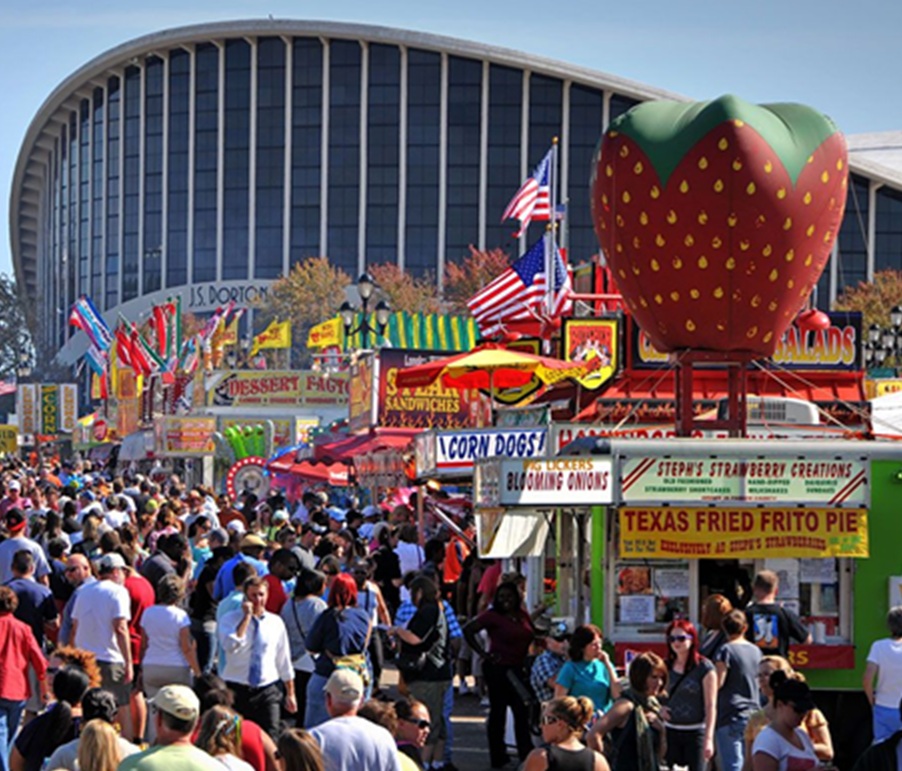
Last Friday I went to the NC State Fair for about the 50th time in my life. It was tricky going when we lived in Chicago, and occasional years we were kept away because of COVID or other illness. But we love the State Fair and on the First Friday of Fair Week every October, the cousins meet at the Edmiston Dairy bottles in the Antique Farm Machinery Building at about 9:15 am. We spend the day eating ham biscuits and Peachey’s Donuts while strolling through buildings full of chickens and cows and pumpkins and peppers. We tracked down CEE’s blue ribbon for a crocheted doll dress in the craft building. We stood in line for the cake decorating display.
The NC State Fair is one of the few places in North Carolina where all kinds of people are exposed to all kinds of people that most of us would not be exposed any other day of the year. There are farm boys and girl scouts. Families of every size, shape, and color. Moms in hijabs and Moms in culottes. Dads in golf shirts and Dads in overalls. We saw prep schools kids in matching uniforms and kids in wheelchairs with caregivers. It’s beautiful. Rural Folks, City Folks, Suburban Folks all together chomping on fried Oreos and waving from the State Fair Flyer.
I am an NPR-listening, New York Times-reading American so you can probably guess where I stand on certain matters. But – while consuming my NYT over the weekend, I read: This HBO Mini-Series Gets Rural America Right. I hope you’ll read it/listen to it. (And I hope my attempt to gift the article works.)
The creator of the mini-series Task is Brad Inglesby and the Times article says that his “shows inhabit a world that his audience lives in or, if they don’t, are not otherwise inclined to contemplate.” Friends, we need more of this. We need to contemplate and consider people that we ordinarily do not contemplate or consider. This is why we have literature. And it’s why we have State Fairs.
For every show like “Yellowstone” set in Montana, there are numerous shows like “Only Murders in the Building” or “The Rookie” set in NYC or LA. But this paragraph about the need for more television about people in the middle of the country captures why our nation is so divided these days:
A memorable “Yellowstone” episode saw John Dutton, played by Kevin Costner, leading a celebratory day of branding cattle in some of the prettiest country Montana has to offer. At one point, he asked an environmental activist he was trying to seduce what she thought of the event. “I thought parts of it were beautiful and I thought parts of it were absolutely heartbreaking,” she told him. “Yeah, then you and I saw it the same,” he replied, before she clarified, “I’m guessing we agree on the beautiful parts, but our heartbreaks are different.”
Some of our hearts break when water is polluted by farming.
Some of our hearts break when our farmers face so much regulation that they go out of business.
Some of our hearts break when brown and black immigrants are arrested by masked ICE agents (especially when they are legal.)
Some of our hearts break when a factory closing taking hundreds of jobs from the county.
Some of our hearts break when queer kids are in danger.
Some of our hearts break when conservative Christians are demonized.
Some of our hearts break when we didn’t get the promotion because we are not White or male.
Some of our hearts break when we didn’t get the promotion because we are White or male.
Brian Stevenson famously says that proximity is everything in terms of understanding each other. We feel for those who are in our families or our neighborhoods or our churches. We judge those who are unfamiliar.
If you have the opportunity to spend a day at your state fair in 2026 (most of them have already happened in 2025), I hope you will do it. And when you go, relish in the unfamiliar foods, the unfamiliar scenes and the unfamiliar people.
Final story: While waiting for my Lyft on the afternoon of the State Fair (I was leaving a little early because my knees were screaming*), I was talking with a N. C. State Trooper who shared his MAGA credentials while I nodded and smiled. Suddenly two little brown boys ran up to him and asked if they could all pose for a photo. He was delighted. He gave them State Trooper stickers while their parents walked up, Dad in a turban and Mom pushing two little girls in the stroller. I offered to take a photo of the whole family with the Trooper and I’d like to think that an angel got her wings that afternoon because – as everybody knows – an angel gets her wings when a Reign of God Moment happens.
*I’m having both knees replaced on October 29th and – if there is room on your prayer list – please send one for healing mercies. Thanks.



 A Church for Starving Artists