With the news of General Colin Powell’s passing this week, I remember reading in one of his books about the parking attendants in the garage where he parked every day while serving the State Department.
The garage was so crowded that cars were parked almost on top of each other. It took most drivers awhile to have parking attendants retrieve their cars from the Tetris-esque configurations in the garage. Interestingly enough though, General Powell never had to wait for his car. It was always readily accessible, and this was not even guaranteed for The Secretary.
General Powell knew the names of the parking attendants. He smiled at them each morning and asked how things were going. It’s not surprising that they would be especially kind to someone who treated them with kindness. You can read about this here.
One of the essential characteristics for successful leadership is having the emotional intelligence to notice the people around us. Relational leadership makes the difference between connecting with the community and serving in a closed system. And it’s not transactional. General Powell benefitted from his kindness, but my hunch is that he would be kind whether he benefitted or not.
Do we in our communities know the names of those who park our cars, ring up our groceries and pour our coffee? The world certainly benefits when we do.
We, in my and other denominations, are dealing with the consequences of taking Native children out of their communities to educate them in Western ways between 1860 to 1978. Helpful White Missionaries taught them the English language, Western table manners, and religious practices that encouraged them to abandon their own culture so that they might prosper in a better culture, a whiter culture. Here is a good article about this tragedy.
It would make their lives so much easier.
When people who look like me protest that they are in no way racist, much less White Supremacist, I think of the Good White Christian People like those missionaries who authentically believed they were “helping” those “poor savage children.”
As a parish pastor in a church outside Washington, DC, we welcomed three children who came to Sunday School on their own. They found themselves in our congregation by a variety of paths and they were all low income and Black or Brown. In the middle of the liturgical year, as we were checking on how things were going in each class, the teacher of the class that included those three children, we learned, was teaching them etiquette lessons. Etiquette Lessons. She was “helping them” learn how to put a napkin in their laps and how to shake hands with adults which was – apparently – as important as teaching them the Parables of Jesus.
For the love of God.
Although I (kind of) like sports, I had never heard of the football player Dante Stewart until yesterday when I read his essay for The New York Times. Please read it here.
As Stewart tells it, he arrived at Clemson University as a Black country boy and he was embraced by White Christians who invited him to Bible studies and prayer meetings. Excellent. What was also true is that he found himself in more and more White Spaces as if being a devout Christian equaled being White.
Through my life, I’ve heard White Christians refer to certain Black people as “good Blacks” or “the Black family who fits it so well” in our church/school/club. Speaking up about injustice is frowned upon in these circles. The Jesus who turned over tables and spoke about the oppressed is not given much attention.
We “Good White Western Christians” have conflated evangelism with making people into our own image. God’s Image is much more glorious and colorful. There is no culture or government or – certainly – political party that has corned the market on being Christian.
It would make OUR lives so much easier if everybody would just dress, speak, live like we (White Western Christians) do.
Perhaps the definition of current religious hypocrisy is expecting people to practice their faith and every other aspect of their lives in the image of the dominant culture of White Western Christianity.
If that’s the case then we – White Western Christians – are the ones missing the point of evangelism.
Image of three Lakota boys before and after they were brought to the Carlisle Indian Industrial School in Carlisle, PA in 1900. (Smithsonian Institution) Source here.
Some of the big stories in the news today include the verbal and physical assault on teachers (who are trying to be safe in the classroom), Asian citizens (who have experienced increased violence against them) and political leaders (especially those who are speaking out in support of the vulnerable and the poor.)
On any given day, we call each other names that dehumanize: savage, illegal, trash, monsters. Many of us consider those who are not “like us” to be less valuable even if the differences are as simple as skin color or family heritage or political party.
The most fundamental thing to teach children in our churches, temples, mosques, and synagogues is that all of us were created in God’s image and each human being is precious in God’s sight. Dehumanizing people strikes me as the least Christ-like thing we can do.
Imagine what a difference it would make if we lived as if we actually believed that – even the most annoying among us – is made in God’s image. It would be a start.
After traveling up and down the East Coast this month talking with wedding guests and small town cashiers and overworked barristas in highway rest stops, I’ve been pondering what might possibly bring healing to our nation. I’ve talked with people who believe to their toenails that this President is evil. I’ve talked with people who believe with similar intensity that the former President is evil. Billboards on the highway accuse political rivals of “destroying our values.”
What can be done to bring us together as a people? I have a couple ideas.
The first is a pledge to be consistent in terms of our morals.
Jon Stewart often showed side by side clips of politicians saying one thing in 2020 and the opposite thing in 2021. In 2010 a politician supports the filibuster because his party is in power. In 2020 he opposes the filibuster because his party is not in power. (Note: it was never about what’s right. It was about politics.)
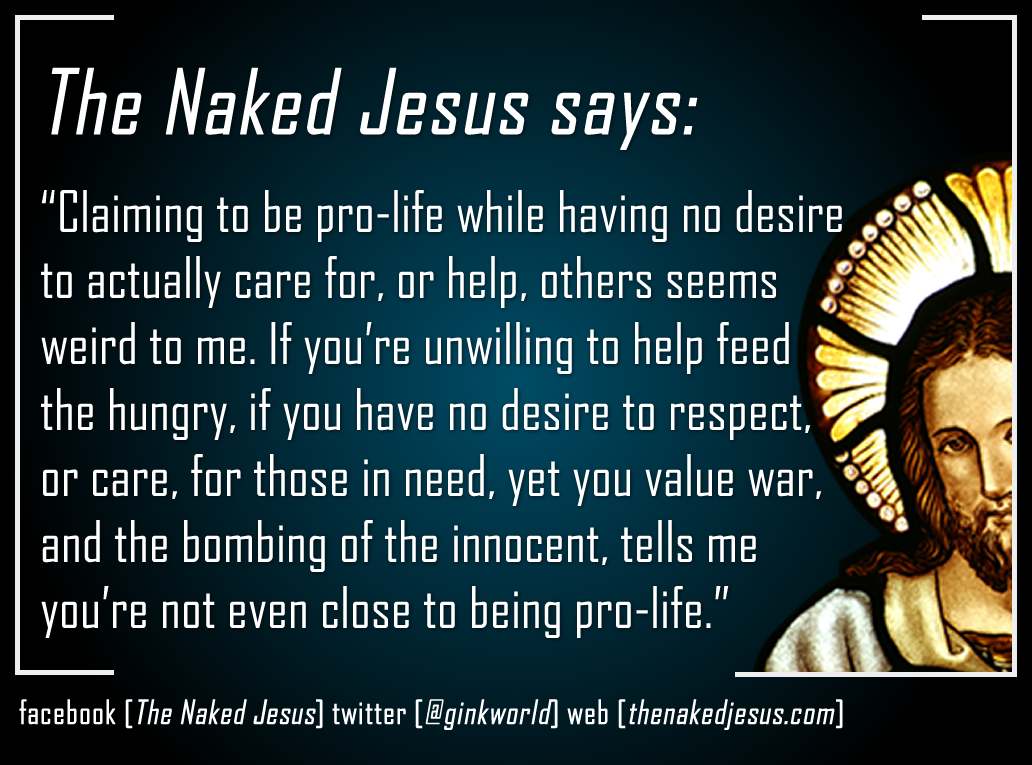
I have a friend who is indeed “pro-life.” He is opposed to most abortions, and he is also against the death penalty. He believes in fully funding Head Start and free health care for uninsured children. His views are morally consistent – or he tries to be morally consistent.
To be “pro-life” while being against funding prenatal care for poor women is confusing.
What if we all pledged to seek moral consistency in the way we live and vote and spend our money? I wonder if this would help us understand each other. Otherwise we are simply engaging in partisan politics that have less to do with what’s best for our country than personal power.
How do our politics and our faith match up? Are they consistent across the board? I hope this is something we’ll grapple with in our faith communities in the coming months.
As of this Saturday, I will have celebrated three weddings and two funerals in four weeks. They are all indeed celebrations. After spending time with Susan Beaumont about liminal times via Zoom last week I’m reminded to relish everything – even and especially the transitions.
Curiosity is underrated I’ve decided.
It’s normal to be curious about what the future holds for a newly married couple. It’s normal to be curious about what happens after we die. And it’s essential to be curious about other people and places if we hope to be well-rounded human beings. And it’s essential to be curious about The Future if we hope to be effective leaders.
Casting a vision for The Church when we have no idea what’s next is challenging. But if we are not curious about the possibilities, we have already failed. Let’s not waste this liminal season.
Image from our drive to Northeastern Pennsylvania over the weekend.
[Note: This is my sole post this week as I am participating in a conference of Mid-Council leaders. See you next week.]
Telling the truth is not for the fainthearted. It’s so easy to lie. Lying helps us avoid conflict. Lying keeps us from having to explain things.
Sarah Niles – the actor who plays Dr. Sharon Fieldstone on Ted Lasso – was interviewed by Brene Brown last week and it’s worth a listen here. In both the podcast and in the show, Niles/Fieldstone is all about truthtelling.
The older I get, the more truthtelling factors into my ministry, my parenting, my humanity. Again – it’s so easy to lie.
For example, consider this scenario:
There’s a longtime church member who has presided over The Women’s Group for years and she has never been asked to serve as an Elder of her congregation – for good reasons about which she is unaware. She has always wanted to be an Elder but she has never been nominated and she wants to know why.
The reason is that her personality is harsh and she is not a good listener. She insists on her own way and – if only she had noticed – it’s been hard finding other women willing to work with her in The Women’s Group. She wants to talk with you – the pastor – on why she is never chosen to be an Elder. Your options for answering her might be these:
A) “We are looking for more men to serve as Elders and we are trying to recruit them first.”
B) “You do such a good job with The Women’s Group and we need you there more.”
C) “You have obvious gifts for getting things done, which is essential in many situations. What we are looking for in our Elders include spiritual gifts like listening well and equipping others to be leaders. Those are not your strongest gifts.” (Ouch. But this is the only true answer.)
In a world in which many of us have been taught that “we can do anything” the truth is that we can’t. Not everyone has the gifts to be a spiritual leader. Not everyone has the gifts to be a professional musician. Not everyone has the gifts to work effectively with preschoolers.
It’s okay. But if we’ve grown up to believe that if we can see it, we can be it, the truth hurts. And yet it’s important for us to be in relationships in which someone will tell us the truth – lovingly.
If Dr. Sharon Fieldstone told me something I would believe it. It’s not that she always offers feel good advice. In fact, she never gives feel good advice because that’s not her job. It’s not her job to give advice at all. Instead she says things like:
“That must have been hard” (regarding a painful childhood experience)
“I understand why you’re angry” (regarding an event that would anger any normal human being)
She asks questions that help people sort out their truth. “Are you good at your job?” she inquires of Ted Lasso.
Church people notoriously avoid conflict – which is interesting if we consider Jesus’ story and his interactions with Pharisees and Roman leaders. He spoke the God’s truth to them – literally – and they didn’t like it.
And our congregations suffer because we conflate niceness and goodness. Jesus was good. He was not particularly nice. And when we speak the truth – even in love – many people in our congregations don’t like it. We are being too political.
Speaking the truth is essential for spiritual growth though.
When I hear that only 20% of the membership makes an annual pledge to support their church financially, there are difficult truths to say out loud about that.
When I hear leaders share in the parking lot what they were not willing to say around the meeting table, there are difficult truths to say out loud about that.
When I hear pastors bully their parishioners or parishioners bully their pastors, there are difficult truths to say out loud about that.
Thriving congregations and leaders speak the truth in love because it’s about what God wants and not what we want. It’s about spiritual maturity and authentic relationships. Susan Beaumont, who is leading the conference I’m attending this week, says that “leading with presence” means being “grounded in the true self, embracing a sense of wonder, and open to the leading of the Divine.“
Yes. You too can observe a master of helping people find their true self if you watch Season 2 of Ted Lasso. Or just watch how Jesus did it.
Image of the actor Sarah Niles who plays the role of Dr. Sharon Fieldstone exceedingly well in Ted Lasso. Source.
There are probably many people out there who believe I am headed for eternal damnation. But probably most people who know me don’t ponder this one way or another.
I have reached the point that it doesn’t matter to me what (most) people believe about my life – or afterlife. I’m grateful that God continues to reveal things to me that crack open what Jesus has taught us and every day’s a school day when it comes to what we can learn from the historians, prophets, and poets of the Bible. It doesn’t matter if you think my theology is mistaken or my politics are wrong or my lifestyle is a wasteland of caffeine and Apple TV. But if you love me and you “know” I’m going to hell, it hurts.
I think about LGBTQA+ Christians who live with this each day. There are people in their lives – some of whom are in their families of origin or even their chosen families – who believe they are condemned by God. I think of “agitators” who are trying to speak up and speak out about injustices in the world and they are written off as “faithless.” Certainly there are Republican Christians who can’t imagine how a person can be Christian and vote for Democrats. And there are Democratic Christians who can’t imagine how a person can be Christian and vote for Republicans. And there are the Christians who have mental check-lists about other people who call themselves believers, but they don’t follow the check list (so they are probably not really believers.)
Jesus said, “‘Do not think that I have come to bring peace to the earth; I have not come to bring peace, but a sword.” (The Gospel of Matthew 10:34) Ouch.
There are some with whom we will never be at peace perhaps because they clearly judge us instead of love us for who we are and what God is leading us to be and do. (I can hear the retort now: “God is actually not the one leading you to be a _________ and do _________.)
My dad used to say, “Just love ’em.” Just love ’em when they get on your last nerve. Just love ’em when they ignore you. Just love ’em when they hurt you.
It’s really hard to do when they have condemned you and you happen to want them in your life anyway in hopes they will one day understand. And in the meantime, we pray for the capacity to love honestly and graciously even those who are certain we are spending eternity in fire.
The bottom line is that God is God and we are not.
Image of Mary fighting Satan from The Book of Hours creating in about 1240. (The British Library, London.)
Although we all need electricity, HVAC, and water, they aren’t fun expenses. The same goes for church properties. It’s more fun to know that our financial donations are going to building a hospital in Honduras or sending kids to camp rather than replacing the carpet in the church parlor or increasing the Pastor’s salary . . .
. . . unless we see all our donations as an investment in the future of God’s reign on earth.
At last week’s gathering to talk about Yancey Stricklers book This Could Be Our Future: A Manifesto for a More Generous World * someone said simply, “investment is a good word.” Yes. It’s a good word and it better expresses why we share our financial offerings with our congregations (and other non-profits.)
We are making an investment in people, in projects, in tools for ministry for the sake of making earth a little more like heaven to the glory of God.
PEOPLE – We want the best possible people on staff who will equip others to teach, lead, sing, visit, and make community happen. We want them to know we appreciate them, especially during a pandemic.
PROJECTS – We want to love God and our neighbors as ourselves by feeding the hungry, housing the homeless, serving the poor, sharing what Jesus said. We hope to love as lavishly as God loves us.
TOOLS – The only reason to have a church building is to use it as a tool for ministry and it needs to be safe, clean, and open. Better to keep our tools in good shape now rather than having to replace them later at a much higher cost.)
Likewise, our Presbytery (the mid-councils in my denomination) invest in congregations so that they can provide effective ministry. We grant funds for churches to buy freezers (so that their food pantry can provide meat and cheese.) We grant funds for churches to start after-school programs (so that neighborhood kids have a safe place to do their homework and play.) We grant funds for churches to upgrade their microphones, screens, and technological capacity (so that they can offer hybrid worship.) Important qualification: we only invest money in congregations who invest in their communities and beyond.
Investment is a good word. As the 2022 budgeting process begins in the coming weeks/months, how does your congregation hope to invest in the future?
That time a family member betrayed us. That time a business partner cheated us. That time a political leader made the decision to abandon a whole demographic of people. That time The Church disappointed us.
It’s easier when there’s been acknowledgment, confession, justice. Sometimes that’s not possible.
As I talk with people about the divide in our nation, we always seem to return to the notion of “getting over it.” I’ve noticed that the people who most easily want to move on are the ones who enjoy the most privilege. Why can’t Black and Brown people get over slavery? Why can’t women get over misogyny? Why can’t Native Americans get over losing their land?
It’s easier to think those things if our ancestors were never enslaved or subjected to certain laws because of the color of our skin. It’s easier if we’ve never been denied a job or been leered at by a colleague. It’s easier if we have inherited property.
How do we shift our mentality from “I deserve all thisand others don’t” to “I’m grateful for what I have and others deserve this too”? I don’t know but it divides us every day.
I continue to have hope that The Church can teach and model a different way to live our lives because of Jesus. And I hope I never get over that.








 A Church for Starving Artists