What Do We Talk About When We’re Together?

First a confession: I am extremely judgmental, especially towards other Christians. Also, I know myself to be a miserable sinner. I’ll just start with those two statements.

I was at a party recently and – just that week in international news – a Latino man was illegally deported and sent to a Salvadorean prison because of what the President called “an administrative error.” A Russian missile strike killed 19 Ukrainians including 9 children. And the President of South Korea was impeached.

Because it was a party, I didn’t expect people to chat about this news.

But I was surprised at what we did talk about: “How is your kitchen renovation going?” “Are you still headed to the Faroe Islands in July?” “You can’t even tell you’ve had Botox.” There was a really, really long and heated conversation about how high your lawn grass should be before it’s mowed. “I’d say that Fescue needs to be cut at 2.5 inches.” “No, you’re thinking about Zoysia. Fescue should be cut at 3.5 inches.”

On the one hand, I’m impressed that people have the lawn grass knowledge of Jeopardy contestants. (Double Jeopardy Category: Grass Identification)

On the other hand, I wondered what they talk about when they aren’t at a party.

Debby Irving wrote in Waking Up White that White People talk about race only occasionally. But Black People talk about it daily. Why is that, do you think?

I’d venture to guess that Black People live in closer proximity to racism than White People. There are more situations in which Black people are unsafe out there. This is simply not true for your average White Person, especially those of us who live in “good neighborhoods.” Even if we live in “good neighborhoods” Black and Brown people are at higher risk by virtue of their skin color and inherent bias. Do we ever talk about this, White Friends?

Someone I know recently retired from a career in working for the poorest of the poor in her rural community. She has seen things: Domestic violence. Abject poverty. Shocking hunger. Utter desperation. And yet, she has made an enormous difference because of her proximity to the poor.

Bryan Stevenson is well known for talking about how essential to be in proximity to marginalized people – at least if we want the world to be better. I am struck by the number of people – and especially Christian people – who do not need for the world to be better because it’s already pretty great for us.

  • We are installing bidets in our new bathrooms, unaware that 522,752 US households did not have basic plumbing in their homes in 2021.
  • We are planning a fall vacation to Vermont and frankly don’t care to learn that 6% of Americans do not have reliable transportation to get to medical appointments.
  • We are so excited to get reservations to that cool new restaurant, not wanting to think about the 1 in 5 children in the USA who are hungry. (We’re talking about 14 million children.) And I’m hoping to save room for the $15 crème brûlée.

Yes, thinking about poverty is a downer. And no, I don’t believe God intends for us to refrain from having nice bathrooms and vacations and dessert. But having proximity to people who are struggling because they lack basic human needs changes everything – from our priorities to our level of gratitude.

Have we seen things that have changed us to the point of altering what we talk about socially?

Do we know anyone unable to pay cash bail for their grandson who was arrested for robbery even though he was nowhere near the crime? Do we know anyone who is not taking their meds because they need the money for food? Do we know school children who are at risk every weekend of their lives? Do we know people living in shame because they cannot provide for their families, or they are victims of abuse but cannot leave or they are so controlled by their addictions that they rob from their friends? This is real life for too many of our neighbors. This personal experience changes us. It opens our eyes.

So let’s talk more about how we can make a difference in God’s world. And maybe talk less about our landscaping problems. (I warned you I am judgey.)

PS God loves gardens too. It’s the idolatry that’s a problem.

Image of Ladies Who Lunch. Artist unknown.

The Jeopardy Test

This opinion piece by Ken Jennings is excellent. Jeopardy host and lovely human Ken Jennings makes the point that the game show Jeopardy – beloved by Red, Blue, and Purple Americans – is one of the last bastions of fact-sharing.

They have made mistakes: Remember the “Paul wrote the book of Hebrews” debacle of 2022 that had Bible nerds screaming at our TV screens? Paul did not write the book of Hebrews. Nobody (except a misinformed Jeopardy researcher, apparently) believes this.

Our world is filled with misinformation, disinformation, and run-of-the-mill lying. Jeopardy offers refreshing facts at least five nights a week about sports and art and potent potables. The contestants are also a refreshing array of fact-knowers who look like I imagine the Reign of God looks. All the genders, backgrounds, skin colors, hairstyles, and job experiences we find in the USA and beyond. The only ones excluded are those of us who can’t think fast on our feet.

So, Church: do we want facts?

What we believe is often based on faith rather than historic, confirmable proof. I have a colleague who begins every funeral sermon with an attestation about the Fact that Jesus was born, lived, died and was resurrected. I believe that statement too, but we have no scientific proof.

Things we do know – almost certainly:

  • The New Testament book called Hebrews was not written by Paul.
  • Mary Magdalene was not a prostitute.
  • Someone named Jesus lived and died and appeared three days later (according to the Jewish scholar Josephus -circa CE 37 – 100 – in Book 18 of The Antiquities of the Jews. At least one Biblical scholar however believes that those texts were altered and are not legitimate.
  • Something galvanized First Century Jews and Gentiles to the point of creating a historically impactful influence after Jesus died.
  • The Roman Emperor Constantine became a follower of Jesus at the end of his life and Constantinian Christianity was born – which in many ways wrecked the Church. Suddenly it was politically beneficial to be a Christian and so quite a few people self-identified as such – not because they wanted to follow the way of Jesus, but because it was culturally helpful. (We might note that this trend continues to wreck the Church of Jesus Christ to this day.)

Facts help us discern how we can serve our neighbors. If we know the statistics on childhood hunger, we can better feed those children. If we know the unfiltered condition of prisons and detention camps, we can know how to address those conditions. If we know the authentic efficacy of vaccines and pollution controls and construction regulations, we can know how to keep people safe.

Facts make us better humans.

What we cannot prove per se but I believe by faith:

  • That God created an evolving world. Just because scientists can explain it, doesn’t mean God didn’t have something to do with it.
  • That God loved us enough to put on human skin and move into the neighborhood. (Thank you Eugene Peterson – paraphrasing John 1:14 in The Message.)
  • That God is all about diversity, equity, and inclusion and woe to those who oppose it.
  • That we are drenched in God’s grace even when we don’t deserve it. And in response we are supposed to offer grace to others who don’t deserve it. That second part is really hard.

The Truth sets us free, but first it makes us miserable. We need to stop lying to each other – not only about the meaning of habeas corpus or the historical veracity of The Tulsa Massacre – but also about the health of our congregations, the effectiveness of our spiritual leaders and our responsibility to love and serve our neighbors.

Have a good weekend.

Pastors and Performers

Some pastors do accents. Show me a Presbyterian preacher who has (or can conjure up) a Scottish accent and I’ll show you a very popular preacher.

I’ve known pastors who perform exquisitely. They have the bedside manner of Marcus Welby, MD. They have the financial chops of a corporate banker. They have the intellectual heft of a theology professor. And yet it feels like they are performing rather than pastoring.

I’m not talking about Imposter Syndrome. Most of us wonder if we are up to the task. We wonder if our sermons are impactful. We might worry that we are getting stale after all these years.

Or maybe we do not wonder or worry at all. As long as we can perform our tasks in the presence of Church witnesses (so they know we are doing our job), we are fine.

But this is not what it means to be a Pastor. This is not an all-inclusive list, but what it means to be an authentic Pastor involves these attributes:

  • Is our Pastor trustworthy in terms of practicing what they preach? Clearly we all fall short of the glory of God, and yet – are our words the clear opposite of our actions?
  • Is our Pastor safe and approachable? Is there anything about the pastor that makes people feel unwelcome or uncomfortable? Pastors and parishioners differ in theology and other matters – of course – and yet respecting people for who they are is essential.
  • Is our Pastor spiritually grounded? Are they leading faithfully based on what Jesus teaches, and do they lead confidently because they trust God to guide them?
  • Does our Pastor love us? Do they want to hear our stories? Do they care about our ideas? Do they feel compassion when we are grieving? Do they light up when we are excited about something?

As I move closer and closer towards retirement (March 2026) I can look back and see that the most effective ministers are the ones who were more pastoral than performative. Every pastor is expected to “perform” occasionally. We act interested even when we are bored silly the fifth time someone tells us about their hip replacement. We don’t complain (much) when asked to do things we didn’t go to seminary for. We bite our lips when members say for the upteenth time: “if only we had more young families.”

It is the honor and privilege of a lifetime to serve people as their Pastor. It’s also infuriating, exhausting, and mind-numbing at times. But to hear the stories of God’s people and to know and love them is amazing.

I Beg You. Stop Saying “Lay Leadership”

I’ve written quite a bit about pastoral leadership – like here. But if we want to be a part of a thriving, impactful congregation, we need to develop everybody’s leadership skills.

The angels weep (and Cindy Bolbach sighs from the heavens) every time someone uses the term “lay leadership.” It’s not a thing – at least in Reformed Theology – because we believe that all baptized believers are called into ministry. If we consider the person with “Reverend” or “Pastor” in front their names to be the only leader or the most important leader in the congregation, we are mistaken.

The very best leaders know how to equip other leaders – whether we are ordained or not. Every day I witness churches that are dying and churches that are thriving. The difference is leadership.

Signs of a good leader:

  • No confusing ownership of a project, a team, or a congregation. I flinch a little when pastors refer to “my staff” or “my sanctuary” or “my committee.” It all belongs to God. Practice saying “our church” and “our vision.”
  • Willingness to step aside to give new people a chance. I know a pastor who is especially generous in sharing the microphone. In Bible Studies, when Church-Famous speakers visit, anytime it’s possible, he asks someone else to open with prayer or introduce the speaker or be in charge. The congregation he serves is rich in leadership because he encourages others to lead.
  • Things Happen without the presence of any Pastor. There are classes and fundraisers and special events not dependent on whether or not the Pastor shows up. It could mean that the Pastor is a slacker. Or it could mean that the Pastor trusts their people.
  • They take constructive criticism well. Bullies stay in power because they scare people. We don’t dare challenge their ideas or ask them to give others a chance to lead because they give the impression that nobody else will do it or nobody will do it as well as they do.
  • They laugh at failure. So we decided to try nighttime Vacation Bible School this year and it was a bust. Now we know. And the worst thing that happened was that the ten of us who showed up had to eat all those extra ice cream bars.
  • They exemplify more Christlike qualities than Lady Macbeth-like qualities. Nobody wants to work with a manipulative and ruthless person.

So here’s a question: what ideas do you have for equipping leaders to serve? What would be the best way for – say – a Presbytery to train people to be more effective leaders? It’s a real question.

Morally Wounded?

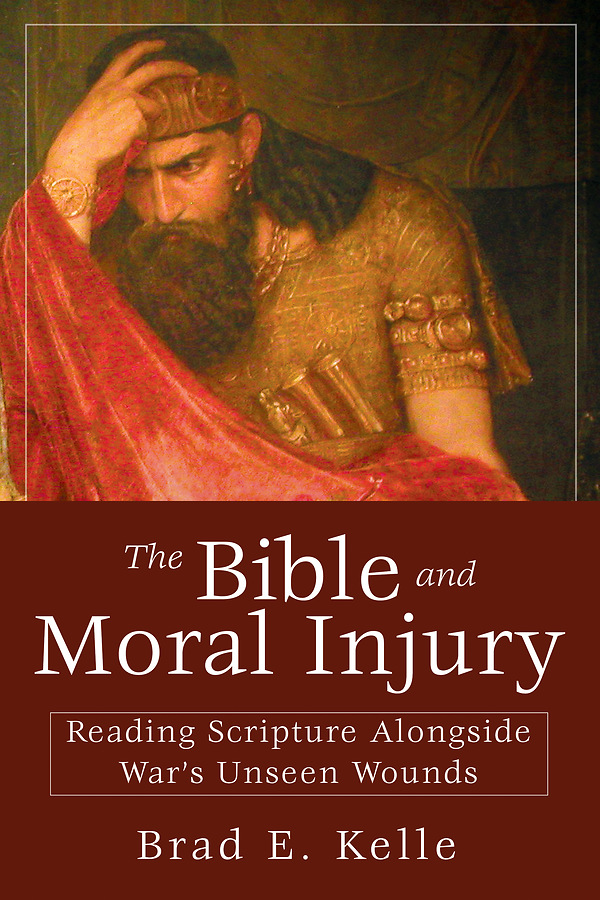
I mentioned in last week’s post that “a study out of Boston University reports that 35% of clergy have PTSD.” A Navy chaplain I respect responded that perhaps clergy deal with PTSD. Or maybe we are dealing with Moral Injury. (He recommends the Brad E. Kelle book pictured above.)

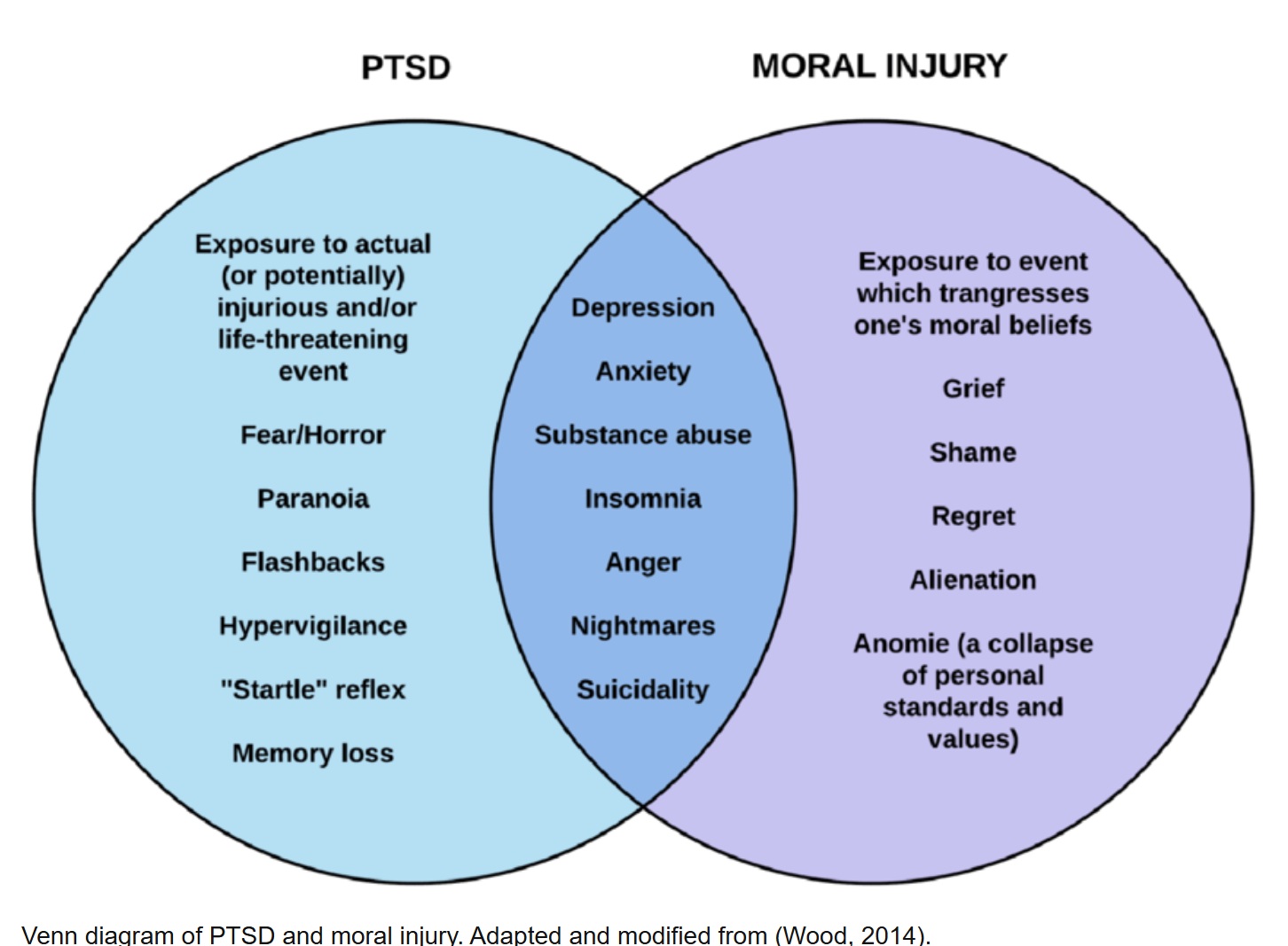
I’m thinking that Moral Injury is rampant today – if not universal. All of us experience daily damage to our core values:

  • When government leaders vote to cut support for children and the elderly while offering tax cuts to the wealthy, we wonder how this makes any sense for people elected to Serve The People.
  • When law enforcement officers abuse – or kill – a person who has committed a minor crime or no crime, we wonder if we can trust public servants with the power of badges and guns.
  • When Pastors preach week after week about living faithful lives but – in secret – they are unfaithful to their marriages, their neighbors, or their congregations, we wonder how we can ever take their sermons seriously.

Moral injuries are the invisible wounds resulting from our own failures to do the right thing or the failures of others whom we trusted to do the right thing. Because we all fall short of God’s glory, moral injuries are part of human life. We hold up star athletes and then feel crushed when we learn they are not what they seem. We idolize a family member only to learn that there are secrets that break our hearts.

Moral injury in the Church is particularly damaging in that one person can trample the souls of a whole congregation of people in one fell swoop. People leave Church when it turns out that the person entrusted with their holiest moments has acted out in unholy ways.

Maybe we are naive. Maybe we simply need to buck up and realize that everybody is disappointing.

As a Pastor myself and as a leader of Pastors, I can’t say that I’m not shocked anymore. I’m still a little shocked. Or actually, it’s not shock I feel. Maybe it’s the pain of knowing that countless layers of hurt result from clergy misconduct. The consequences are far-reaching.

How do we address moral injury in our lives? Yes, grace abounds from On High. And it takes time for us humans to reach a place where we can offer grace when our very souls feel crushed. But this is the work of the Holy Spirit. We can only regain trust, we can only forgive by the power of God’s Spirit. The very fact that this is possible is such a relief.

Thanks I.C. and here’s the Venn Diagram Source.

“She Had Boundless Energy. And Then She Had to Leave for Medical Reasons”

A stranger said this to me today about his former pastor: “She had boundless energy. And then she had to leave for medical reasons.” Without knowing anything about the situation, I wonder if her boundless energy resulted in clinical exhaustion.

Maybe she didn’t merely need a nap. Maybe she didn’t merely need a vacation. Maybe she needed treatment for Post-Traumatic Stress Disorder.

As I shared in my oral Presbytery Report yesterday, a study out of Boston University reports that 35% of clergy have PTSD. We hear about soldiers, firefighters, police officers and witnesses to terrible violence sometimes experiencing PTSD. But pastors?

Yes. A third of us.

Pastors deal daily with unrealistic expectations, lavish criticism and low wages. I could not do my own ministry without the good, inspiring, life-changing moments when I witness resurrection and grace and hope. If those experiences are outweighed by painful, soul-sucking, paralyzing moments when I witness only death, effrontery, and dread, then I’m in trouble.

The life of a pastor sometimes feels like being the ball in a pinball machine. On a given day, the pastor might bounce from sermon prep to sitting bedside with a dying parishioner to leading a class of teenagers to receiving an angry phone call. At the risk of sounding dramatic, I have personally experienced written death threats, verbal death threats, dirty diapers dumped in my driveway, a keyed car, broken pottery on my home patio, and a guy with a knife in my office who was tired of “being Jesus.”

And speaking of being Jesus, some of us forget that we are not.

I write this because it is harder than ever to be an effective pastor. If you have an effective pastor, please respect them, encourage them to have a life outside the congregation, and pay them as generously as possible. At least offer a Cost of Living Adjustment each year.

We didn’t go into professional ministry for the money. But if we are worried about how we are going to pay our student loans and our mortgage this month, we cannot be effective.

If you have an ineffective pastor, suggest training in leadership or time management or preaching. (Please be gentle with these suggestions.) And remember that the pastor with excellent bedside manner might not be a world class preacher. No pastor excels at everything. But if they are trying to excel at everything, they might actually have PTSD.

You can order the needlepoint pillow pictured and all kinds of other fun pillows here.

Reviewing

You know those group gatherings where we are asked to name “one word that describes where you are today?” I’m freshly back from study leave and – of course – someone asked a group of clergywomen this question. My one-word answer: Reviewing.

My March 2026 Retirement Date has been announced and I’m profoundly grateful for these months ahead when I can review 40+ years of professional ministry. I share this in order to ask you all – lovely readers – if there’s anything in particular you would like me to reflect on out loud/in this blog. Among the things I look forward to doing over the next ten months:

  • Personally thanking the people who saved my life/changed my life/loved me best. This is a long list because I’m the world’s richest person in the people department. My Roundtable Clergywomen – among others – know the correct response to this phone call in the middle of the night: “There’s a naked dead man on my kitchen floor.” (Note: there is only one correct response to this statement.)
  • Stuff I’ve learned.
  • Trying to discern where to live out the next 30 years of my life (or a fraction thereof) with HH.

I’ve never been a fan of prepping for a role with the ones previously serving in those roles, mostly because I love discovering things on my own . . . until I hit a bump in the terrain that requires historical information. And then I reach out wondering what’s up with that committee member who responds strangely whenever someone refers to “the camp.”

What I’ve learned is not necessarily going to be helpful to anyone else. But this blog has always been a bit like a journal for me. If others find it interesting, that’s great. And if not, that’s great.

In the meantime, I am relishing these days. It could have been very different and I’m deeply grateful.

Resurrection is not Fantasyland

Maybe it’s because I’m feeling refreshed (and strong) after a much-needed vacation. Maybe I’ve spent too much time reading painful statistics. Maybe I’ve been inspired by brave Take Charge Citizens standing up for democracy. But I find myself allergic to denial today.

The God’s Honest Truth is that quite a few of our churches will (and should) close in the next year. They will include churches with gorgeous windows, churches with historic cemeteries, hard-to-find churches in quiet neighborhoods, easy-to-find churches on bustling Main Streets and churches that have remained open while real estate developers phone me on a regular basis asking if they could “buy that closed church on the corner.” Most of these church spaces indeed appear to be closed because they can’t afford to mow the grass or the parking lot is always empty (even on Sundays.)

I work with all these congregations and – again, to be honest – they are lovely people who have memories of more vibrant times. Or maybe their congregation has never been vibrant but once upon a time, their church was planted in a “growing community” with the hopes that all the families moving in would join. And they didn’t.

Nobody loves to close a church. And aren’t we Christians an Easter People? Don’t we believe that God can resurrect a church whose building and community are crumbling to bring forth a new and shining Body of Christ? Yes . . . and. Yes we believe in resurrection – both in this life and in the life to come.

And yet resurrection is not Fantasyland.

I consistently work with congregations living utter denial. They believe that – “if only . . . ”

“If only we could call a charismatic young pastor . . . “

“If only we could refurbish our building . . . “

“If only people would bring their children . . .”

then they would be raised from the dead. But this is a fantasy and God doesn’t do fantasy. God does Truth. And here’s the truth:

Your church can’t afford a charismatic young pastor. Your church can’t afford any pastor.

Your building needs hundreds of thousands of dollars in repairs and you don’t even have the money to patch that small hole in the roof.

No one is bringing children to your church – at least if they are looking for a clean nursery, a healthy education ministry, and the congregational capacity to nurture your children.

I would like to spend my first year of retirement on the Amalfi Coast, but that’s not going to happen. I would like to pay for my grandchildren’s college education, but I simply cannot afford to do that. I would like every church in our Presbytery to have a gifted, full-time Pastor who can be paid $100,00 annually (which is about what it takes to live a comfortable life in Charlotte, NC) but most of our congregations can’t afford that and our Presbytery doesn’t have the funds to supplement salaries.

How do we help congregations recognize that they need to close for the sake of the Gospel of Jesus Christ? There is no resurrection without – first – a death. And death is hard.

But death is not the last word. Resurrection – in this life and in the life to come – is the central message of Jesus. So many tell me that their church will close when and only when there is a single person left to turn out the lights. But is that trust in God? Is that what God is telling us to do? Is that the message of Jesus?

Or is that a selfish need to keep a dying church “alive” for the sake of sentimental members?

Here’s my question for the week after Easter: How is your church dead and how is your church alive?

If it’s only alive with a faint heartbeat for a handful of members, wouldn’t it be faithful to close and allow the Spirit to resurrect something new? Are you going to make our Presbytery offer an ultimatum? Are you going to make us the bad guys? (It’s Jesus’ Church, but it’s your decision.)

Christ is Risen!

Christ is risen indeed!

The Bearer of (Good) News that’s Hard to Hear

A big part of my ministry involves sharing news that’s hard to hear. Maybe it’s good news that sounds like bad news or maybe it’s just bad news, but it’s all hard to hear:

  • It sounds like this isn’t a good time for you to serve on this committee (because you are too busy/sick/overwhelmed.)
  • You will have to step away from this position (because of your sexual/financial/bullying misconduct.)
  • It’s not healthy for you to continue to serve all these decades (as the volunteer Treasurer/Clerk of Session/Christian Education Chairperson/Director of the Children’s Choir.) I know you love it, but it’s possible that your generous service is keeping the church stuck.

Ouch.

One of the most difficult hard news for people to hear is this: Your congregation has a rich history of caring for each other for a long time. But you’ve reached a point where your church cannot recover from its current situation. Your choices are to either 1) call a part time pastor to help discern next steps, 2) merge or partner with another church, or 3) bring your current ministry to an end.

Denial is the usual response.

  • Maybe we can call a dynamic pastor who can bring in young families.” (My immediate reaction in my head: kill me now.) This will not work because 1) you cannot afford a dynamic pastor and 2) “bring in young families” is code for “new people who will pledge money and assume all committee responsibilities whose children all look like the children who were here 50 years ago.” If young families haven’t joined you in 10+ years, why would they join now?
  • “What if we paint the front door red?” This response is more prevalent than you might expect. Also: nobody joins a church because of the color of the front door.
  • We aren’t going anywhere because we still have $80k in assets. We’ll be here until the last person turns off the lights.” That’s a choice. It’s not good stewardship, but it’s a choice.
  • Nobody says it out loud, but it’s understood: “We aren’t going to change a thing.” This is a decision to close.

Again, sometimes the worst news can result in the best news. Consider what Jesus said to his followers:

I must go to Jerusalem (where I’m a wanted man.)

I must suffer (at the hands of religious leaders.)

I must be killed (not just die, but be killed.)

And then since those first three statements are rather disturbing, we don’t hear the last one: be raised on the third day.

When Jesus said these words – or a variation of these words – to his disciples they responded this way:

  • They were too afraid to respond (Mark 9:32) and somebody changed the subject.
  • They refuted Jesus (Matthew 16:22) and it didn’t go well.

Even when a church merges or closes, there is ultimately resurrection in the form of new ministries made possible. Jesus’ legacy was not his crucifixion; it was new life, grace, forgiveness, salvation, healing, a Church that no one could have imagined. Churches hearing the hard news about their situation are understandably upset and grieving, and yet good news is possible. The legacy could be something life-giving if they are faithful.

A big part of my ministry involves sharing hard news. I’m sorry and I’m not sorry. I’ve learned over the years (my 41st ordiversary is tomorrow) that God can use everything – even death – for unexpected good.