The Rainy Day Fund

Some people call it The Emergency Fund.  My money squad* calls it the MASH Fund (money – to spend – after stuff happens.)  Some churches call it The Building Fund.  Some call it The Endowment. 

Financial planners suggest that individuals and organizations (like churches) have a pot of money set aside for special circumstances like an unforeseen snow emergency while living in Texas when your pipes burst and this happens.

HH and I had to spend a chunk of our MASH Fund after my shoulder surgery – which I hated because I’d rather spend it on something fun like a post-pandemic vacation – but the beauty part is that we didn’t have to go into debt.  The fact that we have really good insurance and still had thousands of dollars of medical bills is the topic for another post.

But my shoulder is an investment.  I need it and am grateful for all it will allow me to do in the future.

Congregations with investments and a pot of money to use for emergencies don’t like to touch that money.  We don’t like to use those Rainy Day Funds even when it’s pouring out there.  And now – during what we hope is the end of the pandemic – congregations fear that those funds will be needed to help rebuild post-COVID.

So here’s what I believe we need in a post-COVID world:

  1. Shame-free financial education and coaching for individuals in our congregations.  Debt is killing our people and we aren’t talking about it much less equipping people to get rid of it.  This is a spiritual issue, my friends, and we cannot use our money as a tool for expanding the reign of God if we are struggling paycheck to paycheck.  The Bible is filled with shame stories and Jesus came to release us from our shame.  
  2. Congregations investing in their own shoulders. Delayed building maintenance will result in much more expensive projects in the future. (e.g. it’s less expensive to repair a hole in the roof than the whole roof.)  
  3. An assessment of the best financial investments for our community.  (Note that I didn’t say the best financial investments for our church.)  Please do not spend another dollar on your church building if you are not using your church building as a tool for ministry.

The only reason to have a church building is to use it as a tool for ministry.  If your church building (during non-COVID times) is empty most of the week, you are not using it as a tool for ministry.  If you are renting your church space to other organizations, you are not using it as a tool for ministry.  (You are a landlord.  Big difference.)  I know, I know – you are providing a service to other ministries.  But you are not “ministry partners” if the only transactions you share involve a rent check and a key.

It’s pouring y’all.  It’s time to invest in our community.

If your congregation has a pile of money set aside for “the future” please know that the future is now.  There are neighbors who need housing now.  There are children who need safe places to hang out now.  There are hungry people, broken people, isolated people who need the Church to step up now.

When our mindset is service in the name of Jesus Christ rather than institutional survival, the rainbow in the distance becomes clear.  This is God’s promise – that healing will come.  Do we believe this or not?

Happy First Monday in Lent.

*Although it’s more of a life practice than a Lenten practice, I meet regularly with a team of women who support each other as we try to use our money better for the sake of the world One of our goals is to promote wealth for women of color.  Email me if you want to know more about this.
 

Is It Okay for me to Belt Out “Lift Ev-ry Voice and Sing”?

Stony the road we trod
Bitter the chastening rod
Felt in the days when hope unborn had died
Yet with a steady beat
Have not our weary feet
Come to the place for which our fathers sighed?

At our last Presbytery meeting via Zoom, the final hymn was Lift Ev’ry Voice and Sing and someone noted that they needed the words. (The lyrics were not provided on the screen.) A quick-moving pastor pasted them to the Zoom Chat.

Most White People do not know the words to this song known as The Black National Anthem – or at least we don’t know the words to all three verses. It’s a beautiful hymn first written as a poem by James Weldon Johnson to celebrate Abraham Lincoln’s Birthday at The Stanton School in 1900. Booker T. Washington was a special guest that day and Mr. Johnson was the school principal.  

We often sang that hymn when I was a pastor outside Our Nation’s Capital but to be perfectly honest, I felt uncomfortable singing it.  My personal history and the history of my White ancestors doesn’t include chastening rods and the death of hope.  I’m not saying that my ancient forebearers had it easy settling land in Virginia and then North Carolina.  I’m saying that they were never in chains brought to Virginia and North Carolina against their will.

This is the same feeling I get when I sing We Shall Overcome alongside Black siblings.  Although Pete Seeger made it famous, the song was written by the Rev. Dr. Charles Tindley, a Methodist Episcopal pastor whose father was enslaved before emancipation.

We shall overcome
We shall overcome
We shall overcome, some day

My own White privilege has made the need to “overcome” less pressing than most people.  There is no comparison between what I’ve had to overcome compared to Black and Indigenous People, and other People of Color.  Yes, we there a collective urgency to overcome systemic racism, sexism, and poverty and yet as I’ve stood on church steps or in sanctuaries singing this historic song, I am aware of the irony of someone like me belting out the lyrics alongside friends who can’t get a fair mortgage rate or the same healthcare I’ve always had because of the color of their skin.

Some songs do not belong to us.  I’m not saying that non-Christians should refrain from singing Amazing Grace.  I’m not saying that it’s wrong to join in when Jewish friends are dancing to Hava Nagila although it would feel strange to sing it at a Christian or Muslim wedding.  

Avoiding the appropriation of someone else’s culture has changed the way we dress our children for Halloween and how we accessorize ourselves as adults (no Black face ever, no wearing somebody’s Purple Heart medal as jewelry, no using a sacred Native American stone as a coffee table.)  Appreciating other cultures is complicated in that we can acknowledge other cultures without usurping them.

Not every song, not every fashion choice, not every home decorating idea is for me . . . unless I do the serious work of making myself aware of the history and culture behind those choices.  If we honor each other, if we seek to understand each other, if we respect each other then not only are our lives enriched, but our connections to each other are strengthened.

This is the role of the Church, my friends.  Look at how Jesus crossed boundaries to befriend those of other cultures and faiths.  Read the gospel stories through that lens, and then praise Jesus for giving us the charge to expand the colorful, story-filled reign of God by loving people whose experiences are not like our own.

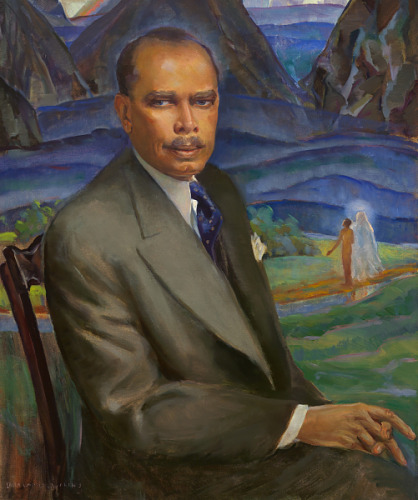
Painting of James Weldon Johnson by Laura Wheeler Waring in the National Gallery of the Smithsonian Institution in Washington, DC (1943)

It Was the Window

I know people who have chosen their new car based on the number and location of the cup holders. The first time I saw HH I was really attracted to the way he wore a white button-down shirt. In my first post-seminary home, I remember loving the staircase railing.

For our newest home, it was the window. I walked into an empty apartment and saw the window and immediately imagined our Christmas tree there. It would be a good place for Spense to watch other dogs and their people on the sidewalk below.  It would be a great place to sit and begin the morning with our first cups of coffee.

Something random yet particular often draws us in.

Today is Ash Wednesday and there are already many comments out there about how we’ve been in a season of Lent since mid-March 2020.  Do we really need to consider that “to dust we will return” when it’s felt dusty for 12 months now? Isolation has a way of forcing us to think about things we would otherwise be too busy to ponder.

But here’s my thinking: if you are a person of faith, something drew you to God once upon a time.  Maybe you were in trouble and there was nobody else to help.  Maybe someone you love was in trouble and you cried out on their behalf.  Maybe something was so profoundly beautiful that you knew there was a Divine Creator.

What first drew you to God?

Was it fear? Family ties? Ineffable joy? Pain? I was introduced to God by my parents and extended family in the Church.  I was drawn to God because of loneliness and pain.

Lent is a lonely time and the pandemic has made the world lonelier and more isolating, so yes, it feels like we’ve been in a season of Lent for the last twelve months.  And yet it’s also a time when we strive to be more attuned to where God is all around us.  This is how we are moved spiritually.

I see a lovely window and imagine what that window offers.  I see a handsome man in a white button-down and he seemed interesting. (Handsome Man became Handsome Husband – HH.)  I could imagine walking down the staircase in my first manse to welcome guests at the front door.

The pandemic cannot take away our imagination.  Everyday there is something ordinary that can lead to extraordinary moments.  A window, a shirt, a staircase.

Today may God remind us that we are indeed dust and to dust we will return.  And there is beauty in the dust and the light and the wind and the noise and the quiet.

Image of the window in our dining room overlooking the world outside our doors.

Moving Always Hurts

HH and I moved over the weekend from one home to another. We had three movers, TBC and TBSILE, and a couple of handy carts. With two sore arms (shoulder surgery on the right side in October and a tetanus shot on the left arm last week) I was not only coached to refrain from lifting anything heavier than my phone, I actually couldn’t.

But on Saturday night, I was in physical agony. Legs, back, and yes – shoulders ached as if I’d hiked for hours carrying a bag of rocks.  And I did almost nothing except tell people where to put the sofa and lamps.  Okay – and I also lifted more than my phone.

Moving always hurts.  Either our bodies ache or our soul aches.

I have friends and family who have lived in the same home for most of their lives if not all of their lives.  There is enormous comfort in living in one’s forever home, and yet a day will indeed come when those homes are emptied out too.

With each move comes a loss whether the move is from home to home or job to job or from one church to another church (or to no church.)  And yet these new chapters are also full of adventure and new perspectives.  

People can live in the same home for decades and scores of decades and never be stuck in the way they live out their lives.  And others of us do get a little stuck in our ways.

I’ve shared many times George Bullard’s 60-40-20 theory:  If most of our church members are at least 60 years old and have been Christian for at least 40 years and have been members of the congregation for at least 20 years there is an excellent chance that our church is stuck.  Any change will be difficult.

And these are fighting words for our congregations who tell me they are ready for change but they are not.

Many of us are in “making the best of it” mode in many parts of our lives and this can be admirable. And it also negates what God can do if we will let God do it.  God can infuse new life into our relationships, our financial situations, our outlook and definitely our spiritual lives if we will spend as much time in prayerful discernment as we spend defending the way we’ve always done things.

Something I see all too often: a congregation knows that something needs to change.  They call in consultants.  They ponder merging with another church.  They consider moving to a new location.  They call a new pastor.  They get rid of a current pastor.  They paint the door green. 

They spend an enormous amount of energy considering options that will help them survive and yet when it comes to moving either physically or culturally, they just can’t do it.  It will hurt too much.  

These are the congregations which will die in the next five years – and with the impact of COVID their time of death is closer than they expect.

On this Tuesday after Moving Weekend, I am still achy.  The pains of moving physically and culturally take their toll, but what lies ahead for me and HH is fresh and clean and clear.  We love our new place and not merely because we have two sinks in our bathroom for the first time in our lives.

We love the new sounds at night.  We love the new neighbors.  We love the new views outside our windows.  It’s an adventure that only God knows about in detail.  I’m excited.

I’m also excited when a church tells me that they’ve made a decision to move on a new building plan, a new mission focus, a new way of worshiping, a new partnership in the community.  They are moving even if they are not changing geographic locations.

When we let the Spirit move, we move.  And the pain lasts only a short while.

(Mandatory) Anti-Racism Training

All congregations in my denomination (the Presbyterian Church USA) require pastors and other leaders to take Healthy Boundaries Training. It might be called by another name, but this training involves clarifying roles and setting up norms for keeping clear lines of behavior. There are obvious boundaries (e.g. Don’t date parishioners) and there are not so obvious boundaries (e.g. Don’t continue serving a pastoral role in your former congregation except in limited circumstances.)

Last weekend, my Presbytery/geographic area of congregations approved a new requirement: Anti-Racism Training would be required for all pastors and other leaders starting this spring. It was almost a unanimous vote.

There are obvious anti-racism norms (e.g. Don’t use the N-word) and there are not so obvious anti-racism norms (e.g. Stop saying you don’t see color.)  Those of us who are White have a lifetime of learning to do and a required course won’t heal centuries of pain.  But it’s a start.

Comments I have heard both from our own local people and others around the country:

  • This is too political.
  • There are no Brown or Black people in our churches or even in our county so why do we have to do this?
  • I’m tired of being called a racist.

All of these comments only reiterate how much we need to educate ourselves about race.  People who are not White have spent their lives navigating a world in which their skin color was not the dominant skin color.  People who are White have not had to code switch throughout the day and might not even know what code switching is.

There are sacred assumptions all of us make about each other based on the color of our skin.  We need to unlearn this for the sake of the Gospel, not because it’s politically correct and not because it’s trendy and not because of any other reason except for the fact that God created each of us with our own eye colors and hair colors and skin colors.  And Jesus was born to save each of us all.

And I have every expectation that the Holy Spirit will be with us as we grapple with each other about the racism that divides us.  It doesn’t scare me because God is in it.  It inspires me because God is in it.  

What’s going on in your congregations to address the sin of racism?

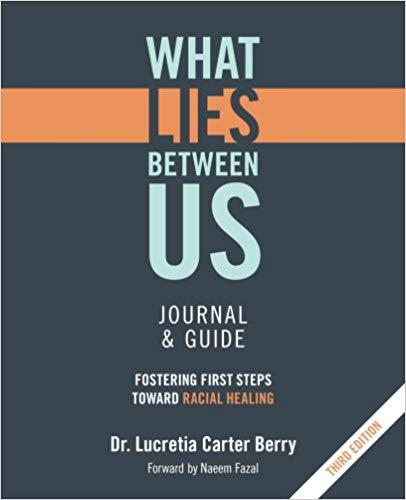
Image is the workbook we are using for our training: What Lies Between Us by Dr. Lucretia Carter Berry.  Check it out as part of your Lenten practice this spring.


Consistent Grace Changes the World

I was watching a documentary about the U.S. Presidents over the weekend and saw a photo of President Reagan wearing a tan-colored suit. No big deal. But remember when President Obama wore a tan suit in 2014 and was criticized for it?

We’ve all heard over and over again what might have happened if those who stormed the U.S. Capitol on January 6 had been Black or Muslim instead of predominantly White and Christian. I have no doubt that more than five people would have died that day.

We are politically inconsistent. We criticize, if not condemn, people with whom we disagree politically for doing what our own political side has done.  Late night comedians point this out in their opening stand ups but most of us don’t care. We offer grace to those who agree with us and we excoriate our political foes.  And sometimes we are all in the same Church.

I’ve had parishioners decry certain choices until those choices have shown up in their own families: 

  • The anti-abortion mom who changed her mind when her own daughter faced that choice.
  • The family who said that divorce could never be an option for Christian families until one of their own family members made that choice.
  • The parents who judged the parents of a child who struggled with addiction until their own child struggled with addiction.

Imagine a world in which we offered consistent grace to our political adversaries, to our theological foes, and to those people we judge.  Jesus modeled lavish grace to everyone, including those who executed him and including us.

I disagree with a lot of people about many things.  And yet, consistent grace is what I’m called to offer them because Jesus offers it to me. 

This doesn’t mean that anything goes.  It means that God is God and we are not. And sometimes we condemn each other for the fundamental politics of it.  It’s a waste of our precious time.

Let’s be gracious out there.

Image source.  

Jan & Dr. Edmiston

I earned a Doctor of Ministry degree in 2001.  I didn’t plan to call myself Dr. Edmiston although several of my parishioners at the time insisted that both the worship bulletin and church stationery reflect the fact that the church had a pastor who was a “Doctor.”

All three of my pastor predecessors were “Rev. Dr.” but I learned that each of them actually had honorary doctorates from a Christian college that the church supported financially.  Yet they were each called Dr. ___ until they died.

Mostly people have called me “Jan” or “Pastor Jan” and this is okay with me because as an educated White Woman, I grew up with the expectation that I belonged in most any professional context you might find me.  I didn’t need the “Dr.” in front of my name to convince people I was smart.

Again – I am White.

My Black colleagues with Master and Doctoral degrees always use the “Rev. Dr.” in front of their names because it reflects their achievements in a world that doesn’t assume that Black and Brown people are professional, well-educated, brilliant human beings.  And it’s about respect in a culture that has not respected their ancestors.

Dr. Yolanda Pierce, Dean of the School of Divinity at Howard University wrote this article in The Christian Century recently in which she talked about this need for respect.  She shared the story of civil rights activist Mary Hamilton who was arrested during a peaceful protest in Alabama in 1963 and  was held in contempt of court after refusing to answer questions until she was addressed as “Miss Hamilton.”  The laws in Alabama were changed because of her demand for respect.

We live in rather casual culture now where children call their pastors by their first names  – at least in some churches.  I call all my colleagues by their first names when I am talking with them, but they are Dr. __ or Rev. __ when I’m referring to them among their parishioners, especially when I’m referring to Black and Brown colleagues.  This is an essential teaching tool.  I work among some of the most gifted pastors in the country and I know that my Black colleagues are still not respected in the same way my White colleages are.  To remind church people that their leaders are graduate school-educated pastors is important, especially when some church folks disrespect their leaders.

Joseph Epstein’s op-ed in The Wall Street Journal here sparked controversy when he suggested that Dr. Jill Biden wasn’t a real doctor because her degree was a Doctor of Education.  He was challenged in social media to put it mildly.

It’s important for the First Lady to be known as Dr. Biden to remind us that she, too, is a well-educated leader with expertise beyond the honorific of FLOTUS.

I can be called “Jan” without dismissing myself because of my White Privilege.  And yet sometimes I use Rev. Dr. Edmiston because it’s a helpful reminder to some that women can be pastors and holders of doctorate degrees.

My point is that I imagine a world in which we stop assuming that just because people not in the dominant demographic, it doesn’t mean they aren’t gifted and worthy of respect.  God sees us as we were created to be.  This alone should be enough to see each other in new ways.

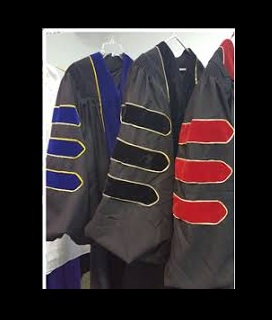
Image showing the three stripes of a doctoral robe.  I don’t know why Juris Doctor recipients aren’t called “Dr.”

The “Angry With Me” File

I keep a file with all the angry emails I’ve received over my years of professional ministry  and re-reading them is strangely comforting.  (Note: The most devastating comments I’ve received were shared without a paper trail.)

As for the ones who put their grievances in writing, they fall into several categories:

  • Angry Emails from People Who are Not Well.  There’s the email from the Baptist minister I’ve never met who accused me of apostasy because I won’t let him serve a Presbyterian Church because if he served he would prove that only he is the real Christian.  There’s the email  sent in the middle of the night from a person who was under the influence of something powerful and took out his life frustrations on me.  (Note: I contacted that person to review some of his colorful accusations and he had no memory of sending it.)
  • Angry Emails from People Who Don’t Like Presbyterian Polity. There’s the one from several elders accusing me of ruining their church because we/I would not let them call a high school graduate who was somebody’s cousin to be their new pastor.  (“We all love him What is wrong with you?“)  There’s the one from the congregation who wanted to call the guy from another denomination who had been their supply preacher for a few months.  The problem was that he had a history of sexual assault accusations against him and had been defrocked from that other denomination. 
  • Angry Emails from People Who Are Not Dealing with Reality.  I have an email from an elder who was angry with me because I wouldn’t “let them they sing the Doxology anymore.”  I reminded them that I have no authority over whether or not they sing the Doxology but they left the denomination anyway.
  • Angry People Who Are Not As Angry After We Talk.  After praying one Sunday for Saddam Hussein (something about asking that the hate in his heart melt and all our hearts melt after preaching a sermon about loving our enemies and praying for those who persecute us)  Angry Member and I had a good talk about Jesus really meaning what he says even if it makes us uncomfortable.

I have given people plenty of good reasons to be angry with me over the years, and my point is this: professional ministry is not for the fainthearted.  If we are doing our jobs, if we are faithfully interpretting God’s Word, we will make people angry.  If we are trying to steer congregations towards healthy choices, we will make people angry.  If we are loving the unlovable and standing up to bullies, we will make people angry.

God said via the prophet Isaiah, “See, I am doing a new thing.”  People will get angry when we remind our congregations about this. Or they’ll say, “God can do a new thing but our congregation doesn’t have to.”  (Well, how do you think God does it if not through our congregation?)

Healthy ministry involves loving God’s people and sometimes they will be angry anyway.  It’s okay.  We are still called to love even the angry ones.

The Stimulus Check Challenge

HH and I received a stimulus check last week and frankly I was surprised. I didn’t think we qualified. We have been among the privileged during this pandemic.

We’ve experienced minimal pain. We still have steady paychecks and can work from home. We have excellent health care. 

We don’t need this stimulus check for daily expenses.

Of course we could use this money for future purchases or to add to our retirement accounts. But we have neighbors in food lines and neighbors living in tents by the highway because the winter shelters are closed.

Here’s the challenge: if you don’t need your stimulus check for your own daily needs, please consider giving it away to those who have more daily needs than we can imagine

  • Keep it local..
  • Don’t tell anyone.

Being poor is not a sin. Ignoring the poor is.  And those of us who can live without a stimulus check have been given the opportunity to stop being ignorant.

Happy February.

When Being Inclusive Doesn’t Make Sense

Being inclusive – as a society, as a church, as a community –  is one of those things we are all supposed to do and be.  From playgrounds to boardrooms, we’ve all witnessed situations when somebody isn’t included and it’s painful.  What’s even more concerning is when we live our lives never noticing who’s not at the table and whose voice is not being heard.

And yet, in organizations like the Church, sometimes our mission is sabotaged when “everybody” is included.  For example:

  • A congregation elects a Pastor Nominating Committee and there’s a desire to include a member who is a reliable naysayer.  He has strong opinions and many believe it would be a good thing to include him so that he feels like he’s a part of important decision-making in the life of the congregation.  A Pastor Nominating Committee needs to be on the same page in terms of what the congregation wants in the next pastor.  And this particular guy has announced that under no circumstances will he allow the church to call a clergywoman, even though their denomination ordains and supports women in professional ministry.  This not only frustrates the work of the PNC; it also blocks the movement of the Spirit.
  • After a year of study, St. Thomas Church on the Hill votes to build affordable housing on their property for homeless veterans.  They have prayed about this for a long time and they feel that God is calling them to do this.  The vote was 89% in favor of this project during the congregational meeting, so it’s going to happen.  When putting together the six person team to work with the builders, the pastor includes two of the members who voted against the project.  Unfortunately, those two are doing their best to sabotage the construction process even though the congregation is overwhelmingly in favor.  They are asking questions and making demands that have already been settled.  They should never have been added to the committee, but – for the sake of inclusion – they were.

See what I mean?  A healthy governing board indeed includes a diverse group of people who are representative of the congregation, and yet the board needs to be able to debate an issue and come out of it as a united body.  Healthy elders and deacons might disagree with what the others approved, but they leave the meeting backing up the the majority vote.

In a healthy church, there are not “winners” and “losers” in terms of congregational decisions.  If our focus is on pleasing God, and we have prayerfully discerned the situation, we have to agree to agree with each other and show a united front.

I hope this makes sense.  What I’m not saying is that we forego inclusion of different ages, heritages, and perspectives on our church leadership teams.  What I am saying is that we must be committed exclusively to following the Spirit’s lead.  Otherwise, we are wasting everybody’s time.

It’s best to exclude those who don’t play well with others.  Love them.  And love your church by electing those who are most excited to expand the congregation’s mission.