Empathy Week: Hearing (and Believing) Each Other’s Stories

Trust – especially between people of different political perspectives – seems to be at an all time low.  I (a White person) was telling a friend (who is a White person) about what happened to another friend (who is a Black person) involving a server in a restaurant who ignored her place in line and gave the next table to a White couple when it was actually her turn.  “That wasn’t about racism,” my friend responded.  “The server was probably really busy and just didn’t see her.”  Exactly.

Some of us don’t believe that Tamir Rice was merely playing in a park before he was shot by police, perhaps because he wasn’t our son or our child’s friend. He must have done something threatening that prompted the police to shoot him.

I can retell the stories of Black friends being pulled over in their cars for no apparent reason, but it’s not the same as if those friends share those stories.

Again – empathy isn’t everything.  But it’s something.  Empathy helps us to humanize each other and understand each other a tiny bit better.  And when we know each other’s stories, our capacity to empathize with them grows.

Zoom meetings are perfect for story sharing and relationship-building.  My brilliant friend S suggested that our Anti-Racism Ministry Team begin our meetings with a relationship building question that everyone is invited to answer.  The first time we did this the question was one of my favorites:

What is your earliest memory about race?

One by one on Zoom, we shared a personal story and then invited someone else to share their story until everyone had the opportunity to share.  And voila!  We had made connections that had not been made before.  While you might scoff at spending 20 or 30 minutes at the beginning of a meeting sharing stories because we are not getting into the “real business” the truth is that those minutes of relational time are priceless in terms of making connections.

Here are some other questions that prompt a little self-revelation:

  • What is the story of your name?
  • When and where were you baptized and what have you been told/remember about it?
  • When was a time you felt the presence of God in an especially deep way?
  • When did you experience someone doing exactly the right thing to support you?
  • What’s the best present you’ve ever received?

Imagine opening every business meeting, every small group, every Bible study, every book study with a common question that people are invited to share.  Believe me, this is what people crave: deeper relationships, a sense of being known, an opportunity to share a glimpse of their lives.

And relationship-building bolsters trust.

These story times are the little tastes of dessert in our day.  We see each other in a new ways.  We see the world in new ways.

So – your spiritual discipline today might be to ask someone – individually or in a meeting  – to share a story about themselves.

Stories change us.  And maybe they will make us more empathetic.

Image of the painter Joe Lopez standing with one of his works from The Gallo Series.  You can read his story here.

Empathy Week: Literature by People Whose Lives Don’t Look Like Ours Builds Empathy

I remember finishing Crime and Punishment at a bus stop on my way home from work years ago and the end so blew me away that I couldn’t stand still. I walked all the way home, about five miles.

Despite never having been a Russian man, much less a 19th Century impoverished criminal racked with paranoia, I deeply felt the impoverishment, the paranoia, and the guilt of Rodian Raskolnikov.  His agony was felt deep in my guts.

This article by Molly Worthen sparked today’s post.  She interviewed scholars and students for her article and writes this:

This is the gift of liberal education: the invitation to read a book and think about both the variety and the common threads of human experience across time, space and culture. “Empathy extends beyond trying to put yourself in other people’s shoes,” said Ms. Holloway, the student at Oberlin. “Success is not part of that definition, really. The act of listening is a form of that empathy. You’re willing to attempt to understand.”

Reading authors whose life experiences are totally different from our own is priceless for bolstering our ability to empathize – although having empathy is not enough in terms of changing the world.  See yesterday’s post.

All their lives, People of Color in the United States have been given reading assignments, book club suggestions, and everyday reading materials that portray the life experiences of White People.  To Kill a Mockingbird. Romeo and Juliet. The Hardy Boys. Lord of the Flies.  The Great Gatsby.  All “classics” to be sure.

On today’s high school reading lists, students might also find Song of Solomon, The Joy Luck Club, Persepolis, and The Brief Wondrous Life of Oscar Wao on their reading lists and yet we can do better.  There are so many new novels by people and about people whose life experiences show White People a different reality.

If you are interested in some small semblance of walking in another person’s shoes whose life might be very different from yours, consider these excellent books by authors of color.  I dare you not to be moved in your gut.

  • The Nickel Boys by Colson Whitehead
  • The Water Dancer by Ta-Nehisi Coats
  • Homegoing by Yaa Gyasi
  • The Lost Children Archive by Valeria Luiselli
  • The Other Americans by Laila Lalami

There are literally an endless list of novels to read that exquisitely take the reader to a new place with a new lens.  Empathy isn’t everything but reading novels by authors whose lives don’t look like our own is one way to nourish it.

Image is a pencil drawing of the lead character of Crime and Punishment by Fyodor Dostoevsky by an unknown artist. The name Raskolnikov means “schismatic.”

Empathy Week: Actually Empathy Is Not Enough

Justice will not be served until those who are unaffected are as outraged as those who are. Benjamin Franklin*

Social-Emotional Learning (SEL) is hot as part of a holistic curriculum for children these days, and it’s been said for a while now that EI (emotional intelligence) is a better predictor of success in the world than IQ (intelligence quotient.)  Teaching empathy is not only possible; it’s become a movement.

Most of us want our children to be Good Humans.  How does that happen?

Being sympathetic is not enough. To say “I feel sorry for that person” keeps us separated from someone’s pain.  They are sick/lonely/poor – but we aren’t, so off we go with the rest of our day.

Being empathic is not enough.  To say “I feel your pain” isn’t even possible most of the time.  I cannot know how a gay person, a black person, a Gen Z person,  a refugee, or an imprisoned person feels because I’ve never been any of those things.  I can try to imagine and my imagination might be pretty good.  But still I cannot know.

God calls us to be compassionate and my resident theologian HH has studied this for most of his professional life.  The Bible refers to Jesus “having compassion” upon people six times in the New Testament.  The Good Samaritan has compassion on the injured stranger.  The Prodigal Son’s father has compassion for his wayward child.  The Greek word here is σπλαγχνίζομαι (splagchnizomai) which literally means to be moved in one’s bowels.

It’s the opposite of “I hate your guts.”

It means “I feel love for you in my deepest guts.”  It’s a verb which implies being one with someone – which is so much more than feeling sorry for them or identifying with their pain. (Note: this is a great article about how literature can take empathy to new levels.)

The Good Samaritan didn’t merely feel sorry for the guy on the side of the road or imagine how much his wounds must have hurt.  He took responsibility for the stranger’s wounds himself.  Sort of like Jesus.

And so, here we are living in a world of conflict and violence.  After George Floyd’s murder all kinds of people who had never considered police brutality or the unnecessary death of Black men suddenly included support on their Instagram accounts.  Some marched in peaceful protests for the first time in their lives.  And then so many of us stopped.

We’ve done our part.  We’ve spoken up bravely on social media. And now we’ve reverted back to sympathy and empathy for our Black and Brown neighbors.

This is not where Jesus stopped.  Jesus never stopped speaking up and walking with those experiencing violence and injustice, racism and sexism.  It was not a temporary activity to stand up to injustice.  It was his life.

Having sympathy for people might be an essential part of our lives.  Feeling empathy for those who suffer physically, emotionally, spiritually, politically might be an essential part of our lives.

But neither of these actions are enough.

  • How are we standing with people in pain?
  • How are we speaking up?
  • What are we doing every day to the point that it’s who we are to seek understanding and hear the stories.

ESPN footbal analyst Kirk Herbstreit – God bless him – broke down in tears saying this over the weekend:

The Black community is hurting. … How do you listen to these stories and not feel pain and not want to help?

Empathy is not enough. We must be moved to do something to help, to become the kind of human being who stands alongside those in any kind of need.

Now more than ever, the Church must speak up and be the ones who help in tangible, transformative ways.

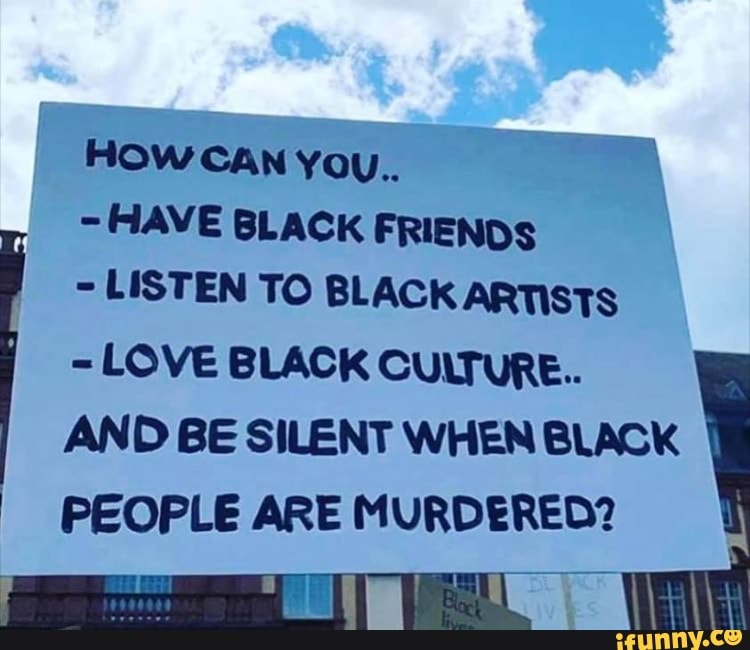
Popular image from a recent BLM protest.  And a note about having Black friends.  (Most White people don’t actually have any.  Read here.)

*Someone shared that Benjamin Franklin didn’t actually say this, although it’s attributed to him all over the place.  Whether he said it or not, it’s true.

Empathy Week: How Can We Come Back Together in a Divided Nation?

‘Do not think that I have come to bring peace to the earth; I have not come to bring peace, but a sword.
For I have come to set a man against his father,
and a daughter against her mother,
and a daughter-in-law against her mother-in-law;
and one’s foes will be members of one’s own household.
Whoever loves father or mother more than me is not worthy of me; and whoever loves son or daughter more than me is not worthy of me; and whoever does not take up the cross and follow me is not worthy of me. Those who find their life will lose it, and those who lose their life for my sake will find it. Jesus in Matthew 10:34-39

There is no rejection more painful than family rejection. Brene Brown

The country I love is more divided than I’ve ever remembered.  Not only does it bring All The Feelings (shame, grief, sadness, resentment, and a crushed heart) it also reminds me of what Jesus said about how we will be rejected when we try to follow Jesus.  I’m not talking about the platitudes.  I’m not talking about the upbeat Bible verses.  I’m talking about disagreeing on who God is and who God calls us to be.

When we Christians deeply disagree to the point that we cannot talk with each other anymore, it makes me profoundly sad.  The upcoming election is bringing this up for me like no other time.

Is Jesus divisive?  Sadly, yes.

As a lifelong long Christian, I believe that the Bible teaches that:

  • Jesus died to show us the depths that God would go to show us how much we are loved.  Can we even get our minds around this – that God would die for us?  I can barely comprehend it.  This cosmically defeated sin and evil, and yet sin and evil are still real.
  • What happens on this earth matters.  It’s not about “getting into heaven.”  It’s not about telling the poor, the enslaved, the desperate that they will get their justice in heaven.  No. No. No. Jesus prayed “thy kingdom come, thy will be done on earth as it is in heaven.”  If we ignore the poor, the sick, the outcast, the people we assume are not like us while we are alive, we are in utter disobedience to the God who made us all.
  • There are at least two forms of justice in the world today just as there were at least two forms of justice when Jesus walked in Palestine: one for the dominant culture and one for the people who are not in the dominant culture.  And this is a sin. If you are a young white man who is caught high on weed in a public place, you will most likely be sent home.  If you are a young black man who is caught high on weed in a public place, you will be arrested and possibly shot.  Please connect with me in the comment section if you’d like me to share evidence of this from the public record.
  • Jesus has called us not to be sympathetic (“I feel so sorry for you.“) and not to be empathetic (more about that tomorrow) but to be compassionate.  Jesus was “filled with compassion” more than once in the Greek Bible and this involves walking alongside those in pain.  Not feeling for them.  Not imagining how they feel.  But being with them in their suffering.  Emmanuel = God with us.  And we are supposed to do what Jesus did.

So here’s where the division comes in – especially for Christians.  When the basic tenets of my faith (see above) are at odds with the basic tenets of your faith, our politics are informed accordingly and we are at odds.  We see the world differently, even though we both identify as followers of Jesus.

As a follower of Jesus:

  • I will vote for candidates who show a semblance of love towards the people God died for.
  • I will vote for candidates who understand that there is no peace in the world without justice, especially for the poor, the sick, and the outcast.
  • I will vote for candidates who show compassion.

And because of this, I find myself profoundly sad because this divides me from family and friends.  And yet, Jesus told us this would happen.

And this is the labor many of us carry today.

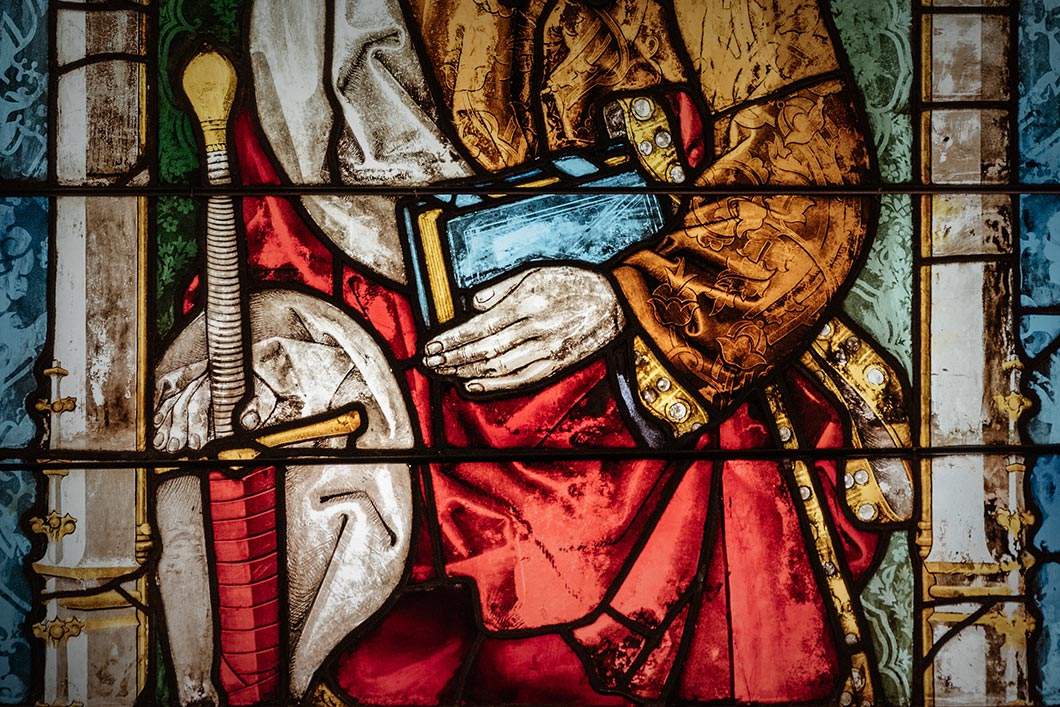
Image from a window in a Geneva, Switzerland church sanctuary  Photo by Samuel Zeller on Unsplash.

Isabel Wilkerson Explains It All

America is an old house.

If you’ve ever lived in an old house, you know that there is always work to do to keep that house structurally sound. Ancient roots have messed with the foundation. There are four layers of shingles covering up a damaged roof. Old destruction caused by critters can’t be ignored any longer.

Nine years after The Warmth of Other Suns: The Epic Story of America’s Great Migration, Isabel Wilkerson has blessed us with Caste: The Origins of Our Discontent.  It’s such a good book and if you are a preacher, prepare to be drenched in sermon illustrations. Ms. Wilkinson brilliantly describes the United States as an old house that needs to address the cracks in our foundation.

The Institutional Church is also an old house.

There is always work to do in terms of learning about God and the history of God’s people and our history as God’s people.  There are repairs to make (and I’m not talking about the church roof or the lighting in the sanctuary) and sometimes it feels easier to ignore them . . . until we cannot ignore them any longer.

As my own corner of Church World grapples with systemic racism, as we try to become an anti-racist Church, the subsequent issues involves fear. Hot topics always invite what could be difficult conversations.

I believe that congregations willing to have difficult conversations are dynamic and theologically faithful.  They are confident that God’s truth will be lifted up and they don’t fear that “people will leave” when there are differences.

I love my brother’s response to differences in theology when debating certain issues:  “I’m just not there yet.”  It’s a generous thing to say, making the assumption that he might one day shift in his views.

There are churches with Black Lives Matter banners in their front lawns.  There are churches offering Bible studies about racism.  There are churches delving deeply into the history of White Supremacy in the Church.  And there are churches ignoring that there is a problem.

Just like an old house, The Church of Jesus Christ – especially in the United States – needs work.  Ancient biases have messed with the foundation. There are layers of mythology covering up a damaged structure. Destructive assumptions can no longer be ignored.  (Except many congregations are indeed ignoring them.)

Not doing the work to tear down and rebuild and repair will eventually cause the whole thing to crash.  And so, we need to face the truth about what lies behind the walls, underneath the foundation, and above our heads.

Do. Not. Be. Afraid. That. People. Will. Leave. Your. Congregation. If. You. Talk. About. Hard. Things.  Yes, they will leave.  And others will join you.

Please read Caste by Isabel Wilkerson.  She will explain it all.

Don’t Be Afraid

It was the admonition of angels and prophets and even Jesus in Holy Scripture and most of us fail at living it:

Don’t be afraid.

As I talk with church people about everything from the pandemic to calling a new pastor, it’s clear that many are afraid.  Their biggest fears seem to be these:

  • If we don’t get back into the sanctuary soon, people will become so used to not “going to church” that they will never come back.
  • If we discuss difficult topics (like Black Lives Matter) people will leave the church.
  • If we can’t have traditional Sunday School we won’t even be a church anymore.
  • If we don’t have a new pastor by Christmas, people will find new churches.

We’ve all heard about the importance of faith over fear.  It’s in Scripture, hymns, and those fun “encouragements” you can buy at Homegoods to hang on the wall.

When I hear lifelong church people express their fears, I (perhaps unfairly) think: “This church is dying and they don’t know it.”  Their identity is about surviving, not being A Light to the World.

I’m not saying “let go and let God.”  Yuck. No.  (It’s true but we’ve turned it into a wall plaque.)  I’m saying that when we live out our calling in faith, God makes it abundantly clear when things need to change.

Our identity as The Church is not in our building, our programs, our ability to hire a pastor, or the number of people on our rolls.  Our identity is in Jesus Christ.

  • How are we making a life-giving impact in our community in the name of Jesus?
  • What positive things have we learned about God and ourselves as God’s people during this pandemic?
  • What’s keeping us from being the people God created us to be?

These are exciting times to be the Church.  I say this boldly and – to be honest – with trepidation considering that the world is a hot mess.  (And how can Chadwick Boseman be dead?)

But praying about the future of The Church is no joke.  It’s not a platitude to nail to the livingroom wall.  It’s serious business.  Every week as I serve Charlotte Presbytery – and I mean every week – I see God moving.  God is especially moving in shake-it-up kinds of ways:

The person who “is not yet ready” for leadership becomes the one called to step up now.  The impossible task of clearing the decks in terms of tired leadership is miraculously achieved. The funding needed for a desperately needed ministry is found.

God is doing amazing things during 2020.  The year is a monster, to be sure.  It’s been ugly and devastating and violent and often evil.  And yet, we are not afraid.  In fact, we expect resurrection.

Image is a quote from The Fault in Our Stars by John Green. Augustus’ parents were all about “encouragements.” (I like pillow sayings as much as anyone but true faith is not a platitude.)

Evaluating Pastors During a Pandemic

Be honest: was your pastor officially evaluated last year? 

I’ve found three things about evaluating clergy serving churches:

  1. Many churches never evaluate their pastors.
  2. When churches do evaluate their pastors, it’s often unsatisfying.
  3. Most parishioners truly have no idea what pastors do all week.

Jill Hudson continues to be the go-to person for clergy evaluation and she looks for these themes when evaluating clergy:

  1. How effective is the pastor in personal, professional, and spiritual balance?
  2. How effective is the pastor in guiding a transformational faith experience?
  3. How effective is the pastor in motivating and developing a congregation to be a “mission outpost” (help churches reclaim their role in reaching new believers)?
  4. How effective is the pastor in developing and communicating a vision?
  5. How effective is the pastor in interpreting and leading change?
  6. How effective is the pastor in promoting and leading spiritual formation for church members?
  7. How effective is the pastor in providing leadership for high-quality, relevant worship experiences?
  8. How effective is the pastor in identifying, developing, and supporting congregational leaders?
  9. How effective is the pastor in building, inspiring, and leading a team of both staff and volunteers.
  10. How effective is the pastor at managing conflict?
  11. How effective is the pastor in navigating technology?
  12. How effective is the pastor at being a lifelong learner?

Even these questions can fall short but they are better than questions about “the pastor’s plan for growing the church” or the “the pastor’s plan for raising money for the roof.

If clergy evaluations have been tricky pre-pandemic, they are more so now that we’ve been social distancing since mid-March.  There are so many new ways parishioners can transfer their frustrations and anxieties on pastors during COVID-19:

  • Why won’t the pastor let us back in the sanctuary?
  • Why didn’t the pastor visit me in the hospital when I had surgery?
  • Why aren’t we doing Zoom Bible Studies like the Lutherans?

I’ve had church leaders contact me to ask if they could pay their pastors for PT work now since “obviously they aren’t working full time these days.”  Congregants have no idea.

I like Jill Hudson’s themes because what we want in a church community is indeed healthy balance, transformation, inspiration, vision, leadership, and authentic relationships.  We can live with the occasional dull sermon or off-key anthem or peeling paint if we are growing closer to God, closer to each other, and closer to our God-given purpose as individuals and community.

We are moving into staff review season as congregations consider their 2021 budgets.  A healthy congregation has a healthy and satisfying review process. Read Jill’s book.  Remember that staff evaluations are about the whole congregation.  A happy, healthy, thriving church staff makes for a happy, healthy, thriving church even during a global pandemic.

Image source.

The Parable of the Farmers’ Market

Parables are the shocking stories Jesus told to teach us about God.  And this is the Parable of the Farmers’ Market.

There was a Farmers’ Market in Charlotte, NC and the vegetables and flowers were almost too beautiful to bear. The smells were intoxicating.  And the world seemed as it should be. God did this.

Baby bok choy in deep greens.  Eggplants in royal purples. Sweet peppers in colors never before seen in the average garden. Jalapenos to delight the soul. Flowers too gorgeous to choose just one bouquet.

Catfish and fresh rainbow trout. Breads for the gluttons and gluten free. Olive oils and honey as far as you can see. Coffee beans and fruit juices. Peaches and blackberries large enough to make a person weep.

And the people. On one particular Saturday the people were from Korea and India and Syria and Ghana and Honduras.  There were women donning bindis and chadors. There were men in Lily Pulitzer shorts and in blue jeans. Their skins were golden and brown and black and white.

It was a happy place, a God-given place.

And then three middle-aged white men were overheard talking about how “those four police officers taught that crook a lesson.” “They shot the hell out of him” the one in the turquoise shirt said, laughing.

And there was a guy wearing this T-shirt.

And the LORD said,  “I have given you blessings of every color and shape,  from every nation and creed.  And you curse my blessings.  And while you are rich in worldly power and contempt, you who do not treasure the colors and textures I have created in this life will be condemned in the next. To those who love, love will drench them even in times of brokenness.  And to those who hate, there will be deep sorrow.”

Have a hope-filled Monday.

Images from the Charlotte Farmers’ Market on Saturday, August 29.

Conversations with an Unexpected Twist

I try to take somebody’s mother out to dinner on August 28th every year because it’s my mother’s birthday and I can’t take her out to dinner.  Last year I took her sister out for dinner and I called at the last minute to get a reservation:

Me:  Hi.  I’d like a reservation for two outside.  Someplace with a nice view.

Hostess:  Is this a special occasion?

Me:  Yes, it’s my mother’s birthday and her sister and I are meeting for dinner.

Hostess: Will you mother be coming with her sister?

Me: Unfortunately no.  My mother is dead.  But please wish a Happy Birthday to her sister if she gets there before I do.

I love eating out. When we arrived, the hostess mentioned how nice it was that V & I were getting together for Mom’s birthday. And then the hostess told me about her own mother who had died recently of breast cancer.  Yep.

Yesterday, I had a doctor’s appointment and as I was leaving, the conversation went like this:

Me: (to my doctor who has a LeBron poster on his wall) Did you see LeBron talking about the NBA boycott last night?

*Doc: Why do people have to be so emotional?

Me: ?

Doc: I mean, I don’t see race.  But clearly this black man was a bad guy.  He had a knife.

Me: I think the knife was in his car.  He didn’t have a weapon on him at the time he was shot.

Doc: But the police know what they are doing.  They were just defending themselves.

Me: Do they? He was shot in the back seven times.  I don’t think he would have been shot if he was a white guy.

Doc: People are so emotional. 

*Maybe I don’t need to say this, but this doc is a young straight white guy.

I like doctors – especially those who like basketball.  We were talking about my shoulder and then the conversation made a twist and I found myself talking about racism with with this guy who is a specialist I don’t need to see after next week.

We never know when simple conversations turn into more complicated conversations.  But it’s important that we see people and talk with them – even if the simple becomes more complicated.  There could be a pastoral twist.  Or a political one.

But we need to keep talking to each other.

Happy birthday Mom.

Image of the dessert I always ate for Mom’s birthday when we lived in Northern Virginia: The Flourless Chocolate Waffle at The Carlyle.

Protesting As a Faith Practice

Cutting straight to the chase here:  Peaceful protest is protected by the U.S. Constitution.  PROTESTING IS NOT THE SAME AS RIOTING. Protesting is also a spiritual practice.

I was asked in a church interview in 1988, “Can you think of any reason why you might protest something in a public gathering?”  It was an interesting question to ask a pastoral candidate.  I thought for a moment and responded, “Any reason?  There are many reasons why I might protest something for the sake of the Gospel.  Wouldn’t you?

I sounded so confidently evangelical and social justice-y, didn’t I?  At that point in my life, I don’t know that I had ever protested anything in public.  I voted.  I wrote letters to my representatives.  But I was a rule follower who was taught to be ladylike and marching with signs seemed a little radical.  It never occurred to me that protesting is a spiritual practice.

Consider what Jesus did for the sake of the Gospel.  (And he was actually a little destructive in this story.)

Today, protesters are confused with looters and definitions have become political.  One side is all about Black Lives Matter and the peaceful protests asking for justice for George Floyd, Brionna Taylor, and now Jacob Blake. The other side equates protesting with breaking windows and setting buildings on fire.

Senator Mitt Romney joined evangelical Christians to peacefully protest the death of George Floyd on June 7th. People of many different faiths have joined protests here in Charlotte, NC where I live.  Why do we do this?

  • Because we want to express our support for mistreated people.
  • Because we want to draw attention to injustice. (Still – nobody has been arrested for the March 13th murder of Breonna Taylor in her own bed in a case of mistaken identity. Wouldn’t you be enraged if that were your daughter or sister?  Wouldn’t you ask for justice for her?)
  • Because we want to gather in unity to support each other.
  • Because peaceful actions often change policy. (In Charlotte, the police will no longer be buying chemical weapons after protests in June.)

Can you think of any reason why you might protest something in a public gathering?  I hope we all would, for the sake of the Gospel.

We pray.  We read Holy Scripture. We gather for worship. We serve our neighbors.  And we stand up for what’s right because that’s what God commands.  These are just some of the ways we practice our faith.

He has told you, O mortal, what is good;
   and what does the Lord require of you
but to do justice, and to love kindness,
   and to walk humbly with your God? Micah 6:8

Top image from Senator Romney’s Twitter feed.  Bottom image from the 2017 Women’s March in Chicago.