Back from Vacation . . . And I Confess I Want More

Vacation was spent in a very nice beach house that my siblings and I rented with our families as we’ve done now for over 30 years.  Different houses.  Same relaxation except now it’s even easier because the kids are grown.  There were years when we had at least five in diapers.

Let’s just start by acknowleding that I am extremely privileged to get this:

  1. Vacation.
  2. Paid Vacation.
  3. A Job I Won’t Lose If I Take Vacation.
  4. The Ability to Afford to Rent This House.
  5. Extended Family Who Wants to Spend Vacation Together.
  6. More Than Enough Food.
  7. A Pool (and An Ocean.)
  8. Good Health.

Even with distancing and masks, we could still contract COVID-10, but there’s another virus that threatens us and it comes from the privilege of having things.

It’s easy to become accustomed to luxury and privilege.  And the weird thing is that the more luxury we have, the more luxury we desire.  (That’s the virus.)

Our very, very nice beach “cottage” had a covered bar overlooking the pool (see photos above) and as I sat there mesmerized by the beauty around me, I started to think, “This bar really needs a little refrigerator.  Why don’t we have a little fridge down here?  And an electric ice-maker (like the one in the living room of this house) would be handy.

And so it goes.

What I’m not saying: That it’s not okay to enjoy a slice of luxury.

What I am saying: That being content and grateful keeps us grounded.

Wanting more and more and more is the virus that results when we are not content with and grateful for what we already have.  I can see the utter selfishness of desiring more cookies when our neighbors have no cookies at all.

There is nothing holy about poverty.  It’s also true that being poor is not a sin.  We often attack the poor rather than poverty and we blame the poor for making bad choices. (Note: If you believe this, please make friends with someone who lives on the streets or in public housing and hear their story.)

Enjoying some of life’s sweet luxuries can be rejuvenating, and yet, we are also called to consider what we could live without for the sake of our neighbors.  

If I owned that beach house, would I do without a poolside fridge and a poolside icemaker so that some other person’s life might be improved?  Would I consider matching what I paid for this vacation to share with an unemployed neighbor?  Would I relinquish something I really really want so that another person could get an air conditioned hotel room with a shower?

These are all personal choices and it’s easy to be judgey or hold ourselves up as paragons of mission service.  But this is what I thought about at the beach last week.  It was a wonderful time of restoration and resurrection.  And also the world is a hot mess and it’s time to get back to figuring out how to bring some equity to those who don’t have this.

Image of our vacation pool and the view from the pool bar. It was lovely.

I Need This (And Maybe You Do Too)

Everybody needs a time away to stare at the clouds and rest and regroup.  Everybody needs a vacation and I hope a vacation is in your future if you haven’t recently taken one.

I’m going radio-silent until July 27th and I’m grateful for the opportunity to step away. No phone. No computer.

See you later this month and may the world also find rest.

A Test and An Opportunity: Yes, Churches Can Assist Their Neighborhood Schools

Okay folks – I got some great feedback from yesterday’s post and the Holy Spirit – as always – is on top of things.

Just as my post was being read yesterday, school systems around the country were already reaching out to congregations from California to North Carolina asking their neighborhood congregations if they had space that their school systems could use to 1) expand their access to socially distanced space and 2) offer internet access to students without such access at home.  I heard from dozens of pastors.

Thank you God.

This issue of schools re-opening for in-person or online classes is both a test and an opportunity for congregations.

  • THE TEST:  If your congregation already has a relationship with the nearest school to your church building, then you get an A.  If your pastor or other church leaders already know the school principal and guidance counselors by name, you are steps ahead in terms of being a missional congregation.  Excellent.  Unfortunately, the majority of our pastors cannot identify the name of the principal of the closest school to their church building, much less the name of the police chief, the fire chief, and the owner of the local coffee shop.  Kudos to all of you who already have relationships with your community leaders.
  • THE OPPORTUNITY: Churches have fellowship halls and family centers and classrooms that are unused these days because of the pandemic.  Could those spaces be used for local students?  Do you have courtyards or patios or parking lots or shady lawns that your school system could use as they socially distance?

Church: here’s what you do next if this resonates with you:

  1. Contact your local school system offices/the principal of the school closest to your church property/the school board and ask what your church can do to help them this fall with school. Maybe they can use your building or your parking lot or your lawn.  Maybe they need space with quality wireless.  Maybe they need meals or snacks served.  Maybe they need space for story time.  Maybe they need art space.
  2. If your church needs assistance before they can do what the schools need them to do (like upgrade their wireless service or do a deep cleaning) contact your denominational leaders.  There are grants out there.  (Note: If you are in Charlotte Presbytery check this out.)  This is why denominations exist: to support local congregations.
  3. If volunteers are needed, do background checks on those who sign up ASAP.  Everybody – everybody – gets a background check before they work with children.  Safety is the first priority.
  4. Be the Church out there.  This is our time to serve.  This is not our time to proselytize or convert or judge people.  This is not about “getting new members.”  This is about being the hands and feet of Jesus in the world.

We are blessed with an opportunity to serve our communities in ways we’ve never served before.  This is our chance – even if we’ve failed to reach out into our communities before – to reach out and make a difference.

This is why we have church buildings: to use those buildings as tools for ministry.  Don’t miss this opportunity.  Don’t fail another test.

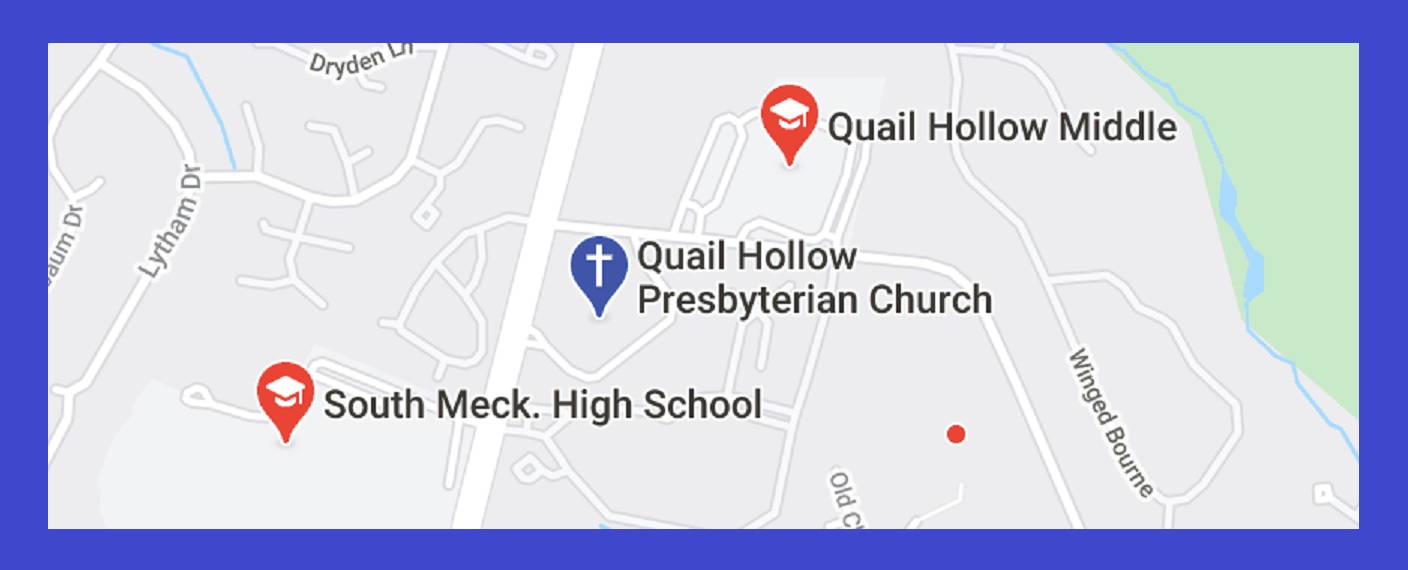
Image shows one of my favorite churches in Charlotte, NC and their proximity to two schools within walking distance from their property.


How Can Churches Help When the Schools Open?

Whether our schools will open for in-person classes or virtual classes, I’m wondering if there is anything our congregations can do to help.

I know that school systems have regulations and license requirements, but this might be a great opportunity to offer support to our parents, teachers, and students.  I just don’t know how those opportunities might play out.

When I traveled to Lebanon in 2017, I visited schools established by the local churches to serve Syrian refugee children.  The Syrian children didn’t speak English (which was required in Lebanese schools) and some of them were illiterate in their own language.  The Presbyterian Church in Minyara, Lebanon bought a garage that looked like an old Jiffy Lube business with three bays and some offices that were turned into classrooms.  Our group visited this school and witnessed lessons being taught with music and art.  “Physical Education” class was actually a brief dance party kicked off when one of the teachers would yell “Dance Party!” and everybody got out of their desks and broke into dance in the garage bays while music played.

The teachers were “regular church people” who had a heart for these children who – by night – slept in plastic tents in a camp.  During the day, they could be in school where there was heat in the winter and a hot meal for lunch.

The context is different here in the U.S. as we endure this pandemic situation.  But I wonder what our churches, synagogues, and mosques could do to help.

Again, I don’t have specific ideas.  But do you?  Please share.

Image of Dance Party Time (i.e. Physical Education Class) at the refugee school in Minyara, Lebanon in 2017.  Read more about these efforts by The National Evangelical Synod (Presbyterian) of Syria and Lebanon here.

Church: Ignoring What’s Going On in the World Will Kill Your Ministry

I know. I know. I know.

You find political sermons divisive.  Your church is “purple.” You pay your pastor to preach The Bible not the newspaper.  You fear another church split.  “What if people leave?

There are church leaders out there today grappling with whether or not to put a Black Lives Matter banner on the front lawn of church property.  There are church leaders doing book studies using everything from denominational resources that instill Scripture in the lessons to secular books by DiAngelo, Kendi, Coates, and Oluo – and not everyone’s happy about it.  There are pastors participating in peaceful marches and other pastors decrying those marches.

(Note: The Billy Graham Rapid Response Team chaplains were present at at least one march in Charlotte, NC and I wasn’t sure if they were present to march or pray or help in case violence broke out.  Either way, it was good to see them.)

I once served a church that had endured an especially ugly church split prior to my arrival and at one of the first elders’ meetings, I remember that the split and its ugliness came into the discussion.  One Church Pillar immediately interjected this statement:

Let’s pretend like that never happened.

So, actually it had happened.  Every kind of misconduct except sexual.  Embezzlement. Spiritual abuse. Fraud. Behavior Unbecoming of a Follower of Jesus.

It had happened over a long period of time and the consequences were not going away by ignoring it or proclaiming “well, that’s over” as if it was actually over.  The split took almost two decades to happen.  It took almost two decades to heal from the split.

And now we hear Good Church People say “Let’s pretend like ___ never happened.

  • Let’s pretend that slavery was never sanctioned by the Church.
  • Let’s pretend that Christians never perpetuated or nourished the lies of White Supremacy.
  • Let’s pretend that every child has an equal opportunity to succeed in this country.
  • Let’s pretend that “We don’t see color.”

It’s best if we just don’t talk about that around here.  Political conversations are divisive.  Church should be a Happy Place – Praise Jesus.

Friendly reminder:  Jesus was crucified for trying to overthrow the Roman government.  Jesus turned over the tables in the temple after seeing the heresies and injustices to the poor.  Jesus called the Righteous Leaders “broods of vipers.”  And he didn’t do these things because he was cranky.

Jesus models that when we see injustice, we act to make it right.

Hanging BLM banners on church property will not make it right.  Prayerful marching in the streets will not make it right.  Book groups will not make it right.  But the hope is that someone will be moved, someone will wake up, someone will realize that it’s our responsibility as followers to Jesus to do more than wish the ugliness will go away.

After we (White People) educate ourselves about the realities of what has happened in the history of our nation, the next step is to do something impactful.  Banners and book studies are not enough.

The next step is to work for justice.  The next step is to make earth as it is in heaven.  (Jesus’ words; not mine.)

The worst thing we can do is pretend our history never happened.  It will literally kill our ministry because it will kill our credibility and our honesty.  We must face the truth and address the truth in the name of love.

(I would personally say that we must address the truth in the name of Jesus, but even if you don’t believe in Jesus, or you don’t believe in any kind of Divine God, please consider addressing injustice with love.)

Fun fact: God is love.

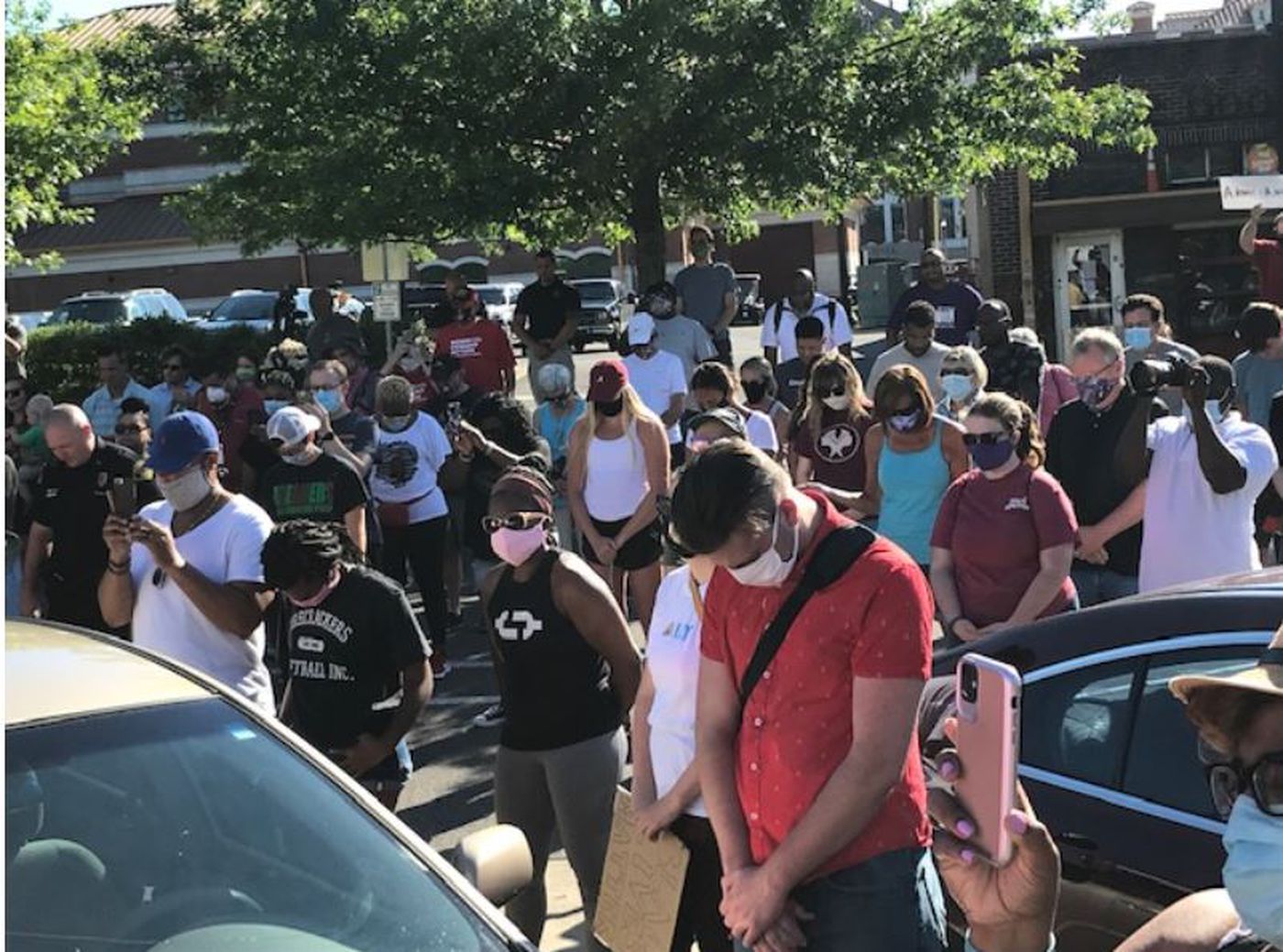
Image from a May 2020 prayer march in Tuscaloosa, Alabama. Source.

Good Ideas and Not-So-Good Ideas for These Days

Happy Monday as we enter Day 120 of these days of pandemic/quarantine/mask-wearing or not-mask-wearing.  By now – after multiple months of adapting, it occurs to many of us in the Church that we need to take further action or refrain from taking further action.  This is our new normal until there is a vaccine.

What are the good ideas and what are the not-so-good ideas for these days?

Not-So-Good Ideas:

  • Having a Long Term Strategic Planning Retreat for Leaders. We don’t know what to expect in August 2020 much less three years from now.  (Please tell me you aren’t considering a ten year strategic plan for your congregation anytime soon – or ever.)
  • Shaming People for Not “Going Back” to Church (i.e. in the Church Building.)  Some will be able to return and some won’t.  It’s okay. God knows who is medically vulnerable.
  • Ignoring What’s Going On in the World (a.k.a. tomorrow’s blog post) Please don’t say that it’s “too political” or “too depressing” to address COVID, George Floyd, poverty, unemployment, school closings.  Exhibit A: Jesus who bummed out the self-righteous and was executed for sedition.

Good Ideas:

  • Auditing Your Church’s Tech Needs.  What would make virtual ministry easier for your congregation?  Teaching people Zoom? An Apple TV? New microphones?  There are grants out there for tech needs.  Check denominational resources for grants.
  • Working with a Tech Mentor.  Maybe you definitely do not need an Apple TV or new mikes, but you need updated laptops for your staff.  Talk with other congregations to connect with someone who might give you honest advice and help hook you up.
  • Re-Consider Church Staffing.  Does the church need a high school student who can help with tech needs?  This could be a great internship for the right person.  Does the church need to re-train pastoral care givers for more phone and computer work?  (Let’s practice praying on the phone, people.)  Do we need a different kind of Pastor, Educator, Office Manager, Finance Person?  I don’t say this to freak out current staff members who need/want to stay in their positions.  Old dogs CAN learn new tricks if we are willing.
  • Celebrate the Advantages of Online Worship, Online Social Times, Online Bible Studies, Online Meetings.  Yes, they can be exhausting but they can also :
    • Include those who’ve never been included before because of age, home responsibilities, weather, lack of transportation, illness.
    • Offer connections to neighbors of other faiths or no faith who are interested in your Anti-Racism book study or your Bible study on Revelation.
    • Point out the inequities in terms of digital access and move us to expand our mission priorities to address this.
    • Inspire us.  I watched a Sunday morning worship service yesterday that included children’s art for the pastoral prayer and a child’s voice praying The Lord’s Prayer.  My heart is still full.

It’s a great time to be the Church.  And it’s also an exhausting time to be the Church because adaptation is labor-intensive.

And it’s summer.  Be gentle with yourselves.

We don’t have to be perfect in these transitions.  We’ve never done this before.  But the God I believe in offers grace beyond grace for every anxious one of us.

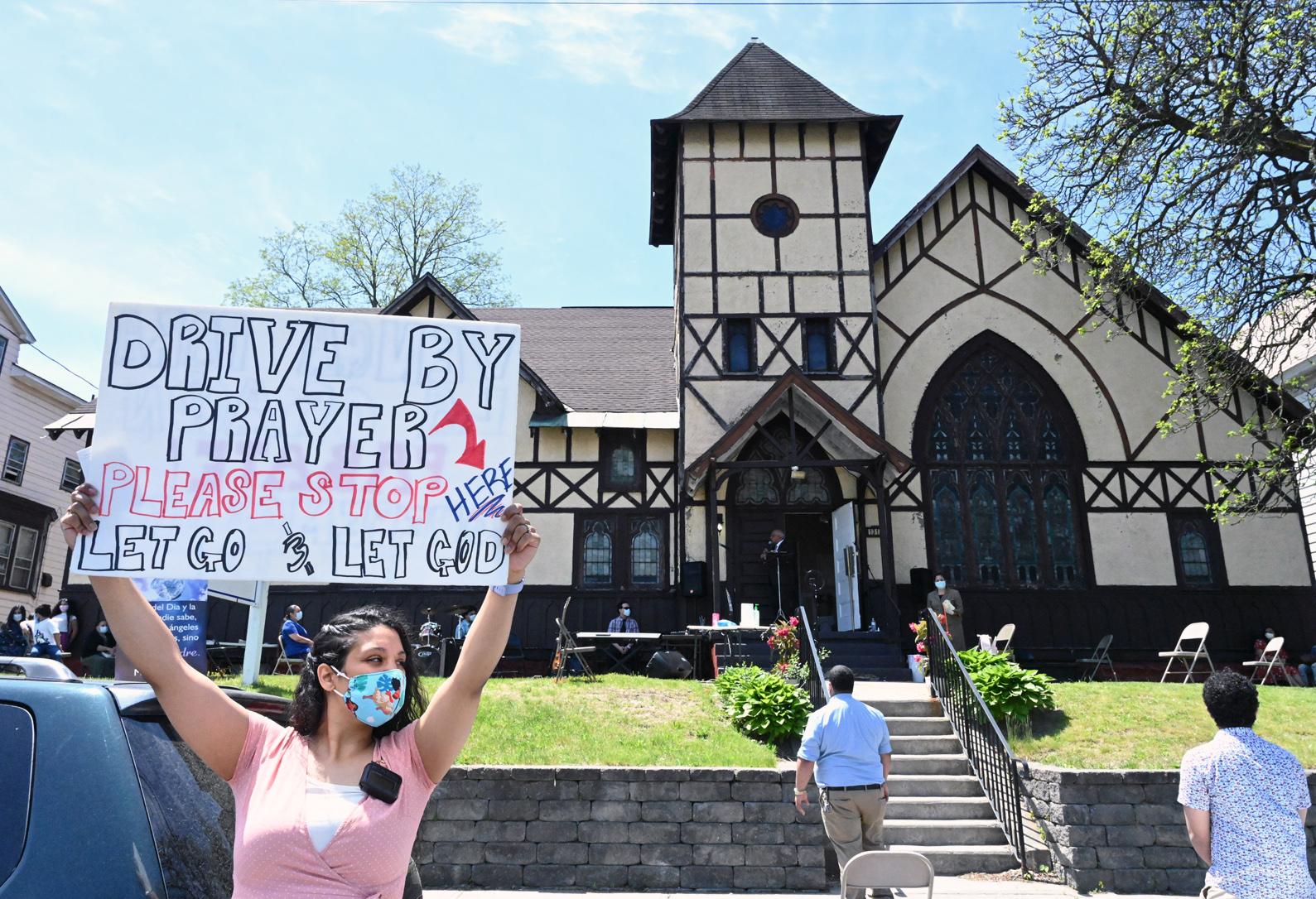
Image by Marc Schultz of Iglesia Pentecostal Dios Proveera Church in Schenectady, NY

Flash Cards

I still remember my fifth grade vocabulary flashcards: BANISH, IMPALE, GARRULOUS. #FunWithMemorization

And every Presbyterian seminarian is familiar with those handy Greek and Hebrew flashcards – especially helpful in summer school when we had to learn 50 new words every 24 hours.

I received a set of flash cards yesterday from Fulton Street Books and Coffee with my first Ally Box.  And although I knew all those words: ALLY. RACE. IMPLICIT BIAS. DECOLONIZATION. ANTI-RACIST. ANTI-BLACK. PRIVILEGE. RACISM. WHITE FRAGILITY. WHITE SUPREMACY – it occurs to me that many of us have different definitions for those words.

What I mean by “racism” may not be what you mean by “racism.”

As we (White People) do the work of becoming Anti-Racist which – defined by Ibram X. Kendi means:

Someone who is supporting an antiracist policy through their actions or expressing antriracist ideas. This includes the expression or ideas that racial groups are equals and do not need developing, and supporting policies that reduce racial inequity.

. . . we need to use the same definitions.

If I understand that “race” is a human-made social construct which considers some people to be superior and some to be inferior and you believe that race is a God-given designation to divide human beings into different castes – then we have a problem as we (White People) grapple with the issues of these particular days.

Although I’ve already read the books I received yesterday with my flash cards, I recommend subscribing to the Fulton Street Ally Box.  It’s expensive but I consider the cost worth it not only for my own education but also for supporting a Black-owned business doing good work.

[Note: With a subscription, you also receive the code for The Ally Box Learning Cooperative which unlocks the door to some important conversation and this is where the magic will happen!]

And if anybody out there needs a copy of The Color of Law or So You Want to Talk About Race, I will share my extra copies.  Not kidding.  Email me.

When I say “we have a work to do (White People)” this is what I’m talking about. Have a good Wednesday.

Image of the Ally Box flashcards that come with a subscription.  Also, I was baptized 64 years ago today so I consider this commitment to participate in the Fulton Street Learning Cooperative to be part of my ongoing attempt to confirm my baptism.

Either You Trust Me or You Don’t

I wrote a post in February about Church People who trust each other. But this particular post is about whether or not people trust their institutional leaders.

I am a Mid-Council Leader in the Presbyterian Church USA, which – in the eyes of many – makes me immediately suspect. People don’t trust The Institutional Church like we used to.

I know things by virtue of my role. And some of what I know is confidential.

Let’s say that I know a pastor- let’s call this pastor Sydney- and Sydney has a history of making parishioners uncomfortable because Sydney thinks that sexual innuendo is hilarious. Charges have never been filed against Pastor Sydney so nothing shows up on criminal or disciplinary checks.  Pastor Sydney also has a secret home in the mountains that even his family doesn’t know about and a side job raising chinchillas in the basement of the manse.

It’s possible that I would share with a Pastor Search Committee that there are flashing yellow lights concerning Pastor Sydney. This suggests a serious cautionary note about moving further in considering Pastor Syd to be your minister.

NOTE:  I made all that up.  None of it is true. But if it were true, please believe me when I share that Pastor Sydney might not be a good match for you.

We don’t have bishops in my tradition and I do not match churches and pastors.

Jobs are not guaranteed for clergy in my denomination. And while I can share information I know from talking with my counterparts, that information will be vague if there are issues. #Lawsuits

It’s very rare for me to say to a pastor search committee: “This person cannot be your pastor.” Usually there are signs that a particular candidate may not be the right pastor for your wonderful church. But it’s often not my decision.

Sometimes . . .

  • Congregations do not care that their potential pastor has anger issues/a trail of strange behaviors/unusual hobbies that feel icky. They just want somebody to be their leader as soon as possible.
  • Congregations still pick leaders who physically “look like a pastor” but do not have the skills they need in a pastor.

I’m excited to work with you and your church. Your congregation deserves great leadership and we will work together to make that happen by God’s grace.

A great match is a holy thing. Congregational leaders and denominational can do this together but we need to trust each other.

You either trust me or you don’t.  But the truth is that I want your congregation to thrive in the name of Jesus Christ.

Image is Creation of Man by Chagall (1958)

Can We Believe It If We Haven’t Experienced It?

Over the weekend, HH and I watched fireworks from the top of our building’s parking deck and it was amazing.  We could see at least twelve different shows across the horizon AND the red, white, and blue skyline of Charlotte.

Lots of other people in our building had the same idea.  Some brought coolers and chairs.  A group of people sat in the back of a truck.  Someone brought an incredibly non-anxious dog.  I’d say there were about 20 people up on the roof.

HH and I were the only ones wearing face masks. We were both surprised and not at all surprised.

We personally know people who have tested positive for the novel coronavirus with few symptoms.  We personally know people who have tested positive and been hospitalized.  And we personally know people who have died from COVID-19.

Do the people who don’t wear facemasks or socially distance have a hard time believing that COVID-19 is real because they’ve not personally experienced it?

It makes me wonder about their belief in God.  Can God be real to people who have never experienced God?

There’s a famous story in the Bible about one of the Twelve Disciples – Thomas – who pronounced famously that ‘Unless I see the mark of the nails in his hands, and put my finger in the mark of the nails and my hand in his side, I will not believe.’  I get it.  Who’s going to believe something as farfetched as a dead person rising back to life?

And who is going to believe in a God who brings healing and inspiration and peace and salvation if we haven’t personally experienced it?

Throughout my life, I’ve observed people doubting everything from back pain to mental illness.  “They don’t look disabled!”  “They need to get out of bed and snap out of it.”

I know people who believe that the poor have made poor choices which is why they can’t have nice things.  Chances are that the people who say this about the poor have always had nice things within their reach and if they ever lost their nice things, they could replace them.

Personal experiences are essential and even Jesus knew this.

Go and tell John what you have seen and heard: the blind receive their sight, the lame walk, the lepers are cleansed, the deaf hear, the dead are raised, the poor have good news brought to them.’

One of the reasons I believe in God is because of what I’ve seen and heard and felt and experienced.  I don’t know what to say to those who have not seen and heard and felt and experienced what I have – except to serve as a tour guide pointing out moments that they – too – saw, heard, felt, and experienced God’s grace.  They just didn’t realize that’s what was happening.

Someone reading this post might test positive for COVID-19 this week or this month.  I know it’s real because of personal experience.  And I wore a mask even before someone I knew was infected because I trusted the scientists.

What we believe in life is all about trust.  Who do we trust? 

I have reasons to trust scientists because of personal experiences.  I have reasons to trust God because of personal experiences.

Who do you trust and why?

Image source.

Sins of the Fathers . . . and

The LORD is slow to anger, abounding in love and forgiving sin and rebellion. Yet he does not leave the guilty unpunished; he punishes the children for the sin of the parents to the third and fourth generation.  Numbers 14:18

When Scripture talks about “the sins of the father” (which is often in the Bible) it sounds – in some passages – like God is punishing people for what their ancestors did.  In other passages it sounds like God will not punish people for what their forefathers and foremothers did.  And in still other passages, those words sound more like prophesy than punishment.

When parents make poor judgements, their children often suffer for it.  When grandparents leave a legacy of greed and deception, the next generations often feel generational effects.  Trauma specialists say that – when children are traumatized by “the sins of their parents” their DNA actually shifts.

The effects of the generational sin of enslaving people in the United States continues to show up in the fourth and fifth and twelfth generations of the children of historically enslaved people.

Now we (White People) might say . . .

  • I’ve never enslaved people.
  • My ancestors never enslaved people.

But the truth is that our Founding Fathers built this nation on a system of enslaving people who didn’t look like them.

  • 40 of the 56 signers of the Declaration of Independence enslaved people.
  • 10 of the first 12 Presidents enslaved people.
  • 2 of the 4 Presidents on Mt. Rushmore enslaved people.

Even if your family never enslaved people, our nation’s Founding Fathers and we who look like them have structurally benefited for hundreds of years.

And now we owe for it.

We not only owe for years of unpaid wages throughout years of slavery, we owe for the financial ramifications of failing to offer Black and Brown military veterans the GI Bill, for red-lining, for school segregation, for poll taxes, for two sets of law enforcement practices and sentencing guidelines.  We owe for substandard healthcare and substandard schools and substandard parks and recreation resources.

We owe for the everyday sins of 2020.  Please read this by former US professional soccer player Lauren Holiday.  Lauren – who is White – writes:

Every white person in America owes.

It will be painful and it will probably be bloody.  People who are still wealthy because their great-grandparents and great-great-great grandparents enslaved people whose labor made them wealthy in tobacco and sugar cane and railroads will not want to part with their wealth.  We will not want to share our structural White privilege and our everyday White privileges.

There are many White people who would rather die than pay reparations.

May God have mercy upon us because most of us (White People) would rather die than pay reparations.

But consider this – those of us who are White People who also say we love Jesus:

The LORD is slow to anger, abounding in love and forgiving sin and rebellion. Yet he does not leave the guilty unpunished; he punishes the children for the sin of the parents to the third and fourth generation.

It feels energizing to see this not as “punishment” but as that  justice rolling down like waters and righteousness like an ever-flowing stream.  Don’t we want this if God mandates it?

It’s something to consider long after Fourth of July Weekend.  (I’m talking to you, Church, in love.)

Image of the national monument Mt. Rushmore in Keystone, South Dakota on the land of the Lakota Sioux Native Americans.