How Women and Men Are Talking to Each Other These Days (And I’m Glad)

Note:  The post is full of generalizations.

Although I’m a Myers-Briggs Introvert, I find it easy to talk with strangers about cursory topics.  Like shoes.

I’ve noticed that women generally comment to each other about shoes, hair, jewelry, etc.  For example, last week I was in a coffee shop meeting someone and three different women commented on my cute purse.

Women #1 as I picked up my cup of coffee:  I love your purse.  I’ve never seen that purse in white.

Me:  Thanks.  I got it on Amazon.*

Woman #2 two minutes later while I was sitting at the table waiting for my friend:  Your purse is so cute.  Where did you get it?

Me:  Thanks so much.  Amazon.*

Woman #3 in the parking lot:  What a cute purse. I love the cross body.

Me:  Thanks.  

This happens frequently.  “Nice T-shirt” is a common comment I make when walking through my neighborhood.  I have generally believed that guys do not do this with each other.  But then I found myself in rural Canton, NC last week and this conversation ensued with a man fixing my car:

Me: I love your shoes.

Mechanic Guy:  Thanks.  I got them at the Under Armour outlet in Colorado.  They are so comfortable that I found an outlet near here and I bought two more pairs.

Me: So cute.

Did I just say “so cute” to tough guy male car mechanic about his shoes?  Yes I did.

I wonder – as genders are more openly fluid and gender roles are less strict – if men and women are normalizing ordinary conversation in ways like this that make people connect more easily.  Are you finding this?

This is not about flirtation or nervous chatter.  What I’m talking about here is making connections with people beyond “hi.”  When I wear this shirt, I always get comments and smiles.  Or comments and grimaces.  Relationships – even ephemeral ones – are crucial in any culture.

In the United States where social isolation is part of our culture, it’s nice to make connections any way we can between men and women, children and adults, rich and poor, rural and urban.  And so – if I may be so bold – say something encouraging to neighbors today:

I love your shoes.

Your hair is awesome.

Your lipstick is amazing.

Cute dogs.

Again (and please hear me) this is not about flirting with people.  This is about making wholesome, natural connections.  This is about noticing each other.  This is about seeing people as neighbors and human beings.

Have a friendly Tuesday.


Images of the cute purse and cute shoes.

*I am trying to quit Amazon.  But it’s really hard.

The Racist Bones in My Body

“I don’t have a racist bone in my body.”

Good for you, if you believe that about yourself. But to be perfectly honest, I – Jan Edmiston – have lots of racist bones.

Being called a racist is – apparently – the worst.  In the last week (and for the last 100 years or so*) people of every political stripe and skin color have been arguing about what’s racist and who’s racist.

  • Are we racist if we are members of the KKK?
  • If we are members of the Sons/Daughters of the Confederate Veterans?
  • If we live in a gated community that only allows a certain color or heritage of people?
  • If we send our children to a private school to avoid sending them to a school where the majority of students are a different skin color?
  • If we cross the street to avoid people of another race?
  • If have different rules for people who look like us and people who don’t look like us?
  • If we don’t go to stores, neighborhoods, houses of faith, restaurants, clubs where we are not the dominant race/ethnicity?
  • If we will only accept our children marrying someone of our same skin color?
  • If we support political candidates who do not prioritize voting rights or fair housing?
  • If we live in the United States of America?

Yes.

My definition of race has to do with the fact that we Americans live in a system of white privilege and supremacy where white is “normal.”  White is the color of most politicians, media stars, business leaders, and wealthy people.  Most of us with fair skin do not notice when we are in a restaurant, movie theater, office building or store where everybody is white.  We do tend to notice when we are in a place where we are the only white people (and we have been taught to be afraid in that situation.)

The fallout of systemic racism has fallen on every single one of us.  We don’t even notice when we are being racist.  We make comments that people whose bones are covered in brown or black skin are not as smart, not as law-abiding, not as refined, not as ambitious, not as responsible, not as committed as those whose bones are covered in white skin.  I have literally heard these words in the past week:

  • “You know blacks don’t stay married.”
  • “Why can’t blacks keep a job?”
  • “Why are black women so loud?”

I literally heard those words coming out of white people’s mouths.  Last. Week.  And if you think I heard them because I happen to live in North Carolina – home of the “Send her back” crowd – I drove halfway across the country and back over the last four days and, believe me, there are ignorant people everywhere.

Do I have a racist bone in my body?  I have a skeleton full.

And so do you, my pale friends. (And so do you my brown and black and golden friends – although it’s different.  That’s for another post.)

My jaw bone has been party to racist comments I’ve made.  My spine has been too soft when I should have stood up to the foolish comments of others.  My orbital bones have protected eyes that didn’t want to see the truth.  My shoulder bones have failed to help carry the burdens of my brown and black siblings.  My leg bones have failed to march alongside those who have no choice but to march.  Every one of my bones is a racist bone because we live in a culture that is racist.  It’s in our veins.  It’s in our DNA.  It’s under our fingernails.  It’s in the air we breathe.

So, what do we do next? 

We do the work of teaching ourselves.  Listen to podcasts like these.  Read books like these.

And why not stay racist?  Because Jesus.  Literally – for the love of God.  We are commanded to love our neighbors, to offer hospitality to strangers, and to recognize that the brown and black people languishing at our borders are God’s children just as surely as the white Europeans hoping to become U.S. citizens are God’s children.  And every single one of those men, women, and children we are keeping in detention centers used to be fetuses.  (But that’s for another post as well.)

When people say that somebody “doesn’t have a racist bone in their body” they not only don’t know what they’re talking about.  The claim actually proves that they are in fact racist to their core.

* The word “racist” is a fairly new word. During the centuries of slavery and Jim Crow, treating black and brown people as less than human was considered normal in many parts of the world.  The word might be new, but the existence of racism is ancient.

How Traumatic Was a Trip to the Moon?


I’m thinking about trauma today. Pastors are entrusted with stories of trauma from parishioners, strangers, and colleagues. Domestic abuse. Combat. Incest. Terrorism. Fire.

Pastors (and educators, social workers, police officers, and medical professionals) hear a lot of difficult stories – at least if we are authentically open to hearing them.  And I don’t know if incidents of trauma are on the rise in the world or it’s just that people are more open to talking about their trauma, but all clergy – and anyone in people professions – need training in ACEs and in Trauma Informed Care.

Can you imagine how traumatic it was to fly to, land on, and return from the moon?

Edwin Aldrin has written about both his depression and addiction post-Apollo 11.  His friend astronaut Ed White had died three years before in a fire testing for Apollo 1 and so he ventured to the moon with the realization that it was a life-threatening mission. there was always the possibility that once they landed, they would not be able to leave.

Prior to Apollo 11, Neil Armstrong and his wife lost their two year daughter to brain cancer.  The fact that he had the internal strength to fly to the moon and back after such a trauma speaks of his fortitude.  Or maybe it speaks to his need to leave everything behind.

I wonder if Aldrin – a Presbyterian – and Armstrong – a Deist – ever talked with clergy about the spiritual ramifications of flying to the moon.  Did they even have the words to express what it was like?  Did they have secret conversations comparing soulful insights, especially since they shared an experience unknown to any other human being?

Part of the training to be an astronaut is resilience building.  Even though the slightest mistake could result in death, astronauts were chosen for their ability to remain calm in disasters and clear-headed in chaos.

Just as we who work with people need to learn how to care for the traumatized, we also need to learn how to build resilience and how to teach resilience to others.  I have a feeling that the world is going to become even more traumatizing in the coming years in terms of violence and climate change and bullying.  Life feels especially coarse and cruel.

But it’s humanly possible to achieve miraculous things in spite of trauma.  50 years ago, two human beings experienced something marvelous.  They walked on the freaking moon and lived to tell us about it.  Wow.

Moon Week: What Do You See in This Photo?

What Do You See?

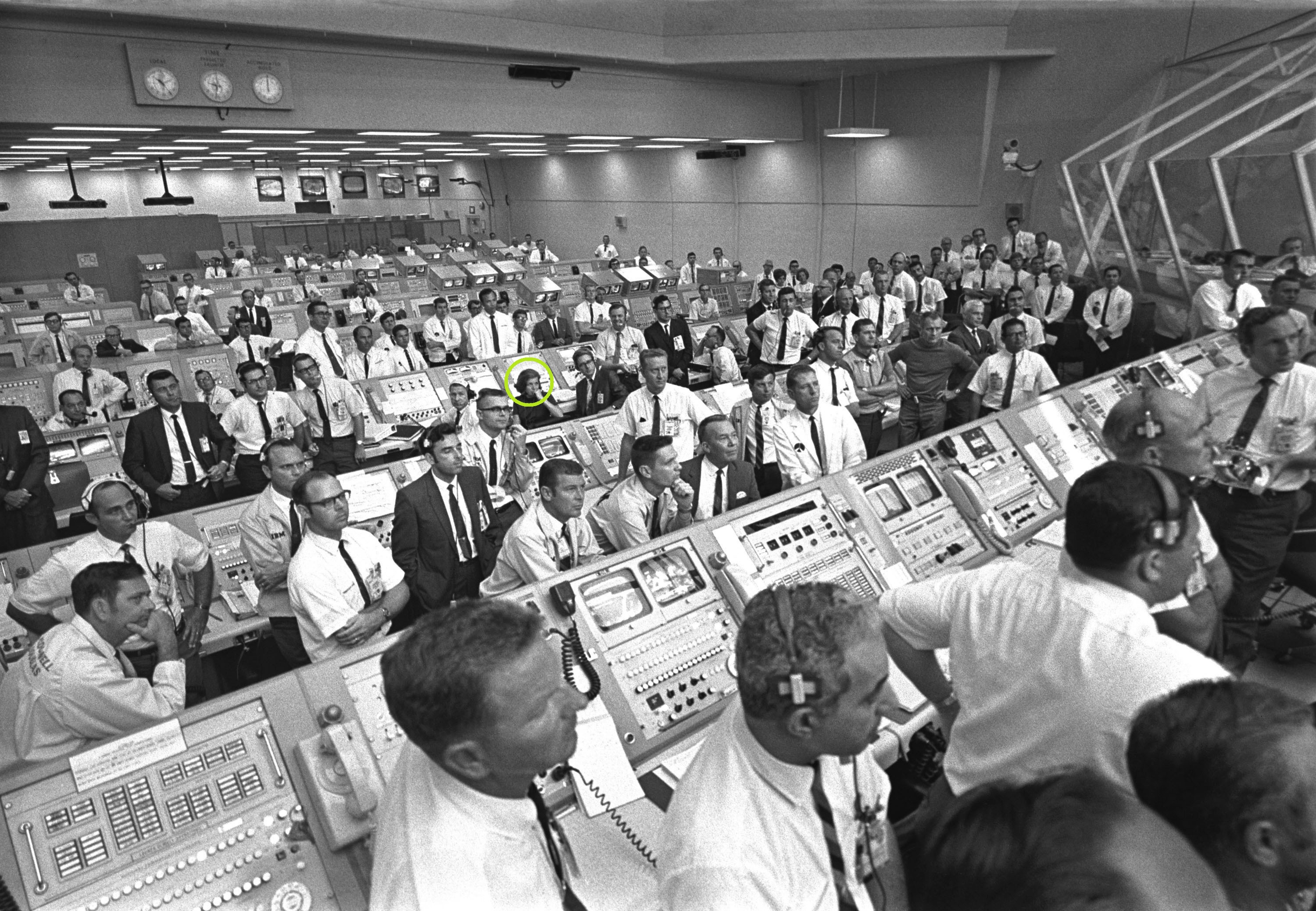
I am so struck by this photo of the Kennedy Space Center Control Room on July 16, 1969 when Apollo 11 was launched. What do you see?

I see lots of white shirts and dark ties.  I see eyes glued to a rocket launch happening outside their window.  I see clunky computer consoles. I see white men.  I see all white men – except for one woman dressed in black in the middle of the room.  Her name is JoAnn Hardin Morgan and she is an aerospace engineer.  Surely she was not the only woman in the whole USA with the chops to sit in that room, but she was the only one who got to be there.  She is brilliant – clearly – and she also had connections that helped make this happen.  (Her father worked at Cape Canaveral for the US Army rocket program.)

I wonder about the young boys and girls of color who were not encouraged to study math and science, whose school systems were diminished by Plessy v Ferguson. I wonder about all the girls who were discouraged from studying engineering, whose parents could not imagine any future that involved outer space, especially for their daughters.

There were women including – famously – women of color who helped make Apollo 11 a success fifty years ago.  This is nothing short of miraculous that – in a culture where women’s roles were so limited – someone noticed geniuses among them who happened to be women.  Katherine Johnson. Margaret HamiltonChristine Darden. Poppy Northcutt. Joanne Thompson, Lillie Elliott, Ruth Anna Ratledge and Anna Lee Minner.  And there were many more.

Surely there were men of color who also served NASA in those days, but I cannot find their names or their photographs.  African American men, Japanese American men, and other men whose ancestors did not come from Europe were still considered dangerous in the 1960s.  (And they are today in some communities.)

I wonder – as we see images of the great Apollo 11 moments this week – if our children and grandchildren will notice how white and male those images are.  When I hear people say “make America great again” I wonder if those were the great days they are talking about.

They weren’t so great for women and people of color.  Although there were extraordinarily gifted people who were not given the opportunity to share those gifts, we are so fortunate that – in these days – there are more opportunities for both women and all people of color.  But we haven’t hit “greatness” yet. There are still structures and systems that keep some of the most talented people out of the room.

When we look at these photos, what do we see?  Do we immediately notice who is not there?

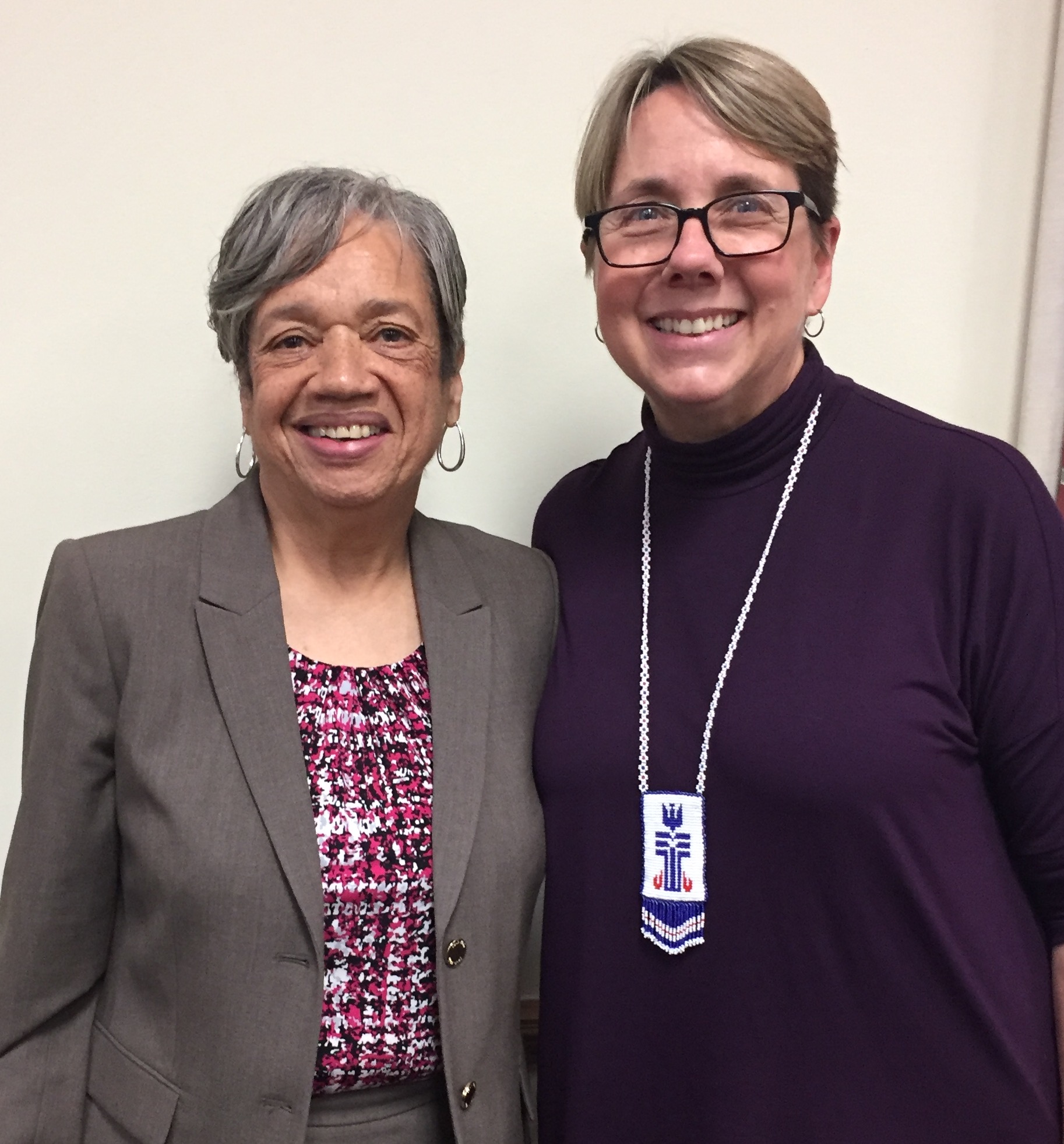
Images of Kennedy Space Center Control Room on Apollo 11 Launch Day (top) and the great Dr. Christine Darden with a fan girl at Columbia Theological Seminary in 2017.

Moon Week! “It’s Amazing What the LORD Has Let Us Learn”

I was 13 years old when Apollo 11 landed on the moon on July 20, 1969.  I remember that our family watched it on television at Mamaw and Papaw’s house in Mooresville, N.C.  I remember that it was my cousin J’s birthday.  I remember that we were all gathered around the television.  I can’t remember if we watched in black and white or in color.

My Dad had just lost his mother six months before on Christmas day 1968.  He was the same age as all three astronauts – 39.  And he commented on how much Miss E. (his mother) would have loved this moment.  He often quoted her:

“It’s amazing what the LORD has let us learn.”

Consider how much we’ve learned over the past 50 years.  And consider what we will learn – by God’s grace – in the next 50.  Let’s hope it includes cures for cancer, Alzheimer’s, ALS, diabetes, bipolarity, addiction and every other disease that wrecks our lives.  Let’s hope the future includes a way to clean the air and water for future generations.  Let’s hope there is still a place to enjoy quiet.  Let’s hope.

Image from AFP/Getty Images as published in The Atlantic magazine.

What to Do About Fake News (in Church and Beyond)

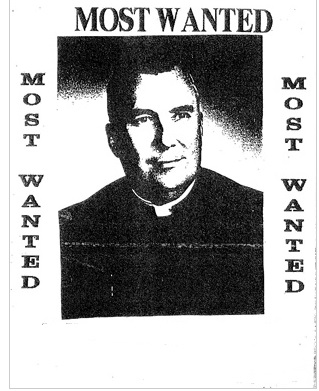
While on vacation last week in TBC’s neighborhood, I picked up a piece of trash on the sidewalk and it was a business card with the photo of a pastor and – in bold lettering – the words: “____ is an abusive priest” with an accompanying URL to learn more.

As we walked along the sidewalk, I saw more of these cards sprinkled along the ground for about a block.  And when we got home, I did some research.

It was clear that there had been a church conflict between a member and the priest.  It didn’t involve sexual or financial misconduct, but the member perceived that the priest had not been kind to his family during a difficult situation.  The priest had filed for a restraining order against the parishioner after being physically threatened.  The congregation was supporting the priest.

The member had printed up business cards to distribute throughout the neighborhood and – to put it lightly – this was not good for the congregation or their pastoral leader.

Suing somebody for slander is 1) a difficult case to win and 2) against some of our religious beliefs.  But what do we do about fake news especially when the news is about us?

All of us need to do our research.

If . . .

  • Someone says, “You know, Pastor Z has had charges brought against her” and that accusation doesn’t strike you as true from what you know about Pastor Z –  do your research.
  • You read in the paper that Presidential Candidate H is running a human trafficking enterprise out of a pizza parlor – which sounds a little crazy – do your research.
  • You find a business card on the sidewalk with the name and photo of a local priest connecting him with abuse – do your research.

The only way we can stop fake news is to stop it.  Stop assuming the worst about people.  Stop looking for dirt on our enemies.  Stop spreading gossip – or worse – about our neighbors.  It’s destructive.

We can do better.  God commands us to do better.

Image of a priest accused of misconduct.  These “Most Wanted” signs were spread all over a suburb several years ago.  I don’t know whether or not he was guilty.

And the #1 Reason Why the 21st Century Church Struggles Is . . .

(. . .  I’ll get to that.)

I wrote yesterday about the problem of greed in our congregations and while I indeed believe that greed destroys our mission as followers of Christ, there is a larger issue destroying our mission and it encompasses greed.

But first, what do you think?

What would you say is the #1 reason why the 21st Century Church is struggling and by “Church” I’m talking about everybody from the Southern Baptists to the progressive formerly “Mainline” denominations to the Roman Catholics to the Orthodox denominations in the United States.  Is our biggest issue:

  • Secularization?
  • A lack of “young people”?
  • Obsolescence?
  • A lack of commitment?

The Rev. Lenny Duncan is an African American pastor in the Evangelical Lutheran Church in America. (Apparently the Lutherans are even whiter than the Presbyterians.)  He suggests an even bigger issue: White Supremacy.

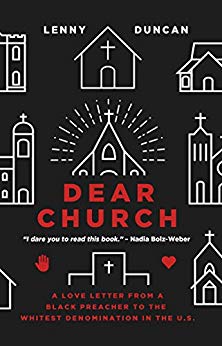
Duncan has written Dear Church – A Love Letter from a Black Preacher to the Whitest Denomination in the U.S. that spells our what he (and I) believe is the #1 issue for all predominantly white congregations in the United States.

We must dismantle, destroy, and bury white supremacy. In this nation. In our pews. In our liturgies. As a church, as a people, and as Christians, this is our call in the twenty-first century.

The evil of white supremacy is so entrenched in our culture that we don’t even see it.  We picture KKK members or those guys with the Tiki torches in Charlottesville when someone says “white supremacy.”  But the fallout has settled upon every one of us.  And it shows up everywhere:

  • We congratulate ourselves when people of color join our congregations where we welcome them heartily as long as they sing and pray like we do.
  • We plan mission projects for “the needy” but rarely do we develop deep, lasting relationships that help us understand the perspectives of people Not Like Us white people.
  • We might have Bible studies or book studies that challenge – but not too much.  We don’t want to be too uncomfortable.
  • We use words like “plantation” or “picnic” or “states’ rights” without considering what those words might mean to people of color.
  • We say “that’s just the way things are” when discussing racism or poverty, forgetting that Jesus taught us to pray and work so that God’s will would be done on earth as it is in heaven.  
  • We fail to support people of color in seminaries and we fail to support our historically African American congregations as readily as we will support white seminarians and our own white congregations. (The lack of generational wealth in our culture is, of course, a consequence of slavery.)

Duncan writes that “there will be no recognizable Lutheran witness in this country in fifty years if we don’t participate in this work. Period.”

The same could be true for my denomination and for yours.  And this is not about perpetuating our denominational institutions.  This is about living out the message of the Gospel.  This is about following Jesus.

God has blessed the United States with an increasingly diverse population.  Some of our neighbors first came here by choice.  Many of our neighbors came here – historically – in chains.  But God has brought us together and Jesus has a message that requires us to dismantle white supremacy because it is the antithesis of God’s plan for this world.

We white people have had it good.  Even if we grew up poor and broken, it was always better to be white than to be brown or black because this country was made for us.  This is the truth.  The laws, the educational systems, the entertainment industries were all made for us.

White siblings: we have a lifetime of work to do. And if we don’t do it, our churches deserve to die.

We can do better.  We have got to do better.

Note: Here’s a last minute opportunity for some anti-racism training:  Check it out.  And read Lenny Duncan’s new book.

Is Hemp the New Black?

This post could also be called Greed Has Long Term Consequences. Also, I’ve never smoked weed, just to be clear.  Seriously, never.

[Note:  Upon seeing the billboard pictured here in NYC last week, HH said, “Hemp must be The New Black.”]

Apparently industrial hemp is the new everything:

  • You can eat it.
  • You can drink it.
  • You can fuel your car with it.
  • You can build a house with it.
  • You can slather it on your body.
  • You can wear it.
  • You can save the planet with it.

You could smoke industrial hemp but it would only give you a headache.  It’s not the same as smoke-able weed.

So, I don’t know much about hemp but if both ends of the political spectrum are in favor of expanding hemp production in the United States, it sounds like it could be a good idea.  And if industrial hemp is so awesome and it won’t be our gateway drug into opioids, why has it taken so long to embrace it?

This is a post about greed.

Once upon a time in the United States of America all farmers were required to grow hemp and all pharmacists carried medicinal cannabis in their drug stores.  But in 1936 the film Reefer Madness came out as a propaganda project which kicked off an ongoing campaign to make cannabis increasingly illegal.

And then there were the Rockefeller, Dupont, Mellon, and Hearst families. Throughout the early 20th Century and continuing to these days, the Rockefellers controlled oil, the Du Ponts controlled chemicals (including the creation of nylon), the Hearsts owned newspapers (with an emphasis on paper) and Andrew Mellon was both the richest man in the country and Secretary of the Treasury (and an investor in nylon.)

They killed the hemp industry because it competed with the oil and wood pulp industries and their power was no match for hemp farmers.  And now we find ourselves – as a nation and planet – with some environmental issues that could have been avoided if we’d stuck with hemp. (Sources here and here.)

Greed fuels everything bad about our country today, if you ask me.  Even our churches struggle with it.  (Have you ever heard someone refer to the church as “mine” and not as a community identifier?)

Greedy choices made today have long term consequences that impact our communities, our congregations, and our planet.  Greed keeps people poor.  Greed keeps people sick.  Greed separates people from their Creator.

Why is it not one of the Ten Commandments then? (i.e. Thou shalt not be greedy?”)  Actually, greed plays a role in Commandments 1, 2, 6, 7, 8, and 10 – and maybe the other four as well.

One of the reasons organized religion struggles today is because of greed.  (It might be the #1 reason but – for me – it’s a toss up between greed, laziness, and fear.)

So . . . go hemp!  I hope you are The New Black and that you help save our environment.  And I hope – as we sit in meetings today with our congregations, our business partners, our government officials, our community leaders, our school staffs, and our neighbors – we will consider this:

Is greed impacting our decision in any way?  

We can do better with and for each other.

Image of a billboard in NYC at the corner of 53rd and 6th.

“I love what I see when I look at you.”

This is a line – written by Aaron Sorkin – spoken by the character Calpurnia to young Scout Finch in To Kill a Mockingbird.  HH and I got to see the play last week in NYC and I remember thinking – when I heard that line – that everybody should hear those words as least once in our lives.

I love what I see when I look at my children.

I love what I see when I look at the U.S. Women’s Soccer Team.

I love what I see when I look at our faithful church leaders.

I love what I see when I look at you.

This line falls in juxtaposition to the line from Ava Duvernay’s title When They See Us.   When the world saw Kevin Richardson, Antron McCray, Yusef Salaam, Korey Wise, and Raymond Santana we saw rapists.  Some wanted us to see rapists when we saw those young men.  In fact, I believe that some love it when we look at certain people with fear or contempt or disgust.

This is not who God created us to be.

I believe that God loves us when God looks at us.  The truth is that we are ridiculous.  We are selfish.  We are cruel.  We are unlovable.  But God still loves us.  This is not to say that God doesn’t require us to be better humans.

How do we feel when we look at immigrants, refugees, brown people, black people, golden people, white people, elderly people, queer people, people wearing MAGA hats?  Do we generally feel afraid?  Safe?  Disgusted? Judge-y?

I do not love what I see when I look at some of our political leaders or people in detention centers or people who litter or church leaders who refuse to serve those outside their comfort zones.  I love the people (only because I try to see them through the eyes of Jesus) but I don’t love the behavior or the situation or the choices made.

Is this akin to loving the sinner while hating the sin?  Actually, it’s more than that.

When we look at each other what do we feel?  It’s a question that helps me check myself.  If I feel afraid, is that my racism creeping up?  If I feel disgusted, is that my white smugness showing it’s face?  If I feel deep love, is that Jesus in me?

I was in Our Nation’s Capital last week for the Fourth of July and I felt things. There Were Feelings.

There Were Feelings when I watched so many people wearing MAGA hats in that city I love.  There Were Feelings when I saw tourists on the Metro look at sleeping people on the Metro with disdain.

I’m wondering about this.  How do we feel when we look at each other?  Not what do we think.  Not what do we see.  But what do we feel?

I wonder if feeling love when we look at each other might be a spiritual discipline to try.  Can I feel compassion and love for someone even when I don’t understand them or I disagree with them or I fear them?

Monday Challenge #1: Try saying these words to someone and mean it.  I love what I see when I look at you.

Monday Challenge #2: Try to be the people God created us to be.

Also the play was very good.

Image of Celia Keenan-Bolger and LaTanya Richardson Jackson in the play To Kill a Mockingbird at the Shubert Theatre in NYC.  They play Scout and Calpurnia, respectively.

We are Great (and We Can Be Better)

After a few days of vacation in NYC and DC, I was chomping at the bit to write about The Fourth of July.  I love this holiday and it’s especially wonderful to celebrate in those cities.

I love our country.  And we can do better. (The US Women’s National Team cannot do any better, but the rest of us can.)

Someone asked me once why I hated the Church so much (because I was always pointing to what needs to change.)  Loving someone or something, and wanting things to be better are not mutually exclusive.

This week my posts will be about being better than we’ve been. Maybe all my posts are about this, but our constant efforts as American citizens must be that we strive for liberty and justice for all.  And as The Church of Jesus Christ we must strive to be faithful disciples.

Go USA!