Monthly Archives: September 2026

Do We Remember?

Do you remember
The 21st night of September?
Love was changin’ the minds of pretenders
While chasin’ the clouds away

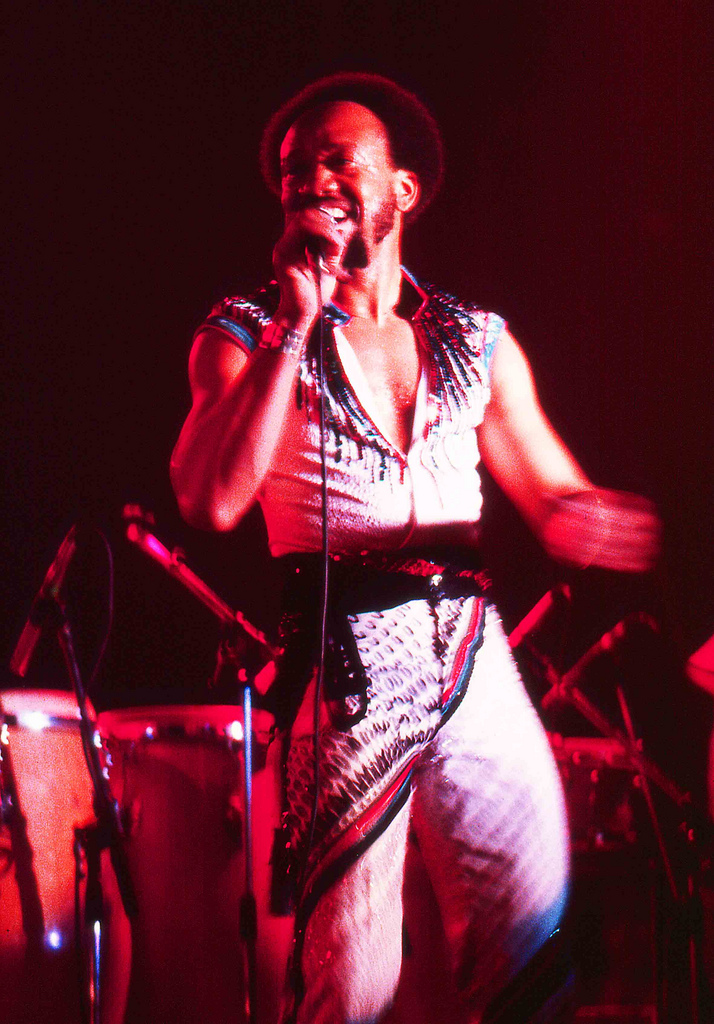
The song “September” makes everyone want to dance. It was written by Maurice White (pictured) and Allee Willis – and although it was released in 1978, it continues to be played at countless wedding receptions. Eian Rivera dances to it in airports, parks and through the aisles of Walmart.

I was thinking about this song today and wondering what “love was changin’ the minds of pretenders” meant to the writers. It’s about romantic love and love’s ability to alter the minds of people who pretend like they don’t need it.

Obviously we all need love. We need authentic, unconditional love. It’s what gives life meaning. It’s the foundation of the teachings of Jesus, even though many followers of Jesus seem to believe that his teachings are more about exclusion, judgement, and transactions. (If we do this, God will do that.) Obviously there are consequences for bad/cruel/selfish behavior. But the God I believe in has created a world in which grace trumps sin. (Sorry.)

As many of us – from journalists to psychologists to politicians to regular folk – try to process the actions of our current President, my ongoing theory is that he has never experienced unconditional love. He has never experienced the grace of being loved just because he exists. I’m not sure his parents, his wives, his children, his business partners, his fans have ever loved him beyond what he could give to them or withhold from them.

I pray for that guy every day and not because I’m a good person. I pray for him because only the love of God can change him. In spite of all the power and the money and the women and the bluster, he is a lost child of God.

It really ticks me off. But Jesus taught that we must pray for our enemies and those who persecute us. And not only pray for them. Love them. Ugh. It’s infuriating.

So today – on the 21st day of September – I’m remembering that God loves Donald Trump. Dammit.

Read This Book

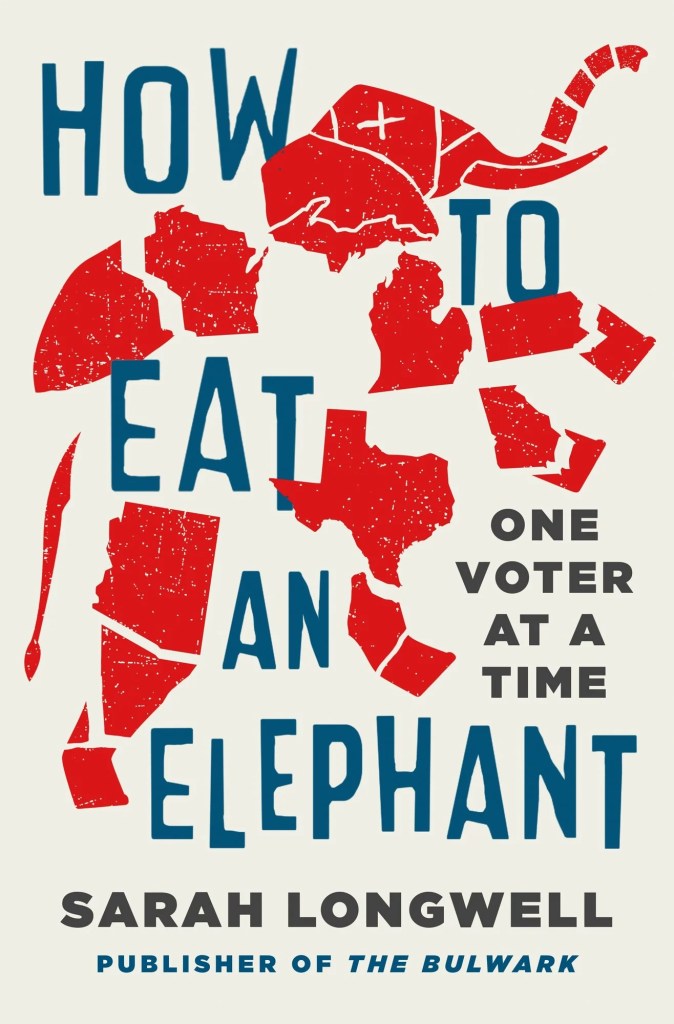
A friend gave me Sarah Longwell’s new book about how we as a divided nation might move forward, especially as elections are closely upon us and then – probably immediately – we’ll be looking at the 2028 elections. I’m already exhausted.

But please read this book.

I encourage you to read it if you feel despair about the politics of these days. And because I might be retired but my brain still filters everything through a Church lens, it’s also informative for the Church.

Sarah Longwell spends most of her time listening to people in political focus groups which must be endlessly fascinating and often frustrating. I’m not sure I could keep my mouth shut when people express views like “the Muslims are trying to bring sharia law to our state.” But she does. She listens to people who love our current President, people who voted for him but do not love him, people who loathe him, and people who don’t really care.

One my favorite comments she makes is this: ‘if it were a drinking game every time focus group participants said they were voting for “the lesser of two evils,” everyone would be dead.’ No matter what your political proclivities might be, our political system is clearly broken. Both political parties are broken.

So . . . how can we who love this country but feel exasperated/infuriated/disgusted/heartbroken over what’s happening in our nation – no matter where we land on the political spectrum – find hope? Sarah has learned things from talking with a wide variety of our neighbors and we – in the Church – could stand to learn these things too and then act upon them.

[Note to Church Book Study Groups: we pride ourselves in staying informed and then we go home feeling smarter but nothing ever changes. Imagine if – with every novel, Bible story, or non-fiction book we read – our behavior changes a tiny bit for the better.]

Lessons from How to Eat an Elephant:

  • The easiest way to build community is to be a community.” We talk about our “Church Family” and yet we are so busy and distracted that we might miss it when people in our chosen family are hurting. We treat prayer lists more like gossipy news sources rather than reaching out with practical support. We ignore certain family members when they annoy us. We give the stink eye to non-conformists. We treat those dealing with certain traumas as if they are contagious. The blessing of being in community is that we are not alone in our traumas, our doubts, our very bad days. (Yes, God is with us but also we are called to be with each other.)
  • We need to retire people and programs that are keeping us stuck. I’m not just talking about chronological age here. I know some 40-something pastors who will not let go of the annual church BBQ even though everyone hates doing it. I’m talking about being A Bake Sale Church in an AI Fundraising World. I’m talking about being able to share clearly and succinctly why we do what we do as followers of Jesus. The average age of a pastor in my denomination is 54, and again, chronological age is not the issue. If our leaders are not connected to “modern life, modern challenges, modern communication” God’s people are missing out on opportunities to be the Church.
  • “What would you do if your life depended on it?” This is the question one of Sarah Longwell’s mentors asked her when she went to him with a problem. Our calling is urgent but we don’t act like it’s urgent. But people are starving for hope and connection and authenticity. This is the season in Church when we are starting a new program year. For our Jewish neighbors, it’s literally a new year. Do we look upon the upcoming season with dread or disinterest? Or are we excited for the possibilities? What would we be willing to do to protect immigrants, mentor someone seeking guidance, feed people who are having a hard time affording groceries? Political people want to restore democracy. Christian people want to expand the Reign of God. Life is short. We have work to do.
  • Are we feeding “The Good Wolf” or “The Bad Wolf:? Sarah shares this Cherokee parable:

One evening, a grandfather sat down with his grandson. “My son,” he said, “Inside us all, there is a battle between two wolves. One is good: It is joy, peace love, hope, serenity, kindness, empathy, generosity, compassion, faith, and truth. The other is evil. It’s is anger, envy, jealousy, sorry, regret, greed, resentment, superiority, arrogance, self-pity, and lies” The grandson thought about it for a minute and then asked. “Which wolf wins?” The grandfather replied, “The one you feed.”

How do we feed The Good Wolf in our spiritual communities? Be The Church. Know why we exist. Be confident in our mission to love God and our neighbor. Worship, pray AND actively serve. Don’t be fake. We are not supposed to be “Christian Influencers” who share our awesome and amazing spiritual lives while – behind the scenes – we yell at the kids and drink too much and depend on a team of therapists and meds to keep it going. Claim who we really are and admit that we need a Savior and each other.

Read Sarah’s book, both for the political tools and for the spiritual connections. And have a great week.

Shared Trauma and Healing

Some are probably tired of hearing about it. Some were not yet born. Some are living with physical symptoms from breathing the air. Some still weep.

The article below showed up on my feed this past week from the first anniversary of 9/11 (2002) when the church I was serving at the time lit 3000 candles on the front lawn and in the sanctuary to remember that we shared a trauma and were also united in working towards healing. It’s a day when our church, our community, and our nation were united in empathy. May it be so again – but please God – without the tragedy.

Saying Goodbye to Our Stuff

HH and I sat with a beloved parishioner in her apartment many years ago as she was preparing to move into an assisted living facility in another state. She had once lived in a spacious custom built home with a spectacular backyard large enough to host the entire congregation. “This is what my life has become,” she said, surrounded by boxes. “I can pack my whole life into just a few boxes.” Clearly she didn’t have dementia. She knew she was saying goodbye to her former life.

HH and I have now moved four times in our marriage and with each move I have increasingly donated or tossed more possessions. Our current home is a 1031 square foot apartment with dramatically less closet space than we had in Charlotte.

I am the heartless one. “Who needs six pie plates?” But I live with someone who has a memory of every pie plate.

(That’s an exaggeration, but not by much.)

This post is about two things: saying goodbye to our stuff and saying goodbye to institutions we’ve loved.

About the stuff: Dr. Yolanda Pierce says that the difference between treasures and trash is that treasures have a story. Those pieces of broken glass might look like trash, until we realize that they came from the stained glass windows of the 16th Street Baptist Church in Birmingham, Alabama the day white terrorists set off a bomb that killed four little girls. They are forever treasured, now displayed in the Museum of African American History and Culture in Our Nation’s Capital. But the broken Coke bottle from a family reunion in 1982 probably doesn’t need to be saved.

It hurts to give away items with a story. Even though the clock is broken, we remember who gave us the clock. Even though Grandpa has been dead for 40 years, it hurts to throw away his moth eaten brown sweater because we remember when he wore it. If the sweater is in good shape, someone else could wear it (i.e. give it away.) If the clock cannot be repaired, nobody will need it (i.e. throw it away.) Note: if you don’t have the heart to do this kind of gleaning yourself, invite someone like me to come over.

I’ve noticed that we lie to old people moving into smaller spaces. “Sure, we’ll donate this mini-fridge” we tell them, but then it goes into the dumpster. But they can rest easy believing someone will use it in the future.

We all know that saying goodbye to our stuff is about grief for times that have passed. How wonderful that we have those memories though: when we won the trophy, spread the tablecloth, read the book in high school. If we are lucky, the memories remain clear and we can thank God.

About the institutions: I am in a never-ending furor these days about institutions that I and tens of thousands of others have loved and appreciated in Our Nation’s Capital that are being defaced and/or torn down for no good reason. I remember our young children’s faces when Tinklebell flew over the stage at The Kennedy Center. I remember getting everybody up early to see the cherry blossoms before the crowds every spring, and telling our children that they were a gift from Japan. Word has it that on this very day – September 4 in the year of our LORD 2026 – a team of people are examining the roundabout between The Lincoln Memorial and Arlington National Cemetery in preparation for erecting a massive arch that only one person seems to want. It makes me feel sick.

I’ve also known church buildings that were once the site of weddings and baptisms and funerals being torn down after decades of unaddressed maintenance issues. Money pits that haven’t had proper heating for years get bulldozed for affordable housing. Or the little church in the country with less than ten members, now worshipping in a tiny classroom because the sanctuary roof leaks so badly that the walls are covered in mold. And because of the location, nobody buys the property and the building deteriorates until it collapses along with all the memories.

We all know that saying goodbye to institutions is about grief for times that have passed. It makes us angry when it didn’t have to happen. Different decisions in the past could have opened possibilities for a different future. Or – in times of war or political narcissism – we rage against unnecessary violence. Still we thank God for what was.

I have no easy answers about saying goodbye to things. Usually, it’s not about the things; it’s about the people connected with the things. I have a good cry (a really ugly one) and then I toss the box of love letters between my parents. I don’t need 50 of them. I only need one, and that single love letter will one day be tossed or lost. And then I thank God for my parents and friends who have passed and children who have grown up. This is life. Being thankful helps.

AI image of Marie Kondo being sad to say goodbye to her stuff.