Author Archives: jledmiston

The Utter Comfort of Feeling Safe

The theme of Season 3 of Ted Lasso seems to be about being safe. Some people are safe. Some people are not. Some places are safe. Some places are not.

I was blessed with a safe childhood and – for the most part – my life experiences have been in safe relationships and safe places. I lived in the Washington, DC area during the DC Sniper Attacks in 2002 when two men randomly shot and killed ten people in places as varied as a golf course and a hardware store parking lot. I was in Best Buy with my then 10 year old daughter and I remember telling her to stay in the store until I pulled the car to the front door. And then I carried her running to the car pulled as closely to the door as possible – literally on the sidewalk. My heart still pounds when I remember that day. It was terrifying.

Those experiences have been rare in my life. And yet I fully expect that someone I know will eventually die in a random shooting if things continue as they are going.

Consider what it feels like to be safe: to be able to share a secret and not risk rejection, to be loved in spite of past mistakes, to be accepted in a family no matter what, to sleep soundly at night without fear.

Church is not always a safe place but it’s supposed to be in terms of unconditional love and forgiveness. And on the other hand we are called to take risks that some would say are not at all safe: house the homeless, feed the hungry, visit the imprisoned, love the enemy. In other words, we are called to make the world safer for vulnerable people.

Note: when dealing with enemies, we need to protect ourselves too. It’s possible that we cannot be the ones to offer them kindness but others can do that for us.

I love this season of Ted Lasso. It’s the moments when people realize they are safe that really get to me.

Image of me and my mom in about 1958. Happy Mothers’ Day weekend.

How Does Church Make You Feel?

Feelings. Whoa, whoa, whoa. Feelings

Note: God is present and loves us whether we feel it or not.

When asked how I feel about The Church in general and a single church in particular, I often give thought answers, not feeling answers:

I think they are going to close in the next year.

I believe they are doing amazing things.

I know they have some interesting plans in the works.

How does The Church or a church make me feel? Hopeful? Tired? Sad? Joyful? Excited?

How are you feeling about your church? Does your congregation make you angry? Weary? Energized? Inspired? Filled with the Spirit? Loved?

Again, God is with us whether we feel it or not. God has called us to be The Church whether we feel it or not.

To feel abused, infuriated, beaten down, betrayed, lonely, or excluded is never okay – especially in church. And yet I’m concerned that we who lead churches are falling away from those practices and events that make people feel safe, connected, and joyful. We sometimes choose efficiency and cost-cutting at the expense of those things that make us feel like The Church.

Examples:

My denomination used to meet in a different city’s convention center every two years with people coming from all over the country and world to gather for General Assembly. There were meet-ups. There was an Exhibition Hall where we could learn what our military chaplains and camps and missionaries and activists were doing. Connections were made. There was random swag. But for the sake of cost-cutting, there are no more Exhibition Halls, no more global reunions. What made us feel like family feels lost.

Congregations have eliminated retreats, scholarships for kids to go to camp, and even mission projects because they cost money that we no longer have. And yet we continue to put on annual fundraisers that we’ve done “forever” or perpetuate other traditional events that no longer have a a missional impact. It’s hard to get volunteers for them and they might even lose money.

I’m wondering about looking at our calendars and ongoing activities in terms of considering how they make us feel. Do we feel dread? Irritation? Or do we feel utter joy and energy?

Jesus wept. And laughed and hurt and felt compassion and anger. Too many of us are going through the motions without much emotion. What does that say about our spiritual lives?

Things that made me feel something recently:

  • I felt deep joy to hear about one church whose children’s choir learned some old hymns and then visited several retirement homes to sing to residents. Some of the elders who had not spoken in years sang along.
  • I felt tearful gratitude when my preaching group prayed for me while laying hands on my shoulders last week.
  • I felt light-hearted when about 30 colleagues met for a coffee house Happy Hour in April with no agenda except to hang out.
  • I felt deeply moved when participating in the ordination of a new pastor yesterday whose various calls have included Italian Translator, 5th Grade Teacher and Lactation Specialist. And now, she is so clearly called to serve a little congregation in our Presbytery.

My friends, this is Church. Can you feel it?

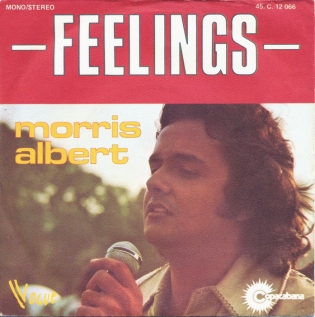
Image of singer Morris Albert who sang the ever-popular Feelings.

A Week Away

I’m grateful for a week of study leave. Take gentle care of yourselves, my friends, and I’ll be writing again next week.

The porch overlooking Kanuga Lake in Hendersonville, NC

Friday Pro Tips

In these days when life feels hard/soul-sucking in Church World and beyond, here are some simple things that will make life easier/life-giving.

In no particular order:

  1. Pastors: on the day you baptize someone, write them a letter to open on their 10th birthday (for infants/young children) or in ten years (for older people) about what happened that day. Who was present. What happened. What you hope for them by the time they read it. Who will have your contact information if they want to catch up some day. The pastor who baptized my siblings over sixty years ago did this and I did it as a parish pastor and it’s truly special to have them reach out years later.
  2. Pastors: we have peculiar lives and often deal with individuals/congregations who make our lives harder. Do not overshare on social media about what frustrating things your congregation is/not doing. Don’t name names in media interviews. Don’t believe that your church/presbytery/colleagues will not read the post where you trashed them. Yes, vent. But vent to friends over coffee or in a private text thread. (Note: people have told me that they have shown up on my blog and – please believe me – I make up stories/change them liberally to protect both the innocent and the guilty.)
  3. Pastors and Other Faith Leaders: when someone asks you to pray for them (and even if they don’t) ask if you can pray together here and now. And then do that. Don’t wait until you have quiet time at the end of the day. Pray right then. Leave a prayer on their voicemail. Send a prayer via text. This is not about performing. It’s about authentic bonding.
  4. Don’t ever accept a call that you are not indeed called to. Don’t serve in a church just because it’s in a city where you want to live if you aren’t called there. Don’t serve in a church that will be impressive to your parents/friends if you aren’t called there. Don’t avoid the church in a place you never imagined living or the church of quirky people who resemble The Island of Misfit Toys if God is screaming in your ear that you are indeed called to be with those interesting humans.
  5. Get out more. Don’t do the same continuing education every year. Read a book in a genre you usually don’t read. Talk with a person with whom you totally disagree. Try a cuisine you’ve never tried. Sit on a bench and watch people (but not in a creepy way.) Walk somebody else’s dog. Go to a 24/hour diner at 4 in the morning and notice who else is up late.
  6. Support a B Corporation.

Have a wonderful weekend everyone.

I Am Toast

My Sabbatical begins in 35 days and I am profoundly grateful that . . .

  • I get a Sabbatical.
  • I love my work even though it necessitates a Sabbatical.

The whole world needs a Sabbatical right now to refresh ourselves and stare into space and spend time delighting in all that fills us with joy. It’s moments like these when I covet the European vacation culture. Combined with mandated vacation days, workers in Europe can get as many as 38 days paid time off. And that holiday time contributes to making these nations the happiest countries in the world.

We are in deeply anxious times regardless of our politics, family situations, and financial standing. I don’t need to spell those out details for you.

Yesterday our Presbytery hosted an informal Happy Hour at a local coffee shop and it felt good. It felt good to talk about things like funny things our kids are doing or the upcoming Chelsea-Wrexham “friendly” happening in Chapel Hill in July or whether or not these were the best empanadas we’ve ever had. It refreshed my toastedness, even for just a short bit.

Friends, take in a deep breath and remember what freshly baked bread smelled like. Life can smell like that but it takes intention. What are we doing to create Happy Hours in our lives (and I’m not talking about bar scenes)?

What if we took an hour a day for Happy Time. This is a privilege for those of us without young children or caregiver responsibilities, but honestly, most of us can find a Happy Hour. And thanks be to God for Happy Sabbaticals.

Taking deep breaths over here trying to remember what freshly baked sourdough smells like.

Who Are We Setting Up for Success?

This post is dedicated to the Rev. Betty Meadows who set me up for success. Almost five years ago, after she honorably retired, I started my new role as General Presbyter of The Presbytery of Charlotte. I am profoundly grateful for how she prepared the way for me to succeed. May 1st will be my five year anniversary in this incredibly fun call.

She dealt with hard things. She made some people frustrated. She did the work that would allow me to step in and go.

Who are we setting up for success?

Maybe it’s the transitional leader who is preparing the way for a new season in an institutional setting. Maybe it’s the mentor who’s shepherding us to do what we’re called to do. Maybe it’s the parent who is raising us to be resilient, independent, and kind.

It’s the role of every single one of us to prepare another Child of God for success. Who are we setting up for success today?

PS. Thanks Betty.

Magical Thinking Kills

Maybe your place of worship resembles Hogwarts. Cool.

I personally love a beautiful place of worship: candles and rafters and stone and carved angels. Some of us find peace just sitting in a sanctuary with stained glass and gothic architecture. If the place feels magical, maybe something extraordinary will happen . . .

One of the mistakes churches are making everywhere I look involves magical thinking and it has little to do with architecture or design. It’s all about looking backwards, culturally speaking.

Magical thinking for a Pastor Nominating Committee:

  • If we call a young pastor, people will come.
  • If we (a predominantly white congregation) call a Person of Color, People of Color will come.
  • If we call a pastor with little children, more families with children will come.

These ideas worked 30 years ago. They do not work now. They maybe didn’t even work 30 years ago.

Magical thinking for governing bodies:

  • We have a big enough endowment that we can afford ______.
  • I know we have investments to keep us afloat.
  • Our treasurer of 20 years tells us we are fine financially.

These are dangerous assumptions. My own experience as a denomination leader over the past 10+ years have included experiences with churches who call pastors they cannot afford to pay with long time treasurers who use money or resources set aside for one purpose to pay for a different one.

Magical thinking for Pastors:

  • If I lay low and keep the key members happy, things will be fine until I retire.
  • If I use my continuing education money to go on vacation, I can read a book or two about faith formation or stewardship and nobody will be the wiser.
  • If I take naps every afternoon, nobody will notice that I’m not doing my job.

This makes my heart hurt. We Pastors were not called to pat people on the heads or take advantage of our role to unsuspecting parishioners. We are called to love God’s people and hold them accountable and expect them to hold us accountable.

Jesus was not a magician. His miracles were not magic tricks.

Faith in God is not magical. We don’t pray for a parking space and –poof!— one appears.

Magical thinking – no matter who’s doing it in our congregations – might just be the death of us. Facing reality makes amazing things happen. How are we doing with this, friends?

“We Choose to Believe in a Happy Ending”

“It’s one of the American qualities that we absorbed — be optimistic, believe in happy endings, and that’s where we stand right now. But I’m not stupid. I understand what’s involved. But that’s what I choose to believe.” Ella Gershkovich

The parents of Evan Gershkovich – Ella and Mikhail – were interviewed last week about their son Evan’s arrest in Russia, accused of espionage. As I’ve previously shared, Evan is a friend our of TBC and we pray he will be set free soon along with Paul Whelan and all others falsely charged. Evan Gershkovich is a journalist for The Wall Street Journal covering the war in Ukraine.

Perhaps it is an American characteristic to be optimistic. We are the homeland of Disney movies and Jason Bourne, after all. We believe that:

  • Things will turn out in the end,
  • If you work hard enough, you will be successful,
  • Anyone can be President.

So . . . the truth is that not everything works out in the end unless we are talking in cosmic/eternal terms, and most of us don’t know precisely what the cosmos/eternity will bring. Trust in the future and karma and heaven are all matters of faith. The truth is that many impoverished people work very hard and never reach the middle class. And while we live in a nation where both a reality TV personality and someone whose middle name is Hussein could be elected President in the same decade, not everybody can be President.

We choose to believe what we believe. And while I believe that these times are cataclysmic for our culture, I choose to believe that we will come out better on the other side. Ultimately.

Someone said to me recently, “This is a rough time for the Church.” And I agree. And I also believe that these changes are essential if we are going to become the Church as God intends it to be.

Easter morning felt especially secular this year. After church, HH and I went out to brunch and there was zero indication that it was Easter morning. No “Happy Easter” from the host. Nobody was dressed up. There were no “Easter Specials” on the menu. For the first time in my life, I’m not sure most of my neighbors knew – or cared – that it was Easter morning. And I live in the Bible Belt.

I hear of congregations doing extraordinary ministry. I see pastoral leaders offer profound sermons and pastoral care. And I also hear – over and over again – “where are the people?” “Will our members ever come back to Church?

Maybe we are waiting for the wrong people. Believe me, there are people craving hope out there. There are people who wonder if anyone sees them, loves them, cares about them. They are God’s people. We are God’s people. But we in the Church have some work to do.

I believe that Jesus will always have a Church even if most of us church people miss the point. I believe in happy endings. I believe that the blind will receive their sight, the lame will walk, lepers will be cleansed, the deaf will hear, the dead will be raised up, and the poor will hear good news. I believe in the hope of Easter.

Image of Evan Gershkovich. Please pray for him today.

We’ll Continue to be a Divided Nation As Long As We Characterize Each Other Like Cartoon Characters

Why do political and/or theological rivals demonize each other with cartoonish characterizations?

I listened to Senator Tim Scott’s message this week about his exploratory committee regarding a run for the GOP nomination for President and it made me queasy. I like Tim Scott. He seems like a good person. And yet, when I heard his message it made me question his character. Does he intend to stoke division like a cynical politician? Or does he want to be the President of all US citizens? Among the things he said in that video:

  • President Biden and his people are “the radical left.”
  • Democrats promote “a culture of grievance” and “victimhood.”
  • Democrats are “indoctrinating our children to believe we live in an evil country.”

Wow.

We have a joke in our family that any one of us – no matter how wholesomely or beneficently we may have lived our lives – would be crucified in this political climate if we ever ran for public office. Someone would dig up dirt on how we treated a prom date or something. I’m sure someone would find that pastoral prayer in which I prayed for Saddam during the Gulf War and declare that I hate the military.

We have got to stop demonizing each other.

I even hear church people (aka Followers of Jesus?) make up stories about people with opposing theological views for the sake of promoting their own theological views. Theology and Politics often align along the same lines: I hear Christians say that “you can’t be a Christian if you’re gay” and I hear Christians say that “you can’t be a Christian if you own an assault rifle.” The truth is that life is more complicated than cartoons. Although I might not understand how my sibling in Christ wants to eliminate difficult but real American history from the classroom, it’s better to talk to that person rather than write them off.

Jesus was executed because of political demonization. Haven’t we learned anything?

I’m not interested in voting for someone who calls their opponents “creators of a culture of grievance” anymore than I’m interested in voting for someone who calls their opponents “gun-toting Nazis.” I know. I know. Some of you are reading this and thinking “some people are hooked on grievances” and “some people are gun-toting Nazis.” There are certainly extremists on every side.

Resurrection is for each of us. And we begin by trying to understand our enemies, by praying for and with them. Jesus conquered hate and death which makes me know that we can as well.

Image is from The Mission Resource Network to offer support to independent congregations. I probably disagree with them on some things.

Talent Dysmorphia

The great majority of pastors I know do NOT suffer from Talent Dysmorphia but I wanted to consider this after hearing the term on Ted Lasso this week. (No spoilers. It’s just a term I appreciated much like “Compliment Sandwich.”)

Ted Lasso is chock full of leadership lessons.

Back to Talent Dysmorphia though . . .

There are indeed some pastors who believe they are amazing preachers, teachers, and pastoral caregivers when their parishioners would disagree. These are the pastors who tend to forego Continuing Education classes, mentoring, and counseling. They don’t think they need to brush up on their sermon writing or delivery. They love their people even if their faces appear annoyed.

I also know pastors who struggle more with Imposter Syndrome. (“If people really knew me, they’d never let me be their pastor.“) For what it’s worth, here’s a good article about women and imposter syndrome. Some of us might have it because we’ve been told we aren’t enough/supposed to be in the room because of our gender or age or experience. We often believe what other people say about us, even if it’s not true.

I wonder if people who accuse their colleagues of being imposters actually – themselves – have Talent Dysmorphia. Maybe they believe they are smartest/most gifted people in the room to the detriment of their organization’s health. Nobody else can be successful if leaders believe they are the only successful ones. They have an unrealistic opinion of their own talent.

In happier news, the most effective pastors I know are lifelong learners (especially about their own psyches.) They don’t take themselves too seriously, but they take their calling very seriously. They laugh easily and have an obvious spark. They are self-aware. They know that they belong to God.

Image is Jack (actor Jodi Balfour) from Season 3 of Ted Lasso: The worst people often think they’re the best. My dad calls it “talent dysmorphia.”