Author Archives: jledmiston

When The Church is Hateful

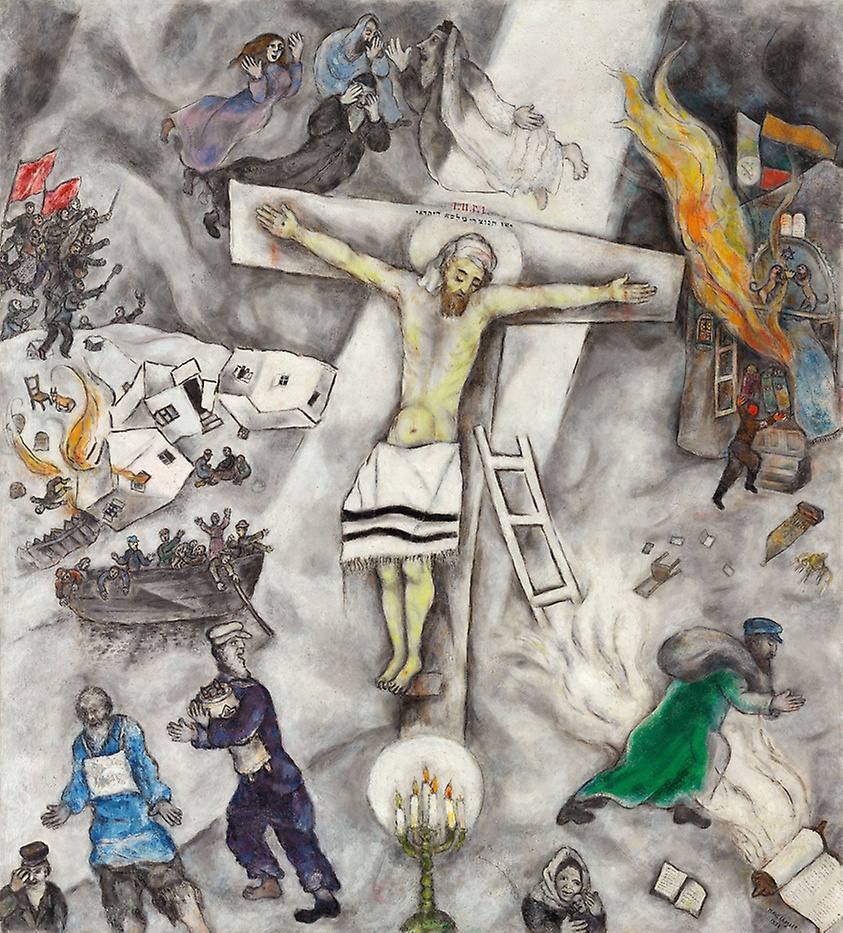
Today we remember that Jesus was forsaken by his own congregation.  He was betrayed by a good friend.  He was abandoned by others.  His words were taken out of context by the Pharisees. He was gaslit before anybody knew to call it gaslighting.

The Church of Jesus Christ has a history of this kind of traumatizing behavior.

  • Church people who seem “nice” but then they eat their own.
  • Congregations who call young pastors “to help them grow and change” only to turn on those pastors for doing just that.
  • Followers of Jesus who actually follow the bullies.
  • People who refuse to refute the gossips.
  • Graceless behavior.
  • “Welcoming congregations” with a high stink eye quotient.
  • Parishioners who banish the divorced, the broken, the queer.

We are the kind of people – we who are bullies and fear mongers and gossips and mean girls – that Jesus died for.  Jesus even died for the haters. The crucifixion was about showing love even to those who don’t deserve it.  Let that sink in.

Who have we have bullied and feared and gossiped about and tortured?  Can we try to show grace in a hateful world?

Image is White Crucifixion by Chagall (1938)

Fake News is Real (and so is Fake Theology)

One of my pet peeves on the evening news is the banter of newscasters after a story is reported.  Example:

Reporter: (Reports the story about a new treatment for Alzheimer’s Disease.)

News Anchor: Thank you Roger.  This news gives everybody hope.

Me: (in my head) Does it? And why do you need to comment? 

There are journalists who research and report the news.  And then there are talking heads who opine about the news and deliver their take as if they are journalists.  Note:  Hannity, Maddow, etc. are not reporters or journalists.  They offer commentary that supports what they consider to be true/right/real.

This has divided us. Millions of people watch what appears to be The News when what they are actually watching hours of opinion pieces that perpetuate their own political stances.

What is the plain meaning of a news story?  It’s about facts and only facts.

Fact:  The Cathedral at Notre Dame burned.  Commentary:  Even the faithless are in mourning.

Fact: Meghan Markle is going to have a baby. Commentary: British tabloids are reportedly upset that there will be no newborn photo shoot.

Some interpretation of the news is helpful in terms of understanding beyond the plain meaning of a statement.  For example: Congresswoman Ilhan Omar spoke last month at a CAIR (Council on American-Islamic Relations) event and said this to a group of Muslims:

“Here’s the truth. For far too long we have lived with the discomfort of being a second-class citizen. Frankly, I’m tired of it. And every single Muslim in this country should be tired of it. CAIR was founded after 9/11 because they recognized that some people did something and that all of us were starting to lose access to our civil liberties.”

Commentators have responded with “She doesn’t consider 9/11 to have been an act of terrorism” or “She is minimizing the horror of that day.”

People have taken her words out of context or attributed meaning to her words that were not there.  Sometimes we need to look at the plain meaning of a sentence and ask:

  • What was the context?
  • Who was the audience?
  • What was said before and after the specific sentence that troubles you?

Imagine if I told you that these lines can be found in the Bible:

  • Abraham reached out his hand and took the knife to kill his son. 
  • Two she-bears came out of the woods and mauled forty-two of the boys.
  • Jesus began to weep.

And now imagine if I told you that the plain meaning is clearly that:

  • Abraham is a child murderer.
  • Mother Bears were a special danger in ancient Israel.
  • Jesus was a crier.

The top lines come from the Hebrew and Greek Scriptures.  The bottom set seems to point out “the plain meaning” of those top lines.  But to understand what’s going on, a preacher will offer the historical context, the probable audience, the genre (is this from a poem?), and the textual features.  A solid preacher will explain that Genesis 2 is about the end of child sacrifice, 2 Kings 2 is about the importance of respecting God’s prophets, and John 11 is about the death of Jesus’ friend Lazarus and – being a human being – Jesus wept when Lazarus died.  Spoiler alert: Easter is not the first resurrection story in the Greek Testament.

My point is this:  some commentary is good.  We need to know the context, the history, the audience.  But we don’t need eisegesis either from preachers who are twisting scripture to make it say what they want it to say or from media personalities who are twisting words to create drama.

Fake news is real.  Fake theology is real.  God gave us brains to discern what is real and what is not real and in this Holy Week, we remember Jesus whose words were twisted and whose actions were misconstrued.

Looking back on that day 2000 years later, we can see that Jesus was executed unfairly.  But in the First Century, perhaps we would have believed the commentators too.  Perhaps we would have listened to the politicians who gaslighted him.

Here in the middle of Holy Week, I pray we will not be lazy followers of Jesus.  I pray we will not be lazy citizens.  I pray we will defend people who are being gaslighted like Representative Oman.  We can agree with her or we can disagree with her.  But if we allow people to crucify her, we are no better than they are.

Image from The Berean Corner.

Holy Week Questions: Where Do We Need to Catch Up?

The parade into Jerusalem is well underway and – if we plan to follow Jesus into Easter this week – we might need to catch up.  Speaking from the perspective of a Pharisee (a well educated, prosperous person in the dominant culture) some of us have a lot of catching up to do.

I’m trying to catch up on my history of white supremacy.  Although it’s an 11 year old book – and it’s very detailed and very long – I’ve been listening to Annette Gordon-Reed‘s The Hemingses of Monticello: An American Family. It extensively covers the history of white supremacy during a slice of time when one enslaved woman landed in Virginia in the 17th Century whose granddaughter became the mother of Thomas Jefferson’s last six children.

As a southern girl who was taught that slaveholders treated the people they enslaved “like family”  not to mention that Thomas Jefferson who wrote:

“We hold these Truths to be self-evident, that all men are created equal, that they are endowed by their Creator with certain unalienable rights, that among these are Life, Liberty, and the Pursuit of Happiness….”

wasn’t really talking about “all men,” much less “all people” I have some re-education to do.

When a politician believes that “If it’s a legitimate rape, the female body has ways to try to shut that whole thing down” he has some catching up to do about women’s reproductive health.  Actually lots of legislators need to catch up on sex education.

When Americans believe that immigrants take jobs away from us, we need to catch up on economic realities.

When we believe that people with black or brown skin are more dangerous than people with white skin, we need to do our research on the actual numbers.  While the gap between the number of black and brown prisoners and the number of white prisoners is lessening, it’s still true that:

In 2016, blacks represented 12% of the U.S. adult population but 33% of the sentenced prison population. Whites accounted for 64% of adults but 30% of prisoners. And while Hispanics represented 16% of the adult population, they accounted for 23% of inmates. Source.

Where do you need to catch up?  And I’m not talking about returning emails or doing laundry.  Yes, we are busy with life things.  But in this week where people who follow Jesus consider Life and Death Things, can we agree that each of us – especially if you too are a Pharisee – needs to catch up on the realities of the world around us?

Holy Week Questions: What Kind of Famous?

There have been three studies over the past several years declaring that – more than anything else – “kids today” want to be famous.  And there are lots of different kinds of famous:

Obviously some kinds of famous are crossovers.  People know Tiger Woods for sports plus several other things.  Same with Amal Clooney and Abby Wambaugh and Whoopi Goldberg and Kate Bowler.

Can you think of anyone who is famous because of the way they live their lives for others? I was thinking the other day about the people I consider to be National Treasures and they tend to be the ones who do creative, self-sacrificial things:

Bryan Stephenson. Dolly Parton. John Green. Melinda and Bill Gates. Hasan Minhaj.

Those who personally know those people would surely say that they are deeply flawed, and yet they make daily choices that benefit strangers.  Each of them could spend their lives sitting on their own laurels and yet they serve “the least of these.”  They find joy in service.

The world is better because of the way they live.

Especially on this week when we remember the last days of Jesus’ life, I want the world to be better because of the way I live.  I want the world to be better because of the way you live.  I want my children to change the world for good.  I want your children to change the world for good.

This doesn’t happen if we seek to be famous and so it’s fairly disturbing that being famous is a widely held aspiration – and not just among “the kids.”  Imagine a world in which we aspire to serve rather than to be served.  This is God’s breathtaking message.  This is Truth.

Image of Deah Barakat and Yusur Mohammad Abu Salha.  I dedicate this post to the memory of Deah who- with his wife Yusur and her sister Razan – were murdered in my hometown on 2-10-15.  Mr. Barakat was an extraordinary human being who made the world a much better place.  You can donate to a charity in their names here.

Shades of Purple (Churches)

Politically speaking, the Bible is an equal opportunity offender.  Not only is God neither a Democrat nor a Republican, God’s wisdom and love are beyond all measure, beyond anything we can comprehend or package.

It was fun to see one of my favorite churches covered by NPR recently for finessing the tricky path to being a Purple Church.  “Purple churches” appreciate the perspectives and honor the presence of people who consider themselves “red” politically (i.e. more conservative) and people who consider themselves “blue” politically (i.e. more liberal.)

Can we – as a spiritual community – be “open and welcome to anyone who wants to come” and not be theologically wishy washy?  I think so.  But there are many shades of purple for “Purple Churches.”  I served a Purple Church for 22 years.  We talked about Jesus openly.  We talked about “hot topics” (abortion, LGBTQ rights, immigration) openly and allowed people to agree to disagree. And yet . . .

  • Some would say that we were not-so-secretly “Blue” because the church was served by a female pastor.
  • Some would say that we were not-so-secretly “Red” because  closeted LGBT members who were approached about serving as elders said that they were not ready and  the church was not ready.
  • Some would say that we were clearly “Blue” because we decided that – in fact – we would ordain LGBTQ leaders and we would also welcome same-sex couples to have their marriages blessed in our sanctuary.  (Same sex marriage was not legal at that time in Virginia.)
  • Some would say that we were clearly “Red” because we started a new church that focused on open conversation about faith in Jesus and personal testimony.
  • Some would insist (and leave the church) because we loved our LGBTQ members and didn’t exclude them from leadership.
  • Some would insist (and leave the church) because we refused to baptize a Muslim woman who asked to be baptized but couldn’t say that Jesus was her LORD and Savior.

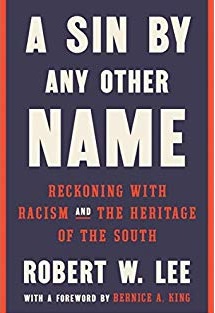
I just finished Robert W. Lee’s book A Sin By Any Other Name in which he discusses what happened when he  challenged his white congregation to address white privilege.  (Spoiler alert: he was asked to leave the church.)  Lee was a young a pastor and perhaps did not finesse his message as a more seasoned leader might have.  But he spoke from a place of deep conviction and doesn’t Jesus ask us to be the salt of the earth and the light of the world?  Doesn’t Jesus warn us about persecution for speaking up and living out our faith?

Sometimes I worry that calling ourselves a “Purple Church” is an excuse for dodging tough but essential questions.

The NPR story and this article about the same congregation stresses the importance of process.  It’s not always helpful for the preacher to preach a volatile message – even if it’s a faithful message – without preparing the congregation to hear it.  (And yet, didn’t Jesus do that?  Jesus wasn’t executed for being a middle-of-the-road preacher.)

Jesus also loved God’s people deeply – even to the point of dying for them.  I assume that Jesus would be pleased with us ensuring that all voices are heard and respected.

Note:  Jesus also was a name-caller:  “Brood of Vipers” etc.

The bottom line for me is that following Jesus is easy and not easy.  We are called simply to love God and to love our neighbors as ourselves.  Simple, right?  But who really does this and does this well?  Do our neighbors include Transgender people, undocumented immigrants, terrorists, parents who won’t vaccinate their kids?  And what does “loving” them mean?

There are shades of purple and one person’s purple is another person’s royal blue. Maybe some of our congregations are actually “lilac” and others are clearly “eggplant.”

I’m sad when people leave “our church” to go to another church, but I’m more interested in them finding a community where they can best connect with God.  Maybe our brand of purple looks red hot or baby blue to them.  It’s okay.

But it’s a gloriously holy thing when God’s people can wrestle and grapple and be a random, odd assortment of misfit toys together.  That’s church.  In the Purple Church I once served, we had Republicans and Democrats, people who had served in every US President’s administration from Ford to the second Bush, and folks from Nigeria, Vietnam, South Sudan, Korea, Cameroon, Ghana, and Turkey. And we loved each other.  And we did some amazing ministry together.

And sometimes people needed to leave and find another congregation.  That hurt.  But we have to trust that God is working in lots of different kinds of congregations in many shades of purple.

If We Love the Work . . . (Committee Edition)

Institutions have committees.

Most of our committees could be eliminated except for the fact that many believe that we can’t be a church/school/hospital/non-profit without committees.  Let’s do ourselves a big favor and get rid of:

  • Committees that meet for two hours when the work could get done in 30 minutes. Why does this happen?  Because some of us are not organized and some of us believe committee time = social time.  (Note: I’m not talking about brief connecting time – like “please pray for me because I just found out I need heart surgery.”  I’m talking about reminiscing, naysaying, sharing your vacation photos, etc. I am guilty of this myself too many times.)
  • Committees of one.  We say that we have lots of committees  – maybe – because it sounds like we are super active.  But the truth is often that Miss Irma is the de facto Christian Education Committee and Mr. Earl is the de facto Building Committee.  And then Committees of One bring work into the whole governing body as if committee work is their job.
  • Committees of grumpy people who do not want to be there, but “nobody else will sign up.” Stop the madness.
  • Committees with elected members who never show up. Maybe this isn’t a good time for someone.  There’s no shame in saying, “If this isn’t a good time for you to serve, it’s really okay to step away.”  Or if you are the committee member who needs to step away, do that.

Here’s my question for all volunteer coordinators, nominating committees, and leaders to ask committee people:  Do you love this work?  If you don’t, please leave the committee and then – if necessary – dismantle the committee.

If I love the work – whether it’s running a summer kids program or cleaning out closets or having a community barbecue – I will do whatever it takes to do it.  Friends: Divide up the prep work (i.e. construction estimates, speaker fees, buying pickles, etc.) and just do it.  If everyone is clear on:

  • Core Values/The Vision
  • The Budget (and the process for spending beyond the budget if necessary)

. . . then set people free to do the work without having to schedule a meeting.  And if meeting together is essential, honor people’s time.  Meet, Pray, Assign Tasks. Leave.

And if you have committees with zero energy or inspiration, ask them:

Do you love this work?

Because if we don’t, maybe God is telling us to let it go.  If nobody picks it up after us, maybe it needs to be dropped permanently.  And if it’s really important, believe me, someone will pick it up.  (Maybe they’ve been waiting for us to let go.)

Even the busiest people will do what it takes to make something happen if it means enough to them, if they love it, if we’ve discerned that God is leading us to do it.

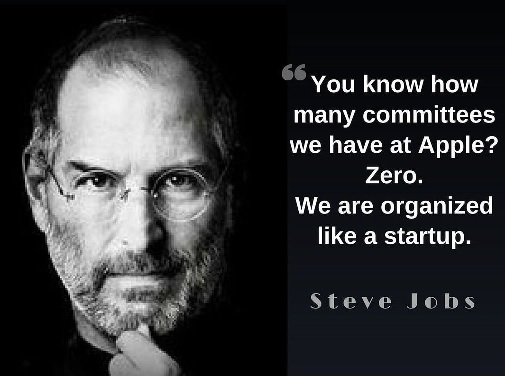
Regarding Steve Jobs: treating our organizations as start-ups everyday is not terrible advice.

Image of Steve Jobs.


“Little Lady”

I was preaching among one of our 97 congregations in Charlotte Presbytery several months ago with worship sandwiched between a class before and a meeting of leaders after.  Great people.  Wonderful mission. And as I was leaving to go home a gentleman stopped me in the lobby and said:

“Little Lady, you did so well today that I think it’s about time you got your own church.”

“Thank you,” I replied.

Young clergywomen everywhere recognize comments like this from people who can’t believe they are “old enough to be a pastor.”  I am clearly old enough unless you have 90 year old eyes.

Today is the 35th anniversary of my ordination as a Minister of the Word and Sacrament.  I indeed “had my own church” for 27 years before serving in Mid-Council and national ministry for the past 8 years.  It’s been a joy and I still can’t believe that I get to do this.

Many of the people who were present at my ordination in Boston Presbytery in 1984 have passed away, but they are still with me.  And I’m especially grateful that God is still with me.

Have a great week.

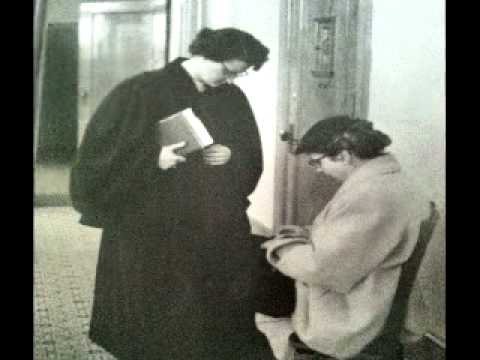
Image of the Rev. Margaret Towner, first clergywoman ordained in the old United Presbyterian Church the year I was born.  Her clergy robe was too big – because it was a man’s robe – and Sarah Dieter, a member of First Presbyterian Church, Allentown was making last minute adjustments before worship on the first Sunday after her ordination. Photo by Alfred Eisenstaedt for Life Magazine, 1956.

Weekend Reading

I don’t know about you, but I’m reading A Sin By Any Other Name this weekend.  When the words of a descendant of Robert E. Lee and the daughter of Martin Luther King, Jr. show up in the same book, I’m in.  I’ll report back next week.

In addition to this kind of reading, I’ve been researching some family history in search of any ancestors who might have enslaved people before the U.S. Civil War.  Last night I found that my 4th Great Grandfather reported holding four enslaved people in the 1830 Federal Census:  two males under the age of ten, one female under the age of ten, and one female between the ages of 24 and 35.  I believe in repairing this sin and I am trying to figure out how.  And so – for now – I educate myself.

Again, I’ll report back.  May your weekend also bring fresh learning that will change your life for good.

Image of A Sin By Any Other Name by Robert W. Lee (2019)

I Was Gay & You Voted for Me

As candidate for President Pete Buttigieg enjoys a “boomlet” these days according to this article, I’ve been pondering whether or not the country would actually elect an openly gay man to be President of the United States.  This particular gay man is smart, thoughtful, patriotic, and a devout Christian.

Like many Progressive followers of Jesus, Buttigieg identifies one of his favorite Bible verses as Matthew 25:40:

Truly I tell you, whatever you did for one of the least of these brothers and sisters of mine, you did for me.

Earlier verses in that passage go like this:

“Come, you that are blessed by my Father, inherit the kingdom prepared for you from the foundation of the world; for I was hungry and you gave me food, I was thirsty and you gave me something to drink, I was a stranger and you welcomed me, I was naked and you gave me clothing, I was sick and you took care of me, I was in prison and you visited me.”

Jesus doesn’t say anything about either homosexuality or voting – here or anywhere else in the Gospels.  But what if God is calling this person – or any other LGBTQ+ person – and we reject that person for his/her/their orientation?  (Note: there are apparently thousands of people who believe that God chose President Trump in spite of his less than noble – much less pious – words and actions.  Could the same people believe that God might also choose a married gay man who is also a scholar and a veteran?)

I’m not sure about God choosing candidates as much as I believe that God allows us to elect candidates and we often get what we deserve.  I believe in “calling” whether someone is up for President or county commissioner.  And sometimes God calls people outside of the dominant sexual orientation.

The newly elected mayor of Chicago is a lesbian and there are other mayors in other cities who self-identify as LGBTQ+.  But would we elect a gay President?  (I’m still surprised that this country elected a Black President.)

Just this week, the nation of Brunei implemented stoning LGBTQ+ people to death.  You read that right: stoning. people. to. death.

And even in the United States, there are many people who would like to bring back (the incorrectly named) sodomy laws.  But as I work with people in large urban congregations and small rural congregations and everything in between, almost all of those churches have LGBTQ+ members and/or members with children, siblings, and/or friends who identify as LGBTQ+.

But could a gay man be elected President of the United States in 2020?  I don’t know.  Maybe.

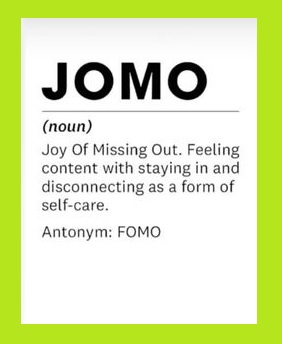
Embracing JOMO

Social media contributes mightily to FOMO.  We see photos of parties we missed or events we weren’t invited to and deep regret ensues.  Whatever.

The truth is that there can be deep joy in missing out. Maybe it comes with age or maybe it shows up at all ages as a healthy independent streak, but some of us reach a point when we are fine with missing the conference, skipping the party, choosing not to participate in the hoohah.

There are naps to relish.  There are books to read.  There is space to stare into.  Think of it as Marie Kondo-ing your schedule.

What gives me joy?  Sipping a third cup of coffee with a book. Baking banana bread in an empty apartment.  Not going out.

I also find joy in my work, in leading retreats and planning meetings that matter.  I love one-on-one conversations at parties.  I appreciate a good movie on opening night in a big theatre with a balcony surrounded by people dressed like Marvel characters.

But count me out of the Final Four Watch Party at the sports bar.  And I’ll be watching election returns at home without a crowd.  And I am deeply content taking road trips by myself.

What gives you joy in terms of your daily schedule?  Let’s do that more – even if it means not being in all the Instagram shots.  It will change our lives for good.