 I like my neck just fine.
But apparently a day will come when I won’t. I remember a church lady tell me one Sunday how fortunate I was that I could still wear blouses that reveal my neck, so it really must be true: something terrible will happen to our necks if we live long enough.
Here are other truths: 1) I actually prefer turtlenecks and 2) I am a middle-aged woman who is slowly dealing with the whole aging process. The aging is not happening slowly. I’m just dealing with it slowly.
I was reading this review by Scott Mendelson of the movie Ted– the one with the talking Teddy Ruxpin – and this line made me feel old, and a little annoyed:
“Our generation defines itself not by the historical events of our lifetime but rather by the entertainment we consumed as we grew up.”
Really? Scott Mendelson is 31 years old which means he was born at the end of Generation X and on the cusp of the Millennial Generation. He was about 14 when 168 people were killed by a truck bomb in Oklahoma City. He was about 16 when the Dolly the sheep was cloned in Scotland. Yes, there were memorable entertainment offerings along the way – but is his generation really more defined by Jurassic Park and The X Files than 9-11? Maybe, but I don’t think so.
One of the things that makes me feel old is when younger generations claim to be the first to do or be something when that’s not necessarily the case – unless you were born before the early 1990s and you have always been digital. Those people really do have different brains from the rest of us.
This also made me feel old yesterday: I had a Mean-Lady-Neighbor-Moment on the way to the train station when I got all bent out of shape seeing candy wrappers dropped along the sidewalk by – I suspect – young menaces. There was a trail of individual Starburst wrappers all the way to the train. (See? I sound like one of those cranky old ladies who shakes her fists at kids chewing gum as they walk past the house.) Somewhere in my neighborhood, there is a kid who polished off an entire sleeve of Starbursts and refused to use a trash can for the wrappers. This makes me feel old and snarky.
Finally, I’ve noticed that I am increasingly invisible to the world. Mid-50s. Average looking. Basic clothes. No flashy jewelry. In a way it’s fine to be invisible. But sometimes it’s annoying. I’ve been in shops with my 20-something kids or friends and no one acknowledges my presence. I don’t need them to believe I’m attractive; I just want to pay for my drink.
I share all this in preparation for my travels to Pittsburgh on Friday. Along with hundreds of my church friends and colleagues, I’m headed to The 220th General Assembly of the Presbyterian Church USA. My hope is that everybody there will be generations younger than I am. It’s one situation in which I would love to be among the oldest ones. The irony is that – when I am the youngest person at church functions – I feel especially old.
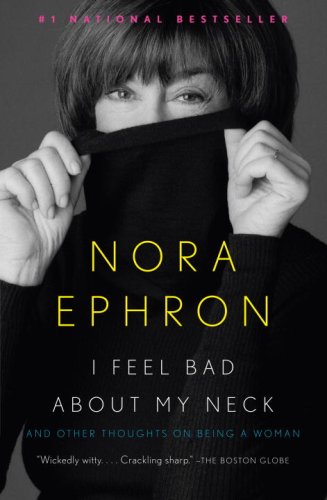
Note: I didn’t love the book pictured above, but this is a good one. Excellent Key Lime Pie recipe.