Category Archives: Uncategorized

Either You Trust Me or You Don’t

I wrote a post in February about Church People who trust each other. But this particular post is about whether or not people trust their institutional leaders.

I am a Mid-Council Leader in the Presbyterian Church USA, which – in the eyes of many – makes me immediately suspect. People don’t trust The Institutional Church like we used to.

I know things by virtue of my role. And some of what I know is confidential.

Let’s say that I know a pastor- let’s call this pastor Sydney- and Sydney has a history of making parishioners uncomfortable because Sydney thinks that sexual innuendo is hilarious. Charges have never been filed against Pastor Sydney so nothing shows up on criminal or disciplinary checks.  Pastor Sydney also has a secret home in the mountains that even his family doesn’t know about and a side job raising chinchillas in the basement of the manse.

It’s possible that I would share with a Pastor Search Committee that there are flashing yellow lights concerning Pastor Sydney. This suggests a serious cautionary note about moving further in considering Pastor Syd to be your minister.

NOTE:  I made all that up.  None of it is true. But if it were true, please believe me when I share that Pastor Sydney might not be a good match for you.

We don’t have bishops in my tradition and I do not match churches and pastors.

Jobs are not guaranteed for clergy in my denomination. And while I can share information I know from talking with my counterparts, that information will be vague if there are issues. #Lawsuits

It’s very rare for me to say to a pastor search committee: “This person cannot be your pastor.” Usually there are signs that a particular candidate may not be the right pastor for your wonderful church. But it’s often not my decision.

Sometimes . . .

  • Congregations do not care that their potential pastor has anger issues/a trail of strange behaviors/unusual hobbies that feel icky. They just want somebody to be their leader as soon as possible.
  • Congregations still pick leaders who physically “look like a pastor” but do not have the skills they need in a pastor.

I’m excited to work with you and your church. Your congregation deserves great leadership and we will work together to make that happen by God’s grace.

A great match is a holy thing. Congregational leaders and denominational can do this together but we need to trust each other.

You either trust me or you don’t.  But the truth is that I want your congregation to thrive in the name of Jesus Christ.

Image is Creation of Man by Chagall (1958)

Can We Believe It If We Haven’t Experienced It?

Over the weekend, HH and I watched fireworks from the top of our building’s parking deck and it was amazing.  We could see at least twelve different shows across the horizon AND the red, white, and blue skyline of Charlotte.

Lots of other people in our building had the same idea.  Some brought coolers and chairs.  A group of people sat in the back of a truck.  Someone brought an incredibly non-anxious dog.  I’d say there were about 20 people up on the roof.

HH and I were the only ones wearing face masks. We were both surprised and not at all surprised.

We personally know people who have tested positive for the novel coronavirus with few symptoms.  We personally know people who have tested positive and been hospitalized.  And we personally know people who have died from COVID-19.

Do the people who don’t wear facemasks or socially distance have a hard time believing that COVID-19 is real because they’ve not personally experienced it?

It makes me wonder about their belief in God.  Can God be real to people who have never experienced God?

There’s a famous story in the Bible about one of the Twelve Disciples – Thomas – who pronounced famously that ‘Unless I see the mark of the nails in his hands, and put my finger in the mark of the nails and my hand in his side, I will not believe.’  I get it.  Who’s going to believe something as farfetched as a dead person rising back to life?

And who is going to believe in a God who brings healing and inspiration and peace and salvation if we haven’t personally experienced it?

Throughout my life, I’ve observed people doubting everything from back pain to mental illness.  “They don’t look disabled!”  “They need to get out of bed and snap out of it.”

I know people who believe that the poor have made poor choices which is why they can’t have nice things.  Chances are that the people who say this about the poor have always had nice things within their reach and if they ever lost their nice things, they could replace them.

Personal experiences are essential and even Jesus knew this.

Go and tell John what you have seen and heard: the blind receive their sight, the lame walk, the lepers are cleansed, the deaf hear, the dead are raised, the poor have good news brought to them.’

One of the reasons I believe in God is because of what I’ve seen and heard and felt and experienced.  I don’t know what to say to those who have not seen and heard and felt and experienced what I have – except to serve as a tour guide pointing out moments that they – too – saw, heard, felt, and experienced God’s grace.  They just didn’t realize that’s what was happening.

Someone reading this post might test positive for COVID-19 this week or this month.  I know it’s real because of personal experience.  And I wore a mask even before someone I knew was infected because I trusted the scientists.

What we believe in life is all about trust.  Who do we trust? 

I have reasons to trust scientists because of personal experiences.  I have reasons to trust God because of personal experiences.

Who do you trust and why?

Image source.

Sins of the Fathers . . . and

The LORD is slow to anger, abounding in love and forgiving sin and rebellion. Yet he does not leave the guilty unpunished; he punishes the children for the sin of the parents to the third and fourth generation.  Numbers 14:18

When Scripture talks about “the sins of the father” (which is often in the Bible) it sounds – in some passages – like God is punishing people for what their ancestors did.  In other passages it sounds like God will not punish people for what their forefathers and foremothers did.  And in still other passages, those words sound more like prophesy than punishment.

When parents make poor judgements, their children often suffer for it.  When grandparents leave a legacy of greed and deception, the next generations often feel generational effects.  Trauma specialists say that – when children are traumatized by “the sins of their parents” their DNA actually shifts.

The effects of the generational sin of enslaving people in the United States continues to show up in the fourth and fifth and twelfth generations of the children of historically enslaved people.

Now we (White People) might say . . .

  • I’ve never enslaved people.
  • My ancestors never enslaved people.

But the truth is that our Founding Fathers built this nation on a system of enslaving people who didn’t look like them.

  • 40 of the 56 signers of the Declaration of Independence enslaved people.
  • 10 of the first 12 Presidents enslaved people.
  • 2 of the 4 Presidents on Mt. Rushmore enslaved people.

Even if your family never enslaved people, our nation’s Founding Fathers and we who look like them have structurally benefited for hundreds of years.

And now we owe for it.

We not only owe for years of unpaid wages throughout years of slavery, we owe for the financial ramifications of failing to offer Black and Brown military veterans the GI Bill, for red-lining, for school segregation, for poll taxes, for two sets of law enforcement practices and sentencing guidelines.  We owe for substandard healthcare and substandard schools and substandard parks and recreation resources.

We owe for the everyday sins of 2020.  Please read this by former US professional soccer player Lauren Holiday.  Lauren – who is White – writes:

Every white person in America owes.

It will be painful and it will probably be bloody.  People who are still wealthy because their great-grandparents and great-great-great grandparents enslaved people whose labor made them wealthy in tobacco and sugar cane and railroads will not want to part with their wealth.  We will not want to share our structural White privilege and our everyday White privileges.

There are many White people who would rather die than pay reparations.

May God have mercy upon us because most of us (White People) would rather die than pay reparations.

But consider this – those of us who are White People who also say we love Jesus:

The LORD is slow to anger, abounding in love and forgiving sin and rebellion. Yet he does not leave the guilty unpunished; he punishes the children for the sin of the parents to the third and fourth generation.

It feels energizing to see this not as “punishment” but as that  justice rolling down like waters and righteousness like an ever-flowing stream.  Don’t we want this if God mandates it?

It’s something to consider long after Fourth of July Weekend.  (I’m talking to you, Church, in love.)

Image of the national monument Mt. Rushmore in Keystone, South Dakota on the land of the Lakota Sioux Native Americans.


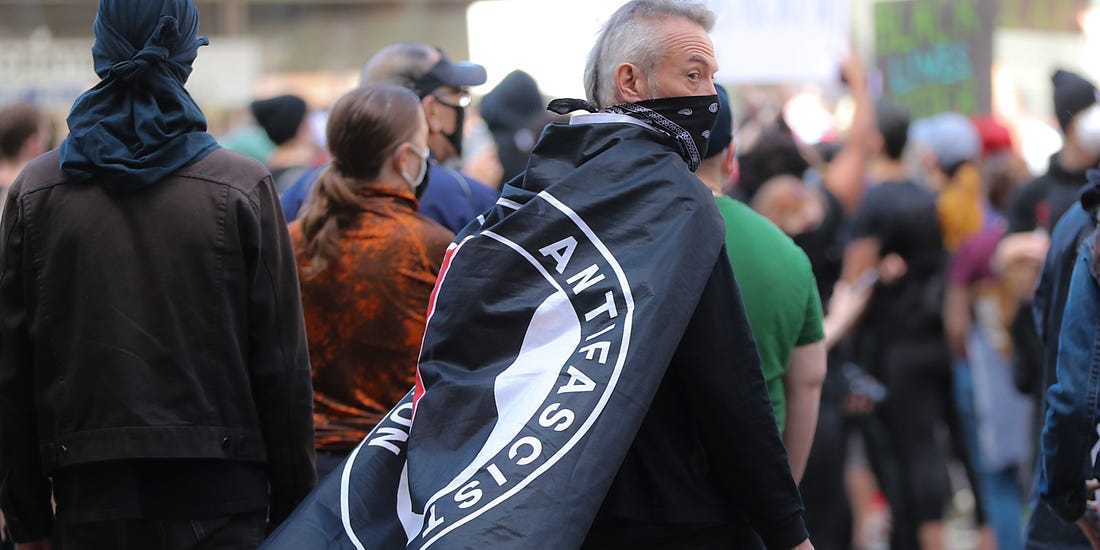
We Can Avoid a Race War

I can’t believe I have to type that.

Do you remember when the man who murdered nine people during a Bible study at Mother Emanuel AME Church in Charleston said that he hoped to start a race war?  I remember thinking that was 1) crazy and 2) incredibly unlikely.  I’m starting to believe I’ve been naive.

Many of my conversations these days are with local civic leaders and church people regarding the deep divisions regarding race.  The divisions reflect long-established understandings and misunderstandings about who we are as human beings and how the world got this way.

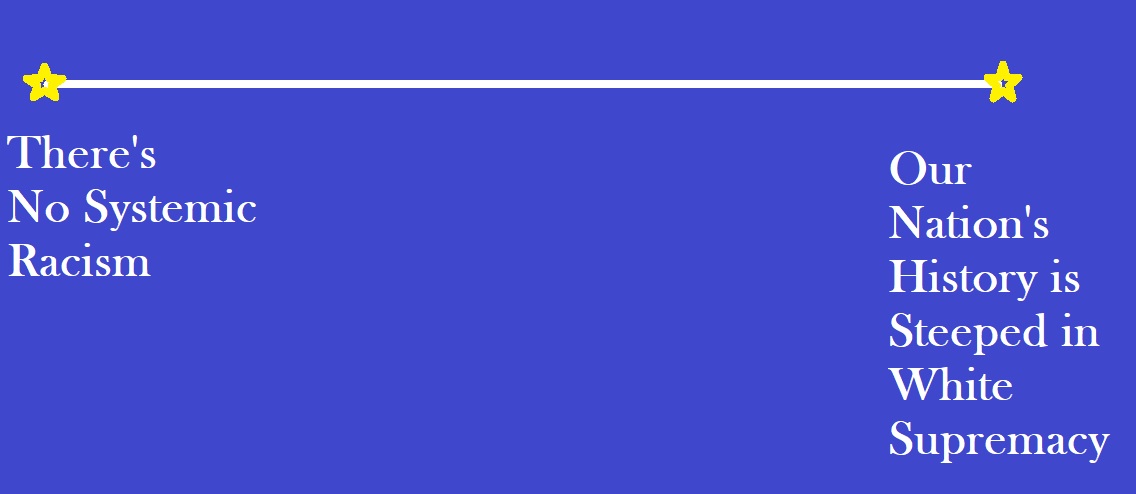
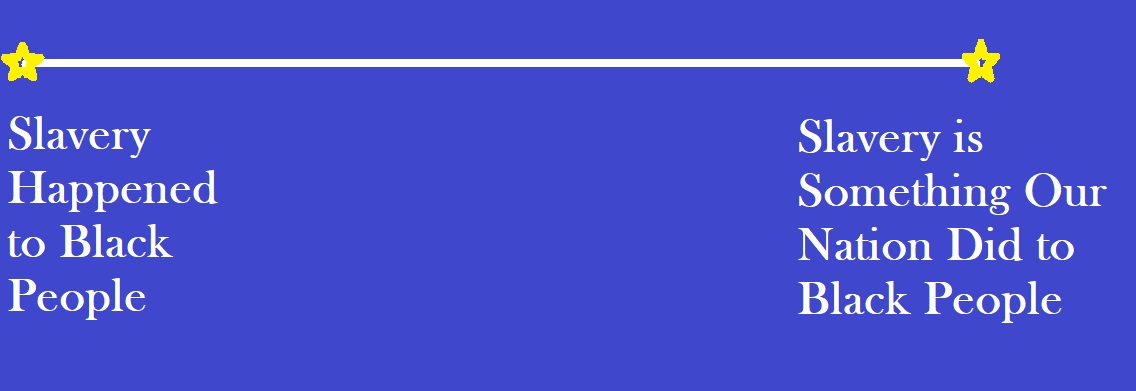
Here’s what I’m learning in terms of the continuum regarding what we believe about race:  we come from very different places and different extremes.

In most White congregations, there will be people on both ends of this continuum.  We disagree on “what happened” in this country and whose fault it was.  The Rev. Denise Anderson, Co-Moderator of the 222nd General Assembly of the Presbyterian Church USA (and my sister) tweeted over the weekend “My ancesters were not slaves.  They were enslaved.”

See the difference?

I’ve had conversations with White friends and family about The Wealth Gap between White people and Black people.  Prosperous White people tell me that people are poor because they’ve made poor decisions, when actually you can make all the correct decisions in the world, but if the rules were not made for you, it’s extremely difficult to lift yourself out of poverty – especially where I now live in Charlotte, NC.

Will these injustices lead to a race war?  I hope not.

But I know that Black people will be blamed if it happens.  True Fact: There are white supremacist groups all over the United States trying to stir up racial divisions and violence. 

It’s also true that when people seek justice for a long, long time and nobody is listening, things indeed get violent.  I researched the history of the “Silent Sam” Confederate monument in Chapel Hill, NC when it was torn down by protesters in 2018.  Students, faculty, and civic leaders had been asking for its removal for over thirty years.  The entire History Department of the University of North Carolina had asked for the statue’s removal for decades.

The Bible calls for justice over and over and over again.  And when there is no justice, there is no peace.  It’s not just a protest chant.

Sooner or later, when there is a lack of equity for people with black and brown skin and it’s been that way for – say – 400+ years, there will be rage.

But a race war is not inevitable if we – White people – take the time to listen to our Brown and Black siblings.  We must listen to personal stories and familiarize ourselves with the lesser known history of Native and Black people in America.

I believe this is required of every human being whether or not we believe that we are created in the image of God.  We have a responsibility – especially in the Church – to teach parents how to identify if their children are becoming radicalized by white supremacists.  We have a responsibility – if we are Christians – to see each other through the lens of Christ.

Top image source.

This is the Best Time to Be the Church

On the Sunday after 9-11-01, I was in Charlotte for the ordination of M.  I had been her pastor in Northern Virginia, and I had driven from Northern Virginia to Charlotte after a wedding on Saturday in Alexandria.

The planes had all been grounded.

Thousands of people had died horrible deaths six days before.  They’d lost their lives on crashed airplanes and in skyscrapers and on sidewalks around those skyscrapers and in the Pentagon on September 11th.  The whole nation was traumatized.

As we processed into the sanctuary for M’s ordination, she said, “This is a terrible time for an ordination.”  But actually it was the perfect time for an ordination.  Just as the world needed to witness true love at the wedding the day before, the world needed to witness the hope of God’s call to serve – literally – for the love of God.  The world needed to see that God was still with us, still calling us to serve.

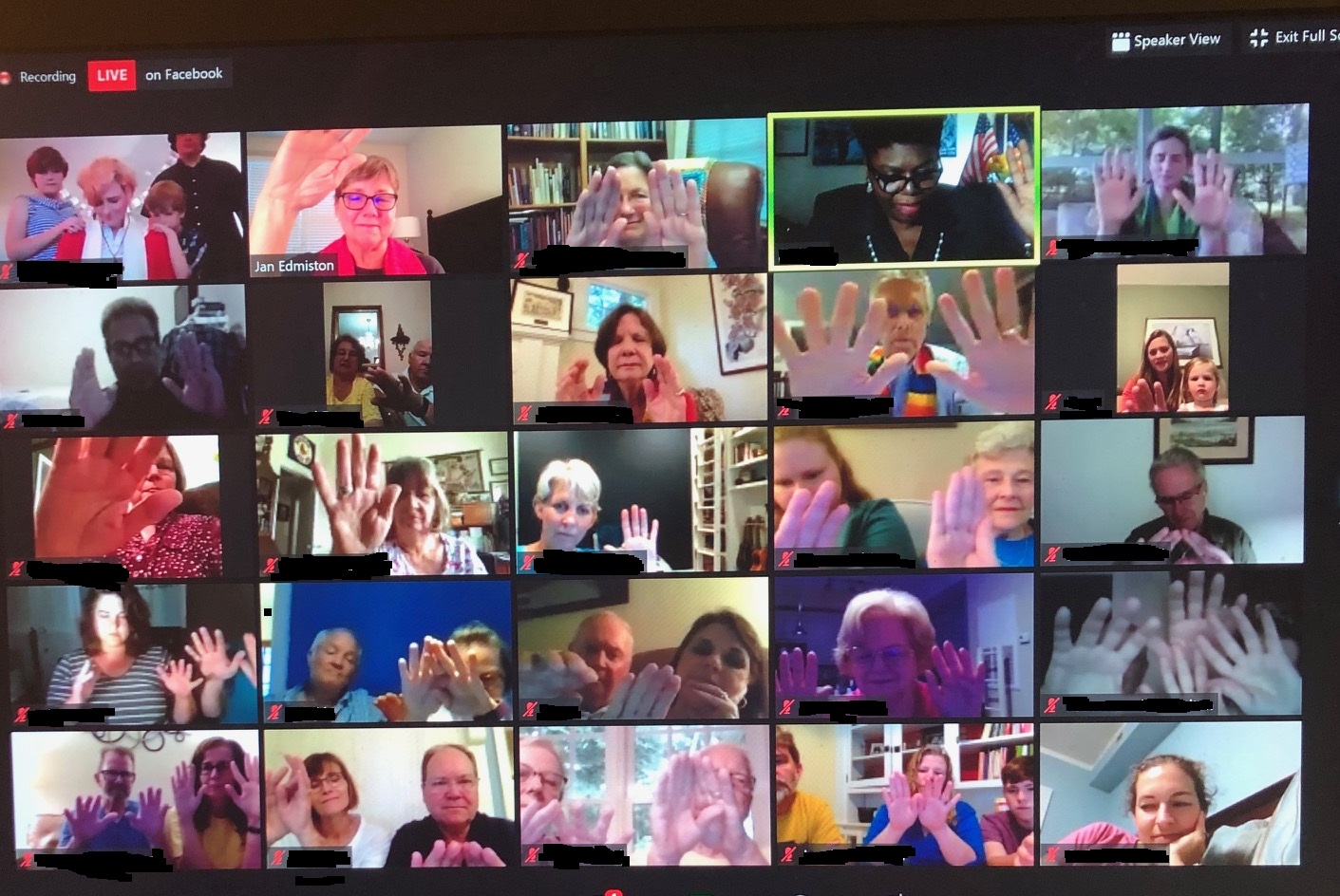
Yesterday, I participated in the ordination for a different pastor named M and because several ordination participants had been exposed to COVID-19, it was a Zoom ordination.  None of us had ever witnessed much less participated in a Zoom ordination.  There was no laying one of hands, no passing the peace with hugs and elbow taps, no tangible feelings of the holiness of the moment we’d been awaiting for so long . . . except that we did lay hands on the candidate.  We did greet each other in peace.  We felt the holiness.

After all the seminary classes and papers and examinations and testing and further examinations and grappling with God, those seeking ordination for professional ministry reach a “can-we-just-do-this-finally?” moment when we are so ready.  And we have dreamed of inviting people important to our journey to participate.  And we have imagined our family and friends present to surround us with love.  And we have wondered who this congregation will be whom we’ve been called to serve.

And then a pandemic happens or terrorism happens or something happens that makes us think, “This is a terrible time to be called to serve” when actually it’s the perfect time.  God calls us when we are needed.

I’ve known new pastors to be ordained the week of a parent’s death.  I’ve been to ordinations days after their spouse has been diagnosed with a terminal illness.

Friends: God calls us whether it’s “a good time” for us or not. We are needed. We are needed to speak up for the vulnerable.  We are needed to notice those on the margins.  We are needed to shepherd people where they might be afraid to go.

This is The Best Time to Be the Church.  Churches need shepherds and churches need sheep and we need everyone to consider their calling.

Really, the world needs each of us.  There is so much work to do.

Image of The Laying On of Hands for M’s ordination and installation yesterday.  This post is dedicated to her and to the other M who’s been ordained for almost 19 years.

God Loves Blackness

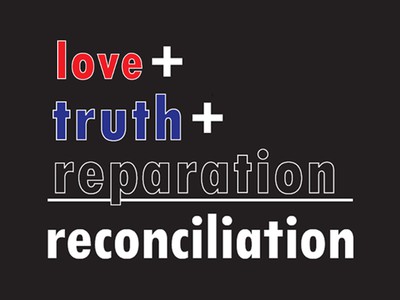
These words – God Loves Blackness – were spelled out in caps in a statement released yesterday from my denomination’s Special Committee on Racism Truth and Reconciliation.  You can read the whole statement here.

Yes, God loves Blackness.  God also loves all the other skin colors and their particular qualities and characteristics – although saying “God loves Whiteness” sounds like something Aryan Nations might chant holding tiki torches.

History alters the meaning of our words and sentiments.

Perhaps you’ve seen the viral video about the little girl who thought she is uglySomebody somewhere has told this child a lie.  And it’s quite possible that she didn’t hear this from a classmate.  She embodied it everytime she didn’t see herself on a toy shelf or in the movies or in storybooks.

Although I’m a broken record, our culture has got to change and not because of political correctness.  Our culture must change because of the Gospel.

Yes, God loves Blackness.  It’s important to point out specifically that God loves Blackness because for centuries the world has taught a different message and that message has been a lie.  That message has destroyed the bodies and souls of millions of God’s children.  God’s priceless, gorgeous, exquisite children who – by grace and intention – are diverse in every way including skin color.

Jesus died for everybody.  I’ll go out on a limb and declare that – if you don’t believe that fact and then try to treat people accordingly – you are in for a huge shock when you meet your Maker.

Images from A Statement from the Special Committee on Racism Truth and Reconciliation in the Presbyterian Church USA, led by Byron Wade and Marta Pumroy and the photo “Alternative Reality” by Chris Buck for O Magazine.

Beyond Art Shows and Sock Collections

I love a good art show.  And I appreciate comfy socks.

And I also know that art shows and socks will not change a deeply entrenched culture of inequity.  And that’s what we need right now if we are serious about making earth “as it is in heaven.

I was in a meeting last week with a group of Church People and a local community organizer whom I’ll call R.

We were discussing what our city needs in light of the violence in our neighborhoods, the uneven opportunities for public education, the lack of COVID-19 testing available in predominantly African American neighborhoods, etc.

The conversation was about inequity.  “How can the Church make a positive difference?” we asked.  And I loved the community organizer’s response:

“We don’t need anymore art shows.”

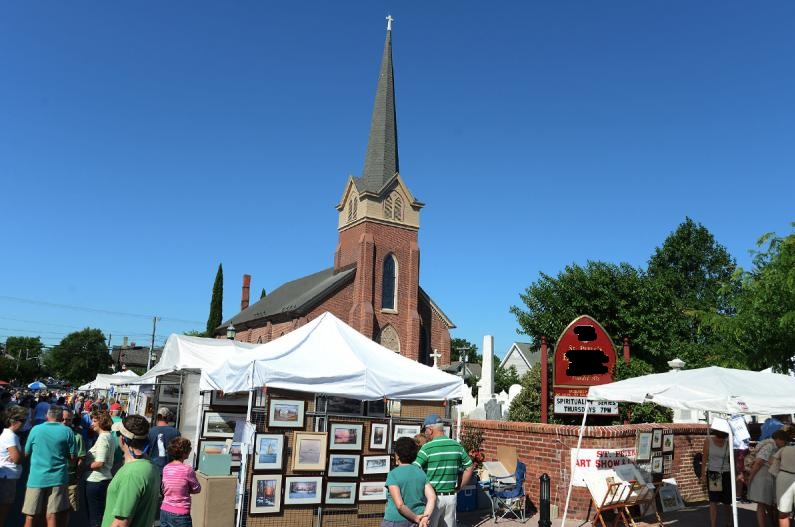
Again, I’m fan of art shows.  I’ve known congregations who have invited the neighbors to display their masterpieces in the hopes of 1) appreciating local artists and 2) offering a way for those artists to make some money by selling their paintings.  Sounds like a good idea, right?

Sure. It’s simple to pull off a local art show on a random Saturday.  It requires minimal commitment and effort.  It’s an opportunity to “reach out into the neighborhood” and subsequently congratulate ourselves.  It’s even Quarantine Legal if we are outside wearing masks and standing six feet apart.

Again – yay art.  This very blog is named for starving artists who see how the world can be different.

And who doesn’t need sturdy socks – especially if you live on the streets? A congregation sets out a box and people donate a pair or two and then – done.  Somebody takes the socks to a local shelter and we feel a great about it.  Easy.

The community organizer made us all laugh when he suggested that we forget about the art shows and sock collections.  If we want to offer a simple, painless project then – by all means – exhibit some paintings for sale and donate socks.

But the Church is called to make sacrifices, not offer simple gestures.  R. said that what we really need – at least in our particular city  – was for congregations to:

  • Offer violence interruption programs.
  • Teach social entrepreneurship.
  • Help change the culture of our local police department.

(I can hear you now, Church People.)

You are suggesting that we get political. 

We don’t have any business doing those things. 

Church is supposed to be about Bible studies and hymn sings, not “social justice.”

I don’t know what Bible you are reading, but mine says that Jesus was killed for political reasons, that Jesus calls us to get involved in the lives of the poor and imprisoned, and that Jesus charges all disciples to feed the poor and heal the sick – among other things.

One of the reasons why the Institutional Church has floundered through the years is because we have forgotten The Great Commission and The Great Commandments.

We spend lots of energy on projects like Bake Sales and Candy Sales, Preschools and Vacation Bible Schools, Book Studies and Bible Studies.  And all of these programs are good.  Nothing wrong with them.

But if we are serious about discipleship (i.e. following Jesus) it won’t be enough. The One who changed the world expects us to change the world too – in his name.  God has blessed us with these pandemic, protest-filled days to remind us that following Jesus involves sacrifice.  Sometimes we need a painful jolt to wake us up – especially if our daily lives are comfortable.

Yay for art shows and sock collections.

But what have we done lately – in faith – to change the world for good in the name of Jesus Christ?

Image of a church art show.  I’ve covered up the church sign because my point isn’t to embarrass that particular congregation.

Are We Resilient Yet?

How are you doing?
This is how many of my Zoom meetings begin and depending on who’s on the call and our relationships, we might hear:
  • Everything’s fine.
  • I’m drinking too much.
  • I’ve gained my Covid-19 (pounds)
  • The whole family’s been really cranky.
  • The pandemic has been great for my devotional life.
  • The pandemic has been great for my sex life.
  • I don’t see what the big deal is.  
All humans need a resilience tool box, especially when the world is stressed out on political divisions, culture shifts, daily violence, and – oh right – a pandemic with no vaccine.  And there’s also the everyday stress of chores, child-raising, homework, office work, and relationships.
Good things for the tool box:  Exercise (but not in a gym right now.) Deep breathing. Prayer. Naps. Screen check-ins with loved ones (“How are you doing?“) Drives in the country. Walks in the woods.  Knitting. Baking. Punching bags. Volunteering.
Bad things for the tool box: Cocaine. Overeating. Overdrinking. Hitting people.
The New York Times has a whole series on resilience you can read here, including what we need in our tool boxes.  And one of the articles helpfully states this:
The very earliest days of our lives, and our closest relationships can offer clues about how we cope with adversity.
This is not good news if our earliest days were traumatic and our closest relationships are toxic.  I’ve written before about ACEs (Adverse Childhood Experiences) and childhood trauma definitely jacks up our risk for all sorts of adult issues.
But childhood trauma doesn’t mean we can’t learn how to cope better.  Toxic relationships do not forever condemn us to a crushed life.
I believe that the Church is called to build resilience and I’m not just talking about memorizing verses about God loving the sparrow – although those verses are true.  I’m talking about redeeming trauma.  I’m talking about nurturing healthy relationships.
Yes, I’m talking about the Church here.
(And yes – dysfunctional congregations cause trauma and sick relationships.  Those congregations are not serving God.)
According to this article in the NYT series, resilient people share these characteristics:
  • They have a positive, realistic outlook. 
  • They have a moral compass.

  • They have a belief in something greater than themselves.

  • They are altruistic; they have a concern for others and a degree of selflessness.

  • They accept what they cannot change and focus energy on what they can change.

  • They have a mission, a meaning, a purpose.

  • They have a social support system, and they support others.

How are our congregations modeling these characteristics?  How do we see these characteristics in the life of Jesus?  (Can you think of a more resilient human being than Jesus?)
How can we build resilience to the glory of God – not merely for our own sakes, but for the purpose of being strong enough to help others cope?
How can we create healthy toolboxes for God’s people?  The world is going to need them for a long, long time.

What We Didn’t Learn in School (Is Coming Back to Bite Us)

I can’t remember when I first learned about Juneteenth but it wasn’t in (my very good) public schools or even in college.  It’s been mentioned in the past years and especially in the past weeks that we who are White need to educate ourselves on everything from microaggressions to the Massacre of Black Wall Street in Tulsa in 1921.

Most White people do not know the history of:

  • Lynchings in our own cities’ history.  (And not just in the Southeastern United States.)
  • The Doctrine of Discovery (You can’t discover what someone’s already discovered and established as their home.)
  • The origins of White Supremacy in the United States. (The first enslaved people landed in Virginia in 1619. An enslaved person was considered 3/5ths of a human being. 40 of the 56 signers of the Declaration of Independence owned slaves.  10 of the first 12 Presidents owned slaves.
  • The campaign to create a post-Civil War mythology. (Gone With the Wind. Confederate Statues. The lionization of Robert E. Lee.)

We have a lot of reading and listening and watching to do if we care about – not only our own education in U.S. History but also – what the Bible teaches us about loving our neighbor as ourselves and loving God.

And we have a lifetime of confession and repair to make.  Once we know our own history, we cannot act as if we don’t know it.

You might remember that when the television show Finding Your Roots disclosed to Ben Affleck that his ancestors included a slaveholder, Affleck was so embarrassed that he caused the PBS show to be taken off the air – temporarily.  Nobody likes to find embarrassing or shameful history in their past.  We – especially those of us who are White in America – like to believe that our ancestors were noble and our heritage was honorable.  It reflects well on us.

We who believe in the God of grace must face the fact that we need that grace – personally, corporately, historically.

Over the weekend, the 224th General Assembly of my denomination – the Presbyterian Church USA – elected Co-Moderators whose ancestors’ blood is in the soil on which we stand.  Rev. Gregory Bentley is an African American pastor serving a congregation in Alabama.  Elder Elona Street-Stewart is a Mid-Council executive in Minnesota and a descendant of the Native American Delaware Nanticoke Tribe.  For the first time in my denomination’s history, we have elected two Co-Moderators who represent a breadth of history we in the Church have often ignored.  We need to learn what we never learned in school – or even in Sunday School – about who we are and who God is.

Although God has created human beings to be a servant people who love the foreigner, the poor, the orphaned, the cast out, we are currently – and historically – self-serving, cruel, and greedy.  This means we need God’s grace.  We cannot be the people we’ve been created to be without it.

We need to know our history and repent.  The Bible tells me so.

For every school we Christians established, for every hospital we chartered, for every good thing we ever accomplished to the glory of God, there are ugly chapters of our history too.  Many times we have been self-serving, cruel, and greedy, for nobody’s glory but our own.

We can do better.  The blessings of these tumultuous days is that with the deaths of George Floyd and Breonna Taylor, with the President’s rally in Tulsa, with the attention to violence upon peaceful protesters we have opportunities to learn the backstories and the history that has brought us to this point.

We Presbyterians pride ourselves in valuing education.  We have much to learn.

Image source.


An Invitation to Focus

This video is 2 minutes long.  It won’t kill you to watch it.

My denomination is the Presbyterian Church USA and we are trying to be a Matthew 25 Church.  We are asking each congregation and each mid-council to focus on one or more of these core values serving “the least of these”:

  • Building congregational vitality by challenging people and congregations to deepen their faith and get actively and joyfully engaged with their community and the world.
  • Dismantling structural racism by advocating and acting to break down the systems, practices and thinking that underlie discrimination, bias, prejudice and oppression of people of color.
  • Eradicating systemic poverty by working to change laws, policies, plans and structures in our society that perpetuate economic exploitation of people who are poor.

You might say, “Of course we try to live out Matthew 25.  This is what it means to be church.”  But – honestly – imagine what it would look like if all our deliberations about our mission, our educational programming, and our budgeting was discerned through the lens of Matthew 25.

Presbyterians:  please share the video above.  It’s not enough to say that “the church is not a building.”

We need to realize that Pentecost Has Found Us.  The Spirit of God is upon us to deepen our faith and to break down systems that perpetuate racism and poverty.  God is using the death of George Floyd and others to shift the culture of everybody from Quaker Oats and Mars to Netflix.

It’s time for the Church to take the lead in shifting the global culture so that the earth resembles heaven more than it resembles hell – especially for the ones Jesus called “the least of these.”

Your congregation can officially become a Matthew 25 Church hereThis is not a gimmick.  This is an invitation to focus.

In other words, next time you are in a church meeting talking about flower arrangements and the cemetery fund, please – somebody – ask:

  • How does this decision Build Congregational Vitality?  
  • How does this decision Dismantle Structural Racism?
  • How does this decision Eradicate Poverty.

(Regarding flowers and cemeteries, if there is no building, dismantling, or eradicating,  let’s not let it be our focus.  Get it?)

Be safe out there.  And remember that your church is open – if you are still serving God’s people – even if the doors are locked, even if your worship is still virtual.  If your church is not serving God’s people, you were never truly open.