My Name is Jan and I’m a White Christian.

… from the perspective of hope, in many ways our age represents an unprecedented opportunity for Christians. The collapse of Christendom over the past few centuries has created a potentially more egalitarian, authentic and pluralistic religious world.  Charles Mathewes in this excellent article

[Seriously.  Read Charles Matthewes’ article in the PostAlso start reading everything that Guthrie Graves-Fitzsimmons writes about religion.  His insights are refreshing in light of what most of the press writes about people of faith.]
I am a white Christian who would call myself evangelical (as in the Greek word Greek euangelion, meaning “the good news” or the “gospel”) except for the fact that the word “evangelical” has been hijacked.  I am a Presbyterian Christian which means my ecclesiastical history includes the heroic and the abominable.  I am a Baby Boomer which means that most Church Members are my age or older.

But I am also preposterously hopeful about the Church.  Church makes me crazy.  But it also makes me deeply excited.

So here’s what one White Christian Lady believes (and I’m not the only one.)

I believe that the Bible is an equal opportunity offender in terms of political parties.

I believe that God created and loves us and the people we love and all the people we don’t love. If you have a hard time loving LGBTQ people, for example, remember that Jesus died for that tall, red-headed Transgender woman in front of you in the grocery store line, as well as that brown kid named Mohammed and that grandmother with the bindi.  The broad and beautiful diversity of God’s people is a blessing we take for granted – which is a sin.

I believe that the reason the angels keep saying, “Be not afraid” is because God knows that fear is our go-to reaction on most days.  We are afraid of the unknown.  We are afraid of change.  We are afraid about what people will think.  

I believe that the Church of Jesus Christ can be mean, ridiculous, complicit, and destructive.  But it is also the best way to connect as the people of God.  At our best, the Church is generous, gracious, creative, life-affirming and the conduit through which God makes people whole again.

I believe that Jesus was born and died to show us what love looks like.  Sometimes love looks angry.  Sometimes it looks confusing.  But most of the time love looks something like this:

 bring good news to the poor,
proclaim release to the captives
   and recovery of sight to the blind,
 and let the oppressed go free, 

[Note:  This was Jesus’ first sermon and you can find the whole thing here.]

I believe that human beings are charged with holding each other accountable.  God did not create us to bully each other, cheat each other or destroy each other.  Mature followers of Jesus welcome this accountability.

I believe this is a great time to be the Church and we are a better Church when we are devoted to

  • being real (most of us are drenched in hot-messedness in spite of appearances),
  • being humble (we need to learn even from those we have previously denigrated),
  • being open to engage with other faiths (which makes our own faith stronger), and
  • being committed to looking more like our communities which means looking less White.  (I’m looking at you, my Mainline friends.)

As White supremacy wanes (and it will wane, my friends), we in the White Church will take this opportunity to learn about our neighbors who are not White, not in our particular political party, and/or not in our socioeconomic class.  These are fighting words, I realize.  But – finally:

I believe that love will ultimately win.  We can participate in this movement to love in the likeness of Christ.  Or we can watch the Church we have known and loved wallow in survival mode.

The world tells us to be afraid.  God keeps sending messengers who tell us not to be afraid.  I hope to side with the angels.

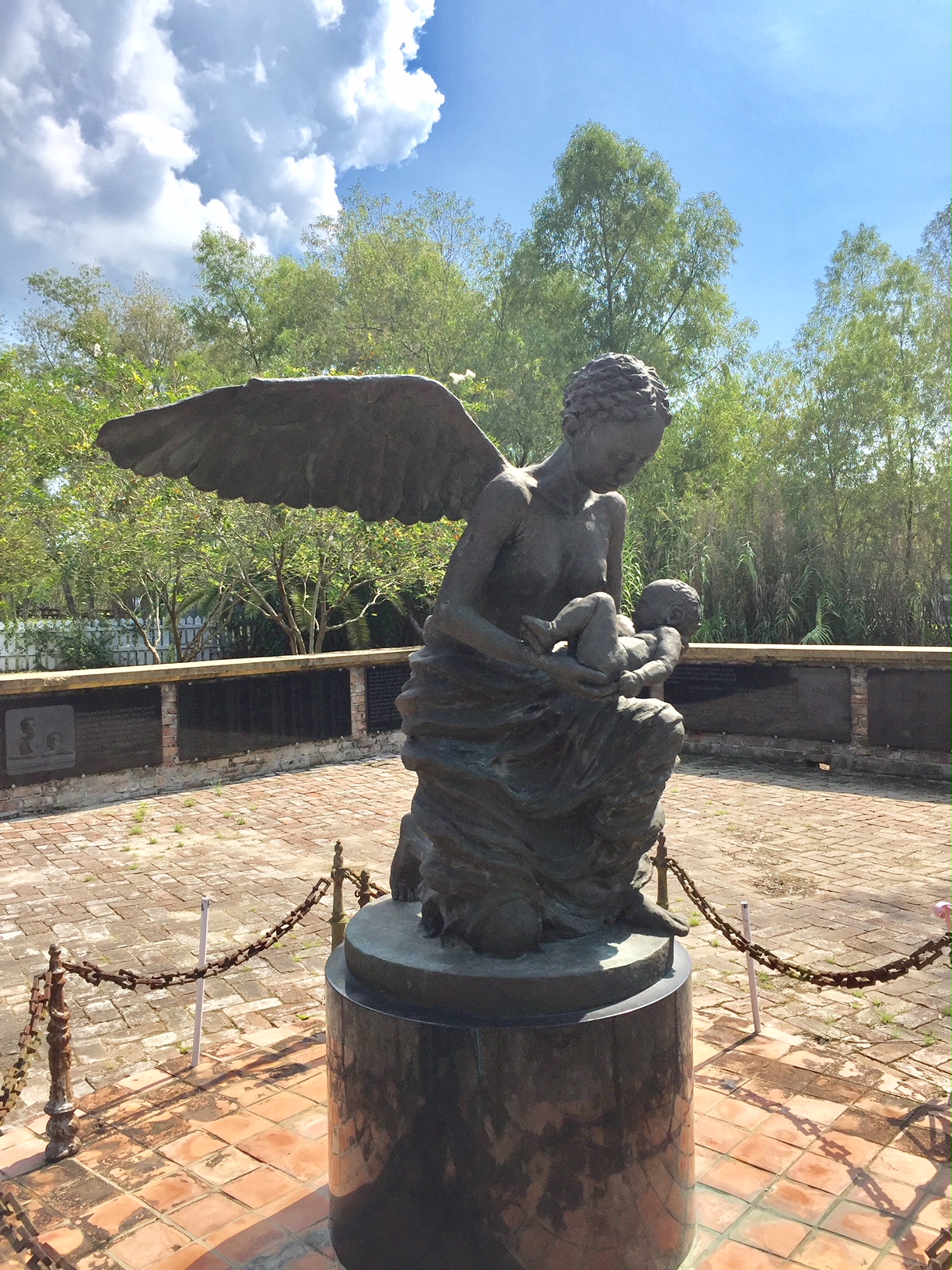
Image is The Field of Angels by Rod Moorhead in the Whitney Plantation,  Wallace, Louisiana.  “The field of Angels is a section of the slave memorial dedicated to 2,200 Louisiana slave children who died before their third birth date and documented in the Sacramental Records of the Archdiocese of New Orleans.” I also believe every one of those children and their parents are now safe.  But we as the Church must not let this kind of thing happen again.
That Time Chick Fil A Opened on a Sunday

The Pharisees said to him, “Look, why are they doing what is not lawful on the sabbath?” And Jesus said to them, “Have you never read what David did when he and his companions were hungry and in need of food?  Mark 2:24-25

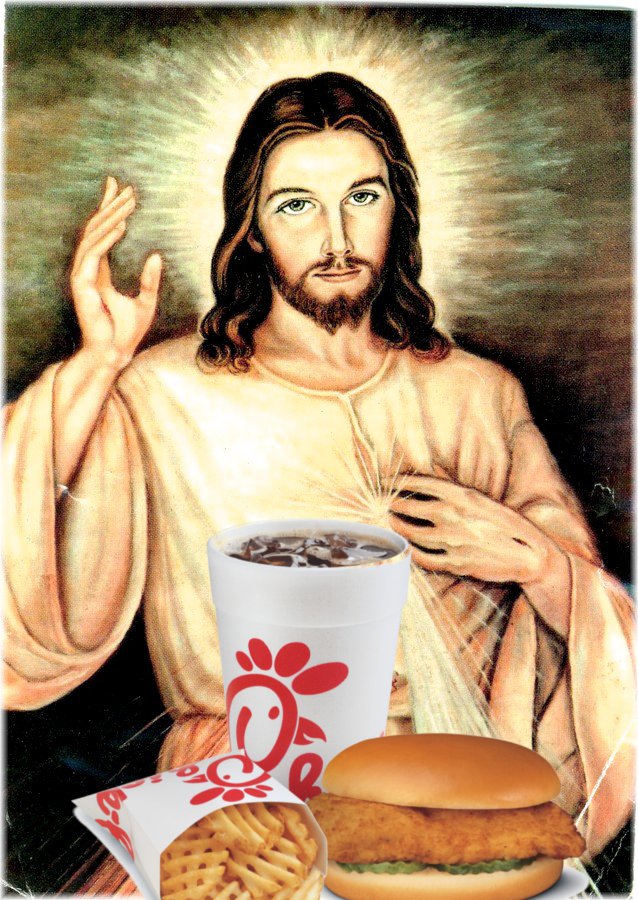
Chick-Fil-A lovers know that they aren’t open on Sundays.  It doesn’t matter if the store is in a busy mall, a heavily trafficked highway, or the Atlanta airport.  If you crave a #1 with waffle fries and a sweet tea on what many call the Sabbath, it’s too bad.  Being closed on Sundays has been part of their culture for over 70 years … until last Sunday.

When the power was out in the busiest airport in the world last Sunday leaving travelers hungry and frustrated, Corporate Headquarters made the decision to open up Chick-Fil-A and feed the stranded people at the Hartsfield-Jackson Airport.  Over 2000 meals were served.

And Jesus smiled.

Chick-Fil-A gets that the Sabbath was made for people – not the other way around.  The point of closing on Sundays is that we are reminded that the world does not stop spinning if we rest.

[Note:  Chick-Fil-A was also in the news several years ago for their founders’ stance on “traditional marriage.”  Today they espouse more inclusive views.  “We want Chick-fil-A to be for everyone,” according to one company VP here.]

In these days when most humans have no idea about the theological significance of holly or stockings or candles in this season, it’s refreshing to see a fast food restaurant which knows precisely why they do what they do – theologically.  They honor God by keeping the Sabbath until it’s clear that it honors God even more to feed desperate people.

I can imagine Chick-Fil-A workers saying, “my pleasure” as they passed out those chicken sandwiches Sunday, but – actually –  I believe it pleased God even more.

May your holiday practices make God happy.


Everyday Beauty

There is beauty in the imperfect and the scarred.

My favorite piece of furniture in our home is the dining room table.  It’s a basic farm table with leaves that make it comfortable to seat about 10 people.  Nothing fancy.

Yes, we’ve enjoyed great meals around that table for decades.  But I especially love the scratches.

If you look closely, you can see the impressions from elementary school homework assignments and high school thank you notes.  There are gouges and water stains.  They mark real life.

This is the season when many of us seek perfection:  the perfect place setting, the perfect tree, the perfect gift.

All those things are lovely.  But there is breathtaking, spirit-filling, deep joy to be found in the everyday beauty of the imperfect.  There are reasons God chose to be born in a cave with the cattle.


Minds in the Gutter

Yep, my mind is in the gutter. Maybe yours is too.

When the President’s Press Secretary suggested earlier this week that reporters’ minds were in the gutter if they interpreted the President’s words about Senator Gillibrand “that way.” He had tweeted Tuesday morning that she was:

someone who would come to my office ‘begging’ for campaign contributions not so long ago (and would do anything for them)

It sounds to me like he was saying that she would offer sexual favors for money.  I go there because  he has shared similarly demeaning things about women in the past.  I didn’t read his tweet in a vacuum.

We live in a culture in which our minds indeed “go there” if we have personally witnessed and maybe even experienced sexual harassment.  We have heard ugly words with our own ears.  We have seen ugly things with our own eyes.

When I hear the story of a Kentucky State Senator accused of assaulting his daughter’s friend during a sleepover when the girls were teenagers, I believe it because it also happened to a friend of mine when I was in high school.  (Note:  The state congressman from Kentucky died by suicide on Wednesday.  My friend never told the police what happened to her.)

When I read about a church leader who makes creepy comments to his female pastor, I believe it because it’s happened to me.

When I see a tweet accusing someone of “doing anything” in order to succeed, I equate “doing anything” with sexual favors because I know women who have been accused of this too.

We need to be aware of what happens in the world to most women:  the comments, the assumptions, the hands.  Maybe our minds are in the gutter because we’ve been there.

But gutters can be cleaned and life can be redeemed. We were created to treat each other with love and respect worthy of the children of God.  God is with us no matter where we are – even if we find our minds – or our very selves – in the gutter.

One of the jobs of the Church is to clean out those gutters and offer safety and protection to the vulnerable.  How are we doing with that these days?  (Better, I hope.)

What They’ve Been Through

 “As hard and as horrible as it sounds, we need people to imagine what it is like (to lose a child to gun violence.) Without that imagination, we’ll never change.”  Jeremy Richmond, the father of Avielle who was killed five years ago today in her classroom at Sandy Hook Elementary School

 When face to face with a person whose loss is too great to imagine, I’ve said, “I can’t imagine what you’ve been through.” I don’t want to imagine something so bitter and horrible.  But maybe I need to.  Jeremy Richman suggests that very thing here.

We never know what to say in times of tragedy and actually no words actually help.  Sometimes it’s best to sit in silence.  Five years go by and – still – our words fall short.

Nevertheless imagining what someone is going through – however imperfect and incomplete – builds empathy.

Frankly, I’m tired of people whose empathy quotient expands only when they are personally impacted.  The father who approves of same sex marriage only after his own son comes out as gay.  The white person who believes that Black Lives Matter only after witnessing abject racism with her own eyes.

Sometimes it takes an up-close-and-personal knock upside the head to move us to care when we’ve had no reason to care before.

Tragedies create activists: the mom who established Mothers Against Drunk Driving, Nancy Brinker who lost her sister to breast cancer, parents like Mark Barden who has become an anti-gun advocate after the death of his son at Sandy Hook.  I believe this is one way God makes sense out of senseless tragedies.

But God is also the Creator of the human imagination.  As difficult as it is to go there, we could all use less individualism and more corporate empathy.  We could all stand to stop saying, “There but for the grace of God go I” and start standing with those who grieve to do what we can to change the world for good.

This is the basic message of all the world’s great religions – in spite of a growing trend to seek the best for us and our own first.  There is nothing Biblical about putting ourselves (much less our nation) first.

God had given us imaginations so that we might connect more intimately with those in pain.  Empathy generates a better, more compassionate world.  Let’s try to imagine what it might be like . . .

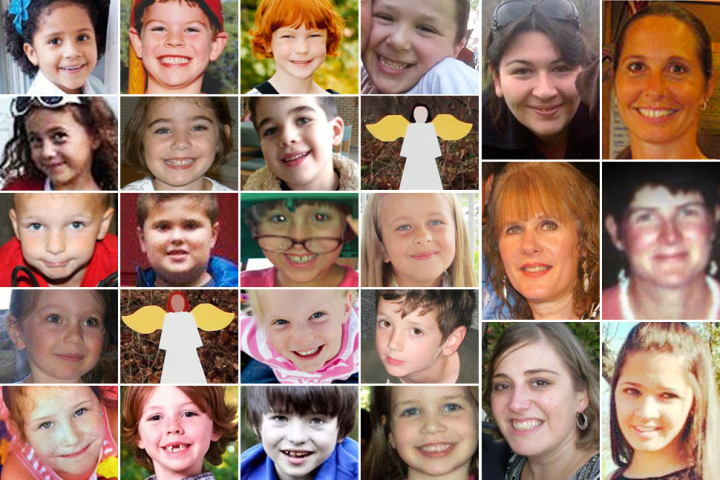
Image of those killed on December 14, 2012 in Newtown, CT.  Thousands more have died from gun violence since that horrible day.  We have the power to make it stop.

Falling In Love Again

Being in love with HH and being in love with God are obviously two different things.  I don’t feel “married to Jesus” although The Church has occasionally felt like my work wife.

This time of year has rarely been a love fest for me in terms of worship planning.  I have preached about John the Baptist so many times that I not only feel like I’m repeating myself; I am repeating myself.

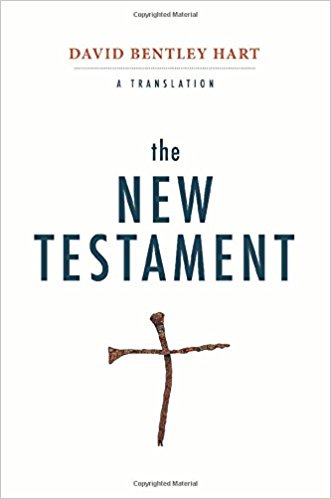
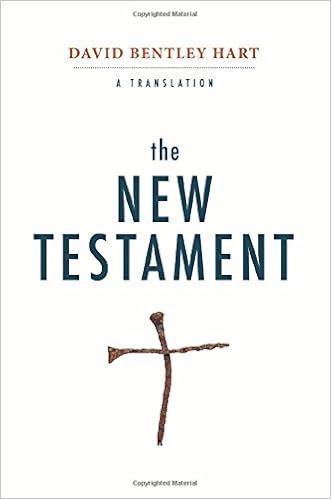
But I just received this in the mail yesterday and it has made me fall in love with The Church again.  David Bentley Hart’s translation of The New Testament is extraordinary.  Check out James Parker’s review  for The Atlantic here.

Many of us think that the institutional Church is a mess.  (Note: it is.) But Hart’s translation reminds us that the First Christians were also a mess.  In his introduction, he writes:

“Most of us would find Christians truly cast in the New Testament mold fairly obnoxious: civically reprobate, ideologically unsound, economically destructive, politically irresponsible, socially discreditable, and really just a bit indecent.”

I love these people.  I loved The Misfit Toys Feel of real church where those who are struggling sit side by side with those who are sitting pretty.  I love the beauty of trans people praying with people who don’t think they know any trans people. I love not being to tell who is homeless and who is not in a gathering of God’s children.

Read. This. Book.  It conveys how confusing, jolting, and grammatically shaky the Greek Bible truly is.  The King James Version is “literarily admirable” in Hart’s words.  But grappling with the strangeness of the Koine Greek brings relief and joy as we grapple with the strangeness of these times.

I’ve fallen in love with The Church again.  In the throes of Advent and Christmas activities, I hope you will find a renewed love for The Church and especially for The Church’s Head.

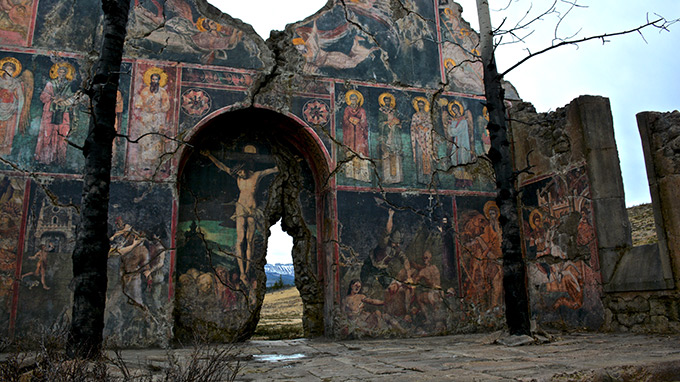
Image of a church building used in the movie The Revenant.  Note:  The Church of Jesus Christ is not a building but this image conveys some of the mess of who we are.

The Best Things Happening Right Now

‘Go and tell John what you hear and see: the blind receive their sight, the lame walk, the lepers are cleansed, the deaf hear, the dead are raised, and the poor have good news brought to them.’  Jesus according to Matthew 11:3

As I travel around for the Presbyterians, I’m often asked to speak about “what the denomination is doing” about everything from gun violence to a lack of millenials in worship. I love being asked about “best things” I’ve seen, but I would also like to know:

What are the best things YOU see in the Church right now?

What is making an impact in your soul and in the souls of others in your community?  What have you seen that makes you say, “God is at work here”?  Where do you see the Church making a difference for good?  Whose lives are better because of your congregation?

Ready . . . and . . . GO!


Image of Syrian children in refugee schools in Lebanon. (March 2017)  This is one of the great things happening in the National Evangelical Synod of Syria and Lebanon.

This is a Test

This is a test of the Emergency Broadcast System. Broadcasters, in your area have developed this system to keep you informed in the event of an emergency. This is only a test.

Our nation faces a test this week.  This is an emergency.

  • Tomorrow, the people the Alabama will decide who they are as human beings and whom they will serve.  My hope is that the voters of Alabama will choose integrity over politics.
  • Thursday is the 5th Anniversary of the shooting at the Sandy Hook Elementary School.  Many of us thought that the killing of mostly white elementary school children by a mentally ill person would be the last straw, bringing more sensible gun laws.  (It hasn’t made much of a difference when children of color are killed.)  We thought it would make a difference when country music fans are killed by a mentally ill man shooting from a high rise hotel. (So far – nothing.) My hope is that our leaders in Washington and throughout the country fear God more than the NRA and do something.

God has given us choices.  Many of us have more choices than others.  I believe that a time will come when we will face our Maker and be told if we’ve passed the test or not.

Yes, there is grace.  But God also calls us to be obedient to the message of Jesus.

When people show you who they are, believe them.

A Letter from the Co-Moderators of the 222nd General Assembly

December 6, 2017

Dear Members and Friends of the Presbyterian Church USA,

We write this today as leaders of our denomination – and specifically as leaders who are women – to address the harassment and abuse stories being shared via the #MeToo and #ChurchToo hashtags. For many, this movement has been both empowering and triggering, as people find themselves reliving sexual trauma from their past. We stand with all who have been victims of assault and objectification in the Church and beyond.

While it goes without saying that healthy boundary training, child protection training and criminal background checks are the responsibility of every congregation and council, we are called in this unique time to seek a deeper cultural shift.  We are called to stand up against a world that allows predators to flourish and victims to be shamed into silence.  The Church is called to be what the world is not:  safe, life-giving, and willing to hold people accountable.

Our denomination – through the ministry of the Advocacy Committee for Women’s Concerns and the work of the General Assembly – suggests concrete tools for addressing these issues.  We strongly encourage you to use these resources in your ministry:

Resources for setting church policies:

  •       The PCUSA Child/Youth/Vulnerable Adult Protection Policy and Its Procedures  from the 222nd General Assembly

Resources for teaching:

Resources for preaching:

Culturally, we must come to terms with the all ways we victimize and objectify people, including actions that are often less noticeable. We have to be willing to examine and confess implicit gender biases that show themselves, among other ways, in pay disparities and comments about personal appearance. While the stories being shared in the media are representative of perhaps the most egregious forms of sexual violence, gender bias must be disrupted everywhere it presents itself. We must be a church committed to gender equity in all areas of our life together.

We humbly ask that the Presbyterian Church USA continue to be a Church in prayer, asking God to bring healing to the victimized, redemption and correction to the victimizer, and a cultural shift to our denomination so that we might have the abundant life promised to us by Jesus Christ.

In Christ’s name,

The Rev. Denise Anderson & The Rev. Jan Edmiston

Co-Moderators of the 222nd General Assembly of the Presbyterian Church USA


Why Our Christmas Cards Say “Happy Holidays”

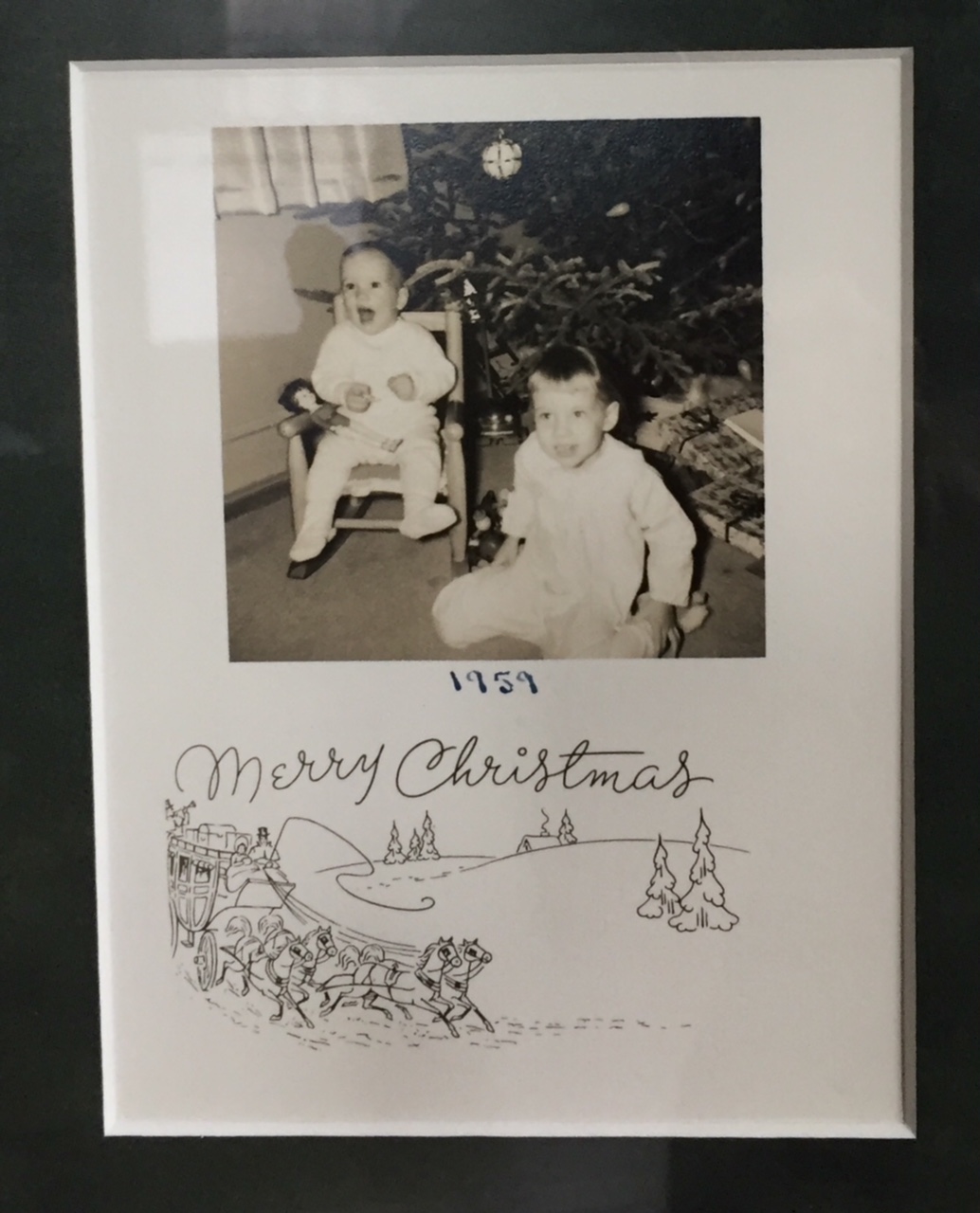
Christmas cards are not about Jesus. At least for me.HH and I send Christmas cards every year as my own parents did for over 30 years.  It’s an intentional practice to connect – at lease one time a year with photos and a quick note.

Sending Christmas cards is more for me than anyone else, just like Yelp.  I use Yelp as a food diary (“Where did we eat that amazing burger?) and I use Christmas cards as a picture diary.  (“That the was the year TBC lost her front teeth.”)  Our Christmas cards go to Jewish friends, Muslim friends, Christian friends, and lots of “nones.”  We celebrate the birth of Jesus, but they don’t, so we say “Happy Holidays” or “Peace on Earth” or something everyone can relate to.

It would feel weird to receive Hanukkah cards or Ramaddan cards from Jewish and Muslim friends because we don’t celebrate those things.  But they also send us Happy Holiday cards.

Saying “Merry Christmas” makes sense for Christians. But not all my friends are Christians.

And Christmas is not just about greeting people merrily.  It’s about the Incarnation of God who came to us, humble and small.  It was a political act 2000 years ago for God to come to break the powers of death, and – for some – it’s a political act now to say “Merry Christmas.”  But if friendly greetings are our most public mark of our faith, we are missing the point.

Yes, Jesus is the reason for the season.  But not so that we can say “Merry Christmas” and decorate trees.  I love to say “Merry Christmas!”  I love to decorate trees.  But Jesus wasn’t born for those things.

I believe that Jesus might just turn over our fancy tables festooned in red and green if he comes back this year.  It feels shallow to focus on saying “Merry Christmas” while failing to lament the fact that Sandy Hook happened almost 5 years ago and still our gun laws fail us. It feels foolish to focus on saying “Merry Christmas” while we cut taxes for the wealthiest of the wealthy and ignore the poor.  It’s kind of ridiculous to focus on saying “Merry Christmas” while turning away refugees who look a lot like Mary and Joseph.

Not to be a downer (probably too late) but Christmas is not about what most of us focus on this season – even if we call ourselves followers of Jesus.

Followers of Jesus protect victims of abuse.  Followers of Jesus serve the vulnerable.  Followers of Jesus get angry about injustice.  In his life, Jesus did all those things for the sake of love.

Christmas is about the incarnation:  when love put on human skin.  We can say “Merry Christmas” or “Happy Holidays” or whatever.  It doesn’t matter.  What does matter is that we mark our faith publicly by living a life of service for the people Jesus loves.

My parents’ cards usually said “Merry Christmas” because they didn’t know anybody who was not celebrating Jesus’ Birthday.  If that’s the case for you, then it makes sense for you to write “Merry Christmas” on all your cards too!

But identifying as Christian has less to do with the words we say than the acts of love we do.

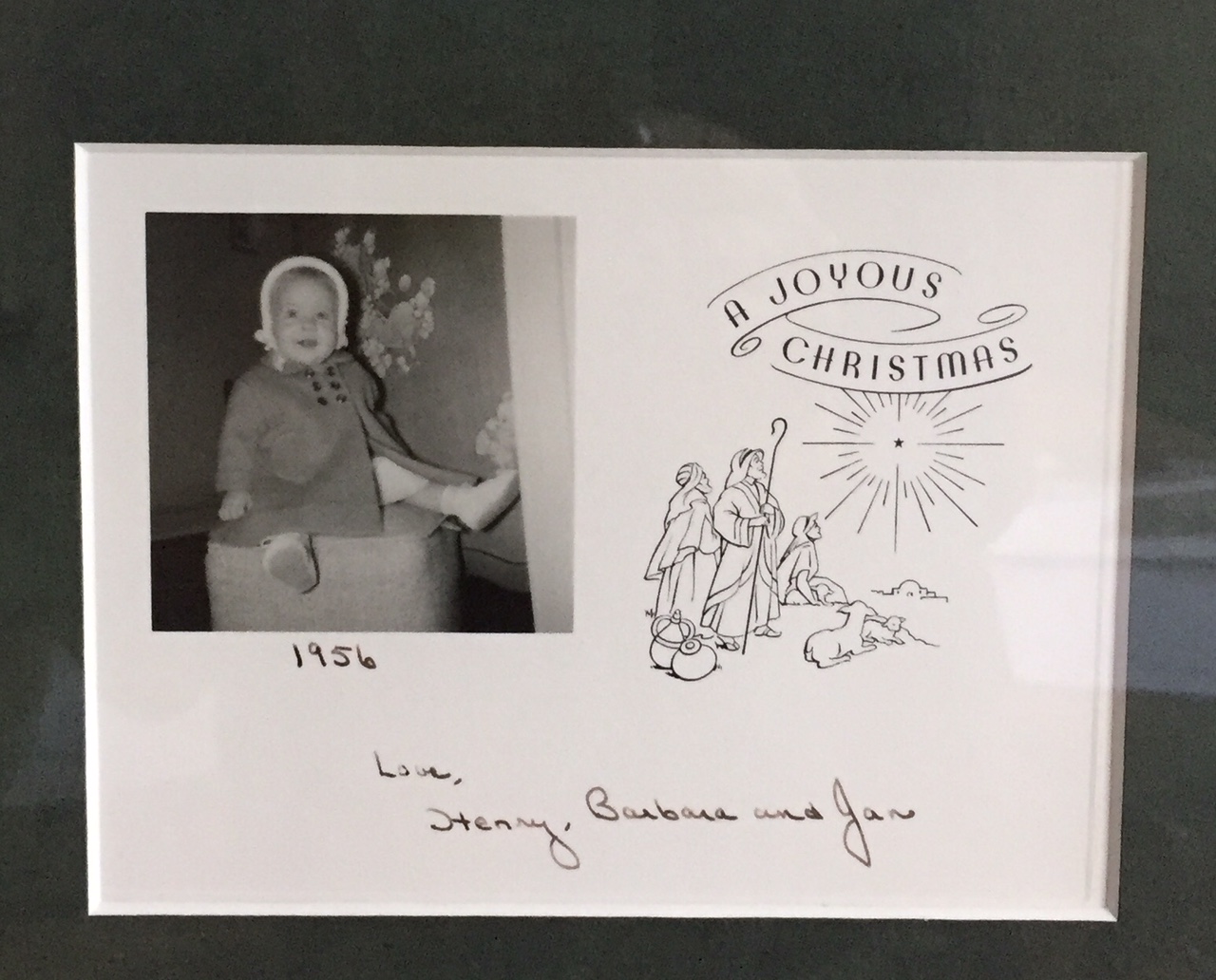
Images are of Christmas Cards past.