Good People (Can Be Clueless)

“…most people the world over were good.  And my family?  We were definitely good.  Our parents impressed the importance of it on us all the time.”  Debby Irving from the chapter “My Good People” in Waking Up White

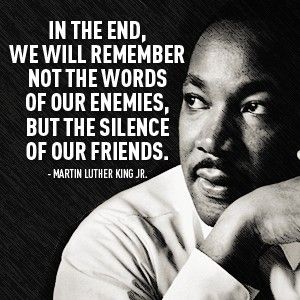
All that is necessary for evil to triumph is for good men to do nothing.”  Edmund Burke

Most of us think of ourselves as Good People.  We follow the rules (except when we don’t re: speed limits.)  We are honest (except when we aren’t re: lying to save face.)  We work hard (except some of us forget that we had some  advantages like white skin color.)

While vacationing in a place where Confederate flags were sometimes visible if not flaunted, I thought about Debby Irving’s chapter “My Good People” a lot. Vacations are supposed to be for relaxing and so discussing politics – for example – in a family with different political perspectives is frowned upon.  (Note: It was really hard the day Anthony Scaramucci was fired.)

Family conversations are opportunities for sharing stories and revealing opinions, and there is always that moment when I need to decide whether or not to speak up when a comment about Good People inadvertently reveals cluelessness.

Examples:

“We were good to our housekeeper.  She was like family.”  

What I wanted to say, but didn’t:  “She wasn’t like family.  She didn’t spend Christmas with us.  She didn’t go on vacation with us.  She didn’t even sit at the same table with us at meals.”


Maybe Sally Hemings and Thomas Jefferson really loved each other.”

What I wanted to say and did:  “She was 14 years old.  And enslaved.

Sometimes we keep our mouths shut when we should speak up.  We don’t want to cause conflict.  We don’t want to hurt someone’s feelings.  We don’t want to get “political.”  We want to think the best of people and we want to think the best of ourselves.

We are Good People.  But sometimes we are also clueless about the fact that we aren’t as Good as we think we are.

I believe in speaking up when we hear or see injustice or false narratives.  But sometimes I don’t speak up either.  Imagine how different the Church would be if we chose not only to speak up but to stand up.


Are We Having Fun Yet?

Every job has it’s not-so-fun parts.  I personally hate doing expense reports.

But if our daily work doesn’t also give us joy and life and moments of fun, I’m not sure we are in the right place.

I remember talking with a colleague about his new call – a complicated congregation with the reputation for serious crankitude – and when I asked how things were going, his face lit up and he said, “I’m having so much fun!”

This is why I believe in “call” – if we are truly called to do something, it’s because we have both the chops and the cosmic prompting to do it.  And it’s meant to be fun – at least occasionally.

Not only can ministry among challenging people be fun  – if the call to serve them is real –  but highway toll-taking, tax accounting, house painting, garden weeding, and tooth polishing can be fun if we enjoy it.  I enjoy none of those things.

But my neighbor asked me recently about my work in the Church and after I described it, he said, “That sounds awful.

Not to me.  It’s really fun.

Repairing Trust

It’s no secret that The Church is not considered a trustworthy institution by a majority of Americans.  According to a 2017 Gallup Poll:

  • 41% of those polled have “a great deal” or “quite a lot” of confidence in the Church or organized religion.
  • 40% of those polled have “a great deal” or “quite a lot” of confidence in The Supreme Court.
  • 36% of those polled have “a great deal” or “quite a lot” of confidence in public schools.
  • 28% of those polled have “a great deal” or “quite a lot” of confidence in organized labor.
  • 21% of those polled have “a great deal” or quite a lot” of confidence in big business.
  • 12% of those polled have “a great deal” or “quite a lot” of confidence in Congress.

Clearly, distrust of our institutions has become part of our American  – and perhaps global  – culture.  Everything from covering up sexual and financial misconduct to serving the institutions rather than God can be blamed, but we are all responsible.

Our institutions are facing a crisis of integrity and – especially in the Church – this is the antithesis of who we are and who we are called to be.

What diminishes trust in our congregations, Governing Boards, Mid-Councils, and National Denominations?  Here are my top six causes:

  1. Failure to adhere to established processes  – which gives the impression actions are being done hastily in order to limit time for objections to be considered.
  2. Secret meetings and secret information without appropriate transparency – which results in gossip, conjecture, and confusion.
  3. A different set of professional and spiritual expectations for some than for others – which results in a breakdown in relationships both personally and professionally.
  4. Lying.  In an anxious culture, anxious people tell themselves and others false narratives to make a case for their own jobs and their own agendas – which shifts the understanding of an organization’s mission from “what’s good for the team/organization” to “what’s good for me.”  (Also known as covering my own @**)
  5. Allowing legal and financial concerns to drive our decisions – which is perhaps “how the world does things” but don’t we as the Church want to be better than the world?
  6. Not standing up against bullies – which sends the message that we fear them more than we fear God.

How do we repair trust levels?  We must bend over backwards to share information which in and of itself allays anxiety.  [Check out this experiment about four groups of soldiers commanded to do a forced march (search “Israeli” and read on page 33 of Steinke’s Congregational Leadership in Anxious Times.)]

We must communicate clearly and often. We must expect the best of each other. We must refrain from gossip.  We must keep all leaders in the know.

An institution that fails to engender trust is a failed institution.  And – especially in the case of Christ’s Church – we deserve to fail if we are untrustworthy.

Can we think of one trustworthy thing we  can do today in whatever leadership position we find ourselves?  Our sacred institutions are depending on us for the love of God.

Networks, Relationships, & Boundaries

Assuming the best about people is inherently a selfish act because the life you change first is your own.  Brene Brown.

In high school I dog sat for UNC’s Women’s Golf Coach.  She connected me to free basketball tickets which was awesome.  But she knew that I wasn’t taking care of Goldie for the tickets. She thought better of me than that.

I guess you could say that Dot was part of a network I cultivated to bring tangible benefits into my life.  It’s good practice for adult success, right?

But actually, Dot was my friend.  I loved her.  And I loved Goldie.

Networking relationships are not the same as personal relationships. Networking is transactional.  I connect with you so that you can help me climb the ladder.  I socialize with you because you can get me into that group/club/circle of influence.

Personal relationships can be transactional too, but the benefits are intangible. They nourish our souls and build our character.

The best professional relationships – I believe – can be personal relationships if we have good boundaries.  Let me say that again:

We can have authentic personal relationships with people in our professional lives if we have good boundaries.

I’m moved by this short Brene Brown talk about boundaries, compassion, and empathy.  We can work professionally with personal friends if our boundaries are strong.  I tend to say, in the course of establishing boundaries, something like, “I’m putting my supervisor hat on now.”  It clarifies that – although we are friendly (or even close friends) we need to make changes, for example, for the sake of professional growth and health.

Some people believe it’s dangerous/impossible to have personal relationships with our co-workers, subordinates, or bosses.  But I believe we can have deep and lifelong friendships with colleagues.  Call me crazy, but good boundaries = good relationships, including personal ones.

Image is called Happy 2000 by James Fowler, author of Connected: How Your Friends’ Friends’ Friends Affect Everything You Feel, Think, and Do

Dream Team

THE Dream Team included the best basketball players in the world and they delivered the Olympic Gold Medal to the United States in 1992.

But I have a Dream Team too.

My dream team includes family and friends who care what happens to me.  I could call many of them in the middle of the night and say, “I need you” and they’d be right over.  My dream team includes an excellent internist who asks me about stress at work, a dentist who knows what it’s like to be a woman in a man’s profession, a coach who knows Church World, a lawyer who doesn’t (but he’s just what I need), an accountant who’s a PK, and a therapist who kicks my butt.  I have an almost perfect dog.  My dream team includes a scheduler who sits at a desk three states away but she knows my every move, a car mechanic who knows the mysteries of Hondas, several barristas and quite a few pastors.

Everybody needs a dream team.

Everybody needs cheerleaders, fixers, and the human equivalent of a pillow.  We need people who stand up for us when we are too tired to stand up for ourselves. We need people who will bring us sweet tea and key lime pie (or whatever brings us comfort.)  We need people who pray for us and with us.  We need people who love us when we are unlovable.

Church People are given obvious and abundant opportunities to be on somebody’s Dream Team or to help people create their own.  I’ve watched countless examples of this: The Church stepping up when a person is living a nightmare with – seemingly –  no way out.

I believe that the world already has a Savior, so it’s not about being somebody’s Savior.  Nevertheless, God has called those of us with solid dream teams in our own lives to use our resources and our privileges to calm the nightmares of others.  Everybody deserves a Dream Team who will support and bless them.

Who is on your own Dream Team?  And subsequently, whose Dream Team are we on?  Do we need to consider sitting with someone in their nightmare?

Image of Michael Jordan, Patrick Ewing, Magic Johnson, Karl Malone, and Charles Barkley.  Be still my heart.

Storytelling is Not a Strategy

Brands are ready to embrace the power of storytelling. Kelly Wenzel

I have a love-hate relationship with branding.  

  • I like easy-to-identify fonts and colors so that when I see a green straw, I think “Starbucks.”  When I see this, I think PCUSA.
  • I don’t like pegging people as in “I know what Jan’s about and my narrative about her is set.”  It’s true that I’m associated with church, Church, and some parenting/cultural shifts/Southern things.  I’m white, married, and straight. But there’s more to me than that.

Contently offered this article last March about the importance of meaning-making but the author was talking about business profits.  It’s an old story that businesses try to tug on heartstrings to tell a story that will make us buy their product.  Think cotton commercials circa 1990s (The Fabric of Our Lives.)

But manipulation is a terrible idea, especially for the 21st Century Church. Millennials are notoriously excellent BS detectors and many others of us can smell when we’ve been targeted.

We tell stories because they make meaning, yes.  But it’s for spiritual nourishment rather than “winning.”  Stories build that armor of protection we’ll need in a cruel world.  Stories comfort us in terrible times.  In the world of faith and religion, stories remind us that we are not alone.

For Christians, it’s particularly meaningful that we have a God whose story includes betrayal and grief and humiliation.  We lesser humans have been there too.  It’s part of our story.

And when we share our stories, it’s not to manipulate or serve ourselves. Storytelling is not a strategy – the Contently people are right.  But a story’s purpose is to connect us to each other.

I wish the image said: “Feed Me. A Story.”  I love food stories and Jesus told lots of them.  Check these out.

The Real Reason Millennials Don’t Do Church

We’re looking for a truer Christianity. Rachel Held Evans

There are many unicorns in my life: those 20 and 30-somethings who are committed church people who consider spiritual community to be an important part of their lives. They regularly worship God. They spend part of their income to support various ministries.  They value connecting with neighbors in need. They have a hunger for spiritual awareness and growth.

I have many more friends in their 20s and 30s who don’t do church and it’s not because they don’t believe in God.  It’s not because they don’t value service to neighbors in need.  It’s not because they are stingy with their money or their time.  It’s not because they don’t ponder cosmic things.

It’s because even with all the good things about being part of a Church –

  • the connection to people of different ages and experiences,
  • the community
  • the opportunities to make a difference in the world

they are turned off/repelled/sickened by the not-so-good things about the Church –

  • the focus on regulations over relationships
  • the dysfunction
  • the lack of transparency/kindness/honesty

My own FBC, SBC, and TBC hear of things in Church World and say, “That’s why it’s so hard to be a part of it, Mom.”  That’s why it’s often hard for me to be a part of it too.

But I have hope.  I have hope that we can shift the culture to be more about relationships over structures, that we are working to become healthier, that we are becoming more transparent, kinder, more honest – especially with ourselves.

Calling all of us who are over 40:  we need to model a truer kind of Christianity. If we continue to fail to do this and be this, there will be no blessing of unicorns.


Note:  A herd of unicorns is called a “blessing.”

Unfinished Work

17Mirzakhani2-master675

I am profoundly sad that Maryam Mirzakhani has passed away at the age of 40 of breast cancer.  You can read about her here.  I wrote about her here in 2014.

She was not only a brilliant mathematician and the first woman to win the Fields Medal. But she was also the mother of Anahita and the spouse of Jan.  Anahita is only 6 or 7 years old.

Dr. Mirzakhani’s unfinished work in mathematics is something I will never comprehend. But her unfinished work as a mother knocks the wind out of me.  I know something about that.  My mother had not finished parenting us when she died at the age of 55. And – sitting here alive and well – I haven’t finished parenting my own grown children.  It’s never finished.  And then – whether we like it or not – it is.

On this lovely Monday in July, when the newspapers in Iran cherished their own Maryam Mirzakhani enough to allow some photos of her with an unveiled head, I continue to trust that life can flourish even after genius . . . or your mother . . . dies.

Image source here.  In thanksgiving today for the motherless genius AAM as she begins a new path herself.

“No Wonder You Were In Pain”

Tom Hanks with toothache

I had dental surgery yesterday and upon checking out the situation, my dentist said, “No wonder you were in pain.

I love it when this happens because I feel like I’ve proven myself to be A Pain Hero. Yeah, I gave birth to three humans. Yeah, I broke my tailbone (twice) and didn’t cry. Yeah, I broke three bones in my foot  – and I cried but not hard.

This kind of talk makes it sounds like feeling pangs of pain is to be avoided when actually feeling pain is an important part of life.  It’s impossible to be an authentic pastor when we:

  1. Pretend like you can’t hurt us even when you tell us our sermons suck or our bedside manner is awkward or something even worse.
  2. Say that we know how you feel when we totally do not.  I have never lost a child or a spouse or a sibling.  I don’t know how that feels (thank God) and even though I’ve indeed lost parents and friends and dogs, your loss is not my loss.  Maybe you didn’t like your parents.  Different situation.
  3. Do not acknowledge our own brokenness.  (Not a newsflash:  I can be a hot mess sometimes.)
  4. Hate it when other people are happy.  Every congregation has people who aspire for something that someone else has (true love, a child, health, a nice home, friends.)  It’s okay for others to be happy. We can be happy too, but everybody’s path is different.

Feeling It is important. It makes us know we are alive.  It connects us to God who also has felt it. (Hello Jesus.) The God I believe in knows what it’s like to be betrayed, to be unjustly accused, to be lonely. The incarnation of God means everything.

Paying attention to pain might even save our lives. (It saved my tooth.)

Image of the Tom Hanks character removing his tooth with an ice skate blade in Castaway.

“Home Sweet Home” – Is This Our Next Big Thing?

Presbyterians are historically known for establishing hospitals and schools throughout the world. To name a few of the hospitals:

  • Rush University Medical Center in Chicago (formerly Presbyterian-St. Luke’s Hospital)
  • Columbia University Medical Center in NYC (formerly Presbyterian Hospital)
  • Penn Presbyterian Medical Center in Philadelphia (formerly Presbyterian Hospital of Philadelphia)
  • Presbyterian Hospital (Durlang, Mizoram, India)
  • Embangweni Hospital (Embangweni, Malawi)
  • Canton Pok Tsai Hospital (Canton, China)
  • Pasteur Research Institute (Addis Ababa, Ethiopia)

And to name a few of the schools:

  • Princeton University (formerly The College of New Jersey)
  • Washington and Lee University (formerly Augusta Academy)
  • The University of Pittsburgh (formerly Pittsburgh Academy)
  • The University of California at Berkeley (formerly the College of California)
  • Cheeloo University, Shandong China
  • American University of Cairo
  • American University of Beirut
  • Damavand College, Tehran (formerly Iran Bethel School for Girls)
  • Presbyterian College and Theological Seminary, Seoul
  • The Reformed University in Barranquilla, Colombia (formerly Presbyterian Theological Seminary)

I believe our next big building project involves housing.

Affordable housing is a huge issue throughout our country and some of our congregations have taken the bold step to partner with housing agencies to combine worship space and housing space. Considering the fact that many hardworking people do not earn enough to live in safe, affordable housing,  it could be true that the next Big Thing in the institutional Church is building homes for the homeless, the housing insecure, and the civil servant employees who cannot afford to live where they work.

Churches own a lot of property, especially in urban and suburban areas.  What might we do to serve the needs of our neighbors with that property while maintaining a spiritual presence? This could be our 21st Century calling.

Images of 1) project between (upper left clockwise) Full Gospel Church & Related California in Oakland, CA; 2) St. James United Methodist Church & AHC Partners in Alexandria, VA; 3) AME Zion in White Plains, NY; 4) Fairlington Presbyterian Church & Wesley Housing Development Corporation, Alexandria, VA.