That Time I Was Told The Photo Wouldn’t Look Right With Me In It

Sometime in my 6th to 7th year of professional ministry, I thought that being an ordained clergywoman wasn’t a problem for most people.  At least most educated people with moderate to left leaning theology had no problem with ordained clergywomen.

I was serving as Co-Pastor with HH at the time and we were basically taking turns officiating scheduled weddings.  It was my turn for a certain bride and groom and they were great.  We covered not only their actual wedding ceremony and their hopes for marriage, but we also spent time talking about their extended families, their dating careers, and their youthful missteps.

The week before the wedding, the couple asked to meet with me and they seemed upset.  Uh oh.

The bride was teary and the groom looked ashen.  “What’s going on?” I asked. And the bride said, “We wonder if you could find a male pastor to officiate because we don’t think you’ll look right in the pictures.”  The groom chimed in, “Yes, it will be awkward to have two women in the photos.”

!

I said something like, “You can ask the other (male) co-pastor to officiate, but frankly, I doubt he will do it for the reasons you’ve suggested.”  (Yay HH)  “Or I could probably find a retired male pastor in town who looks like ‘a traditional minister.’  But he probably won’t want to talk with you about the things we’ve been able to talk about.”

Not surprisingly HH was unavailable to officiate at their wedding, but the couple called me back the next day and apologized and said that I could officiate after all.

I remembered this story while watching Hasan Minhaj’s  Homecoming King on Netflix.  [Caution: language is not for young or sensitive ears.]  Seriously, it’s poignant and beautiful and real and brilliant.  Do yourself a favor and watch it.

Except for the language, I wish every high school student in the world (and their parents) could watch it.

Many of us are still worried about What People Will Think.  Oh my gosh, what if my white relatives see a brown boyfriend in my vacation photos?  What will my Jewish Grandma think when I bring home a Muslim girlfriend for Thanksgiving? What if will they think if I (a woman) take another woman to prom?

We are worried about the pictures because we want to avoid bullying/snide remarks.  Mom can cut us with a single comment.  Dad can go angrily mute for days. I could be shunned from my friend group for dating outside the norm.

My friends, life is too short and the God who made us loves us too much to refrain from including the people we love/like/want to get to know better in the photos.  Seriously.  Be true to yourself.  Hold somebody’s hand.  And smile for the camera.


The Biggest Culture Shift for Youth Ministry?

HH is spending the week with his congregation’s youth group on a mission trip to DC. I have colleagues doing the same thing this week in Cuba, South Dakota, and West Virginia.  Mission trips with youth and adults change lives – usually the lives of those traveling youth and adults most of all.

Just as we live in a time when the average committed church member attends weekly worship less often (read this), youth ministers tell me that their youth do not attend activities every week.  A youth group might have a substantial number of participants if everybody attended every week, but attendance can be spotty for the same reasons that their parents no longer attend worship every Sunday. Among the comments I hear:

  • Youth members do not attend school together and so they are not necessarily with their close friends in church.
  • Kids are busy and “church” has become another activity like orchestra and soccer.
  • Connecting to church is different from connecting to God and some kids have never experienced a connection to God.

Camps, conferences, and mission trips are considered important for connecting people to God.  They offer time away from the usual activities when people are focussed together for a common purpose.  Mission trips to venues far from home offer a glimpse outside their own experiences and – if done well – they learn sound theological and ethical principles.  They learn how not to do toxic ministry. 

So what if we did away with weekly or even monthly “youth group” and offered 4 retreats a year?  I know some congregations who have shifted to this kind of youth ministry and it seems more effective.  [Note:  I am not a youth ministry expert but I’ve observed the following programs which seem to work, depending on the context.]

  1. Partner with other churches if you have less than ten teenagers in your congregation.  Imagine teaming up with 4-6 local congregations and sharing costs and leadership.
  2. All retreats, conferences, and mission trips involve orientation, preparation, and a covenant of participation.  This creates intentionality and commitment on the parts of both the leaders and the youth.  And we are teaching that these events are more than social activities.
  3. Mix it up.  Some congregations might plan four different mission trips a year, but you could also plan one local mission trip, an international mission trip, a denominational youth retreat, and a pilgrimage (e.g. focussing on Civil Rights or Interfaith Understanding.)  Or you could plan two mission trips and two retreats.  It could vary each year.  And participants should be required to raise some/most of the money to attend.
  4. Remember that God uses everything – and talk about that.  What is God telling us about our own calling in these experiences?  Where have you seen God in these neighbors?  And – again – teach healthy partnership, not hierarchical charity.

Experts in youth ministry are good at sorting out the details.  But my point is that congregations might want to let go of the notion that The Youth Group looks like it looked generations ago.

What if your congregation has no kids?  Then ask the local high school guidance counselors or principals what their kids need and consider addressing that need.*

*Repeat after me:  Youth Ministry Is Not About Increasing Church Membership.

Our calling is to offer spiritual nourishment, practical ministry skills, and community to all ages – not to perpetuate an institution.  And our youth are spiritual human beings who want to belong and understand life.

This might be one of the biggest shifts in 21st Century ministry.

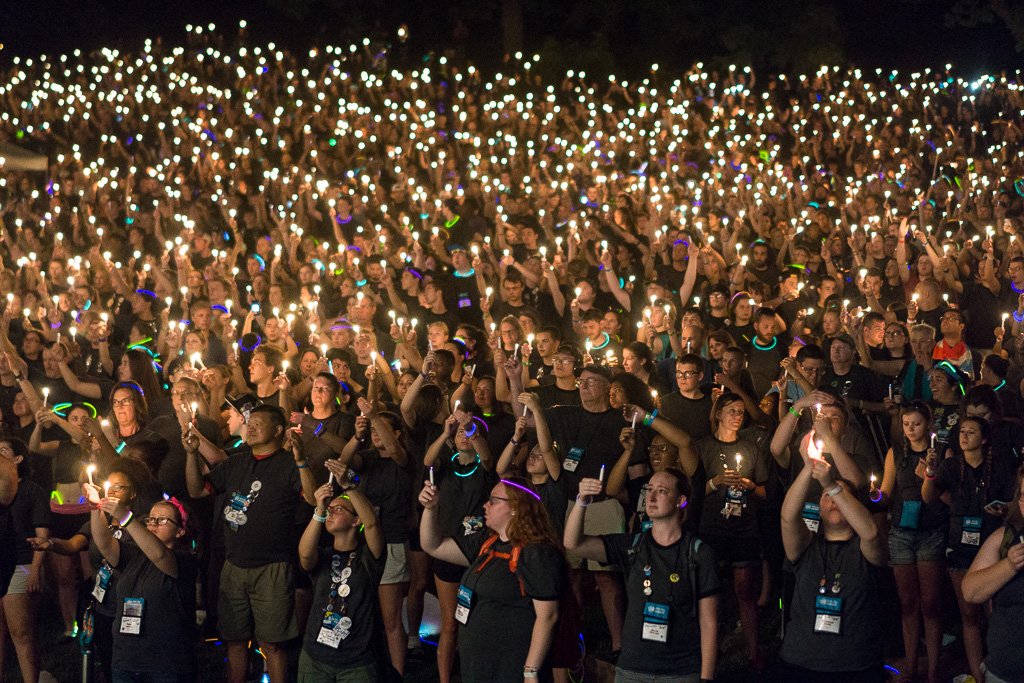
Image from the 2016 Presbyterian Youth Triennium.  The call for volunteers for the 2019 Triennium has begun.

An Easy Place to Live

Last weekend I relished in all things beautiful and holy at B&D’s wedding.  We stayed at a lovely place on Cape Cod where the staff said “It was my pleasure” with every breath.  They live to serve the guests from spreading out our beach towels for us on comfy deck chairs to offering us drinks made of coconut vodka. It felt awkward for about 15 minutes and then I got kind of used to it.

Back to reality today.

The bride was raised Jewish and I was honored to stand with the couple under the chuppah which Rob Bell reminds us (thanks EH) symbolizes that God protects us today just as God protected the Hebrew slaves in Egypt.  They escaped into the desert which – as we know – was not an easy place to live.  It was hard to find food in the desert.  It was  hard to get comfortable.  It was hard to protect yourself.  It was hard not to feel cranky/anxious/envious of people living in the oasis.

Some people believe that being poor is inevitable for certain people.  Some believe that there will always be a servant class.  I wonder what it’s like for the housekeepers, bartenders, pool servers and maintenance people as they work day in and day out for people wealthy enough to stay in a resort like the one we enjoyed on Cape Cod last weekend.

What if we lived in a culture in which everybody occasionally serves and everybody occasionally gets served (and I don’t mean with legal papers)?

People are paid, of course, to perk our coffee, paint our walls, play with our children, etc. etc.  But if we could ensure that those who serve us and our needs – either paid or unpaid – also enjoyed being served occasionally, the world would be a happier, healthier place.

Human beings are called to support people living in difficult places.  Who lives in a difficult place in your town or city?  Maybe . . .

  • Places where it’s hard to find food.
  • Places where it’s  hard to get comfortable.
  • Places where it’s hard to protect yourself.
  • Places where it’s hard not to feel cranky/anxious/envious of people living in abundance, comfort, and safety.

We live in a profoundly divided world where rich and poor, rural and urban, conservative and liberal barely connect with each other.  But can we all agree that we have a human responsibility to feed, comfort, and protect each other – regardless of where we live and who we are?

Imagine getting used to that.

Image from the Wequassett Resort and Golf Club in Harwich, Massachusetts

It Could Happen to You (But It Probably Wouldn’t)

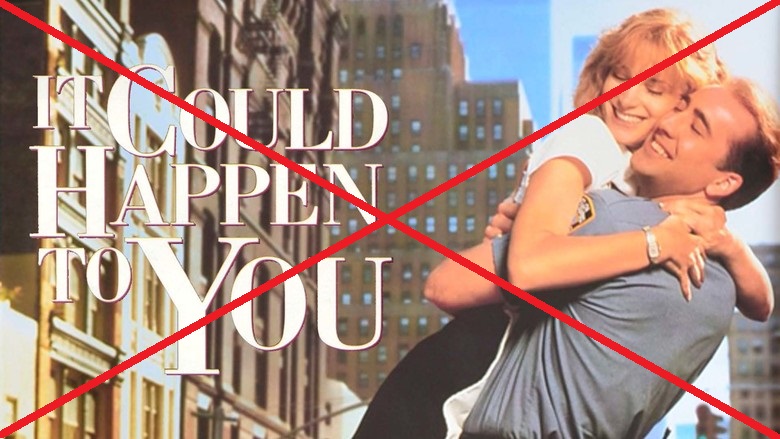
There’s an old movie called It Could Happen to You about a NY cop who wins the lottery and splits the money with a waitress.  The thing is:  it could not happen to me, actually.  I don’t play the lottery.  Even if you play the lottery, it could happen but it probably won’t.

The death of Otto Warmbier feels especially disturbing to parents who send their children abroad to places like Russia or Turkey or even North Korea. We can imagine our kids trying to take a propaganda poster as a souvenir (aka commiting a “hostile act against the state.”) We can imagine this happening to one of our kids – especially if “we” are prosperous people who can afford international travel for our children.

The death of Philando Castile feels disturbing too, but I am not hearing white friends and family members saying “It could happen to our child too” because it probably wouldn’t.  Mr. Castile was pulled over by police officers over 49 times in 13 years according to this article.  Like you and me, he sometimes turned without signaling or drove without knowing that his license plate light had burned out. This study in Mr. Castile’s home state of MN found that

“minority drivers were more likely than white drivers to be both stopped and searched, even though officers found contraband more often when searching white drivers.”

As I consider the death of Charleena Lyles who was shot by the very Seattle police officers she called to report a burglary, I was saying to BSE yesterday something like this:  “Can you imagine this happening to you or your neighbor?  You call the police because you are afraid you’re being robbed and the police shoot you? They said she had some mental health issues, but why would they shoot her?

But then I realized how ridiculous I sounded.  Of course we can’t imagine this because it is highly unlikely that this would ever happen to me or BSE. Because we are white.  Because we live in nice neighborhoods.  Because we have health care.  Ms. Lyles was a black woman with mental illness living in an apartment for people transitioning out of homelessness.

What happened to Charleena Lyles probably wouldn’t happen to me or to my next door neighbor.  If my child gets pulled over with weed in the car, he might not even get arrested.  If I am missing a tail light  – and even if I have a legal gun in the car – I am not likely to get a ticket, much less multiple bullets fired at me.  If my husband goes out to get milk at 11 PM, I am 99.9% certain he will arrive home safely.

Note to white people like me:  The world will not change until we have empathy for people enduring what we cannot imagine because it probably would never happen to us.  Because we are white.  Because our skin color affords us privileges we don’t even notice.  It’s time for more of us become angry for the sake of what’s right and fair.

Why Did I Listen to This?

I like podcasts and non-fiction books.  I like Netflix and NPR and lectures on random topics.  I like Chicago Ideas Week and the Chicago Humanities Festival. But even a diet of these activities has become anxiety-provoking.

Why in the world did I listen to this last night on the way home from a meeting? 


It was a beautiful story.  A poignant story.  A sucks-you-in-and-changes-your-life story.  But I deal with those stories every day in real life.

My work – by its nature – boosts my anxiety quotient and so does yours, most likely.  It also boosts my (good) energy levels in that I believe my entering the salad of church conflict, pastoral crisis, missional uncertainty, and personal discernment somehow transforms things for good sometimes.  It’s hard to be present with someone facing a difficult situation but it’s also beautiful.  It’s exhausting to shift institutional cultures but it’s also delicious.

Because all of us consume daily diets of anxiety-enhancers, it occurs to me that I need to go vegan  in terms of my media intake.  What is the media equivalent of green vegetables?

More Kimmy Schmidt and less Claire Underwood?  Maybe.

You know that moment when news reporters warn us that “the following stories may be upsetting to sensitive listeners“?  All of us seem to be more sensitive in these days when we could turn on the TV to catch the weather only to hear that a 30 year old woman who called the police about a robbery was then shot and killed by the police herself.  I wanted an interesting podcast on the drive home last night but I got a tragically interesting one.

How do we stay informed while pacing ourselves?  When I googled “Podcasts That Make People Happy” I got stories about a newborn baby kidnapped from the hospital and crows mourning their dead.  (I assume the baby was found unharmed and the crows found new friends.)  But no thanks.

I actually know the answer already.  I just have to do it.

Image of Ellie Kemper as Kimmy Schmidt

Good Girls

I was facilitating a parenting group several years ago and one of the parents asked the group if being “a good kid” meant being a compliant kid. Good question.

Good kids follow the rules. Good kids control their emotions. Good girls – in particular – are expected to be subdued and deferential.

Yesterday HH and I finally saw Wonder Woman and let’s just say that Diana, Princess of the Amazon was not always a rule keeper.  Both as a child and as a young woman, she defied requests/commands/ultimata to refrain from saving the world.  People who loved her wanted to keep her safe.  But her inherent kick-assery made compliance unlikely.

Nevertheless, Diana was the best of the Good Girls.  She knew when to fight.  She knew when to empathize.  She believed in grace.

I don’t believe you get what you deserve.  You get what you believe and I believe in love.”

Good girls might indeed be compliant, but the best ones I know demand respect for themselves and for others. They are kind.  They are brave. They believe that love changes the world.

Image of Gal Gadot as Wonder Woman (2017)


Philando Castile’s Life Mattered

That’s all I have to say today.


The Girl on the Train – or – How Do Adults Make Friends?

I met E on the train yesterday.  There were lots of empty seats but she chose to sit with me and I said, “Good Morning.” Ordinarily I don’t say anything to people sitting beside me on trains or airplanes because I don’t want to talk.  I want to read or sleep or stare out the window.

Good Morning” is not an invitation to chat for the remainder of a trip, until it is. My seat mate E wanted to chat.

Me:  Good Morning.

E:  Which stop is yours?

Me: UIC.

E: Are you in college?  [Note:  UIC is the University of Illinois Chicago stop.)

Me:  No, my office is near there.

E: You work in an office?

Me: Yes.

E: What do you do in your office?

Me: I’m a Presbyterian pastor.  I work for the Presbytery of Chicago which is sort of like working for the regional group of Presbyterian churches.  

E:  What do you do all day?

Me: I work with people preparing for professional ministry or churches going through changes.

E:  I’m Jewish.

Me:  Oh, great.  I’m officiating at a Jewish wedding next weekend.

E: (She looked confused.)

E: It’s hard to make friends as an adult.

Me:  I agree.  

I handed her my card more to prove that working for a Presbytery is a real thing than to hang out later.  She responded by saying again, “I’m Jewish.”

One of the reasons why recent college graduates move to cities is because there is a higher possibility that there will be People Their Age nearby.  Gone are the days when you can yell “Who wants pizza?” down a dorm hallway at 11:45 pm and several people are happy to join you.  It’s really hard when you are 22 and in a new job and everybody in your office is over 40.  It can be lonely to be the lone Young Person in the place where you spend most of your waking hours.

  • I was 27 when I moved to my first post-seminary position in a rural community.
  • I was 33 when I moved just outside DC but I had a spouse and a baby and it’s easier to meet people when you have a baby.  Other people with babies want to hang out.  We had other kids and their friends’ parents became our friends
  • I was 55 when I moved just outside Chicago.  My kids (the source of most of my adult friendships) were gone and it was hard to make friends from scratch.

Building community as adults happens only when we are intentional about it. We make the effort to connect with a church or a club or a neighborhood soccer league.  Or we meet people through other people we already know or meet through work.  Most of us do not try to make friends on trains.

E is very brave.  She put herself out there and dared to talk with a stranger on the L in Chicago on a warm June day.

How have you made friends as adults?  Any tips?

Image source.


Simple Reminder: The E Word

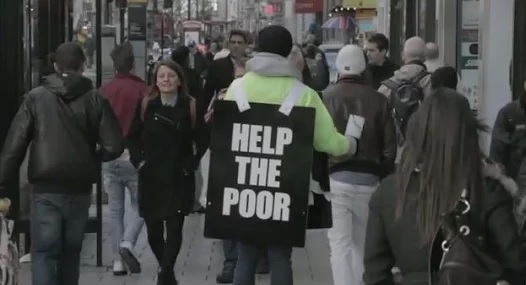
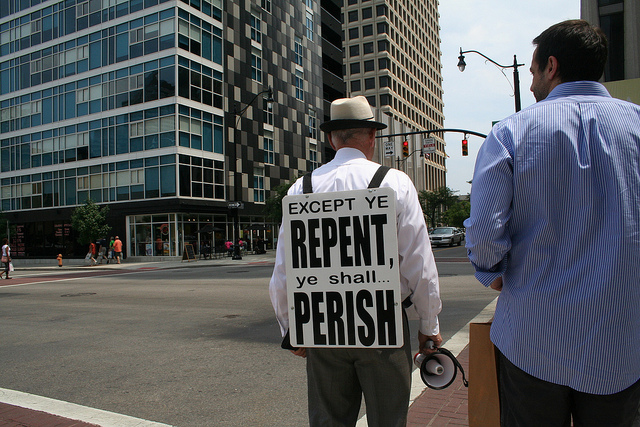
The E Word has a shaky reputation.  People hear “evangelism” and picture somebody wearing a sandwich board like this.  Or they hear the word “evangelist” and picture a sweaty man shaking a Bible in somebody’s face. Nevertheless, I embrace this word as a goal and as my particular appellation.

Evangelists share Good News.  That’s part of my job as a leader in my Church.  But here’s an important question:  For what are we evangelists?

  • For our denomination?
  • For our congregations?
  • For our particular brand of privilege?
  • For our political party?
  • For our business?
  • For our school?
  • For our country?
  • For our family?
  • For our team?

Imagine – if you are a person of faith – sharing the Good News of your God’s message.  For me, this would be the message of Jesus:

The Spirit of the Lord is upon me,
   because he has anointed me
     to bring good news to the poor.
He has sent me to proclaim release to the captives
   and recovery of sight to the blind,
     to let the oppressed go free,
 to proclaim the year of the Lord’s favor.  Luke 4:18-19

Sometimes we confuse the object of our devotion.  I know I do.  But on my best days, I remember my most basic purpose.  Imagine – if we actually lived to bring good news to the poor, release to the captive, recovery to the blind, freedom for the oppressed, and proclamation of Jubilee aka “the year of the Lord’s favor.”

The time is coming when this movement will rise again.

Image source.

In Praise of Curmudgeons

There are two kinds of curmudgeons:

  1. Curmudgeons whose crankitude is endless and indiscriminate. Good things happen and yet they rarely acknowledge them.
  2. Curmudgeons whose hope for the world endures in spite of all cosmic ridiculousness. They sound cranky at times and yet their basic faith that human beings are capable of virtue remains.

We know which we are.

People who spend their lives in tireless service to others in the likeness of Christ actually do get tired.  There are glimpses of good and then someone tells you that her white daughter got assigned a black roommate and “of course we had to move her out of that dorm room” or someone makes a comment about your decision to wear capri pants to worship rather than “something more appropriate.”  And you begin to feel grouchy and might even whisper “What’s the use?” to no one in particular.

Following Jesus can be hard.  I’m not sure we are truly following Jesus if it isn’t a little hard.

We are on the cusp of the 50th Anniversary of The Poor People’s Campaign organized by Dr. King and the Southern Christian Leadership Conference.  The hope was to address issues that create poverty and declare war on those issues, resulting in more justice for all.

Happy Anniversary to the Poor People’s Campaign but we don’t have as many laurels to rest upon as we’d hoped.  This article is very helpful for dissecting data between poverty stats in the 1960s and poverty now.  The author, Yves Smith also says that:

“Poverty is multidimensional.  It radiates into housing, health, education, criminal justice, and upward mobility, which in turn affect economic poverty.” 

Talking about poverty is not as sexy or uplifting as talking about so many other things (e.g. Wonder Woman, cute shoes, vacation plans.)  But Jesus talked about it a lot.

I recently heard someone say that “nobody in America is truly poor.

It’s true that many who live below the poverty line have mobile phones and televisions.  But economists explain that measuring poverty is complicated.

If we are measuring poverty according to how many people are receiving benefits like food stamps, free school lunches or housing subsidies, we are overlooking those who are not receiving those benefits because they are no longer available or they are unaware that they are available.  Ask your local church group doing mission trips in rural areas this summer if they have noticed how “truly poor” our fellow citizens are.  We have a long way to go before every child has clean drinking water in the United States, much less a solid education and healthy food options.

Our culture rewards those who are always positive and smiling. But note that Jesus himself was not always the meek and mild prophet who chucked little children under his chin. Note that even Jesus loved the poor enough to toss tables from time to time.

For what injustice would we be willing to be like Jesus?  For what injustice would we toss tables – or simply speak up?

Image source unknown.