If We Won’t Be a Global Nation, We Can Still Be a Global Church

white-house-websiteAt the end of a long work day, I see that:

Our reputation as a global nation might be shifting, but we are still called to be a global church because Jesus calls us to make disciples of all nations.  For God so loved the world (not just the United States.)

Sorry for all the hyperlinks.

A global Church seeks to:

  • Speak the language of the people. Thank you PCUSA for printing materials in English, Spanish, and Korean because those are the languages of the people in our congregations.
  • Be stewards of creation.  Thank you PCUSA for encouraging churches to be Earth Care Congregations.
  • Protect the vulnerable.  Thank you PCUSA for appreciating and lifting up the gifts of LGBTQ persons.
  • Seek justice for all. Thank you PCUSA for expanding our ministry to minorities, refugees, and the poor.
  • Remember that it’s not about us.  Thank you for our Reformed theology.  

Now more than ever,  the Church is called to be different, to counter the culture, to be like Jesus in the world.

I’m not giving up on my country.  But it looks like the Church will increasingly need to take the lead in showing the world what God is calling us to be and do.

Carnage and Me

Let’s talk about carnage.
car·nage ˈkärnij/  noun
  1. the killing of a large number of people.

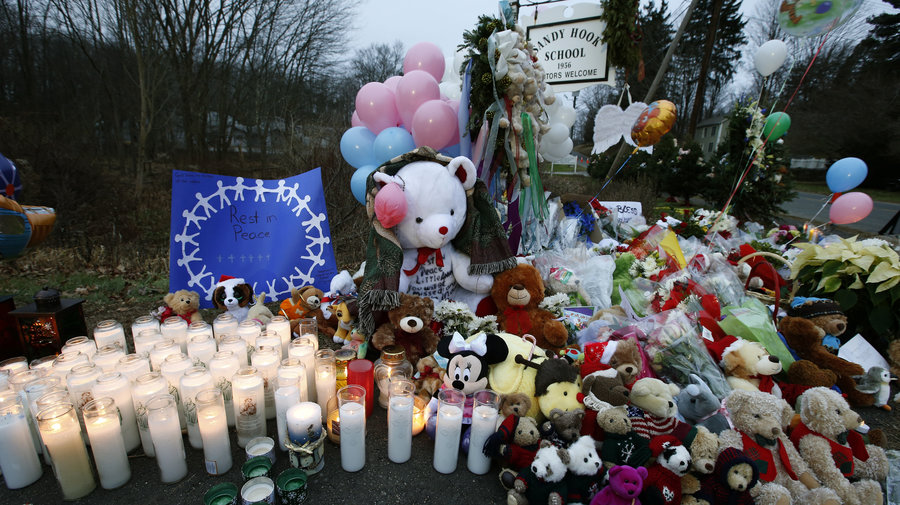
But for too many of our citizens, a different reality exists: mothers and children sandy-hooktrapped in poverty in our inner cities; rusted out factories scattered like tombstones across the landscape of our nation; an education system flush with cash, but which leaves our young and beautiful students deprived of all knowledge; and the crime and the gangs and the drugs that have stolen too many lives and robbed our country of so much unrealized potential. This American carnage stops right here and stops right now.  From the Inauguration Speech of the 45th President of the U.S.A. 1-20-17

I have never personally witnessed what I would call “carnage.”  I have never fought in a war, been in a multi-car accident, stood on the grounds of  a school shooting, or observed a natural disaster first hand.  My life has been remarkably sheltered. But what I have witnessed first hand is this:

  • The testimony of my friend Mindy Corporan about April 13, 2014 when a white supremacist shot and killed her 14 year old son and her father in the parking lot of the Jewish Community Center in Overland Park, KS.  Note:  the shooter killed three human beings that day.  Killing Jews was his goal.  He killed three Christians which I share only to note the absurdity of this day. How did this Neo-Nazi get a gun?  How does a person so thoroughly hate people who happen to worship God in a different tradition? Gun accessibility has produced unspeakable carnage.
  • The testimony of my friend Valarie Kaur, a Sikh activist, who talks about the family friend who was shot on September 15, 2001 just days after the attacks on America by a person who mistook a patriotic Sikh business owner for a terrorist because of his turban and beard. He was shot in cold blood at his small business in Mesa, AZ.  Why did this person think he could take the law into his own hands? How did this shooter get to adulthood without a working knowledge of what people of other faiths believe and look like?  Hate crimes have produced unspeakable carnage.

This is the carnage I have observed.  And I’m not even talking about the carnage resulting from crimes against unarmed black men, crimes against police officers and gang violence in this city I now call home.

This is a carnage I know.  My prayer is that our new president will explore up close and personal this carnage rather than depend on cliches.

In the meantime, we who call ourselves The Church are called to address any and all who suffer these days.  I, for one, am grateful and – yes – proud to be part of a denomination who:

This is not the time to stare at whatever carnage you see or imagine.  This is the time to step up and serve in the name of all that is good and holy.  We were created for this.

Image of Sandy Hook Elementary School after the 2012 carnage resulting from a mentally ill shooter who should never have had access to guns.

The Circus

ringling-bros-and-barnum-and-bailey-circus-tickets-jpg-870x570_q70_crop-smart_upscale

The news that Ringling Brothers, Barnum and Bailey Circus is shutting down didn’t feel tragic to me.  SBC and I were reviewing his Circus Memories yesterday and he had no recollection of attend RB, B&B Circus at the age of two.  (Actually he slept through it.)  He only remembers The Big Apple Circus when he was a little older.

I remember marveling over the Ringling Brothers Circus as a child but I almost slept through it in the early ’90s too.  It struck me as dated.  The Big Apple, on the other hand, was more impressive to me as well.  Fewer animal tricks (which are often achieved through cruelty.) More human skill.

Life can be a circus, of course, and The Circus Quotient feels particularly high this week.

Some of us love a circus (the more rings, the better) and some of us prefer a quiet corner with a book.  But things need to get done in this world and there is much work to do.  Let’s learn from the circus.

  • Cruelty might seem to get results, but in the long run, somebody notices that the elephants are in pain and it’s evil.
  • It’s better to have one ring of excellence than three rings of mediocre.
  • The casual observer wonders how someone can possibly fling herself off a trapeze and live. But that trapeze artist is – in fact – A) an artist and B) extremely well-rehearsed.  Skills require lots of practice.  And sometimes good work is simply an art.
  • Some clowns are scary.

So, my friends, find your art.  Practice every day and you will be able to do amazing things.  Don’t be cruel.  And don’t be a scary clown.


Meet Chad Crow

I wish everyone would read  this article by Yawo Brown today.  And then, could we talk about it?

There is immense division in our nation.  We start this work week with a federal holiday commemorating Martin Luther King Jr. birthday.  And we end the work week with the inauguration of the 45th President of the United States.

Few of us embrace being called racist and yet those who voted for Mr. Trump subtle-racismhave been accused of racism.  People who didn’t vote for Mr. Trump certainly have racist proclivities too.   All of of us live in a nation steeped in racism so embedded in our way of being that we who are in the dominant culture barely notice.

(Note:  The Waking Up White supplementary study is now ready here.)

Racism is part of the DNA of this country although that term makes us uncomfortable and defensive and angry. So what if we called it Polite White Supremacy?

Affectionately, it’s called #PWS for short. It has been referred to as the Casual American Caste System, Delicate Apartheid, Gentle Oppression, or what I like to call it after a few drinks: Chad Crow, the super chill grandson of Jim Crow.

Chad doesn’t force people of color to use separate bathrooms or water fountains. He doesn’t make people of color enter his home through the back door or bring their own cups.  But he makes assumptions about people of color based on erroneous information (e.g. some people are rich because they work harder.)

I am quite far from being fully awake to my own racism.  But – especially on this day and especially on this week – perhaps we who have enjoyed life in the dominant culture could commit to waking up to Polite White Supremacy.  More than ever, we need to see each other with the eyes of Christ.

Image source.

Wearing the Church

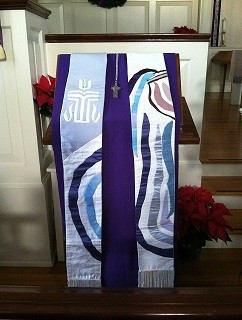
So, chosen by God for this new life of love, dress in the wardrobe God picked cindys-stoleout for you: compassion, kindness, humility, quiet strength, discipline. Be even-tempered, content with second place, quick to forgive an offense. Forgive as quickly and completely as the Master forgave you. And regardless of what else you put on, wear love. It’s your basic, all-purpose garment. Never be without it.  Colossians 3:12-14

On any given day, I am wearing at least one of the following:

  • A tartan scarf given by The Church of Scotland
  • A beaded bracelet given by Presbyterians from Pakistan
  • A beaded PCUSA cross given by the Native American pastors of the PCUSA
  • One of several stoles given by the Committee on Local Arrangements for the 222nd General Assembly by the Presbytery of Cascades or by the Office of the General Assembly or by The Presbyterian Church of Korea

My partner in Co-Moderating wears an ancient cross around her neck which is actually three crosses riveted together.  It’s the Moderator’s Cross and Denise is wearing it the first year of our two year term.

We wear the Church wherever we go.

Wearing the Church is not the same as being “clothed in love.”  Our confusion about this has lead to the diminishing of our ministry in the Mainline Church. We have confused “being good Church People” with being faithful disciples of Jesus. I remember the funeral of a church member years ago during which his former pastor named him as One of the Great Church Statesmen.

With all due respect, I hope nobody ever calls me “a Great Church Stateswoman.”  Our faith in Christ is marked more by how well we have worn love.  Do we walk through the day wrapped in a cloak of compassion or dressed in the right outfit according to human expectations?

I’m a fan of dressing appropriately, but if we do not wear our faith out in the world, people will notice.  God certainly will notice.  A clergy collar worn at a rally is damaging if that collar is not accessorized by compassion, kindness, humility, quiet strength, and self-discipline.  A cross around the neck is confusing when worn by a cruel person.

As I celebrate the 150th anniversary of the First Presbyterian Church of Santa Fe this weekend. bedecked in all my Church-wear, I pray people will know I am Christian (and you are Christian) by our love.  This is especially the case as we remember the ministry of Dr. King this weekend.

Image of the stole which once belonged to the Moderator of the 219th General Assembly of the Presbyterian Church USA.


For Your Consideration This Weekend (and always)

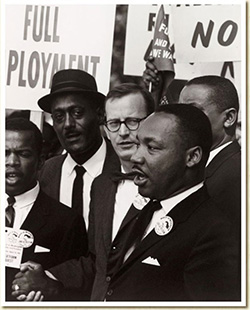
mlk-march-on-washingtonThis holiday weekend is not about linen sales or car deals.  It’s about this. Please join us.

Connecting the Dots

How do we discern God’s will for ourselves?  I’m in the discernmentconnect-the-dots business and I’ve found that:

  • It’s not magic.
  • It’s not discerned in isolation.
  • It’s not revealed without some level of discomfort.

In other words, we don’t uncover God’s will for us  by opening a Bible and pointing. Community affirmation is essential.  (i.e. we cannot “call ourselves”) And God rarely calls us to do something easy.

When Denise Anderson and I were discerning whether or not we were called to stand for Co-Moderators of the 222nd General Assembly of the Presbyterian Church (USA) we grappled together and with others.  No bird flew through the window with a golden envelope.  The community encouraged us (although there were a couple naysayers.) And it semi-terrified us.

So now I find myself loving life as one of the Co-Moderators and in the past several weeks I am connecting the dots regarding where God might be leading us as the Church.  It’s not magic.  It’s not a solitary effort on my part and Denise’s part.  It’s a little scary.  But it’s also holy, hard, amazing, and inspiring.

On the cusp of the weekend when we honor Dr. Martin Luther King, Jr and his example of human rights work, these are the days when it’s becoming clearer that we are called – as followers of Jesus – to do the same in the 21st Century Church. There are dots being connected all around – between refugees and victims of hate crimes, between Christians, Jews, and Muslims, between old and young.

What is God calling you to do and be here on the cusp of this MLK weekend and on the cusp of our next President’s inauguration?  It’s not only a great time to be the Church; it is an especially important time to be the Church.

How are you connecting the dots?

What Dylann Roof Deserves

“Returning hate for hate multiplies hate, adding deeper darkness to a night already devoid of stars. Darkness cannot drive out darkness; only light can do that. Hate cannot drive out hate; only love can do that. Hate multiplies hate, violence multiplies violence, and toughness multiplies toughness in a descending spiral of destruction.”  Dr. Martin Luther King Jr.

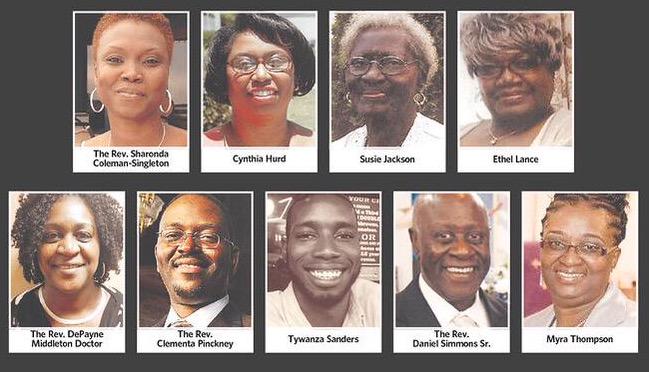
Dylann Roof was sentenced to death yesterday for the murder of nine innocentcharleston-nine people.  It’s possible that he could be sentenced to death again in the future if found guilty in his federal trial. Does he deserve to be killed for what he did?  Most of us would say yes.  Is it our place to kill him?  I would say no.  That’s God’s call and God’s call alone.

Let’s talk about what we deserve.

I don’t deserve what I have in this life.  I won the lottery jackpot when I was born to parents who loved me and had the capacity to provide everything from new shoes to braces to summer vacations.  They had the emotional and psychological abilities that caused me to attach to them in a healthy way so that I could connect with other people easily.  They encouraged me to get a college education and they supported me financially as much as they could.  And because of those early years, I had other opportunities that paved the way for me.  And I was born with white skin in the United States of America  – an enormous advantage.

I have made life mistakes that might have capsized a different person’s life.  I have fallen short of the glory of God in some ways that everyone knows and in some ways that only God knows.  I do not deserve what I have in this life.

But by grace I have been saved – and not merely in cosmic, eternal terms.  Grace saves me every day.

Dylann Roof committed  an evil. ignorant, unspeakable, punk crime.  He deserves to die for this crime.  Not one of his victims’ family members should have to have endured what they endured over the past months and days.  But killing him is not our call.

And allowing the government to kill someone in our name ruins us as human beings just a little bit.  Or a lot.

Image of the victims of the June 17, 2015 shooting in Mother Emanuel AME Church in Charleston, SC: Cynthia Marie Graham Hurd (54) – Bible study member and manager for the Charleston County Public Library system; Susie Jackson (87) – a Bible study and church choir member.Ethel Lee Lance (70) – the church’s sexton; Depayne Middleton-Doctor (49) – a pastor who was also employed at Southern Wesleyan University;  Clementa C. Pinckney (41) – the church’s pastor and a South Carolina state senator; Tywanza Sanders (26) – a Bible study member; Daniel Simmons (74) – a pastor who also served at Greater Zion AME Church in Awendaw, SC;  Sharonda Coleman-Singleton (45) – a pastor; also a speech therapist and track coach at Goose Creek High School; Myra Thompson (59) – a Bible study teacher.


Quote from the sermon “Loving Your Enemies” (Strength to Love, 1963)

Thinking about My Brother Franklin Graham

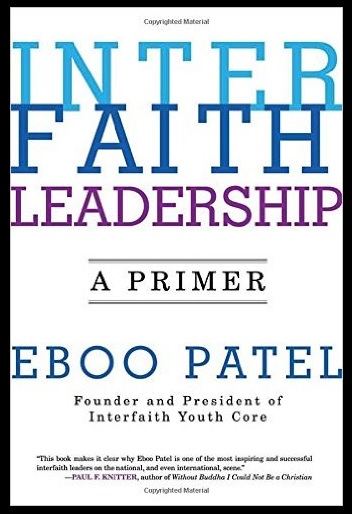
interfaith-leadership-by-eboo-patelA Jew, a Muslim, and four Christians sat around a table yesterday in Chicago and my soul was fed in a holy way.

I’ve been thinking about Franklin Graham a lot these days, especially since I was in his home town last week.  I drove up to Billy Graham’s gate just to pray for Franklin’s father who lives on the other side of that gate.  I deeply admire Billy Graham.

I  follow Franklin Graham on Twitter and he is my brother in Christ, but his tweets do not usually feed my soul. In fact, sometimes they trouble my soul and not in a this-is-good-for-me kind of way.  Sometimes he quotes scripture – the same scripture I quote – but I long for a conversation with him about how he applies those holy words to some of the choices he makes.  (If he knew me, he’d probably say the same thing about me.)

I find that I agree with my Jewish and Muslim friends more than my brother Franklin these days.  I am looking daily – especially in these weeks before the inauguration of the next President of the United States – for people who resemble Jesus.  Sometimes the ones who most resemble Jesus to me are not Christian.

I am trying to resemble Jesus myself.  And this book is helping me.  [Note:  It’s written by a Muslim man.  Sometimes interfaith conversations make me a better Christian.]

Muslims, Jews, and Christians share the heritage of Abraham.  While we differ on what we believe about Jesus, we share a common God and we share some of the same holy stories.

Christians who voted for Mr. Trump and I share the same Savior.  While we differ on what we believe about immigrants, women’s health, the poor, and white supremacy, we probably share some similarities on those topics too.  We probably all know immigrants whom we admire.  We probably all want women to be healthy.  We probably all want people to have food and shelter.  We probably all know people whose skin color is not like our own whom we care about.

Eboo Patel’s new book is a must read for navigating 21st Century life with people who are not like us.  The world is become more – not less – diverse.  We have got to figure out how to live with each other.

Eboo is specifically talking about interfaith relationships, but his wisdom can be applied to other relationships too.

  • What do we share?
  • How do we seek to learn from each other?  (Or are we stuck scolding each other?)
  • How do we enrich civic spaces (schools, parks, hospitals) in accordance with the diversity of those who spend time there?

These are the days when we need to educate ourselves.  Is there someone we don’t understand?  Is there someone we hate/avoid because we don’t know them and we don’t want to know them?

As a person who is trying to follow Jesus, I want to know what I don’t know.  (See my previous post.)  It makes me a better person.  It makes me a better Christian.

Not Knowing What We Don’t Know

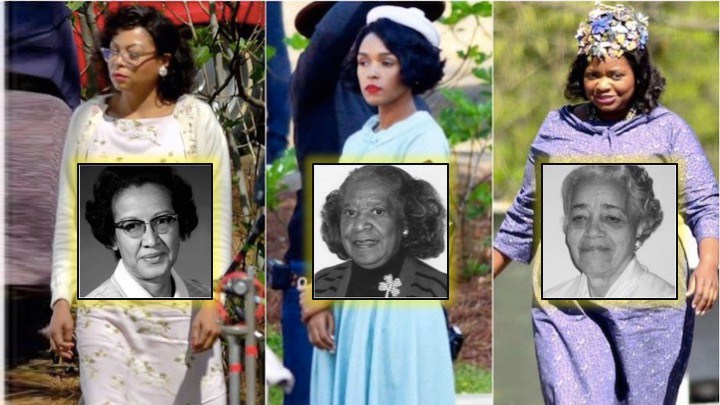
hidden-figuresTell me your story,” I blurted out to a stranger at Montreat last week.  Not sure why I didn’t just start with “Hi” but the stranger quickly became a friend because he told me his story.  He looked like a hipster which means I’d pegged him as one kind of person when actually his story informed me that he was another kind of person.

Erroneous assumptions cause problems.

I’ve been in situations because people assumed things about me based on my job, my age, my gender, my appearance.  And I have my own personal problem with making erroneous assumptions about other people.  We call this implicit bias.

The God who knows the truth about us (and especially those things we would die if everyone knew about us) calls us to love our neighbors as ourselves.  It’s easier to do this when we know peoples’ stories.  When we don’t know what we don’t know we are not just ignorant; we are dangerous.

I am a little less ignorant about systemic racism after reading Waking Up White – the book Denise Anderson and I are asking everybody in our denomination to read.  Before reading the book, I didn’t know that the GI Bill was – in the 1950s and 1960s – only for white men.  What this means:

  • White men got their college educations paid for or subsidized which means that . . .
  • They graduated from college without loans which means that . . .
  • They could buy a home to build equity which means that . . .
  • They  could afford to move into better and better homes with higher tax rates which means that . . .
  • Their schools were better which means that . . .
  • Their children could get a good education which means that . . .
  • Those children could get into better colleges and perpetuate the advantages.

So, if Black men didn’t have access to the GI Bill . . .

  • They either couldn’t go to college or they had to borrow money for college which means that . . .
  • They started their adult working lives at a disadvantage and also . . .
  • Even if they could get a good job and buy a home, there were only a few neighborhoods they could get a mortgage to buy a home because of red-lining (and being considered a poor financial risk) which means that . . .
  • They lived in less desirable neighborhoods which means that . . .
  • Their property tax rate was lower which means that . . .
  • There was less funding for their schools which means that . . .
  • Their schools had fewer resources which means that . . .
  • Their children had a disadvantaged education which means that . . .
  • Their educational futures were limited which means that . . .
  • Disadvantages were perpetuated.

Do we see the “systemic” part of systemic racism?  Nobody alive today initiated systemic racism.  It’s been set up this way for a long long time.

This is a long introduction to why I recommend that we all see the movie Hidden Figures this weekend.

Many white people not only do not know this story which is part of American history, but we also do not know the extent that racism has been an everyday reality for citizens of color in the United States of America since forever.

Not only are we ignorant when we don’t know what we don’t know; we are also dangerous.

Note:  I write this on the day that a man has killed innocent people in the Ft. Lauderdale Airport and while information is still coming in, one tweet I read which was sent to Ari Fleischer who was in the airport when it happened is this: Are they screaming or ?   

One more time:  Not only are we ignorant when we don’t know what we don’t know; we are also dangerous.