How Not to Interview Your Next Pastor

Church interviews are not like corporate interviews necessarily, but healthyjob-opportunity-2_1 congregations offer a positive portrait of who when they interview potential staff members.

Here’s what not to do when you are interviewing your next pastor, for example:

  1. Let your candidate find her own way from the airport to your church building.  Better:  Pick her up at the airport if she’s arriving by plane.  Best: Ask her if she’s eaten lately and take her out for food before the interview if she’s starving.
  2. Set up your candidate in someone’s home for an overnight. Extroverts might love this but if you can possibly arrange it, have your candidate stay in a hotel for some down time. Most pastors are introverts and will need a chunk of time to regroup.
  3. Argue amongst each other during the interview.  Nothing screams “toxic church!” like a pastor nominating committee that has disdain for each other.
  4. Interview filter-less.  Watch what you blurt out.  It’s not helpful (but painfully revealing) to say these things during an interview: “You appear to be a mediocre preacher.”  “The first thing we need you to do is get rid of our lazy secretary.” “We’re actually not sure we can afford a full-time pastor.”
  5. Interview without doing your research.  (e.g. you don’t know whether or not you can afford a FT pastor.)  Better:  know everything you can possibly know about your candidates.  Read their blogs.  Take note of their social media presence.  Google them.
  6. Ask random questions.  It makes sense to ask all candidates the same prepared questions so you can compare and contrast the answers.  Do not ask “If you could be an animal, what would you be?” questions.  Do not ask historically contextual questions like “If your ten year old son broke the rose window, how would you punish him?”
  7. Leave no time for the candidate to ask questions.   This is a two-way street, folks.  Strong candidates will come with questions of their own, so leave lots of time for them to ask away.  Be prepared to answer their questions honestly and clearly.  Note:  If your candidate asks a simple question (“Why does your church exist?”) and nobody has a good answer, that will speak volumes to your candidate.
  8. After the interview, say, “Well that was great.  We’ll be in touch.” For the love of God, give the candidate a clear understanding of Next Steps and then close in prayer.  Have the candidate pray so you can see how he does it.  And then give him a ride back to the hotel. Or go to dinner with everyone.

Candidates will learn who you are by what you do and do not do in the hospitality department.  Keep this in mind as you welcome your guest.

Some Pastor Nominating Committees are pros.  They have their acts together and they recognize that pastor interviews are both professional and spiritual endeavors.   But I’m noticing that some Pastor Nominating Committees sabotage themselves by not thinking through their interview process.

We make better choices (and we please God) when we consider hospitality while meeting with anyone with whom we hope to share our lives.  Especially our next spiritual leaders.


Louisville

lucie-and-thorntonI have the privilege today of meeting all the new incoming Moderators of all the Presbyteries throughout all of the Presbyterian Church (USA.)  “Why is this worthy of a blog post?” you might ask.

It’s because these 172 people have taken time out of their regular lives to lead their particular corners of their broader spiritual communities for the next year. In some Presbyteries, the commitment is much longer than a single year.

These are the people who will preside over the ordinations of new pastors and the dismissal of old churches.  They will pray for and with “their” churches.  They will appoint people to commissions and committees.  And they will do this while also serving in their Day Jobs.

They have come to Louisville because it’s the home of our denominational headquarters. Louisville is also known for bourbon, baseball bats, and a famous derby.  But everyone who comes through here has an important story to share.

I look forward to hearing some of those stories today from sisters and brothers who hail from places called Glacier and Cimarron and Kiskiminetas.

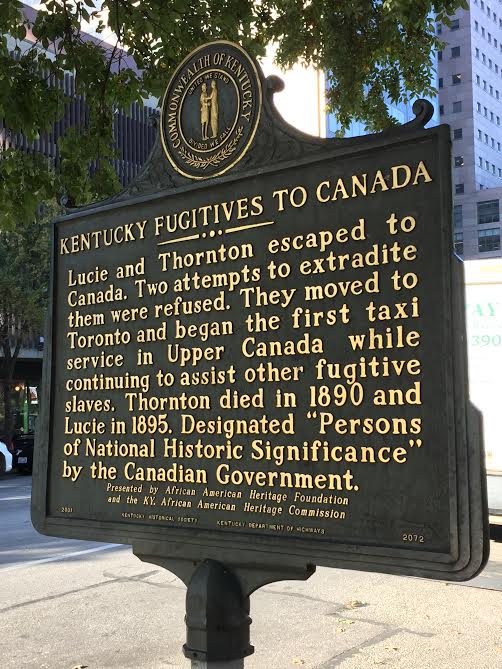
Image of an historical marker in Louisville which reminds us that some of the stories are about people who passed through here against their will.  Lucie and Thornton were people of National Historical Significance and I’m grateful we acknowledge this – or at least Canada does.

Lawyers

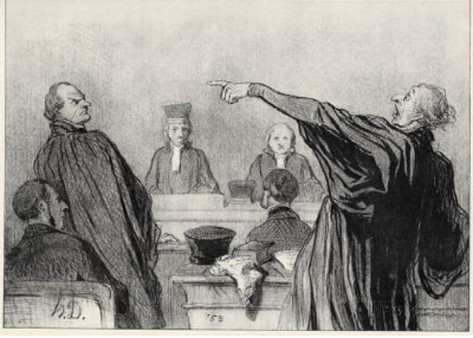
Some of my best friends are lawyers.honore-daumier-the-opposing-lawyers-art-poster-print

Some (many?) people do not trust lawyers. And yet, I once served a congregation comprised of many folks with law degrees and they were – for the record – stellar human beings.  They cared about justice and integrity and social righteousness.  For that matter, I serve a denomination strongly influenced by a lawyer.

We live in a litigious society but we don’t have to.  As I write this, I’m surrounded by denominational leaders doing God’s work who are aware that we could (and sometimes are) concerned about legal issues.  Someone wise pointed out that people in the church don’t pick up their church constitutions until they want to stop something legally.  We use our constitutions as a weapon or a shield instead of a permission-giving faith document.

What if we – instead – lived each day more focused on what we can do in obedience to God’s calling instead of what we can’t do for fear we will find ourselves in a legal entanglement?

I admit that I personally need to be reminded occasionally that our denominational function is beyond church law or institutional support.

We are called to demonstrate the message of Jesus in the world.  We are called to reach out into the world in love – responsibly, of course.  Legally, of course.

But we have got to realign who we are in the realm of our Creator.  We exist to serve God’s purposes.  We do not exist to avoid legal issues.  Let’s be brave.  Let’s be forgiving.  Let’s remember that we are trying to follow One who was arrested for sedition but who was actually serving God perfectly.

Image is A Criminal Case by Daumier


A Listening Revolution

Listening is not waiting for your turn to talk.

listening

On November 9th, our country will be just as divided as it is today  – if not more so.  There will be gloating and blaming and excuse-making.  Whomever wins will be handed the  monumental responsibility of trying to pull everyone together, although it might feel too onerous a task even to try.

But I hope she/he will try.  (It’s something to start praying for.)

The enormous divides between us – whether the issues are related to socio-economic, racial/ethnic, political, or educational differences – can only be healed by listening and learning.  But most of us are terrible listeners.

  • Somebody says something that makes me feel uncomfortable so – instead of really listening and trying to understand – I jump in to refute it.
  • Somebody says something that makes me angry so – instead of really listening and trying to understand – I respond in anger myself.
  • Somebody says something that deeply hurts me so – instead of really listening and trying to understand – I shut down or run.

I’m talking here about the tough but important conversations that we need to have with each other about who we are and what we’ve experienced and why healing is essential before moving on.  I’m talking about thoughtful sharing so that we can learn and understand.

There are restorative justice circles in schools doing this.  There are national truth and reconciliation groups doing this.

My hope is that the Church will also be willing to lead in a listening revolution. Imagine being will to hear each other – as tough as this will be –  so that we can find healing and work together for good.

There’s talk about “revolution” following the election, and it sounds ugly and violent.  What if we traded that for a listening revolution?

Are we willing to listen to people whom we don’t understand (and maybe haven’t even wanted to understand?)

Image source here.

So . . . Who’s Reading Waking Up White?

waking-up-whiteIt’s been a couple months since Denise Anderson and I suggested that the PCUSA read this book.  I’d love to hear who has read it, who is reading it now, and who plans to read it.

Are you reading it in Small Groups?  Book groups?  Coffee klatches? By a light of a single candle?  I would love to hear about it today. Thanks.

Heroes & Mentors (Don’t be like them)

Throwback Thursday:  But don’t be like Mike.

I remember reading years ago that Michael Jordan taught his own sons not to be like him.  He told them to be like Marcus and Jeffrey.  Whether or not his thinking was theological, I don’t know.

But – theologically – I completely agree.

We can observe and learn from our heroes and mentors.  We can hear and understand.  We can admire and be inspired.  We can even try to emulate them.

But leadership is not the same as imitation.  (A wise woman recently told me this.)

We are not called to be somebody else.  God calls us to be the people we were created to be.  Thinking about this today.


PS  Okay there is one exception:  we are called to be like Jesus.

Foreign to Each Other

“We can’t even say prayers in our own schools anymore. But yet, we can build mosques across the country.”  Arlene Hawk of Ravelli County, Montana

rural-urban-mosaicI can’t stop thinking about this article. (Heads up:  there’s profanity.)  And the interview quoted above made me want to pull my hair out.  The interview was on NPR.  Of course it was.

Here are things I love:  NPR, The Atlantic, The New York Times, urban
coffee shops, Chicago Ideas Week.  I am an urban snob.  I grew up in a college town with well educated people from all over.  I have lived in cities for most of my adult life.  I have enjoyed privileges that come with white skin, college degrees, and money.  My car has heated seats for heaven’s sake.

Here are other things I love: the smell of cow manure and freshly mowed hay, church pork dinner fundraisers, men in dirty farm shirts with big bellies, women in aprons frying fish, diner waitresses with lots of blue eye shadow.  My extended family is from rural towns with populations under 1500.  My first call was in a tiny village with a population under 700.

The Cracked article helps explain why many people are angry.  Their jobs have gone away.  They are mocked.  They are called “a mass of ignorant, rageful, crude, cursing, spitting subhumans.”

No wonder our nation is divided.  We don’t understand each other.  We don’t even want to.

We are foreign to each other.

Even people who share the same religion and read the same Bibles disagree with the meaning of these words:

  • “So show your love for the alien, for you were aliens in the land of Egypt.” Deuteronomy 10:19
  • “The alien has not lodged outside, for I have opened my doors to the traveler.”  Job 31:32
  • “For I was hungry, and you gave Me something to eat; I was thirsty, and you gave Me something to drink; I was a stranger, and you invited Me in;” Matthew 25:35

Welcoming the aliens includes welcoming people who have alienated us and welcoming people whom we have alienated.  Maybe the foreigners are from Syria and maybe they are from Montana.  But we have got to stop mocking each other, stop demonizing each other, stop sharing misinformation about each other.

Fear of the other is killing us.

Vuja de

“Deja vu occurs when we encounter something new, but it feels as if we’ve seen it before.  Vuja de is the reverse – we face something familiar but we see it with a fresh perspective that enables us to gain new insights into old problems.” Adam Grant

I’m reading Originals: How Non-Conformists Move the World by Adamclouds-are-for-dreaming Grant and you should be reading it too.   People who are “originals” reject the default options of human history:

  • Suffragettes rejected the default notion that women can’t vote.
  • Rosa Parks rejected the default notion that people of color must sit at the back of the bus.
  • Kelly Oxford (and countless others) rejected the default notion that  “locker room talk” about assaulting women is okay.

Consider what this might mean  if we countered what has become the default narrative for the Church:

  • I do not accept that the Church is irrelevant.
  • I do not accept that all Christians are homophobic.
  • I do not accept that the Church must be segregated by race and ethnicity.
  • I do not accept that denominations cannot be transparent, permission-giving, creative, honorable, and inspiring.

What about you, my original friends?  What new narrative can you imagine? What will you no longer accept?

Are we ready to consider Vuja De?

Beyond FOMO

worship-at-disgraceAs I longed to be at this conference last week, it occurred to me that this wasn’t a case of FOMO (Fear of Missing Out.)  It was more about FOLIT (Fear of Leaving It There.)

I can only try to imagine the depth of emotion in having a Come to Jesus event about race and white supremacy/fear in the church context.  I’ve been a part of such conversations before.  But this sounded different.  You would almost feel it in the comments of participants and in the quotes from keynoters:

Don’t ignore the body in the room.”  Soong-Chan Rah on the need to lament in church

We cultivate comfort in the church. We need to cultivate discomfort and grow courage. We conflate comfort and gospel.”

We are not seeing the de-Christianization of America.  We are seeing the de-Europanization of Christianity in America.

“The most significant evangelical/spiritual movement in U.S. history was when First Generation African-Americans moved north after the Civil War and started churches.”

[Note:  I’m sure these are not exact quotations.  But you get the gist.]

One of my personal pet peeves is when we church people go to classes, training sessions, conferences, and retreats and learn amazing things, but then we go home smarter but without any lasting impact.  The impact of this conference is yet to be seen, but my hope – as one who was not there – is that we will:

  • Lament for the Sake of the Gospel.
  • Repent for the Sake of the Gospel.
  • Notice for the Sake of the Gospel.
  • Speak Up in Love for the Sake of the Gospel.
  • Be Willing to Set Aside Our Own Privilege for the Sake of the Gospel.

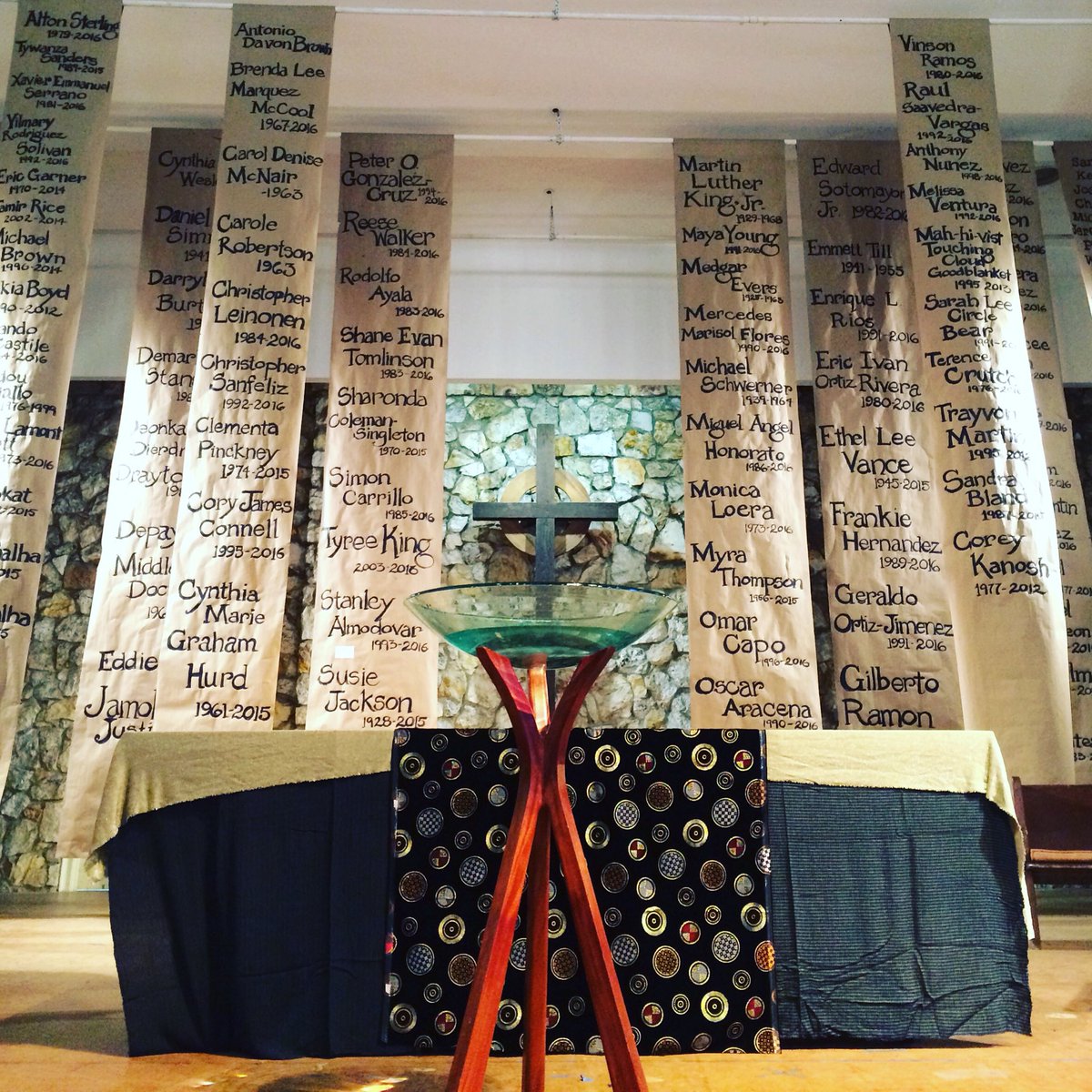
Healing prayers to all who attended disGrace and are now pondering its impact.

Photo by Irene Pak Lee from the disGrace Conference at Montreat Conference Center last week.

That Time I Met the One Non-PCUSA Person On the Planet Who Knows What a GA Moderator Is

It happened in an independent coffee shop two blocks from my office in Chicago.  I noticed that all the barristas were new.

Me:  Are all of you new?card

Barrista:  Yeah, there are new owners.  Same coffee.  New owners.

Me:  I love your coffee.  Nice to meet you.  (Even though we hadn’t exactly met.)

Barrista:  Do you work around here?

Me:  Yes, the Rice Building, where the Giordano’s is.

Barrista:  What do you do?

This is the moment when I have several options, as I assume that no one has any idea what a Presbytery is.  I could say that I work for a non-profit.  I could say that I work for a church office.  Or I could go for it and say “I work for The Presbytery of Chicago.

Me:  I work for the Presbytery of Chicago.

Barrista:  Is that PCA or PCUSA?

Me (in my head):  What???!!!

Me (out loud):  Seriously?  You know the difference?

Barrista:  Of course I do.

Me (in my head):  This guy is a total dork.

Me (out loud):  Look at me.  What do you think?  PCA or PCUSA?

[Note: If you are not a church dork yourself, the Presbyterian Church in America does not ordain people with female parts.]

Barrista:  You could be a secretary.

Me:  Yes, I could.  

And then I said something I never thought I would ever say out loud in my entire life because 1) I still can’t believe this happened and 2) there are very few people on the planet who care.

Me:  Actually, I’m an ordained pastor.  And I’m one of the co-moderators of the 222nd General Assembly of the Presbyterian Church USA.

Barrista:  No @*!t?

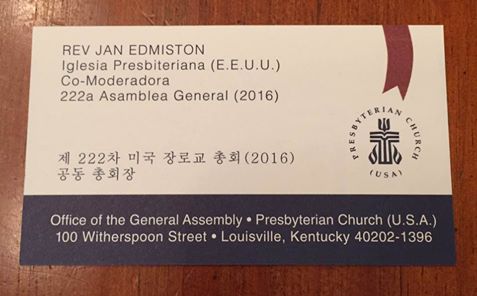
Me:  It’s true. I even have a card.

Barrista:  I’m PCA.  My name’s T___.

Me:  Hi.  I’m Jan.

Then we talked about our sameness and our different-ness.  And he makes an excellent mocha.  As AAM says, “Every day’s a school day.”


Image is the Spanish and Korean side of my GA card.  I would have shown the English side but I don’t need that many phone calls.