Say This, Not That

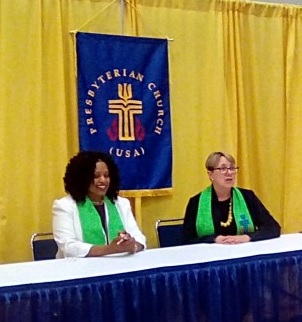
Old LettersAfter two extraordinary days with Kellie Anderson-Picallo, my head is full of things – among them: words.  What words do we say that make eyes glaze over? What phrases sound tired? I’m not talking about “snap!” or “you go, girl.”  I’m talking about words and phrases that no longer reflect who we are and where we are going as God’s people.  (Unless they do which means we are toast.)

A couple of stories:

Twice in job interviews, I’ve asked committee members to tell me about their church/institution.  It went like this . . .

Me:  Tell me about your church.

PNC:  We are the richest, smartest, most successful people in (the city).

Me:  Wow.  So why do you need Jesus?

PNC:  (crickets)


Me:  Tell me about your institution.

INC:  We are the first in the nation with a rich history that parallels our nation’s history.  Many of our historical leaders were also founding fathers of our country.

Me:  Wow.  What’s your vision for the future?

INC:  (crickets)

So, here’s the thing:  I love that you love your organization and it’s cultural place in the community.

But I don’t really care where you’ve been as much as I care where you are going. I don’t need to know how smart/successful you’ve been in the past as much as I want to know why you exist now.  It’s not that I don’t care about the past.  But I care more about the future.

In my own denomination, there are certain words and phrases that we use and those in the room chuckle as if to say, “Yes, we certainly are that thing.”  In stead of building solidarity, those terms make me feel dated and tired.  Among the perennial favorites:

  • Connectional Church – First of all, we are not all that connectional. Our congregations are often lone rangers most concerned with their own projects/budgets/people.  Congregations are suspicious of Presbyteries and denominational structures in general.  And for that matter, the whole world is connected digitally, so what’s so new/different about being “connectional”?  (Note:  thank you KA-P)
  • God’s Frozen Chosen – This is embarrassing.  Yes, it’s cold in Scotland, but authentic warmth is priceless in a cold world.  God always chooses stirring/moving/changing – rather than freezing –  if you ask me.
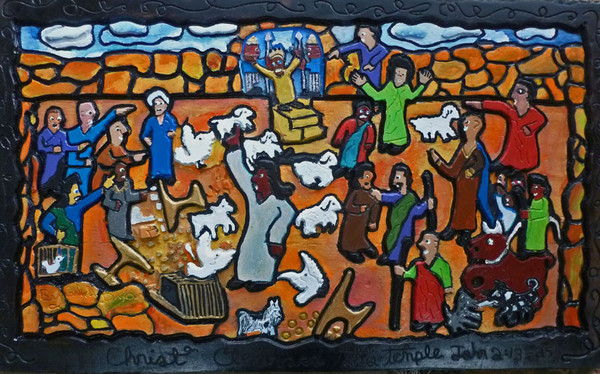
  • Decently and in Order – You know this verse is about speaking in tongues and women being silent, right?  We Presbyterians are all about being decent and orderly until we aren’t.  Sometimes tables need to be turned over in the temple because God is not pleased. Jesus was a bit of an agitator.  Be like Jesus.

For all the times we Presbyterians will hear the words I listed above, my hope is that we will hear more often these questions:

  • How are we are creating a new ecosystem of spiritual vitality and why?
  • How are we investing in the future and why?
  • What innovative ministries are we trying and why?
  • Where is Jesus in all this and why?

Image is from Architectural Artifacts in Chicago where a space has been repurposed as a warehouse/museum/event venue.  There is old stuff there that can be transformed into something new.

The Year Our Preaching Group Didn’t Share Sermons

Churches bring people to the pulpit; Media brings pulpit to the people.*Jesus with ear phones

For 17 years, my preaching group has gathered annually to share resources and sermons in order to assist each other in the relentless responsibility of preaching. Through the years we have shared:

  • lectionary-based sermons
  • sermons for national holidays
  • sermons on life transitions (singleness, divorce, giving birth, infertility, etc.)
  • sermons for interfaith services
  • sermons on “shame stories” from the Bible (our Brene Brown year)
  • sermons for special services (Longest Night, weddings, funerals, etc.)

This year, we brought no sermons to share.  

When colleagues talk about retiring or “leaving church” I sometimes hear them rue the loss of weekly preaching.  Granted, some pastors hate to preach and it’s not their gift.  But many of us LOVE to preach:  the research, the stories, the crafting, the delivery, the pulpit.  We love it.  It is our terror, our power, our moment.

As churches change, sermons are changing too.  Among the innovations that are making Harry Emerson Fosdick whirl in his grave are these:

  • Dialogue sermons
  • Video sermons
  • Question-Answer sermons
  • Theatrical sermons
  • Sung sermons

Note:  some of these ideas might sound laughable, but three points and a poem sounds fairly laughable to others.

Back to my preaching group:  This year we invited Kellie Anderson Picallo to teach us about media savvy pastors and The 90 Second Sermon.  Do yourselves a favor and check out Kellie’s work.  Many of us (I’ll admit I’m one) have worked with her on media training and it has cracked open so many fresh ideas for sharing the message we want to get out there.

For preachers, that’s the point.  We want to share messages of inspiration and resurrection and hope in hopeless days.  If Pew is right and our parishioners are worshiping only once or twice a month, how can we reach them the rest of the time?

The day has come when my preaching colleagues are called to do more than merely share sermons with each other.  We are called to figure out how to share God’s message beyond the pulpit.

*Quote by Kellie Anderson Picallo

Would It Surprise You in 2016?

I have a friend – a first generation clergywomen – who is in her 80s now and she The-Clergy-Collection-April-2011 (2)is a fascinating resource for learning what it was like for a woman in professional ministry in the 1950s and 60s.  In my denomination, women could be ordained in 1956, but there weren’t many who sought ordination in those days.  My friend is one who did.

She tells me that – after her ordination in her late 20s until about age 45 – there was not a single church meeting, not a single Presbytery Assembly, not a single committee meeting when she was not propositioned in some overt or subtle way by her male colleagues.

As one of her colleagues crassly put it, “If you are here,  we get to  have you.

That was in the 1950s and 1960s.

Flash forward to 2016:  Harvard alumni Charles Storey of the exclusive Porcellian Club stated last week to The Harvard Crimson that “Forcing single gender organizations to accept members of the opposite sex could potentially increase, not decrease the potential for sexual misconduct.”  If women are here, we are tempted to have them.

Ugh.

I’ve been informally asking young clergywomen if men still make inappropriate comments to them and I hear a resounding yes:

  • “You look beautiful today.”
  • “I like a woman in panty hose.”
  • “You should wear skirts more often.”

I would love to hear from young clergymen if they ever hear women say to them:

  • “You look handsome today.”
  • “I like a man in a robe/suit.”
  • “You should wear jeans more often.”

As a single clergywoman years ago, it was a bit shocking what men said to me. Keep in mind that I am a clergywoman.  And the comments are coming from clergymen or male church members.  Are they just being awkward?  Or are they wielding power as if to say:  “I don’t care how gifted you are in ministry; if you are here, you are an object for my benefit.”

I am going to give church guys the benefit of the doubt and assume for a moment that they just don’t know what to say to their pastor.  Here are some ideas:

  • “That sermon really made me think.”
  • “You led a great class today.”
  • “Thank you for your leadership.”

Many things have changed in the past 60 years.  But many things have not changed.  How about for you?

If I Were the Queen of All Things

I often ask people, “If you were the Queen of All Things/King of All Things . . .Roundtable in Montreat 2016 and then the end of that sentence depends on what we are talking about.  What would be your life dream?  How would you spend the next year?

If I were the Queen of All Things . . .

  • Everybody on the planet would get good food, shelter, an education and health care.  (Note the good.  Healthy food.  Safe shelter.  Top notch education.  Quality health care.)
  • Everybody would get a sabbatical at least once in their lives.
  • Everybody would get a birthday video like the one I got in March.
  • Everybody would have some one to make them soup when they felt terrible.
  • Everybody would have a cohort of colleagues like my preaching group.

For the 17th year, we are meeting to share resources, wisdom, vulnerability, stories, sorrows, frustrations, and joy.  We’ve been to Texas, North Carolina, Illinois, Georgia, California, Tennessee, New York, Florida, Virginia, and Scotland together, and more than ever, I believe that everybody deserves this kind of group of friends and colleagues.

If I were the QOAT, it would happen.  But I’m not.  So let’s get out there and make good things happen for people.


What’s Your Race Story?

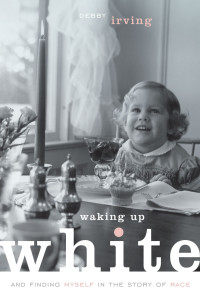
Storytelling is a tool for changing the world.  Or corrupting the world.Jan with doll circa 1959

Pretty much everything is about stories: sermons, country-western songs, paintings, therapy, romantic relationships.  All depend upon stories.

David Hunt and Susan Naimark led the workshop this morning on our race
stories.  What stories do we remember from our earliest memories?  And what don’t we remember?

  • I remember that a woman with dark skin named Thelma took care of me and my little brothers while our parents worked.  I sometimes went with my dad to drive Thelma home and I remember that she didn’t live in a very nice house.  I was about four years old.
  • I remember Inez who lived down the road from my cousins on the farm, and she took care of them while their parents worked.  We thought she was part of our family and my sister thought her name was “Aunt Ez.”  I remember when someone referred to Inez’ children that I wondered who took care of them while she took care of us.
  • I remember having a doll with dark skin.  She was a rag doll and not a fashion doll.

All these memories gave me the impression that people with dark skin were poor.  This is how biases happen.

What I don’t remember:

  • I don’t remember wondering why there were no children who didn’t look like me in my classes until about the sixth grade.
  • I don’t remember wondering why I never had a teacher of color until the eighth grade.  (Thank you Cecilia Barnes.)
  • I don’t remember why everybody in my neighborhood, in magazines, in book illustrations, on television looked like me and not like my doll or Cecilia Barnes.

There are stories that we are told or stories we have experienced from our youngest days that are so deeply ingrained in us that we don’t even realize that they’re there.  They have influenced how we see ourselves and others.

I met a woman this morning who shared how she felt being the only Korean girl in her class in school.  People called her names and made assumptions about her.  I talked with another woman who is the daughter of a blonde German woman and a dark-skinned Indian man.  Among the Germans, she was called a n@^&#. Among the Indians, she was called a white pig.  Like most of our parents, her parents told her to ignore the comments of others.  We rarely if ever had conversations about race.

It would be so fascinating to talk about our earliest memories about race in our own lives.  What did we grow up believing about people with dark skin or light skin, people from Ireland or Mexico or Ghana or India or Korea?  And who told us those stories?  And are they even true stories?

Somewhere along the way, many of us in the United States have been told that all black men are dangerous and all native Americans are alcoholics and all Asian Americans are really smart and all white people are rich/stupid/entitled/greedy/whatever.  The reality is that my white skin has granted me special privileges for 60 years.  Why is that?

How can we use our stories to advocate for change?  Sometimes these stories are horribly painful.  Exhibit A from The New York Times today.  But if we know them, face them, and try to redeem them, maybe we can break through our own biases and see the world as God created it (and us) to be.

For more information about The White Privilege Conference, check this out.

What’s Great About Being White

White Privilege Make up LineMy first workshop today at #PHLWPC17 was called “Laughing Out White (Superiority)” with Jackie Battalora.  Obviously humor dilutes tensions and speaks truth in ways that we might not hear it otherwise. There are things Chris Rock can say about being black or Margaret Cho can say about being Asian that I cannot say.  But I can speak about my white experience.

We were asked to write a (funny) list about What’s Great About Being White.  None of us are comedians, but some of these are funny.

WHAT’S GREAT ABOUT BEING WHITE (with gratitude to our workshop groups):

  1. You’re the same color as Santa.
  2. And Jesus.*
  3. Nobody randomly touches our hair.
  4. You can play any ethnicity in the movies.
  5. It took ten times to arrest Winona Ryder for shoplifting.
  6. Because your family always went to camp and not just between the years of 1941 and 1945.
  7. You can drive a Lexus through any neighborhood and not be pulled over.
  8. You have so many makeup choices.  (See image)

My particular group reflected on the number of makeup choices white people have.  So, is this funny in any way to you?  Or does it sound like the post of an angry white lady?  As I sit through these talks, I feel more sad and overwhelmed.  We can do better, America.

*Actually Jesus’ complexion was most likely similar the complexions of these people.

Image of our workshop group’s imaginary White Privilege Line of makeup.

I Can See You Roll Your Eyes

WPC

As you read this, I’m arriving in Philly for the White Privilege Conference.
(Thank you Synod of Lincoln Trails.)

I can see your eyes rolling, my friends.

Among the comments posted about the 2015 conference:

So there’s that.

Warren Buffett  – who is nobody’s wild-eyed liberal – has said this:  “My wealth has come from a combination of living in America, some lucky genes, and compound interest. Both my children and I won what I call the ovarian lottery. (For starters, the odds against my 1930 birth taking place in the U.S. were at least 30 to 1. My being male and white also removed huge obstacles that a majority of Americans then faced.)”  I would venture to say that a majority of Americans (i.e. females, people of color) still face those obstacles.

I also won the ovarian lottery. I enjoy a great deal of privilege based wholly on the fact that I happened to be born in the United States of America with parents who could provide everything from piano lessons to braces to a college education.  Plus my skin is white.

There are other privileges I enjoy based on the fact that I can walk, hear, see, and think fairly clearly.  But one of my greatest privileges – one that has certainly opened door or at least not closed them – is my skin color.

Yes, race is a social construct.  But I am judged on my skin color and so are you. That is a fact. And in my case, those judgments have almost always made my life easier.

I’m attending this conference in hopes that I will learn how to make somebody else’s life easier for the sake of the Gospel.  And I hope to share some of what I learn.  Please try not to roll your eyes.


Optics

Imagine getting a resume that announced from the bold-typed first line:

William Jones, BUMS

(Note:  BUMS is the academic acronym for Bachelor of Unani Medicine and stained glass window with conf flagSurgery.  It’s a real degree.)

My twenty-something son whose ink has been covered up for assorted job interviews teaches high school kids that you can’t show up for a summer job interview wearing bathing suit shorts unless you hope to be a life guard.

If your business holds a press conference on a new venture for women and the three employees at the mikes are all men, somebody will notice.  And not take your seriously.

Optics are obviously huge.  And in Church World, optics are sometimes overlooked to the detriment of our ministry.

  • Who is staffing your refreshments table after worship?  Is it the person who best represents the hospitality of your congregation?
  • Do you self-describe as open and inclusive but your artwork, your website, and your Up Front People reflect only one race/ethnicity/sexual orientation/gender?
  • Do you say you value children in church but the nursery toys are all broken?

Consider paying a  few strangers $20 each to do a walk through of your church building, digital presence, and worship experience for an Optics Review.  We might be surprised by what strangers notice.

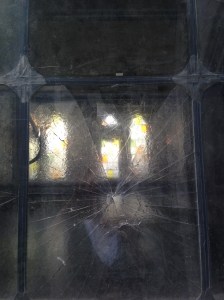
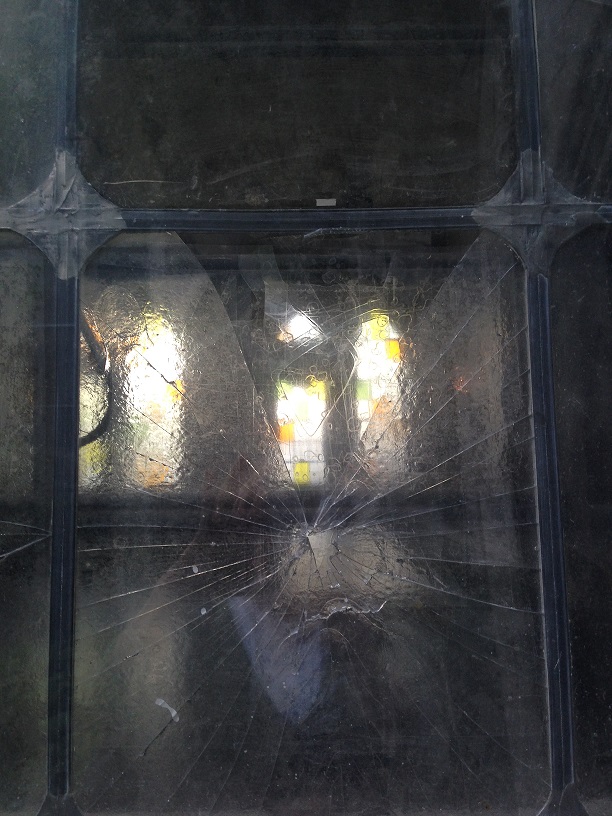
Image of a window in the National Cathedral in Washington, DC.  There are plans to remove the window according to this.

The Future of Ministry is All About . . . Curiosity

Top executives from Fortune 500 companies offer sage advice about the Firstquestion-mark-painting Day On The Job in this article and it’s all about curiosity.  The same could be said for ministry – professional or your everyday variety.

Fortune 500 leaders advise this:

  • Don’t be intimidated. (Even though you’re new, come in ready to learn.)
  • Learn every day. (You don’t know everything no matter how seasoned you are.)
  • Ask questions. (Be willing to learn from everybody.)
  • Focus on relationships. (Building trust creates a team.)
  • Be patient. (You might have to ask proactively for feedback if you aren’t getting any.)
  • Put yourself in the customers’ shoes. (It helps focus on what people really want.)

For those of us engaged in ministry, curiosity always makes us better leaders, When starting a new job/program/project/team/mission:

  • Don’t be intimidated.  (If God has called you, it’s going to be fine.)
  • Learn every day.  (Acquaint yourself with the resumes of your team.  Expect to learn from them.)
  • Ask questions.  (“Why?” is the best question of all.  Why do we do it this why?  Why has this been our practice?)
  • Focus on relationships.  (Be authentic.)
  • Be patient.  (It takes time to shift a church’s culture.)
  • Put yourself in your neighbor’s shoes.  (I guess we could say that our neighbors are also our ‘customers’ but most of all, be partners with those we serve.  Jesus served alongside the poor, the sick, the oppressed.  Be like Jesus.)

Last week, I was honored to spend three days with some of the newest pastors in my denomination.  We’ve been together for the last three years, gathering for two retreats per year.  Last week was our sixth and last retreat.

What makes these not-so-new-anymore pastors so extraordinary is that they are curious human beings.  They are not know-it-alls.  They know the value of taking further classes and reading books and studying.

I know seasoned pastors who haven’t taken a class in years.  They only attend conferences if they are the leaders.  They come into most situations believing they already know what they need to know.  Their ministry is stagnant.

The future of effective ministry is curiosity.  Being curious about everything from the people we serve to the people we work alongside to the world in which God has placed us is everything.

Image source.


Doing Nothing

dark-bedroom

After ten days of rib-bruising hacking and other basic cold symptoms, three retreats, and assorted beyond-the-usual-work-things activities, I canceled a work trip to San Diego to recover.  This is not something I do.

So now I am home Doing Nothing in the hopes of regaining my health and more.

Doing Nothing for me usually means:

  • Having time to pay bills, sort laundry, clean out the fridge, and update my Angie’s List and Yelp reviews.
  • Catch up on Thank You notes.
  • Bake.

But this time I am really Doing Nothing.  (Note:  this blog post is my last until the hacking subsides.)  May you find the time to Do Nothing soon.