
This is my only blog post this week as I am semi-radio silent with the RevGalBlogPals at Big Event #9. See you in February.

This is my only blog post this week as I am semi-radio silent with the RevGalBlogPals at Big Event #9. See you in February.
Posted in Uncategorized
It’s been a long time since I’ve watched Grey’s Anatomy but I know that 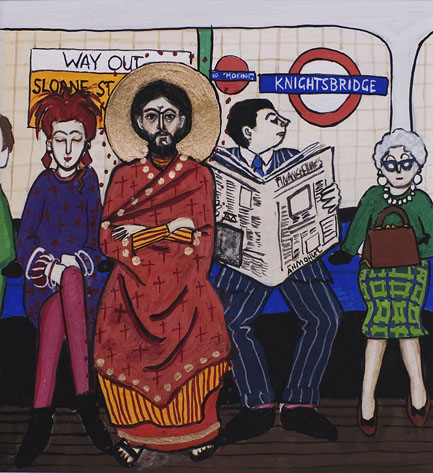 Meredith and Cristina are each other’s person. Your person is the one you can call when you get dumped, the one who helps you get home after surgery, the one you can phone in the middle of the night and say, “There’s a naked dead guy on my kitchen floor” and she responds, “I’ll be right over.”
One of the comforts of life is having a person. The unspeakably fortunate have more than one.
So, I was praying on the train yesterday on my way to work and – to be perfectly honest – I am a distracted pray-er, especially on the train. But these words came out: “Help me be your person today.” For the record, I was talking to God.
Now God can do much better than me, in terms of a reliable person. And yet it occurs to me that it’s not a bad daily aspiration: to try to be God’s person. And by that I mean that there will be people out there on the sidewalk or in the elevator or waiting for a bus and they might need someone to be their person for a moment or a day.
I’m not talking about being That Person who annoyingly tries to fix everything or be helpful in ways that are not at all helpful.
I’m talking about paying attention. It’s really cold in Chicago this week and it’s common to bundle up and brace ourselves against the weather to such an extent that we can become blind to what’s going on around us. We miss the person who needs a person.
Trying to be God’s person feels amazing – sort of what it’s like to be a super hero. Nobody knows we have a secret mission. But we do.
Image source. She can also paint a picture of you and your people on the Tube with Jesus.
Posted in Uncategorized
 Faithful readers: if you happen to be the Head of Staff in your church: who taught you how to be a Head of Staff?
To those of you who moderate governing boards/the vestry/the session: who taught you how to Moderate a meeting?
To anyone reading this who runs a non-profit or serves from the second chair or organizes an event: how did you learn how to do those things?
These are real questions and I hope you’ll share your experiences. Did you watch someone do it? Did you go to “head of staff” school? Did you learn on the fly? Did you read Drucker/Godin/Borden/Easum/Bandy/Bullard/Rendle?Are you being coached?
Lifelong learning is crucial for all leaders. But what if we work with someone who doesn’t see any need to learn new skills or has no desire to tweak their expertise? How do we encourage seasoned pastors, for example, to become more proficient?
One of the fun things about ministry in the 21st Century Church is that it’s all deliciously new. One of the not-fun things is that many of us are not interested in the new. We have too many leaders who are too weary or unwilling or unaware to make pronounced shifts in his/her leadership. There are too many of us who have made ministry about us.
(It’s not about us.)
What are the best coaches or books or blogs or classes you’ve found that enhance your leadership skills for serving the 21st Century Church? I’d love you to share.
Posted in Uncategorized
“I would like to tell you that such a day approaches when the people who believe themselves to be white renounce this demon religion and begin to think of themselves as human.” from Between the World and Me by Ta-Nehisi Coates
Our Presbytery offered a day-long anti-racism event led by Chicago Regional Organizing for Antiracism (Chicago ROAR) and over 100 people attended. On a Saturday. Of a three-day weekend. From 9-4 (as in all day.) And it was a sunny day.
Our nation is a hot mess in terms of violence and racial prejudice. But the color of one’s skin is about as indicative of one’s propensity for personal success or violence as one’s height, eye color, or shoe size. And yet we consider skin color to determine one’s intelligence, personality traits, and proclivities.
We know that race is a social construct, right? It was invented by Europeans to designate value and status. We know that – right?
What was considered “white” in the United States varied from state to state after the U.S. Civil War. The children of Thomas Jefferson and Sally Hemings were slaves and yet – according to Virginia law – they were “white” by virtue of their European blood. Native Americans were “white” in Oklahoma during Jim Crow years. Arabs were officially ruled to be “white” in 1944. At certain points in history, people from Ireland, Italy, and Israel were not considered “white” until they were. Rashida Jones and Lena Horne are considered “black” although their skin color is lighter than my (“white”) father’s.
And so on this day when we remember Dr. Martin Luther King, let us also remember that:
Race is a social construct invented to sort people. And sorting people based on the color of their skin makes no sense. And so, while we move further into the 21st Century, let’s educate ourselves on what it means to be human beings created in the image of God. It’s not about melanin.
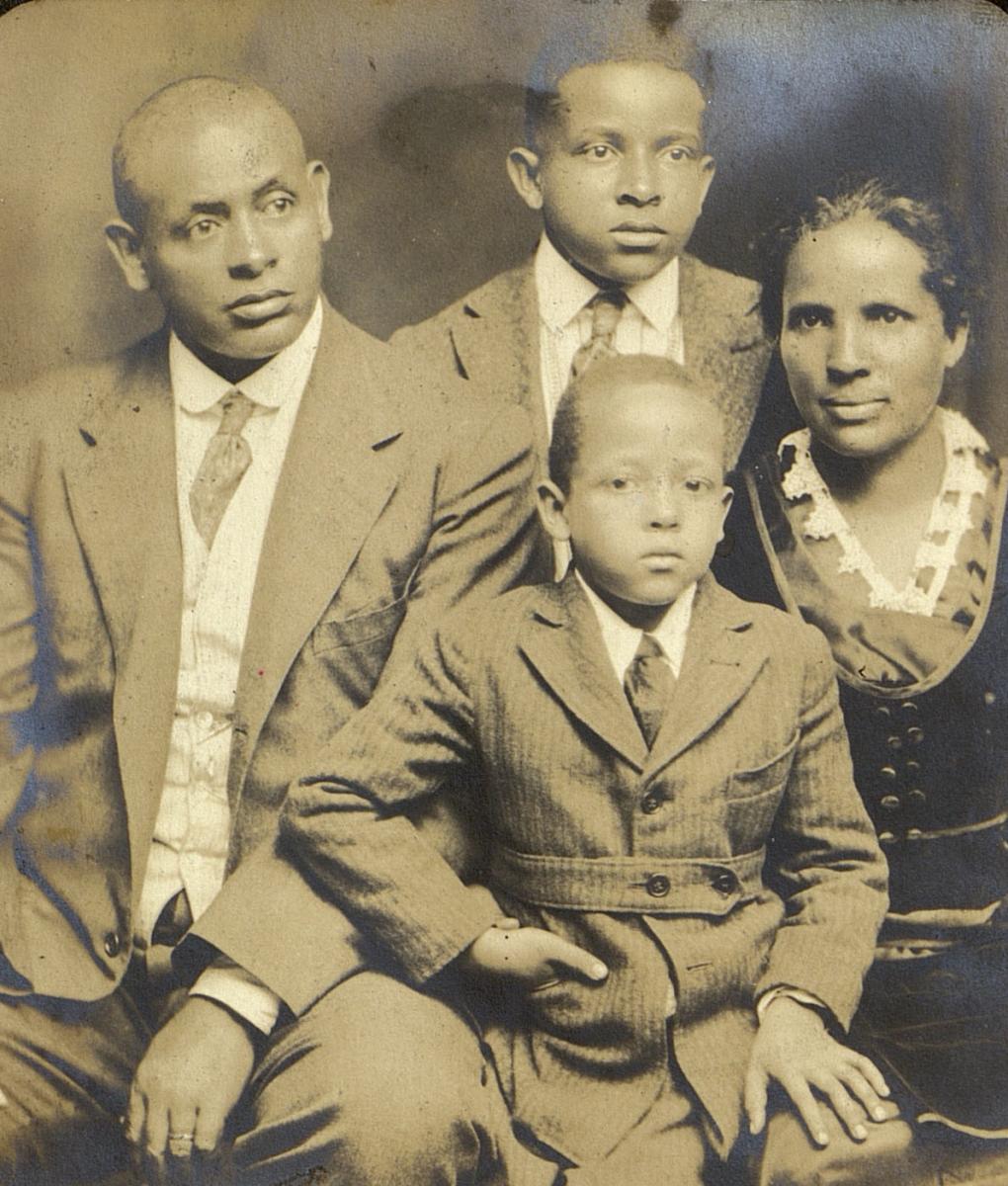
Image of Alonzo Edmiston and family whom I would be honored to consider my kin although I’m not sure we are actually related by either marriage or blood. “Alonzo Edmiston, a missionary to the American Presbyterian Congo Mission in the early twentieth century . . . married fellow missionary Althea Brown on July 8, 1905, and together they had two sons. Sherman Lucius was born on May 26, 1906, and given the native name of Kuete, after the Bakuba King. Alonzo Leaucourt was born on May 27, 1913, and given the native name of Bope.” You can read more about Althea Edmiston here.
Posted in Uncategorized
 Remember the Emerging Church? Many of us involved in the Emerging Church, the Emergent Church, the Hyphenateds (Presbymergent, Anglomergent, Luthermergent, etc.) considered this to be more than a program or semantic shift.
It was (and still is) a movement.
Congregations have been creating and perpetuating church programs for years: Vacation Bible School, PADS (Public Action to Deliver Shelter), chili dinners, book groups, after-school activities, lunch hour lectures, youth retreats, Bible studies, knitting groups, hand bell choirs, yoga lessons, tutoring events. We are good at creating programs and we’ve felt good about these – often impactful – activities.
But the 21st Century Church is not about programs. It’s about a movement. Programs are activities that – at best- nourish us spiritually, educationally, socially. And at worst they simply busy us and make us feel like we’re accomplishing something.
The 21st Century Church is a movement: a movement to change the world for good in the name of Jesus Christ, a movement to bring justice, a movement to address what breaks God’s heart, a movement to help us be the people God created us to be.
I was talking with a young man last year who had converted to Islam. He was raised a Baptist Christian, but he said that he had converted because “Islam is a way of life. It’s not just about going to church.” (Note: I wonder if understanding Islam as a way of life is contributing to this.)
When I defensively responded that “Following Jesus is a way of life too!” he looked at me like I was speaking a foreign language. That had not been his experience: either the part about following Jesus or the part about the faith of his childhood being “a way of life.” Sigh.
A couple important articles have come out over the past few weeks addressing this question: are our spiritual lives about participating in programs or committing to a movement?
Check these out:
David R. Henson addresses why Sunday School is faltering. While Sunday School started out as a justice movement to educate poor children, today it’s more likely “about educating and ensuring a future generation of Christians or getting more warm bodies and families through the church door.” This is a recipe for shutting down Sunday School, my friends.
Noa Gafni wrote last fall that millennials are not interested in protest movements. And yet, they are – generally speaking – attracted to movements that meld “old power” (hierarchical) and “new power” (participatory), promote worthy causes, and “adapt the global development agenda to their local communities.” They want to make an impact while also growing personally.
Gone are the days when congregations grew and thrived because they offered a catalog of activities. If church offerings do not move us to deeper discipleship, they will eventually fall away (and so will our people.) But if we see our mission as one which moves us towards a way of life that brings wholeness to ourselves and to the world, we will flourish as God’s people.
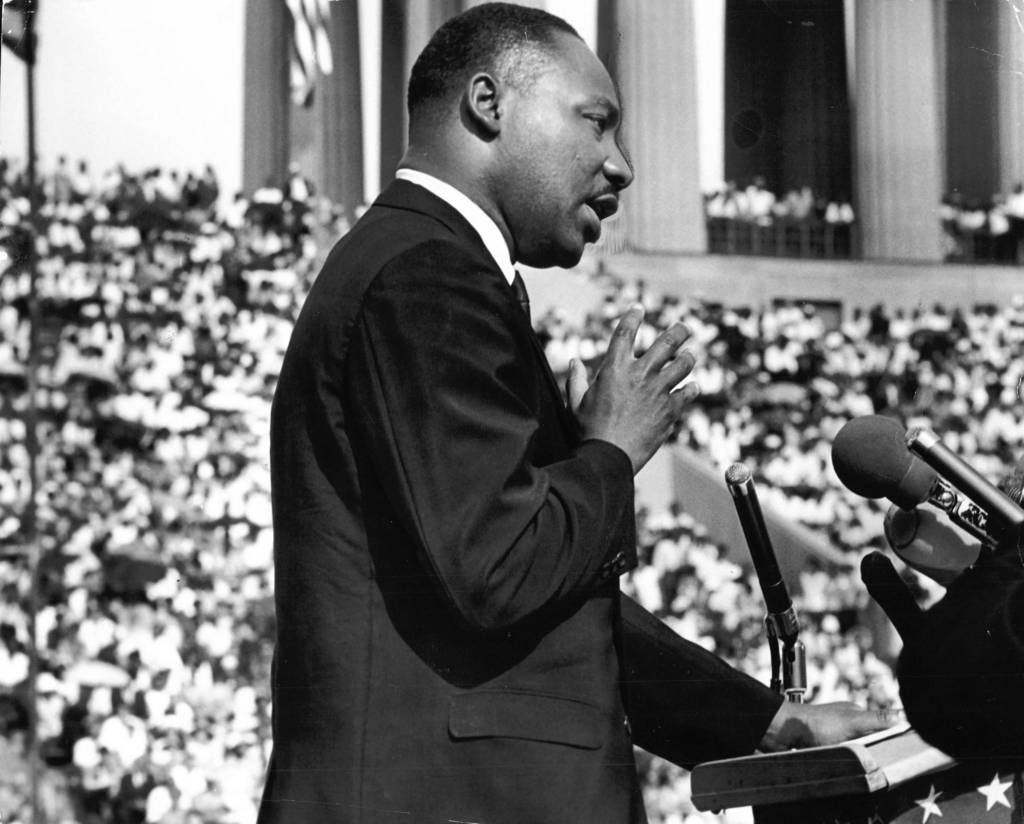
Image of Martin Luther King Jr. speaking against racism and poverty at Soldier Field in Chicago on June 21, 1964.
Posted in Uncategorized
As I attempt to Marie Kondo my closets at home, I am grateful for all those  church ladies (and they are usually ladies) who organize office filing cabinets and kitchen closets and fellowship halls post-clothing sale events. Churches are magnets for junk:
It makes my project of evaluating old sweaters look like a vacation.
Marie Kondo famously suggests that – as we de-clutter – we ask ourselves: “Does this coat/pair of shoes/scarf/nightgown bring me joy?” If not, say “Thank you” in remembrance of old times and pack it away for The Salvation Army. That moment when we toss the bags in a bin or drop them off at the Goodwill Store feels wonderful. Exquisite really.
This is all old news since Kondo’s book is a couple years old. But – with Lent around the corner – it feels like a good time for spiritual communities to de-clutter more than our balconies and music files.
Maybe we all need to de-clutter our calendars – as individuals and as congregations. We who consider church to be an important community in our lives seem to be especially susceptible to filling our calendars. In addition to busying ourselves in general, congregations have the added burdens/blessings of “tradition” and liturgical calendars and institutional directives.
I hope we know that Busy Church ≠ Thriving Church.
As I’ve shared before, I know a church that gives up all business meetings for Lent. No elders, deacons, or trustees meetings. No staff meetings. No committee meetings. Yes to Bible studies, prayer gatherings, worship gatherings, book groups, coffee klatches, Faith on Tap.
Imagine going on a church meeting Sabbatical for seven weeks. Sweet.
Now would be the time to discuss this for and with your congregation.
And for the rest of the year – after Easter – what calendar de-cluttering is needed? Is there a Peach Festival that you’ve scheduled every summer that nobody likes anymore except the two ladies in charge? Is there a fall ham dinner that people groan about – even though it’s an annual “tradition”?
What sparks joy? Let’s get rid of what doesn’t.
Image from a church balcony that I do not dare identify.
Posted in Uncategorized
Life is full of existential moments when we might say to ourselves, “This decision could change the course of my life forever.” (Note: Winning or losing a Saturday afternoon soccer game is not one of those moments. Passing or failing a particular math test is not one of those moments.)
High School Teacher Peter Greene’s blog post One Wrong Move speaks to this issue of children and young adults being so terrified of “the moment that defines their downward spiral into failure and squalor” that could possibly result in “living in a van by the river eating canned cat food warmed on a hot plate, alone and miserable and poor forever” that they become paralyzed and joyless. Also Hanna Rosen’s article about Silicon Valley kids who have a suicide rate four to five times the national average is an important read.
Maybe we don’t live in Silicon Valley, but we know these kids. 
I distinctly remember a moment in my twenties when I realized that a decision I was about to make (breaking up with someone I thought I would marry) would change the course of my life. There are definitely moments like that for all of us. I made a decision and it was terrifying.
And yet, even if I had made a different choice, my life would not have crashed and burned forever and ever amen. The road would have been different, but I trust that God would have used whatever came around the bend.
Vibrant churches – if I might make the segue you’ve come to expect in this blog – are so sure of their call to make disciples and love their neighbors that they launch off into unknown territory less afraid of “making the wrong move” than they fear missing the cosmic point.
Dying congregations, on the other hand, are often paralyzed, fearing that The Wrong Move will send them off a cliff. The wrong move – for a church – could be anything from daring to call a pastor who doesn’t look like them to investing assets to start a hospital in Haiti to moving from one church building to another. Some of these moves are so absolutely harrowing that we choose not to move at all.
But there also churches that make terrifying decisions:
So – back to our kids.
Yes, there are Huge Decisions we make in life that impact our futures significantly. But not every decision is like that. Let’s encourage our kids to take electives that make their hearts sing. Let’s allow them to fail. Let’s give them a break.
And as for us – the adults in the room – the same is true. Let’s allow each other to make the kind of wrong moves that make our hearts beat faster. And let’s be around for each other when everything goes south.
Posted in Uncategorized
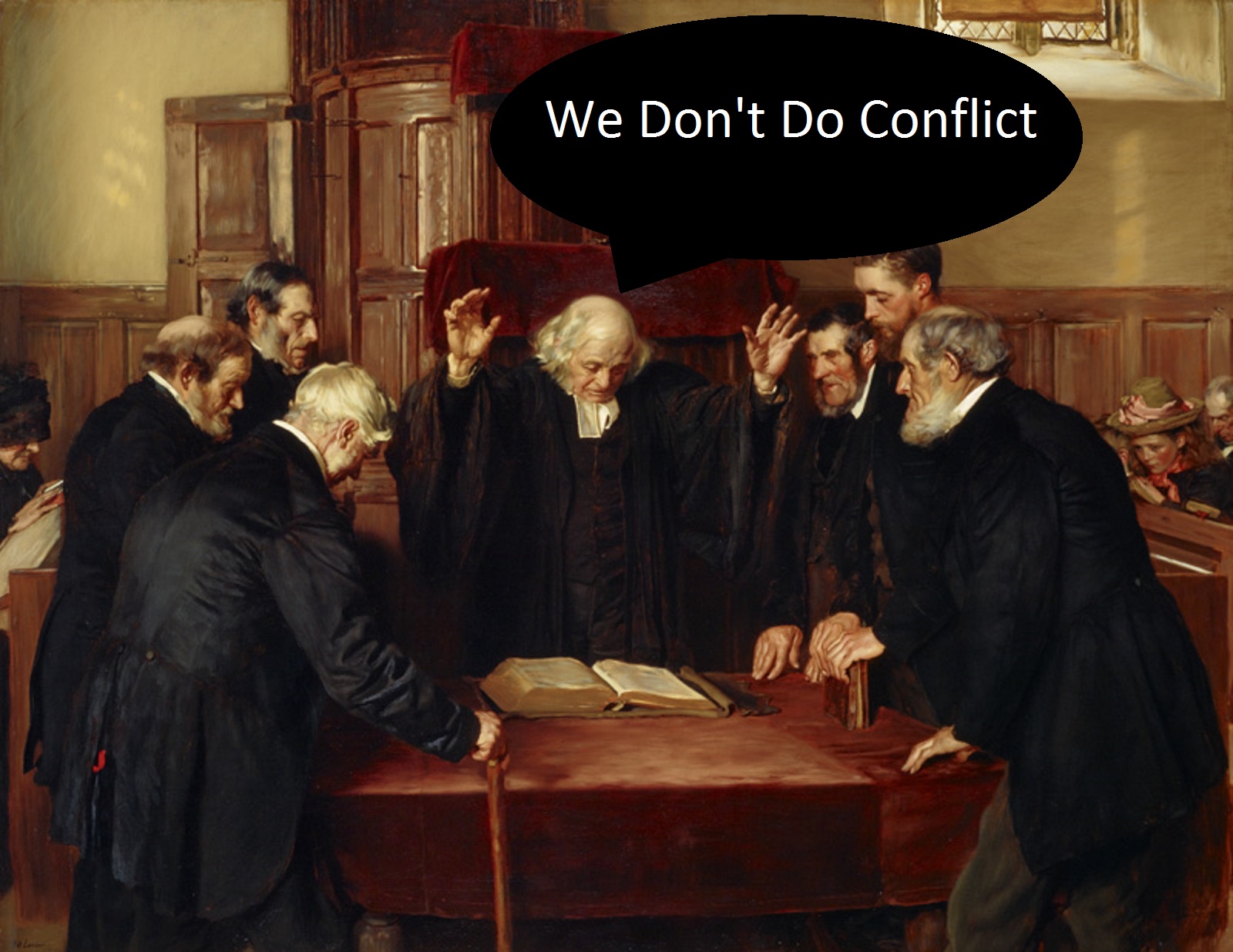
Let’s enjoy such an ecclesiastically healthy year in 2016 so that we can honestly say that these scenarios never happened. We called to something so much greater.
Image is The Ordination of Elders in a Scottish Kirk (1891) by Lorimer.
Posted in Uncategorized
On April 1, 2011 I outlived my mother. In August of this year, I will outlive my dad. I don’t take being alive for granted for many reasons because remembering my mortality sets me free.

It occurs to me that most of our holidays and holy days are about freedom. The lives of Nicholas of Myra (St. Nick), Patrick of Ireland (St. Pat), and Valentine of Rome include tales of freedom. Nicholas paid the dowries of three poor girls to save them from prostitution. Patrick escaped slavery in Ireland only to return as an adult to share the message of Jesus. Valentine secretly married Christian couples although it was forbidden as married men were less likely to volunteer to be soldiers.
Our uniquely U.S. holidays – Martin Luther King Day, President’s Day, Patriot’s Day, Memorial Day, Independence Day, Veterans Day – are all about remembering those who helped set us free or keep us free or dreamed that we might one day be free.
Labor Day marks the freedoms that labor unions created. (Thank you for weekends.) One could make the case that Halloween sets us free to try out new identities.
A sign that a holiday is not a real holiday? When that “holiday” is about enslavement (i.e. Columbus Day) or burden (every Hallmark you-must-buy-a-card-for-this occasion.) This means that Mother’s Day and Father’s Day are iffy.
Thanksgiving – in a perfect world – brings freedom from want to mind. And then there’s Christmas. The real Christmas. Come, thou long expected Jesus,
born to set thy people free. Cultural Christmas, on the other hand, often enslaves us.
The beauty of a New Year is that it marks a new beginning when we are free to hope and dream and imagine what the future holds, and we trust that the future holds something wonderful.
In 2016, I will outlive my dad. It’s also possible that my ministry will change. A new president will be elected. Maybe you will get a new job or a fall in love or get healthy or become a new parent. It’s all so wonderful to ponder. It feels good to be alive.
Perhaps the best resolution of all is that we spend this year setting ourselves or someone else free.
Image is Chagall’s America Windows (1977) in the Art Institute of Chicago which “celebrates the country as a place of cultural and religious freedom.”
Posted in Uncategorized

 A Church for Starving Artists